The Conservation Stay: Why the New Luxury Is Land, Not Marble
For a century, luxury travel measured itself in surfaces: marble, gold leaf, thread count, the polished lobby. A quieter idea is now overtaking it. The rarest thing money can buy has become protected space, and the most desirable address is the one with the fewest rooms and the most untouched land around them.
Something has shifted in what wealthy travelers want, and the hotel industry has felt it before it has fully named it. The old luxury was additive. It piled on service, ornament and choice until abundance itself became the message. The new luxury is subtractive. It removes noise, crowds, buildings and even other guests, and it presents what remains, a great deal of intact land held quiet and whole, as the ultimate indulgence. This is the conservation stay, and it is reorganising the top of the market around a single premise: that the most valuable thing a property can offer is no longer what it built, but what it chose not to.
Why scarcity moved from the object to the land
Luxury has always been a language of scarcity, and scarcity has quietly changed address. A marble bathroom was once hard to come by. It no longer is. What has become genuinely rare, measurably and irreversibly, is uncrowded, ecologically intact space. Wild land is shrinking, wildlife populations are thinning, and silence has turned into one of the few resources that cannot be manufactured on demand. In that world, a property that controls twenty thousand hectares and puts almost nothing on them holds something no amount of capital can quickly reproduce.
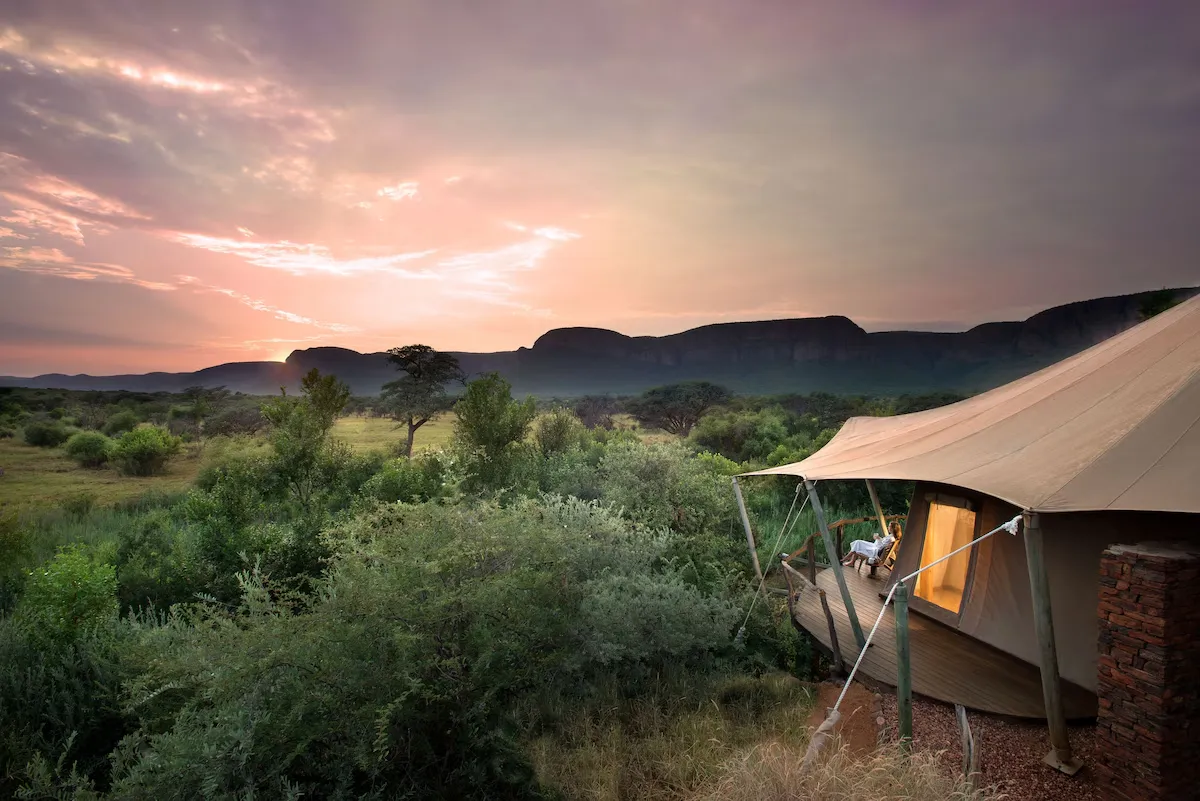
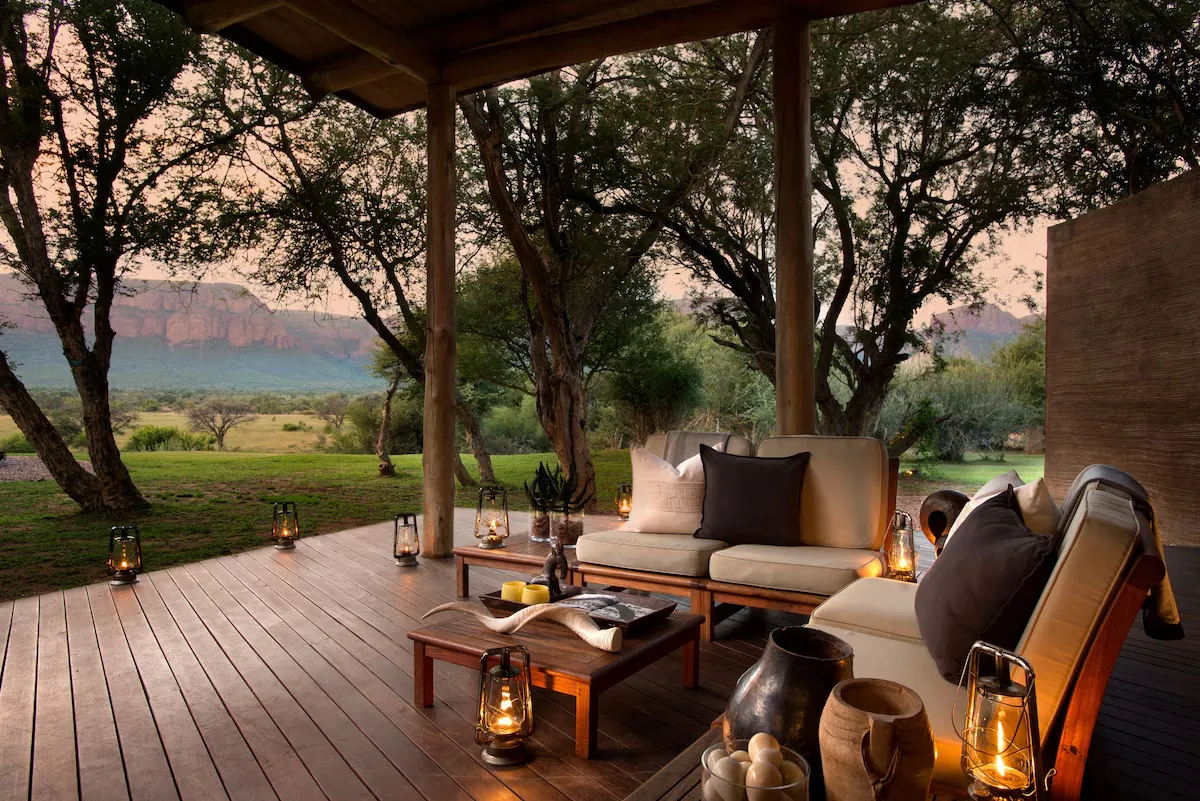
The clearest expression of this is the private reserve. At Maloba Private Game Reserve near Kimberley, the arithmetic is the point: a handful of suites set inside twenty thousand hectares of protected Northern Cape plain, so that the ratio of land to guest becomes the luxury itself. The room is comfortable, but the room is not the product. The product is the horizon, and the fact that so few people are permitted to share it.
The old luxury asked how much can be added to a room. The new luxury asks how much land can be kept empty around it.
From owning status to funding it
There is a deeper cultural current beneath the trend. For an earlier generation of affluent travelers, status lived in possession, in the object brought home and displayed. For the current one it lives increasingly in experience and in meaning, in what a trip did rather than what it acquired. A stay that demonstrably keeps a species on the map, or a landscape out of the hands of agriculture, carries a kind of moral interest that no purchased object can. The traveler is no longer only consuming the wilderness; they are, at least in the honest cases, paying to keep it wild.
That economic logic is what separates the serious version from the cosmetic one. In much of the world, tourism is now the argument for protection. Land that generates more value with animals on it than with cattle or crops tends to stay wild, and the guest bill is what tips the balance. At Marataba Safari Lodge, the model ties a small, low impact lodge to the management of a far larger protected area, so that the price of a night is also, functionally, a contribution to the running of the reserve. The traveler's comfort and the land's survival are placed on the same ledger, which is exactly where a conservation stay is supposed to put them.
What the traveler actually trades
None of this comes for free, and pretending otherwise does the idea no favours. A conservation stay asks the guest to give something up. The buildings are deliberately light, the room count is low, and the polish of a full service urban hotel is usually absent by design. Reaching these places is rarely simple: light aircraft, long transfers, dust. Wildlife does not appear on schedule, and weather governs the day more than the concierge does. What is offered in return is not more, but rarer: total quiet, unbroken night skies, and access to animals and terrain that the ordinary traveler will never see.
The trade takes different forms in different landscapes, and the variety is part of what makes the category interesting rather than uniform. At Jamtara Wilderness Camp in Madhya Pradesh, the whole proposition is built around the tiger and the forest that sustains it, a stay organised around a single, difficult, thrilling possibility rather than a menu of amenities. In the forests of Costa Rica, Origins Lodge trades the manicured resort grid for rainforest that is meant to stay a little wild at the edges. The common thread is that the surroundings are the amenity, and the guest accepts a landscape they cannot control as the price of one worth protecting.
The greenwashing problem
Here honesty is owed to the reader, because the same vocabulary that describes the real thing has become a marketing costume for the fake one. Conservation is now a selling word, and any selling word attracts imitation. A resort can plant a few indigenous trees, print a mission statement on recycled card, retire the small shampoo bottles, and call itself a sanctuary while changing nothing about its footprint or its economics. The language of protection is cheap. The protection itself is not.
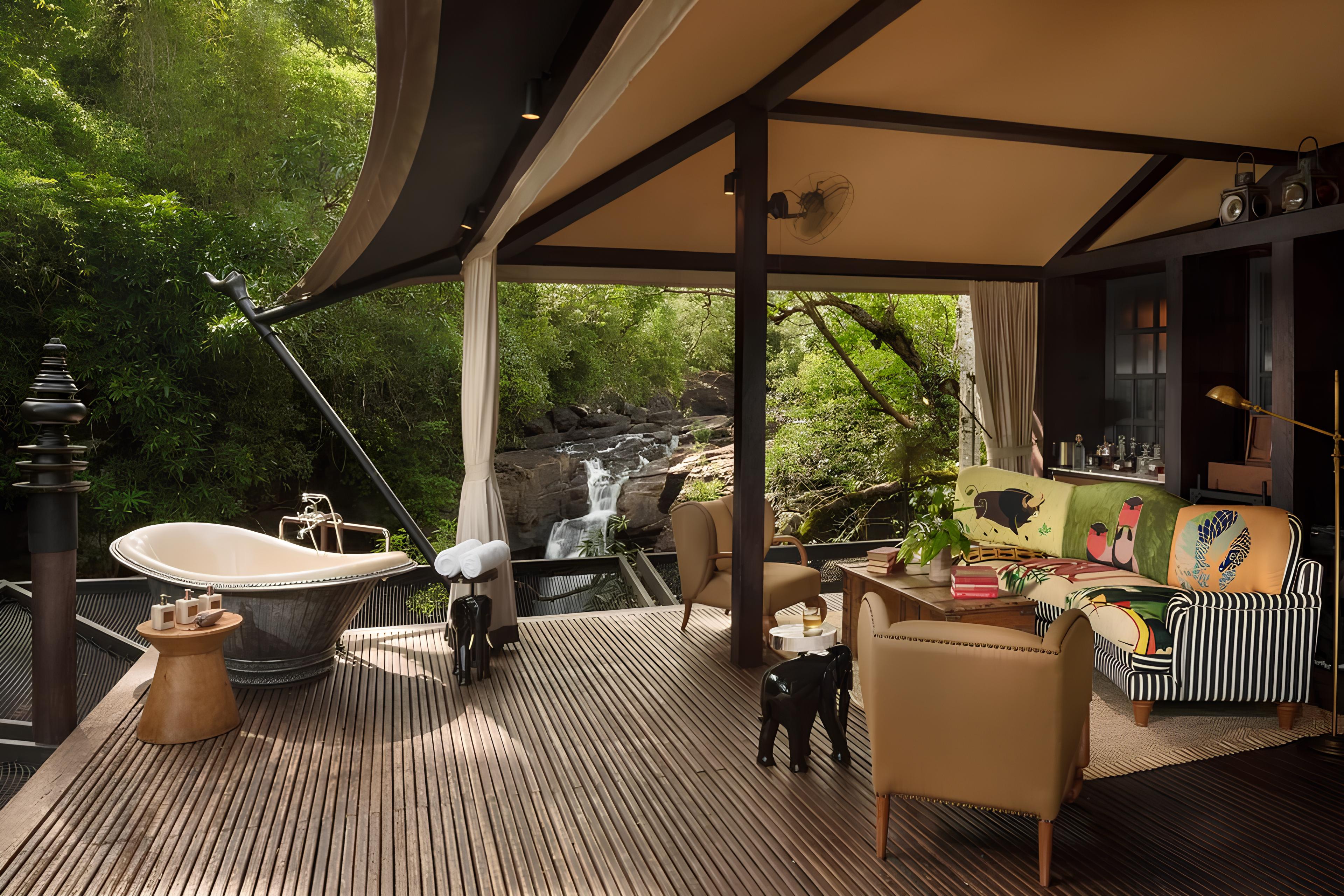
The distinction that matters is between a property that funds conservation and one that merely references it. The first can show where the money goes, who manages the land, how the local community shares in it, and what has measurably survived because the guests came. At Shinta Mani Wild in Cambodia, the lodge exists in part to hold a corridor of threatened forest against poaching and clearance, so that guest revenue underwrites active protection rather than symbolising it. That is the test a traveler should apply everywhere: not whether a place uses the word, but whether the word is doing any work.
Conservation is a claim before it is a practice. The serious properties can show the receipts. The rest are selling the feeling of virtue at a markup.
Community is the second half of the same honesty. A reserve that protects wildlife while excluding or underpaying the people who live beside it has solved half a problem and created another. The stronger models treat local employment, land agreements and shared revenue as structural rather than charitable. Even a leisure led property can sit inside this logic: Bawe Island off Zanzibar shows how an island stay can be framed around the stewardship of a marine and coastal environment, where what surrounds the guest is meant to be conserved rather than merely enjoyed. The framing only counts, of course, if the substance is there behind it.
How to read a conservation stay before booking
A traveler does not need to be an ecologist to separate the credible from the cosmetic. A few plain questions do most of the work. How much land supports each guest, and is it genuinely protected or simply adjacent to something that is. Who manages the wilderness, and can the property name its conservation and community partners rather than gesturing at them. Where the money goes, and whether any outcome, a species count, a rewilded acreage, a community fund, is actually published rather than implied. A serious operation answers these easily, because the answers are its reason for existing. An evasive one changes the subject to the spa.
The conservation stay is not a moral guarantee, and it should not be sold as one. It is a model with real promise and a real vulnerability to imitation, and the traveler who understands both gets the best of it. Choosing well does more than buy a rarer holiday. It sends money to the one argument that keeps wild land wild, which may turn out to be the most lasting thing a luxury traveler can now purchase.
Frequently asked questions
| Question | Answer |
|---|---|
| What is a conservation stay? | It is a stay where the main asset is protected land and wildlife rather than built luxury. Typically a small number of rooms sit inside a large private or community managed wilderness, and a share of what I pay helps fund the protection of that land. The surroundings, not the facilities, are the point. |
| Does a conservation stay cost more than a normal hotel? | Usually yes. Low room counts, remote locations, small aircraft transfers and the cost of managing a large protected area all push the price up. Part of what I am paying for is scarcity and part is the running of the reserve itself, so a conservation stay rarely competes on price with a conventional resort. |
| Is conservation travel genuinely sustainable or just marketing? | Both exist, which is why judgement matters. Serious properties fund real protection and can show where the money goes. Others use the vocabulary of conservation as decoration. I should look for named partners, transparent community terms and published outcomes rather than trusting the word on its own. |
| How do I tell a serious lodge from greenwashing? | Ask a few plain questions. How much protected land supports each guest, who manages the wilderness, where the guest revenue goes, and what measurable result the property can point to. A credible operation answers easily because that is its reason for existing. An evasive one redirects the conversation to comfort and amenities. |
| Are conservation stays suitable for families? | Many are, though it depends on the place. Some reserves welcome children and build activities around them, while others keep age limits for safety on game drives or in wilderness settings. Because the appeal is nature rather than facilities, families comfortable with early starts, insects and unstructured days tend to get the most from them. |
| How is a conservation stay different from a normal luxury resort? | A resort adds: more rooms, more amenities, more polish. A conservation stay subtracts, offering fewer buildings and far more protected space, and it ties the guest bill to the survival of that land. The luxury is access and silence rather than service and ornament, and the trade is comfort and predictability for rarity. |
| Where can I find conservation stays? | They cluster where intact wilderness and wildlife remain: private game reserves in southern Africa, tiger forests in India, rainforest in Central America, protected corridors in Southeast Asia, and marine and island environments in places such as Zanzibar. The strongest examples pair a small lodge with a clearly defined protected area around it. |
The marble lobby is not disappearing, but it has stopped being the summit. The travelers who set the pace now measure luxury in hectares and quiet, and in whether the place they chose will still be wild for the next guest. That, in the end, is what land offers that marble never could.