Mallorca vs Ibiza: Which Balearic Island Is Yours in 2026
Two islands, a short flight apart, sharing the same sea and almost nothing else. One answers with pine cliffs and stone villages; the other with white light and a beat that carries across the water at dusk. The question is rarely which is better. It is which one is yours.
The two reputations
Before either island is seen, it is imagined, and the imagining does most of the damage. Ibiza arrives with a soundtrack: clubs, closing parties and a summer built around the night, a reputation real enough to fill flights every June. Mallorca arrives with the opposite baggage, the memory of package coastlines and crowded beach strips that defined its 1970s boom. Both pictures are true, and both are decades out of date. Clinging to either is the surest way to book the wrong holiday.
The honest version is more interesting. Mallorca is the large, plural island, big enough to hold a serious mountain range, a walkable capital, a wine country and a hundred coves that never see a coach. The tourism of the strips still exists in a few well-known bays, but it is a small fraction of a place that has quietly become one of the Mediterranean's most sophisticated. Ibiza is the small, concentrated island, and its fame flattens it in the telling. The clubs are real, but so is a north coast of pine and red earth, a slow interior of white farmhouses, and a design-hotel culture that rivals anywhere in Spain. The difference between the two is less one of quality than of scale and temperament.
Landscape and beaches
Geography sets the tone for everything that follows. Mallorca is roughly six times the size of Ibiza, and it uses the space. The northwest is dominated by the Serra de Tramuntana, a limestone range that drops into the sea in cliffs and shelters stone villages such as Deia and Valldemossa in its folds. The east coast hides the calas, small turquoise inlets reached down pine paths, and the interior rolls through almond groves and vineyards toward the plain. A traveler could return to Mallorca for years and keep finding coast that was not there the summer before. The island rewards a car and a sense of exploration more than any other in the group.
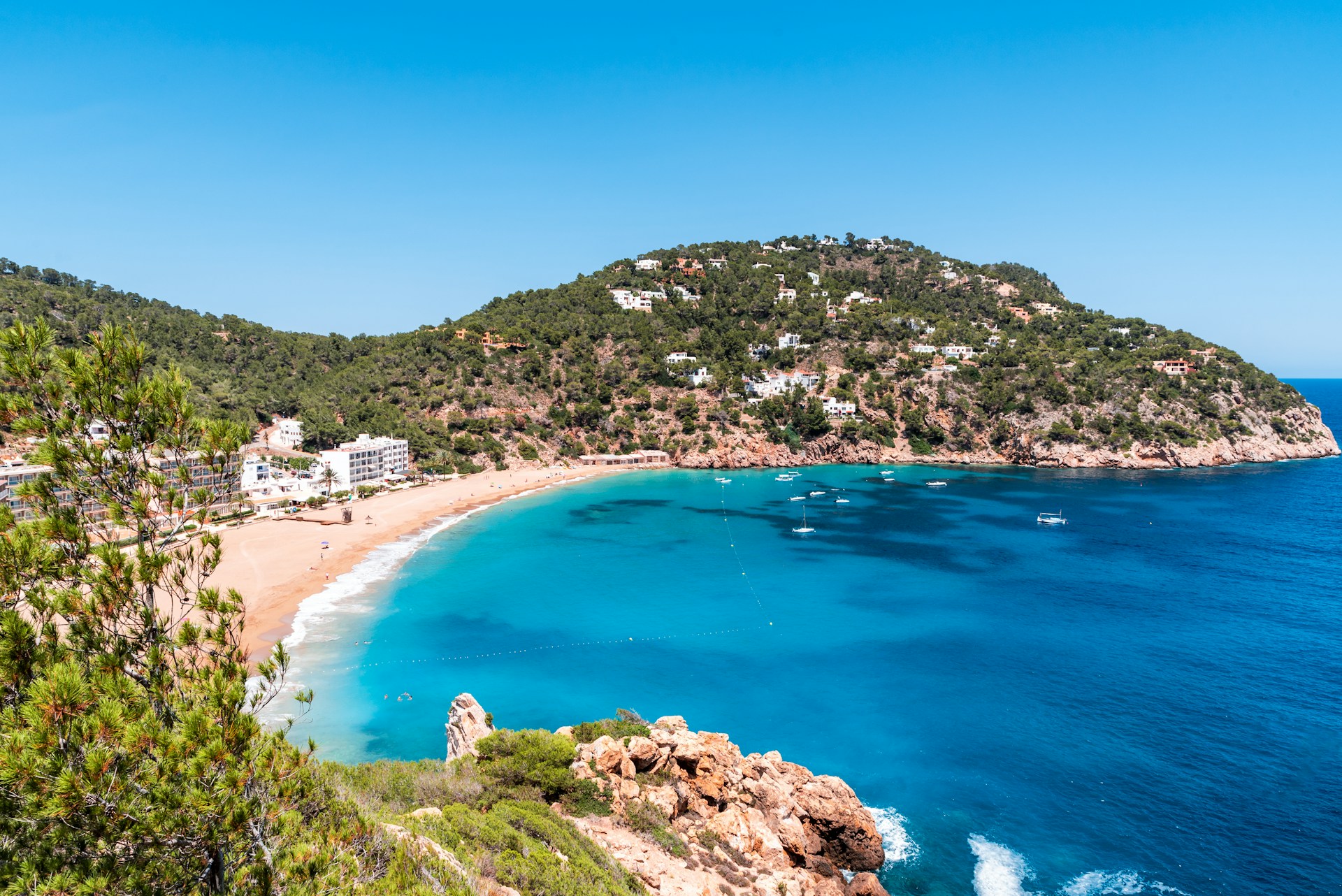
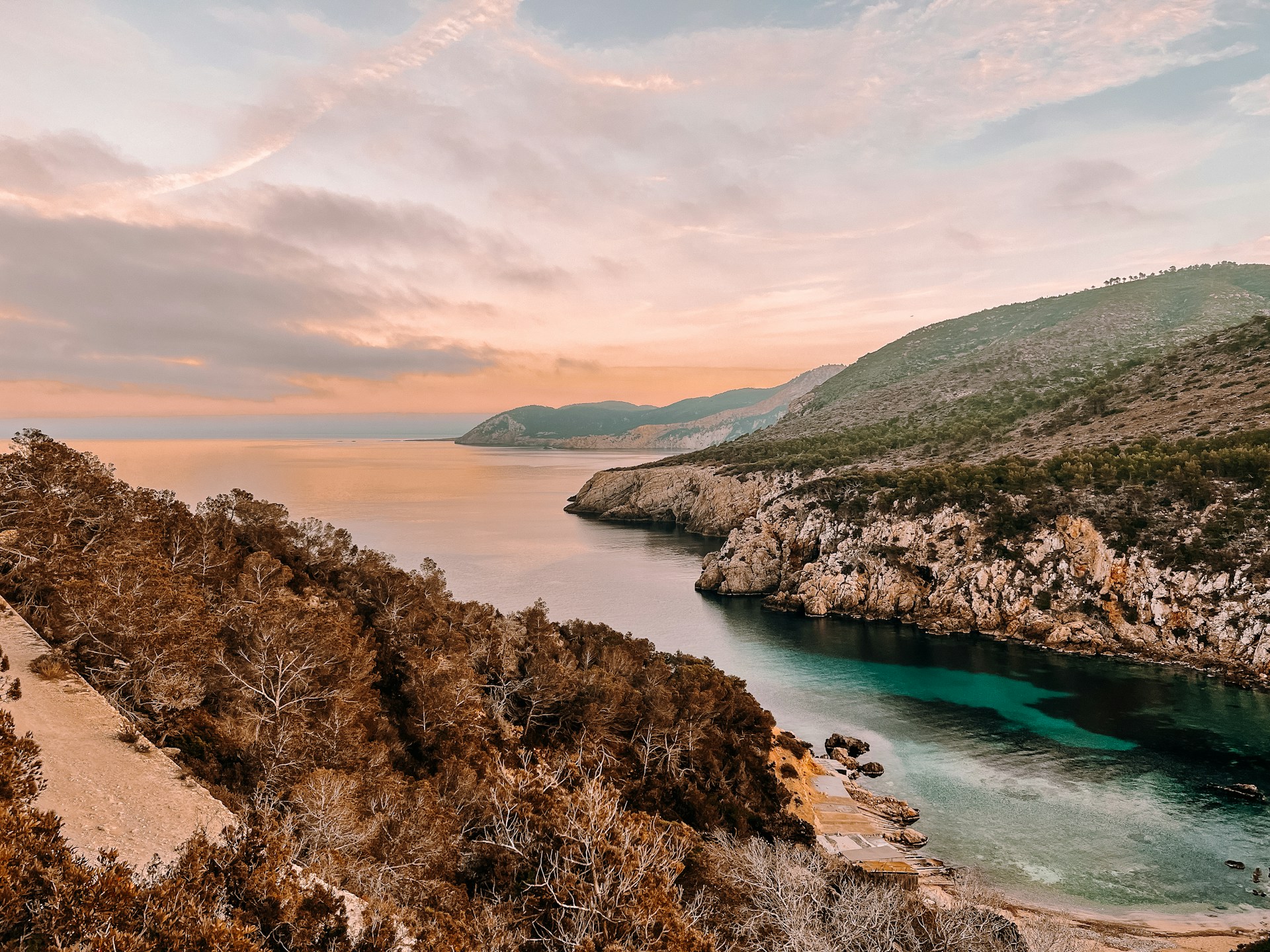
Ibiza compresses its drama. The distances are short, part of its appeal, and the landscape shifts quickly from the cliffs of the north to the flat salt pans of the south and the long sunset beaches of the west. The beaches divide sharply. The famous ones, Playa d'en Bossa and the west-coast sunset bars, are loud by design and full by afternoon. The quiet ones, the tiny coves of the north reached down rough tracks, are as empty and clear as anything in the Mediterranean, and most day-trippers never find them. Ibiza is smaller but not simpler, and the island keeps its best beaches for those willing to drive past the obvious.
Towns, villages and the pull of the capital
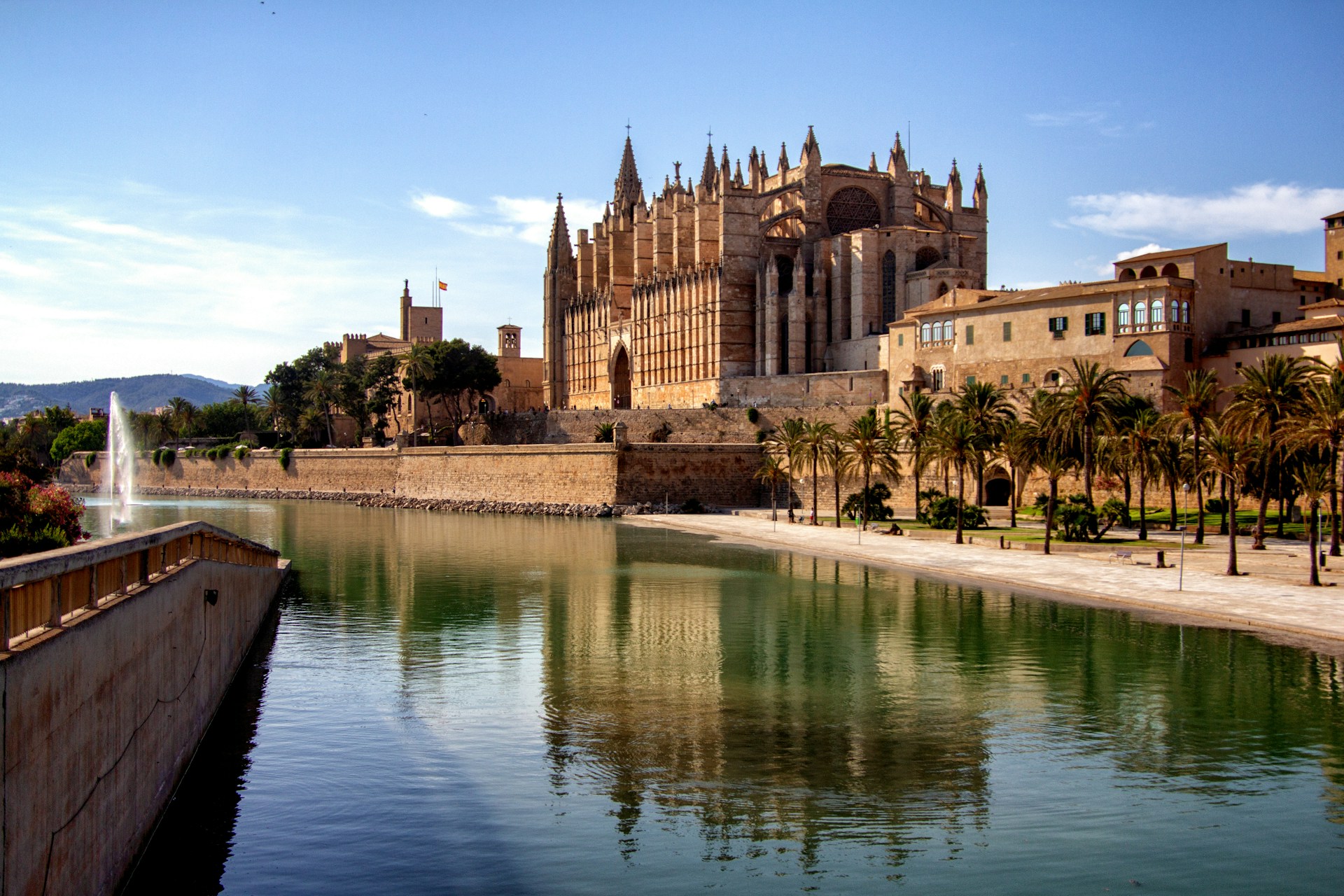
The two capitals frame the difference perfectly. Palma, on Mallorca, is a real city, a working Mediterranean capital with a Gothic cathedral rising straight out of the sea wall, a tangle of old-town lanes, independent galleries, a growing restaurant scene and enough life to fill a stay on its own. It is one of the few island capitals in Europe that a traveler might visit for the city alone. To sleep inside it is to have the whole island within reach and a genuine urban evening on the doorstep. Hotel Cort sits in the heart of the old town beside a centuries-old olive tree in the Plaça de Cort, the kind of address that puts the cathedral, the tapas bars and the harbour all within a short walk. A short distance from the noise, Posada Terra Santa occupies a restored townhouse in the quieter lanes, trading the harbour view for the calm of a courtyard and the sense of a private house in the medieval quarter.
Ibiza's answer is different in kind. Ibiza Town, or Eivissa, is smaller and steeper, crowned by the walled hilltop of Dalt Vila, a fortified old town that turns to gold at dusk and looks down on a marina of superyachts. It is beautiful and theatrical rather than practical, a place to walk and drink and watch rather than to run daily errands. For the island's calmer face, travelers head inland to villages such as Santa Gertrudis, a white crossroads of galleries, long lunches and slow afternoons that feels a world away from the coast, or to the market town of Sant Joan in the green north. The best of Ibiza is often found by turning away from the sea.
Mallorca asks how many islands one island can hold. Ibiza asks how much a small island can contain. The right answer is not the same for every traveler.
The table
Food has become one of the strongest arguments for Mallorca, and one that surprises visitors who arrive expecting sunburn and sangria. The island now carries a cluster of ambitious kitchens, a real wine country in the Binissalem and Pla i Llevant regions, and a farm-to-table movement built on its own almonds, olive oil, sobrassada and black pig. Palma alone could fill a week of good dinners, and the villages of the Tramuntana hide long lunches worth the drive. Mallorca eats like a place that takes its own produce seriously, and the standard has risen fast over the last decade. A stay at The Donna Portals, on the coast west of Palma near the marina at Puerto Portals, places travelers among some of the island's most polished waterfront dining.
Ibiza's food scene has grown up alongside its nightlife and now stands on its own. The island balances rustic country restaurants, the payés tradition of grilled fish and slow-cooked lamb, against a layer of glamorous beach clubs and design-led kitchens that trade as much on setting as on the plate. Dinner in Ibiza is often theatre, timed to the sunset and dressed to match, and the north of the island in particular has quietly become a place for serious, unhurried eating away from the crowds. The distinction holds across both islands: Mallorca leans toward the produce and the kitchen, Ibiza toward the setting and the scene, and neither is short of a memorable meal.
Nightlife and quiet
This is the axis on which most people decide, and it deserves a clear answer. If the night is the point of the trip, Ibiza has no rival in the Mediterranean. The island's clubs are institutions, its DJs draw crowds from across the world, and the season builds a rhythm that touches even travelers who never set foot in a club, the late dinners, the sunset gatherings, the sense that the island is awake. For anyone who wants that energy, choosing Mallorca instead would be a quiet disappointment. Ibiza does the night better than anywhere, and it does it without apology.
Yet the island contains its own opposite, and this is the part the reputation hides. Away from the club belt, the north and the interior of Ibiza are genuinely calm, and a cliff-edge hotel far from the noise offers one of the most peaceful stays in the Balearics. Hacienda Na Xamena, perched high on the cliffs of the northern coast above the sea, is the clearest proof that Ibiza can mean silence and long sunsets rather than crowds. On the west coast, 7Pines Resort Ibiza looks out toward the rock of Es Vedra with the kind of sunset that needs no soundtrack, while The Standard, Ibiza brings a sharper, design-forward energy to the town for travelers who want to be closer to the pulse. The point is that Ibiza offers a dial, not a switch, and the traveler chooses where to set it.
Mallorca, by contrast, is quiet almost everywhere. There are bars and there is a summer buzz in Palma, but the island is not built around the night, and the traveler who wants stillness will find far more of it here and far more easily. For a stay that turns entirely inward, L'Avenida offers the intimacy of a small, character-led hotel, the sort of place that treats calm as the main amenity rather than an afterthought.
Who each island suits
Reduced to its essentials, the choice is a question of temperament and company. Mallorca suits families, couples who want variety, and travelers who like to move. Its scale means space for children, a car unlocks a different beach every day, and the mix of city, mountains and coast keeps a longer stay from ever feeling repetitive. It is the safer choice for a group with mixed tastes, because the island can satisfy the walker, the diner, the beach-lover and the culture-seeker inside the same week without anyone compromising much.
Ibiza suits couples, friends and travelers who want a single strong mood, whether that mood is the night or its deliberate opposite. A group of friends chasing the summer will find nowhere better, and so, surprisingly, will a couple after a design-led hideaway on an empty north coast, provided they choose their base with care. The island rewards decisiveness. A traveler who wants a little of everything and no strong pull in any direction is usually happier on Mallorca. The combination to avoid is arriving in Ibiza hoping for a quiet family fortnight in the wrong postcode, or arriving in Mallorca expecting the electricity of an Ibiza August.
When to go
The seasons run in parallel across both islands. The shoulder months, May into June and September into October, are the sweet spot, with warm water, long light, thinner crowds and gentler prices than the peak. July and August bring the heat, the full beaches and, on Ibiza, the height of the club season, exactly what some travelers come for and others should avoid. The islands quieten sharply from late October. Through winter Mallorca stays gently alive thanks to Palma, its almond blossom and its walking, while much of Ibiza closes down until spring. For a first visit weighted toward calm and value, the last two weeks of September are hard to better on either island.
Getting there and around
Access is easy and similar for both. Palma and Ibiza each have busy international airports with direct flights from across Europe through the season, and Palma in particular is one of the best-connected islands in the Mediterranean. The two islands are also linked to each other by ferry, a crossing of roughly two to three hours depending on the service, which makes combining them on a single trip entirely practical.
Getting around differs with the geography. On Mallorca a hire car is close to essential, since the island's pleasures are spread across mountains, coast and interior. On Ibiza a car is useful but less critical given the shorter distances, though anyone basing themselves in the quiet north will still want one for the town, the beaches and dinner. Among Palma's boutique options, Palma Riad offers a courtyard-house calm in the old town for those who want the city on foot and the rest of the island a short drive away.
Frequently asked questions
| Question | Answer |
|---|---|
| Is Mallorca or Ibiza better for a family holiday? | For most families Mallorca is the easier choice. It is far larger, with more space, more variety and a gentler overall pace, so a car can reach a different quiet cove each day and the mix of city, mountains and beach keeps children and adults occupied. Ibiza can work for families if I base myself in the calm north and stay away from the club areas, but it takes more careful planning. |
| Which Balearic island is quieter? | Mallorca is quieter on average because its size gives so much more room to spread out and disappear. That said, the north and interior of Ibiza are genuinely peaceful, and a cliff-side hotel there can feel as calm as anywhere. The difference is that on Mallorca I find the quiet almost everywhere, while on Ibiza I have to choose my base to avoid the noise. |
| Is Ibiza only about nightlife? | No, and that reputation is misleading. Ibiza has a famous club scene, but it also has a beautiful north coast, a slow white-village interior, a strong design-hotel culture and some of the emptiest coves in the Mediterranean. If I want the party I can find it easily, and if I want silence I can find that too, as long as I pick the right part of the island. |
| Which island is better for a couple? | Both work well, in different registers. Mallorca suits couples who want variety, good food and a mix of city and coast across a relaxed week. Ibiza suits couples who want a single strong mood, either a glamorous, energetic stay or a design-led hideaway on an empty northern cliff. It comes down to whether I want range or a clear atmosphere. |
| When is the best time to visit Mallorca and Ibiza? | May into June and September into October are the best windows on both islands, with warm seas, long days and fewer crowds than the peak. July and August are hot and busy and, on Ibiza, the height of the club season. If I want calm and better value, the second half of September is close to ideal on either island. |
| How many days do I need on each island? | Five to seven nights suit a single island well. Mallorca can absorb a longer stay easily because of its size and variety, while Ibiza feels complete in five to seven nights given how compact it is. For a first visit I would rather spend a full week on one island than rush to see both. |
| Can I visit both Mallorca and Ibiza on one trip? | Yes. The two are linked by a ferry that takes roughly two to three hours, and both have well-connected airports, so combining them is straightforward. A common plan is a few nights on each, though allowing enough time to settle into both rather than treating either as a stopover makes for a far better trip. |
| Which island has better food? | Both eat well, in different ways. Mallorca has grown into a serious food destination built on its own produce, wine country and ambitious kitchens, so it leans toward the plate itself. Ibiza pairs rustic country cooking with glamorous, setting-driven restaurants where the view and the atmosphere are part of the meal. If dinner is the reason I travel, Mallorca edges it, but neither island disappoints. |
In the end the two islands are not rivals but different answers to the same summer question. Mallorca offers range, calm and a table worth the flight. Ibiza offers a single, vivid mood, loud or silent as the traveler chooses. The right island is simply the one whose temperament matches the trip already imagined.