Where to Stay in the Cyclades: A Complete Guide to Santorini and Mykonos in 2026
Two islands, an hour apart by fast ferry, have come to stand for the whole of Greek summer. They could not be more different in temperament. This guide explains what each one is for, when to go, and where to stay across both.
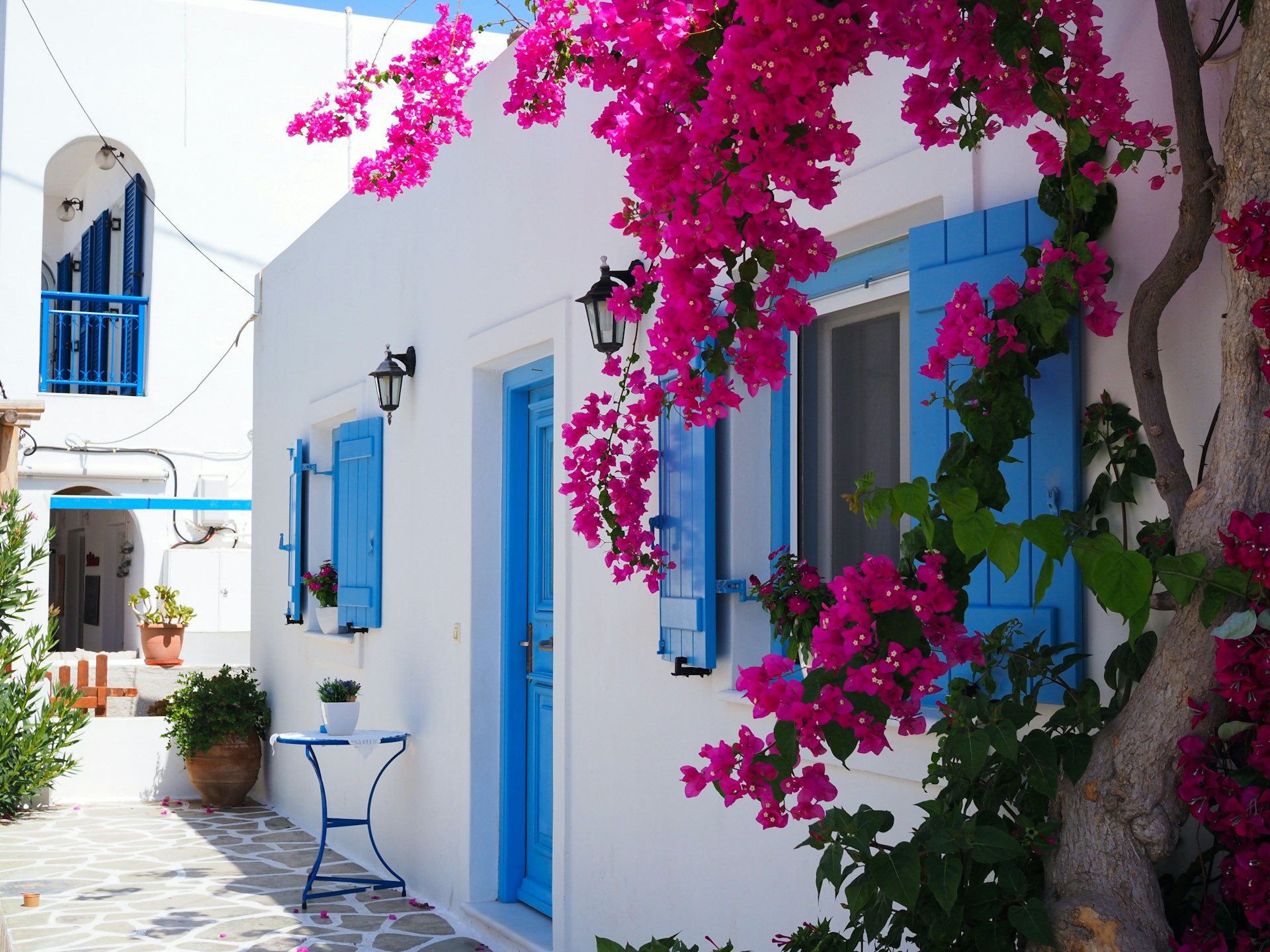
The Cyclades are a scatter of more than two hundred islands in the Aegean, of which only a few dozen are inhabited and just two are household names. Santorini and Mykonos draw the crowds, the flights and the photographs, and for good reason. They are also, between them, a study in contrast. One is a volcano with a view that silences a room. The other is a stage for sun, sea and a long, loud night. Travelers often treat the choice as a rivalry. The better approach is to understand the character of each and then decide whether to pick one or, as many do, to take both.
01When to go
The season on both islands runs from late April to late October, and the month chosen changes the trip more than the island does. July and August are the peak, with the hottest weather, the warmest sea, the highest prices and the largest crowds, when Santorini's sunset spots fill an hour early and Mykonos turns into one long party. The strong meltemi wind also blows hardest in midsummer, which can chop up the sea and the ferry crossings.
The sweeter windows sit on either side. May and June bring warm days, a sea that is swimmable from June, lighter crowds and softer prices, with everything open. September and early October may be the best of all, the water at its warmest after a summer of heat, the light turning gold, and the islands exhaling after the peak. Late October sees venues begin to close, and from November to March both islands largely shut down, beautiful but quiet, with most hotels and restaurants dark.
02How to get there
Both islands have airports with direct flights from Athens and, in summer, from many European cities, which makes flying the fastest way in. From Athens the hop is under an hour. The alternative, and part of the pleasure for travelers with time, is the ferry. High-speed boats leave Athens from the ports of Piraeus and Rafina and reach Mykonos in around three hours and Santorini in around five, while slower conventional ferries cost less and take longer. Booking ahead matters in July and August, when popular sailings sell out.
The crucial connection for a combined trip is the one between the two islands. High-speed ferries link Santorini and Mykonos directly in roughly two to three hours, several times a day in season, which is what makes pairing them so easy. Travelers prone to seasickness should know that the same meltemi wind that cools the islands can make the crossing lively, so a calmer morning sailing is the safer choice.
03How to get around
Neither island needs a car to enjoy, but each has its own logic. On Santorini the famous villages, Fira, Firostefani, Imerovigli and Oia, run in a line along the caldera rim and are linked by bus, taxi and a scenic clifftop walking path, while the beaches sit on the far side of the island. A car or quad helps for the beaches but is a liability in the narrow, stepped caldera villages, where walking is the only real option. On Mykonos the Town, known as Chora, is a pedestrian maze best left to foot, and the beaches spread around the south coast, reached by bus, taxi, boat or rental. Many travelers on both islands skip the car and rely on taxis and transfers, since parking near the best spots is scarce.
04Where to stay on Santorini
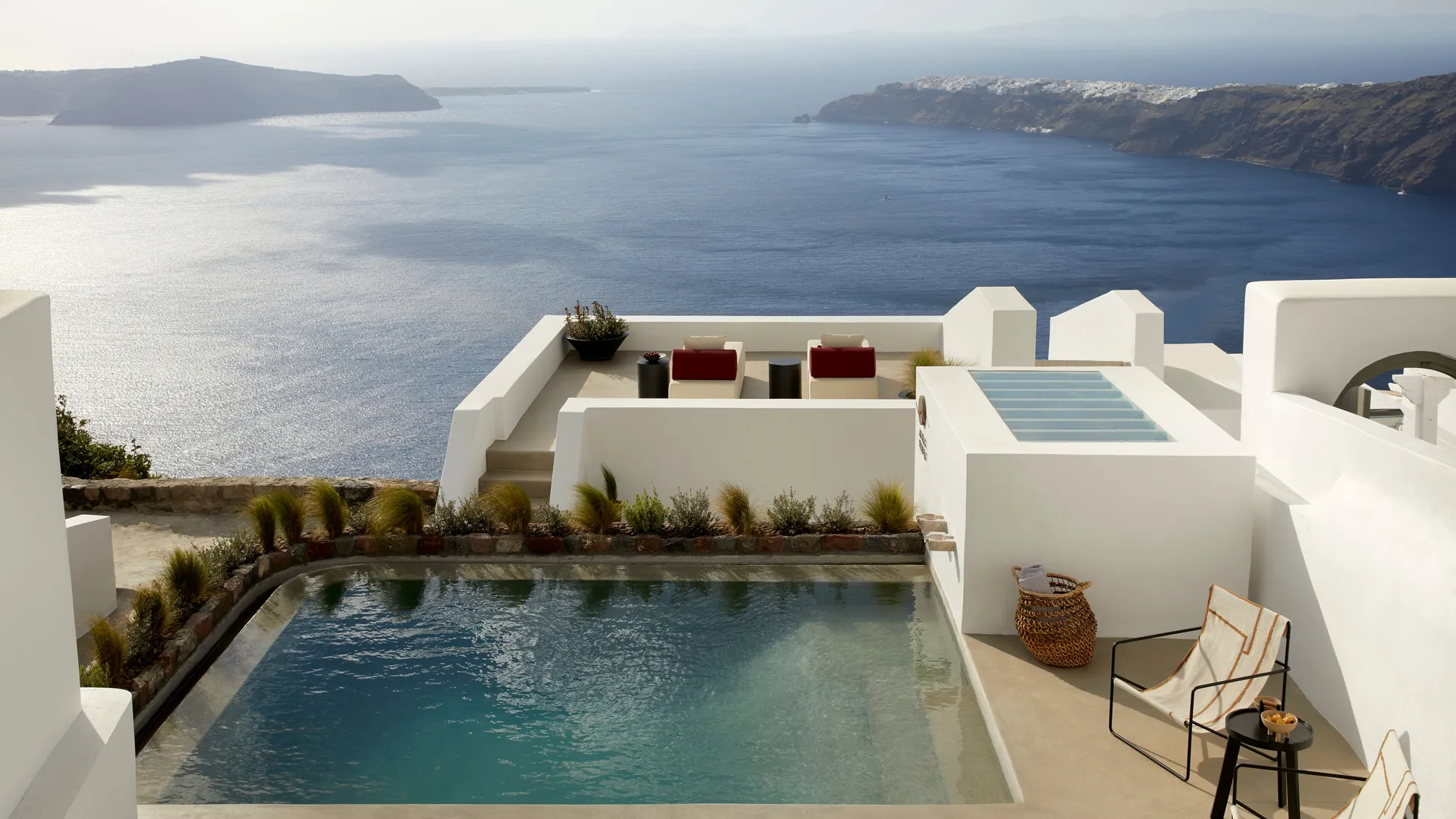
Santorini's geography decides its hotels. The premium addresses cling to the caldera, the inner curve of the cliff that looks west over the drowned volcano and catches the sunset, and the experience there is about the view, the infinitesimal terraces and the quiet of an adults-leaning, romantic stay rather than beaches at the door. Santorini Secret Suites & Spa belongs to this caldera tradition, the kind of cliffside address travelers picture when they imagine the island, with a spa and the long western view built into the stay.
For a quieter, more design-minded read on the same idea, Secret View Hotel trades on the island's defining asset, the view itself, in a smaller and more intimate package, which suits couples who want the caldera without the largest crowds around them. Travelers who prioritize space, a proper pool and a resort rhythm over a clifftop perch will find a different balance at Santo Pure, while Atoles Retreat leans toward the calmer, retreat-style end of the island, for visitors who want Santorini's beauty with a slower pulse.
The rule of thumb on Santorini is to be honest about the trade. A caldera room is the island's signature and its splurge, short on beach access and long on romance and view. A hotel away from the cliff buys more space, a bigger pool and a lower price, at the cost of the sunset from the bed. Neither is wrong. The right one depends on whether the view or the swim matters more.
05Where to stay on Mykonos
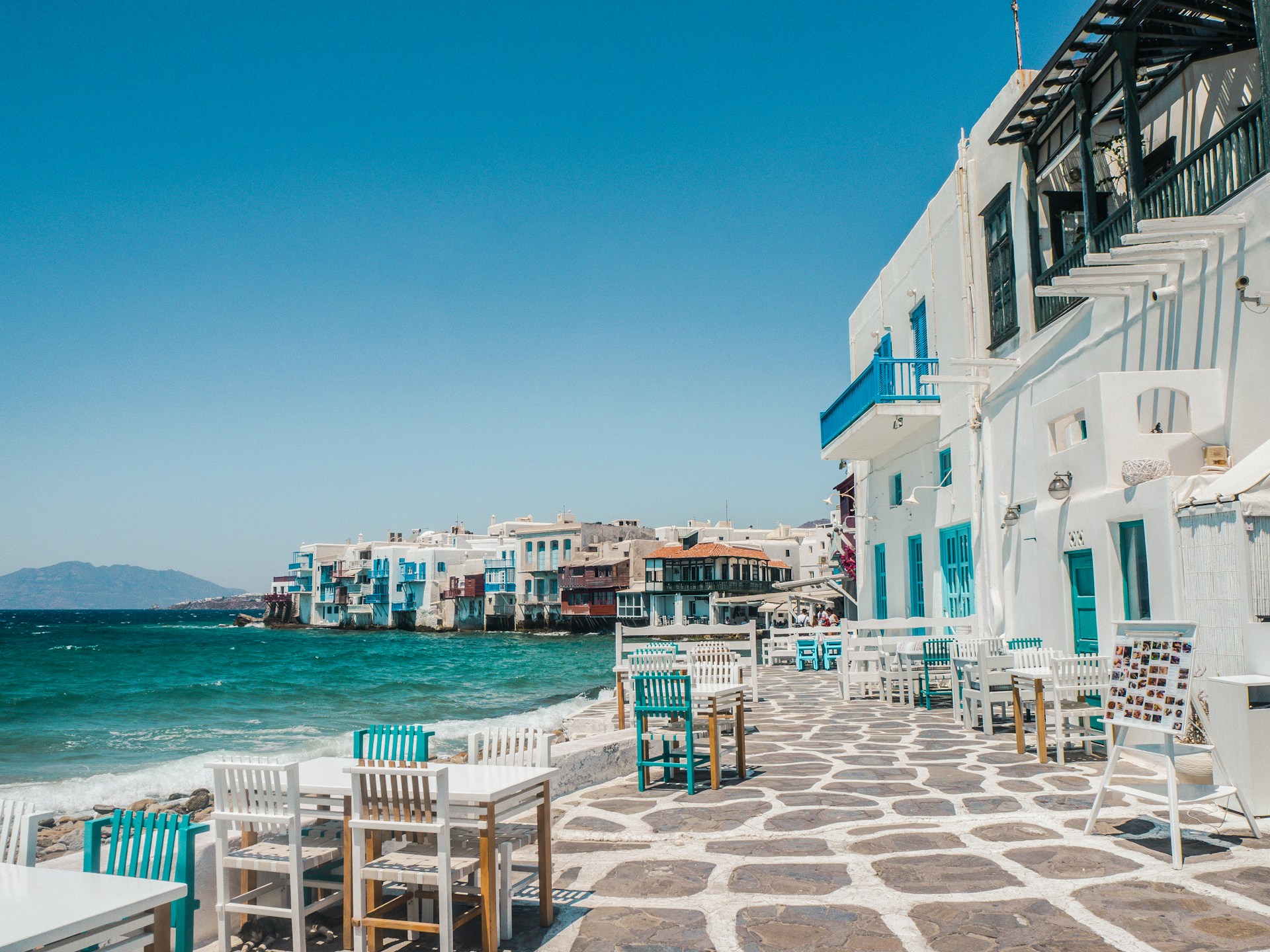
Mykonos divides differently, between the Town and the beaches. Staying in or near Chora puts a traveler inside the island's social life, the whitewashed lanes, the windmills, the waterfront of Little Venice and the restaurants and bars that define the Mykonos evening, all on foot. Boheme Mykonos sits close to that Town energy, a stylish base for travelers who want the nightlife, the shopping and the scene within walking distance rather than a drive away.
The alternative is to base near the south-coast beaches, where the famous bays of Psarou, Ornos and Platis Gialos gather the beach clubs and the daytime social life. Nomad Mykonos offers a design-led, contemporary take on the island for travelers who want style and a more relaxed setting while staying within easy reach of both the beaches and the Town. The Mykonos choice, in short, is between sleeping in the party and sleeping near the sea, with a short taxi joining the two whichever way a traveler leans.
06What to do
On Santorini the days arrange themselves around the caldera and the light. The clifftop walk from Fira to Oia, roughly three hours along the rim, is the island's great free pleasure, best in the cool of the morning. The sunset from Oia is the headline event, and the way to enjoy it is to arrive early or to watch it from a caldera terrace rather than the crush of the castle. Beyond the cliff, the island offers black-sand and red-sand beaches at Kamari, Perissa and the Red Beach, the wineries of a volcanic terroir that produces the crisp white Assyrtiko, and boat trips into the caldera to the volcanic islet and its warm springs.
On Mykonos the sea leads. The south-coast beaches and their clubs fill the daytime, the Town fills the evening, and the single essential excursion is the short boat trip to the sacred island of Delos, one of the most important archaeological sites in the Aegean and a place of real weight beneath the island's lighter reputation. Between beach and ruin, Mykonos rewards travelers who balance the hedonism with a half day of history.
07What to eat
Cycladic food is simpler and better than the islands' glamour suggests. Tomatoes, the small intense Santorini variety chief among them, capers, fava made from yellow split peas, fresh fish grilled whole, and the local cheeses define the table. On Santorini the volcanic wine deserves attention, and a tasting at one of the island's wineries is among the best non-view things to do. On Mykonos the dining runs from humble seaside tavernas to ambitious restaurants that draw a stylish crowd, and the smart move is to mix the two rather than spend every night at the headline tables. On both islands the freshest meals are the simplest, fish, salad, local wine, eaten slowly as the light goes.
08Day trips and combining the islands
Each island carries a natural excursion. From Santorini the boat into the caldera, taking in the volcanic islet, the hot springs and the smaller island of Thirassia, shows the place from the water, which is the only way to grasp the scale of what the eruption left behind. From Mykonos the trip to Delos is unmissable for anyone with an interest in the ancient world, a short crossing to an island that was once one of the great sanctuaries of the Greek world and is now an open-air museum.
The larger day-trip question is whether to combine the two. For most travelers with seven nights or more, the answer is yes. The ferry between them takes only two to three hours, and the two islands answer different needs so cleanly that pairing them gives a fuller picture of the Cyclades than either alone. The usual structure is four nights on one and three on the other, with the order set by the flights home.
09Santorini or Mykonos: which one is for you
When a trip allows only one, the decision comes down to temperament. Santorini suits couples, honeymooners and travelers who want beauty, romance, sunsets and a slower pace, and who will happily trade beaches for the most photographed view in Greece. Mykonos suits groups, friends, beach lovers and anyone who wants swimming, social energy and a long night out, and who treats the scene as the point rather than the price. A traveler who wants both romance and a party, or who simply wants to understand the islands properly, should take both and let the ferry do the rest.
10What it costs
Both islands sit at the upper end of Greek prices, and the season moves the number more than the choice of island. The caldera hotels of Santorini and the design addresses of Mykonos command a premium in July and August, when demand peaks and the sunset rooms book out months ahead. The same rooms in May, June, September and early October cost meaningfully less while the experience is, if anything, better. The largest savings come from three moves: travel in the shoulder season, choose a hotel away from the caldera or the Town if the view or the scene is not the priority, and eat at the simpler tavernas as often as the headline restaurants. None of those lowers the quality of the trip. They lower the bill while the islands stay exactly as good.
Frequently asked questions
| Question | Answer |
|---|---|
| Should I go to Santorini or Mykonos? | It depends on the trip I want. Santorini suits couples and travelers who want sunsets, romance and the famous caldera view at a slower pace. Mykonos suits groups, beach lovers and anyone who wants swimming and a lively social scene. If I have seven nights or more, the easiest answer is to do both, since the ferry between them takes only two to three hours. |
| How many days do I need for Santorini and Mykonos together? | Seven nights is the comfortable minimum to do both islands justice, usually split four and three. With only four or five nights, it is better to choose one island and explore it well rather than spend a day of the trip on the ferry and the transfers between them. |
| What is the best time of year to visit? | May to June and September to early October offer the best balance of warm weather, a swimmable sea, open venues, lighter crowds and lower prices. July and August are hottest and liveliest but also the most crowded and expensive, with the strongest winds. From November to March both islands largely close. |
| How do I get from Santorini to Mykonos? | High-speed ferries connect the two islands directly in roughly two to three hours, with several sailings a day in season. Booking ahead is wise in July and August, and travelers prone to seasickness should choose a calmer morning crossing, since the summer meltemi wind can make the sea lively. |
| Do I need to rent a car on the islands? | Not necessarily. On Santorini the caldera villages are walkable and linked by bus and taxi, and a car only helps for reaching the beaches on the far side. On Mykonos the Town is pedestrian and the beaches are served by bus, taxi and boat. Many travelers skip the car on both islands because parking near the best spots is limited. |
| Is Santorini good for a beach holiday? | Less than Mykonos. Santorini's beaches are volcanic black and red sand on the side of the island away from the famous caldera villages, and the premium hotels on the cliff have views rather than beach access. For a holiday built around swimming and beach clubs, Mykonos is the stronger choice. |
| Where is the best area to stay on Santorini? | For the signature experience, a caldera village such as Oia, Imerovigli, Firostefani or Fira gives the sunset and the view, at a premium and with little beach access. For more space, a proper pool and a lower price, a hotel away from the cliff is the better balance. The right area depends on whether the view or the swim matters more. |
| Is it better to stay in Mykonos Town or by the beach? | Staying in or near Chora, the Town, puts the nightlife, restaurants and shops on foot, which suits travelers who want the social scene. Staying near the south-coast beaches such as Psarou or Ornos suits those who want beach days and a calmer base. A short taxi connects the two, so the choice is simply which one I want at my door. |
Santorini and Mykonos are often sold as a contest, the view against the party. Seen properly they are two halves of the same Aegean summer, one looking inward at a sunset and the other outward at the sea. The traveler who understands the difference can choose well, or refuse to choose at all and let the ferry carry them from one to the other.