At the Chef's Table: Hotels Where Dinner Is the Reason to Book
There is a moment, somewhere between the second course and the light going down over the valley, when it becomes clear that the room was never the point. The traveler did not come for the bed. They came for the table.
For most of the twentieth century, the hotel restaurant was an apology. It existed because a guest who arrived late, or tired, or unwilling to face an unfamiliar city in the dark, needed to be fed somewhere. The food was competent and forgettable by design, a service rather than a reason. To eat well, a traveler left the building. The good address of the evening was always somewhere else, down the street, across the square, anywhere but the dining room off the lobby. The kitchen was infrastructure, not ambition.
That arrangement has quietly inverted. A growing number of travelers now choose a hotel the way they once chose a restaurant, reading the menu before the room rates, checking whether the table can be had on the right night before checking whether the suite can. The meal has climbed to the top of the decision. Destination dining, the industry's slightly awkward name for the phenomenon, describes a hotel whose kitchen has become the thing worth travelling for, the dinner that justifies the flight. The room, in these places, has been demoted to a very comfortable way of not having to drive home afterward.
When the kitchen became the reason
Several forces pushed the table forward at once. The first was the collapse of the old boundary between the hotel restaurant and the serious restaurant. As chefs grew into public figures, the hotels that could house them realised that a great kitchen was no longer overhead to be minimised but an asset to be advertised. A Michelin star hung in a lobby draws a different guest, and holds them for dinner, than a spa or a rooftop pool ever could. The dining room stopped being a cost centre and became a headline.
The second force was the traveler's own appetite. A generation that once collected cities now collects meals. The single most photographed, most remembered, most described moment of a modern luxury trip is frequently not a view or a room but a plate, and the story told on return is about what was eaten and where. Food became the souvenir that could not be bought in the gift shop. Hotels that understood this began to build around the table rather than beside it, treating dinner as the centrepiece of the stay and the rest of the property as its setting.
The third force was place. The most compelling hotel kitchens stopped importing luxury and started expressing geography. A meal that could only happen here, made from what grows in this valley or this coast, cooked in a way this culture invented, offers something a city restaurant with a global larder cannot. The plate became a map. This is where the estate hotel had a natural advantage, and where the idea of destination dining found its clearest form, in properties that could reach out of a window and pull in the ingredients.
The estate that grows its own dinner
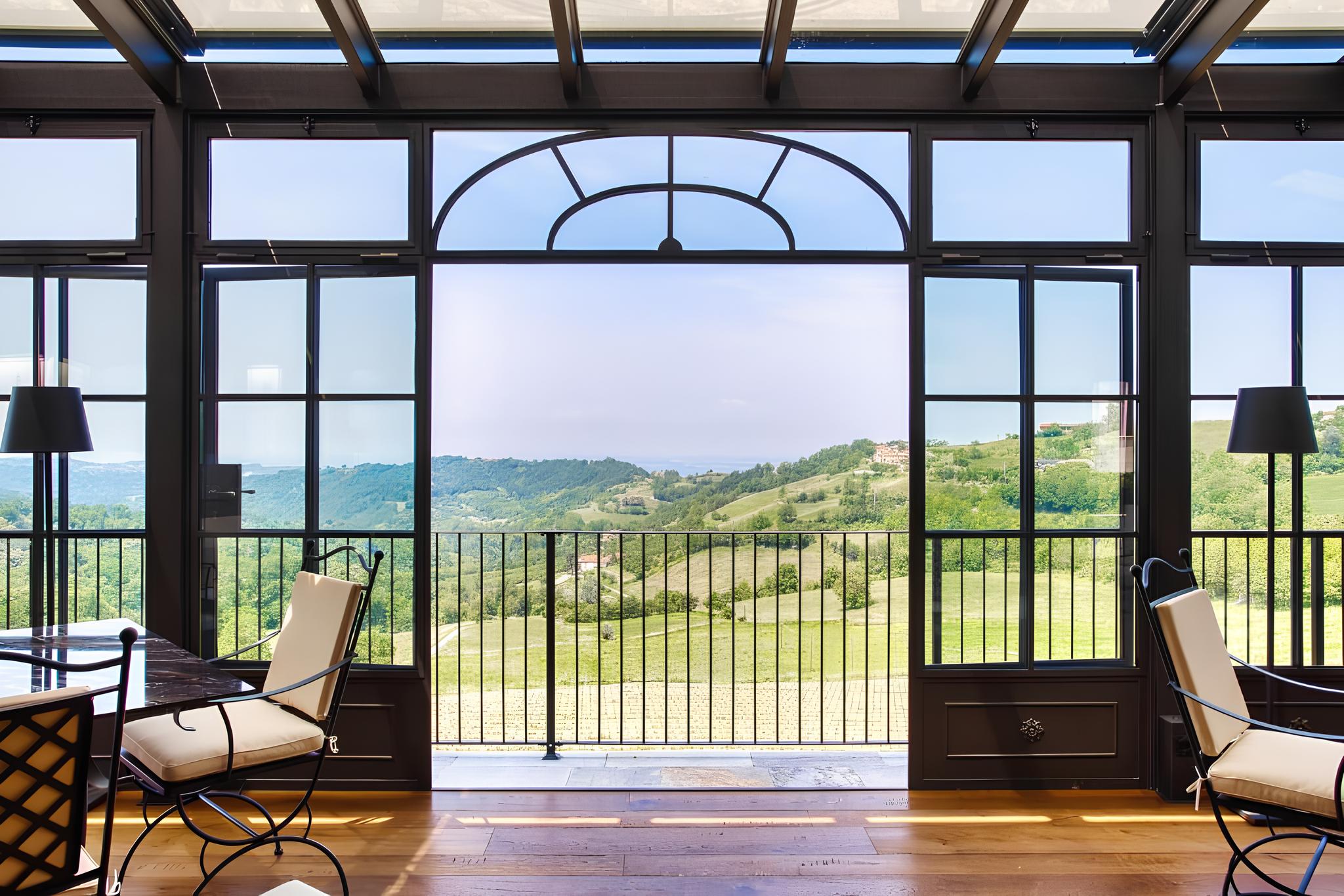
Nowhere has this played out more fully than in the wine country of central Italy, where the hotel, the farm and the restaurant have folded into a single organism. At COMO Castello Del Nero, a restored castle set among the vines and olive groves of the Chianti hills, the kitchen holds a Michelin star and cooks a Tuscan menu that reads almost as an inventory of the land immediately outside, the estate's own oil, herbs from its gardens, produce from the surrounding countryside. A guest who books a night here for the rooms alone has misunderstood the assignment. The dinner is the axis the whole stay turns on, and the setting exists to frame it.
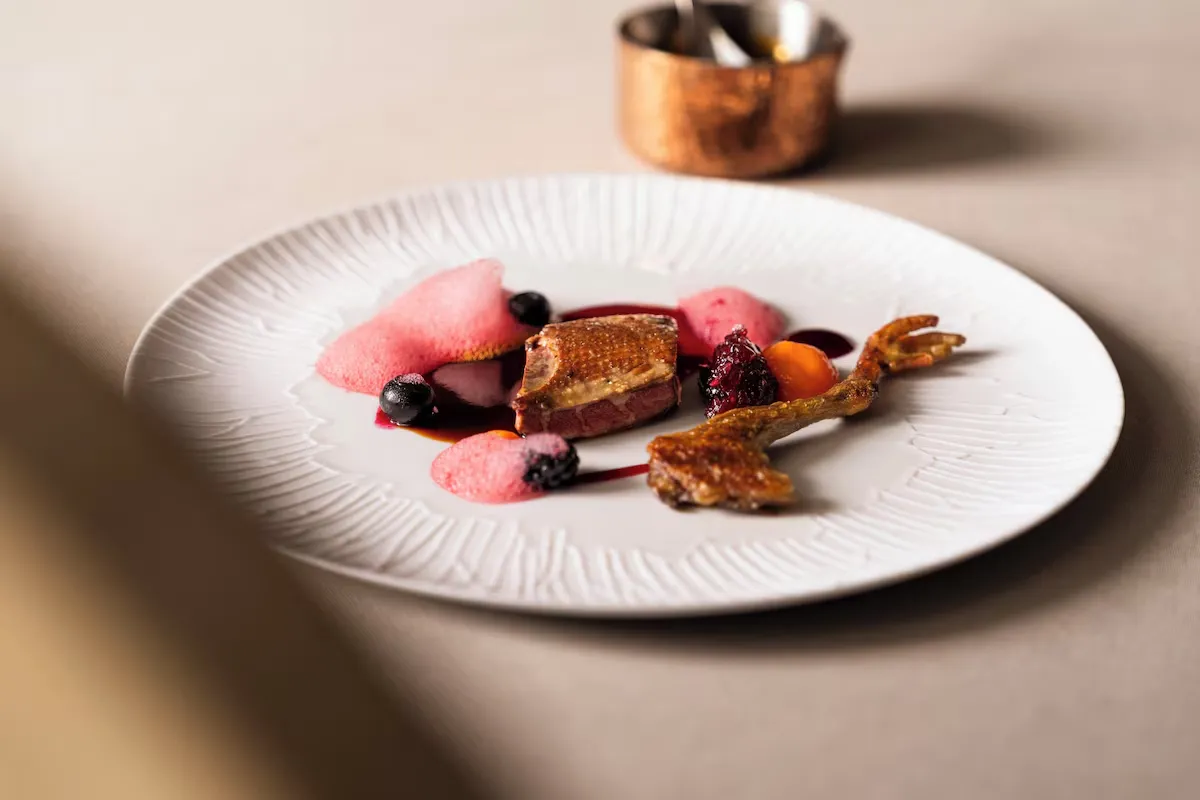
The same instinct, worked at a smaller and more intimate scale, animates Monteverdi Tuscany, a hamlet of restored stone houses in the quieter, wilder Val d'Orcia to the south. Here the cooking leans on the food of the immediate territory, the pecorino, the pork, the pici, the wild greens, treated with the seriousness usually reserved for grander cuisines. What both properties grasp is that in this part of the world a sense of place is not a marketing line but a recipe. The meal cannot be exported because half its ingredients grew within sight of the plate, and that inseparability from the ground is exactly what makes it worth the journey.
The great hotel dinner is the one meal that could not be served anywhere else. Its value is not the rarity of the ingredients but the impossibility of moving them.
The city table as landmark
Destination dining is not only a rural affair, a matter of vineyards and kitchen gardens. It works with equal force inside cities, where a hotel table can become one of the addresses that defines a district. In Florence, IL Tornabuoni Hotel sits on the city's most storied shopping street and lifts its dining above the rooftops, turning the meal into a way of seeing the place. The rooftop table does something a ground-floor restaurant cannot: it hands the diner the city itself as the final course, the domes and terracotta and evening light arranged as part of the service. The view becomes an ingredient, and the dinner becomes a reason to be in the building rather than merely near it.
The urban hotel table has a further advantage. In a city crowded with restaurants, a hotel that gets its dining right offers the rare combination of a serious kitchen and a very short walk home. The traveler who has spent the day on their feet can eat at a genuine destination and then climb the stairs, which sounds like a small thing until it has been experienced. The best city hotels have understood that convenience and ambition are no longer opposites, and that the guest who once left the building to eat well can now be persuaded to stay in it precisely because the building has become the best table in the neighbourhood.
Cooking inside the landscape
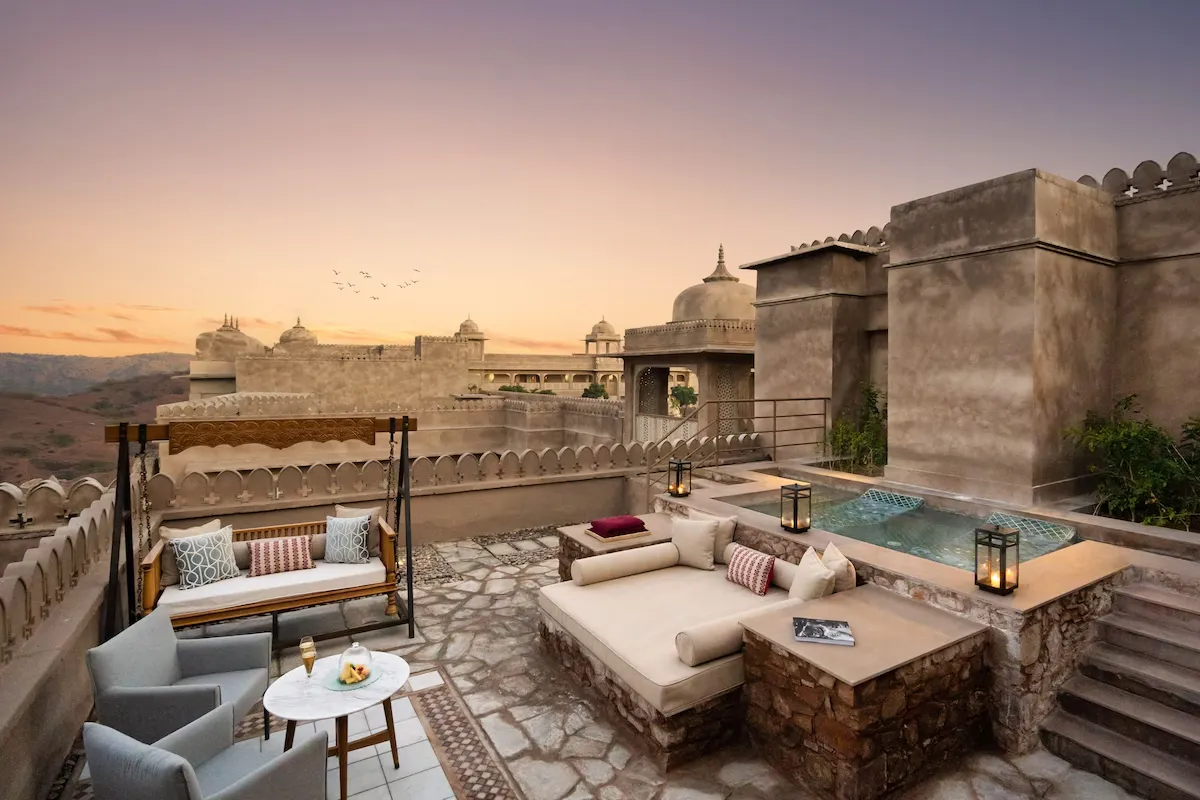
At the far edge of the idea sits a kind of hotel where the meal is inseparable not just from the region's produce but from the place itself, from the walls and the wilderness around them. Six Senses Fort Barwara, set inside a restored fourteenth-century fort in Rajasthan, serves Rajasthani cooking within stone chambers that were built for defence long before they were built for dinner. To eat here is to eat inside history, the flavours of the region delivered in a room that could not exist anywhere else, and the sense of occasion is not manufactured but structural. The architecture does half the cooking. A meal in a converted fort carries a weight that no purpose-built dining room can counterfeit.
Further east, Shinta Mani Wild pushes the setting to its limit, a tented camp threaded through the Cambodian forest where dining happens amid the trees and the river, the wilderness pressed right up against the table. This is destination dining stripped of its dining room altogether, the meal staged in the landscape it belongs to, so that the sound of the water and the dark of the canopy become as much a part of the evening as the food. The point of a place like this is not comfort in the conventional sense. It is that the memory of the meal is welded to the memory of the place, and neither can be recalled without the other.
The refinement of a single cuisine
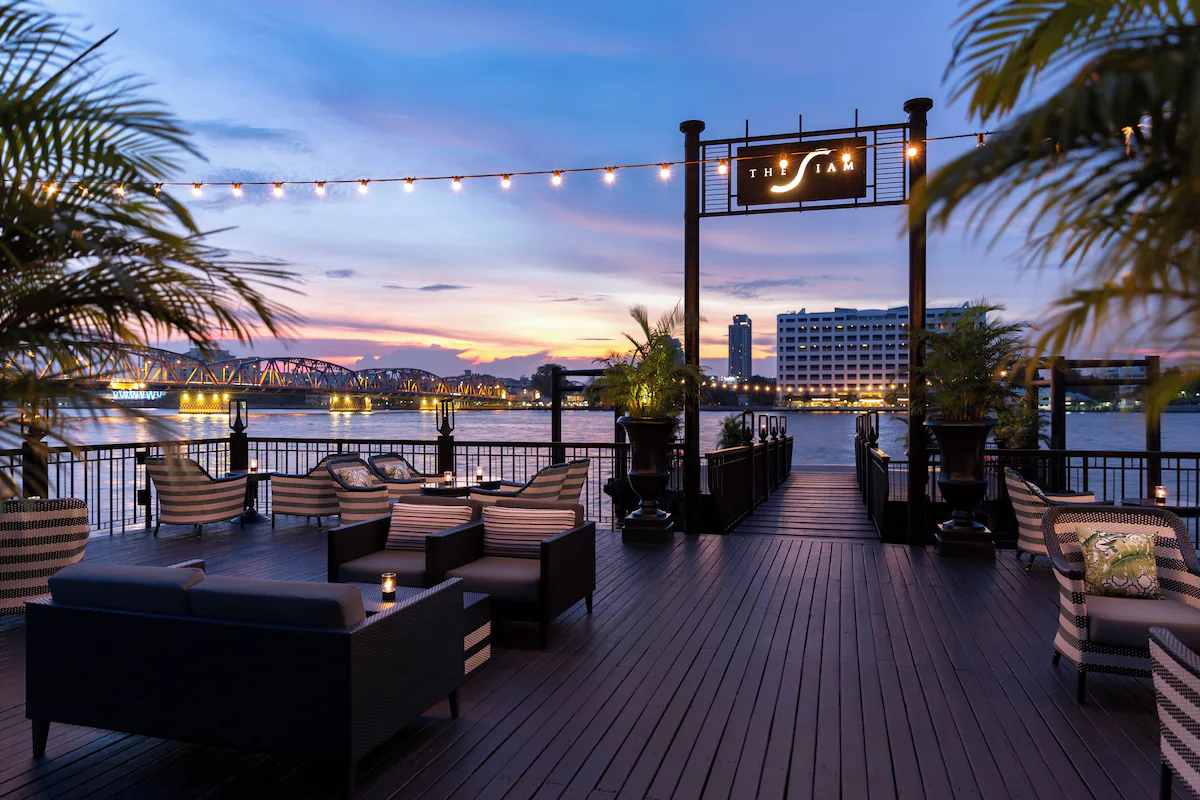
There is a quieter version of destination dining that does not reach for spectacle at all, and instead earns its reputation through sheer command of a single tradition. In Bangkok, The Siam holds an Art Deco riverside estate where refined Thai cooking is served with a precision that treats the national cuisine as the serious, layered thing it is rather than as a crowd-pleaser. A hotel like this proves that destination dining does not always mean invention or theatre. Sometimes it means taking a familiar cuisine and cooking it with such care and such respect for its own logic that the traveler realises they had never really tasted it before. Depth can be a destination in itself.
What unites these very different tables, the castle in Chianti, the fort in Rajasthan, the camp in the forest, the estate on the river, is a shared refusal of the old logic. None of them treats dinner as a service to be discharged. Each treats it as the reason the traveler came, and builds outward from that conviction. The rooms are excellent, the settings are extraordinary, but the centre of gravity has moved to the plate. These are not hotels that happen to have good restaurants. They are restaurants that happen to have rooms.
How to book a dinner worth travelling for
The traveler who plans a trip around a table learns a few things quickly. The first is that the best hotel restaurants are small, often much smaller than the hotels attached to them, and that the tables can sell out weeks before the rooms do. A booking secured months ahead is not caution but common sense. The second is that the tasting menu, where one exists, is usually the way the kitchen wants to be understood, the fullest statement of what the place can do, and skipping it in favour of a la carte can mean missing the argument the chef is trying to make.
The third lesson is about rhythm. A destination dinner deserves an empty evening around it, not a packed itinerary that arrives at the table exhausted and leaves it rushing for the next thing. The meal is the event, not an interruption of the day. Travelers who treat it that way, clearing the afternoon, dressing for the occasion, arriving unhurried and leaving late, tend to remember these dinners for years. Those who squeeze them between a tour and an early flight remember only that the food was good, which is a smaller and sadder thing to carry home.
Frequently asked questions
| Question | Answer |
|---|---|
| What does destination dining actually mean? | It describes a hotel whose restaurant has become the main reason to book, rather than a convenience for guests already staying. The meal leads the decision, so I might choose the hotel because of its kitchen and treat the room as a comfortable way to end the night, not the other way around. |
| Do I have to be a hotel guest to eat at the restaurant? | Usually not. Most serious hotel restaurants welcome outside diners and are keen to be seen as restaurants in their own right. That said, tables are often limited and guests may get priority, so booking well ahead matters more than whether or not I am staying the night. |
| Should I book the tasting menu in advance? | Yes, wherever the kitchen offers one. The tasting menu is normally the fullest expression of what the chef is doing, and the small dining rooms attached to these hotels can sell out weeks ahead. I would reserve the table when I book the trip, not after I arrive. |
| Is there a dress code at a hotel chef's table? | It varies with the setting. A Michelin dining room in a castle or a city landmark tends to expect smart dress, while a jungle camp or a beach estate is more relaxed by nature. When unsure, I check with the hotel, since the tone of the room is part of the experience they are trying to create. |
| How far ahead do these tables get booked? | For the smallest and most sought-after rooms, several weeks is normal and busy seasons can stretch that further. Because the restaurant is often smaller than the hotel, the dinner can be harder to secure than the bed, so I plan the table first and build the rest of the stay around it. |
| What makes a hotel worth booking just for dinner? | The clearest signal is a kitchen that expresses its place, cooking that could not be reproduced elsewhere because it draws on the estate, the region or the culture around it. A serious chef, a menu rooted in the landscape and a room designed around the meal rather than beside it are the marks of a genuine destination table. |
| Can I plan a whole trip around one meal? | Many travelers do exactly that, and these hotels are built for it. The trick is to give the dinner an empty evening, arriving unhurried and leaving late, so the meal becomes the event rather than a stop between other plans. Treated that way, a single dinner can anchor an entire journey. |
| Are these dinners suitable for a special occasion? | They are among the best settings for one. A restored fort, a candlelit rooftop over a historic city or a table set among the trees turns a birthday or an anniversary into something that stays in memory. Because the whole property is arranged around the meal, the sense of occasion tends to feel built in rather than added on. |
The old hotel dinner asked only to be forgotten, a meal to bridge the gap until morning. The new one asks to be the reason the traveler came at all. To book a room for the sake of a table is not extravagance. It is simply understanding, at last, where the journey was always heading.