The Sicily Food Trail: Five Hotels, Five Sicilies, One Long Table
Sicily is not a cuisine. It is five cuisines, separated by mountains, dialects, and a thousand years of overlapping invasions. The Greek east cooks differently from the Arab south. Taormina and Sciacca are only two hundred and forty kilometres apart but eat as if they were two countries. This trail follows that geography across the island in five stops, with one boutique hotel per stop, and a single thesis: Sicily eaten badly is Sicily missed.
Every regional cuisine in Italy has its layers. Sicily has more than most, because the island has been worked over by more invaders than any other part of the Mediterranean. The Greeks brought the olive and the vine in the eighth century before Christ. The Arabs brought citrus, rice, sugar cane, eggplant, and the pasta technology, between the ninth and the eleventh century. The Normans brought salt cod and pastry. The Spanish brought the tomato in the sixteenth century, four hundred years before the rest of Italy adopted it seriously. The French left ice cream and the croissant. Each layer is still visible on the table.
This is why the standard Italian guidebook chapter on Sicily fails. The chapter tries to describe one cuisine and ends up describing none. The trail below proposes a different structure: five regional stops, each with a single boutique base from the Top World Hotel Italian collection, each devoted to one of the island's five food cultures. Total length: ten to twelve nights. Direction of travel: counter-clockwise from the north-east, ending on the western coast.
01Five Sicilies, in brief
Before the trail itself, the framework.
The Etna East (Taormina, Catania, the slopes of Etna). The Greek inheritance, the volcanic soil, the lightest cooking on the island. Wine country in the proper sense, with serious red and white production from the high vineyards. Pistachio of Bronte, almond, sea-urchin from the rocky coast.
The Inland Centre (around the Madonie and Nebrodi mountains, the old latifondo estates). Sicily's continental food culture: cured meats, mountain cheeses, hand-cut pasta with ragù, slow lamb, the cooking the rest of the island ignores at its peril.
The Baroque South-East (Noto, Ragusa, Modica, Syracuse, the Vendicari coast). The most refined sweet tradition on the island, plus the cleanest fish cooking south of the strait of Messina, plus the Modica chocolate (cold-worked, granular, Aztec-influenced via Spain).
The Greek South (Agrigento, the Valley of the Temples, the inland Sicani hills). The most archaeologically Greek part of the island and one of the most quietly cooked. Couscous of fish, almond pastries, the strong influence of nearby North Africa.
The Arab West (Sciacca, Mazara del Vallo, Marsala, Trapani, the islands offshore). The most Arab-Sicilian table on the island, with the strongest fish-and-couscous tradition, the great desserts of Erice, and the Marsala wine country.
The five regions are connected by serviceable roads (around 60 to 90 minutes between each base) and one short flight if the start and end airports differ. The trail below uses both.
Five Sicilies, one long table.
| Stop | Base | Signature on the table | The wine |
|---|---|---|---|
| Etna East | Villa Fiorita (Taormina) | Pasta alla Norma, pistachio of Bronte, Ionian sea urchin | Etna Rosso, Carricante |
| Inland Centre | Relais San Giuliano | Black pig of the Nebrodi, caciocavallo, falsomagro | Cerasuolo di Vittoria, Nero d'Avola |
| Baroque South-East | Country House Villadorata (Noto) | Cannolo of Noto, Modica chocolate, Vendicari fish | Moscato di Noto, Frappato |
| Greek South | Doric Eco (Agrigento) | Couscous of fish, sarde a beccafico, almond pastries | Inzolia, Grillo |
| Arab West | Verdura Resort (Sciacca) | Mazara red prawns, Trapani couscous, Erice almond cookies | Marsala, Grillo of Marsala hills |
02When to go
The Sicilian table changes with the calendar more than any other Italian regional cuisine. Three windows are worth knowing.
April to early June is the strongest spring window. The new olive oil from the previous autumn is still at peak. Artichokes, fava beans, wild fennel, the spring vegetable cooking is at its most active. Sea is warming to swimmable by late May. Sicilian Easter (which moves) is the single best week for traditional cooking; the pastries alone justify the trip.
Mid-September to mid-November is the autumn equivalent. Grape harvest on Etna and in Marsala, the new wine pressings, the olive harvest from late October. The sea is still warm into early October. The southern temples are usable without summer heat. This is the trail's strongest single window.
Mid-December to early February is the quiet winter version. Almost everything coastal is closed except in the larger towns. The inland is at its most authentic, the citrus is at peak, the Sicilian Christmas and New Year cooking includes some of the year's best pastry work. The trail above can be compressed to three or four inland stops in winter, with the coast skipped.
Avoid mid-July to mid-August. The heat is genuinely punishing inland (regularly 40 degrees plus in the south and centre), the coast is crowded, and the producers are exhausted by their fourth straight week of high season.
03How to move
The trail uses a rental car. There is no honest alternative for inland Sicily. The autostrada network covers the perimeter (A18 east coast, A19 across the centre, A29 west), and the inland connections are smaller roads of variable quality. Allow more driving time than the kilometre count suggests; sixty kilometres on an inland road can take ninety minutes.
The right airports are Catania (CTA) in the east and Palermo (PMO) or Trapani (TPS) in the west. Open-jaw tickets are widely available and worth slightly more than round-trip into one airport, given the geography of the trail.
One practical detail. The Strada Statale network of Sicily has dramatically improved in the last five years, but the smaller Strade Provinciali connecting the inland villages have not. The drive from Noto inland to Modica is fast; the drive from Modica inland to Caltagirone is slow. Plan with this in mind.
Stop 1. The Etna East
Villa Fiorita Boutique Hotel, Taormina (two nights)
The place
Taormina sits on a terrace high above the Ionian sea, with Etna directly behind it. The town has been a tourist destination since the German romantics arrived in the late nineteenth century, which means it has had nearly two centuries to develop both its better restaurants and its tourist traps. Distinguishing between the two is part of the visit.
Behind Taormina, Etna is the working volcano of Europe, with the last serious eruption in 2024 and minor activity on a near-monthly basis. The volcano is also the most important Italian wine region of the last twenty years. The high vineyards on the slopes (between 600 and 1,000 metres) produce some of the most distinctive reds in Italy from the indigenous Nerello Mascalese and Nerello Cappuccio grapes, plus serious whites from Carricante.
The table
Etna cooking is the lightest on the island. The cuisine here uses less garlic and less heat than the rest of Sicily, leans on the volcanic vegetables (the mountain potatoes, the cabbage of the slopes), and gives serious attention to fish from the Ionian coast. The Taormina restaurants worth the visit are the small ones in the streets behind Corso Umberto, not the ones on it.
Three things to eat on this stop. Pasta alla Norma, the regional pasta dish (rigatoni with fried eggplant, tomato, ricotta salata, and fresh basil), invented in Catania and at its best in the small trattorie at the bottom of the Taormina cable car. Pistachio of Bronte, the indigenous green pistachio from the Etna slopes, used in everything from gelato to the cream-filled pastries called genovesi di Erice. Sea urchin from the rocky coast at Isola Bella, in season from October to April, eaten with bread and a glass of Carricante.
The hotel
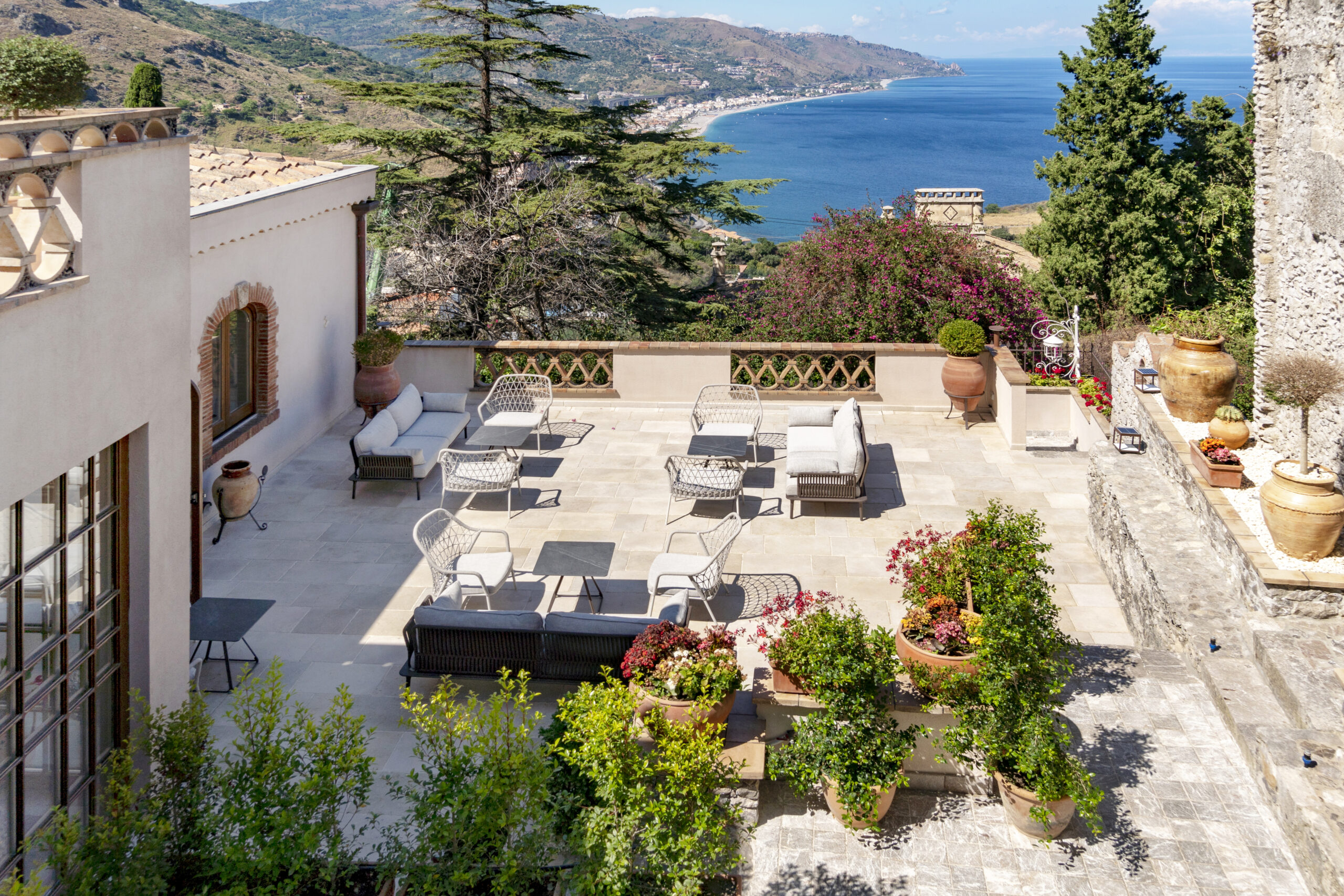
Villa Fiorita Boutique Hotel sits in the upper part of Taormina, on a quiet street away from the main tourist axis, in a restored historic villa with about twenty rooms. The position gives the property the two things that matter in Taormina: distance from the daytime crowds, and a view that includes Etna on the southern side and the Ionian on the eastern. The kitchen serves a regional Etna repertoire with strong wine pairings from the volcano's own producers (Passopisciaro, Tenuta delle Terre Nere, Pietradolce). The breakfast pastries are sourced from a small bakery in Castelmola, the village above Taormina.
Best for: the opening two nights of the trail, with Etna behind and the Ionian below.
Memorable detail: the morning view from the small breakfast terrace, when Etna is visible against the sky and the smoke from the crater catches the early light.
Stop 2. The Inland Centre
Relais San Giuliano (two nights)
The place
The interior of Sicily is the part of the island most travellers never see. The drive inland from Taormina, climbing through the eastern Nebrodi range, opens onto a landscape that has very little to do with the coastal image of the island: wheat fields, oak forests, working farms on the old estates, and small hill towns that have stayed at five thousand inhabitants for centuries. This is the Sicily of the latifondo, the historic agricultural Sicily, and it has its own table.
The table
Inland Sicilian cooking is heavier, more meat-driven, more focused on grain and dairy than the coast. The pasta is hand-cut and thick. The ragù is genuinely long-cooked (six hours in the proper version). The cheese culture is serious, with caciocavallo ragusano, mountain pecorino, and the rare provola dei Nebrodi all worth seeking out. The wines run heavily to Nero d'Avola from the southern slopes and to the inland Cerasuolo di Vittoria, the only Sicilian DOCG.
Three things to eat. Pasta con il maiale nero dei Nebrodi, the dish that uses the indigenous black pig of the mountains, slow-braised with onion and red wine, served with hand-cut maccheroni. Falsomagro, the inland Sicilian rolled stuffed beef, dating to the Bourbon period, with hard-boiled egg, cheese, and breadcrumbs inside. Aged caciocavallo, eaten at room temperature with the local black olives and a glass of Cerasuolo.
The hotel
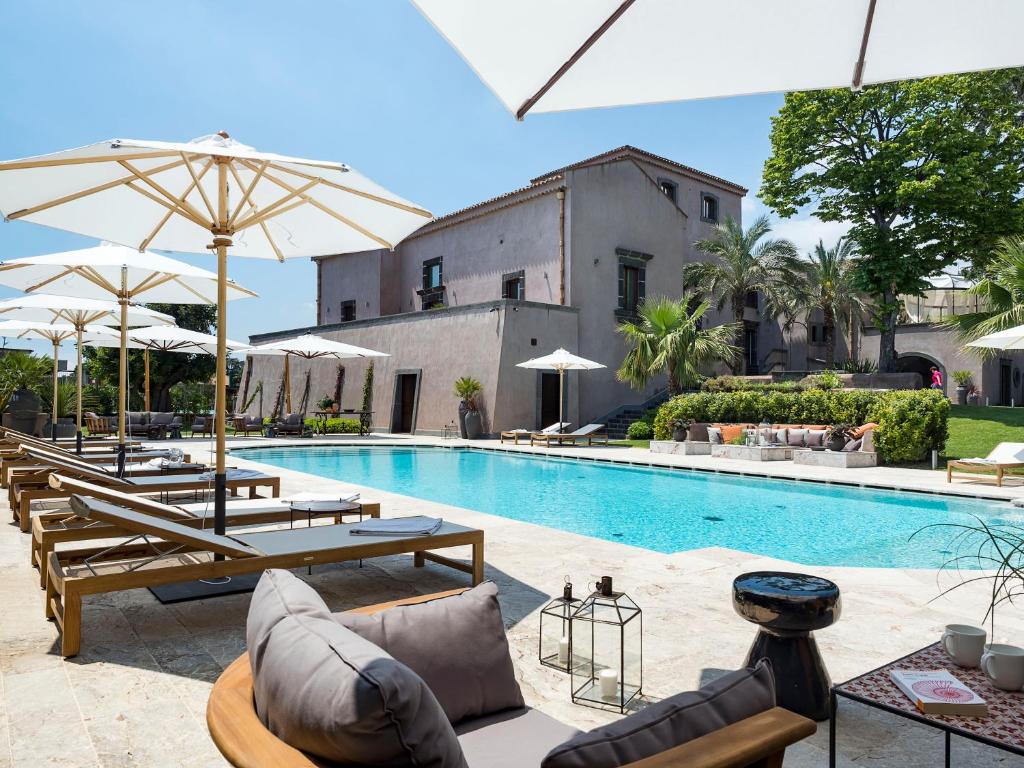
Relais San Giuliano sits in the heart of the inland landscape, in a restored country house with a small number of rooms and a kitchen that takes the inland repertoire seriously. The property runs its own garden and works directly with two surrounding farms for cheese, salumi, and the day's bread. Breakfast is served on the courtyard in the cooler months and in the shaded loggia in summer. The pace of the property matches the pace of the landscape: slow, with most guests staying at least two nights and many staying three.
Best for: the second leg of the trail, with the inland Sicily that most visitors miss.
Memorable detail: the evening aperitivo on the loggia, with the property's own oil drizzled on warm bread and a small plate of the local salumi.
Stop 3. The Baroque South-East
Country House Villadorata, Noto (two nights)
The place
The south-east corner of Sicily was destroyed by an earthquake in 1693 and rebuilt entirely in the late Sicilian Baroque style across a decade. The result is the most architecturally coherent urban landscape in southern Italy: Noto, Modica, Ragusa Ibla, Scicli, Catania, Caltagirone. Eight towns rebuilt in a single architectural language, in golden limestone, with the same generation of stonemasons working across all of them. UNESCO listed the area in 2002. The towns are worth half a day each.
This is also a particular food region. The south-eastern triangle has the strongest pastry tradition on the island, the cleanest fish cooking from the Vendicari coast, and the most distinctive chocolate culture in Italy (Modica, where the chocolate is made cold and granular, by a method that arrived from the Aztecs via the Spanish in the sixteenth century).
The table
The south-eastern table is built around three poles. The fish from the Vendicari coast, light and clean, often with citrus and capers. The pastries of Noto, including the cannolo in its proper southern version (the shell fried to order, the ricotta from the local sheep, no candied fruit). The chocolate of Modica, eaten plain, with the texture of fine sand and the original Aztec flavour profile (vanilla, cinnamon, chili in the more traditional versions).
Three things to eat. Pasta con le sarde, in the south-eastern version, with the wild fennel still growing in the Vendicari dunes. Cannolo di Noto, ordered at one of the two serious pasticcerie on Corso Vittorio Emanuele and eaten on the steps of the cathedral. Modica chocolate, ideally the cinnamon-and-chili version from Bonajuto, eaten the way it is meant to be eaten: slowly, at room temperature, with an espresso.
The hotel
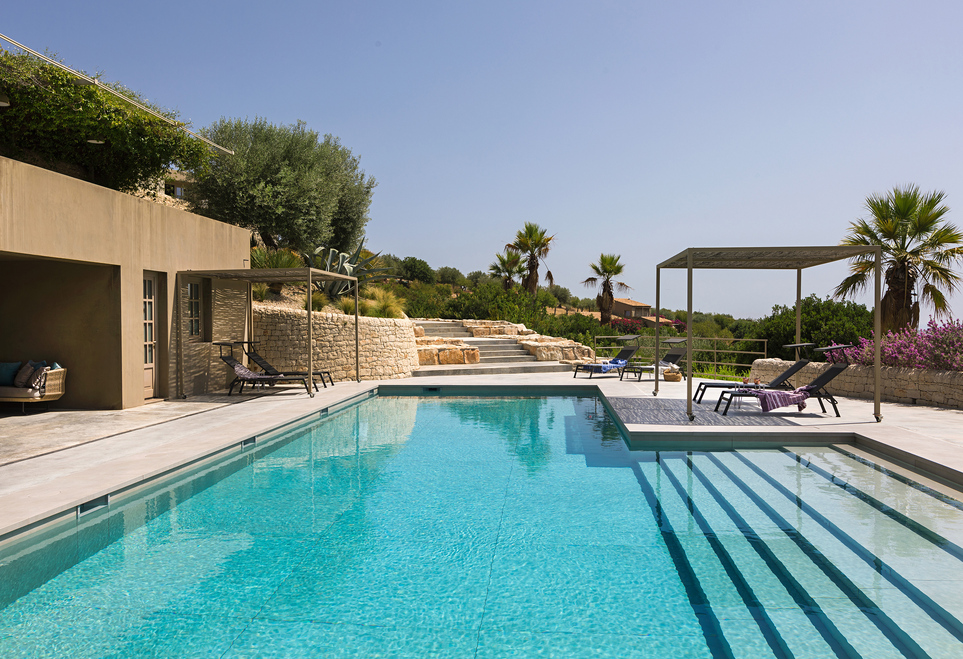
Country House Villadorata sits just outside Noto, in a restored country estate on the road that leads down to the Vendicari coast. The property is run by the Nicolaci di Villadorata family, whose Baroque palazzo on Via Nicolaci in Noto centre is one of the architectural anchors of the town. The hotel itself is the family's working country house, opened to guests, with a kitchen that runs on the produce from the surrounding land. The pool sits in the carob grove. The pace is unhurried.
Best for: the third leg of the trail, with the Baroque towns within reach and a serious kitchen on the property.
Memorable detail: the breakfast pastries delivered every morning from a small pasticceria in Noto town, served with the family's own marmalade made from the property's bitter oranges.
Stop 4. The Greek South
Doric Eco Boutique Resort & Spa, Agrigento (two nights)
The place
Agrigento sits on the southern coast facing North Africa, with the Valley of the Temples just below the modern town: the best-preserved Doric temples outside Greece, with the Temple of Concordia still standing nearly complete after twenty-five centuries. The Greek presence here was older and longer than in Taormina. The cultural inheritance reaches further down into the cooking.
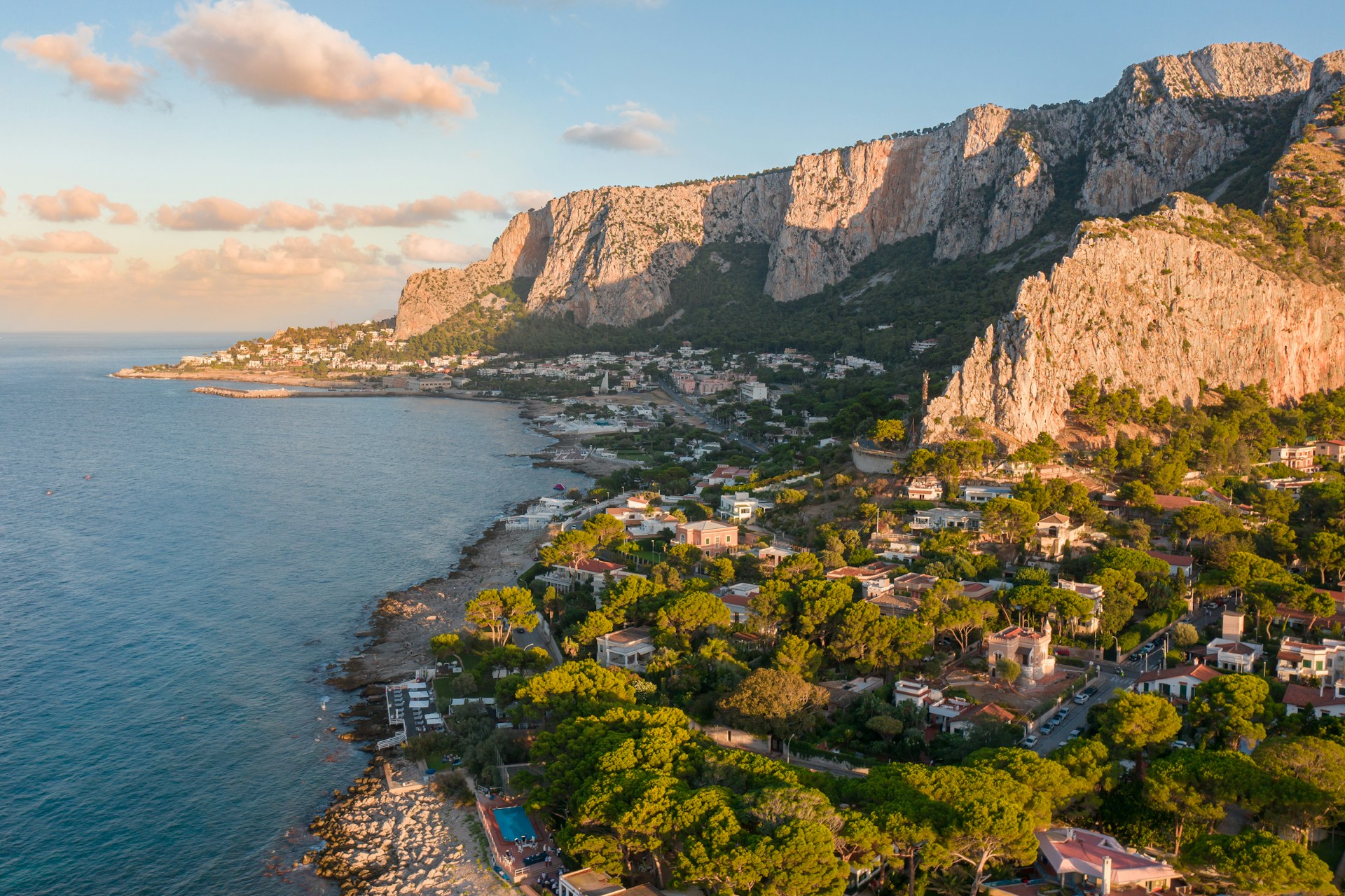
South of Agrigento, the coast is shorter and harder than further east, with the Scala dei Turchi, the white marl cliffs, and the small fishing villages of the Realmonte and Porto Empedocle coast. Inland, the Sicani hills run up toward the Madonie and contain some of the most archaically Sicilian villages on the island.
The table
The southern table here is the most Greek-Arab on the island. The use of almond, of dried fruit, of strong herbs, the importance of the couscous of fish (which has been traditional in Agrigento and Mazara for nearly a thousand years), the survival of dishes like the cuscusu of Agrigentine Easter. The bread tradition is also one of the best on the island: long-fermented, made with the hard wheat of the inland fields.
Three things to eat. Couscous di pesce all'Agrigentina, the local version with mixed fish broth, in season from spring through autumn. Sarde a beccafico, the rolled sardines stuffed with pine nuts and raisins, in the southern style with breadcrumbs that include orange zest. Almond cookies from the small pasticcerie of Aragona, an inland village half an hour north of Agrigento.
The hotel
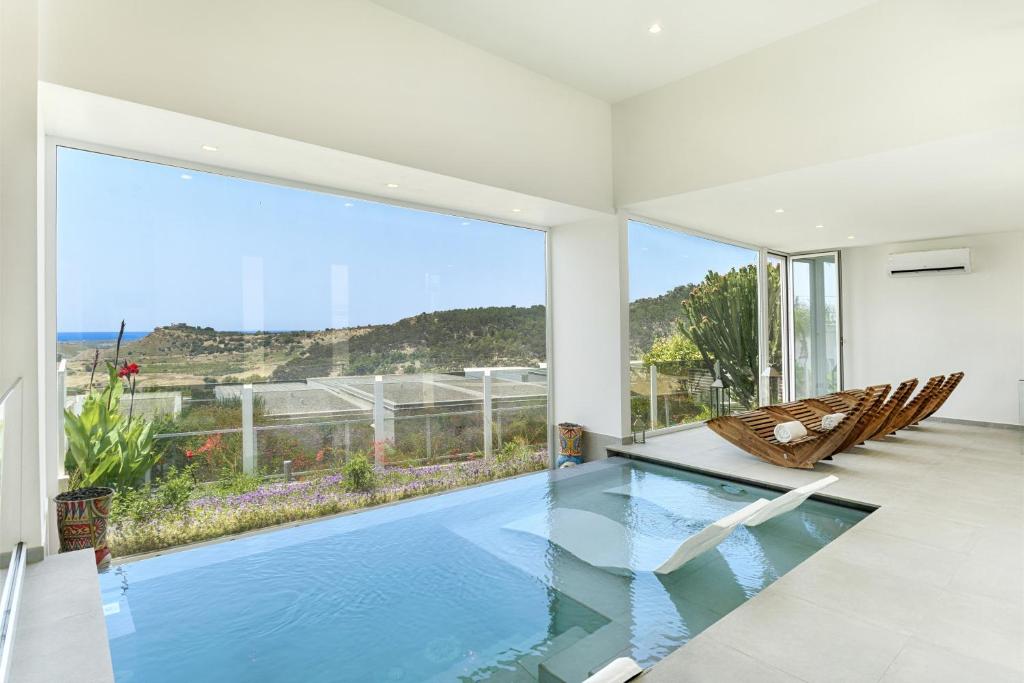
Doric Eco Boutique Resort & Spa sits just outside Agrigento, on a quiet stretch of coast within reach of the temples and the white cliffs. The property is built with an explicit ecological orientation: solar power, water-recycling, gardens of native Mediterranean herbs. The spa is one of the strongest on the southern coast, with treatments drawn on the local plant palette (almond, citrus, rosemary). The kitchen serves a southern Sicilian repertoire with strong attention to the fish from the local boats and to the bread programme from a single bakery in Aragona.
Best for: the fourth leg of the trail, with the Greek temples within walking range and the African influence on the table.
Memorable detail: the view from the spa terrace at sunset, when the southern light hits the temples and turns them, briefly, the colour of old amber.
Stop 5. The Arab West
Verdura Resort, Sciacca (three nights)
The place
The western corner of Sicily is the most North African part of Italy, in both the visual and the culinary sense. The fishing port of Mazara del Vallo, half an hour west of Sciacca, has had a working Tunisian community since the medieval period; the call to prayer can still be heard from the port. The salt pans of Trapani and the Marsala wineries close the western edge. The food culture is more Arab than anywhere else in Italy.
Sciacca itself is a working fishing town, with one of the largest fishing fleets on the southern Italian coast and one of the most underrated old towns on the island. The Baroque centre is smaller than Noto's but lived-in rather than restored-and-rented.
The table
The western table is the most Arab-Sicilian on the island, with the strongest cuscusu tradition (the version with mixed fish, served in Trapani and Mazara), with serious work on raw fish (the crudo tradition of the Mazara prawns is one of the high points of Sicilian seafood), and with the great Marsala wines on the dessert side. The almond pastries of Erice, the small hill town above Trapani, are the closing high point of the trail: nearly five hundred years of cloistered nun-pastry tradition still alive in the Pasticceria Maria Grammatico.
Three things to eat. Cuscusu di pesce, in the Trapani version, with the broth of mixed Mediterranean fish served separately from the grain. Mazara red prawns (gambero rosso di Mazara), eaten raw with sea salt and lemon, at one of the small restaurants on the Mazara port. The almond pastries of Erice (the genovese with cream, the belli e brutti), eaten at Maria Grammatico's with an espresso, on the terrace looking across to the salt pans of Trapani.
The hotel
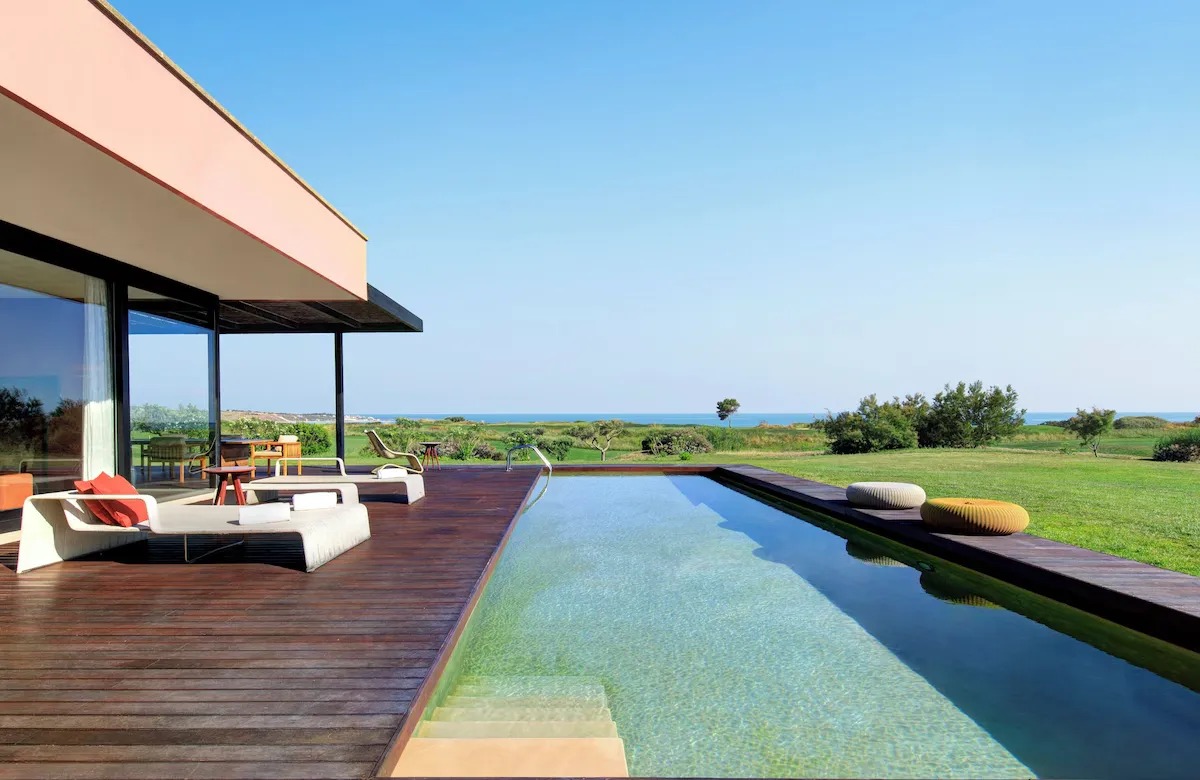
Verdura Resort sits on the coast just outside Sciacca, on a two-kilometre stretch of private beach with three golf courses behind it. The property is the largest of the five on this trail and the only one with the full resort vocabulary, but the kitchen takes its position seriously: three restaurants, all working with the daily fish auction at Sciacca port, with one (Buongiorno) running a tasting menu that surveys western Sicilian cooking across ten courses. The spa is among the strongest in Italy, with thalassotherapy treatments using the western coast's seawater and a long olive-oil ritual using the property's own oil.
The closing three nights at Verdura are the relaxed pause of the trail, with the dense inland stops behind and the western table at its most refined.
Best for: the closing three nights of the trail, with the most Arab table on the island and the longest beach on the southern coast.
Memorable detail: the lunch on the beach club terrace, with the chef's daily plate of raw Mazara prawns and a glass of Grillo from the Marsala hills above.
04The Long Table
The trail above runs eleven nights across the island, with five stops, four short transfers and one long one (the drive from Agrigento west to Sciacca, which is the longest single leg at around 130 kilometres). The shape of the journey is counter-clockwise: north-east, centre, south-east, south, west. The shape of the table moves correspondingly: from the lightest cooking of the Etna east to the most Arab cooking of the western coast.
What survives of the trail, after the return home, is rarely a single meal. It is the shape of the island that emerges, with food as the legend on the map. The Greek light at Taormina. The mountain ragù in the centre. The cannoli of Noto and the chocolate of Modica. The couscous of Agrigento. The almond pastries of Erice, eaten on the last afternoon of the trip with a glass of Marsala. Five Sicilies, one long table.
05The eleven-night structure, at a glance
- Day 1: arrive Catania, transfer to Villa Fiorita in Taormina.
- Days 2 to 3: Taormina, with one full day on Etna for the wineries.
- Day 4: drive inland to Relais San Giuliano (around 90 minutes).
- Days 5 to 6: inland centre, with one half-day in the Madonie villages.
- Day 7: drive south-east to Country House Villadorata, Noto (around two hours).
- Days 8 to 9: Noto base, with half-days in Modica, Ragusa Ibla, and the Vendicari coast.
- Day 10: drive west to Doric Eco, Agrigento (around two hours).
- Days 11 to 12: Agrigento, with the temples and the Sicani inland.
- Day 13: drive west to Verdura Resort, Sciacca (around 90 minutes).
- Days 14 to 16: closing three nights at Verdura, with day trips to Mazara, Erice, and Marsala.
- Day 17: depart Palermo or Trapani airport.
For a shorter version, the inland centre stop can be cut to one night and the Agrigento stop to one night, bringing the trail to nine nights total with five stops.
06Clichés worth correcting
"Sicilian food is heavy." Sicilian food can be heavy, in its mountain and inland forms. Coastal Sicilian cooking, particularly in the south-east and the Etna east, is among the lightest in southern Europe. The cliché reflects bad restaurant Sicily, not real Sicily.
"Sicily is one cuisine." Sicily is five cuisines (see the framework at the top of this guide). Treating it as one is the most common mistake in the international writing about the island.
"Cannoli are best in Palermo." Strong opinions here. The Palermo cannolo is the best-known version but not the best. The Noto and Catania cannoli, made with the morning ricotta and the shell fried to order, are the serious versions of the dish.
"You should drink Nero d'Avola with everything." The work of the last twenty years on Etna has produced reds and whites at a different level. Nero d'Avola from the south remains excellent but is no longer the only serious Sicilian wine.
"Sicily in summer." The standard idea, and the wrong window for the table. Spring and autumn are when the Sicilian kitchen is at peak. Summer is when it tries to feed three times the population it was designed for.
07Frequently asked questions
| Question | Answer |
|---|---|
| When is the best time to visit Sicily for food? | Mid-September to early November is the strongest single window, with grape and olive harvests, autumn vegetables, and the sea still warm into early October. April through early June is the spring equivalent. Avoid July and August. |
| How long do visitors need for the food trail? | The full trail runs eleven nights across five stops. A shorter version can compress it to nine nights with single-night stays at two of the inland stops. Less than seven nights is not enough to see more than one or two Sicilies. |
| Do travellers need a rental car in Sicily? | Yes. The inland Sicily on this trail is not reachable meaningfully by train. A compact car is the right choice for the inland roads. Allow more driving time than the kilometre count suggests. |
| Is Sicily safe? | Yes. Common-sense precautions in Palermo and Catania (valuables, parking) apply. The inland and the smaller coastal towns are calm at all hours. The mafia narrative familiar from international press is not the experience of contemporary travel. |
| What about Palermo? | Palermo deserves a separate two-night urban stop, ideally at the end or the start of the trail above. The street food (the arancina, the panelle, the pani ca' meusa) is some of the best in southern Italy, and the Capo and Vucciria markets are essential. Adding two nights at the start, before the drive to Sciacca, is the cleanest structure. |
| What about the Aeolian islands? | The seven small volcanic islands north of Sicily are a separate trip. They are reachable by ferry from Milazzo on the northern coast and worth a four-to-six-night extension. The food culture is its own (capers from Salina, sweet Malvasia wines, fish from the local boats), and the geography is different from the mainland. |
| How does Sicily compare to Puglia for food travel? | Puglia is structurally simpler: one regional cuisine with northern and southern variants, vegetable-forward, with strong dairy. Sicily is structurally more complex: five regional cuisines, each with its own outside influence, with the deepest layering in Italy. Both reward slow travel. Sicily rewards a longer trip. |