The Complete Guide to Puglia in 2026: Where to Stay, When to Go, What to Drive
Puglia is two regions in one. The first is the Trulli country of Alberobello and Polignano, photogenic and well-known. The second is the Salento, the heel itself, slower and less obvious. This guide covers both, with six boutique hotels across eight towns, honest road notes, food advice from people who actually live there, and the things the internet keeps getting wrong.
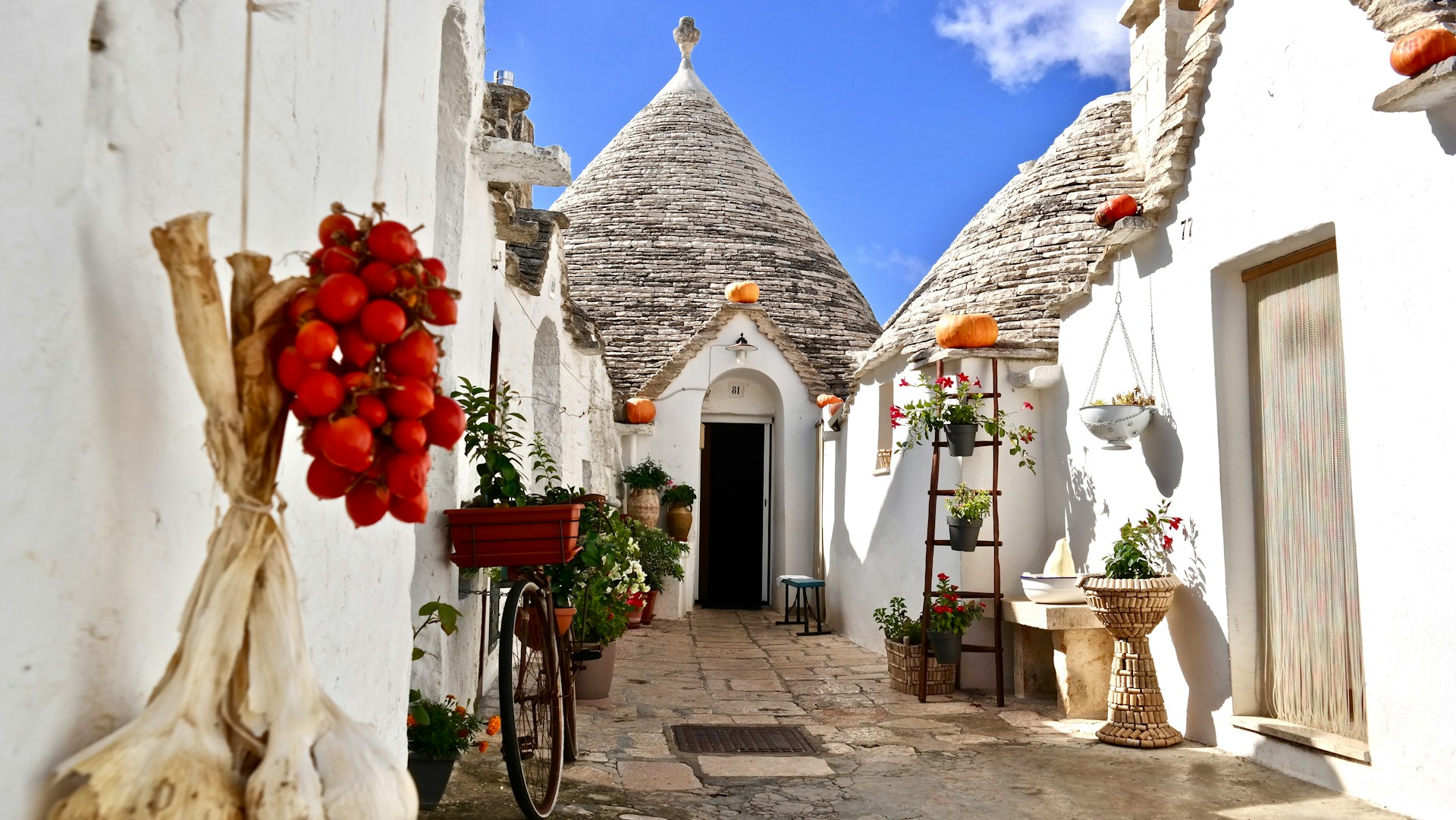
The first thing to understand about Puglia is that it is not one trip. It is at least two. The northern half, broadly the area around Bari, Polignano a Mare and the Valle d’Itria with its trulli, is what most international travellers picture when they think of Puglia. The southern half, the Salento, is the long flat peninsula that runs from south of Lecce all the way to the lighthouse at Santa Maria di Leuca, where the Adriatic and the Ionian meet.
The two halves feel like different countries. The food is different (you eat more fish and more raw seafood in the Salento, more dairy and more bread in the north). The dialect is different. The architecture is different. Even the light is different, harder and whiter in the Salento, more golden in the trulli country.
A first trip of seven to ten days can cover both halves if planned well. A first trip of four to five days should pick one. This guide is built to help you make that decision, and then make the choices inside it.
We have organised what follows into seven sections: when to go, how to get there, how to move around, where to stay (the six hotels, with our notes), what to eat, the clichés to avoid, and a final FAQ.
01When to go
The honest answer surprises people. The best months for Puglia are not July and August.
May, June, mid-September and early October are the strongest windows. The sea is warm enough from late May onward (around 21 to 23 degrees) and stays warm through mid-October. The temperatures inland are pleasant, in the high twenties most days, cool at night. The towns are not yet (or no longer) full of domestic Italian tourism, the masseria restaurants take reservations the day before instead of two weeks ahead, and the small road that runs past the olive groves is yours to drive at your own pace.
July and August are difficult in two specific ways. The first is heat: temperatures regularly hit 38 to 40 degrees inland in the late afternoon, which means most of the day is unusable for driving or walking, and you end up moving only at the bookend hours. The second is volume: this is when most Italians take their summer holidays. The beaches that look empty in May fill quickly. The same masseria that has a table free for dinner in June has a three-week waiting list in August.
November through February is the quiet, atmospheric, slightly melancholy version of the region. Many of the smaller masserie close completely, some larger ones operate at reduced service. The food is at its best (the new olive oil, the citrus, the artichoke season), and Lecce in winter is an experience entirely different from Lecce in July, with empty piazze and the limestone façades softened by a less aggressive light. We recommend it for the second or third visit, when you already know the region.
Easter through May is a wild-card window. Particular years have spectacular weather and almost no crowds; particular years have one cold rainy week. If you have flexibility, watch the forecast in the two weeks before departure.
02How to get there
The two main airports for Puglia are Bari Karol Wojtyła (BRI) in the north and Brindisi Salento (BDS) in the south. Both are served by direct flights from most major Italian cities, from London, Paris, Brussels, Amsterdam, Munich, Vienna, and a handful of seasonal routes from further afield.
Choose the airport based on where your first night is. If you are starting in the trulli country or around Polignano, fly into Bari. If you are starting in the Salento, fly into Brindisi. The drive between the two airports is just under two hours on the SS16, and most of our guests do a multi-stop trip that starts at one airport and ends at the other.
For the higher-end traveller, a third option is to fly into Naples (NAP) and drive across, or to take the Frecciarossa high-speed train from Rome, Milan or Bologna to Bari (4 to 6 hours from Rome and Bologna respectively). The train arrives in central Bari and you pick up a rental car at the station car-rental desks. The whole experience is more pleasant than the equivalent connecting flight from northern Europe via Rome.
Avoid arriving in Puglia in the middle of the day in summer. The first hour of driving in 38-degree heat with a full car and unfamiliar roads is not the way to start a trip. Arrange your flight or train so that you arrive in the morning or in the evening.
03How to move around
Hire a car. There is no honest alternative for Puglia. The towns are spread out, the masserie are by definition rural, the smaller coastal villages are not reachable by train, and the bus network is thin outside the cities.
A few practical points that the internet underplays.
Choose a compact car, not a large SUV. Many of the historic centres (Lecce, Gallipoli, Ostuni, Otranto) have narrow streets with strict ZTL (limited traffic zones), and parking outside the walls is plentiful for small cars but tight for large ones. A Volkswagen Polo or Fiat Panda is more comfortable in practice than a Land Rover.
ZTL is real and the fines arrive months later. The historic centres are closed to non-resident traffic during most hours. If your hotel is inside a ZTL, the staff will register your plate at check-in so you can drop off luggage; outside that window, park in the parcheggio outside the walls and walk. Driving into a ZTL by mistake will produce a 90 euro fine that lands on your home address six weeks later via the rental company.
The SS16 is your spine. Most of the meaningful drives in Puglia are along the SS16 (the main coastal route) or the SS101 (Lecce to Gallipoli) or the SP122 and SP123 (the small Salentine country roads between Otranto and Santa Maria di Leuca). All paved. All easy. None of them dramatic the way alpine roads are dramatic. The pleasure is in stopping, not in driving.
Petrol is cheaper at the self-service pumps off the highway. The motorway Autogrill stops are convenient but more expensive. Fill up before the motorway if you can.
04Where to stay
Six boutique hotels from the Top World Hotel collection, sorted from north to south. We have stayed at each one in the past eighteen months.
Mastropà Exclusive Resort, Massafra (Trulli country)
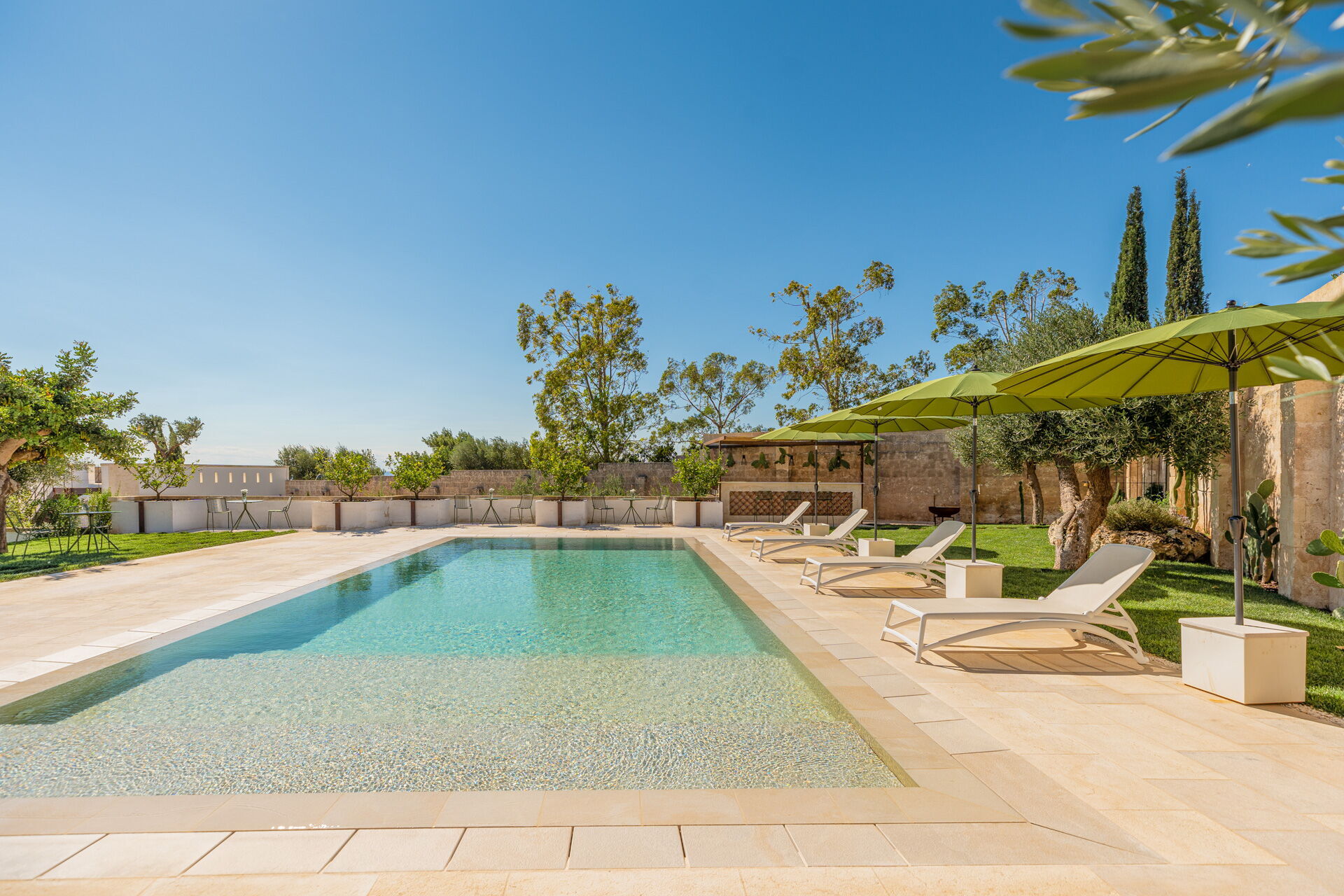
The northernmost property in this guide. Massafra is a small town on the southern edge of the Murgia plateau, about an hour southeast of Bari. The area is technically not classic Trulli country (which is concentrated around Alberobello, Locorotondo and Cisternino), but it shares the architectural family: limestone walls, vaulted ceilings, courtyard logic.
Mastropà is a restored masseria converted into a small resort with about twenty suites organised across the main farmhouse and several smaller outbuildings. The materials are honest: lime plaster, tuff stone, terracotta floors. The pool is set into the original threshing yard. The kitchen leans heavily on the inland Apulian repertoire: fave e cicoria (broad beans with chicory), orecchiette con cime di rapa (the regional pasta), local cheeses including the local cacioricotta of the Murge area.
What makes Mastropà unusually well-positioned: it is within an hour’s drive of Matera (the cave city in Basilicata, technically just over the regional border) and also within an hour of Polignano a Mare and the coast. If you are planning a single base for the northern Puglia leg, this is one of the strongest choices.
Best for: travellers who want a single inland base for the northern Puglia leg with easy access to Matera, Polignano, and the trulli area. Price range: From around €280 per night in May. Memorable detail: The breakfast spread at Mastropà includes seven kinds of homemade jam from the property’s own fruit, including a fig-and-walnut combination that we still think about.
Palazzo del Corso, Gallipoli (Ionian coast)
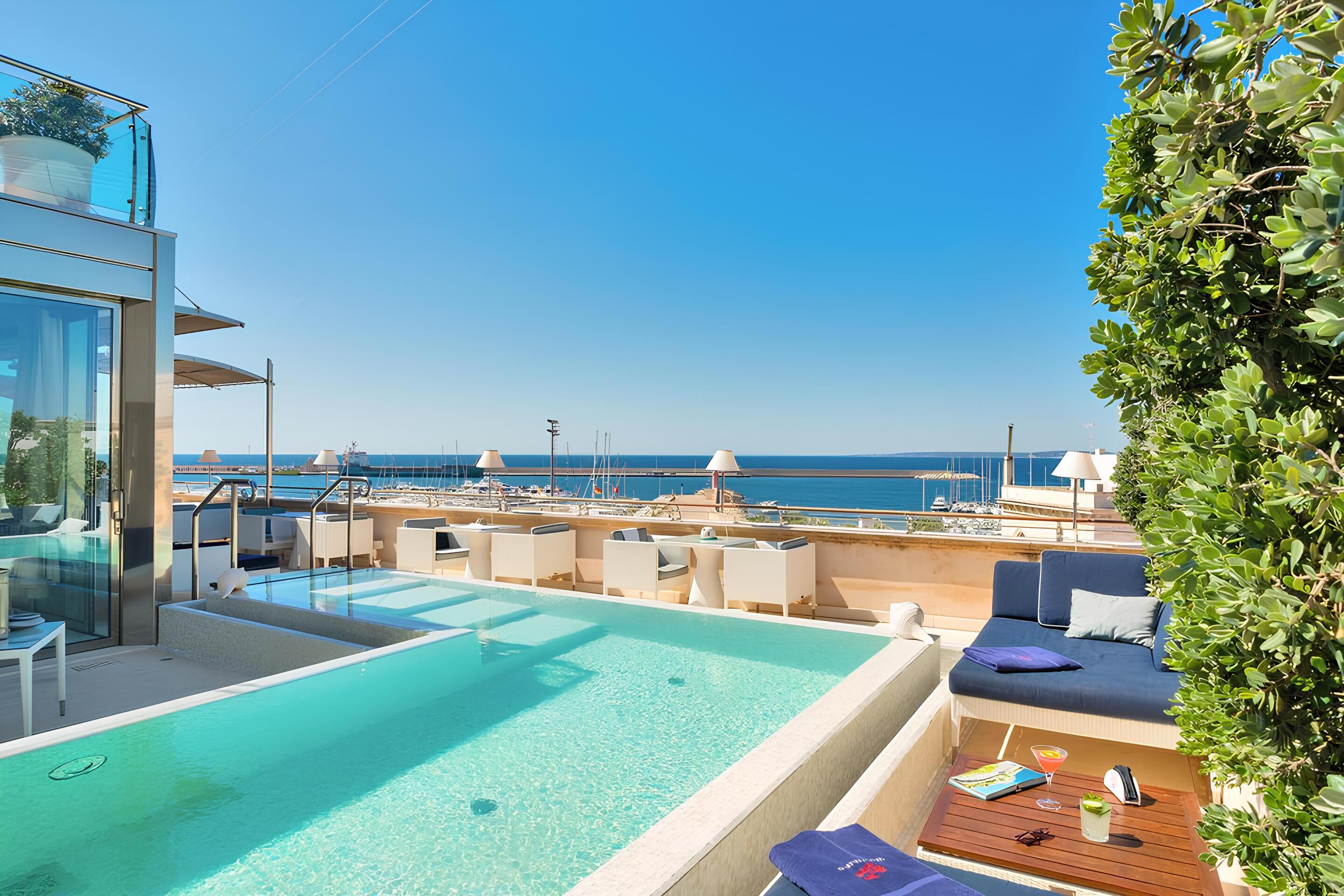
Gallipoli is the white-walled fishing town on the Ionian side of the Salento. The old town is a small island connected to the mainland by a single bridge, and the experience of staying inside the walls is unlike staying in any of the other Salento towns. The streets are narrow, the sea is everywhere, the fishing boats come in at four in the morning, and the daily auction at the mercato del pesce is one of the better small-town spectacles in southern Italy.
Palazzo del Corso is on the corso itself, the main street of the old town, in a restored historic palazzo. The hotel is small, twelve rooms, organised around a small lift and a roof terrace that has one of the best sunset views in the Salento (the Ionian goes red, then purple, then dark). The interiors are restrained, baroque architecture left to speak for itself, white linen on the beds, contemporary bathrooms.
Best for: travellers who want the Salento coast experience, plus the small daily theatre of a working Mediterranean fishing town, plus the rooftop sunset. Price range: From around €260 per night in May. Memorable detail: The rooftop service brings sea urchin (when in season, October to April) and a bottle of cold Salentine bianco without you having to ask, after you have been at the hotel for two nights.
Masseria Corsano, Nardò (inland Salento)
Nardò is a small inland Salentine town that most international travellers skip. This is exactly why staying near it is interesting. The countryside between Nardò and the coast is gentle, low, with stone walls running between olive groves and the occasional small white village. There is almost no signage in English. The pace is slower than the coast.
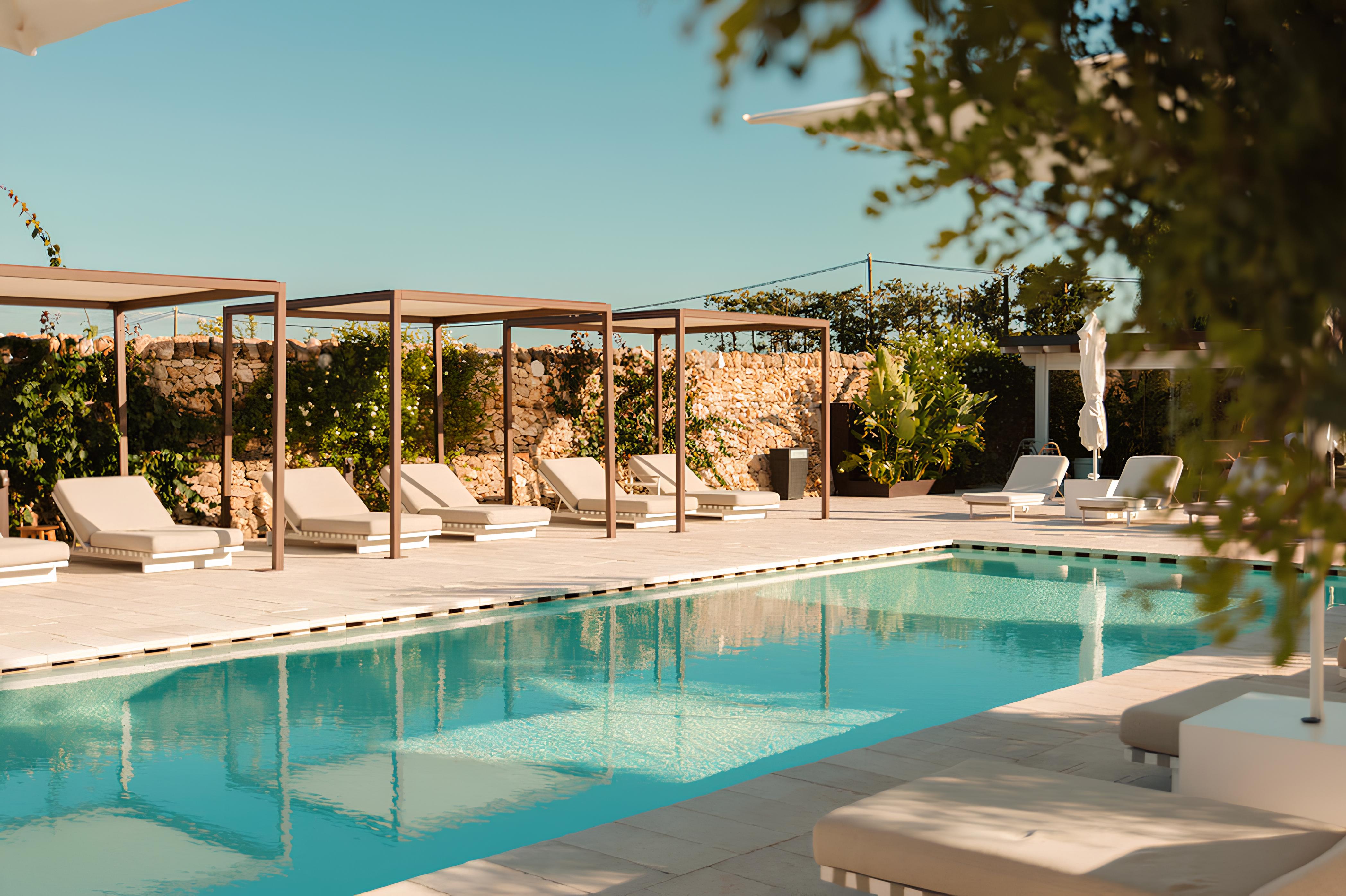
Masseria Corsano is a working olive estate restored as a small luxury masseria. The architecture is the classic masseria of the Salento: a long low building with a central courtyard, vaulted ceilings, lime-washed walls, a kitchen with a wood-burning oven that is in use every day. The pool is set in the olive grove, not next to the building.
The food at Corsano is among the best masseria kitchens we know. The chef cooks the regional repertoire seriously: taralli with fennel and white wine, pittule (fried dough balls), purè di fave with sautéed cicoria, the parmigiana di melanzane in the southern style with grated ricotta forte. The oil at table is the estate’s own.
Best for: travellers who want the inland Salento experience and good food more than the coast, and who plan to base themselves for several days at one property. Price range: From around €310 per night in May. Memorable detail: The estate’s evening aperitivo on the roof, with their own oil drizzled on warm focaccia and a small glass of their unfiltered rosé.
Masseria dei Monaci, Otranto (eastern Salento)
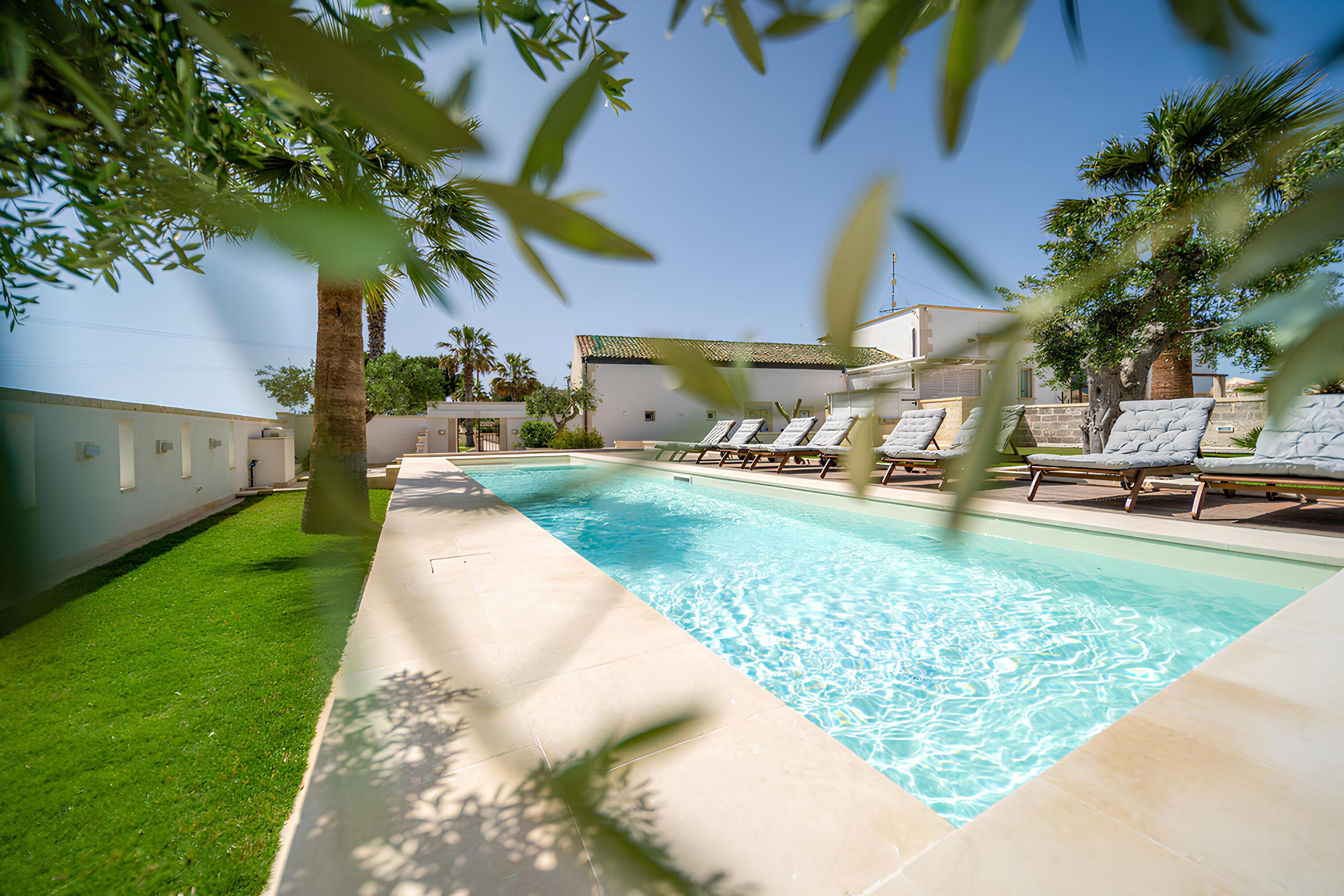
Otranto sits on the Adriatic side of the Salento, the easternmost town of the region. It is a small fortified town with a beautiful Norman cathedral whose floor is one continuous twelfth-century mosaic. The coastline north and south of Otranto, the Costa Otrantina, is the most dramatic of the Salento: small bays, sea caves, the lighthouse at Punta Palascìa which is the easternmost point of mainland Italy.
Masseria dei Monaci sits in the country side outside Otranto, in an estate that includes its own bay. The hotel is small, sixteen suites, with a wellness centre and a kitchen that uses the property’s own fish (caught from the bay) and vegetables (grown on the estate). The aesthetic is calm and contemporary inside a historic shell.
Best for: travellers who want the dramatic coast of the eastern Salento with a private cove of their own. Price range: From around €340 per night in May. Memorable detail: The path that runs from the property down to the bay, through a stretch of Aleppo pines that smell of resin in the heat. Ten minutes of walking and you are in private salt water.
Don Totu, San Cassiano (Salento entroterra)
San Cassiano is a small village of about two thousand people, in the very deep south Salento, near the road that runs from Otranto down toward Castro Marina. There is no reason to be in San Cassiano unless you are at Don Totu, or unless you stop for coffee on your way somewhere else. This is the point.
Don Totu is a small dimora storica in the centre of the village, a restored seventeenth-century house with seven suites. The owner is in residence. The kitchen serves breakfast in the courtyard and a small two-course dinner most evenings, in the family living room which has been opened to guests, on a long shared table. The cuisine is Salentine domestic: the food the family eats. Many of the recipes were the owner’s grandmother’s.
This is a property to choose when you want to disappear from your normal life for a few nights. There is no spa, no pool, no “concierge service”. There is a quiet village, a careful house, food made by people who care, and the deep south of the Salento half an hour in any direction.
Best for: travellers prioritising authenticity, owner-led hospitality and silence over amenities. Not for everyone. Price range: From around €240 per night in May. Memorable detail: The corner of the courtyard at six in the evening, when the sun goes behind the wall and a small breeze starts, and you are the only guest left at the long table with the last glass of primitivo.
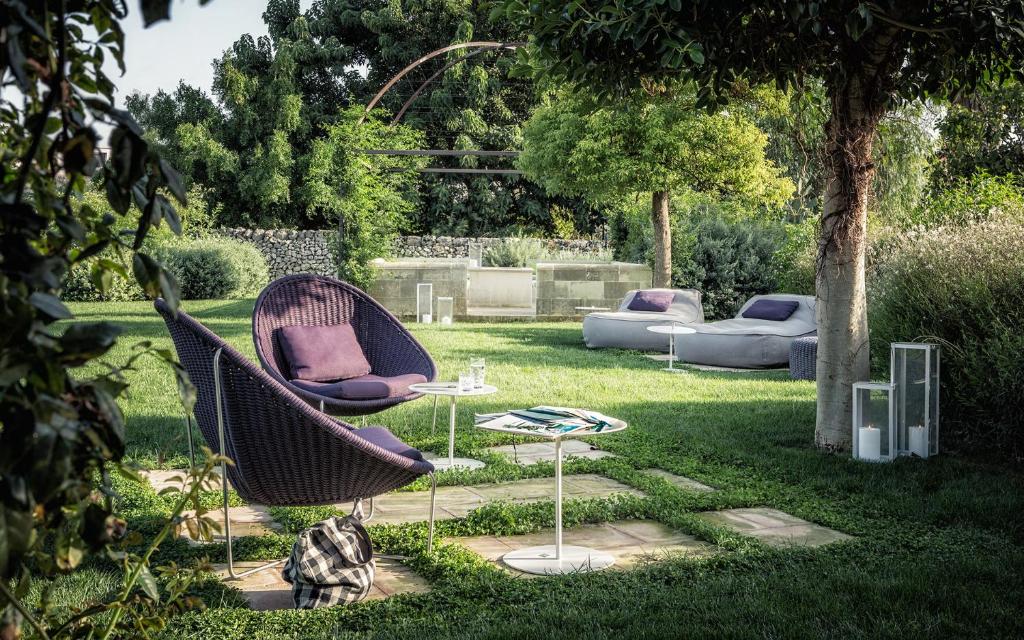
Palazzo Lecce, Lecce (capital of the Salento)
Lecce is the cultural capital of the Salento, often called “the Florence of the south” for the density of its baroque architecture. The historic centre is a continuous theatre of carved limestone façades. Walking it in the evening, when the limestone catches the warm afternoon light, is the single most photogenic urban experience in the south of Italy.
Palazzo Lecce is a restored historic palazzo in the centre, with about ten rooms inside a single sixteenth-century building. We wrote about this hotel in our piece on Italian heritage palaces; we mention it again here because in the context of a Puglia trip it functions slightly differently. It is the city hotel of the Salento. You stay there to walk the historic centre in the evening, to eat in the small osterie that line the streets behind the Piazza Sant’Oronzo, to spend mornings in the cathedrals and afternoons in the limestone-shaded cafés.
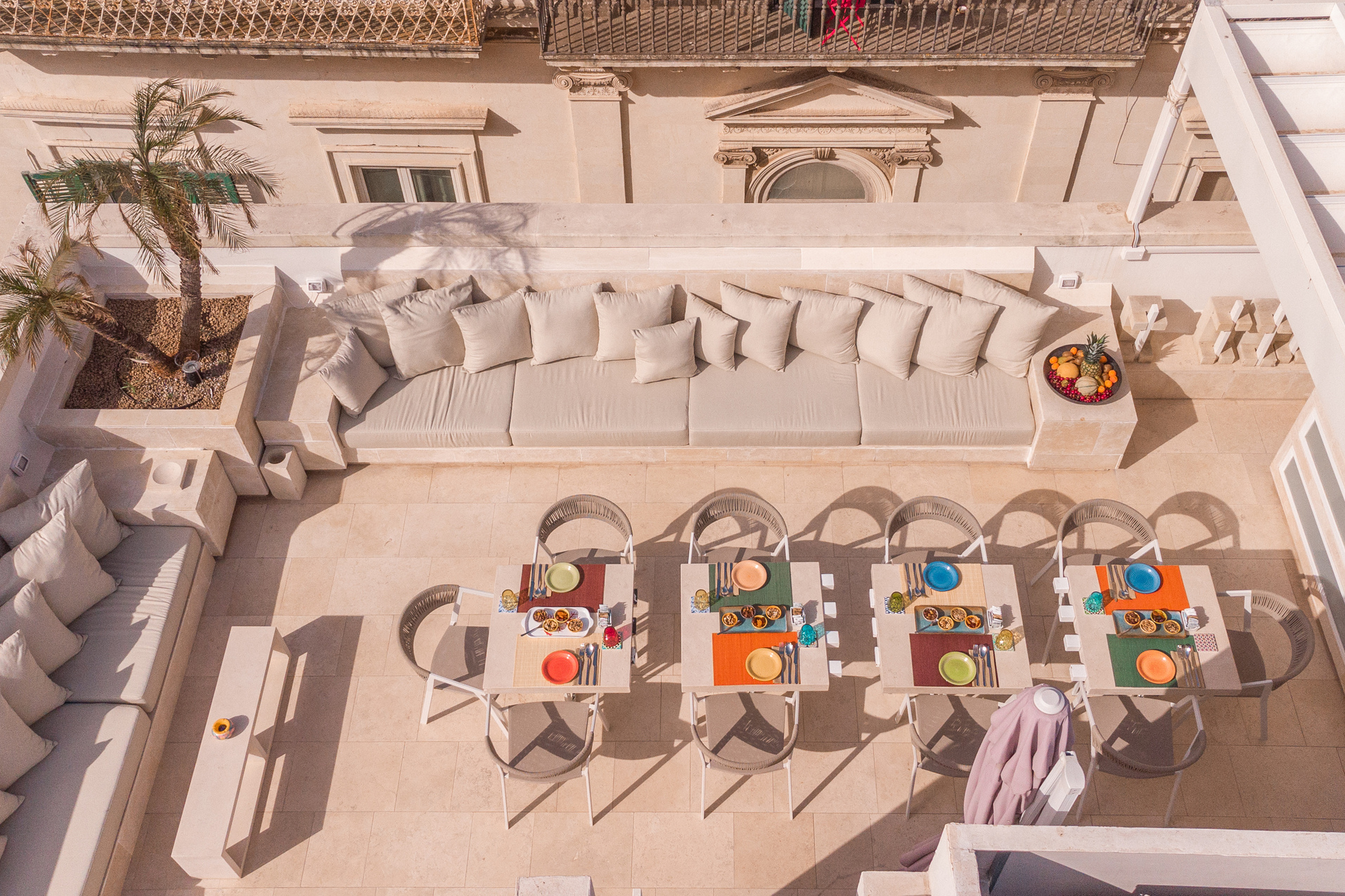
Best for: travellers who want one night or two of urban Lecce inside a multi-stop Salento trip. Price range: From around €290 per night in May. Memorable detail: Breakfast is served on the rooftop, with the basilica of Santa Croce in the foreground and the sky above the historic centre opening into the typical baroque silhouette.
A note on Castle Elvira
We wrote about Castle Elvira in Trepuzzi in our article on Italian heritage palace hotels. If you are doing a heritage-focused Puglia trip, it is worth adding as a single-night stop on your way from Lecce toward Massafra (it sits just north of Lecce). For a first-time visitor, the six properties above already cover the geography well, but Castle Elvira is the neo-gothic curiosity of the region and worth knowing about.
05What to eat (and where)
Pugliese food is regional almost to the village level. Three notes that the standard tourist guides do not always make clear.
Pasta: the regional pasta is orecchiette (small ear-shaped pasta) and it is hand-made fresh almost everywhere. The classic preparation is con cime di rapa (with turnip greens). In Bari the orecchiette ladies still make pasta in the street in the Strada dell’Arco Basso in the morning, which is a small piece of tourist-theatre but also genuinely the same orecchiette the restaurants are serving.
Vegetable cuisine: Puglia is the most vegetable-forward region of Italy. Fave e cicoria (broad bean purée with sautéed chicory) is the signature dish. Tiella di riso, patate e cozze (the Bari rice-potato-mussel bake) is the local one-dish meal. The vegetable section of the menu in a good Pugliese restaurant is often more interesting than the meat section.
Wine: the dominant grapes are Primitivo (powerful red, similar to American Zinfandel, often from Manduria) and Negroamaro (lighter, more elegant, the great Salentine red), plus Susumaniello which has been quietly improving and is now serious. Among whites, Verdeca and Bianco d’Alessano. The rosés of the Salento (often labelled Five Roses or various small estates) are some of the best rosés produced in Italy and are at their peak between June and September.
Sea urchin: in season (October to April) and a Salento delicacy. Eat them in the small ports of Gallipoli or Tricase Porto in the early morning, with bread and a glass of dry white. Out of season, do not order them; they have been frozen.
Burrata: the Puglia cheese par excellence, originally from Andria. The local burrata produced and consumed within 24 hours of being made is a different cheese from the burrata you buy at supermarkets in northern Italy or abroad. Eat it the day you see it being made if you can.
06Clichés to avoid
A few things the internet keeps repeating that are not quite true.
“Puglia is the new Tuscany.” It is not. The two regions are structurally different in food, architecture, agriculture and travel rhythm. Pugliese tourism is also at a different stage: less infrastructure for international visitors, less English in the smaller towns, more raw. This is good for some travellers and frustrating for others. Do not arrive expecting Tuscan service density.
“You can do Puglia in three days.” You can drive across Puglia in three days. You cannot experience it in three days. The region is built for slow travel: long lunches, afternoons in the historic centres, time to drive the small inland roads between olive groves. Three days is one half of the region at best. Plan five to seven.
“You need to visit Alberobello.” Alberobello is the iconic trulli town and is genuinely UNESCO-listed, but it has become a heavily touristed photo-stop. Locorotondo, Cisternino and Ostuni offer the same architectural language with much less crowding. If you have the option, drive past Alberobello (admire it from the road) and stay an extra hour in Locorotondo.
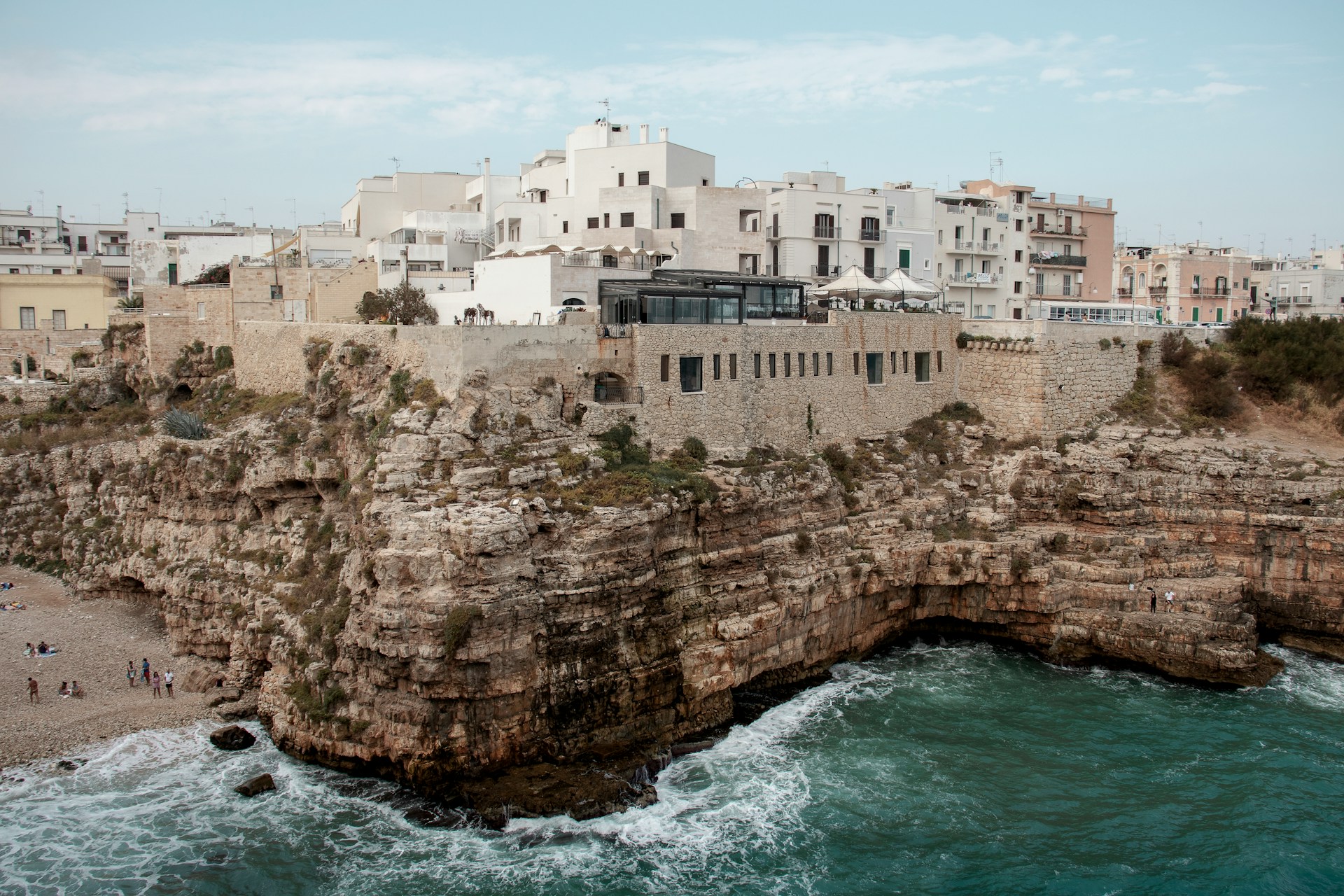
“Polignano a Mare is the best beach in Puglia.” Polignano is dramatic and beautiful, but the beach itself is small and crowded in summer. For actual beach time, drive south to the bays around Otranto (Costa Otrantina), or to Pescoluse (“the Maldives of Salento”), or to the inlets on the Ionian side north of Santa Maria di Leuca.
“The food is better in the Salento than in the north.” Strong opinions on both sides. The food in the north (around Bari) is more bread-and-dairy-driven; the food in the Salento is more fish-and-vegetable-driven. Different rather than better. Eat in both halves before concluding.
07A suggested seven-night structure
Two nights at Mastropà (inland north, with Matera and Polignano day trips). Two nights at Masseria Corsano or Masseria dei Monaci (Salento masseria life). One night at Palazzo Lecce (city evening). Two nights at Palazzo del Corso or Don Totu, depending on whether you want sea (Gallipoli) or silence (San Cassiano).
This structure gives you north and south, inland and coast, masseria and palazzo. It involves roughly 280 kilometres of driving over the week, spread across four short legs.
For nine nights, add a second night at Lecce and a third night at the masseria of your choice.
Frequently asked questions
| When is the best time to visit Puglia? | May, June, mid-September, and early October. The sea is warm enough from late May, the crowds are absent, the food season is at its best. Avoid July and August unless you can tolerate temperatures of 38 to 40 degrees inland and very full beaches. |
| How long do I need for Puglia? | A first visit should be at least five nights and ideally seven. The region is bigger than it looks (the drive from Bari to Santa Maria di Leuca is around 250 kilometres), and the pleasure is in slow stops, not in covering distance. |
| Should I rent a car in Puglia? | Yes. There is no honest alternative. The masserie, the small coastal villages and the inland towns are not well connected by public transport. Choose a compact car, not a large SUV, for parking and ZTL reasons. |
| Where should I stay in Puglia for a week? | A combination of one northern Puglia stay (Mastropà or similar in the trulli/Murge area) and one or two Salento stays (one masseria and one urban-Lecce night). The structure above lays out the suggested combination. |
| Are Pugliese hotels family-friendly? | Most masserie are. Don Totu and Palazzo Lecce are smaller and more adult-skewing. The larger masserie (Mastropà, Masseria dei Monaci, Masseria Corsano) accommodate families easily and have facilities (pools, gardens, family suites). |
| Is Puglia safe for solo travellers? | Yes. Among the safest regions in Italy. Common-sense rules apply (lock the car, avoid leaving valuables visible). The small inland villages in particular feel very calm at all hours. |
| What is the best beach in Puglia? | Depends on what you mean by best. The most photogenic is Polignano a Mare. The most beautiful for swimming is the stretch from Otranto down to Santa Maria di Leuca on the Adriatic side. The most local-feeling is the small bays around Tricase Porto. |
| What about Matera? | Matera is in Basilicata, not Puglia, but it is right on the border (under an hour from Mastropà) and is one of the cultural highlights of the south. Easy day trip from the northern Puglia leg of any trip. Worth a half-day at least. |