Where History Sleeps: Five Italian Palace Hotels Outside the Capitals
Italy is a country with more restored palazzi-turned-hotels than any other in Europe. Most articles about them are about Rome, Florence or Venice the postcard. This one is about five buildings, in Venice the working city, in Tuscany the wine country, on Lake Como, in a medieval Tyrolean town, and on a Puglian plain almost no one writes about, that did the thing properly. They saved the architecture. They added one century without overwriting eight. You can sleep in them now.
Eight hundred years is a long time for a building to be useful. The longest of the five buildings in this article has been in continuous use, in one form or another, since the early twelfth century. The shortest has been standing for one hundred and fifty years. All five have done the same difficult thing, which is to absorb the way we live now, wifi, plumbing, climate control, a bar, breakfast for thirty, without erasing the way they lived for everyone who came before.
Italy is full of buildings that almost did this and almost failed. Walk into many four-star “palace” hotels in central Tuscany or near the Grand Canal in Venice and you will find an interior that has been gutted, modernised, and then re-veneered with fake antique furniture. The plaster is hotel plaster. The doors are hotel doors. The history is on a plaque in the lobby and nowhere else in the building.
The five hotels that follow have done the opposite. The architecture is the loudest voice in the room. The contemporary intervention is restrained, intelligent, and almost always reversible, the kind of restoration the Carta del Restauro of 1972 actually intended, the kind where in a hundred years someone could take the modern wing out again and the original building would be intact.
We deliberately leave Rome out of this article. Rome’s palazzi are already well covered, and we have written about two of them on this Journal already. The aim here is the rest of Italy: the country between the capitals, where the great private architectures of the Veneto, the Tyrol, Tuscany, Lombardy and the South have been quietly turned into places to spend a night.
These are five very different buildings in five very different parts of Italy. We have written them out in order of the date the building was first put up.
Castel Hortenberg, Bolzano - twelfth century
The oldest of the five buildings in this article is Castel Hortenberg, on the slope above Bolzano at the gateway to the Dolomites. The castle was first documented in 1186, when a knight named Friedrich von Greifenstein held it for the bishopric of Trent. The building you see today is mostly a fifteenth-century reconstruction over the twelfth-century foundation, with a sixteenth-century renaissance wing added by a later owner, and a small twentieth-century preservation programme that consolidated the masonry without touching the interior frescoes.
The restoration that made the castle a hotel was completed less than a decade ago. The project did three quietly remarkable things. It left the medieval Stuben, the wood-panelled rooms heated by central tiled stoves that are the signature of Tyrolean domestic architecture — exactly as they were. It restored the sixteenth-century frescoes in the great hall to legibility without over-painting them. And it inserted the modern hotel functions (the spa, the dining room, the climate control) into the lower-level vaulted spaces that were originally cellars and stables, in a way that does not touch the upper floors at all.
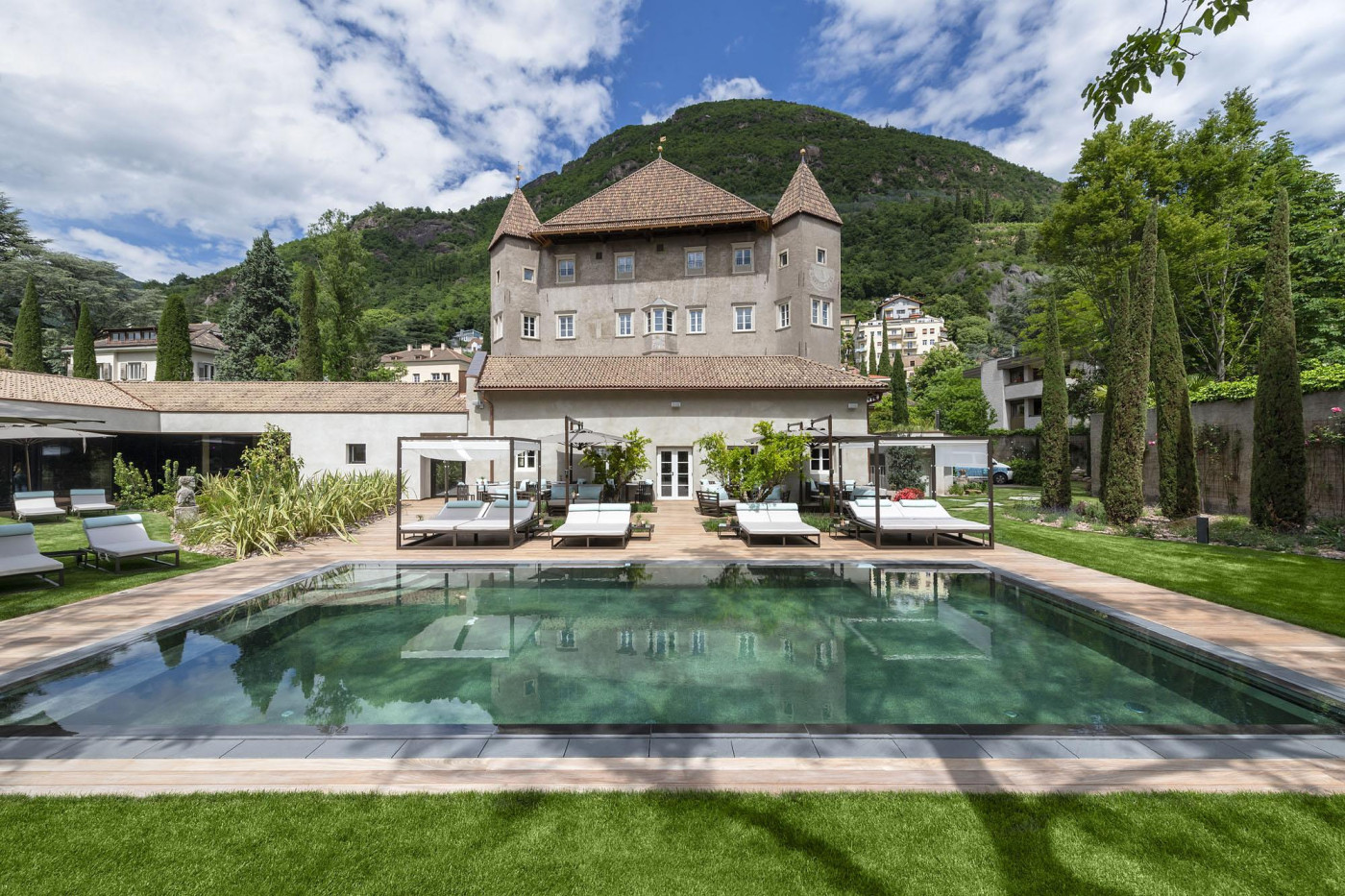
What you remember after staying at Castel Hortenberg is the way the building is colder than you expect, the medieval thickness of the walls, the stone underfoot, and then the way the wood-stove rooms are warmer than you expect once they are lit. The castle is a few minutes by car above the historic centre of Bolzano, with the Dolomites rising to the east and the South Tyrolean vineyards rising to the west. The kitchen leans into a serious Tyrolean repertoire, speck, canederli, juniper-smoked lamb, Schlutzkrapfen with smoked ricotta, paired with the local Lagrein reds and Sylvaner whites that Bolzano makes very well.
Castello del Nero, Tuscany - twelfth and thirteenth centuries
A few hundred kilometres south-west of Bolzano, in the Chianti Classico between Florence and Siena, sits the second-oldest building of the five. Castello del Nero, now run by the COMO Hotels group, started life in the twelfth century as a fortified position for the Del Nero family, a Florentine banking lineage who held the property for nearly seven hundred years. The current shape of the castle, a long stone block on a low ridge surrounded by vineyards and olive groves, settled into its present form in the thirteenth century. Successive Del Nero generations added the inner courtyard, the frescoed great hall, the chapel, and the wing of guest apartments that was used to house the family’s visitors when they were in the country.
The COMO restoration, completed over a decade, is the most ambitious of the five hotels in this article. The brief was extraordinarily difficult: to bring a working twelfth-century castle to the standard of a contemporary luxury hotel without losing any of the original frescoes, painted ceilings, or stone interiors, and without modernising the surrounding 740-acre agricultural estate. The architects who led the project, working in close consultation with the Soprintendenza (the Italian state heritage authority), eventually settled on a strategy of insertion, in which the modern systems (climate, plumbing, lighting) are run inside removable channels behind the original walls, and the new floors of the guest suites sit on platforms that do not touch the historic stone.
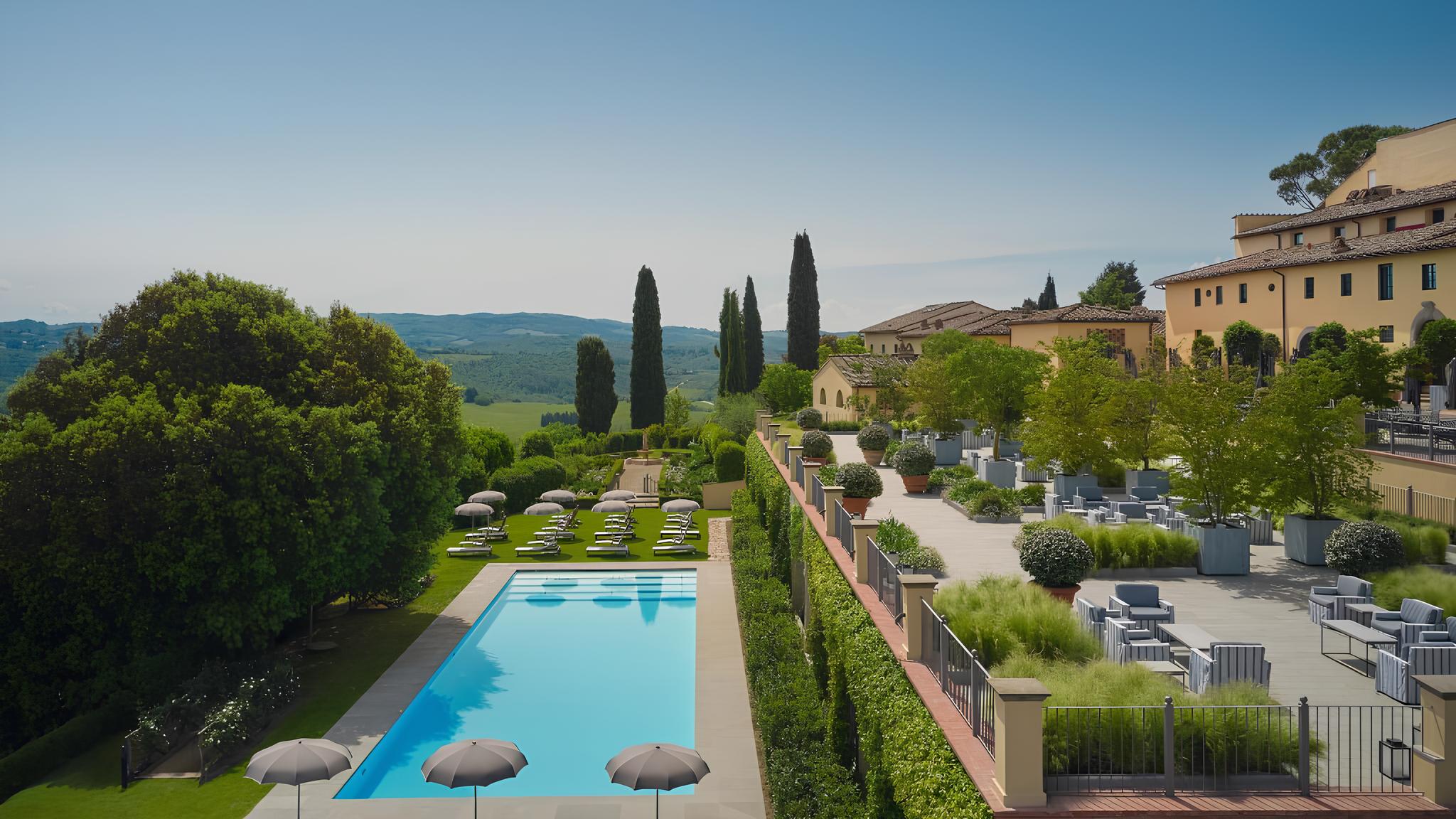
The result is a hotel where the architecture works the way it did in the thirteenth century, same light, same proportions, same internal geometry, but with a contemporary comfort that does not visibly intrude. The COMO Shambhala spa is in a separate stone outbuilding rather than carved out of the castle. The kitchen, the one-Michelin-star La Torre, is built into the old kitchen and pantry rooms but reads as a modern restaurant. The cellar, which holds the estate’s own Chianti Classico production, is still in the original twelfth-century vaulted cellar.
For a first heritage stay in Italy, this is probably the most legible introduction to what a serious palazzo restoration looks like. It is also, by a margin, the most expensive of the five. The trade-off is the access to a thousand years of continuous architecture.
Palazzo Venart, Venice - sixteenth century
The third building of the five is in Venice, but not the Venice most travellers know. Palazzo Venart sits on the Grand Canal in the Santa Croce sestiere, on a stretch of the canal that the gondola tours do not crowd and the cruise traffic does not reach. The palazzo is a sixteenth-century Venetian building of the late renaissance, with the characteristic four-window piano nobile (the noble first floor, where the daily life of a Venetian patrician household actually happened) and the typical androne water-gate that opens directly onto the canal.
The building’s history is complicated, as all Venetian palazzi are: passed from one patrician family to another through dowry and inheritance through four centuries, eventually subdivided into apartments in the nineteenth, and then re-consolidated under a single family ownership in the late twentieth. The restoration that produced the current hotel was completed in 2016. It is, by quiet consensus, one of the best Venetian palazzo restorations of the last decade.
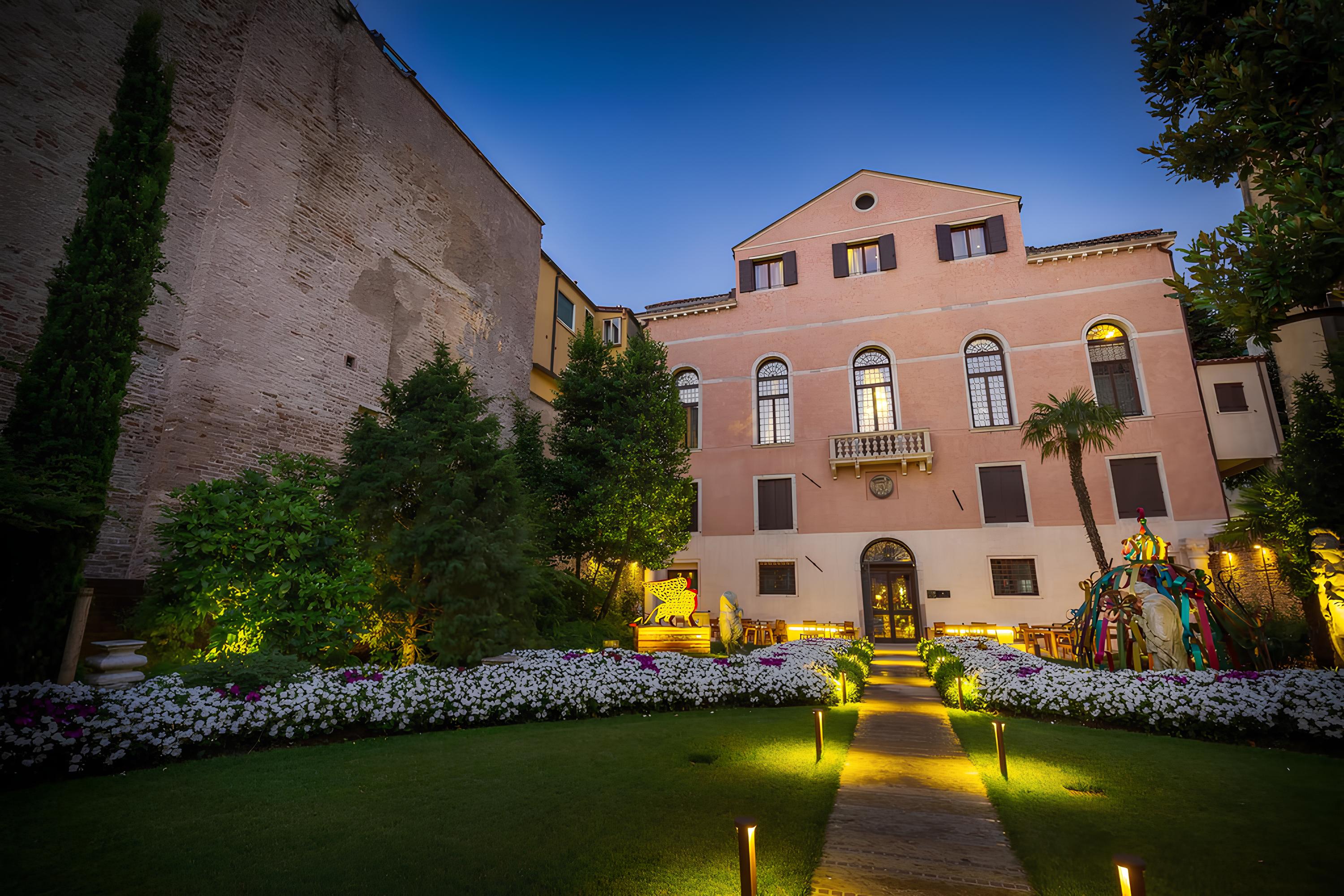
What the restoration did particularly well is the question of the water-gate and the garden. Most Venetian palazzo hotels have lost their water-gates: the androne has been turned into a lobby, the canal entrance closed off because passenger pickup happens on the fondamenta side. Palazzo Venart is one of the few that has kept its water-gate active. You can arrive by boat and step out of the gondola directly into the building, the way the original sixteenth-century inhabitants would have done. The garden, on the back of the palazzo facing the rio (a side canal), is private and walled, and is one of the largest private gardens currently usable on the Grand Canal, about half an acre of cypress, magnolia, jasmine, and stone benches.
The interiors keep the original sixteenth-century proportions and ceiling heights, the original parquet of one of the noble rooms, and a series of large oil portraits the previous family donated to the building. The kitchen, in the one-Michelin-star Glam by chef Enrico Bartolini, reads contemporary in plating and grammar but is built into the old palazzo kitchen rooms on the ground floor.
To stay at Palazzo Venart is to spend several days in a working Venice. The gardens, the water-gate, the silence at night, all of these are the Venice the postcards have stopped photographing. The Rialto Bridge is a fifteen-minute walk. Saint Mark’s Square is a twenty-five minute walk or a five-minute private water taxi. Most guests we know spend more time in the garden than in the square.
Palazzo Albricci Peregrini, Como - seventeenth century
The fourth building is on Lake Como. Palazzo Albricci Peregrini sits in the historic centre of the city of Como, a few minutes’ walk from the lake itself, in the Borgo Vico neighbourhood near the cathedral. The building is a seventeenth-century Lombard palazzo, built originally for the Albricci family, a Como merchant lineage that traded silk on the route between Lake Como and Lyon. The Albricci held the building until the late eighteenth century, when it passed to the Peregrini by marriage. The Peregrini name persists on the doorway.
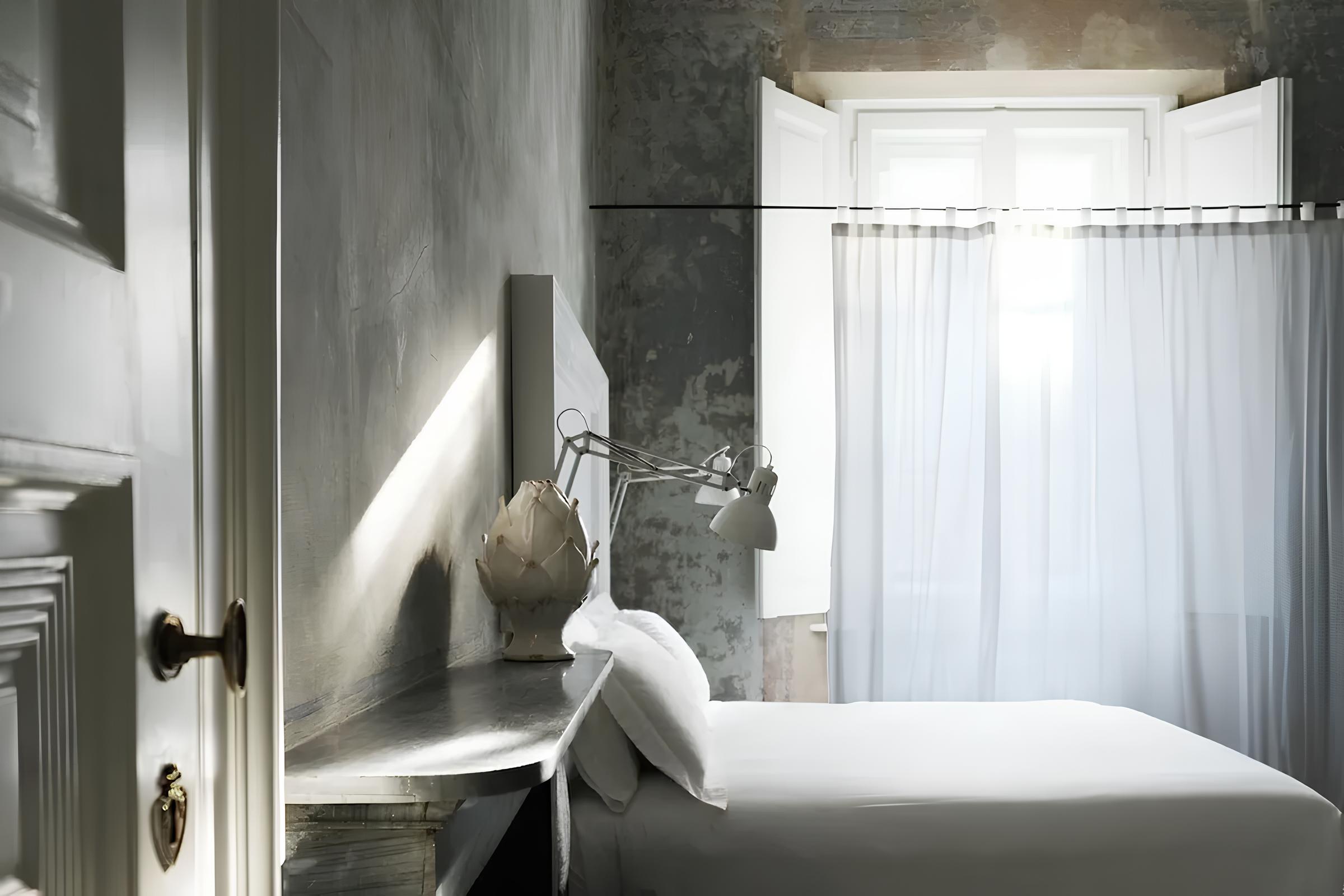
The architecture is characteristically Lombard: a tall four-storey building in pale stucco, with a central inner courtyard that brings light into the interior rooms and a series of stone-framed windows that follow the classical Lombard proportions. The interiors retain the original painted wood ceilings on the piano nobile and a frescoed reception room with a small scena galante, a baroque dance scene, that has been carefully cleaned but not restored. The hotel restoration, completed in the late 2010s, is the smallest in scale of the five buildings in this article, and probably the most intimate. There are fewer than fifteen rooms. The breakfast is served in the inner courtyard when the weather allows.
What makes Palazzo Albricci Peregrini particularly interesting is the city rather than the lake. Como is itself a serious cultural destination, a Roman foundation, a medieval cathedral, the birthplace of Como silk, and a city with several of the most important rationalist architecture buildings of the twentieth century (Terragni’s Casa del Fascio, Cattaneo’s Asilo Sant’Elia). To stay in the historic centre, rather than on the lake’s shoreline thirty kilometres up, gives you a Como that is a working Lombard city, not a backdrop for a lake holiday.
The lake is, of course, three minutes’ walk away. You can take the ferries from Como to Bellagio, to Varenna, to Tremezzina with the great Villa Carlotta. But you sleep inside the city, which is the thing this palazzo allows you to do.
Castle Elvira, Puglia - late nineteenth century
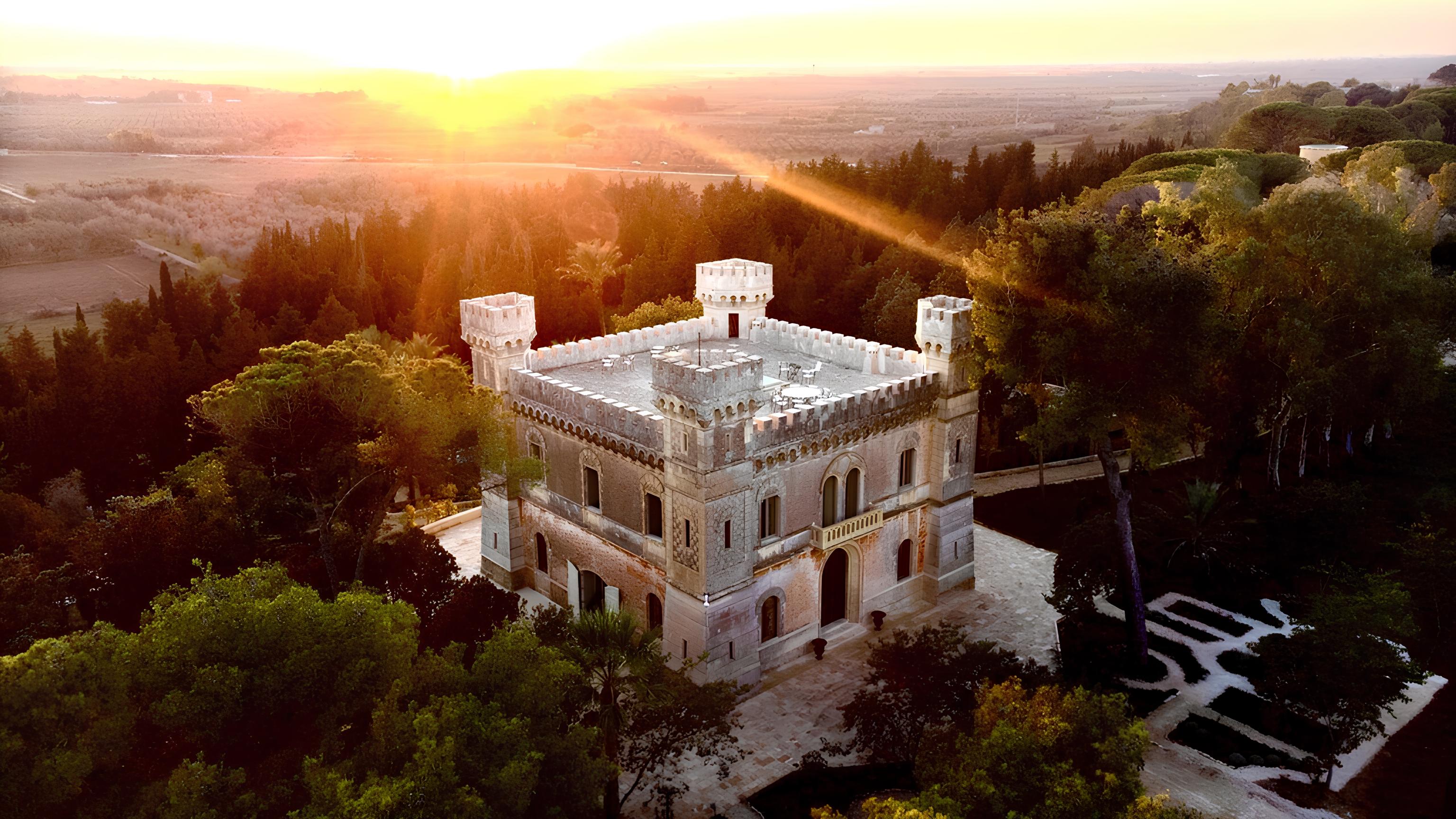
The fifth and youngest building of the five is in Trepuzzi, on the Salento plain north of Lecce, in the south of Puglia. Castle Elvira is a neo-gothic castle built in the late nineteenth century by a wealthy Salentine family. It is, in heritage terms, a modern building, only about 150 years old. But it is the most architecturally surprising of the five, because it does not look like anywhere else in Italy.
The neo-gothic style was, in late nineteenth century Italy, a deliberate cultural choice. While most of the country was building in neo-classical or neo-renaissance idioms, a small number of wealthy southern families chose the gothic, partly under the influence of English Victorian architecture, partly as a romantic gesture, partly because the gothic had not historically been a Puglian style and felt new. Castle Elvira is one of the surviving examples in southern Italy. It has crenellations, pointed-arch windows, a small chapel with stained glass that would not look out of place in a Cotswold parish church, and a central round tower with a panoramic view of the surrounding olive groves.
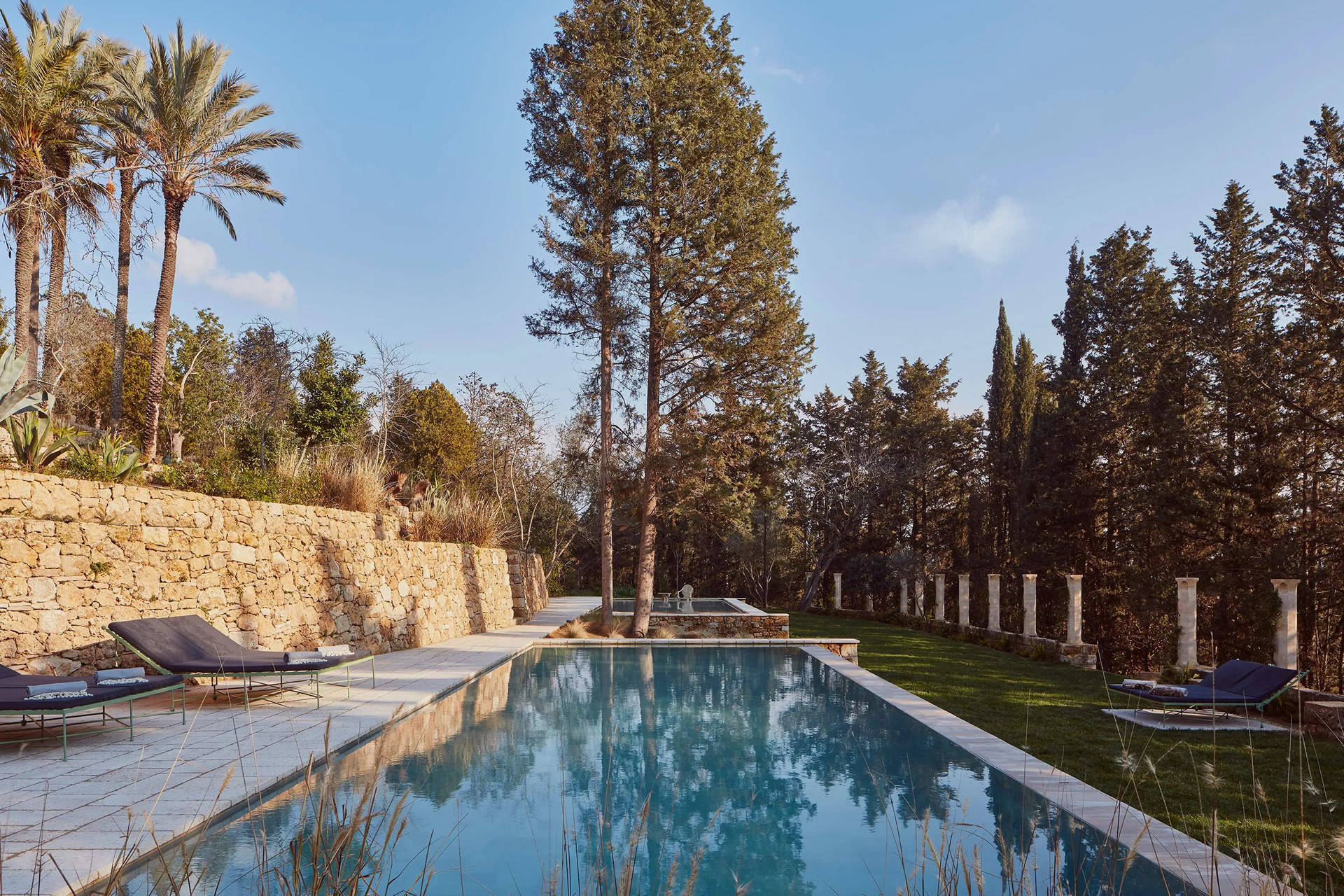
The recent restoration, completed in the early 2020s, was led by a British-Italian family who bought the property when it had been almost abandoned for two decades. The work was less about adding contemporary luxury and more about stopping the building from collapsing. The roof was completely re-done. The internal plaster was stabilised. The stained-glass windows of the chapel were restored by a Murano workshop. The terraced gardens around the castle were re-planted with the original specimen trees from a turn-of-the-century photograph the family found in a local archive.
The hotel is smal, about a dozen suites, most of them in the tower rooms, and is run with a country-house atmosphere. Long lunches under the loggia, evenings in the library, the small chapel still available for private moments. The kitchen is run on the produce of the estate (the family makes its own olive oil and runs a small vineyard) and the local Salentine cuisine, orecchiette, fresh fish from Otranto twenty minutes away, taralli, fave e cicoria.
Castle Elvira is the closest of the five hotels to feeling like a private home you have been invited into. It is the one most likely to make you want to stay an additional night.
How to plan an Italian heritage tour
A practical suggestion for travellers who want to visit more than one.
For a first heritage tour of seven to ten nights in Italy, the most rewarding combination is two nights in the north, two in the centre, two in the south. We would pair Castel Hortenberg (the medieval Tyrolean experience) with Castello del Nero (the Tuscan thousand-year castle) and Castle Elvira (the neo-gothic Salentine surprise). Three buildings, three centuries, three regions, three completely different culinary traditions.
For travellers who want to focus on a single Italian region, the strongest single stay is Castello del Nero in Tuscany, both because it is the most complete restoration and because Chianti Classico is itself a heritage landscape that benefits from a long stay rather than a passing visit.
For travellers who want urban heritage rather than country heritage, Palazzo Venart in Venice and Palazzo Albricci Peregrini in Como are the right pair. Three nights at each, with a train between, gives you two of the great northern Italian historic cities at the slow pace they actually deserve.
What to ask before booking a “palazzo hotel” anywhere in Italy
Three honest pieces of context.
Confirm the building is the original. Many hotels in Italy use palazzo in their name as a marketing term, when the actual building is twentieth-century construction inside a partial palazzo shell. Before booking, ask: what is the date of the building, what is on the heritage register (the Soprintendenza records), and which parts of the building are original. Reputable hotels will answer this question instantly.
Ask about the restoration approach. A good restoration is one in which the original architecture is the loudest voice. Look for hotels that mention things like insertion (modern systems inside removable channels), consolidation (stabilising rather than rebuilding), and Soprintendenza approval. Be wary of brochures that emphasise the “transformation” of the building.
Ask which rooms have the original architecture. In many palazzo restorations, the most historically interesting rooms are the piano nobile (the noble first floor) and a small number of suites that retain frescoes, painted ceilings or original parquet. The standard double rooms are often in less significant parts of the building. If you are paying for heritage, request the heritage rooms by name.
Frequently asked questions
| Where in Italy can I stay in an actual restored palazzo or castle? | The five buildings in this article, Castel Hortenberg in Bolzano, Castello del Nero in Tuscany, Palazzo Venart in Venice, Palazzo Albricci Peregrini in Como, Castle Elvira in Puglia, are five different answers to that question, from north to south, twelfth century to nineteenth century. All five are restorations that put the original architecture first. |
| What is the difference between a “palazzo” hotel and a “castle” hotel in Italy? | A palazzo is an urban patrician residence, usually four or five storeys, organised around an inner courtyard, located in the historic centre of a city. A castello is a fortified building, almost always rural or hilltop, with defensive elements (walls, towers, often a moat). Both can be restored as hotels, but the experience is different, the palazzo gives you the urban Italy, the castello gives you the landscape. |
| Is May a good time for an Italian heritage tour? | Yes, May, June and September are the strongest months. Italian shoulder seasons combine long daylight, mild temperatures, and significantly smaller crowds than July and August. May is particularly good in southern Italy (Castle Elvira opens its terraces) and in Tuscany. September is ideal in the Veneto and Lombardy. |