Florence and the Hills Around It: A Tuscan Long Weekend for 2026
Three nights in Florence, two nights in the Tuscan countryside. Six boutique hotels across the city and the hills, with the practical routes between them, the food details that the city guides keep getting wrong, and an honest note on what to skip. The most efficient long weekend Tuscany can offer in 2026.
The standard advice on Tuscany has been the same for thirty years. Florence for the art, the hills for the wine, two nights each, rent a car. The advice is correct in outline but increasingly imprecise in detail. The city has changed (the centre is busier, the queues are longer, the small trattorie are different). The countryside has changed (the most-known villages are now full at every hour). The road between them is a forty-five-minute drive that has not improved in twenty years.
This guide is built for a long weekend, the most common Tuscan trip format for international visitors: three to four nights in the city, two nights in the hills, total length five to six nights. The recommended structure is described in detail below, with the six hotels that make it work in 2026 and the routes, food and clichés to know.
The article is organised in seven sections: how to get to Florence and Tuscany, where to stay in Florence (three options), what to do there (and what to skip), the move to the countryside, where to stay outside the city (three options), what to eat and drink, and a final FAQ.
01How to get to Florence and Tuscany
The two main airports for a Tuscan trip are Florence Peretola (FLR) and Pisa Galileo Galilei (PSA). Both serve direct flights from most major European cities. Florence is more convenient for the city itself (the airport is fifteen minutes from the centre by tram, line T2, opened in 2019 and very efficient). Pisa is better for travellers continuing to the western Tuscan coast (Lucca, Versilia) or for those flying low-cost routes from northern Europe.
A third practical option is Bologna Marconi (BLQ). The high-speed train from Bologna to Florence runs in thirty-seven minutes (Frecciarossa, multiple departures per hour). For travellers coming from outside Europe, flying into Rome Fiumicino and connecting to Florence by Frecciarossa (one hour twenty minutes) is often more comfortable than a transfer flight.
Avoid renting a car for the Florence portion of the trip. The historic centre is a strict ZTL (limited traffic zone), and parking is both expensive and remote. Most hotels will arrange airport pickup or recommend the airport tram. Pick up the rental car only on the day of the move to the countryside.
02Where to stay in Florence
The default neighbourhood recommendation for a first visit to Florence is the historic centre, north of the Arno. This is correct but underspecified: the centre includes the Duomo area (busy at every hour), the Tornabuoni corridor (the elegant shopping quarter), the Santa Maria Novella area (close to the main train station), and the Santa Croce quarter (slightly more residential). Each has a different character.
Three hotels, three different ways to be in Florence.
Il Tornabuoni Hotel: the central palazzo done seriously
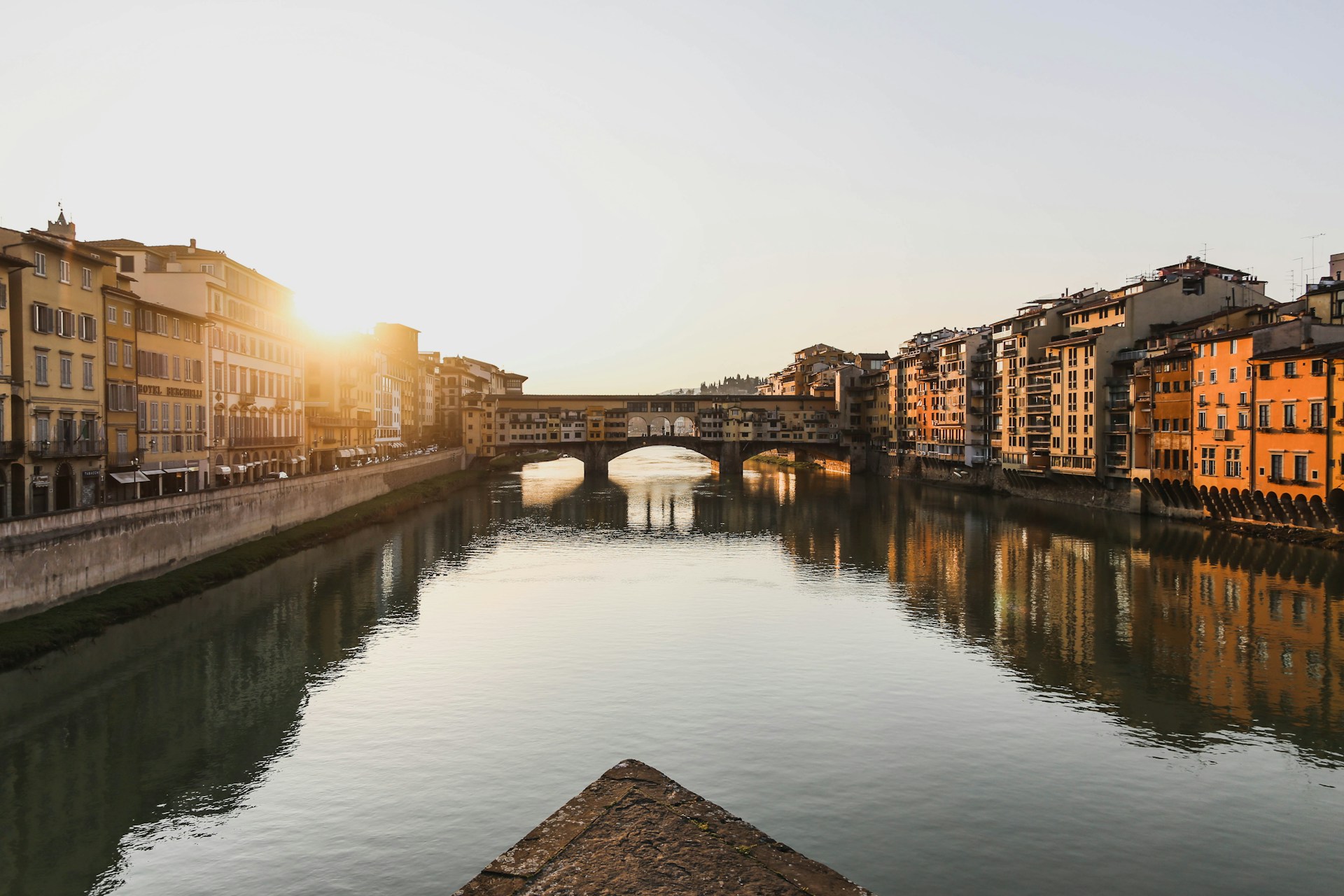
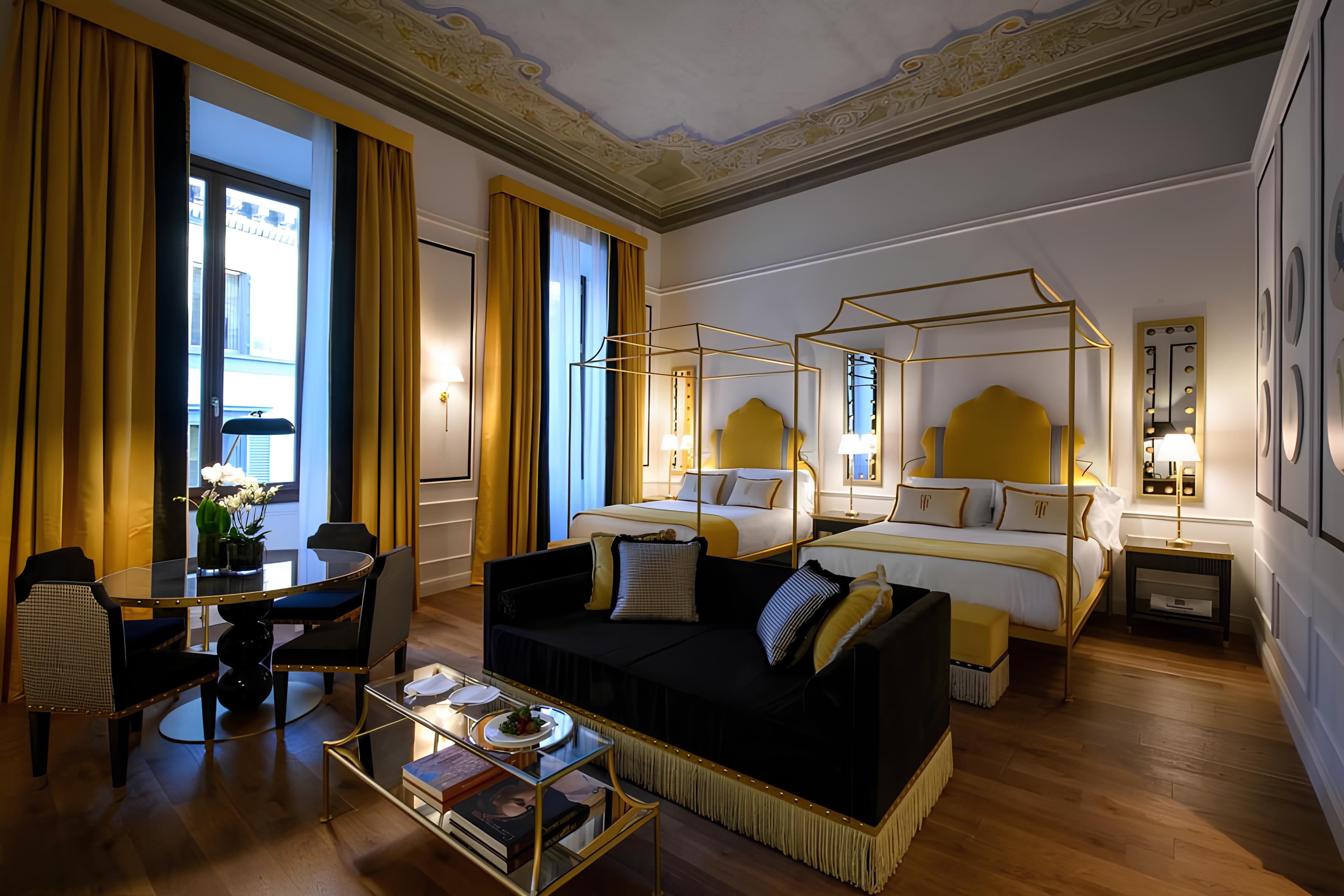
Il Tornabuoni sits on Via dei Tornabuoni, the elegant shopping street that runs between the Arno and the Piazza degli Antinori. The hotel occupies a restored sixteenth-century palazzo, the Palazzo Minerbetti, and reopened in 2021 after a long restoration that worked on the original architecture rather than over it. Frescoed ceilings, polished stone floors, a rooftop bar with one of the best views in central Florence.
The location is the most central of the three Florence options. The Duomo is six minutes’ walk. The Ponte Vecchio is four minutes. The Uffizi is seven. The Tornabuoni shopping street, with its long row of Italian brands (Ferragamo, Cavalli, Pucci, Antinori) is at the front door. The hotel itself is also one of the few in the city with a serious rooftop garden, which becomes the right place for the late apéritif on summer evenings.
The kitchen, called The Lounge, works in a refined Tuscan-Mediterranean register, with an unusually strong wine list given the hotel’s address (the Antinori family palazzo is directly across the street).
At a glance - Location: Via dei Tornabuoni, central Florence - Style: Restored sixteenth-century palazzo with rooftop garden - Best for: First-time Florence visitors who want maximum centrality and serious historical architecture - Memorable detail: The view from the rooftop terrace at sunset, with the Brunelleschi dome of the Duomo to the east and the Tuscan hills above Fiesole to the north.
Riva Lofts: the design loft on the western Arno
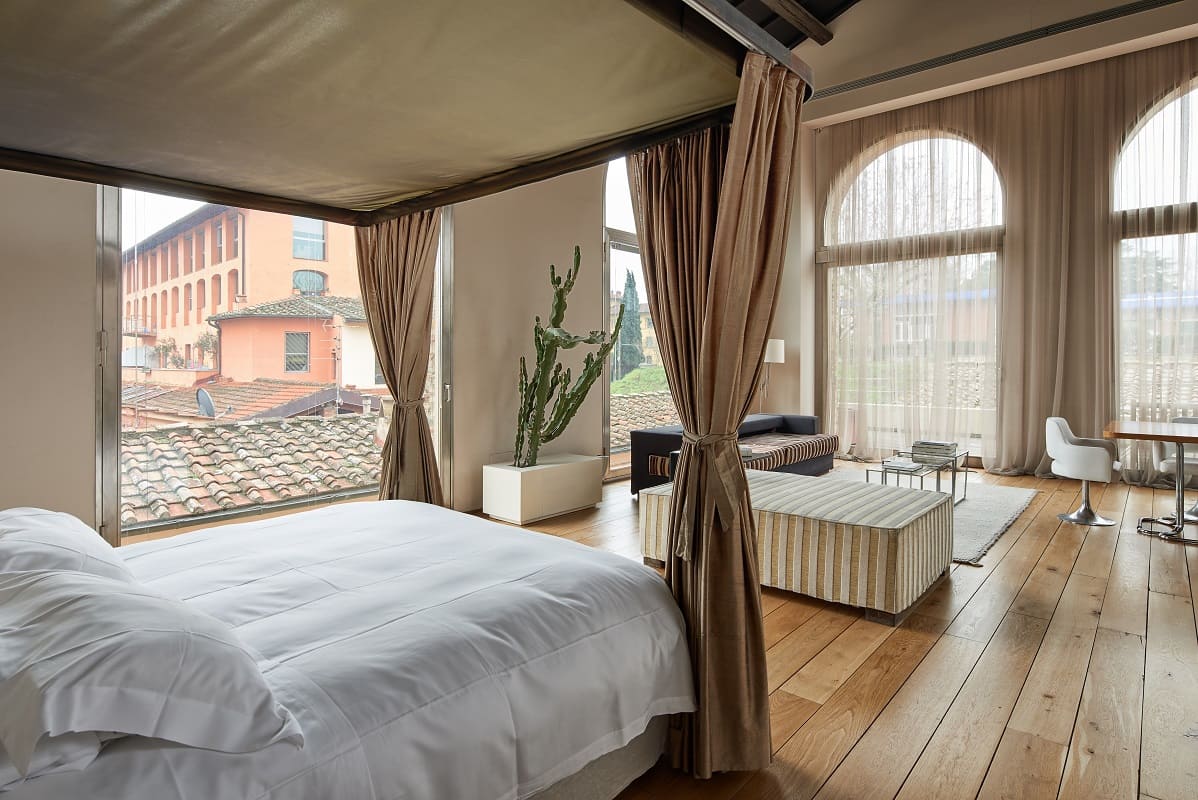
For a different version of Florence, the western end of the Arno offers a quieter alternative. Riva Lofts is a converted nineteenth-century building on the river, about fifteen minutes’ walk west of the historic centre, designed and run by the architect Claudio Nardi and his family. The property is small, about ten lofts arranged on multiple levels, with a small pool in the inner courtyard.
The design is one of the most coherent in the Italian luxury-design segment. Concrete, raw wood, careful contemporary lighting, original mid-century furniture, and the integration of restored industrial elements (steel beams, original cobbled floors) with contemporary interventions. Each loft is different in layout, and several have terraces over the river.
The location is unusual for Florence and is the point. Most guests do not realise that the Arno upriver of the Cascine park is a residential and quietly bohemian district, with small wine bars, neighbourhood trattorie, and an Arno walk that runs almost all the way to the historic centre. Riva Lofts sits in this district, with the city centre easily reachable on foot or by tram (line T1, two stops). Travellers stay here when they have done the central Florence trip before and want a slower, more architectural version of it.
The Nardi family also runs cycling tours from the hotel through the surrounding countryside, including a route into the Chianti hills that begins at the front door and avoids car traffic almost entirely.
At a glance - Location: Western Arno, about 15 minutes walk from central Florence - Style: Contemporary loft conversion in a nineteenth-century building, architect-run - Best for: Return visitors, design enthusiasts, travellers who want Florence at a slower pace - Memorable detail: The small library in the lobby, curated by Claudio Nardi with architecture monographs in three languages and a set of Italian art magazines from the 1960s and 1970s.
The Hoxton, Florence: the millennial-favourite in Piazza dell’Indipendenza
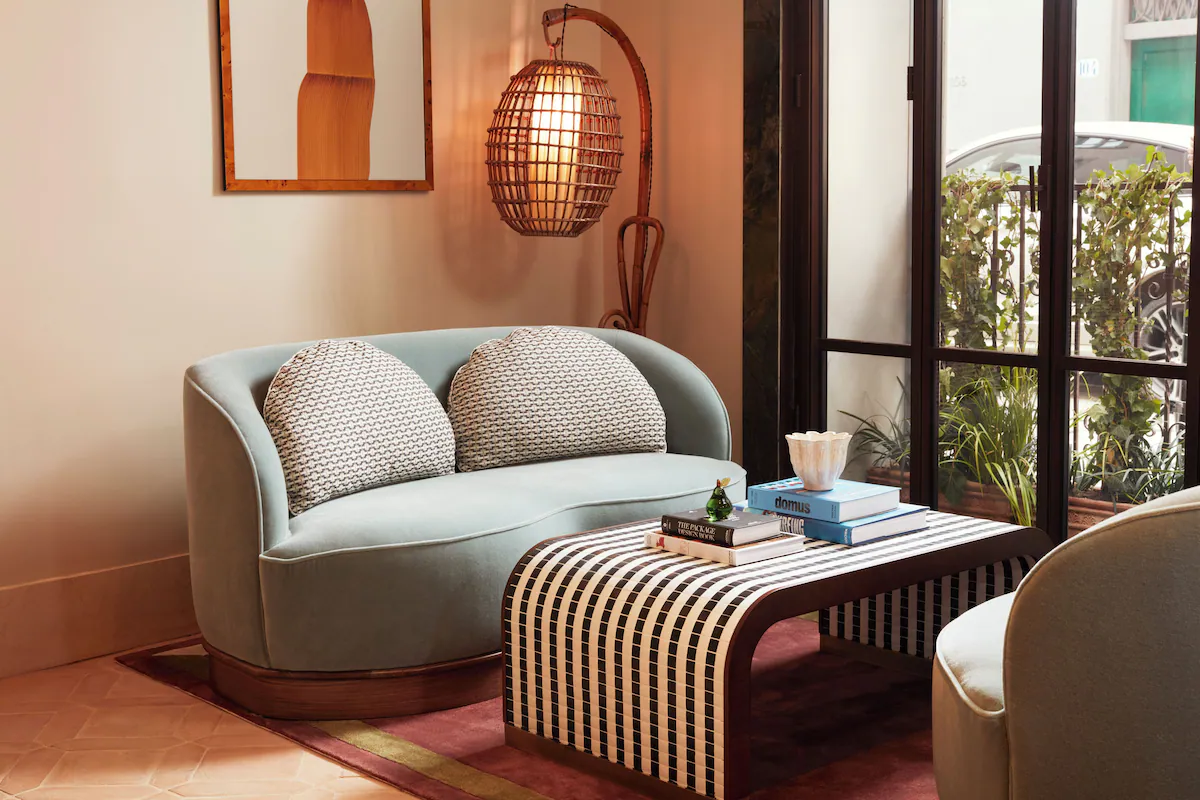
The third Florence option is the more sociable one. The Hoxton, Florence, opened in 2019, occupies a restored historic building on the Piazza dell’Indipendenza, about ten minutes’ walk north of the Duomo. The Hoxton is a brand that knows what it is: a hospitality concept aimed at the design-aware traveller in their thirties and early forties, with a strong public ground-floor scene (lobby bar, cafe, restaurant), and rooms that prioritise functional design over historic preservation.
In Florence, The Hoxton does this template well. The lobby is one of the most lively in the city, with a Tuscan-Californian kitchen called Cento that has become a fixture of the local food scene. The roof terrace, with a small pool and a sea-view-style bar, is busy with locals at sunset as much as with hotel guests. The rooms are clean, contemporary, on the smaller side but well-laid out, and priced significantly below the central palazzo hotels.
The Hoxton is the recommendation for travellers who want Florence with a built-in social atmosphere, who prefer a younger crowd, and who are comfortable with a hotel that is partly a place to live in and partly a public space.
At a glance - Location: Piazza dell’Indipendenza, about 10 minutes walk north of the Duomo - Style: Restored historic building in The Hoxton’s contemporary brand identity - Best for: Travellers who want a younger atmosphere, lobby-as-living-room, and value pricing in central Florence - Memorable detail: The Sunday brunch at Cento, one of the better social meals in central Florence.
03What to do in Florence (and what to skip)
A Florence weekend done well does not chase every museum. Three principles work better than a checklist.
Reserve the Uffizi in advance. The Uffizi Gallery is the city’s central cultural site and is now booked in advance for almost all summer dates. The official ticketing site (uffizi.it) opens reservations sixty days ahead. A walk-up in season often means a two-hour queue or being turned away. The Accademia (home of Michelangelo’s David) is similar.
Walk Florence early or late. The historic centre between 8am and 11am, and again between 7pm and 10pm, is a much more pleasant city than the centre in the midday heat with the day-tripper crowds. The Brunelleschi dome of the Duomo, the Ponte Vecchio, the small lanes around the Piazza Santa Croce, and the Piazzale Michelangelo (for sunset over the city) are all best in these windows.
Cross the river to Oltrarno. The southern bank of the Arno (the Oltrarno) is the part of the city that has retained its artisan character. The neighbourhood of San Frediano in particular still has working leather workshops, picture-framers, and small trattorie used mainly by locals. A morning in Oltrarno (the Brancacci Chapel, lunch at one of the small osterie on Via dei Serragli) is often the most memorable half-day of a first visit.
What to skip. The leather market behind San Lorenzo in midday hours (overpriced and uninteresting compared to the real workshops in Oltrarno). The Boboli Gardens in the middle of a hot afternoon (better at opening or in the last hour). The Loggia dei Lanzi photo crowd in midday Piazza della Signoria.
04The move to the countryside
The right structure for the long weekend is three nights in Florence followed by two nights in the hills. The countryside leg gives time to recover from the city pace and to see Tuscany at the pace that earned it its reputation.
Three options for the countryside, each in a different sub-region and each with a different character.
Villa Lena: the contemporary arts estate near Palaia
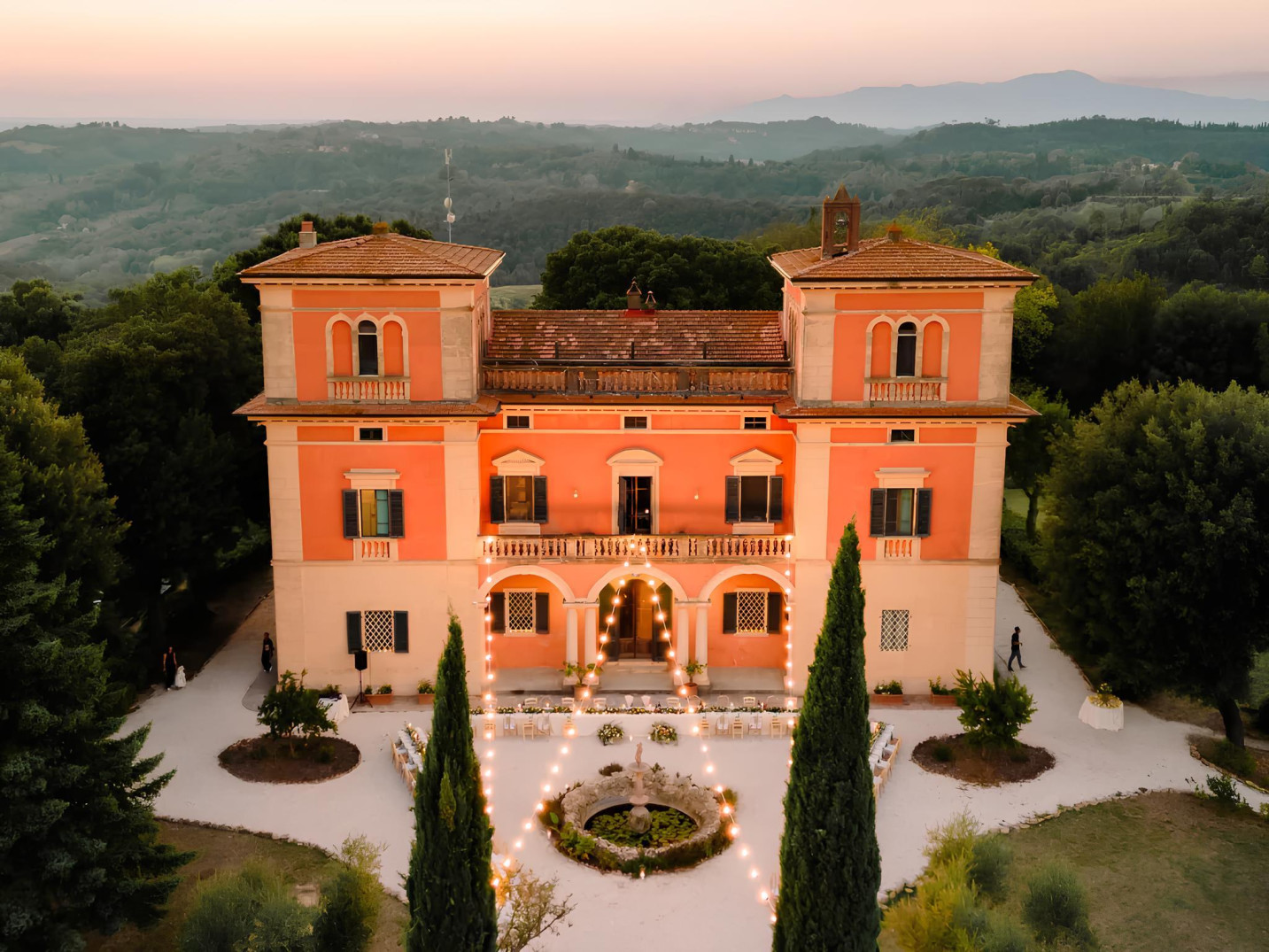
Villa Lena sits in the hills between Pisa and Florence, near the village of Palaia, on a 500-hectare estate that has been farming olive groves and vineyards for centuries. The property is part hotel, part artists’ residency, part working farm. Multiple historic farmhouses (the fattoria) and smaller outbuildings have been restored as guest accommodations across the estate, with prices that range from simple rooms to entire restored barns.
What makes Villa Lena unusual is the rhythm. The artists’ residency is in continuous operation, which means the property has a slightly different texture than a standard rural hotel. There are visiting artists in the studios at any time of year. There is an evening programme of music, screenings, talks. The food on the estate is grown on the estate. The wine is made on the estate (the Villa Lena estate also produces a small range of bottled wines and olive oils under its own label).
Villa Lena works well for travellers who want the countryside but not the silence. It is sociable in the best sense: the meals are usually shared, the bar in the evening becomes a small living room for the visiting community, the family-friendly side of the estate is genuinely well-handled. The location is roughly central in Tuscany: forty minutes from Pisa, an hour from Florence, an hour and a quarter from the Chianti wine country, ninety minutes from the coast.
At a glance - Location: Hills near Palaia, central Tuscany, about 1 hour from Florence - Style: Working estate with artist residency, multiple restored farmhouses - Best for: Travellers who want a sociable, design-aware version of the countryside with cultural programming - Memorable detail: The estate’s own vino rosato, a Sangiovese-based dry rosé served chilled at the long lunch table on the terrace.
Agrivilla i Pini: the organic estate outside San Gimignano
For a quieter, more nature-led version of the countryside, Agrivilla i Pini sits on a small hill near San Gimignano, about forty-five minutes drive south of Florence. The property is a restored seventeenth-century farmhouse with a handful of suites organised around the original courtyard, with a small pool set into the olive grove and a garden of medicinal herbs.
The estate is genuinely organic, certified, and works in a more domestic register than Villa Lena. The kitchen serves a vegetable-forward cuisine that draws from the estate’s own garden, with strong use of the wild herbs that grow on the property and a particular focus on Tuscan domestic dishes (the acquacotta of the Maremma, the ribollita of the Florentine countryside, the pappa al pomodoro of late summer). Wine pairings lean into the region’s smaller producers around San Gimignano (Vernaccia di San Gimignano is the local white, often underrated).
The location is one of the best in Tuscany for a base. San Gimignano with its towers is fifteen minutes away. The Chianti road that connects Florence to Siena (the SR222) is twenty minutes east. Volterra with its Etruscan walls is thirty minutes west. Siena is forty minutes south. From Agrivilla i Pini, the entire central Tuscan triangle is within an hour’s drive.
The atmosphere at the property is intentionally calm and adult-skewing. There is no programming. Mornings begin with a slow breakfast on the terrace. The pool is used quietly. Most guests spend two or three hours each day on a small drive to one of the nearby towns and the rest reading, swimming, eating.
At a glance - Location: Hill near San Gimignano, central Tuscany, about 45 minutes from Florence - Style: Organic farm estate with restored seventeenth-century farmhouse - Best for: Travellers who want classic Tuscan countryside with proper organic agriculture and adult-skewing pace - Memorable detail: The herb garden in summer, with twenty-plus varieties of culinary and medicinal herbs (sage, rosemary, fennel, lemon balm, bergamot, lavender, mint, thyme) used in the kitchen.
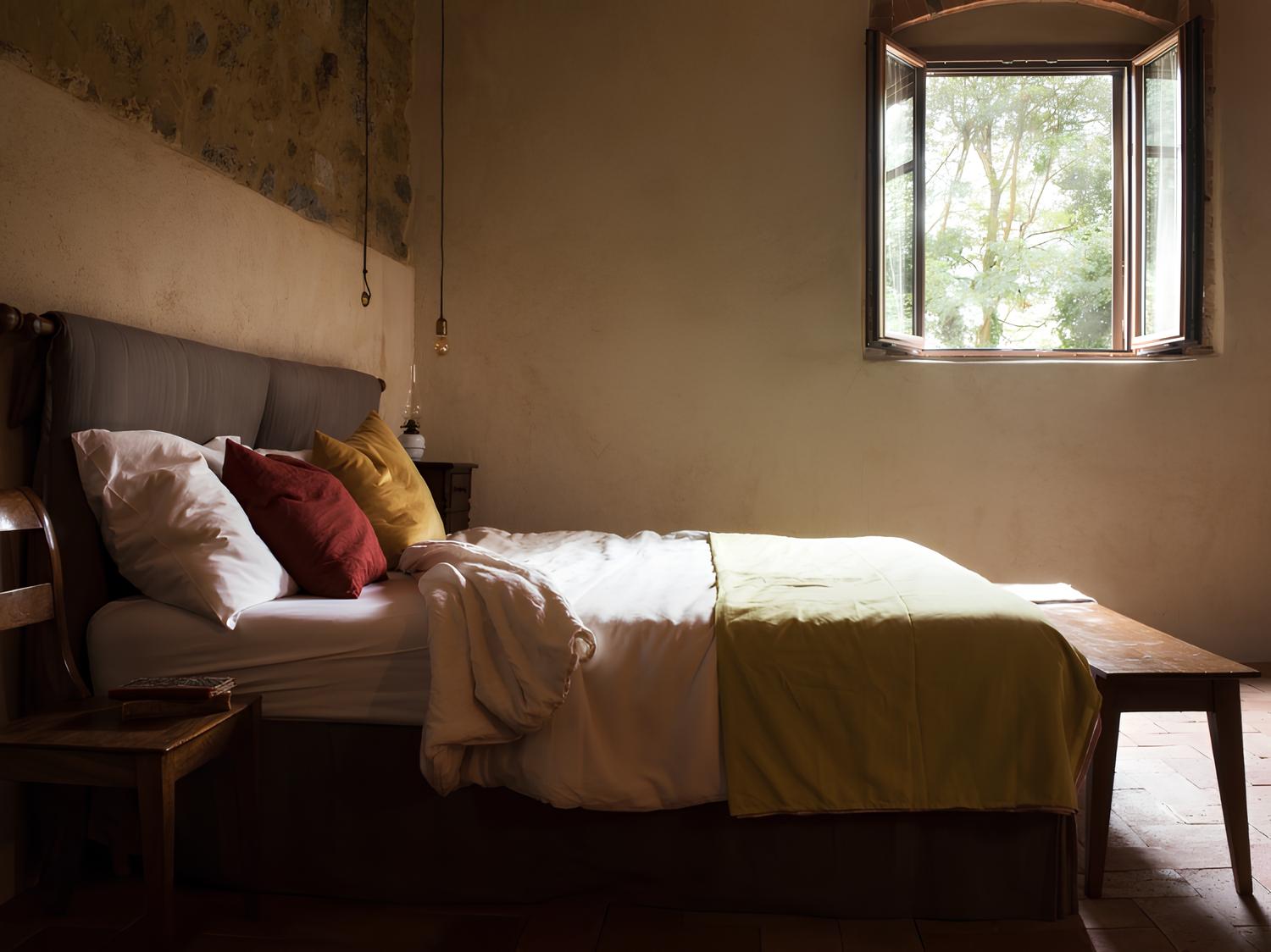
Locanda al Colle: the coastal hills above Camaiore
For travellers who want the sea within reach of the countryside, Locanda al Colle offers a third option. The property sits in the Versilia hills above Camaiore, in the part of northern Tuscany where the Apennines descend toward the Tyrrhenian coast. The location is about ninety minutes drive from Florence (or twenty minutes by train from Florence to Pisa, then thirty minutes by car).
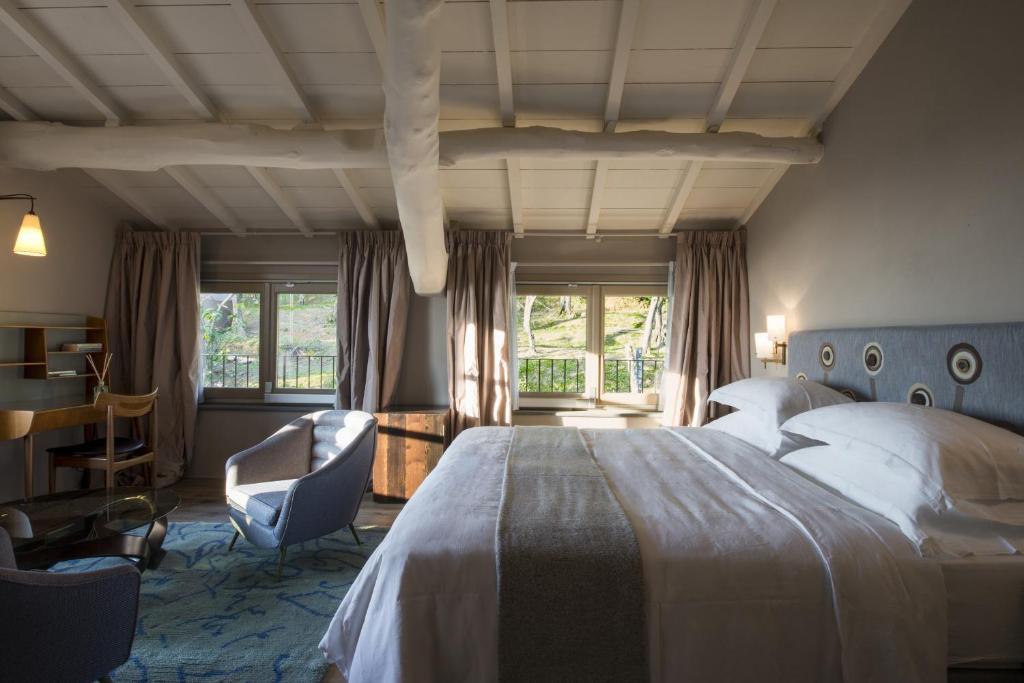
Locanda al Colle is a restored casa colonica (the traditional Tuscan farmhouse, characterised by its stone walls and central chimney), with a small number of suites and a contemporary pool. The interiors are an unusual mix of farmhouse vernacular and modernist Italian design (mid-century furniture, sculptural lighting, contemporary art on the walls).
The position is the point. From the property, the Versilia coast (with the beaches of Forte dei Marmi, the historic seaside resort of the Tuscan elite since the 1920s) is fifteen minutes by car. The Apuan Alps, with the marble quarries above Pietrasanta that supplied Michelangelo, are twenty minutes inland. Lucca, the walled medieval city often described as the more pleasant Pisa, is thirty minutes east. The setting allows a guest to combine countryside, coast and historical city in a single base.
The cuisine at Locanda al Colle works in a coastal-Tuscan register that is different from the inland Chianti style. More fish, more olive oil from the immediate hills (which produce one of the most distinctive Tuscan oils, the olio extravergine di Lucca DOP), lighter pasta preparations, the local cacciucco fish stew of Livorno on the rare evening it appears.
At a glance - Location: Camaiore hills, northern Tuscany (Versilia), about 90 minutes from Florence - Style: Restored stone casa colonica with mid-century interiors - Best for: Travellers who want sea, mountains and city accessible from one base; travellers familiar with central Tuscany who want the coastal side - Memorable detail: The view from the terrace at sunset, with the Tyrrhenian visible in the distance and the Apuan Alps directly behind.
05What to eat and drink
A few notes on Tuscan food and wine that the standard guides keep getting wrong.
The Florentine steak (bistecca alla fiorentina) is real and very large. A proper one is at least 1.2 kilograms, T-bone, served extremely rare. It is meant for two to three people. The historic addresses (Trattoria Sostanza, Trattoria Buca dell’Orafo, Buca Lapi) take reservations weeks in advance in season.
The vegetable repertoire is the underrated half. Tuscan cuisine is heavy on legumes (the white cannellini beans of the central valleys, the dark fagioli zolfini of the Pratomagno) and on bread-based dishes (pappa al pomodoro, ribollita, acquacotta). These appear on most serious menus and are the right order in the summer hours when red meat is heavy.
Chianti, Brunello and Vino Nobile are three different wines. Chianti Classico (from the central zone between Florence and Siena) is the lighter, more food-friendly of the three. Brunello di Montalcino (from a smaller zone south of Siena) is denser, longer-aged, suited to important meat dishes. Vino Nobile di Montepulciano (from the area around Montepulciano) sits between them. All three are Sangiovese-based, but the terroir and ageing produce very different wines.
The white wines are worth a stop. Vernaccia di San Gimignano is the historic Tuscan white and is at its best from recent vintages of small producers (Panizzi, Cesani, Montenidoli). The whites of the Tuscan coast (Vermentino della Costa Toscana) are also serious and are often a more interesting pairing with summer fish dishes than the more famous reds.
Olive oil matters in Tuscany the way wine matters in Burgundy. The serious restaurants will list their oil on the menu by producer and harvest year. Tasting flights of single-estate oils are increasingly offered. The new oil of the year (olio nuovo, available from late October through January) is one of the season’s pleasures.
06Suggested five-night structure
Three nights at one of the three Florence hotels. Two nights at one of the three countryside hotels.
Florence days (using Il Tornabuoni as the example base): - Day 1: arrive Florence, lunch at Trattoria Cibreo or Cibreino in Sant’Ambrogio, afternoon in the historic centre with reserved Uffizi entry, sunset apéritif on the hotel rooftop. - Day 2: morning in Oltrarno (Brancacci Chapel, walk through San Frediano), lunch at one of the small trattorie on Via dei Serragli, afternoon at the Accademia or the Bardini Gardens for the panoramic Florence view, dinner at the hotel. - Day 3: morning in the centre (Bargello museum or the smaller Stibbert collection, both significantly less crowded than the Uffizi), lunch at the historic Café Cibreo, afternoon at the Sant’Ambrogio market, evening pickup of the rental car for the next morning’s transfer.
Countryside days (using Agrivilla i Pini as the example base): - Day 4: morning transfer from Florence (about 45 minutes), lunch on arrival, afternoon in San Gimignano (early evening if possible to avoid the day-tripper crowd), dinner at the estate. - Day 5: morning in the Chianti hills with a wine visit at one of the smaller producers (Felsina, Ama, Volpaia all worth a stop), lunch at a Chianti countryside trattoria, afternoon at the pool or at a smaller hill town nearby (Volterra is a strong choice), dinner at the estate.
Day 6 is departure or extension.
07Frequently asked questions
| How many days do I need for Florence and Tuscany? | For a meaningful trip: five nights minimum (three in Florence, two in the countryside). Six or seven is more comfortable. A weekend of three nights covers only the city and feels rushed for the cultural sites. |
| Florence in summer or in autumn? | Both work. June and early September are the most balanced for combining warm-but-not-stifling temperatures with manageable crowds. July and August are hotter and busier, but the long evenings and the rooftop scene are strong arguments for those months. October is the wine harvest season in the countryside and is one of the most rewarding times to be in the Tuscan hills, with the new oil following in late October and November. |
| Do I need to rent a car? | Not for Florence. Yes for the countryside leg. Pick up the rental car on the morning of the move out of the city to avoid Florence parking issues. Return it at the airport on the day of departure. |
| Are the recommended hotels family-friendly? | Mixed. The Hoxton accommodates families easily. Il Tornabuoni and Riva Lofts are more adult-skewing but accept families. Villa Lena is the most family-friendly of the three countryside options, with structured family activities. Agrivilla i Pini and Locanda al Colle are quieter and better suited to adults. |
| Florence first or countryside first? | Florence first. The arrival energy and travel fatigue are better matched to the city than to the deep countryside. The countryside leg works better as the rest portion at the end of the trip. |
| What about Pisa, Siena, Lucca? | Pisa is best as a stop on arrival or departure (the airport is there). Siena is a full half-day or day trip from the countryside base, particularly from Agrivilla i Pini. Lucca is a day trip from Locanda al Colle or a stop on the way to or from Florence. None of the three requires an overnight stay for a first Tuscan trip. |
| Is there a luxury limit on Tuscan hotels? | The recommended hotels in this article range from approximately €280 per night (Agrivilla i Pini, low season) to over €1,000 per night (Il Tornabuoni in high season, top suite). All are accessible through Top World Hotel. |