Europe's Best Boutique Design Hotels 2026: Eight Stays Where the Building Is the Point
Some hotels are a place to sleep near the things a traveler came to see. A design hotel is one of those things. This is a list of eight European stays where the architecture, the interiors and the idea behind them are reason enough to book the room.
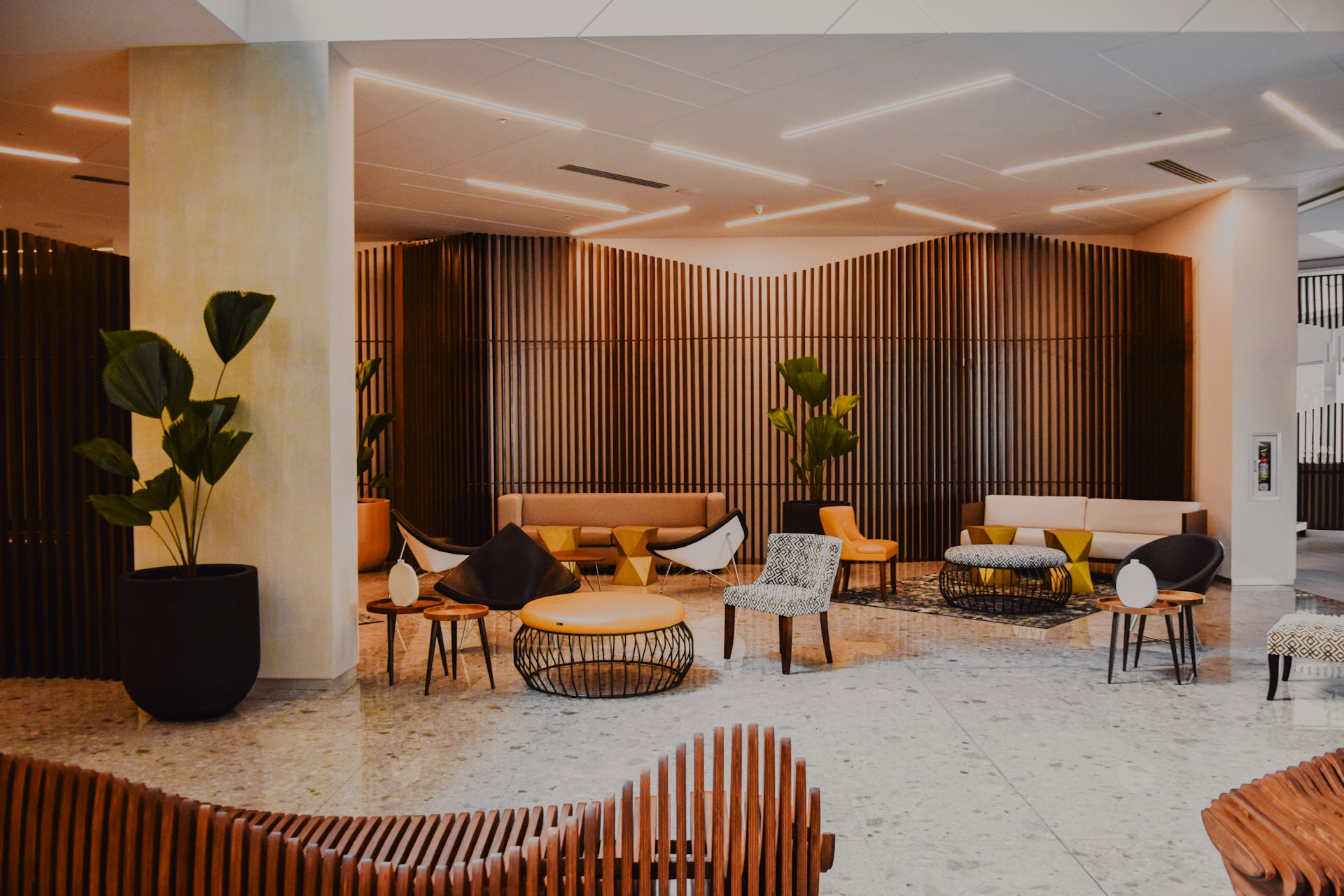
The phrase design hotel has been worn thin by overuse, stretched to cover any lobby with a statement chair. The properties below earn it in the older, stricter sense. Each one treats design as the substance of the experience rather than its decoration, whether through a serious restoration of a historic building, a single coherent authorial vision, or a collection of art and furniture chosen with the eye of a curator. None is large. All sit in the boutique range where a guest is a guest rather than a room number, and all reward the kind of traveler who reads a hotel the way others read a building.
How this list was chosen
Three tests shaped the selection. The first is intent, the sense that design drove the project rather than followed it. The second is coherence, a single idea carried from the facade to the door handles instead of a scatter of trends. The third is place, the way each hotel belongs to its city rather than floating free of it. What follows is ordered by city, not by rank, since the right choice depends entirely on where a traveler is going and what they want the stay to feel like.
01The restored landmark, Barcelona
Barcelona rewards hotels that take its architecture seriously, and few do it with more confidence than Cotton House Hotel, set in a nineteenth-century neoclassical building in the Eixample that once belonged to the city's cotton makers' guild. The restoration keeps the grand bones, the sweeping staircase, the high ceilings and tall windows, and layers a warm, theatrical interior over them. It suits a traveler who wants a sense of old Barcelona without the stiffness, within walking distance of Passeig de Gràcia and the Gaudí houses. Two nights is the natural minimum to feel the building rather than just pass through it.
02The contemporary newcomer, Barcelona
For a cleaner, more current read on the same city, Miiro Borneta sits in El Born, the medieval quarter that has become Barcelona's most walkable design district. The interiors lean modern and restrained, the kind of pared-back palette that lets the neighborhood's narrow streets and the rooftop views do the talking. It is a strong choice for a younger design traveler, or for anyone who wants to step straight out of the lobby into the cafes, galleries and boutiques of El Born and the nearby waterfront.
03The embassy turned design house, Berlin
Berlin's design strength is its habit of giving old institutional buildings provocative second lives, and SO/ Berlin Das Stue is the city at its best, set in a 1930s former Danish embassy on the edge of the Tiergarten. The grand entrance hall meets bold contemporary interiors, and the location, beside the great park and a short walk from the zoo and the western center, gives the stay a calm that central Berlin hotels rarely offer. It suits travelers who want design with quiet around it rather than the noise of Mitte.
04The art-filled address, Berlin
To stay closer to the cultural heart of the city, Château Royal in Mitte folds a serious art collection and a considered, gallery-like interior into a set of restored townhouses. The result reads less like a hotel with art on the walls and than like a private house that happens to take guests, a few minutes from Museum Island, the boulevard of Unter den Linden and the city's best restaurants. It is the choice for a design traveler who treats the collection and the dining as part of the room.
05The grand hotel reimagined, Zurich
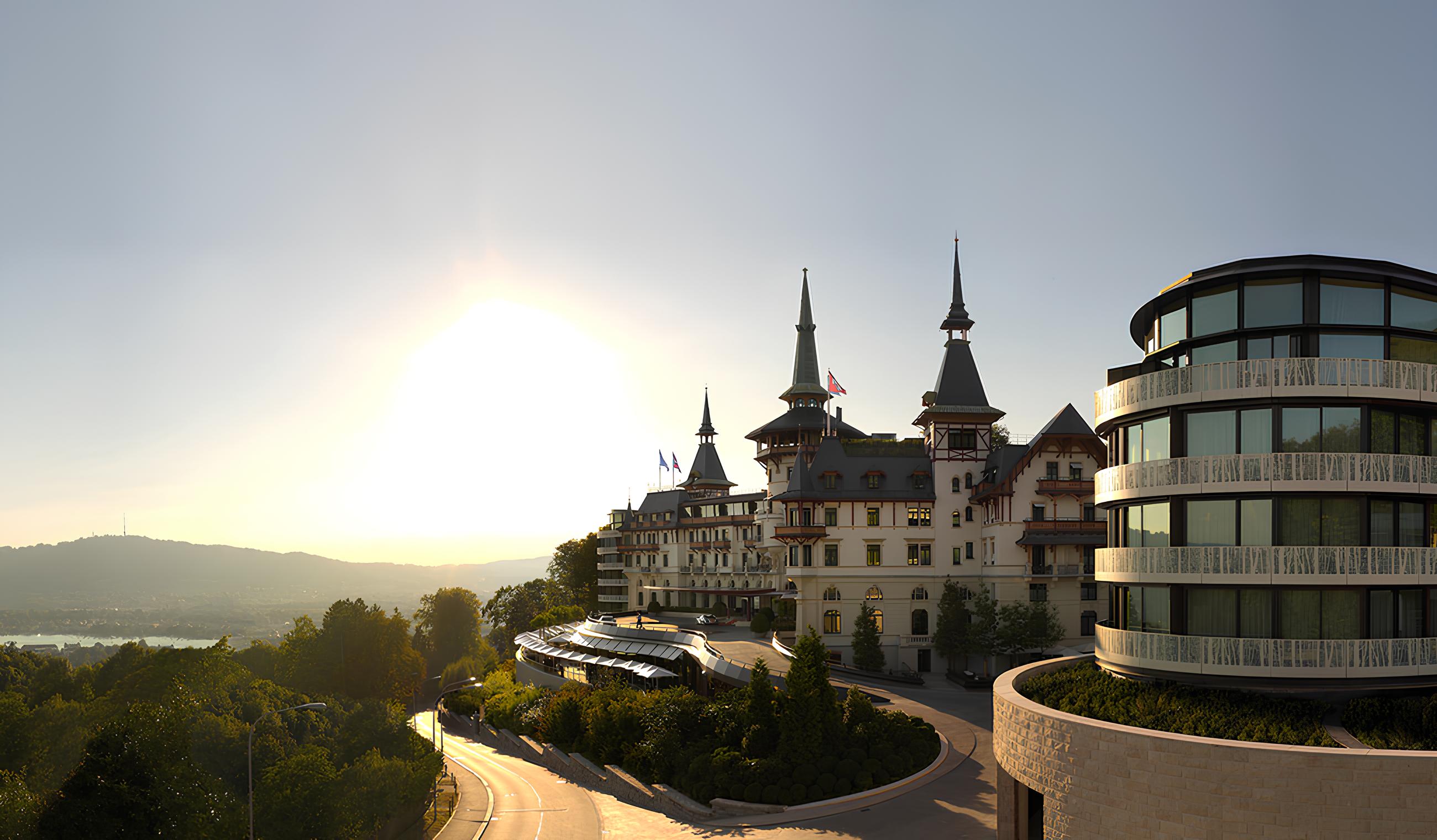
Not every design hotel is small in spirit, and The Dolder Grand shows what happens when a historic landmark is rethought rather than merely refreshed. The 1899 hotel on the hill above Zurich was extended and reworked by Norman Foster's studio, and it carries one of the most ambitious art collections of any hotel in Europe, with works set through its public rooms and grounds. It suits a traveler who wants design at the scale of architecture, plus a major spa and long views over the city and the lake. Two or three nights let the building, the art and the hillside settle into a single stay.
06The academy on the canal, Copenhagen
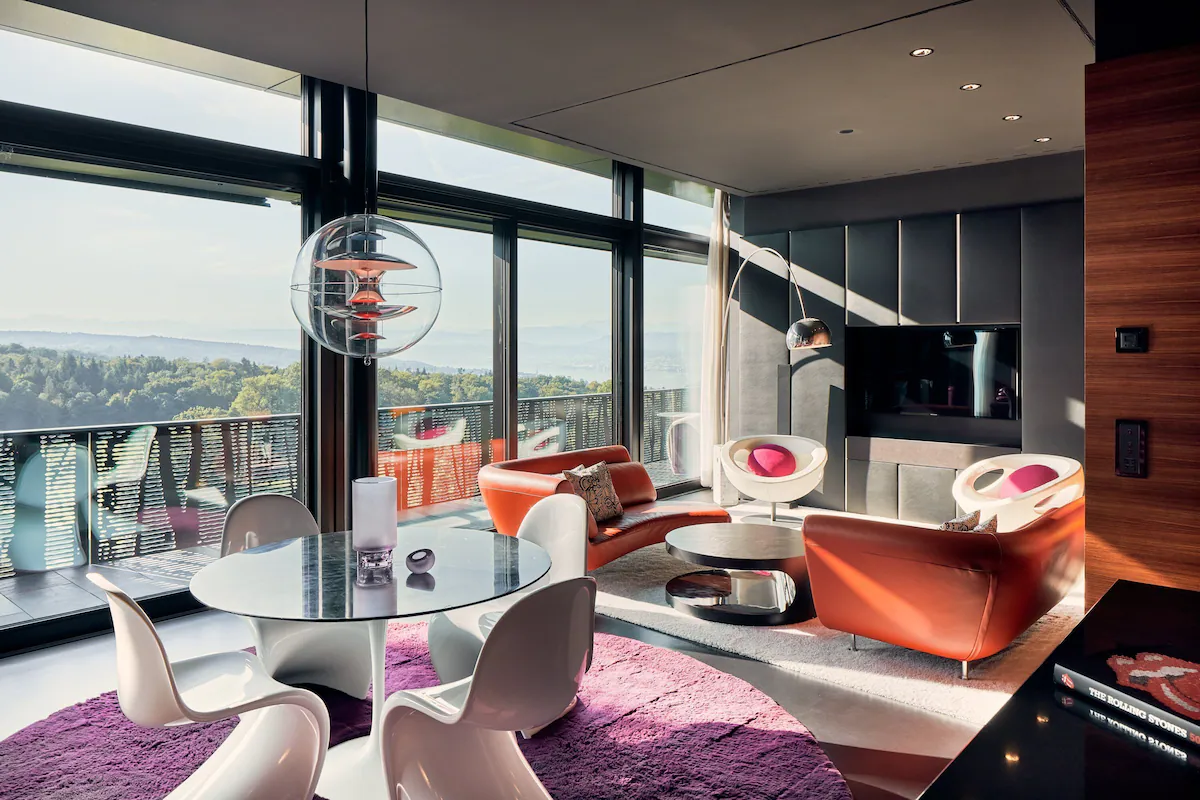
Scandinavian design needs no introduction, and Copenhagen offers it at the source. Nobis Hotel Copenhagen occupies a stately former conservatory building in the center, and the interiors follow the restrained, material-led logic that the country is known for, warm woods, soft stone, nothing shouted. The address puts a traveler within walking distance of the Tivoli Gardens, the design shops and the harbor, which makes it a clean base for a city that is itself a lesson in how design and daily life can share the same street.
07The apartment-hotel in the old town, Prague
Prague's beauty can overwhelm a hotel, so the smart design choice is a building that converses with the city rather than competing with it. The Julius Prague takes a historic building near the lively New Town and reworks it as a design-led apartment-hotel, with rooms that include kitchenettes and a layout built for longer, slower stays. It suits travelers who want to live in Prague for several days rather than visit it, with the space to cook, work and settle in while the old town waits a few minutes away on foot.
08The Provençal maison, Aix-en-Provence
The list closes away from the cities, because design in Europe is not only steel and concept. Villa Gallici sits just above Aix-en-Provence as an unapologetically decorated French maison, all toile, layered fabric and shaded garden, the romantic, maximalist end of the design spectrum that the minimalist hotels exist in reaction to. It suits a traveler who reads warmth as sophistication rather than clutter, and who wants a base for the Provençal triangle of Aix, the Luberon villages and Cézanne's landscape. It is a useful reminder that good design has more than one accent.
What separates design from decoration
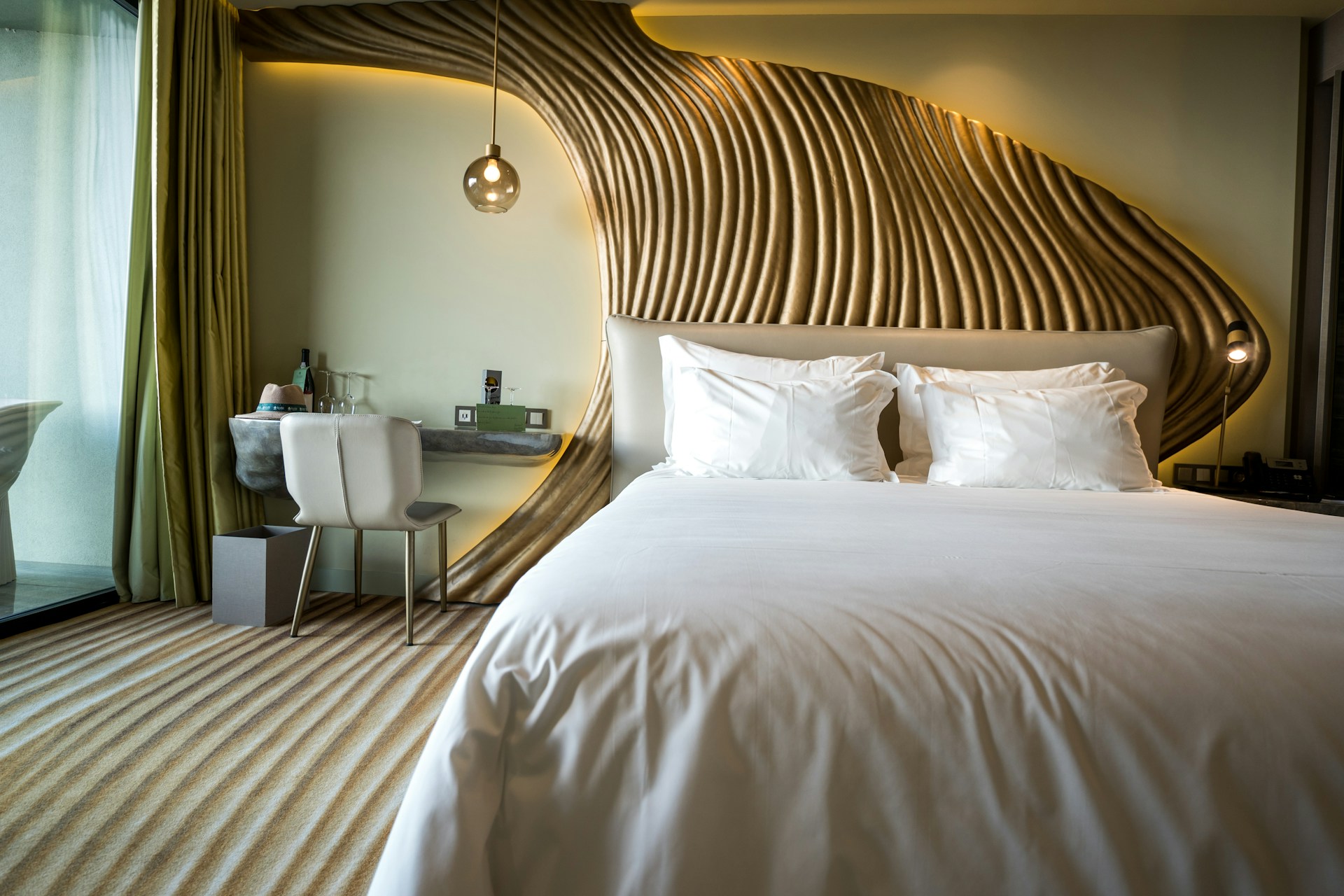
The difference between a design hotel and a hotel with a handsome lobby is easy to feel and hard to fake. A decorated hotel buys good furniture and hangs good art. A design hotel starts from an idea, about the building, the city or the way a guest should move through the day, and follows it down to the smallest detail. The signal is consistency. In the strongest examples the door handle, the light switch, the breakfast plate and the staff uniform all seem to belong to the same sentence. Where that thread breaks, where the rooms say one thing and the restaurant says another, the design is surface rather than structure.
History is the second tell. Many of Europe's best design hotels are not new builds but rescued buildings, a former embassy, a guild house, a conservatory, a townhouse, given a second life that respects the first. Cotton House in Barcelona keeps the cotton guild's grand staircase, SO/ Berlin keeps the bones of a Danish embassy, Nobis in Copenhagen keeps a former academy of music. The design intelligence lies in the conversation between old and new rather than in erasing one for the other. A traveler choosing a design hotel can read this directly: the more a property leans on its building's real story, the less likely the design is to date.
The last test is restraint. Good design knows when to stop, and the line between bold and gimmick is thin. A hotel that photographs as a series of set pieces, each room straining to be the most Instagrammed corner, has usually crossed it. The properties that endure tend to be quieter than their press, confident enough to leave a wall blank and a view uninterrupted. For a stay that still feels right in five years rather than five months, the calmer hand is the safer bet.
How to choose between them
The eight divide along a few clear lines. For historic restoration carried off with confidence, Cotton House in Barcelona and The Dolder Grand in Zurich lead, the second at the scale of true architecture. For design as art collection, Château Royal in Berlin and again the Dolder make the strongest case. For Scandinavian restraint, Nobis in Copenhagen is the purest expression. For longer, lived-in stays, The Julius in Prague is built for the purpose. For the maximalist, decorated tradition, Villa Gallici stands alone here. And for travelers who simply want to be in the best design neighborhood of a great city, Miiro Borneta in El Born and SO/ Berlin beside the Tiergarten answer that first.
At a glance
- Best for historic restoration: Cotton House, Barcelona, and The Dolder Grand, Zurich.
- Best for an art collection: Château Royal, Berlin, and The Dolder Grand, Zurich.
- Best for Scandinavian design: Nobis Hotel Copenhagen.
- Best for a longer stay: The Julius Prague, with apartment-style rooms.
- Best for decorated, maximalist style: Villa Gallici, Aix-en-Provence.
- Best neighborhood base: Miiro Borneta in El Born, Barcelona, and SO/ Berlin Das Stue by the Tiergarten.
Frequently asked questions
| Question | Answer |
|---|---|
| What makes a hotel a true design hotel? | A true design hotel treats design as the substance of the experience rather than decoration. That usually means a serious restoration of a notable building, a single coherent vision carried throughout, or a curated collection of art and furniture. The test is simple: if the building and its interiors are part of the reason I booked, it qualifies. |
| Which is the best design hotel in Barcelona on this list? | Both earn the title in different ways. Cotton House Hotel suits travelers who want a grand nineteenth-century building restored with warmth in the Eixample, while Miiro Borneta is the cleaner, more contemporary choice in the medieval El Born quarter. The decision comes down to historic theatre versus modern restraint, and to which neighborhood I want at my door. |
| Are boutique design hotels more expensive than regular hotels? | Not always, though the best examples sit in the upper range because restoration, original interiors and small room counts cost more to deliver. The value is different from a large chain: fewer rooms, more character and a stronger sense of place, rather than more facilities. For a traveler who cares about the building, that trade usually feels worth it. |
| Which design hotel is best for art lovers? | The Dolder Grand above Zurich carries one of the most ambitious hotel art collections in Europe, set through its public rooms and grounds, and Château Royal in Berlin builds a serious collection into a gallery-like townhouse interior. Either suits a traveler who wants the art to be part of the stay rather than a detail. |
| Are these hotels good for couples or for design-minded solo travelers? | Both. The boutique scale and strong sense of place suit couples looking for atmosphere, and the central, walkable locations make them comfortable and interesting for solo design travelers. Villa Gallici in Provence leans most romantic, while the city addresses work equally well alone or as a pair. |
| How many nights should I stay in a design hotel? | Two nights is the minimum to feel the building rather than just pass through it, and three suits the larger stays such as The Dolder Grand, where the architecture, art and spa all ask for time. For Prague, The Julius is built for longer, with apartment-style rooms that reward four nights or more. |
| What is the most affordable way to experience a design hotel? | Travel in the shoulder seasons of spring and autumn, choose a city stay over a resort, and consider an apartment-style design hotel such as The Julius Prague for a longer trip, where a kitchenette lowers the running cost of the days. The design itself is fixed; the season and the format are where the price moves. |
A great design hotel does not ask to be admired from across the lobby. It asks to be lived in for a few days, until the way it handles light, material and space stops feeling like a style and starts feeling like an argument about how to live. Each of these eight makes that argument well.