A Swiss Summer: Three Hotels That Show What the Country Does When the Skis Are Gone
Switzerland is famous for its winters. Its summers, when the cable cars run for hikers, the city beaches open along the lakes, and the old towns slow into their long northern light, are arguably the better season. Three hotels across the country, from an alpine village to the financial capital to the old town of Geneva, illustrate what the Swiss summer actually does.
Most travellers picture Switzerland the way the country sells itself in winter campaigns: white peaks, ski resorts, fondue, expensive watches behind glass in Zurich. The picture is accurate enough for December through March. From May through October, however, the country becomes a different place. The high passes open. The flower meadows above 1500 metres reach their peak in early July. The lakes of Zurich, Geneva and Lucerne fill with city swimmers in the long evenings after work. The old towns of Bern, Lausanne and Geneva slow down without losing their daily rhythm.
The Swiss summer is one of the quieter pleasures in European travel. It does not have the volume of the Mediterranean coast in the same months. It does not have the festival noise of August in Salzburg or Edinburgh. What it has is something Switzerland is structurally good at: long days, careful infrastructure, and a national taste for being outdoors without making it into a spectacle.
What follows are three hotels that, taken together, show what the country does in this season. They are not the most expensive properties in their cities. They are the most coherent ones for a guest who wants to read Switzerland in summer rather than to do it. The order below moves geographically from the high Alps to the urban lakes.
01The Brecon, Adelboden: the alpine village in its real season
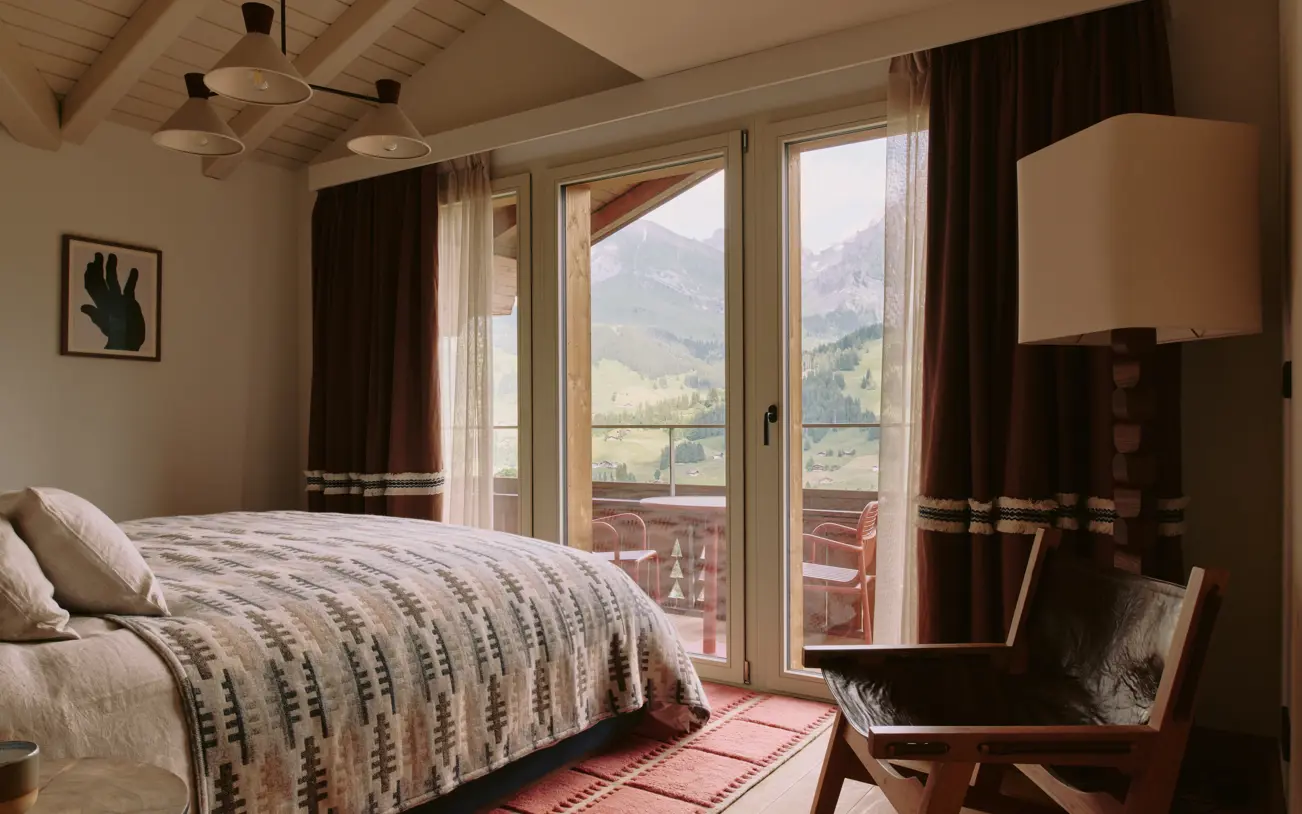
The traditional image of an alpine hotel is a winter one: snow on the roof, skiers in the lobby, fondue at six in the evening. In summer, the same buildings reveal a different identity. Without the snow, the surrounding landscape opens. The wooden chalets show their carved beams. The fields below the property become walkable. The horizon, which in winter is closed by cloud and short days, extends to ridges that are invisible from December through March.
The Brecon sits in Adelboden, in the Bernese Oberland, at about 1350 metres of altitude. The property is a contemporary reinvention of the classic Swiss Berghotel: warm wood, large fireplaces, big south-facing windows that catch the long daylight, a discreet wellness floor. The materials are local: alpine spruce, granite quarried in the canton, hand-spun wool from a workshop two valleys away.
What makes The Brecon particularly suited to summer is the way the daily rhythm of the hotel mirrors the rhythm of the season. Breakfast on the terrace starts around eight, but the kitchen serves until ten because Adelboden in summer wakes slowly. Lunch is deliberately heavier than in winter, in the European seasonal sense, with the season’s first chanterelles served with handmade pasta, alpine lamb cooked over a low flame, dense rye bread from the local bakery. Dinner is paced to finish in time for the alpenglow, the cold pink light on the high peaks that lasts about twenty minutes between nine and nine-thirty in June.
The hiking from Adelboden in summer is some of the best in the Swiss Alps. The Engstligenalp plateau, reachable by a single cable car from the village, opens onto a high meadow ringed by waterfalls and small lakes. The longer Allmenalp loop, about three hours at moderate pace, passes through working alpine farms where cheese is still made daily by hand. None of these walks require technical experience. All of them are accessible by cable car from the centre of the village.
The Brecon arranges most of the logistics. Lunchboxes for the trails, drying space for boots in the lobby, a small early-evening service of cold beer and Älplermagronen (the alpine pasta-and-potato dish) for guests who come back tired and unwilling to dress for dinner. The summer here works because the hotel knows it.
At a glance - Location: Adelboden, Bernese Oberland, about 90 minutes drive from Bern airport - Style: Contemporary alpine Berghotel with hand-finished local materials - Best for: Summer hikers, slow alpine weeks, and travellers who want the canton’s most-photographed mountains without the winter crowds - Memorable detail: The alpenglow on the Wildstrubel at 9pm in June, visible from the south-facing terraces of the hotel
02The Dolder Grand, Zurich: the grand hotel above the lake
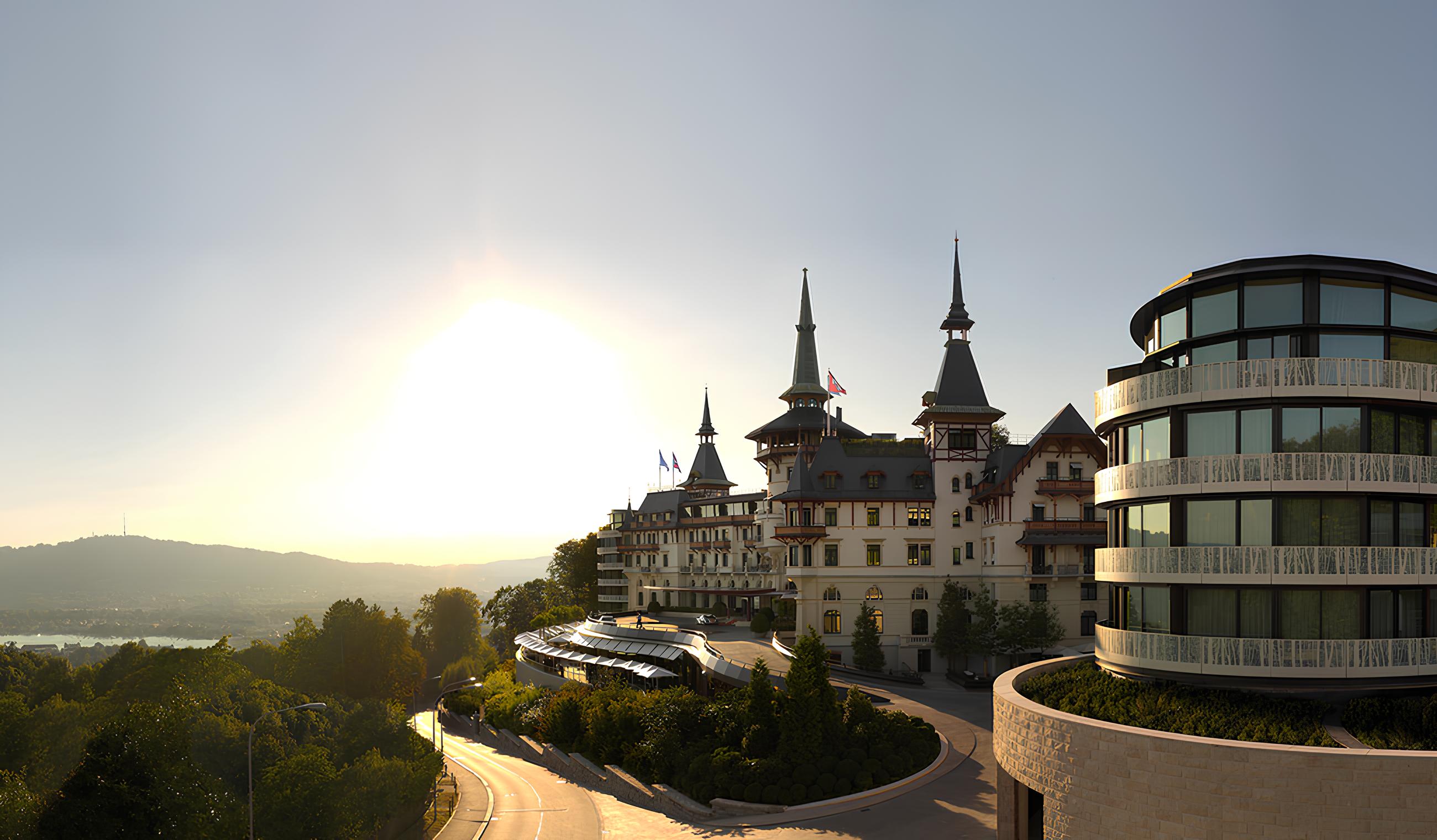
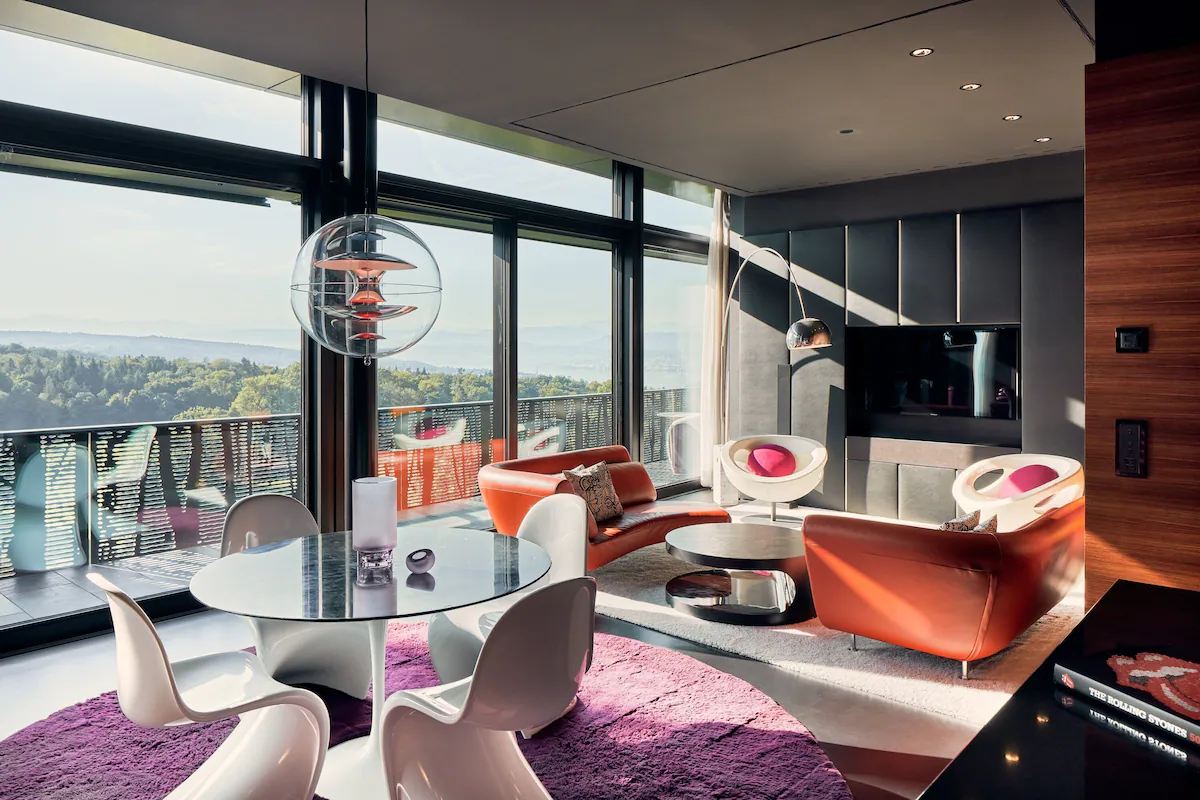
The grand hotel as a building type was invented in nineteenth-century Switzerland. Most of the country’s iconic luxury properties (the Beau-Rivage in Lausanne, the Baur au Lac in Zurich, the Bürgenstock in Lucerne, the Suvretta House in St. Moritz) date to the period between 1870 and 1910, when Swiss tourism was creating the modern hotel industry. The Dolder Grand sits in this tradition. The building, on the Zürichberg hill above the city, opened in 1899 as a Kurhaus and grand hotel. Its current form, after a Norman Foster-led reconstruction completed in 2008, is a contemporary expansion of the original silhouette: the historic central section is preserved and the two new wings extend toward the forest behind.
Summer is the better season at The Dolder Grand for two specific reasons.
The first is the city’s relationship to its lake. Lake Zurich in summer becomes the social centre of the city. The lakeside Badis (the public bathing baths, which are a Swiss institution) reopen in late May. The trams run from the city centre to the lake in twenty minutes. The evenings, with the long northern light that lasts until past nine-thirty in June and July, fill with city residents swimming after work, with apéritifs on the promenade, with the small boats that cross the lake to the suburb of Küsnacht for dinner. The Dolder Grand sits ten minutes by car above the city, in a forested park, but is the natural base for a guest who wants to walk down to the lake in the late afternoon and back up to the cool of the hillside in the late evening.
The second reason is the architecture itself. The historic section of the hotel, on the side that faces the city, is best read in the long light of summer. The Foster extension, with its glass and undulating panels, dialogues with the surrounding forest in a way that disappears against snow in winter but reveals itself in June with green leaves on every side.
The dining at The Dolder Grand is led by The Restaurant, with chef Heiko Nieder, which holds two Michelin stars and is one of the most precise kitchens in Switzerland. The summer menu shifts toward the canton’s lake fish (Egli, Felchen) and toward the early-season produce of the Engadine valleys. The wine list runs the major European appellations but is unusually thoughtful on Swiss wines, which are difficult to taste outside the country.
The spa at The Dolder Grand, Dolder Grand Spa, is one of the largest in Switzerland (4000 square metres), with multiple thermal pools, sauna circuits, and a separate Aman-influenced wellness wing.
At a glance - Location: Zürichberg, above central Zurich, 25 minutes by car from the airport - Style: 1899 grand hotel with Foster-led contemporary extension - Best for: Summer in a major Swiss city, two-Michelin-star dining, large wellness, easy walks to the lake - Memorable detail: The view across central Zurich from the south-facing rooms at sunset, with the Alps visible as a thin band on clear days.
03Hotel Les Armures, Geneva: the old town slowed to its summer pace
Geneva in summer is the version of the city most visitors miss. The international organisations along the lake (United Nations, WHO, WTO) operate at reduced rhythm. The diplomatic season is on holiday. The lake, with its long pier and the Jet d’Eau fountain that has defined the skyline since 1891, fills with sailing boats and city swimmers in the public bains of Pâquis and Eaux-Vives. The Vieille-Ville, the historic old town on the hill above the lake, becomes one of the quietest European old towns of its size.
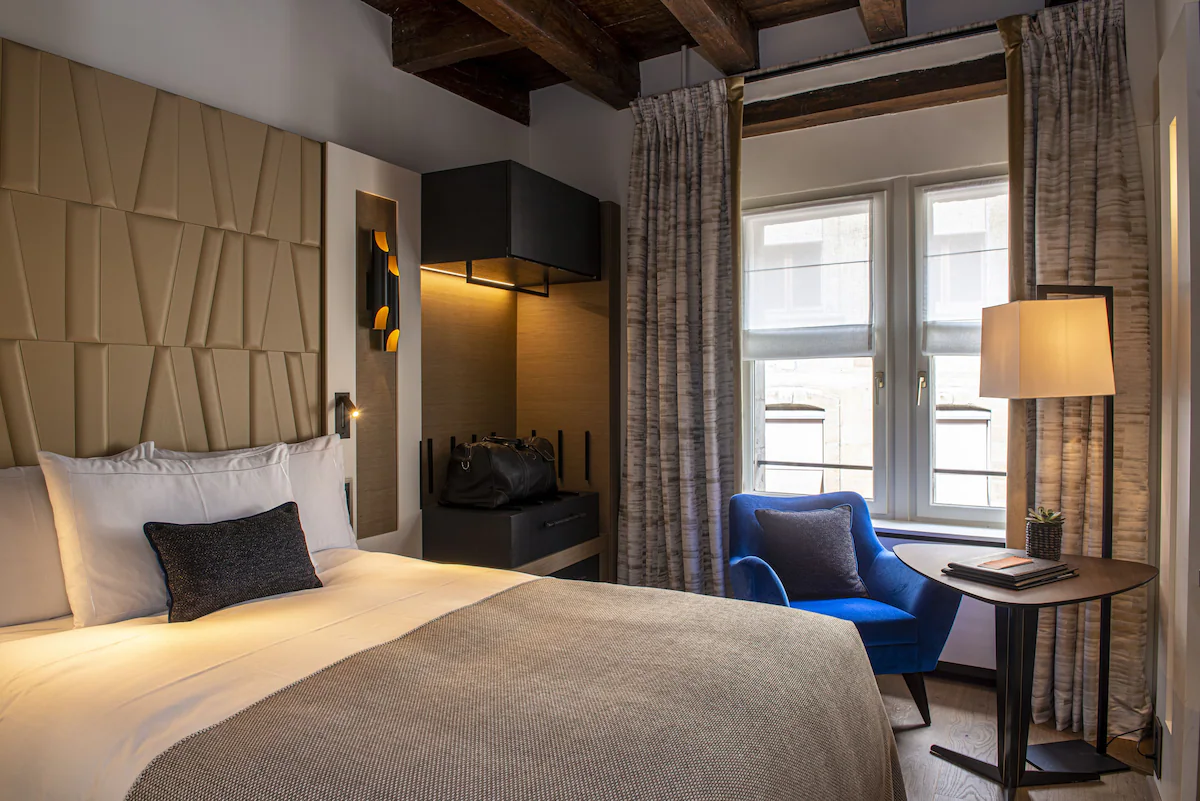
Hotel Les Armures sits in the centre of this Vieille-Ville, in a seventeenth-century building on the Rue du Puits-Saint-Pierre, a few steps from the cathedral and the city’s small but serious Espace Saint-Pierre archaeological site. The hotel has been operating in some form since the 1700s. The current property, after a multi-year restoration that ended in the late 2010s, occupies several connected historic buildings, with rooms organised around small inner courtyards and stone staircases that have been carefully consolidated rather than rebuilt.
What makes Les Armures a good summer Geneva base is the relationship between hotel and old town. The Vieille-Ville is a small, walkable district of about four streets by four, with the Place du Bourg-de-Four at its heart. Most of the city’s serious restaurants, the small antique shops, and the city’s quietest churches are within a five-minute walk. The lake and the city centre, with the larger shopping streets and the international quarter, are a ten-minute walk down the hill.
The kitchen at Les Armures is one of the older institutions in Geneva. The restaurant, which has the same name as the hotel, has been serving fondue and raclette to Genevan locals and to visiting heads of state for over forty years (Bill Clinton famously dined there during his Geneva summits in the 1990s, and his table photograph still hangs in a small frame near the entrance). The summer menu is lighter than the cold-season specialities, with focus on the lake-fish of Lac Léman (perch fillets pan-fried in butter, omble chevalier whitefish baked with herbs), seasonal vegetables from the surrounding canton, and an unusually good cheese course given the hotel’s specialisation.
The atmosphere in summer is the unhurried one of an old town in its low season. The cobbled streets stay cool late into the morning. The mid-morning espresso at the small terraces around Bourg-de-Four becomes a real pause rather than a hurried function. The evening walks through the Parc des Bastions below the old town, with its giant chess boards and the long row of Reformation monuments, are easy and almost crowdless.
At a glance - Location: Vieille-Ville, central Geneva, 20 minutes by tram from the airport - Style: Restored seventeenth-century connected buildings in the city’s historic old town - Best for: Travellers who want Geneva at its quietest, with serious traditional cuisine and walking distance to the lake - Memorable detail: The Place du Bourg-de-Four at 7pm in June, with the cathedral bells, the old fountain, and the long northern light still filling the square.
Three different versions of the same country
Putting the three hotels in sequence reveals something about Switzerland that single-property visits sometimes miss. The country is not architecturally or culturally uniform. The Bernese Oberland is German-speaking, conservative, agriculturally Alpine. Zurich is Zwinglian, financial, lake-and-forest. Geneva is Calvinist, French-speaking, international, distinctly southern in its summer mood.
The three Swiss cantons that these hotels represent (Bern, Zurich, Geneva) are linked by the country’s spine railway, the Swiss Federal Railways (SBB), which is one of the most reliable train networks in the world. Adelboden is reachable from Zurich in about two and a half hours (Zurich to Frutigen by SBB, then a regional postal bus to Adelboden), and from Geneva in roughly three and a half hours. A three-city Swiss summer week is logistically straightforward in a way that the equivalent trip in Italy or France usually is not.
A suggested structure for a first multi-stop Swiss summer week: two nights at The Brecon (Adelboden), three nights at The Dolder Grand (Zurich), two nights at Hotel Les Armures (Geneva). The total distance covered is around 500 kilometres, all by train, with no rental car required and no significant logistical friction at any handover.
When to go
Mid-June to mid-September is the best window in all three locations. June and early July give the long northern daylight (nearly sixteen hours of light around the summer solstice in northern Switzerland). Late August and early September are the second optimum: slightly shorter days, fewer holidaymakers, the first hint of autumn colour in the high Alps.
May and early October are the shoulders. Adelboden in May can still have snow on the highest trails, and some cable cars run a reduced timetable. October in the city hotels (Zurich, Geneva) is one of the pleasantest months for an urban visit, with mild temperatures, clean air, and most cultural seasons in full swing again after the August pause.
July and August are not difficult in Switzerland the way they are on the Mediterranean. The country does not have a high-season crush. Hotel availability is tighter, and some specific cultural events (the Montreux Jazz Festival in early July, the Lucerne Festival in August) can fill regional accommodation, but the overall density is manageable. Travellers coming from southern Europe often comment on the contrast: the same week of August can be at peak chaos in Capri and at completely normal pace in Adelboden.
A note on cost and currency
Switzerland is, accurately, an expensive country. The franc has been strong against the euro and the dollar for over a decade. A meal at The Brecon’s main restaurant is typically CHF 80 to 120 per person without wine. A dinner at The Restaurant in The Dolder Grand begins around CHF 250 per person. Hotel Les Armures sits closer to standard European luxury prices for its category.
These prices are not negotiable downward. Switzerland does not work on the seasonal price-swing logic of southern Europe. What changes between high and low season is availability, not rate. Travellers planning a Swiss summer should budget accordingly and consider the trip in the same financial register as a similar week in London or Paris rather than as a southern European holiday.
Frequently asked questions
| Is Switzerland worth visiting in summer rather than winter? | For many travellers, yes. The summer offers longer days, accessible high-altitude landscapes, the country’s lakes at their most usable, and significantly lower density than the winter ski season. It is a different Switzerland: less postcard-iconic, but arguably more interesting culturally and structurally. |
| Do these hotels need rental car access? | No. All three are reachable by Swiss train (SBB) and integrated with the country’s public transport. Adelboden requires a single bus connection from Frutigen station, which is included in standard Swiss Travel Pass coverage. Zurich and Geneva have direct airport-to-city train links of under twenty minutes. |
| How many days minimum for a Swiss summer trip? | For a single hotel, three to four nights gives a meaningful stay. For two hotels (typically mountain plus city), five to seven nights. The three-city structure described above works at seven nights and stretches comfortably to nine or ten. |
| What about food preferences? | Swiss kitchens, especially in the German-speaking cantons, can be meat-and-dairy heavy. All three hotels in this article have strong vegetarian options in the summer menu, with The Brecon being the most attentive to plant-forward cuisine. Vegan diets require a quick conversation at booking but are well handled in all three. |