Driving the Atlas: A Slow Week in Morocco’s Mountains and Medinas
Seven days, four hotels, two passes, one quiet lake. A slow Moroccan itinerary built around the High Atlas and Marrakech in late spring. Ordered the way the trip actually unfolds rather than as a checklist of monuments.
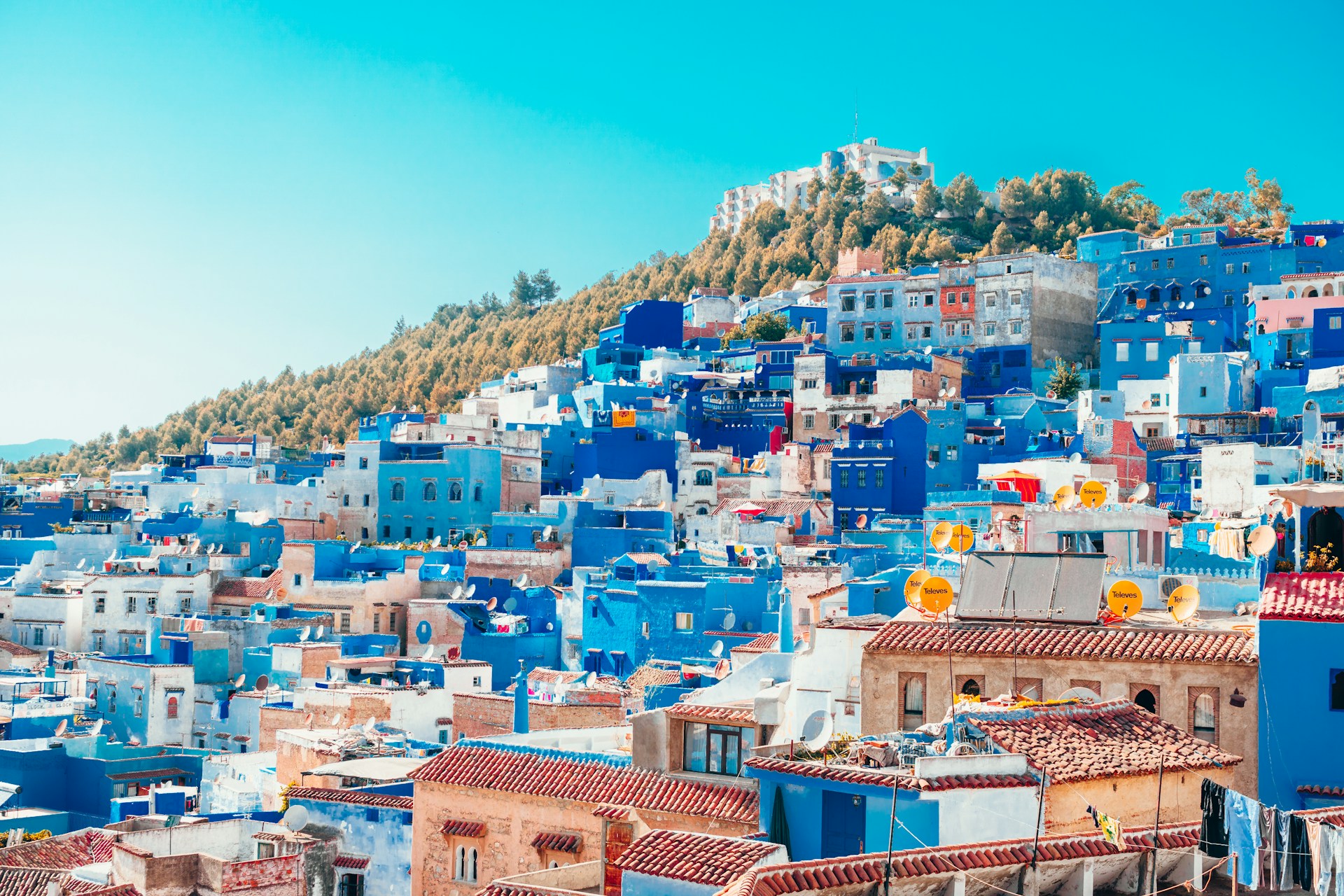
A week in Morocco done well is not a list of cities to tick off. It is a loop. The right version of the trip begins and ends in Marrakech but spends most of its time outside the city: in the mountains south, in the country side north, on a quiet reservoir an hour west, and back into the medina only at the end.
The structure that works best is described below. It is not a guidebook in the conventional sense. It is the way the seven days move when this itinerary is done properly: where to drive, what to eat, what to skip, what to expect from each property and from the road between them. Four small boutique hotels, none of them on a beach, none of them part of a large group.
Day 1, Tuesday. Marrakech to the Atlas foothills
The first afternoon on the road is the slowest. The Tizi n’Tichka pass is a long, switching climb. Coming out of Marrakech the road is straight and the heat is heavy, and the city smell of fried bread and exhaust lingers for fifteen minutes after the last suburb. Then the land opens. The Atlas appears as a thin grey line on the horizon. After about an hour the road begins to climb in earnest, through a series of villages whose names blur together: Aït Ourir, Tighedouine, Taddert.
A small note for trip planning. The car rental that works best for this loop is a any small 4x4 with comfortable suspension. The pickup is most easily arranged in Marrakech itself, not at the airport, with a small local rental called Auto Atlas run by a man named Khalid whose office sits above a laundromat near the Place du 16 Novembre. Khalid is known among visitors for handing out hand-drawn maps on the back of a receipt. The only thing the phone GPS gets wrong on this route is the order of two villages on the way to Asni; the road signs are correct, the phone is not.
About forty minutes up the pass, near the village of Aït Imelloul, a small roadside grill run by a man named Aziz serves the best tagine and mint tea on this stretch of the climb. Aziz learned French in Casablanca in the eighties and is happy to talk about the road. His advice, which proves correct on every visit, is to drive the Tichka between six and nine in the morning, when the trucks are still loading at the markets below. Most travellers forget this rule on the first day going up and then remember it on the way back.
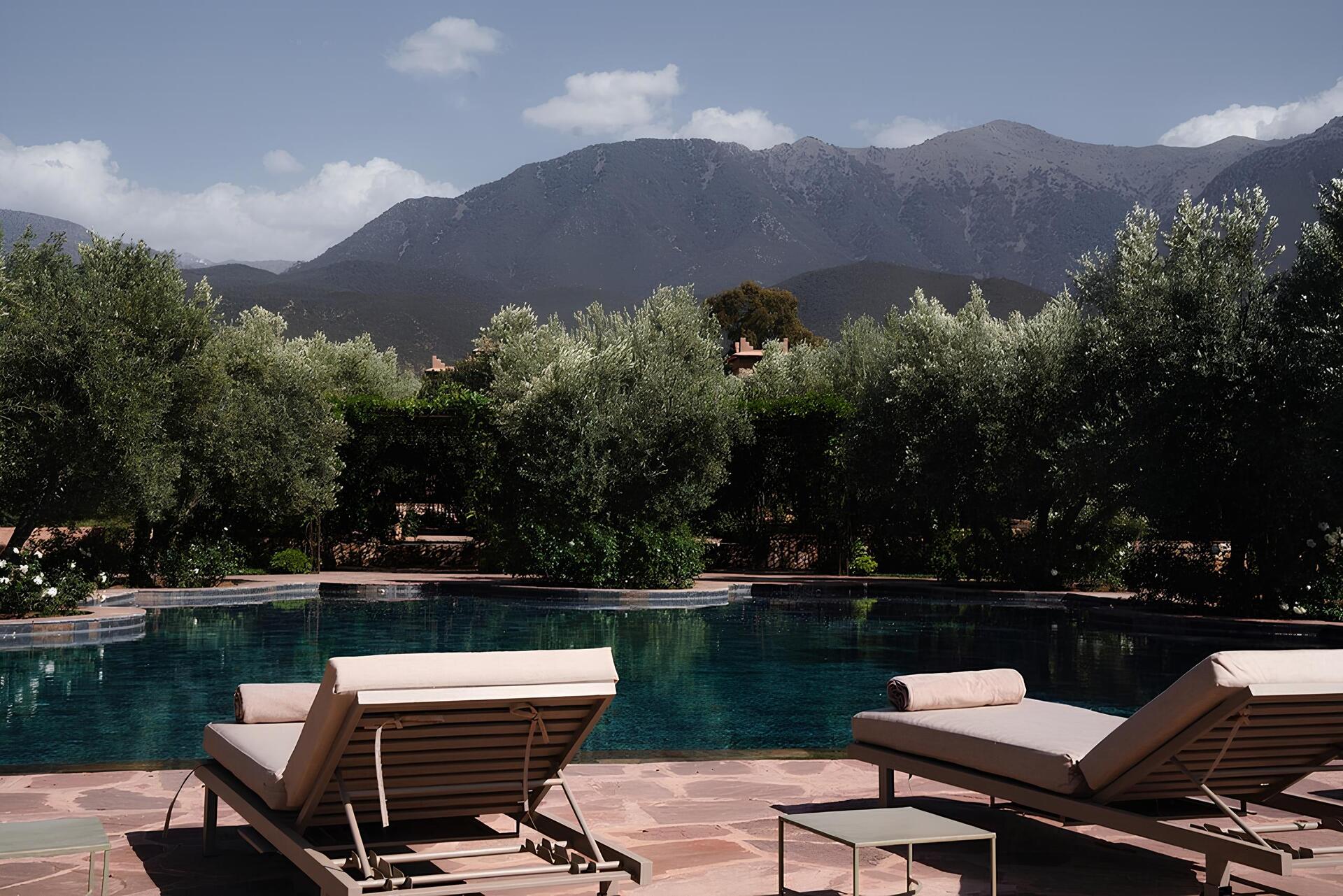
Olinto Atlas Mountain Retreat sits about ninety minutes from Marrakech, off the road that climbs toward the pass. The turnoff is unmarked. A short dirt track leads up to a low rammed-earth building that almost disappears into the landscape. The architecture is contemporary Berber-influenced. The materials are local stone and rammed earth. The property does not advertise itself in any way visible from the road. From the terrace, the snowed peaks of the high Atlas are visible to the south, even in late April.
The first dinner at Olinto is the one travellers tend to remember most. Lamb tagine with prunes and almonds, served on the terrace. A bottle of red Berkane from the Oriental region of Morocco, a wine appellation that does not get the attention it deserves. After dinner, the silence on the terrace has no city sound in it at all. Late arrivals often leave their bedroom doors open the first night.
Day 2, Wednesday. The pass at six in the morning
Aziz is right. The Tichka at six in the morning belongs to no one. Two trucks come down toward Marrakech in the first hour. After that, the road is empty. The summit of the pass (2,260 metres) has a small belvedere worth a twenty-minute stop. The light at that altitude in April is colder and harder than expected. The view, when the haze permits, opens across the high massif toward the southern slopes.
Back at Olinto by eleven. The kitchen does a lunchtime amlou (the local almond paste with argan oil and honey) served with country bread. The bread is baked in the wood oven on the property. The argan oil is pressed in the village.
In the afternoon, the Ourika Valley is fifty minutes east of Olinto on small mountain roads. The valley has been mass-touristed in the past, and the scars are visible: the long row of fish restaurants near the river, the parked tour vans. The trick is to keep driving past the village of Setti Fatma until the road narrows, the cars disappear, and the river becomes the river it has always been. The path to the first of the seven waterfalls takes an hour to walk and is almost always empty after lunchtime. Going to the second or third waterfall is not the point; the first one is enough.
Back at Olinto by sunset. Dinner the same way as the first night. A plate of mrouzia (lamb with raisins and almonds) usually appears on the table without being asked, when the kitchen knows guests are returning from a long walk in the Ourika.
Day 3, Thursday. Down from the mountains, into the country
Thursday morning is the move from Olinto to La Plantation Marrakech, an estate property about thirty minutes north of Marrakech in the country side known as the Palmeraie. The drive down from the mountains is shorter than the drive up: the road is open, the morning is cool, and the descent into the plain takes less than an hour.
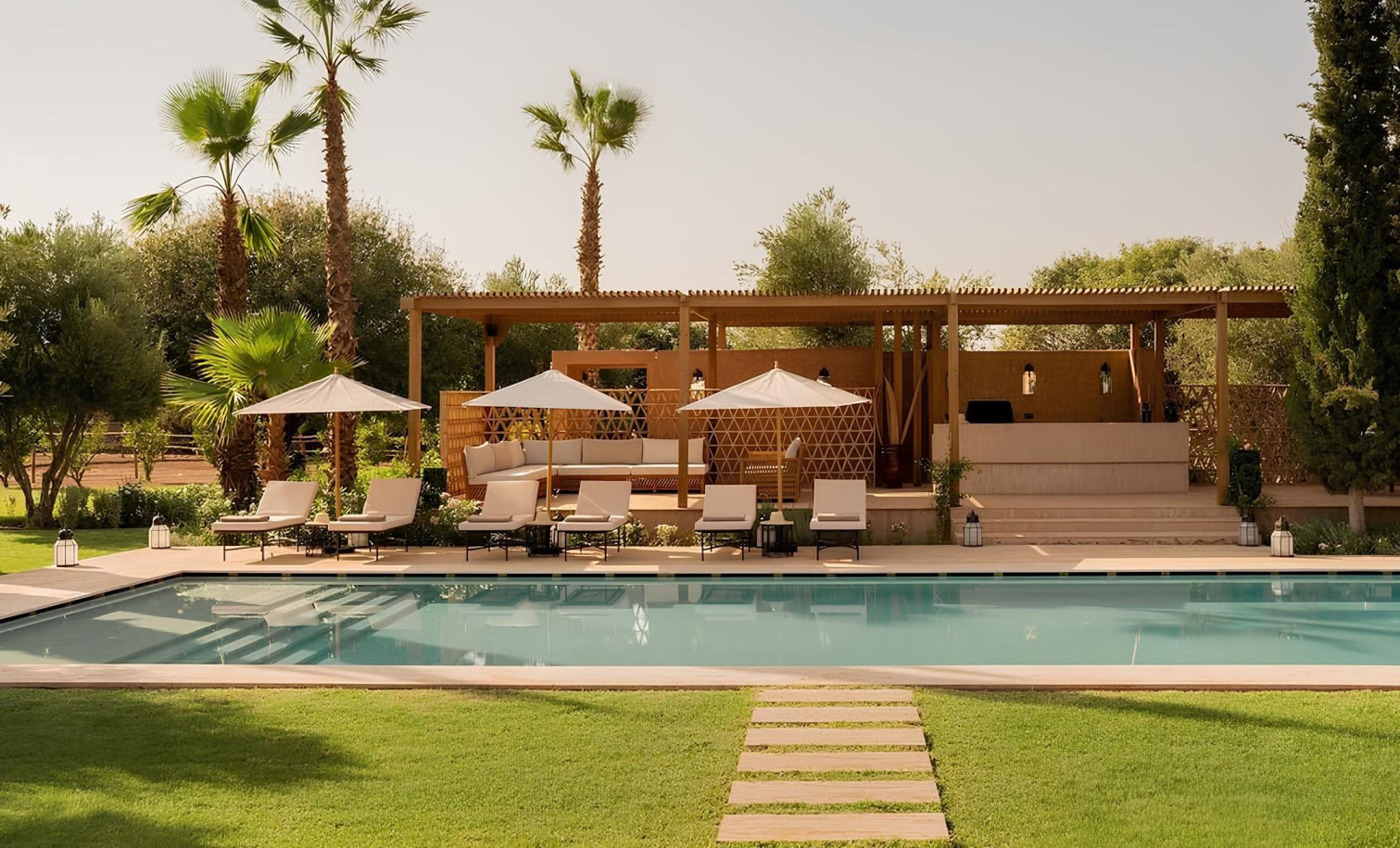
La Plantation is the opposite of Olinto in geography. Where Olinto is mountain stone and altitude, La Plantation is a low estate of olive groves, palms and rose gardens, an hour beyond the city traffic. The hotel itself is a series of villas and pavilions around a long pool, with a kitchen that draws heavily on what the estate produces. The lavender that scents the towels is from the estate. The argan oil at breakfast is pressed in the village. The lemons in the sorbet were on a tree when guests check in.
The afternoon at La Plantation is for doing almost nothing. A long lunch on the terrace, two pieces of grilled sea bass, a glass of Domaine de Sahari (the Moroccan dry rosé that appears on the better tables in Marrakech). Then a swim. Then an hour of reading in a hammock that has been placed in a corner of the garden where nobody walks past.
The dinner at La Plantation is the most “country-restaurant” of the four hotels in this itinerary. A long table, twelve covers, the chef brings each course out himself. The menu changes daily depending on what the garden gives and what the fisherman in Essaouira sends on the morning truck. On a recent evening the plate was a single grilled lamb chop from a small estate near Beni Mellal, with a sauce reduced from the cooking juices and fresh rosemary.
Day 4, Friday. Lalla Takerkoust
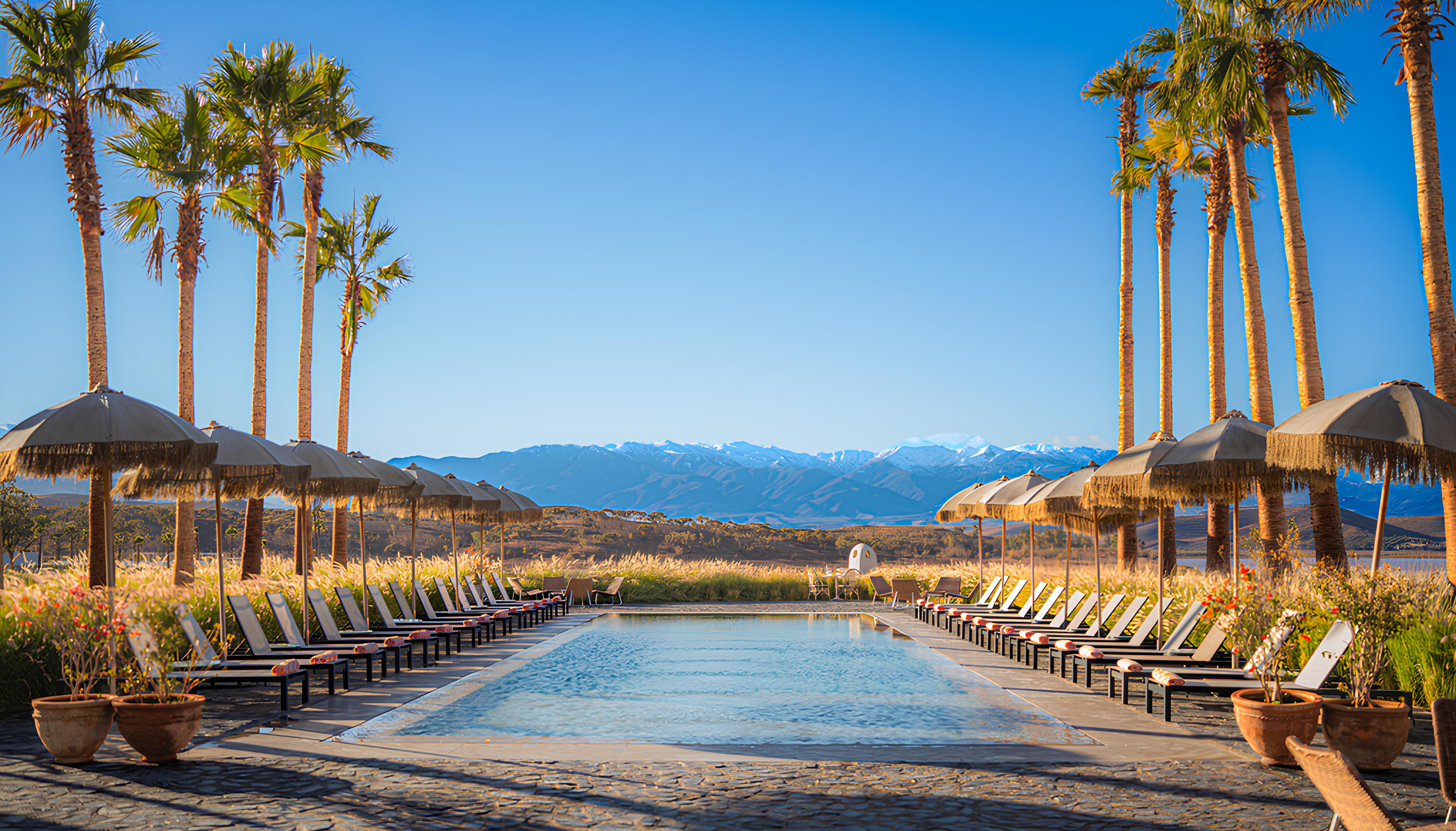
The drive from La Plantation to Lalla Takerkoust is short, around forty-five minutes, and goes through villages where the women walk back from the market in the morning carrying flatbread on wooden boards on their heads. The lake itself is an old reservoir, built in the 1930s, surrounded by the dust-red foothills of the western Atlas. From the lake at the right angle in April, the snow on the highest peaks is still visible.
Pure House on the Lake sits on the eastern shore, on a low promontory that catches the morning light first. The architecture is clear and contemporary: long horizontal lines, large windows, stone-and-timber construction, a swimming pool that runs parallel to the lake itself. The rooms are simple, mostly white and pale wood, with proper Berber-woven blankets folded at the foot of each bed.
The interesting thing about staying at the lake is the rhythm it imposes. The lake is the room. The morning is for the swim and the slow breakfast on the terrace. The midday is for sitting in the shade with a book or, for active guests, taking one of the property’s small kayaks out to the middle of the water for an hour. The afternoon is for the long lunch. The evening is for the lake at sunset, when the colour goes from copper to dark indigo in about twenty minutes, and the small wind picks up.
Two dinners are normal at Pure House. The first is usually a whole grilled daurade (sea bream) brought from Essaouira that morning, served with chermoula and warm flatbread. The second is the tagine of seven vegetables that the chef describes as the recipe his mother makes when there is nothing in the market. The vegetables are tomato, zucchini, carrot, turnip, sweet potato, eggplant and a green chilli, cooked slowly in a clay pot over a flame. By common consensus among travellers who eat it, this is the single best meal of the seven days.
Day 5, Saturday. The road back, slowly
Saturday is the drive back toward Marrakech, but the long way. A small road from Lalla Takerkoust goes northwest through the Agafay desert before circling back to the city from the south. The Agafay is not the Sahara; it is a stone desert, much drier and lighter, with low brown hills that fold into each other.
A small camp on the edge of the desert, where a Berber family still runs a small tea pavilion, is the right place to stop. The tea is made the way it should be: poured from high, three times, strong with mint, sweet with sugar. Conversations with the family often turn to the same theme: the area is changing fast, the new camps that have opened, the way the road has been paved further than before, the way the people from outside have started to walk through the place differently. The family is not bitter about this. They simply describe it.
The last hour into Marrakech is in late afternoon traffic. The medina is waking up from the heat of the day, the call to prayer of the Koutoubia mosque carries across the rooftops, and the right move is to leave the car at the edge of the parking gardienné and walk the last fifteen minutes through the small streets.
Day 6, Sunday. The medina, properly
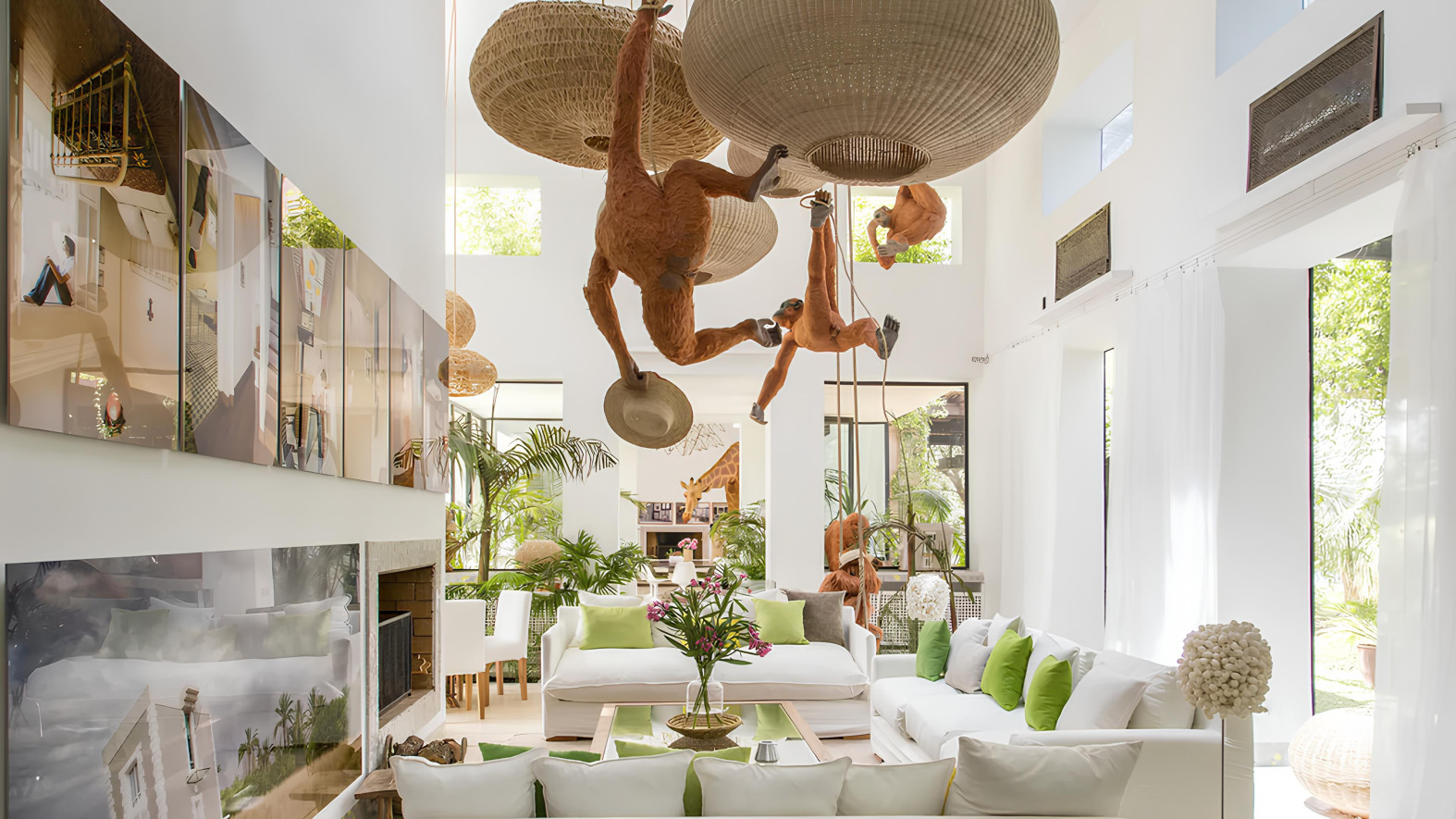
Dar el Sadaka is hidden inside the medina, on a small lane off the main route between the Place des Ferblantiers and the Saadian Tombs. From the outside, the building is a featureless brown wall. The door opens onto a riad courtyard with a fountain, lemon trees, and the smell of jasmine that hits in the same second the door closes behind.
This is the medina hotel experience: the moment of contrast. From a noisy lane that smells of leather and frying onions, through a four-second pause at the threshold, into a room that is quiet and cool and where the loudest noise is the water in the fountain.
Sunday is almost entirely on foot. The Maison de la Photographie, a small private museum housed in a restored fondouk a few hundred metres from the Dar, is the best one-hour stop in the medina. The Mellah (the old Jewish quarter) is twenty minutes’ walk and has kept the architecture and the names of the old streets even though most of its original population is gone. Lunch is best at a small place on a roof terrace, with sea bream, preserved lemons and olives. Then back to the riad in the heat of the early afternoon for the two-hour rest in the shade that the medina demands.
That night Dar el Sadaka can organise a private dinner on the roof terrace, with the muezzin call of the Bahia Palace mosque as the evening soundtrack and the lights of the medina rooftops below.
Day 7, Monday. The last morning
The last morning needs only one detail. The flight out of Marrakech is usually early. The kitchen at Dar el Sadaka does not open until eight. The front desk arranges a taxi for six and packs a small paper bag with the breakfast for the road. Inside the bag are two pieces of bread, a small jar of homemade apricot jam, a slice of country cheese, and three sugar-dusted almonds. A handwritten note in French says Bon voyage, à très bientôt.
That note, more than any of the views, is the thing travellers describe when they call to book the trip again.
Practical notes
A few things to know for any traveller doing something similar.
The road from Marrakech across the Tichka pass to the south is paved, generally well maintained, and safe to drive. Trucks are the main hazard, especially in the morning and late afternoon when they cross the pass loaded. Drive in the cool of the morning. Do not attempt the pass in the dark.
A small 4x4 (Duster, Pajero, Jimny) is more comfortable than a sedan because of the mountain stretches, but not strictly necessary. The road is paved the whole way.
May is the best month for the High Atlas. June starts to get hot below 1,500 metres but the upper villages remain pleasant. July and August are difficult in the Marrakech plain and most hotels there reduce their lunch service. April and October are quieter alternatives with milder temperatures.
Cash matters. In the small villages and at the roadside grills, card machines are rare. Carry small dirham notes for tips, parking, mountain stops.
Phone signal in the high mountains is patchy. Download offline maps before leaving Marrakech.
How to use this itinerary
For a first visit to Morocco, this seven-night structure (two nights at Olinto, one at La Plantation, two at Pure House on the Lake, two at Dar el Sadaka) gives mountain, country, lake and medina in a single trip without long drives between them. The total driving is around 350 kilometres over a week, spread across five short legs of under two hours each.
For ten nights instead of seven, add two nights in Essaouira on the coast (a two-and-a-half-hour drive west of Marrakech) and one extra night at one of the four hotels above.
Frequently asked questions
| Should travellers hire a driver or drive themselves in Morocco? | Driving works well for visitors confident on mountain roads and comfortable navigating without a co-pilot. The roads are paved, the signs are clear (in Arabic, Berber, and French), and the freedom to stop where wanted is the whole point of this trip. Hiring a driver works better for travellers who prefer to focus only on the experience and not on the road, or for visits in summer when the heat makes long midday drives less pleasant. The four hotels in this itinerary can all arrange a private driver if needed. |
| When is the best time to drive the Atlas? | Mid-April to mid-June, then mid-September to late October. Avoid July and August (heat below 1,500 metres) and avoid December through February at the highest passes (snow can close the road for short periods). |
| Is this itinerary suitable for children? | Yes, with three caveats. Mountain driving with switchbacks can cause motion sickness in younger children, so plan short legs. Some of the hotels in this article are quietly adult-skewing (Pure House on the Lake, Dar el Sadaka especially), so confirm at booking. The food is wonderful but spice-forward, so be ready to ask the kitchen to adjust. |
| Is Morocco safe for solo travellers? | Yes. The vast majority of independent visitors complete a similar loop safely. Common-sense rules apply: do not drive at night in the mountains, do not flash valuables in the medina, dress in line with local custom outside the hotels. |