The Longevity Retreat: Why a New Generation of Luxury Hotels Is Being Designed to Help You Live Longer
The wellness hotel of the 2010s was a spa with a yoga deck. The hotel that is emerging now, quietly and across several European and Asian coastlines, is a different proposition: a property designed not to relax the guest, but to extend the guest's life. The shift is small, deliberate, and far more interesting than it sounds. This piece looks at four hotels where it is already happening, the science underwriting it, what a real day inside one looks like, and what a serious longevity week actually costs.
The science arrived first
Until around 2018, the conversation about longevity stayed almost entirely inside research universities and a handful of clinics outside Basel and La Jolla. The work concerned cellular ageing, the maintenance of muscle mass past sixty, the dose-response curve of strength training, the effect of consistent low-grade physical activity over decades, the inflammatory load of ultra-processed food, the role of sleep architecture, and the question of which interventions actually accumulate against time and which do nothing measurable.
By 2024, a second movement was visible. The same protocols that had been confined to medical settings began to find their way into a small number of luxury hotels. The point was no longer the seven-day detox or the deep-tissue massage. The point was a programme designed against an evidence base: longer stays, structured days, real measurement, food whose composition was a clinical decision rather than a decorative one, and a return home with habits a guest had a realistic chance of keeping.
This is the longevity retreat in 2026. It is still a small category. It is also the most interesting development in luxury hospitality since the slow-travel turn after the pandemic.
Where the work is happening
Four properties make the case, each from a different angle on the Mediterranean and Asian map, each working on a piece of the same longer argument.
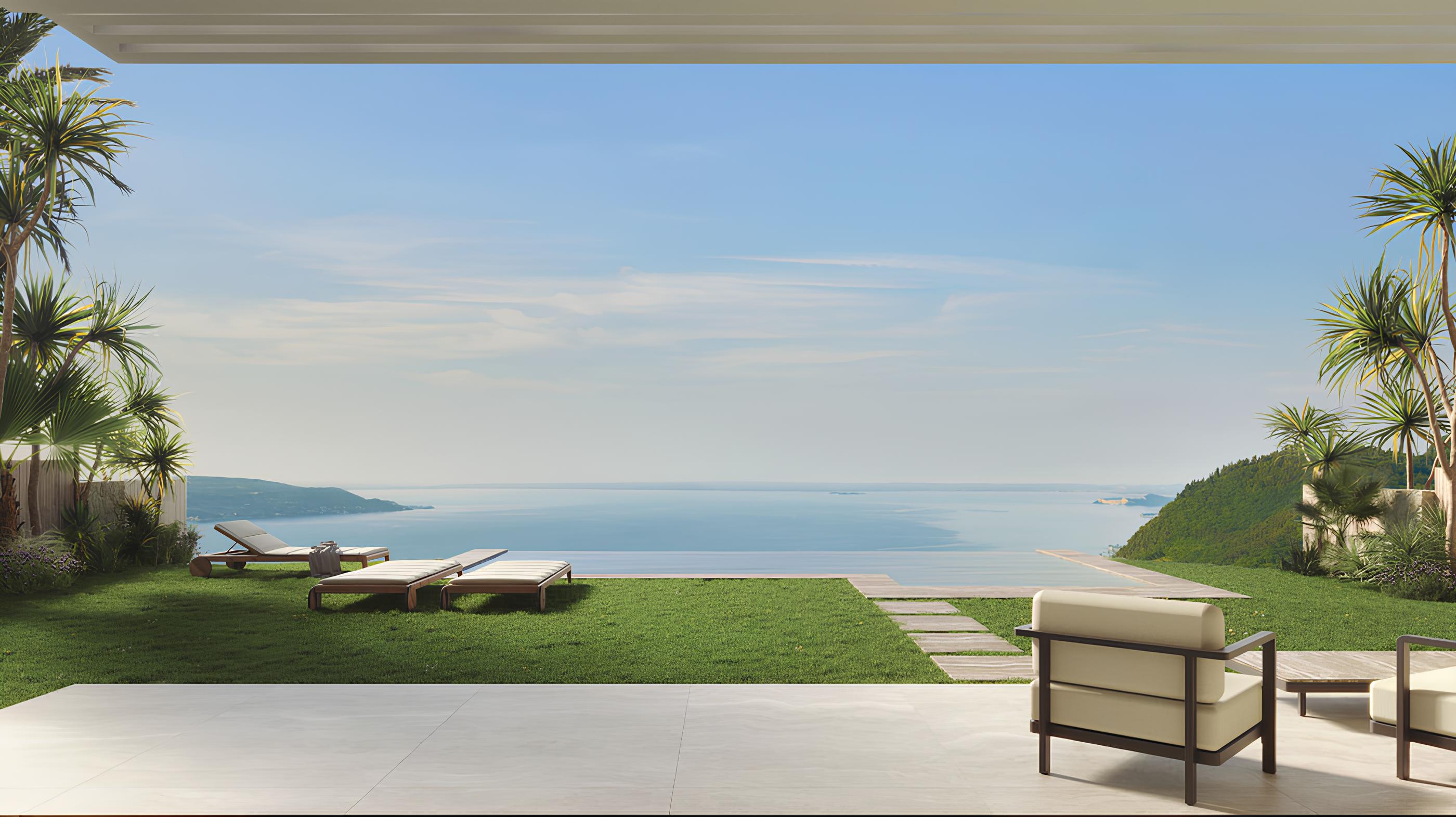
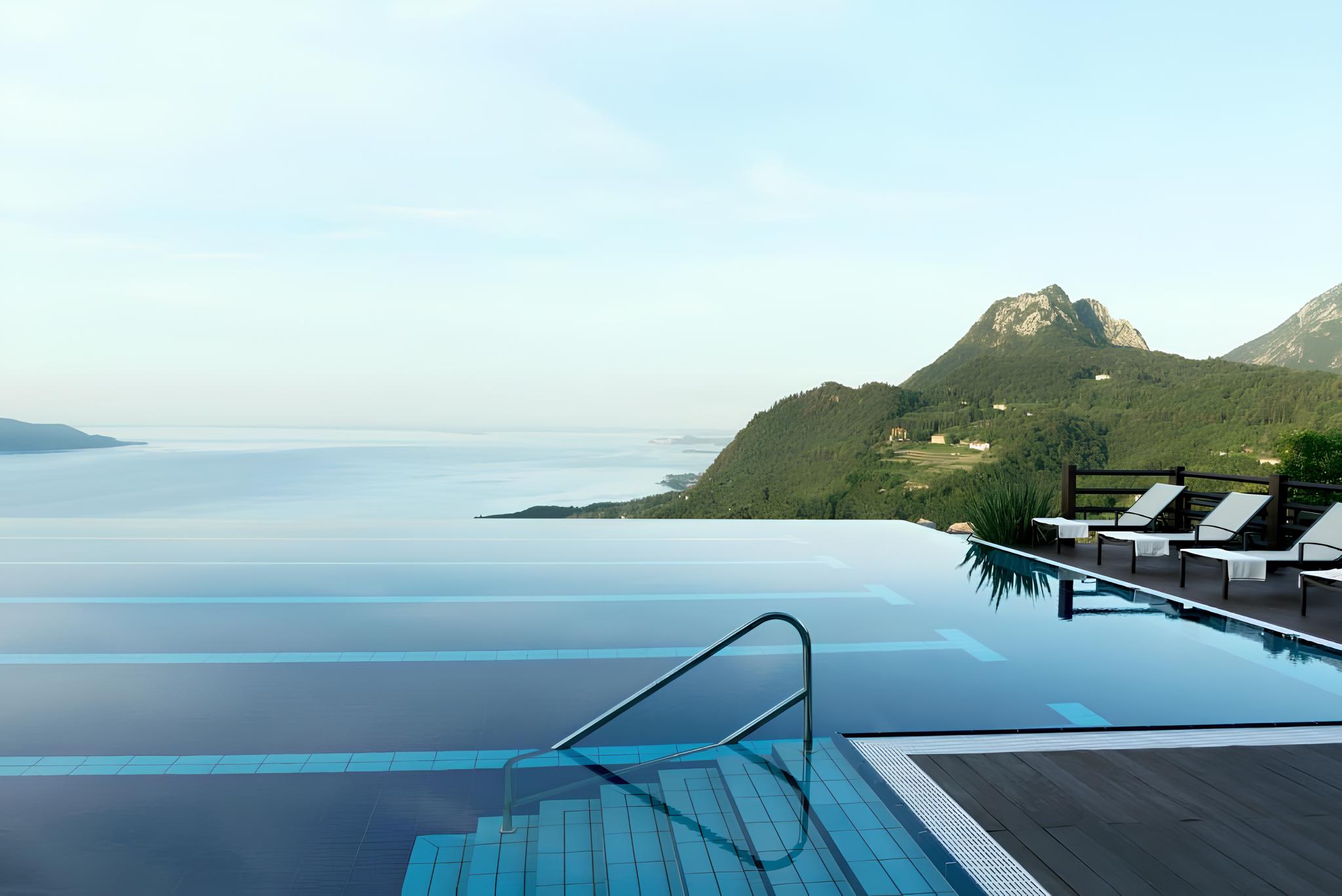
The clearest example sits on the western shore of Lake Garda. Lefay Resort & Spa Lago di Garda has, since its opening, leaned into the medical-spa tradition that links the Alpine Italian wellness culture to the older European thermal tradition. What changed in the last three seasons was the programmes. The property now organises stays of seven, ten and fourteen nights around a defined sequence of measurements (body composition, cardiovascular function, sleep tracking), a daily structure that alternates physical work with recovery, an explicitly Mediterranean-diet kitchen, and a structured exit programme. The hotel still has the lake view, the long swimming pool, the soft service. The skeleton beneath it is no longer a spa, it is a clinic with hotel grammar.
On the central Dalmatian coast, the proposition is leaner. Maslina Resort on the island of Hvar has built its programme around the local material rather than the laboratory. The kitchen runs on the Stari Grad plain, a UNESCO-listed agricultural site whose Greek field divisions have produced olive oil, lavender and stone fruit continuously since the fourth century before Christ. The wellness side is not medical in the strict sense; it is ritual, slow, and Mediterranean-diet-adjacent. The longevity argument here is not that a single week shifts a biomarker, but that a properly designed week (long sleep, plant-forward food, daily seawater immersion, no alcohol unless explicitly chosen, deliberate slowness) teaches the guest to go home and reproduce the rhythm. Less clinic, more apprenticeship.
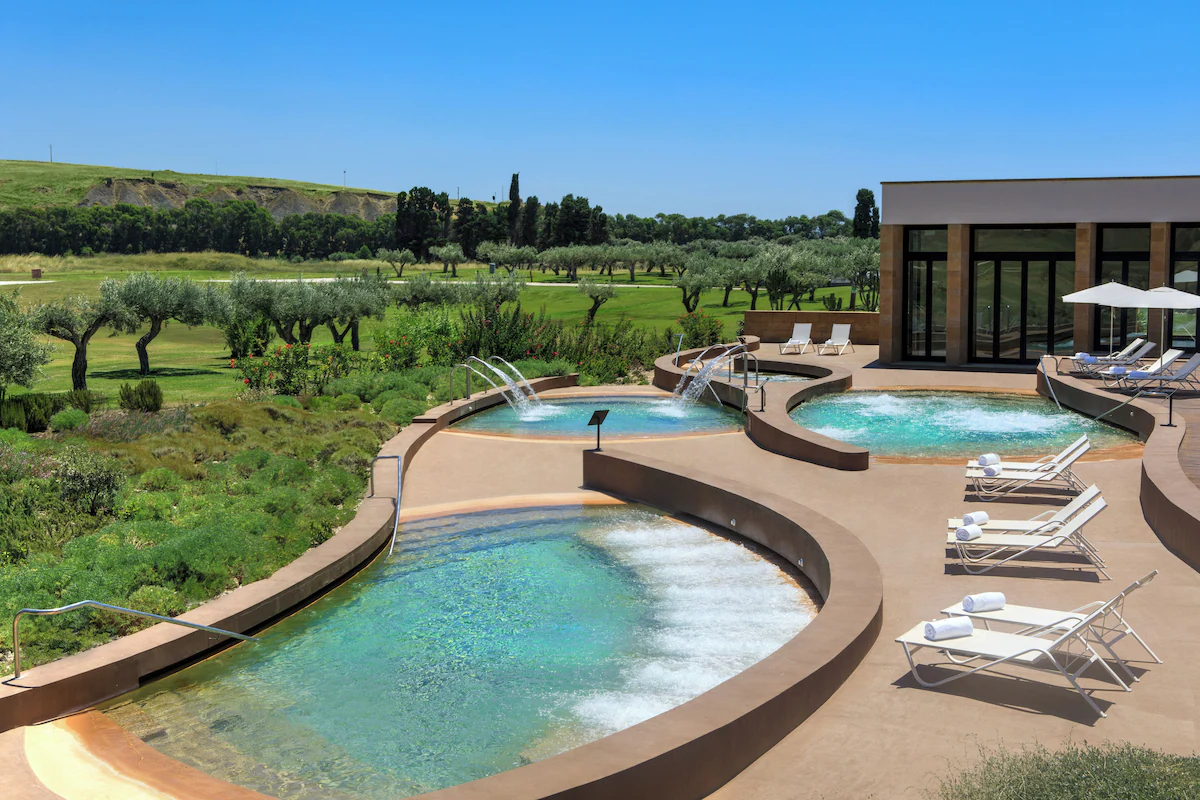
The Italian south offers a third register. Verdura Resort at Sciacca on the Sicilian southern coast has one of the most serious thalassotherapy programmes in the Mediterranean. The seawater treatments here are not the European-spa nineteenth-century version, where guests floated and were called cured; they are calibrated programmes for circulation, joint maintenance, and recovery from sustained physical training. Combine the thalasso with the property's emphasis on Sicilian Mediterranean-diet cooking (olive oil, fish, almonds, the bitter greens) and the result is a longevity stay that arrives via the older European route: sea, sun, hard physical work in the morning, slow Mediterranean food in the afternoon.
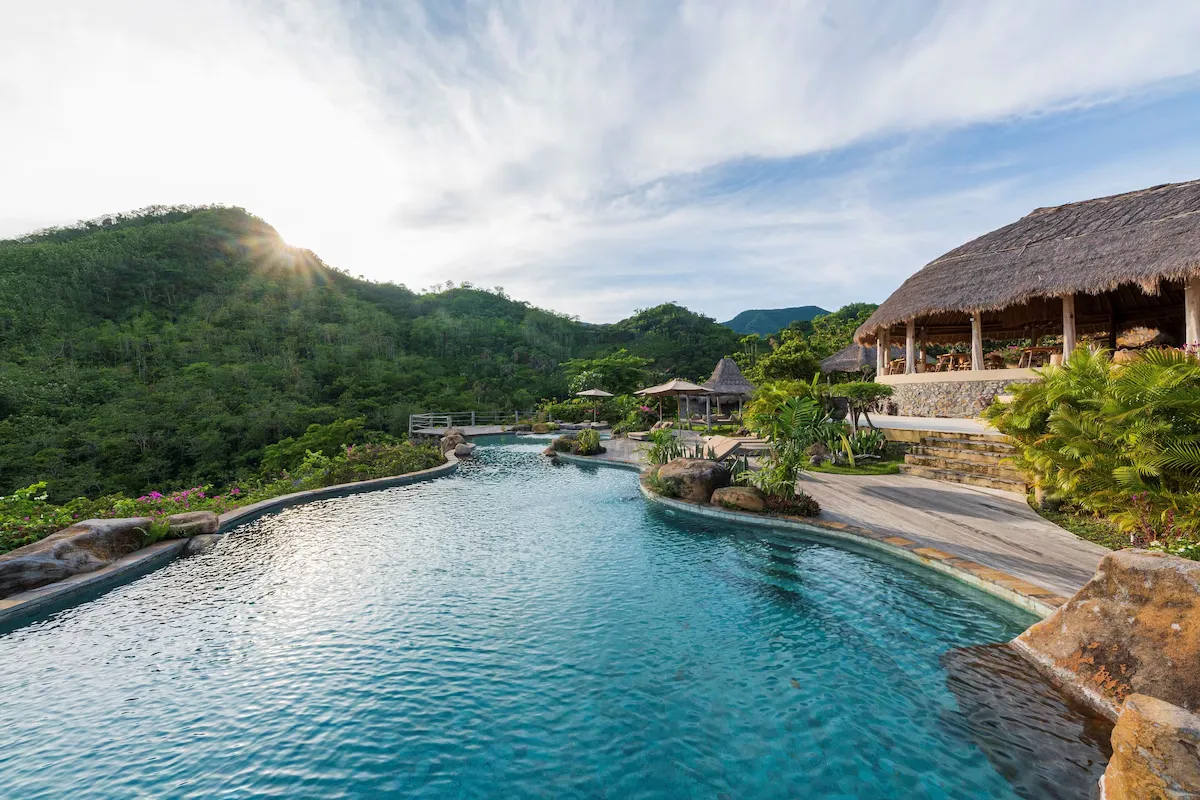
The fourth example sits at the other end of the world's wellness map. Avana Retreat, in the Mai Chau valley west of Hanoi, draws on a tradition that the European clinics arrived at much later: the slow, herbal, low-stimulus Asian retreat. The spa here works with steam, hot stones, regional herbal compresses, and a kitchen that takes the northern Vietnamese vegetarian repertoire as its starting point. There is no medical instrumentation on site in the European sense. What there is, in the structure of the day, is the older Asian version of the same project: the rhythm of an agricultural valley, with the right ratio of physical activity, sleep and plant food, sustained for long enough that the body recalibrates.
Inside the new programme
The longevity stay is not a single product. The exact shape varies. The shared elements are clear.
The first is duration. The week is the minimum unit. Ten nights is the working standard. Fourteen is the proper programme. The properties above all build their longevity offers around stays of at least seven nights and increasingly push for ten, on the simple grounds that the body's measurable adaptations (sleep architecture, recovery markers, glucose response, muscular work capacity) require around eight to ten days of consistent rhythm before they shift in any direction that is more than placebo.
The second is food as a clinical decision. The kitchens at all four properties have moved past the standard wellness vocabulary of "light" and "fresh". The menus are now structured around named patterns, the Mediterranean diet at Lefay and Verdura, the Stari Grad plain repertoire at Maslina, the northern Vietnamese plant-forward tradition at Avana. The change is that the chef is now working in collaboration with a clinical lead or a dietitian who has read the literature on healthspan, not with a head of wellness who has read the marketing material on detox.
The third is physical work that is real. The single most under-appreciated finding from the longevity literature of the last decade is that sustained muscle mass past fifty is one of the strongest predictors of healthspan. Not flexibility, not relaxation. Strength. The properties that have embraced this are now offering, in among the more traditional spa elements, structured resistance training with proper progression. The morning at Lefay can include an hour of guided strength work. The morning at Verdura can include hard hill walking. The morning at Avana is the long climb up into the karst hills.
The fourth is measurement and exit. The clinical-leaning properties (Lefay first, others following) now build the stay around a beginning measurement, a middle adjustment, and an end measurement. The guest leaves with a personalised written set of habits to maintain, scheduled follow-ups, and an explicit recommendation about when to return. The wellness hotel of the 2010s ended at check-out. The longevity hotel of 2026 continues into the year that follows.
Inside a typical day
The structure varies between properties, but a working week at one of the more rigorous longevity programmes follows roughly the same rhythm. What follows is a composite, drawn from the cadence used at the more clinical end of the four hotels above.
06:30. Wake on the natural light cycle the property design has been built around: floor-to-ceiling shutters left partly open the night before, no electronic alarm. Glass of mineral water, ten minutes of breathing work in the room.
07:00. The morning physical block. Forty-five to sixty minutes, alternated across the week: structured strength work in the gym on three days, hard hill walking or hill cycling on two, longer steady cardiovascular work on one. The serious programmes monitor heart-rate zones and adjust load against the guest's baseline measurements. The lazy programmes leave this to the guest.
08:30. Breakfast. A Mediterranean composition at the European properties (olive oil on warm bread, plain yoghurt with seasonal fruit, slow-cooked egg, a small portion of cheese, espresso or green tea), an Asian-vegetarian one at Avana (rice porridge with fresh herbs, steamed greens, the day's first regional tea). No buffet. The kitchen sends what the protocol calls for.
10:00. Either a clinical session (consultation with the medical lead, body composition scan, sleep review) or a slow recovery activity (deep tissue work, a sauna-and-cold-plunge sequence at the spa, a long walk along the lake or coast).
12:30. Light lunch. Lentil soup, grilled fish or pulses, a salad with seasonal vegetables, a slow carbohydrate (whole grains, occasional rice or sourdough). One small glass of red wine at the European properties on three days of the week.
14:00 to 16:00. The unstructured window. Reading, rest, a nap if the body asks for it. The programmes that work resist the temptation to fill this slot with another activity.
16:00. The afternoon physical block, lighter than the morning. Pilates, yoga, mobility work, or a guided cold immersion. Forty to fifty minutes.
17:30. Tea and a small protein-led snack. A short de-briefing of the day with the programme lead at the more clinical properties; a small private moment at the others.
19:30. Dinner. The most considered meal of the day at the European Mediterranean properties: a structured tasting menu of three to four courses, all within the protocol's caloric and macronutrient targets, served with the regional wine in measured portions. The Asian properties run a similar structure with a different vocabulary.
21:30. Bath, reading, low light. The room temperature drops slightly to support deeper sleep architecture. Most guests are asleep by ten thirty.
The deliberate pattern repeats for the length of the stay. The point is not the single morning workout or the single dinner; it is the consistency of the cadence for ten or fourteen days, the duration at which measurable adaptations begin to accumulate.
Why now
Three currents have converged.
The first is the maturation of the longevity research community. The work that was niche in 2015 is, by 2026, in the medical mainstream. The publications, the meta-analyses, the prospective cohort data on the relationship between strength, sleep, diet, social connection and healthspan, have all reached a point where serious operators no longer need to invent their own science. The protocols are available. The properties simply implement them.
The second is a generational shift in the luxury traveller. The cohort in its late forties to early sixties, the group with the most disposable income and the strongest intent for a meaningful holiday, has reached the age where the abstract question of how the next thirty years feel becomes concrete. The traditional luxury week, four-poster bed and a sunset terrace, no longer answers the question. The longevity week does.
The third is the post-pandemic appetite for slower and more deliberate travel. The fast, photogenic, multi-city European holiday has lost some of its dominance. What has replaced it, for a meaningful slice of the market, is the single-property longer stay, with structure and intention. The longevity retreat is the most rigorous expression of this slower turn.
What can go wrong
A real note of caution. The category is small and uneven. Three failure modes are worth knowing.
The first is the medical theatre property: the resort that has bought the equipment, hired the white coats, and produced the brochures, but has not done the harder work of integrating the programme into the operation. The signs are visible in two days: the staff do not know the protocols, the kitchen contradicts the clinical lead, the schedule slips by lunchtime on day one. The properties above avoid this. Many that market themselves in the same category do not.
The second is the diluted offer: a property that calls a stay "longevity" but is operating, underneath, the same generic wellness week. The clinical structure is missing. The food is light but unstructured. The exercise is optional. A reasonable proxy: if the property cannot articulate the difference between its wellness week and its longevity week in one paragraph, the difference is probably not real.
The third is the wrong duration. A four-night longevity stay is unlikely to produce anything beyond a pleasant break. The science requires a week as the minimum threshold. The properties that are honest about this push back on shorter bookings. The properties that are not, take the booking and produce a disappointed guest.
How to choose
For a first longevity stay, three questions sort the field quickly.
The first is the calendar. The right window is the cooler months: October through May at the European Mediterranean properties (the heat of high summer is the wrong setting for the work), and November through March at the Asian retreats (the dry, milder season). Booking the longevity stay against the property's high tourism season is the wrong move; the operations are oriented toward a different guest in those weeks.
The second is the duration the property recommends. A good property pushes back on stays shorter than seven nights. A property that books a "longevity" stay of three nights is selling the brochure, not the work.
The third is the year-after structure. The serious longevity properties build the stay against a follow-up. A property that arranges nothing for the months after the guest leaves, has missed the entire point of the category.
What it costs and what it returns
A serious longevity week at a property in the category sits in the range of seven thousand to fifteen thousand euros per guest, before transfers. The price reflects four specific cost components, not the architecture or the marble of the spa.
The clinical lead is the first. A serious programme runs with a medical director on site or in close consultation, plus a small team of dietitians, physiotherapists and trainers. The labour bill is significant and largely fixed regardless of how many guests are in residence. The properties that try to amortise this cost over a larger guest base dilute the experience; the ones that maintain the ratio carry the cost into the room rate.
The protocol-driven kitchen is the second. The chef at a longevity property does not produce the standard restaurant menu. They cook to a defined macronutrient and caloric target per guest per day, sourced from regional producers, with substantial variation across the week to maintain interest without breaking the protocol. The kitchen-to-guest ratio is higher than at a comparable luxury hotel of the same star rating.
The exit programme is the third. The year that follows the stay is what the price is partly buying. The serious properties schedule three to four follow-up calls with the medical lead over the twelve months after the visit, send the guest's home physician the relevant data, and produce a written progress report at six and twelve months. The properties that omit this stage are not in the category at all.
The opportunity cost of the room is the fourth. A longevity guest occupies a room for ten to fourteen nights, often in shoulder season. The property is, in revenue terms, committing the room to the longer-stay programme rather than to higher-rate three-night tourism. The rate has to reflect that.
For comparison, a typical breakdown at the upper end of the band looks roughly as follows for a ten-night programme at a leading European property:
| Component | Approximate share | What it covers |
|---|---|---|
| Room and board | 40 to 50% | Suite, full board on the protocol menu, daily room service |
| Clinical and personal training | 30 to 35% | Medical lead, scans, trainer-led sessions, physiotherapy |
| Spa and recovery | 10 to 15% | Daily treatments, hydrotherapy, sauna programmes |
| Exit programme | 5 to 10% | Twelve-month follow-up calls and reports |
The honest case for the spend is not the marginal year of life extension that any one stay produces; the literature does not support claims at that resolution. The case is the inflection in habits, the structured restart of a programme the guest had stopped maintaining, the year of follow-through that the right property organises. The longevity stay works on the year that follows it, not the week itself.
The shape of the next five years
Two predictions, with the usual caveats.
The category will narrow before it widens. The next twelve to twenty-four months will produce a wave of properties marketing themselves as longevity retreats. Most will fail the two-day test above. The smaller group that does the work, three to five properties on the Mediterranean coast, two to three in Asia, one to two in the Americas, will become the reference set.
The integration with personal medical care will tighten. The serious properties will, within twenty-four months, be working in active collaboration with their guests' home physicians. The blood markers measured at the start of the stay will arrive from the guest's normal clinical record, and the recommendations made at the end will be transmitted into the guest's home file. The hotel becomes part of the medical year, not separate from it.
The four hotels above are, for the moment, the working examples of the category in the network. The category will expand. The properties that are doing the work now will define what the rest of the industry tries to copy.
Frequently asked questions
| Question | Answer |
|---|---|
| What is a longevity retreat in 2026? | A luxury stay of seven to fourteen nights, designed around the science of healthspan rather than relaxation. The programme typically includes structured strength and cardiovascular training, a clinically informed diet, sleep optimisation, and measurement at the start and end of the stay. The properties leading the category integrate the stay into a year-long follow-up. |
| How long should a longevity stay be? | Seven nights is the minimum at which measurable adaptations begin. Ten nights is the working standard at the serious properties. Fourteen is the proper programme. Stays shorter than seven nights are marketing exercises rather than longevity work. |
| How much does a longevity retreat cost? | A serious week at a leading property sits between seven thousand and fifteen thousand euros per guest, before transfers. The price reflects the clinical lead, the protocol-driven kitchen, the small guest-to-staff ratio, and the exit programme. Properties priced significantly below this band are typically offering a traditional wellness week with a different label. |
| When is the best time of year for a longevity stay? | October through May at the European Mediterranean properties, when the operation is oriented toward the longer-stay guest rather than the summer crowd. November through March at Asian retreats. Avoid the property's high tourism season. |
| What is the difference between a wellness retreat and a longevity retreat? | A wellness retreat is structured around how the guest feels at the end of the week. A longevity retreat is structured around how the guest will live in the year that follows. The first focuses on the experience, the second on the protocol and the follow-through. |
| Do longevity retreats actually extend life? | The honest answer is that no single week can be shown to extend life in the literature. What a properly designed longevity stay can do is restart a set of habits whose sustained maintenance has strong evidence behind it. The week is the inflection point, not the intervention. |
| Are these retreats medically supervised? | The clinical-leaning properties in the category (Lefay is the clearest example) operate with a medical lead who oversees the programme. Other properties operate within the Mediterranean-diet and ritual tradition without a clinical lead but with a coherent structure. Both can work. The combination of strong marketing and weak structure is what to avoid. |