The Cold Cure: Nordic Wellness in Bergen and Stavanger
Snow rooms, fjord plunges, and the Norwegian art of friluftsliv. Two design hotels where wellness means something different than you expect.
The wellness industry has a particular vision of relaxation. White robes, warm stones, eucalyptus mist, perhaps a woman with her eyes closed holding a cucumber. The brochures promise escape, softness, heat. Then there is Norway, where wellness means something else entirely.
In the Nordic tradition, the path to feeling better often involves feeling worse first. Cold water. Freezing air. The shock of snow against heated skin. The body's systems jolted into alertness, then allowed to settle into a calm that feels earned rather than purchased. This is not spa culture in the Mediterranean sense. This is something older and stranger, rooted in a climate that shaped its people's relationship to comfort and discomfort, to the outdoors and the indoors, to the cold that surrounds everything for half the year.
The Norwegians have a word for it: friluftsliv, literally "free air life." The concept predates the wellness industry by centuries. It describes the value of being outdoors in nature, regardless of weather, for the health of both body and mind. Henrik Ibsen coined the term in the 1850s, though the practice is far older. In a country where winter darkness lasts months and rain is more common than sunshine, the instinct might be to stay inside. The Norwegian response has been the opposite: go out, face the elements, return home renewed.
Two hotels in western Norway offer different entry points into this philosophy. One sits in a 19th-century stock exchange in Bergen, the rainiest city in Europe, with access to a new spa built around the principles of thermal contrast. The other occupies a 1930s functionalist warehouse in Stavanger, a gateway to fjords, cliffs, and coastal wilderness. Neither fits the conventional definition of a wellness hotel. Both deliver something that conventional wellness hotels cannot.
Bergen: The Rain and the Refuge
The flight into Bergen Flesland descends through cloud. This is normal. Bergen receives over 200 days of rain per year, a statistic that sounds discouraging until you understand what the city does with its weather. The rain is not a problem to be solved. It is the context in which everything else makes sense.
The light rail from the airport deposits passengers at Byparken, a few blocks from the harbor. The walk to Bergen Børs Hotel passes the fish market, where vendors sell salmon and king crab under awnings designed for perpetual drizzle. The hotel itself appears around a corner: a grand Renaissance Revival building from 1862, once the city's stock exchange, now something considerably more welcoming to visitors.
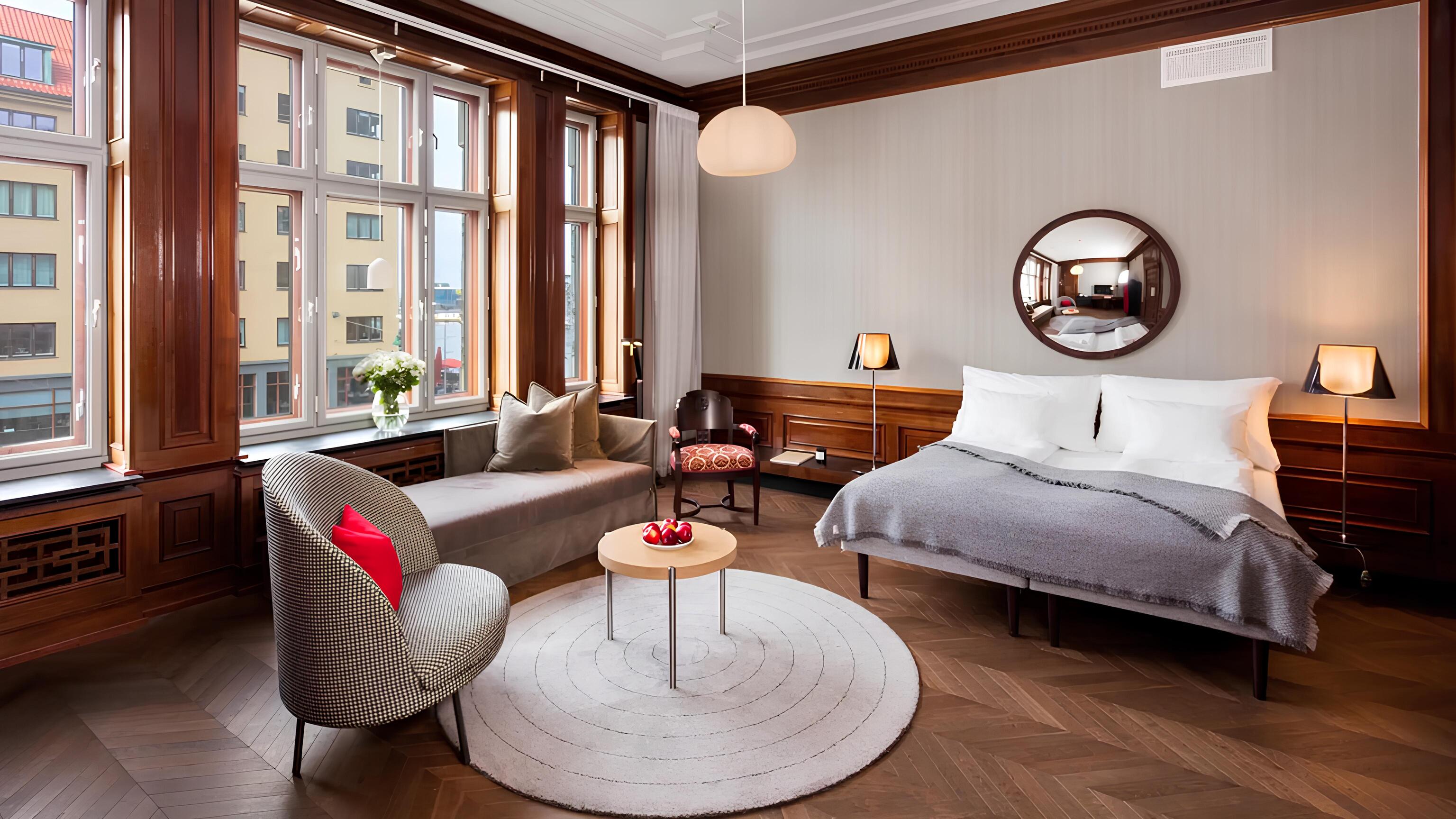
The lobby has high ceilings and an air of quiet grandeur. The interiors, designed by Swedish studio Claesson Koivisto Rune, balance the building's 19th-century bones with contemporary Scandinavian restraint. Walnut wood, leather, marble in muted tones. The rooms continue this approach: clean lines, arched windows that actually open, heated bathroom floors that suggest someone understood what guests need after walking through Bergen's streets.
The hotel houses three restaurants, including BARE, which holds a Michelin star for its Japanese-inflected Nordic cuisine. The Pak brothers, Vladimir and Sergey, trained in Tokyo before returning to Norway. Their tasting menus highlight local seafood prepared with techniques that feel both precise and personal. Dinner here is an event, but the real draw for those seeking the Nordic wellness experience lies elsewhere.
Skostredet Spa opened in January 2025, accessible to guests of Bergen Børs and its sister property Skostredet Hotel. The facility occupies multiple zones, each designed around the principle of thermal contrast. The sequence matters: heat first, then cold, then rest. The body responds to the shifts, circulation increasing, endorphins releasing, the nervous system moving from stress response to recovery mode.
The snow room is exactly what it sounds like. A small chamber kept at sub-zero temperatures, its walls and ceiling covered in fine ice crystals. After fifteen minutes in the sauna, the shock of entering this space is physical and immediate. The skin prickles. The lungs contract. The instinct is to leave at once. Those who stay for a minute or two, moving slowly, allowing the body to adjust, emerge feeling something difficult to describe. Alert but calm. Present but detached. The Norwegians would recognize this state. It is what happens when the body remembers it is designed for survival.
The Aufguss ritual takes the sauna experience further. A trained sauna master pours water infused with essential oils over the heated stones, then uses towels to distribute the steam rhythmically through the room. The temperature rises. The scent intensifies. Music plays, sometimes. The experience sits somewhere between meditation and endurance test. Afterward, guests move to the cold plunge pool, the temperature near freezing, the stay brief but transformative.
The spa also offers a steam room, multiple saunas at different temperatures, and quiet rest areas where the pace finally slows. But the point is the contrast, the oscillation between extremes. This is not relaxation in the passive sense. It is something more active, a kind of training for the nervous system.
The City in the Rain
Bergen demands to be walked, regardless of weather. The city's compact center sits between seven mountains and a harbor, its layout shaped by centuries of maritime trade. Bryggen, the old Hanseatic wharf, is a UNESCO World Heritage site: wooden buildings dating to the 14th century, leaning slightly, their interiors now housing shops and restaurants that lean toward the atmospheric rather than the practical.
The Fløibanen funicular climbs from the city center to Mount Fløyen in eight minutes. The views from the top stretch across the harbor, the surrounding peaks, the islands in the distance. Hiking trails branch out in all directions, ranging from gentle walks to serious scrambles. In rain, which is likely, the forest takes on a particular quality: silent, green, smelling of earth and wet pine. This is friluftsliv in practice. The weather is not a reason to stay indoors. It is the reason to have good rain gear and keep moving.
Breakfast at Bergen Børs happens in Frescohallen, a vast hall whose walls and ceiling are covered in early 20th-century frescoes depicting Bergen's commercial history. The murals show fish, ships, merchants, the activities that built the city's wealth. The breakfast itself is extensive: Norwegian smoked salmon, local cheeses, breads that suggest a serious approach to baking. Coffee refills arrive without asking. The room fills with daylight even when the sky outside is grey.
The contrast between the grandeur of this space and the simplicity of the meal captures something about Norwegian culture. The setting is impressive, but the food is honest. No unnecessary flourishes. No attempt to overwhelm. Just good ingredients, properly prepared, served in a room that rewards attention.
South to Stavanger
The journey from Bergen to Stavanger can happen by air in thirty minutes, by car in five hours, or by a combination of ferry and coastal road that takes longer but reveals more. The landscape shifts as the route moves south: from the steep valleys around Bergen to the flatter agricultural land of Jæren, from the intensity of the fjords to the openness of the North Sea coast.
Stavanger announces itself differently than Bergen. Where the northern city feels carved into its landscape, shaped by the mountains that surround it, Stavanger spreads along a harbor with the confidence of a place built on oil money. The energy industry transformed this fishing town into Norway's petroleum capital, bringing international workers, restaurants, and a cultural scene that punches above its weight. Nine Michelin-starred or -recommended restaurants operate here, more per capita than almost anywhere in Scandinavia.
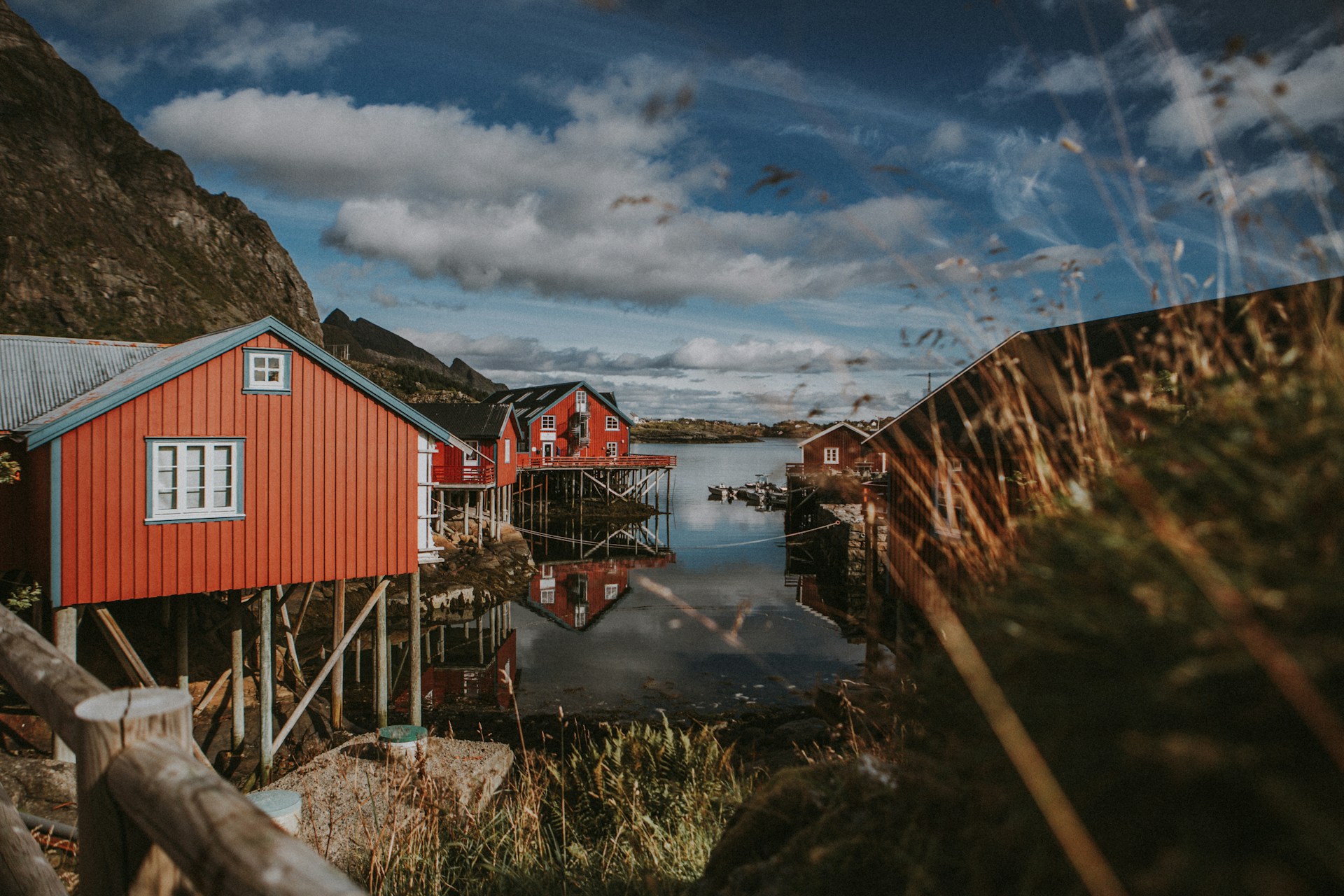
Eilert Smith Hotel sits at the edge of the old town, in a building that looks nothing like a hotel and everything like a piece of architectural history. The structure dates to 1937, designed by the local architect whose name it now bears. Eilert Smith was a proponent of functionalism, the early modernist movement that valued utility and clean lines over ornamentation. The building's curved walls and horizontal windows remain striking nearly a century later, a reminder that good design ages well.
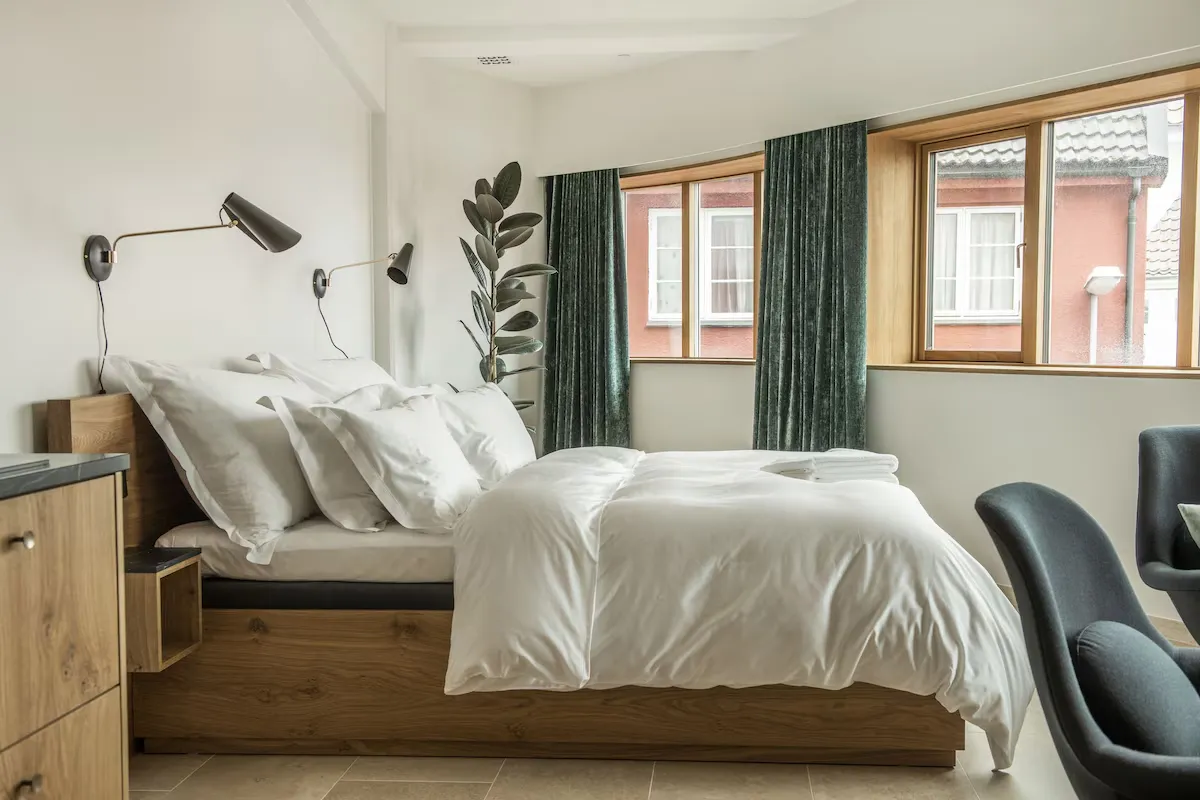
The hotel contains just twelve rooms, each different, each sharing a commitment to natural materials and careful proportions. The conversion, completed in 2019 by owners Signe Anne and Kristoffer Stensrud, preserved the building's character while adding the comforts expected of a contemporary luxury property. Heated floors, spa-like bathrooms with Japanese-inspired fixtures, kitchens stocked for independent guests. The effect is of staying in someone's extremely well-designed home rather than a commercial establishment.
The real reason to book here, though, occupies the ground floor. RE-NAA holds three Michelin stars, one of only two restaurants in Norway at this level. Chef Sven Erik Renaa builds his tasting menus around the produce of Rogaland, the surrounding region: seafood from the fjords, vegetables from local farms, game from the nearby mountains. The meal runs to twenty-five courses or more, served at a counter where diners watch the kitchen work. This is not a quick dinner. It is an evening-long immersion in what a specific place tastes like at a specific moment in time.
Breakfast arrives in the room, prepared by the RE-NAA team, delivered at a time of the guest's choosing. Fresh bread, eggs cooked to order, local butter and jam, coffee that suggests serious attention to sourcing. The service is personal without being intrusive, a reflection of the hotel's intimate scale.
Friluftsliv: The Fjords
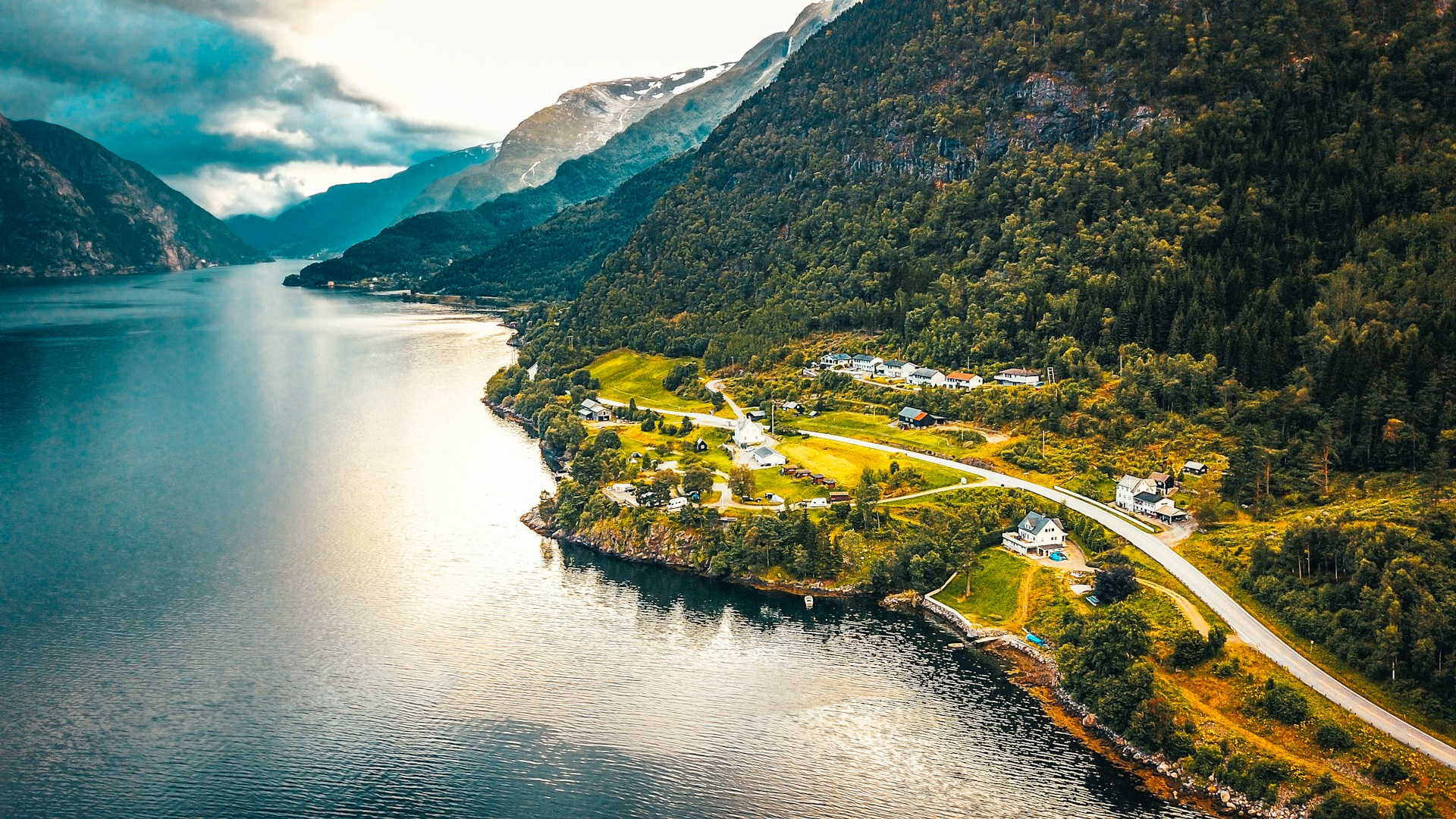
Stavanger's position makes it the natural starting point for exploring the Lysefjord, a 42-kilometer slash of water cutting into the mountains southeast of the city. The fjord's walls rise vertically from the water, reaching heights of over a thousand meters. At the top of one of these cliffs sits Preikestolen, the Pulpit Rock, a flat-topped granite platform that has become one of Norway's most photographed landmarks.
The hike to Preikestolen takes about two hours each way, climbing through forest and across rocky terrain before emerging at the cliff's edge. The view is vertiginous: straight down to the fjord, 604 meters below, the water a distant ribbon of blue-green. The platform itself holds perhaps a hundred people at peak times, fewer in the early morning or late season. Those who arrive at dawn, before the tour buses, experience something closer to what the first visitors must have felt. The silence. The scale. The body's awareness of its own smallness against the rock and water and sky.
This is wellness in the Norwegian sense. Not the absence of effort, but the presence of it. The muscles working on the ascent. The lungs filling with cold air. The mind quieting as the body focuses on the simple task of moving forward. The reward is not relaxation but exhilaration, the particular clarity that comes from being in a landscape that does not care whether you are comfortable.
The fjord itself offers other experiences. Boat tours depart from Stavanger harbor, passing beneath the cliffs, stopping at waterfalls that drop directly into the water. Some operators offer RIB boat expeditions, high-speed inflatable craft that cover the fjord's length in a fraction of the time, spray flying, the wind cutting through whatever layers passengers thought were sufficient. This is not a gentle cruise. It is a confrontation with the elements, followed by the profound relief of returning to warmth.
For those seeking the cold plunge without the spa infrastructure, the fjord provides. The water temperature hovers around 10-15 degrees Celsius in summer, colder in other seasons. Some hardy visitors swim from the rocky shores at the fjord's mouth. Others combine the experience with a sauna session at one of the floating saunas that have appeared along Norway's coast in recent years, wood-fired structures moored in harbors or towed to scenic locations. The sequence is the same as in any Nordic spa: heat, cold, rest. The difference is the setting, open sky above, fjord water below, mountains in every direction.
The Jæren Coast
Southwest of Stavanger, the landscape flattens into Jæren, a stretch of agricultural land and coastline unlike anywhere else in Norway. The beaches here are long, wide, and empty, their sand white, their waters cold, their waves sufficient to support a small but dedicated surfing community. Solastranden, Borestranden, Orrestranden: the names mark different points along a coast that runs for kilometers without significant development.
The Norwegians use these beaches year-round. Families picnic in summer. Surfers paddle out in wetsuits through autumn and winter. Walkers move along the shore in all weather, dogs running ahead, the wind constant, the views toward the North Sea uninterrupted. This is friluftsliv at sea level, the same principle applied to a different terrain.
The Scenic Route Jæren runs along this coast for 41 kilometers, a designated road with viewpoints and rest stops designed by notable architects. The structures themselves, simple wooden pavilions and observation platforms, demonstrate how design can enhance rather than compete with landscape. The drive takes an hour without stops, considerably longer if the light is good and the beaches invite lingering.
For those staying at Eilert Smith, the coast is thirty minutes away by car. An afternoon might include a walk along Solastranden, a coffee at one of the small cafes in Sola or Bryne, a return to Stavanger as the light fades. The combination of culture and coast, of Michelin-starred dining and windswept beach walks, captures something essential about this corner of Norway. Refinement exists alongside rawness. The comforts are earned by the exposures that precede them.
The Norwegian Way
The two hotels share certain qualities despite their differences in scale and setting. Both occupy historic buildings that have been adapted with intelligence and care. Both offer serious food programs, from Bergen Børs's Michelin-starred BARE to Eilert Smith's three-starred RE-NAA. Both sit in cities compact enough to explore on foot, with dramatic landscapes accessible within an hour. And both embody an approach to hospitality that feels distinctly Norwegian: warm but not effusive, attentive but not hovering, luxurious but not excessive.
The wellness proposition at each property reflects this philosophy. Bergen Børs, through Skostredet Spa, offers the full toolkit of Nordic thermal bathing: sauna, steam, snow room, cold plunge, guided rituals. The experience is curated, controlled, designed by professionals who understand the science of temperature contrast and its effects on the body. For visitors new to this tradition, the spa provides an ideal introduction, with staff available to explain the protocols and guide the sequence.
Eilert Smith offers something different: wellness through proximity to wilderness. The hotel itself provides the comfort, the heated floors, the exceptional meals, the quiet rooms where sleep comes easily, while the surrounding landscape provides the challenge. The fjord hike. The coastal walk. The cold water, if one chooses to enter it. The luxury here is not insulation from the environment but access to it, with a beautiful room waiting at the end of the day.
Both approaches have value. Both deliver something that conventional spa hotels, with their warm pools and treatment menus, do not. The Nordic wellness tradition understands that the body responds to stress as well as to ease, that the path to feeling good sometimes runs through feeling challenged. The cold is not an obstacle to be avoided. It is the point.
Planning Your Trip
Bergen Børs Hotel works best for those seeking a self-contained Nordic spa experience combined with urban culture. The hotel's access to Skostredet Spa provides snow room, multiple saunas, cold plunge, and Aufguss rituals. The location places guests steps from Bryggen, the fish market, and the funicular to Mount Fløyen. Restaurant BARE offers Michelin-starred dining; Frescohallen provides one of Norway's most beautiful breakfast rooms. The surrounding landscape, including mountains and fjords, is accessible by foot or short transit. 127 rooms. From approximately €180/night.
Eilert Smith Hotel suits travelers who want world-class dining and a base for fjord and coastal exploration. RE-NAA, one of two three-Michelin-starred restaurants in Norway, operates on the ground floor. The hotel's twelve rooms offer residential comfort with personal kitchens and spa-like bathrooms. Stavanger's position provides access to Lysefjord, Preikestolen, and the Jæren beaches. The city itself offers a walkable old town and Norway's highest concentration of street art. Wellness here means engagement with landscape rather than spa facilities. 12 rooms. From approximately €300/night.
The ideal itinerary combines both cities: three nights in Bergen for the spa, the rain, and the mountains, then three nights in Stavanger for the fjords, the coast, and the meal at RE-NAA. The journey between the two can happen by domestic flight (30 minutes), by car along the coastal highway (5 hours), or by bus with ferry crossings (5-6 hours). Each option offers different views of western Norway's terrain.
Getting there: Bergen Flesland and Stavanger Sola airports both receive direct flights from major European hubs. Oslo connects to both cities by air (under an hour) and by train (Bergen line: 7 hours, one of Europe's most scenic rail journeys; Stavanger line: 8 hours). International visitors typically fly into Oslo, then continue domestically.
When to go: May through September offers the longest days and mildest weather, though "mild" remains relative. The Bergen spa operates year-round; winter visits mean shorter days but emptier trails and a more authentic experience of Norwegian darkness. Preikestolen hiking is best June through September; the trail can be icy or snow-covered in shoulder seasons. Autumn (September-October) brings changing colors and storm watching along the coast.
What to bring: Layered clothing suitable for changing weather. Rain gear is essential in Bergen. Hiking boots for Preikestolen and coastal walks. Swimsuit for spa and, if brave, fjord swimming. The Norwegians have a saying: there is no bad weather, only bad clothing.
Frequently Asked Questions
| Nordic wellness | is a approach to health and wellbeing rooted in Scandinavian traditions. It emphasizes thermal contrast (alternating between heat and cold through saunas, steam rooms, and cold plunges), connection with nature regardless of weather, and the concept of friluftsliv (outdoor life). Unlike Mediterranean spa culture, which focuses on warmth and relaxation, Nordic wellness uses controlled stress—particularly cold exposure—to stimulate the body's recovery systems. |
| Friluftsliv | is a Norwegian concept meaning "free air life" or "open-air living." Coined by playwright Henrik Ibsen in the 1850s, it describes the cultural value of spending time outdoors in nature for physical and mental wellbeing. The practice emphasizes being outside in all weather conditions, engaging with the landscape rather than observing it passively. Friluftsliv is central to Norwegian identity and explains the country's extensive network of hiking trails, mountain cabins, and outdoor recreation facilities. |
| Bergen Børs Hotel | offers the most comprehensive Nordic wellness experience in Bergen through its access to Skostredet Spa. The spa features a snow room, multiple saunas, steam bath, cold and hot plunge pools, and guided Aufguss rituals. The hotel's historic building and central location add cultural dimension to the wellness focus. For visitors seeking traditional spa treatments (massages, facials), Solstrand Hotel & Bad outside the city provides a more conventional option. |
| Eilert Smith Hotel | offers a different approach to wellness, combining exceptional comfort (spa-like bathrooms, heated floors, RE-NAA restaurant) with proximity to fjords, mountains, and coastal landscapes. The hotel does not have a spa facility but can arrange treatments through local providers. The wellness proposition centers on access to nature: Lysefjord for hiking and cold water exposure, Jæren beaches for coastal walks, and the hotel itself as a restorative base. |