Best Boutique Hotels in Crete for 2026: An Island Guide
Crete is the largest of the Greek islands, and it does not behave like an island at all. It is a small country pretending to be a holiday, four regions wide, with mountains between them and a different mood at each end.
Most people arrive in Crete with the mental model of a Greek island: one harbour, a ring of beaches, a week that never needs a plan. That model breaks within a day. Crete runs for roughly two hundred and sixty kilometres from its western tip to its eastern one, a spine of mountains dividing the gentle north from the abrupt south, with three separate ranges rising above two thousand metres. Driving from Chania in the west to the palm beach of Vai in the east takes the better part of a day. The single most useful thing to understand about Crete is that "where to stay" matters more here than on almost any other island in the Mediterranean. A poorly chosen base can put every place a traveler came to see two hours away.
The island falls naturally into four parts, each built around one of the four regional capitals: Chania in the west, Rethymno in the centre-west, Heraklion at the middle of the north coast, and Agios Nikolaos with Elounda in the east. They share a language and a cuisine, yet they feel genuinely distinct. The west is greener, wilder and more Venetian in its towns. The centre holds the great Minoan sites and the island's only real city. The east has the calmest water and the most polished resorts. The south, across the mountains from all of them, is where Crete keeps its silence. This guide moves region by region and places the hotels worth planning a trip around inside the landscape they actually belong to.
The north-east and Elounda
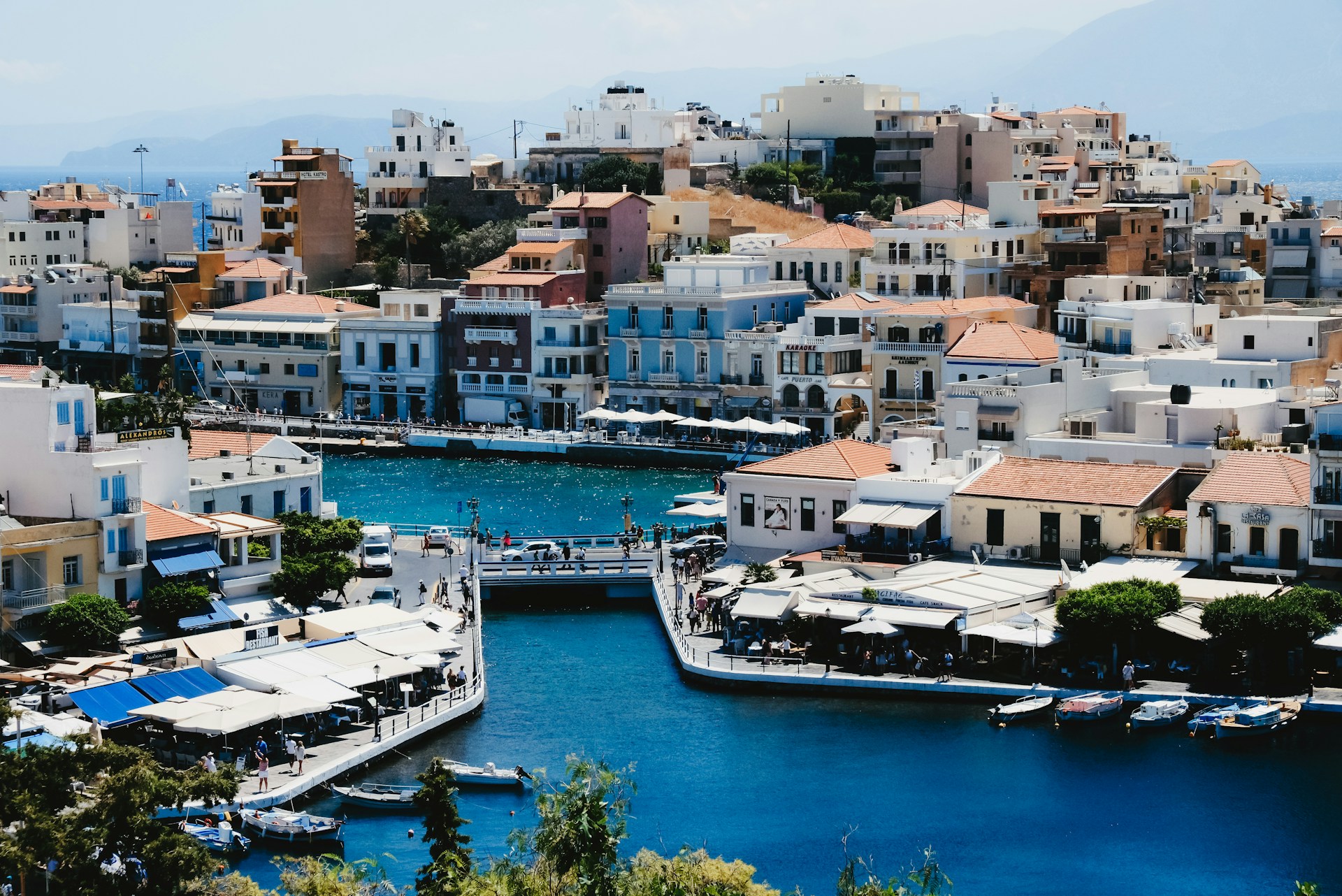
If Crete has a capital of comfort, it is the stretch of the north-east coast around Elounda and the town of Agios Nikolaos. This is where the island's reputation for high-end hospitality was made, on the sheltered water of the Gulf of Mirabello, where a warm, protected sea and a run of headlands gave hotel builders exactly what they wanted. The light here is soft, the bays are calm enough for morning swims well into October, and the little island of Spinalonga, the old Venetian fortress and former leper colony made famous by Victoria Hislop's novel, sits just offshore as the region's signature excursion.
Agios Nikolaos itself is the eastern anchor, a compact town wrapped around a small, almost circular lake that connects to the harbour, ringed by cafés and lit up at night. It is walkable, unpretentious and useful as a base, with tavernas that stay busy with locals rather than tour groups. The seafront just outside town is where some of the island's most characterful stays sit. Minos Beach Art Hotel spreads along the water in low stone bungalows and seafront villas scattered through gardens, with contemporary sculpture set among the tamarisk trees and private terraces that step down almost to the sea. It reads as a small village of art rather than a single block, and its position on the Mirabello water gives it some of the calmest swimming on the island.
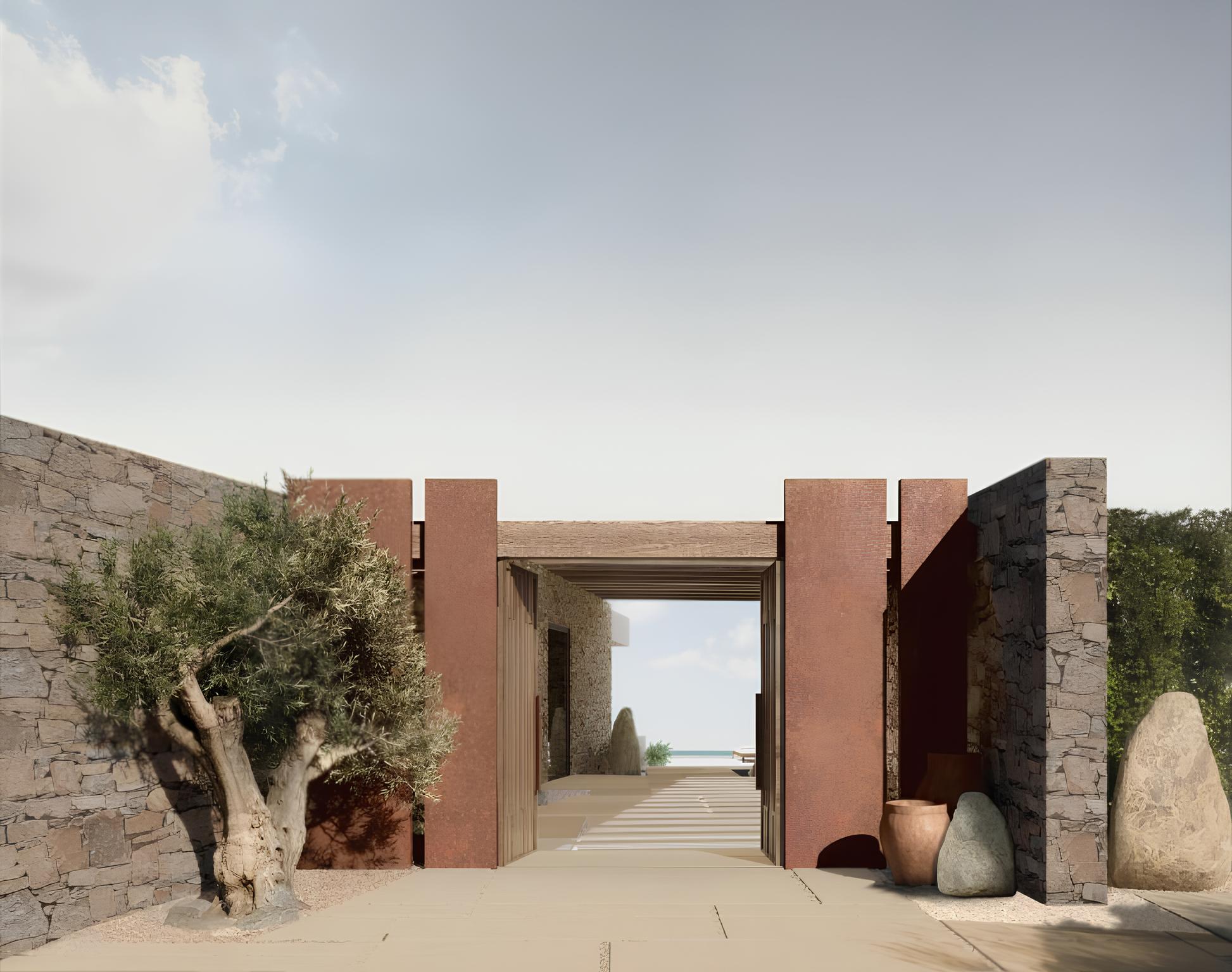
The design end of the region has grown sharply, and The Revery is the clearest expression of where luxury Crete is heading in 2026. It is an architecture-led property of pale stone, deep terraces and long horizon-lines, the kind of place built to frame the Aegean rather than merely overlook it, with suites that open straight onto private pools and a spare, modern aesthetic that lets the sea do the decorating. For travelers whose idea of the island is quiet, precise and design-conscious, this corner of the north-east delivers it more completely than anywhere else in Crete.
Practically, the east suits a certain kind of trip. It is the strongest choice for a first visit that leans toward relaxation, for honeymooners, and for anyone who wants a resort base with a real town within reach. The trade is distance: the great Minoan palaces and the western beaches are both a long drive away, so travelers who plan to sightsee widely often pair a few nights here with a second base further west.
Around Heraklion and the north coast
The centre of the north coast belongs to Heraklion, Crete's only city of real size and the point most visitors fly into. Heraklion is not a resort, and it does not try to charm on arrival: it is a working port with traffic and concrete at its edges. Its centre, though, rewards the patient. The Heraklion Archaeological Museum holds the greatest collection of Minoan art in existence, the frescoes and figurines from a civilisation that flourished here four thousand years ago. A few kilometres out sits Knossos, the largest of the Minoan palaces and the reason many people come to Crete in the first place. The city's Venetian harbour, its fortress and its covered market give an evening in Heraklion more substance than its reputation suggests.
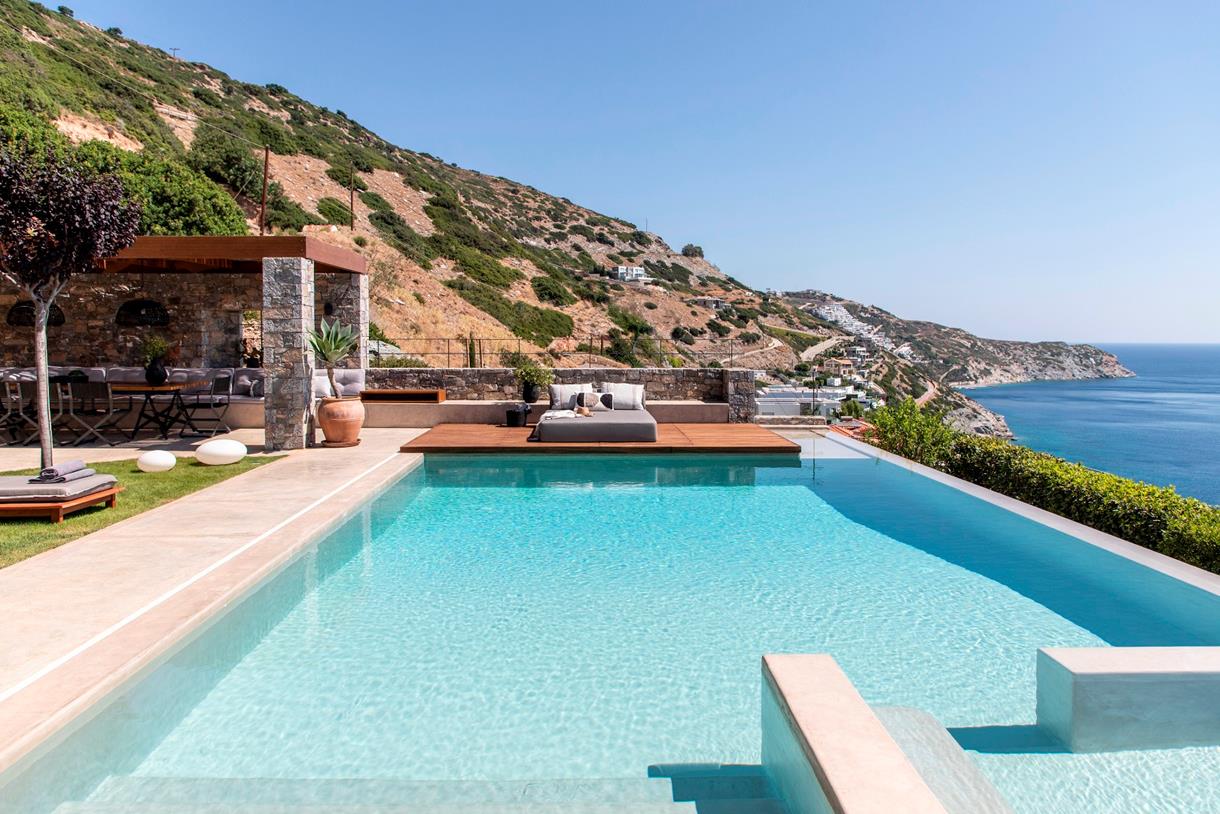
The coast on either side of the city is where central Crete does its resort business. To the west, toward Agia Pelagia, the shoreline breaks into a series of coves cut into cliffs, and this is where one of the island's most striking wellness stays has taken hold. Acro Suites is a cliff resort in the truest sense, its suites and villas carved into the rock above the water so that many of them open onto private pools cantilevered over the drop. It is built around wellbeing rather than nightlife, with a spa programme, sea-facing yoga and a calm that feels earned by its remove from the busier strips further east. For travelers who want the convenience of being close to the airport without the crowds of the central resort towns, the Agia Pelagia cliffs are a smart and scenic compromise.
Central Crete is also the springboard for the island's interior. From Heraklion the roads climb quickly into the Psiloritis massif, Crete's highest mountain, past villages that make their own cheese and wine and the plateau country where the shepherding life still runs on old rhythms. This is the Crete of long lunches and dramatic gorges, and it is genuinely close from a central base in a way it is not from the far east or far west.
South and inland from Heraklion, toward the Messara plain and the road down to Matala, the mood shifts again to something slower and more grown-up. Adama, a Signature Collection by Zalo Spaces is an adults-only address of design-led suites, the sort of small, considered property built for couples who want privacy, clean modern lines and a quiet base within reach of both the south-coast beaches and the central archaeology. Its adults-only footing sets the tone: this is a stay chosen for calm rather than for facilities, and it works best for travelers using a hire car to range across the middle of the island.
Chania and the west
For many who know Crete well, the west is the part they return to, and Chania is the reason. The old town is the most beautiful in the Greek islands after the famous Cycladic villages: a Venetian harbour ringed by tall, faded merchant houses in ochre and rose, a lighthouse at the end of a long stone mole, and a warren of lanes behind the waterfront where Venetian arches give way to Ottoman doorways and a covered market sits at the centre of it all. Chania was fought over and settled by Venetians, Ottomans and Egyptians in turn, and the town wears all of it at once. An evening walk around the harbour as the lighthouse comes on is one of the set pieces of a Cretan trip.
Staying inside Chania's old town means staying inside history, often in restored houses of just a few rooms. Tella Thera belongs to this tradition of the intimate town stay, a boutique, design-conscious property where the scale is small and the finish is careful, the kind of address that puts a traveler a short walk from the harbour, the market and the best of the town's tavernas. For a trip built around atmosphere, food and wandering rather than around a beach lounger, a base of this kind in or near Chania is hard to better.
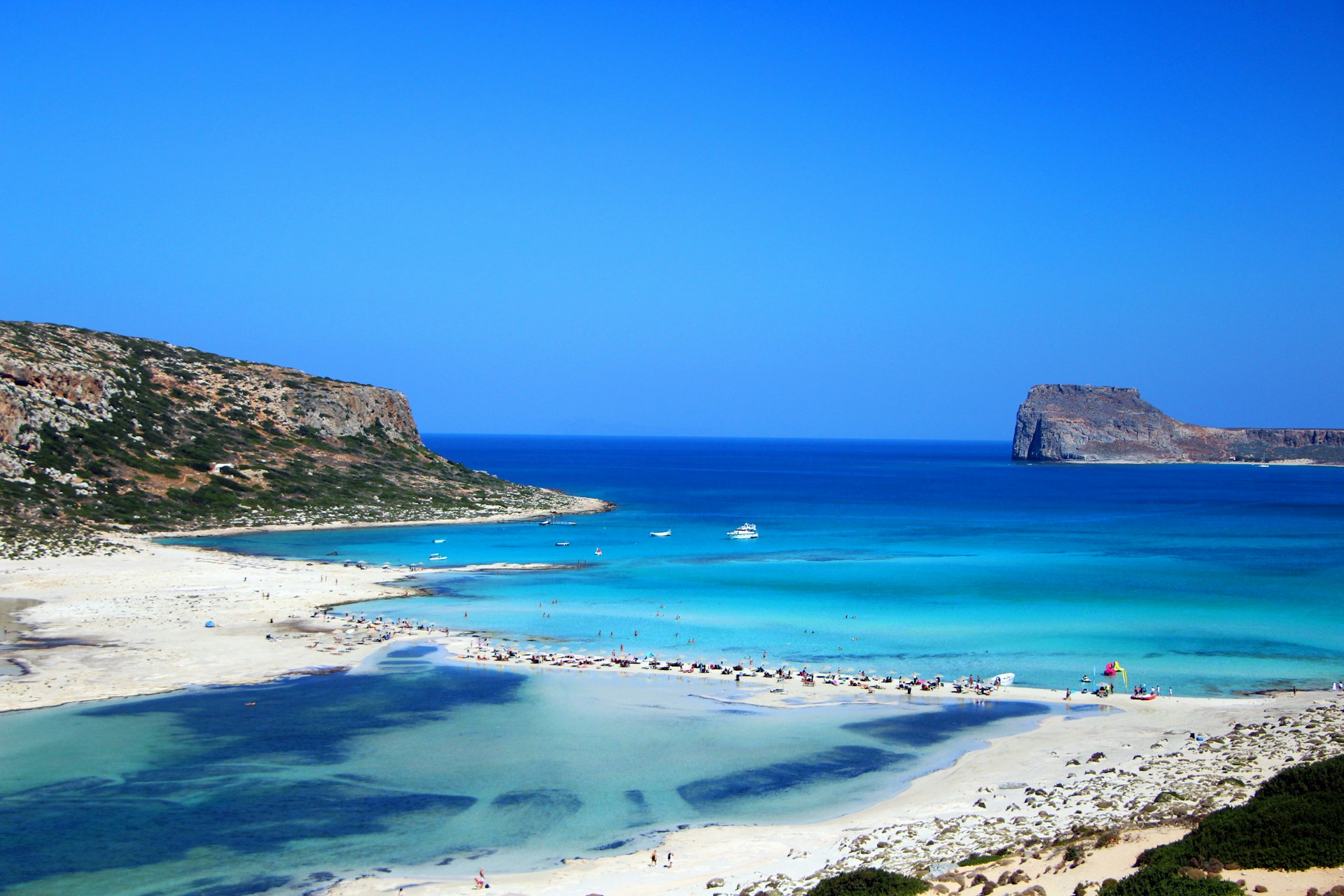
The west is also Crete at its wildest and most scenic. South of Chania the road climbs to the mouth of the Samaria Gorge, at sixteen kilometres one of the longest walkable gorges in Europe, a full-day descent through a national park to the Libyan Sea. The far west holds the island's most photographed beaches: the pink-tinged sand and turquoise shallows of Elafonisi, and the lagoon of Balos, reached by a rough track or a boat, where a sandbar separates two shades of impossible blue. These are day trips from a Chania base, and they are the images that sell Crete, though they demand an early start and a tolerance for company in high season.
For travelers who want the west's beauty with more space around them, the coast and countryside outside Chania hold a scattering of small villa stays. Villa Octo sits in this category of the small boutique villa: a private, low-key stay for those who prefer a handful of rooms and a pool of their own to the bustle of a resort, and who plan to use a car to reach the beaches and the town rather than stepping straight from lobby to sand.
The wild south
Cross the mountains and Crete changes character completely. The south coast faces the Libyan Sea and Africa beyond it, and because the ranges shelter it from the northern roads, it has stayed quieter, emptier and more elemental than the developed north. Villages such as Loutro, reachable only by boat or on foot, and the long grey-sand sweep of beaches below the gorges, are where Crete keeps its sense of remoteness. The water is often warmer here, the pace slower, and the drama of the landscape more extreme, with mountains falling almost straight into the sea.
The south is not for everyone, and honesty helps more than romance. Its roads are slower and more winding, its towns are smaller, and its luxury is thinner on the ground than in the polished north-east. What it offers instead is escape in the literal sense: beaches a traveler can still have half to themselves in June, tavernas where the fish came off a local boat that morning, and nights quiet enough to hear the sea. For a certain temperament this is the real Crete, and it works best as a second act, a few nights of stillness after the towns and sites of the north.
Along the same central and southern belt, contemporary beach hospitality has arrived without erasing the calm. Seaside, a Lifestyle Resort is a modern beach property in this vein, a contemporary resort for travelers who want clean design and direct access to the water without the formality of the grand old names, the kind of base that suits a relaxed few days built around sea, pool and long lunches. It answers a real demand in the 2026 market: the traveler who wants boutique feeling and beach convenience in the same booking.
Crete rewards the traveler who treats it as a country to tour, not a beach to settle on. Two bases nearly always beat one.
How to get around Crete
A hire car is close to essential. This is the single most important practical decision of a Cretan trip, and skipping it is the most common mistake. Public buses run reliably along the north coast between the main towns, but the beaches, gorges, mountain villages and the entire south coast are effectively out of reach without a car. The best of Crete is not in the towns; it is in the drive to them, along the coast road with the sea on one side and the mountains on the other, or up switchbacks to a plateau village for lunch.
Distances deserve respect. The map makes Crete look crossable in an afternoon, and it is not. The national road along the north coast is fast and modern, but the moment a route turns south into the mountains it slows to a crawl of hairpins and single-lane villages. As a rough guide, Chania to Heraklion runs about two hours on the fast road, Heraklion to Agios Nikolaos about an hour, and Chania to the eastern tip most of a long day. Building a trip around one hotel and day-tripping to everything rarely works, which is why this guide keeps returning to the idea of moving base once during a stay of a week or more.
When to go
Crete has one of the longest seasons in Greece, and the shoulder months are the sweet spot. May and June bring warm days, a green interior still bright with wildflowers, and sea temperatures climbing to swimmable by late May, all before the crowds arrive. September and October are arguably better still: the sea is at its warmest after a summer of heating, the light softens, and the island exhales as the peak empties. October in particular is underrated, with warm afternoons and quiet beaches well into the month.
July and August are hot and busy, and travelers who can avoid them usually should. Inland temperatures regularly push past thirty-five degrees, the famous beaches fill early, and prices peak. The heat is more bearable on the north coast, where a steady summer wind called the meltemi cools the afternoons, than in the sheltered south or the interior. Winter is mild along the coast but genuinely wet and cold in the mountains, where the high peaks hold snow into spring, and much of the resort infrastructure closes down between November and April.
How many days do you need
Crete asks for more time than a smaller island. A week is the sensible minimum for a first visit that wants to see more than one region, and ten days to two weeks lets the island open properly. A workable first-time plan splits the trip in two: a few nights in the west around Chania for the old town, the gorges and the western beaches, then a few nights in the east around Elounda and Agios Nikolaos for the calm water and the polished resorts, with Heraklion and Knossos taken in transit between them. Travelers with only three or four nights should resist the urge to see it all and instead pick one region, treat the rest as a reason to return, and let Crete keep something in reserve.
Frequently asked questions
| Question | Answer |
|---|---|
| Is Crete a good island for a first Greek-island trip? | Yes, with one caveat. Crete offers more variety than any other Greek island: beaches, mountains, archaeology, food and real towns. But it is large, so I should not expect the compact, one-harbour feel of a smaller island. If I want simplicity above all, a Cycladic island is easier; if I want range and depth, Crete is the strongest choice in Greece. |
| Which side of Crete is best? | It depends on the trip. The east, around Elounda and Agios Nikolaos, has the calmest water and the most polished luxury resorts. The west, around Chania, has the most beautiful old town and the wildest beaches. The centre gives access to Knossos and the airport. Most travelers who have a week base in two of these rather than choosing only one. |
| Do I need a car in Crete? | Almost certainly yes. Buses connect the main north-coast towns, but the beaches, gorges, mountain villages and the entire south coast need a car. The best of Crete is spread out and often reached by winding roads, so hiring a car turns a limited trip into a complete one. It is the practical decision that matters most. |
| When is the best time to visit Crete? | May to June and September to October are ideal, with warm weather, swimmable sea and far fewer people than the peak. September and October have the warmest water of the year. July and August are hot and crowded, with interior temperatures above thirty-five degrees, so I would avoid them if I have any flexibility in dates. |
| How many days do I need in Crete? | A week is a sensible minimum to see more than one region, and ten days to two weeks lets the island breathe. With only three or four nights I would pick a single area, such as the west around Chania or the east around Elounda, rather than trying to cross the island and spending the trip in the car. |
| Is Crete good for families? | Very. The north coast has calm, shallow beaches, the resorts are used to children, and the mix of archaeology, boat trips and easy swimming keeps a range of ages happy. The gentler eastern bays around Elounda and the central resorts suit families best, while the wild south and the long gorge walks work better once children are older. |
| Elounda or Chania: which should I choose? | Elounda for calm, luxury and the best swimming water, on a sheltered gulf in the east with the island's most polished resorts. Chania for character, history and food, in a Venetian harbour town on the greener, wilder west. For a first trip that can only fit one, Chania gives more to see and do; Elounda gives more to relax into. |
| Do I want somewhere quiet or somewhere lively? | Both exist on Crete, far apart. For quiet, the south coast and the small villa stays inland deliver real stillness. For lively, the harbour towns of Chania and Agios Nikolaos have busy waterfronts, tavernas and evening bustle without becoming party resorts. Choosing between them, or splitting a trip across both, is the core of planning a Cretan stay. |
Crete does not resolve into a single view or a single town. It asks the traveler to drive, to change base, to cross a mountain and find a different sea on the other side. The reward for treating it as a country rather than a beach is a trip that holds more than any one Greek island has any right to.