Where to Stay in Thailand: A 2026 Guide to Bangkok, Phuket and the Islands
Thailand is not one destination but several, stacked on top of each other. A river capital, a rainforest north, two very different coasts, and a scatter of islands that each keep their own weather. Choosing where to stay is really a question of which Thailand a traveller wants first.
Most first plans for Thailand fail in the same way. A traveller picks a beach seen in a photograph, books flights around it, and only later learns that the beach in question is under monsoon rain during the chosen fortnight, or that reaching it swallows a full day of transfers. The country rewards the opposite approach. It helps to understand the shape of the place first, the seasons that split the two coasts, the transport that stitches the regions together, and then to choose where to sleep region by region. This guide moves in that order, from the calendar to the map to the hotels, and closes with a plan for combining several Thailands in a single trip.
01When to go
Thailand runs on three broad seasons, and the most useful thing to know is that they do not fall evenly across the country. The cool dry season, from roughly November to February, is the classic window and the reason peak rates cluster there. Days are warm rather than punishing, humidity drops, and Bangkok and the north are at their most comfortable. This is the safest choice for a first trip and, unsurprisingly, the busiest and most expensive.
The hot season, from March to May, turns the interior fierce. Bangkok and Chiang Mai can climb past forty degrees, and the north carries a further complication in the burning season, when agricultural fires haze the air around Chiang Mai and the surrounding hills through parts of March and April. Travellers sensitive to heat or air quality are better off on the coast in these months, or elsewhere entirely.
The green season, from June to October, brings the southwest monsoon, and here the split between the coasts matters most. The Andaman side, Phuket and the islands facing the Indian Ocean, takes the brunt of it, with heavier rain and rougher seas. The Gulf side, including Koh Samui, keeps a different rhythm and often stays drier into this stretch, with its own wettest spell arriving later, around October and November. The practical lesson is simple and worth repeating: the two coasts peak at opposite times, so a summer trip is not doomed, it just belongs on the Gulf rather than the Andaman.
02How to get there and around
Almost every long-haul route into Thailand lands at Bangkok's Suvarnabhumi airport, with a second, largely low-cost hub at Don Muang. That makes Bangkok the natural first stop for most itineraries, whatever the eventual destination. From there the country opens up through an unusually good and inexpensive domestic network.
Domestic flights do the heavy lifting. Bangkok to Phuket, Chiang Mai or Koh Samui takes little more than an hour and often costs less than a good dinner, which is why island and mountain trips rarely involve long overland journeys unless a traveller wants them. For those who do, the overnight sleeper trains north to Chiang Mai and south toward the Andaman coast are a pleasure in their own right, a slow, sociable way to cover distance while sleeping through it. Booking a lower berth in advance is the small trick that makes them comfortable.
Between and around the islands, ferries and speedboats take over. Phuket connects by boat to Phi Phi, Krabi and the smaller Andaman islands, while Koh Samui, Koh Phangan and Koh Tao form their own ferry triangle in the Gulf. Timetables thin out in the green season when seas are rough, so island hopping wants a little slack in the schedule. On land, ride-hailing apps work well in Bangkok and Phuket, metered taxis and the elevated BTS and MRT lines make the capital easy, and short journeys everywhere lean on the tuk-tuk, more a small adventure than a serious form of transport.
03Bangkok
Bangkok deserves more than the single night most itineraries grant it. The city is Thailand's cultural engine, a place of gilded temples and canal neighbourhoods that sits, at the same time, among the most confident dining and design capitals in Asia. Where to stay depends on which of those Bangkoks a traveller is chasing, and the choice usually comes down to the river or the centre.
The Chao Phraya riverside is the most atmospheric base, trading a little convenience for calm water, breeze and a sense of the old city. It is here that The Siam makes its case, an art-deco riverside retreat of suites and pool villas that feels a world away from the traffic, and one of the most distinctive places to sleep in the whole country. It suits travellers who want their Bangkok slow, private and rooted in the river rather than the shopping district.
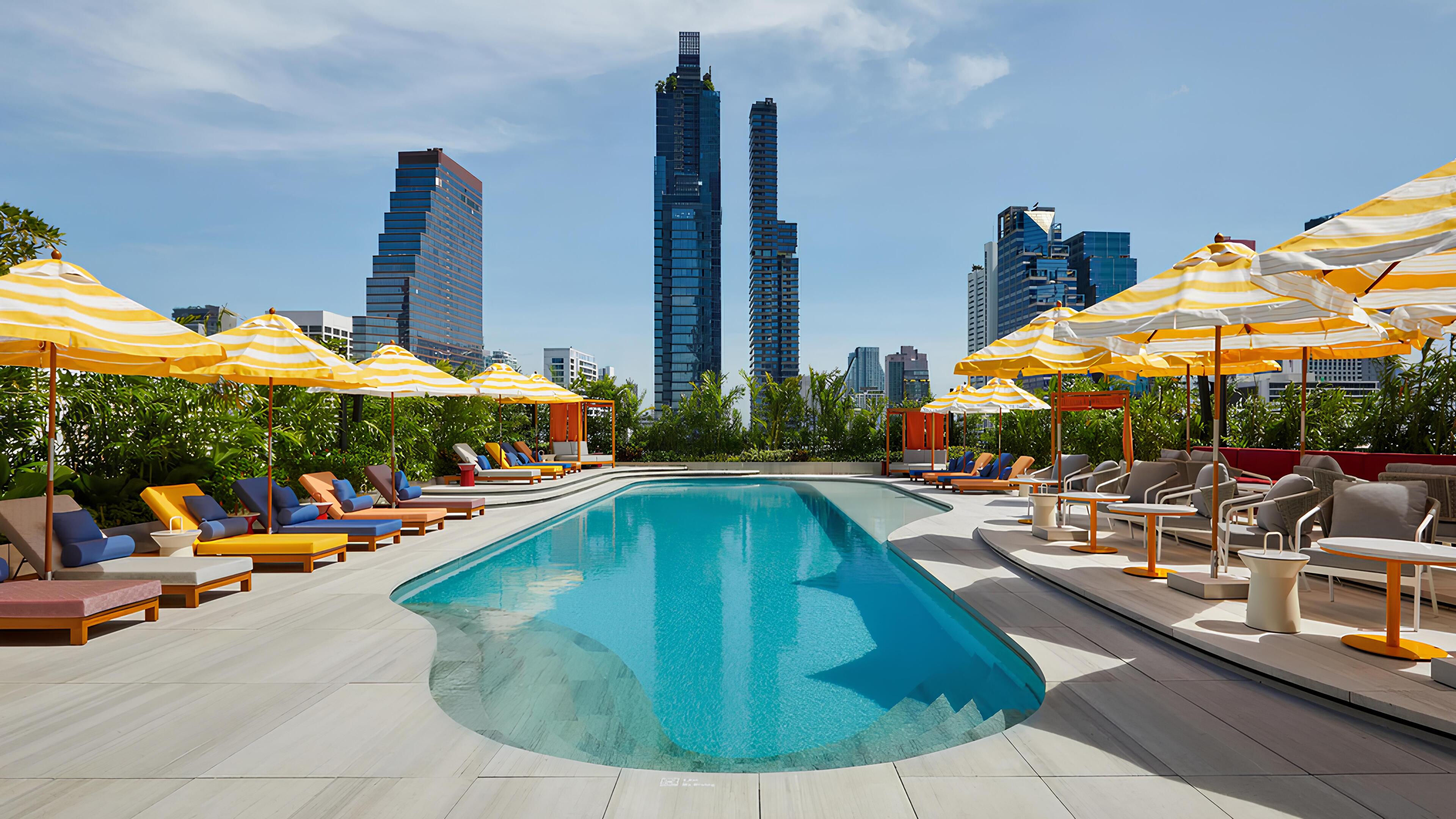
For those who want the city at full voltage, the modern districts around Sukhumvit and Sathorn put the nightlife, restaurants and transit lines on the doorstep. The Standard, Bangkok brings a bold, colour-saturated design sensibility to a central tower, the kind of address that treats a hotel as part of the night out rather than an escape from it. A short way off, SO/ Bangkok looks over the green of Lumpini Park, a design-led high-rise whose rooftop and pool make the most of the skyline. Both belong to the fast, urban Bangkok, and both put a traveller within easy reach of the elevated trains that make the centre so simple to navigate.
Bangkok is the one Thai destination that improves the longer a traveller stays, revealing another layer each day it is given.
04Phuket and the Andaman coast
Phuket is Thailand's largest island and its most developed beach destination, which gives it a mixed reputation it only half deserves. The busy strips of the west coast are real, but so is a quieter Phuket of forested headlands and design-driven retreats set back from the crowds, and that is where the island justifies a luxury stay. The whole Andaman coast, Phuket, Krabi, Phang Nga and the islands between them, shares one calendar: it is at its best in the cool dry season and rough through the summer monsoon.
Above the northwest coast, Keemala hides among the trees near Kamala, a fantastical retreat of tented and nest-like villas with private pools, pitched squarely at travellers who want seclusion and drama over a beachfront address. A little to the south, on the cliffs above the sea, Paresa stacks its villas down a headland for long horizons and sunset views, the kind of place built around the drop to the water. For a smaller, more intimate stay, Hotel Verdigris offers a boutique alternative for travellers who prefer a compact, characterful base to a sprawling resort. Between them these three cover the main ways to do Phuket well: hidden in the forest, high on a cliff, or small and personal.
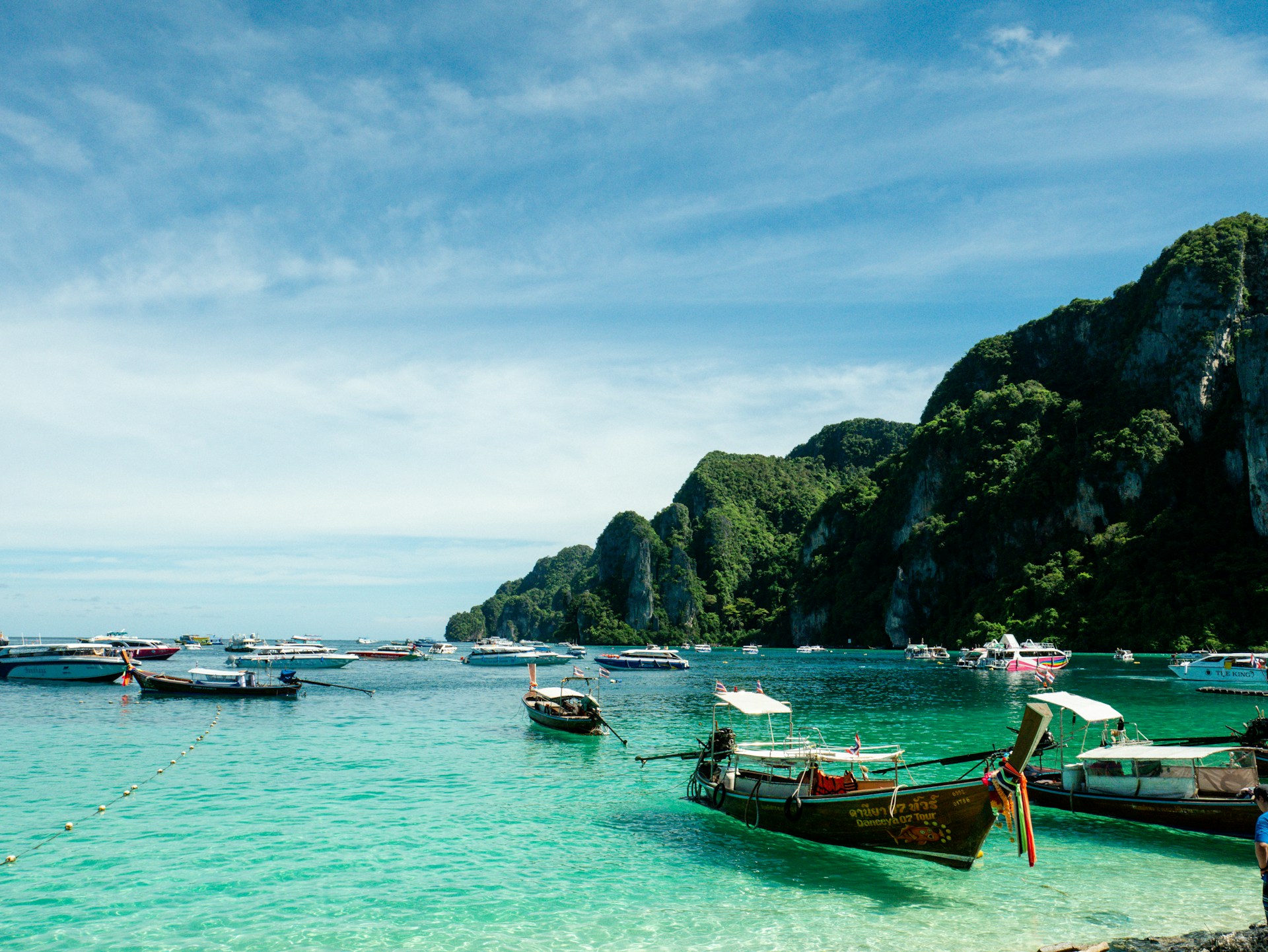
Phuket also earns its keep as a launch pad for the wider Andaman. From its piers, boats reach the limestone theatre of Phang Nga Bay, the beaches of Phi Phi, and the quieter islands off Krabi, so a Phuket base can anchor several days of sea trips without ever changing hotel. Travellers chasing empty sand can push further out to islands such as Koh Lanta or the Similans, though the smallest of these effectively close during the monsoon months.
05The Gulf islands
On the other side of the peninsula lies Thailand's second island world, the Gulf trio of Koh Samui, Koh Phangan and Koh Tao, and its great advantage is that different weather. When the Andaman coast is under summer rain, these islands often stay bright, which makes them the natural choice for a green-season beach trip. They reward a slightly slower traveller and a willingness to hop by ferry between them.
Koh Samui is the developed anchor of the three, with an airport of its own, the broadest range of hotels, and beaches that run from lively to secluded depending on which coast a traveller chooses. It carries the most polished resorts and the easiest arrival. Koh Phangan, a short ferry away, is quieter and greener, known both for its full-moon gatherings on one stretch of sand and, increasingly, for a wellness and retreat scene concentrated in the calmer north of the island. Koh Tao, smaller again, is the diving island, one of the most affordable places in the world to learn, with clear water and a laid-back village pace.
Because the Top World Hotel network does not yet cover these three islands, this guide keeps its Gulf advice general rather than naming a stay. The useful shape to hold in mind is straightforward: Samui for range and comfort, Phangan for quiet and wellness, Tao for diving and simplicity. All three link by regular ferry, so a week split across two of them is an easy and rewarding plan.
06Chiang Mai and the north
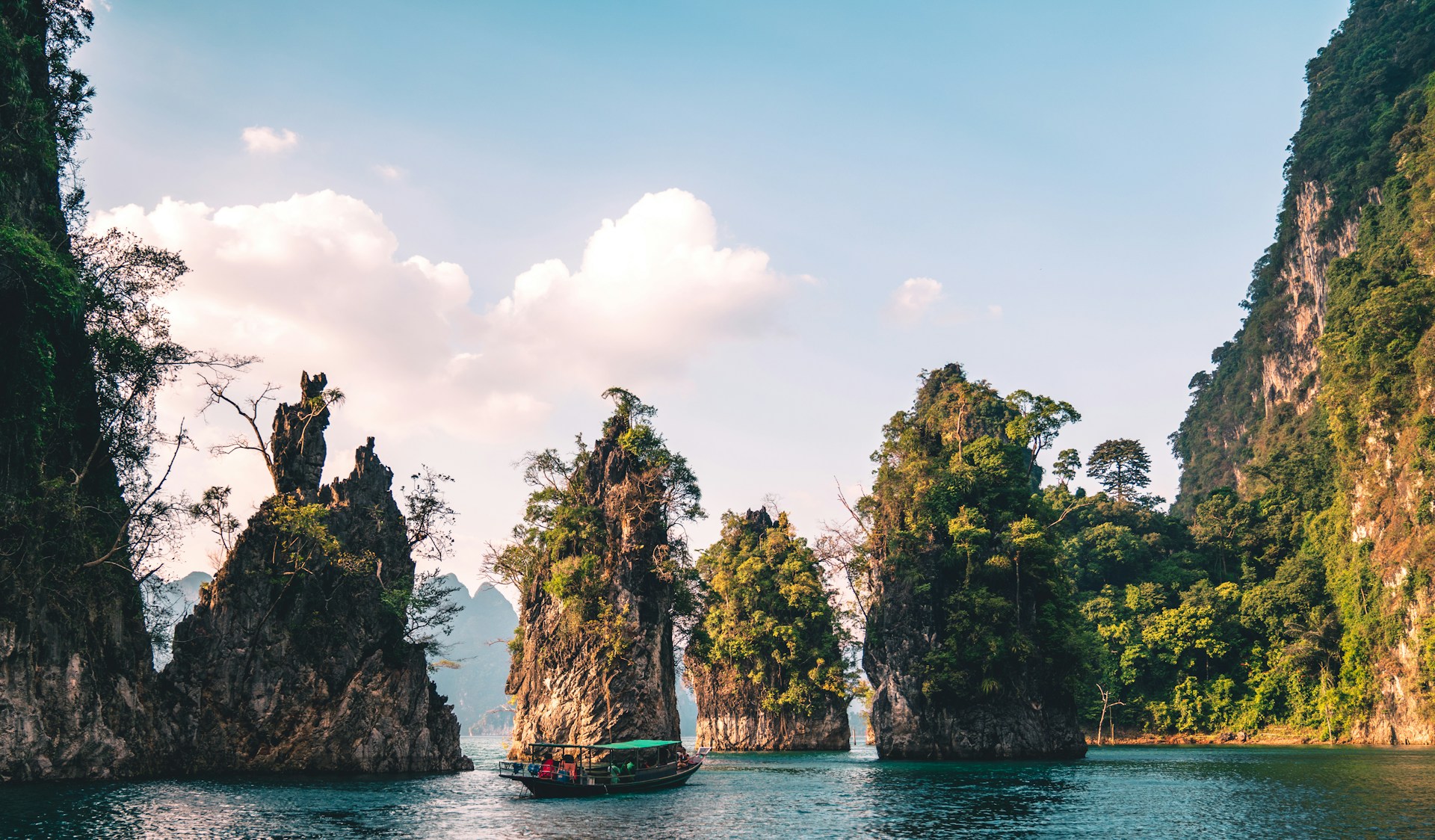
The north is Thailand's counterweight to the beaches, cooler, greener and slower, built around the old walled city of Chiang Mai and the mountains and river valleys beyond it. It is a place for temples and craft, for markets and cookery, for elephant sanctuaries run on kinder modern lines, and for the kind of trekking and hill-country touring that the coast cannot offer. For many travellers it is the part of the trip that lingers longest in memory.
Chiang Mai itself divides between the atmospheric old city, ringed by its moat and gates and dense with temples, the riverside stretches along the Ping, and the leafier suburbs and Nimman district favoured by a younger, café-driven crowd. Beyond the city, the smaller town of Pai and the loop of mountain roads around it draw travellers with more time, while the far north toward Chiang Rai adds tea hills and the meeting of borders. As with the Gulf islands, the network does not yet list a stay here, so the guidance stays general: the old city for immersion, the riverside for calm, the hills beyond for anyone with days to spare.
Timing is the one firm rule for the north. It is loveliest in the cool season and best avoided at the height of the burning season in March and April, when smoke can settle over the valleys. Paired with the coast, though, Chiang Mai gives a trip its range, the mountains balancing the sea and the capital in a way that few countries manage so easily.
07How to combine them
Ten to fourteen days is the sweet spot for Thailand, enough to see more than one face of the country without spending the whole holiday in transit. The right sequence depends almost entirely on the season, because the two coasts pull in opposite directions. A useful rule is to let the calendar choose the beach and then build the rest of the trip around it.
In the cool dry season, from November to March, the Andaman coast is at its best, so a classic loop runs Bangkok, then Chiang Mai, then Phuket: three nights in the capital to shake off the flight and see the city properly, three or four in the north for temples and mountains, and four or five on the Andaman coast to finish on the beach. In the green season, from June to October, the same structure holds but the ending changes, swapping Phuket for Koh Samui and the Gulf, which stay brighter through the summer rains. Travellers with only ten days can drop the north and split the time between Bangkok and a single coast, keeping the pace gentle rather than cramming in a third region.
Two small principles make any of these plans work. Start in Bangkok, since almost every flight lands there and the city is a poor place to rush at the end of a tired trip. And end on the coast, so the holiday finishes on sand rather than in traffic. With cheap domestic flights linking the regions, moving between them costs a morning rather than a day, which is what makes a three-part Thailand realistic inside two weeks.
08What it costs
Thailand covers an unusually wide span of budgets, which is part of its appeal. The same country serves the backpacker on a handful of pounds a day and the traveller booking pool villas, and the gap between them buys a great deal. The single most important fact for a luxury visitor is that the top end of Thailand costs far less than its equivalent in Europe or the Caribbean, so a given budget stretches to a notably better room, a longer stay, or both.
Day to day, food is the clearest bargain. A superb meal from a street stall or a busy local restaurant costs very little, and even fine dining in Bangkok undercuts comparable cities elsewhere. Domestic flights and trains are inexpensive, city transit in Bangkok is cheap and efficient, and the main costs that scale are the hotels and the private transfers and boat trips that a luxury itinerary tends to add. Peak-season rates in the cool dry months run well above the green-season equivalents, so travellers with flexible dates can trade a little weather risk for a meaningful saving.
The sensible way to budget is by tier rather than by a single daily figure. Modest travel is genuinely cheap; comfortable mid-range travel is very good value; and the luxury tier, the design hotels and villa retreats in this guide, sits at a level that would be described as a bargain by the standards of most Western beach destinations. Across all three, the tourist areas price higher than the local economy around them, but even the premium keeps Thailand among the best-value luxury destinations in Asia.
Frequently asked questions
| Question | Answer |
|---|---|
| Where should I stay in Thailand for a first trip? | For a first visit I would combine three regions: Bangkok for the culture and dining, one coast for the beaches, and if there is time the north around Chiang Mai for a complete picture. Which coast to add depends on the season, since the Andaman side and the Gulf side peak at different times of year. |
| What is the best time to visit Thailand? | November to March, the cool dry season, is the safest choice for most of the country and the reason it is also the busiest and most expensive stretch. The hot season from March to May is harsh inland, and the green season from June to October brings rain that hits the Andaman coast hardest while often sparing the Gulf islands. |
| Should I stay in Bangkok or Phuket? | Ideally both, since they offer completely different things. Bangkok is the cultural and dining capital and the natural first stop, while Phuket is the beach base and the gateway to the wider Andaman coast. Most itineraries open in Bangkok for a few nights and finish on a coast rather than choosing one over the other. |
| How do I get around Thailand? | Cheap domestic flights connect Bangkok with Phuket, Chiang Mai and Koh Samui in around an hour and do most of the long-distance work. Overnight sleeper trains are a scenic alternative north and south, and ferries or speedboats link the islands. Within Bangkok the BTS and MRT lines and ride-hailing apps make the city easy. |
| Which islands are best in the summer months? | The Gulf islands, Koh Samui, Koh Phangan and Koh Tao, tend to stay brighter through the June to October monsoon, while the Andaman islands around Phuket are wetter and rougher then. A summer beach trip therefore belongs on the Gulf side, where Samui offers the widest choice of comfortable stays. |
| How many days do I need in Thailand? | Ten to fourteen days is the ideal range for combining a city, a coast and either the north or a second island without spending too long in transit. With only ten days it is better to drop one region and split the time between Bangkok and a single coast, keeping the pace relaxed. |
| Is Thailand expensive for a luxury trip? | Compared with Europe or the Caribbean, no. The top end of Thailand, the design hotels and villa retreats, costs far less than its equivalent elsewhere, so a given budget buys a better room or a longer stay. Food, transport and domestic flights are all inexpensive, which keeps the overall cost of a luxury trip well controlled. |
| Do I need to see the north as well as the beaches? | Not on a short trip, but it adds a great deal on a longer one. Chiang Mai and the surrounding mountains give a Thailand of temples, craft and cool green hills that the coast cannot, balancing the beaches and the capital. It is best in the cool season and worth avoiding during the burning season in March and April. |
Thailand rewards travellers who read its map before they book its flights. Let the season choose the coast, let Bangkok open the trip and the sea close it, and the country arranges itself into something far richer than any single beach could promise.