Desert Modern: Three Hotels Shaping Oman's Architectural Identity
From canyon-edge forts to fishing village resorts, how Anantara Al Jabal Al Akhdar, Six Senses Zighy Bay, and Alila Hinu Bay redefine luxury through Omani vernacular architecture. Three properties, three landscapes, one design philosophy.
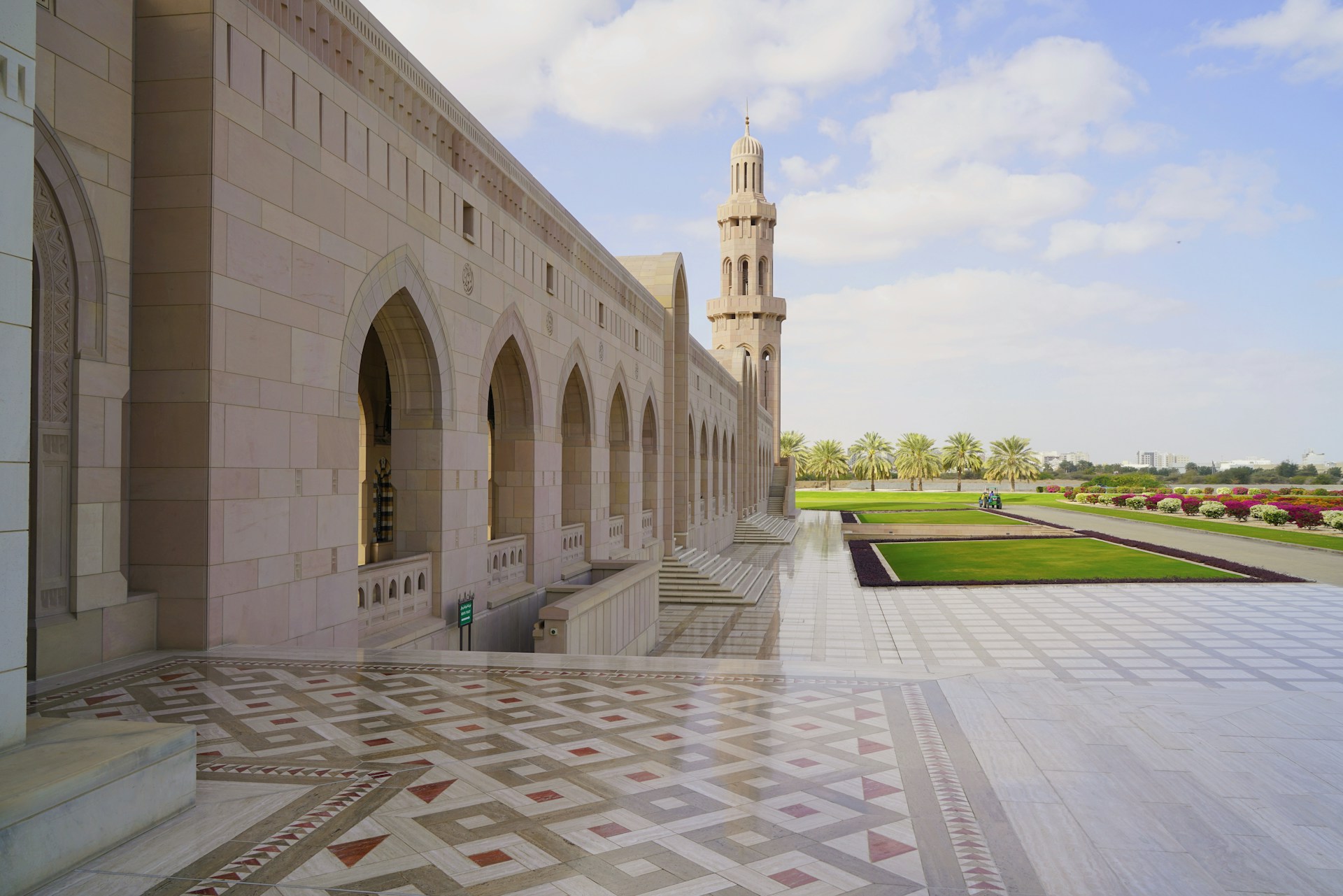
The Sultanate of Oman has never followed the Gulf playbook. While its neighbours raced skyward with glass towers and artificial islands, Oman looked inward, to its mountains and coastlines, its mud-brick forts and ancient irrigation channels. The result is a country where contemporary architecture speaks a different language, one rooted in terrain, climate, and a building tradition that stretches back centuries.
Three hotels, separated by hundreds of kilometres and radically different landscapes, have emerged as the clearest expression of this approach. Anantara Al Jabal Al Akhdar clings to a canyon rim two thousand metres above sea level, its stone walls echoing the fortresses that once guarded the Nizwa region. Six Senses Zighy Bay spreads across a hidden cove on the Musandam Peninsula, its villas built from the same grey rock that rises behind them. Alila Hinu Bay stretches along the Dhofar coast in the far south, where the monsoon transforms the desert green and the ruins of ancient frankincense ports dot the shoreline.
Each property tells a story about what happens when serious architects engage with Omani heritage. Not heritage as decoration, applied like wallpaper to generic concrete boxes, but heritage as method, as a set of principles for responding to extreme climates and difficult sites. The architects behind these hotels spent time in abandoned villages, studied the engineering of medieval castles, and worked with local craftsmen who still know how to mix sarooj, the traditional Omani plite. Their buildings do not look like the luxury resorts you find elsewhere in the region. They look like they belong.
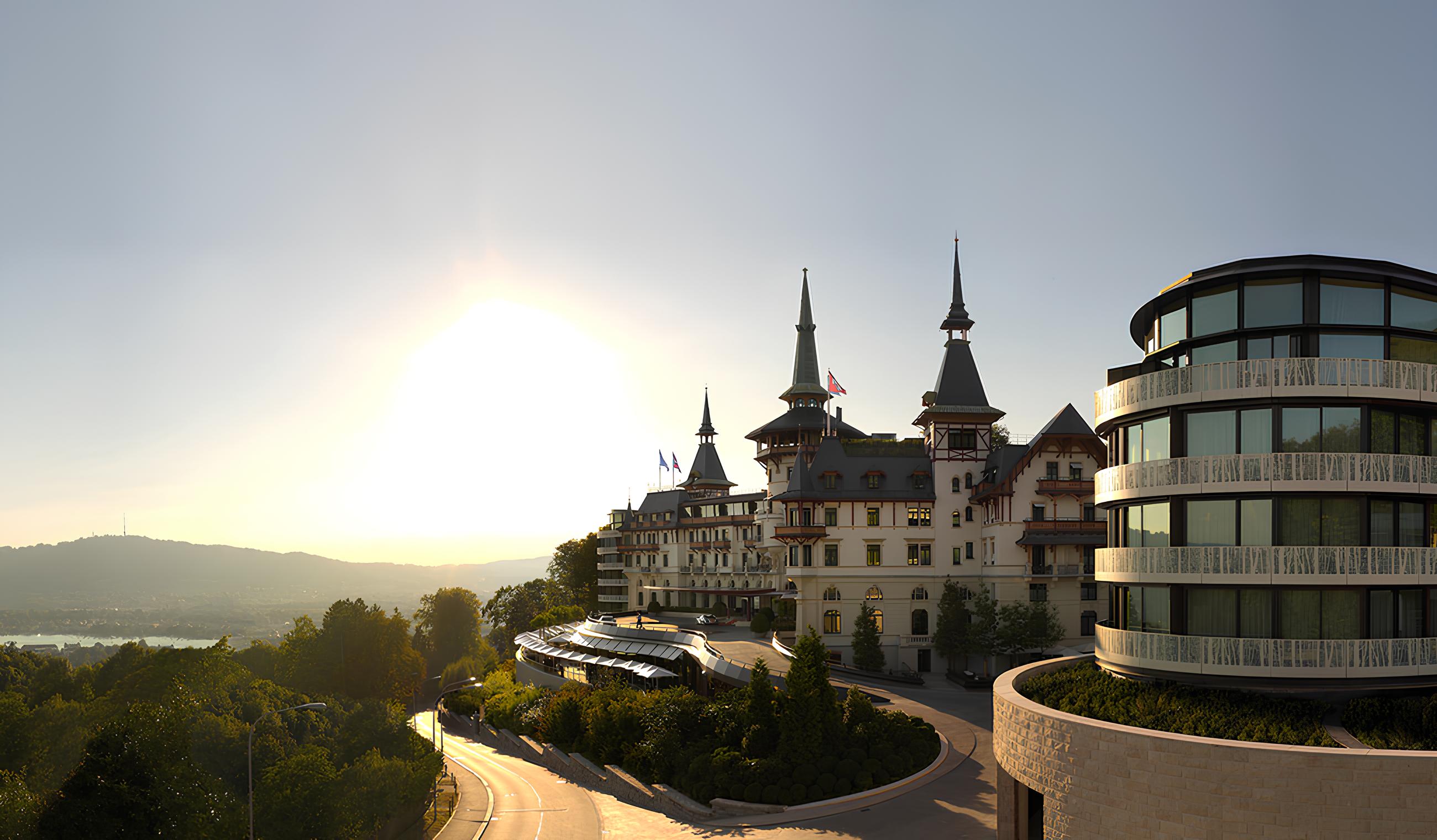
The Fortress in the Clouds: Anantara Al Jabal Al Akhdar
The road to Anantara Al Jabal Al Akhdar requires a four-wheel drive. There is no other option. The mountain that gives the hotel its name, Jabal Akhdar, the Green Mountain, rises from the Saiq Plateau in a series of steep switchbacks that ordinary vehicles cannot manage. The government maintains a checkpoint at the base, turning back anyone without proper clearance or suitable transport. This enforced remoteness is part of the appeal. By the time you reach the resort, perched on a 66,000 square metre cliff-edge plot at 2,000 metres elevation, you have earned your arrival.
Lotfi Sidirahal, the French-Moroccan architect who designed the property, understood that the journey would shape expectations. His firm, Atelier Pod, won the commission after competing against ten internationally recognised design companies, and Sidirahal spent weeks in the region before drawing a single line. He visited the mountain communities who have farmed these terraces for generations. He sketched the architectural details of Birkat al Mawz, the ancient village at the mountain's base, and studied the defensive geometry of Jabreen Fort, one of Oman's finest examples of 17th-century palace architecture.
"We designed the entrance with the idea of a fort in mind," Sidirahal has explained. "The exterior, with its great wooden doors, impressively showcases commanding strength. There is a dramatic contrast upon entry as the interior gives a delicate and voluptuous impression."
The contrast he describes is central to Omani architectural tradition. The country's forts, particularly those in the Nizwa region, were built to intimidate from outside while providing refinement within. Bahla Fort, a UNESCO World Heritage Site just down the mountain, stretches its mud-brick walls for thirteen kilometres around the old oasis town. Its defensive towers are massive, almost brutal. Yet inside, the spaces reveal intricate plasterwork, carved wooden ceilings, and the quiet sound of water moving through falaj channels.
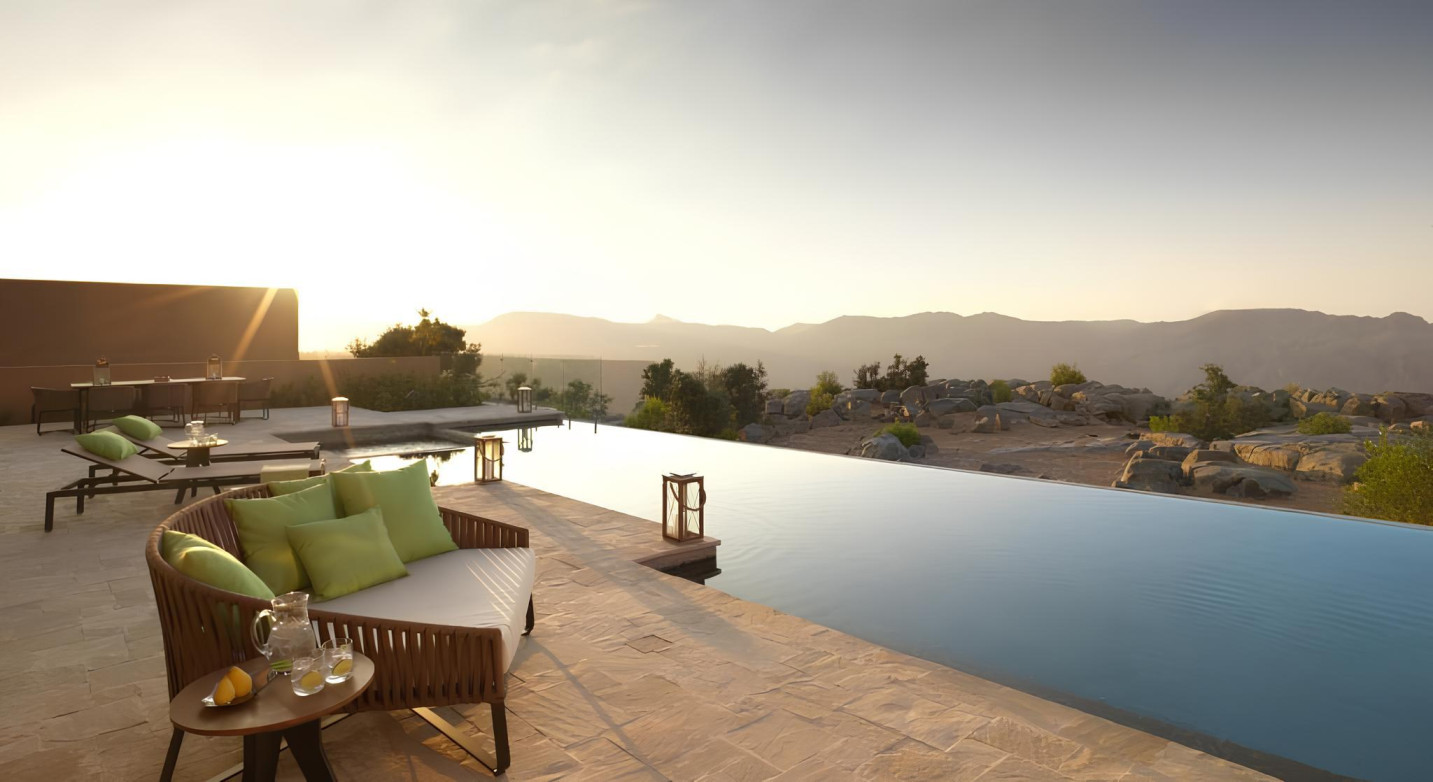
Sidirahal translated this principle into a contemporary vocabulary. The resort's 115 rooms and villas sit within structures that reference the fortification typology of the Nizwa region without replicating it literally. Stone walls rise in clean planes. Windows are deep-set, their proportions echoing the defensive openings of the old citadels. A freestanding tower, housing a lounge and specialty restaurant, recalls the conical watchtowers that punctuate Oman's landscape, though here the ramp that circles its exterior leads to a rooftop bar rather than a garrison.
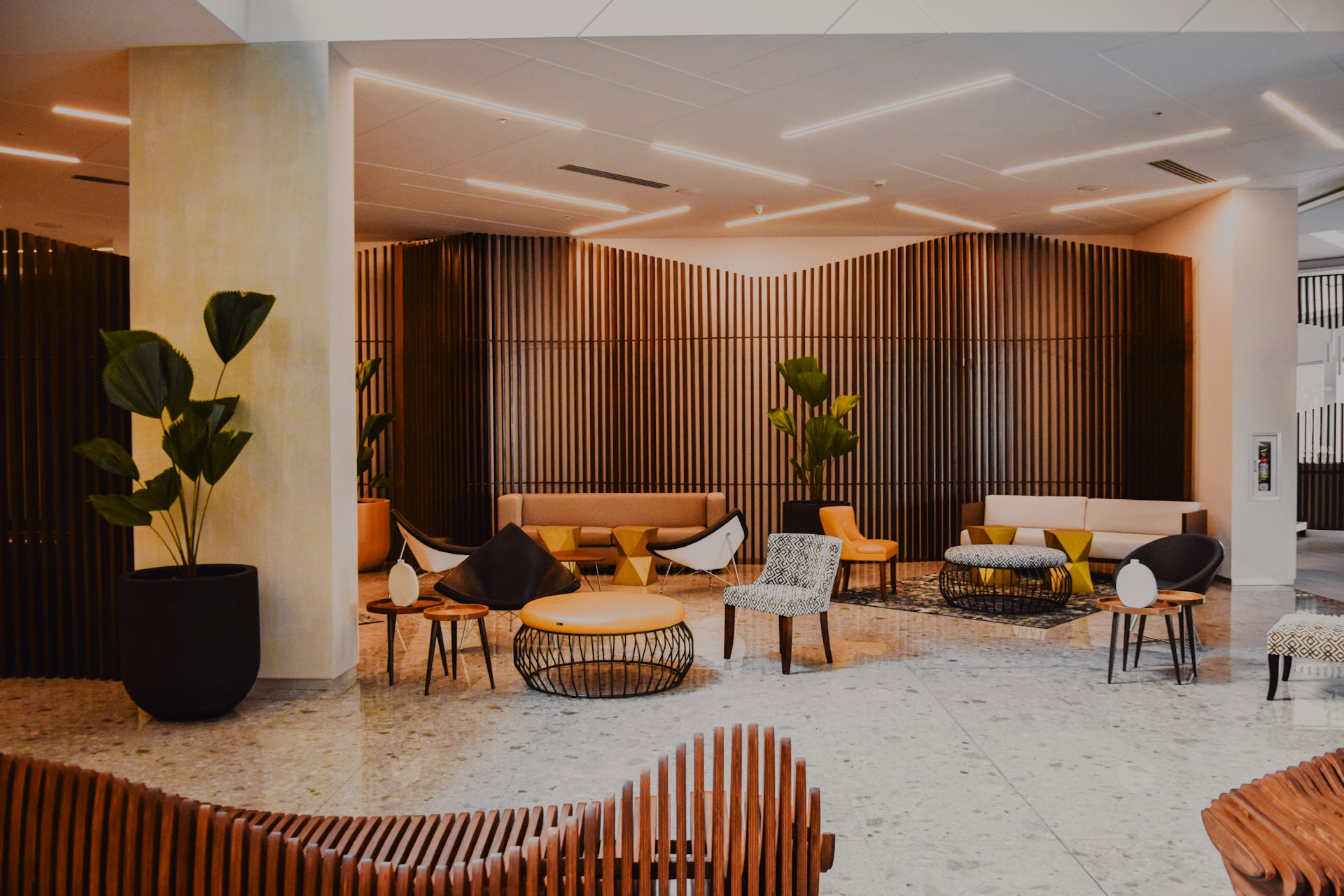
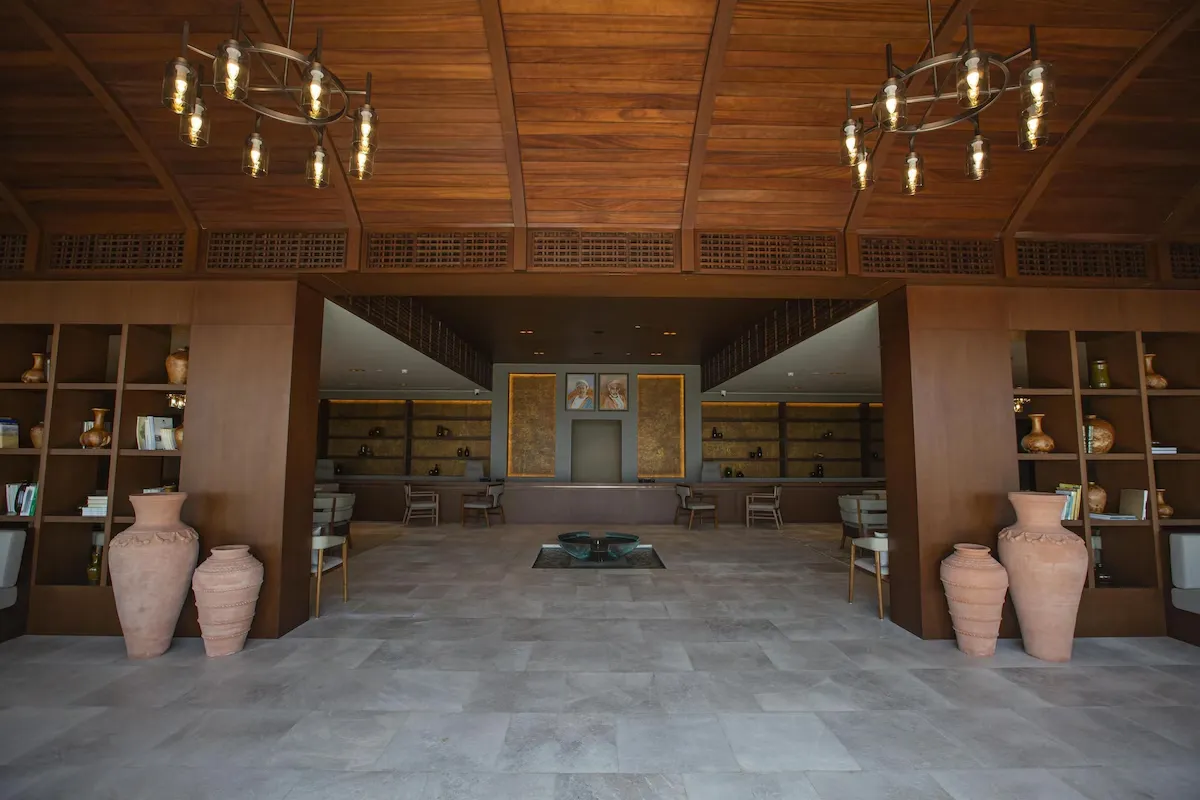
The lobby presents what may be the hotel's most striking architectural moment. A wooden geodesic dome, spanning over ten metres in diameter, floats above a contemporary fountain. The dome is not traditional in any literal sense, its triangulated structure belongs to the 20th century, but its material and warmth connect it to the wooden ceilings that distinguish Jabreen Castle from purely military fortifications. Beyond the lobby, a central courtyard opens to the canyon, its arcades revisited in clean modern lines that frame rather than decorate the view.
Atelier Pod handled not just the architecture but also the interior design, the artwork selection, the lighting design in collaboration with LDC Madrid, and the landscape design with HED London. This comprehensive approach allowed Sidirahal to maintain consistency across scales, from the massing of buildings to the patterns carved into custom furniture. The studio designed eighty pieces of bespoke furniture, each a contemporary interpretation of traditional Omani design, using patterns found in historic doorframes, ceiling details, and the carved wooden chests that once stored a family's valuables.
The material palette draws from the mountain itself. Bathrooms are carved from sustainable stone sourced locally. Warm colours, the ochres and terracottas of the surrounding rock, dominate the interiors. Amouage bath products, produced by the Omani luxury fragrance house, scent the rooms with frankincense and rose, two plants that have defined this region's economy for centuries.
Yet for all its references to the past, the hotel does not feel nostalgic. The infinity pool that extends toward the canyon edge is definitively contemporary. The spa, with its falaj-inspired water channels and rough stone hammam, combines traditional bathing rituals with modern wellness programming. Diana's Point, named for Princess Diana who visited this exact spot in November 1986, now hosts cliff-edge dinners prepared by personal chefs, the candlelit tables positioned above a two-thousand-metre drop.
In 2017, the resort won the AHEAD MEA Spa & Wellness Award, recognition that validated Sidirahal's approach. The jury noted how the property responded to its extraordinary setting without being overwhelmed by it. The architecture serves the landscape rather than competing with it, providing shelter, comfort, and a frame through which to experience a place that has been inaccessible to most visitors for most of human history.
Village on the Bay: Six Senses Zighy Bay
The Musandam Peninsula juts into the Strait of Hormuz like a broken finger, separated from the rest of Oman by a strip of the United Arab Emirates. The geography is extreme, fjord-like inlets cutting between limestone mountains that rise directly from the sea. Locals call it the Norway of the Middle East, though the comparison understates the drama. Norwegian fjords are green and forested. Musandam is bare rock and cobalt water, the landscape stripped to its geological essentials.
Six Senses Zighy Bay occupies one of the peninsula's hidden coves, accessible either by a winding mountain road or, for those seeking a more memorable arrival, by paraglider. The tandem flight launches from a ridge above the resort, circling down past cliff faces before landing on the 1.6-kilometre beach. It is a signature experience, one that establishes the property's character before guests even check in.
The resort was constructed by Intermass, a Sharjah-based company, with a design brief that emphasised integration with the surrounding landscape. Where Anantara referenced the grand forts of the interior, Six Senses looked to humbler models: the fishing villages that have clung to Musandam's coast for centuries, built by people who understood that the sea provides and the mountains protect.
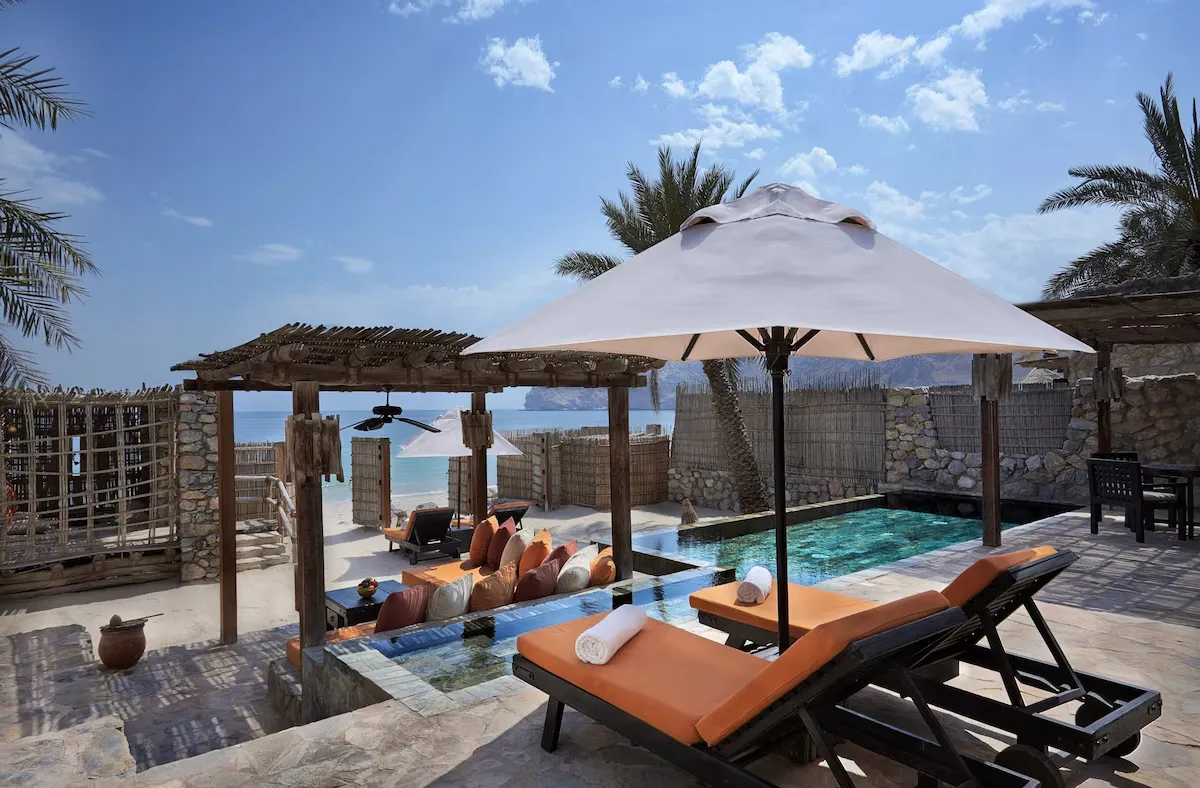
The 82 pool villas are constructed from local grey stone, cut from the same rock that rises behind them. Meranti hardwood, a durable tropical timber, appears in doors, window frames, and ceiling beams. Exteriors are finished in ochre paint that creates a mud-like effect, connecting visually to the earthen architecture of Oman's inland regions. The overall impression is of a village that has grown organically from its site rather than being imposed upon it.
Traditional Omani architectural principles guided decisions beyond the aesthetic. The villas are positioned to catch prevailing breezes, reducing reliance on mechanical cooling. Deep overhangs shade windows from the high summer sun while admitting winter light. Courtyards and shaded outdoor spaces, essential features of desert architecture, extend the livable area of each villa without adding to the air-conditioned footprint.
Interiors follow the same philosophy. Natural materials predominate, hard wood furniture, copper and clay artifacts, textiles in muted earth tones. The spa, considered the resort's spiritual centre, approaches through an alley lined by the sound of running water, a reference to the falaj systems that have irrigated Omani settlements for millennia. The main lobby sits beneath a high central dome, its oculus admitting natural light in the manner of traditional Omani architecture while the surrounding treatment rooms open onto private interior courtyards, invisible from outside.
The village metaphor extends to circulation. There are no interior corridors connecting public spaces. Guests walk along sandy paths shaded by palms, passing communal areas that encourage interaction without forcing it. Bicycles, assigned to each villa, become the primary mode of transport, their presence reinforcing the pedestrian scale that distinguishes the property from the automobile-dependent resorts that proliferate elsewhere in the Gulf.
Sense on the Edge, the resort's fine dining restaurant, sits 293 metres above the bay, accessible by a winding mountain road that adds ceremony to the meal. The architecture here is minimal, designed to maximise views while providing shelter from wind. Tables overlook the cove where, far below, the other restaurants and bars continue their evening service. The vertical separation between dining venues emphasises the property's topographic range, the way it occupies not just a stretch of beach but an entire landscape section from sea level to summit.
Six Senses has built its brand on wellness and sustainability, and Zighy Bay advances both agendas through design. The resort operates its own Dibba Farm, an organic operation that supplies produce to the kitchens and connects guests to the agricultural traditions of the region. Conservation programmes partner with the Olive Ridley Project to protect sea turtles, while regular underwater cleanups remove ghost nets from surrounding waters. The architecture supports these efforts through orientation, material selection, and a spatial organisation that makes walking and cycling more attractive than driving.
Where the Monsoon Reaches: Alila Hinu Bay
Oman's Dhofar region occupies the country's southwestern corner, closer to Yemen than to Muscat, and subject to climatic patterns that set it apart from the rest of the Arabian Peninsula. Each summer, the khareef monsoon brings mist and rain to the coastal mountains, transforming brown hills into something approaching the English Downs. Waterfalls appear in wadis that spend most of the year dry. Camels graze in green pastures that would not look out of place in Ireland.
Alila Hinu Bay sits on this coast, 87 kilometres from Salalah International Airport, where the land meets the Arabian Sea near the ancient port of Khor Rori. From this harbour, frankincense departed for the courts of Egypt, Rome, and beyond, travelling trade routes that made this remote region one of the ancient world's most valuable commercial nodes. The Sumhuram Archaeological Park, preserving the ruins of a 3rd-century BCE trading city, lies minutes from the resort.
The architect Ibrahim Jaidah understood this history. A Qatari who spent his childhood in Doha before studying at the University of Oklahoma and returning to lead Arab Engineering Bureau, Jaidah has dedicated his career to what he calls the innovative adaptation of vernacular elements. His firm, the first architectural and engineering consultancy in Qatar when it was founded in 1966, has completed over 1,500 projects, many of them exploring how Gulf traditions can inform contemporary design without descending into pastiche.
Jaidah's books tell the story of his intellectual project. The History of Qatari Architecture 1800-1950, published in 2009 after eleven years of research, documents building traditions that were disappearing as the Gulf modernised. 99 Domes, written after he designed Qatar's Grand Mosque, traces the development of religious architecture across the Islamic world. Qatari Style, published in 2019, examines interior design through the same lens. These are not coffee table productions but serious works of architectural scholarship, the output of someone who believes that understanding the past is prerequisite to building thoughtfully in the present.
For Alila Hinu Bay, Jaidah's Oman-based subsidiary, Ibrahim Jaidah Architects & Engineers (IJAE), served as lead consultant for design and supervision. The site presented challenges and opportunities that differed markedly from the interior mountains. Where Anantara looked to defensive forts, Alila draws from the coastal settlements that served as entrepôts for the frankincense trade, buildings characterised by openness to sea breezes, connection to waterfront, and a material palette suited to salt air and humid conditions.
The master plan spreads 112 units across 45 hectares of beachfront, following the natural contours of the land as it descends toward the Arabian Sea. The design intent, as IJAE articulated it, was to retain the natural composition of the site with minimal intervention for building components. Arrival occurs from the north, through a descent via rocky terrain that reveals the resort gradually, building anticipation without announcing itself through obvious signage or dramatic entrances.
The main building establishes an axis oriented north-south, facing the beach directly. A falaj water feature connects it to Spa Alila, the quiet sound of moving water audible as guests walk between structures. The guest units, generously scaled with volumes that maximise natural ventilation, descend along natural contours toward the sea, each framing views of the Arabian Sea that emphasise the connection to water that defined this region's pre-oil economy.
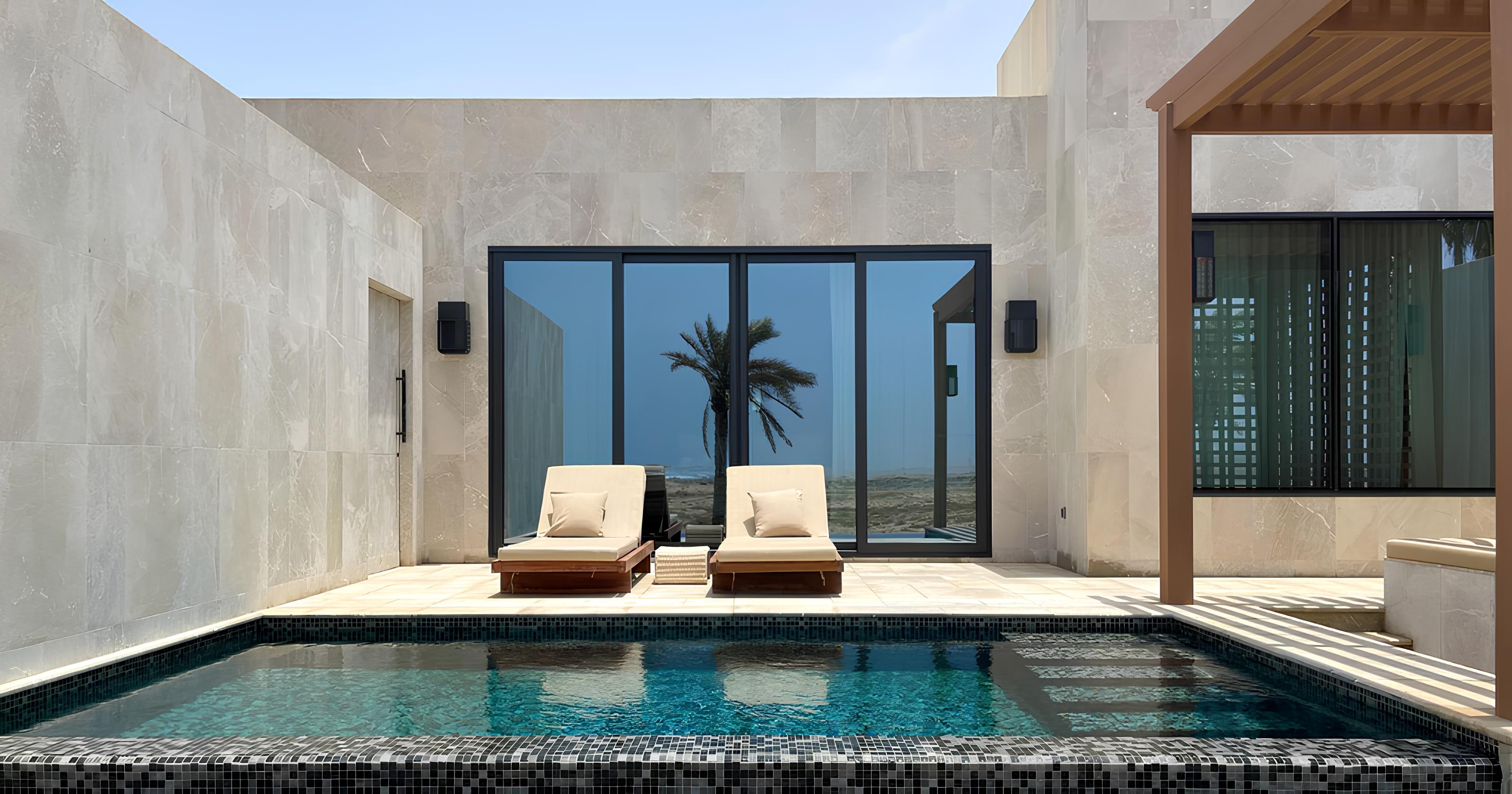
Jaidah describes the design language as contemporary minimalist with heavy influence from the Omani vernacular. Omani marble clads the facades, its texture and colour connecting to the limestone outcrops that punctuate the Dhofar coastline. Omani archway corridors in the reception building reference the covered passages of traditional souks without replicating their forms literally. Local artwork appears throughout, commissioned pieces that continue rather than merely quote the region's visual traditions.
The landscape design demonstrates particular sensitivity to environmental constraints. Rather than importing water-intensive plants that would require constant irrigation, the grounds feature native and adaptive species that thrive in the local climate. The on-site orchard and garden supply produce to the restaurants, continuing an agricultural tradition that the frankincense trade partially displaced. The Orchard restaurant takes its name seriously, with chefs harvesting ingredients minutes before preparation.
Jaidah has been nominated three times for the Aga Khan Award for Architecture, recognition of his sustained engagement with questions of identity and modernity in Islamic contexts. His projects, he has said, are considered to reflect cultural, historical and environmental context in which they exist. At Alila Hinu Bay, that context includes not just the immediate landscape but also the history of a trade route that connected this coast to the wider world, a history that gives the region's architecture its particular character, oriented outward, welcoming of strangers, built to serve the exchange of goods and ideas.
The Grammar of Omani Architecture
What connects these three properties, despite their different locations, climates, and programmatic requirements, is a shared methodology. Each architect spent time in the field before designing, studying not just buildings but the communities that built and used them. Each resisted the temptation to import forms that had worked elsewhere, instead developing responses specific to site and programme. Each worked with local materials, local craftsmen, and local building traditions, not as constraints to be overcome but as resources to be deployed.
This approach has particular resonance in Oman, where the built environment carries heavy symbolic weight. The country's forts, numbering over five hundred, represent not just military engineering but also the social organisation of a tribal society that balanced autonomy with cooperation. The falaj irrigation systems, some dating back three thousand years, demonstrate sophisticated hydrological knowledge adapted to extreme aridity. The coastal settlements of Musandam and Dhofar show how communities adapted to terrain that offered few level building sites and required constant negotiation with the sea.
Contemporary Omani architecture, at its best, continues these conversations. The Royal Opera House Muscat, which opened in 2011, combines modern performance technology with spatial sequences derived from traditional palace architecture. The National Museum of Oman, completed in 2016, uses stone cladding and deep-set windows to connect visually to the historic fabric of Old Muscat. These buildings, like the hotels discussed here, demonstrate that engaging seriously with tradition does not require abandoning contemporary ambitions.
The three architects profiled here, Sidirahal, Jaidah, and the design team behind Six Senses, share certain biographical characteristics that may explain their sensitivity to these issues. Sidirahal, born in Casablanca, trained in Paris, and now operating from offices in three countries, understands what it means to navigate between local and global, traditional and contemporary. His early work, exhibited at the Vitra Design Museum and the ICA Boston, explored nomadic structures and urban utopias, investigations that prepared him for the challenge of building in places where movement and settlement coexist uneasily.
Jaidah, raised in a rapidly modernising Qatar, has watched his home country transform from a pearl-diving economy to a global hub, a transformation that destroyed much of the built environment he documented in his early research. His commitment to vernacular architecture emerges from direct experience of loss, from understanding what disappears when development proceeds without regard for what came before.
The designers at Six Senses, working within a brand framework that emphasises sustainability and local integration, brought different but complementary skills. Their village-scale planning, their attention to pedestrian circulation and natural ventilation, their use of local materials at every opportunity, all reflect a design philosophy that treats luxury as compatibility with place rather than isolation from it.
Practical Information
Anantara Al Jabal Al Akhdar sits approximately two hours by car from Muscat International Airport, with the final approach requiring a 4x4 vehicle. The resort can arrange transfers. Alternatively, guests driving from Dubai can reach the property in approximately four and a half hours. The mountain climate remains cool year-round, with temperatures rarely exceeding 25°C even in summer, making it a popular escape during the Gulf's hottest months.
Six Senses Zighy Bay lies on the Musandam Peninsula, accessible via a two-hour drive from Dubai International Airport. The route crosses into Oman, requiring appropriate visas and border documentation. The resort can arrange paraglider arrivals for guests seeking a dramatic entrance. Climate is subtropical, with warm winters and hot summers moderated by sea breezes.
Alila Hinu Bay is reached via Salalah International Airport, with the resort approximately 87 kilometres east along the coast road. The khareef season, from June through September, brings misty, green conditions unlike anywhere else in Arabia. The remainder of the year offers warm, dry weather ideal for beach activities and exploration of nearby archaeological sites.
All three properties cater to guests seeking extended stays, with programming designed to reward those who remain long enough to understand the landscape. Guided excursions, whether to mountain villages, coastal archaeological sites, or traditional fishing communities, provide context that enhances the architectural experience. These are not resorts to visit briefly. They are places to inhabit, if only for a few days, learning through the body what the architects learned through study.
Frequently Asked Questions
| What makes Omani architecture distinctive from other Gulf countries? | Oman developed its architectural traditions in relative isolation, with limited oil wealth until the 1970s preserving traditional building practices longer than in neighbouring states. The country's forts, numbering over 500, represent centuries of refined defensive architecture, while the falaj irrigation systems demonstrate sophisticated water engineering. Contemporary Omani architecture often references these traditions through material choices, spatial sequences, and defensive geometries adapted for hospitality rather than warfare. |
| Which hotel offers the best example of contemporary Omani design? | Anantara Al Jabal Al Akhdar provides the most explicit engagement with Omani fort architecture, with direct references to Bahla Fort, Jabrin Castle, and other historic structures. Architect Lotfi Sidirahal spent weeks studying these buildings before designing the resort, and his interior design includes custom furniture based on traditional Omani patterns. |
| Can you paraglide into Six Senses Zighy Bay? | Yes. The resort offers tandem paragliding arrivals from a ridge above the property, with guests landing directly on the 1.6-kilometre beach. This requires advance booking and suitable weather conditions. Alternative arrival is by 4x4 vehicle along the mountain road. |
| What is the khareef season at Alila Hinu Bay? | The khareef is the summer monsoon that affects Oman's Dhofar region from June through September. During this period, mist and light rain transform the coastal mountains from brown to green, creating landscapes unlike anywhere else in Arabia. Alila Hinu Bay is ideally positioned to experience this phenomenon, with the resort's grounds and surrounding hills showing dramatic seasonal transformation. |
| Who designed Anantara Al Jabal Al Akhdar? | French-Moroccan architect Lotfi Sidirahal and his firm Atelier Pod designed both the architecture and interiors. Sidirahal, who trained at the École Spéciale d'Architecture in Paris and worked as an assistant professor under architect Odile Decq, has designed luxury hotels for brands including Four Seasons, Fairmont, and Radisson. The project also involved Lighting Design Collective (Madrid) for lighting and HED London for landscape design. |
| Is Alila Hinu Bay near any historical sites? | The resort sits close to several significant archaeological locations. Khor Rori, the ancient frankincense trading port, lies nearby, with the Sumhuram Archaeological Park preserving ruins dating to the 3rd century BCE. The region also contains Mirbat Castle, traditional merchant houses, and Bedouin rock art dating back thousands of years. The resort's restaurant, The Orchard, draws menu inspiration from the frankincense trade routes. |
| What local materials are used at Six Senses Zighy Bay? | The villas are clad in local grey stone quarried from the surrounding Musandam mountains. Meranti hardwood appears in doors, windows, and ceiling beams. Exteriors feature ochre-painted finishes that create a mud-like appearance connecting to traditional Omani earthen architecture. Interiors incorporate copper, clay, and natural textiles sourced from the region. |
| Who is Ibrahim Jaidah? | Ibrahim Jaidah is a Qatari architect who leads Arab Engineering Bureau (AEB), the first architectural consultancy established in Qatar (1966). He studied at the University of Oklahoma and has overseen more than 1,500 projects. His books include The History of Qatari Architecture 1800-1950 and 99 Domes. He has been nominated three times for the Aga Khan Award for Architecture and co-founded the Qatar Green Building Council. |
| How do these hotels address sustainability? | Six Senses operates an organic farm (Dibba Farm) supplying resort kitchens and partners with conservation organisations protecting sea turtles. Alila Hinu Bay uses native and adaptive plants requiring minimal irrigation, with an on-site orchard supplying its restaurants. Anantara sources sustainable local stone for construction and incorporates traditional passive cooling strategies derived from historic Omani architecture. |
| What is the best time to visit each property? | Anantara Al Jabal Al Akhdar offers comfortable temperatures year-round due to its 2,000-metre elevation, making it ideal during the Gulf's hot summer months. Six Senses Zighy Bay is best visited from October through April when temperatures are warm but not extreme. Alila Hinu Bay offers two distinct experiences: the green khareef season (June-September) and the warm, dry period (October-May) ideal for beach activities. |