Bali's Best Boutique Stays 2026: Seven Small Hotels That Understand the Island
Bali is not one place but a dozen, and the island reveals itself differently depending on where a traveler chooses to sleep. The small hotel, the one with more staff than rooms, is still the surest way to meet it honestly.
Why Bali rewards the small hotel
Bali has spent two decades being described as spoiled, and the description is only ever half true. The traffic south of the airport is real, and so is the sprawl along the coast from Kuta to Canggu. Yet the island remains one of the most rewarding places on earth for the traveler willing to choose carefully, because Bali still runs on something the crowds never quite touched: a culture of attention, of craft, of hospitality treated as a form of devotion rather than a transaction. That culture lives most fully in the small hotel.
A boutique property in Bali is rarely just a scaled-down resort. It is closer to a household that has learned to take guests, staffed by people from the surrounding village, cooking from the surrounding land, oriented toward whatever the setting does best, a river gorge, a reef, a rice terrace, a cliff. The trade against the big beach resort is the usual one. There are fewer facilities, sometimes no spa menu as long as an arm, sometimes a single restaurant rather than five. In return the traveler gets proportion and intimacy, a place where the staff learn a name by the second morning and the design was decided by a person rather than a brand manual.
The other reason to stay small in Bali is geographic. The island is not large on a map, but its roads are slow, winding and often clogged, and its distinct regions sit hours apart. A single vast resort cannot show a traveler both the jungle interior and the diving coast. A sequence of well-chosen small hotels can. This is why the smartest Bali trips read less like a stay and more like a short itinerary, two or three bases threaded together, each one a different island.
How this list was chosen
The seven hotels below were selected against a simple test: does the place understand where it stands? A boutique hotel earns its category not through thread count but through fit, the way it answers its own patch of Bali. A property on the black-sand east coast should be about the sea and the reef, not a poolside DJ. A hills retreat above Ubud should be about calm, green and quiet, not nightlife. The selection spans the island deliberately, so that a reader can build a route rather than pick a single dot: two Ubud choices for the interior, two east-coast options for the sea and the reef, a beach classic in the south, and a cliff-top retreat on the Bukit Peninsula. Each was included because it is good at being exactly where it is.
Which part of Bali is for you
Before the hotels, the geography, because in Bali the region matters more than the room. Broadly, the island divides into three moods, and most travelers lean toward one.
Ubud and the hills are Bali's cultural and spiritual centre, a landscape of terraced rice fields, river gorges and temples set inland from the coast. This is the Bali of yoga, craft, ceremony and green, cooler than the beaches and quieter after dark. It suits travelers who want stillness, walking, culture and food over surf and sand.
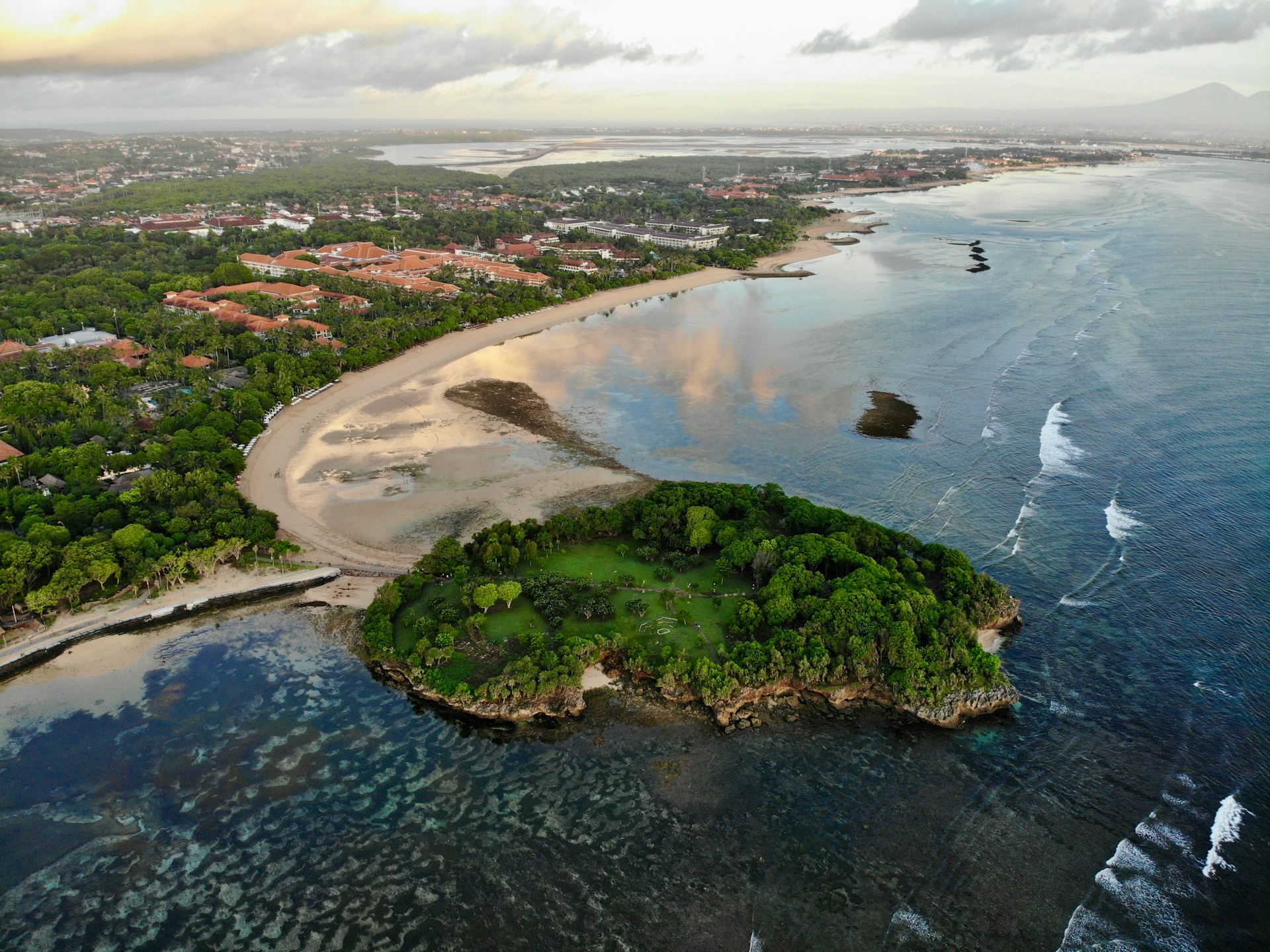
The coasts come in two very different kinds. The developed south, from Seminyak through Canggu, is where the beach clubs, restaurants and nightlife concentrate, sunset-facing and social. The east coast, around Candidasa, Amed and the Gianyar shoreline, is the opposite: calmer, less built, oriented toward diving, snorkelling and slow days by the sea, where Bali still feels like the island it was a generation ago.
The Bukit Peninsula and Uluwatu, the dry limestone tableland at Bali's southern tip, is the surf-and-cliff country, all dramatic drops to the Indian Ocean, clifftop temples and a growing scene of wellness retreats. A first visit often pairs two of these regions, most commonly Ubud with a stretch of coast, so that the trip holds both the green interior and the sea.
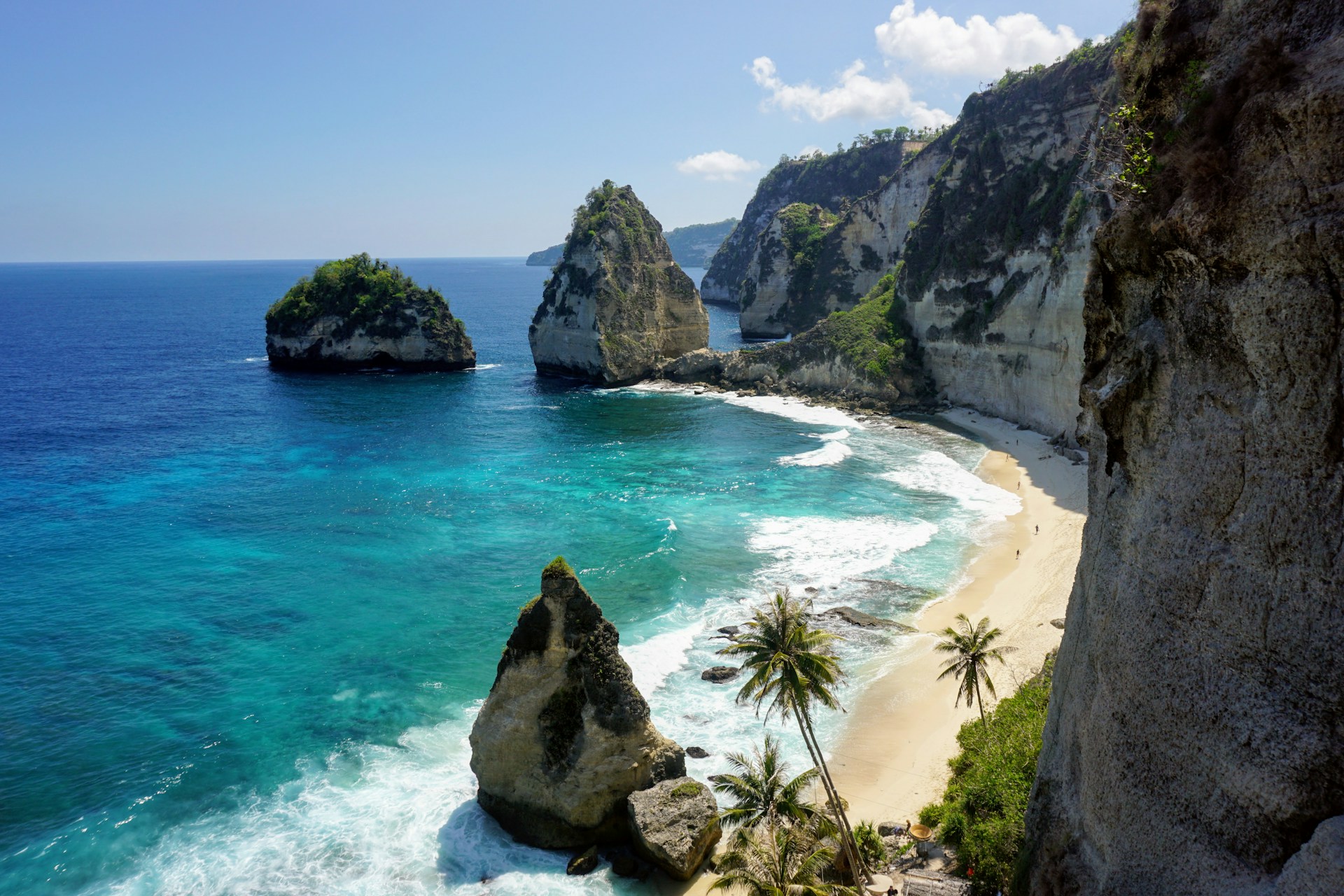
The right hotel in Bali does not try to give a traveler the whole island. It gives them one part of it, completely.
01The calm diving coast of the east
The east coast is Bali's quiet counterargument to the crowded south, and there is no better base for it than Alila Manggis. Set on the shore near Candidasa, in the shadow of the sacred Mount Agung, it is a low-slung, coconut-grove retreat that trades the party for the reef. The rooms look toward the Lombok Strait, the water off this coast is famously good for diving and snorkelling, and the pace is deliberately unhurried.
What makes it a boutique stay rather than a resort is the tone: the scale is modest, the design is understated coastal modernism rather than spectacle, and the kitchen leans hard on local produce and seafood. For a traveler who wants Bali's sea without its noise, who would rather rise for a dive than a brunch, this stretch of east coast is the answer.
02Black sand and reef at Amed
Further up the east coast, past the point where day-trippers turn back, lies Amed, a string of fishing villages along a shore of dark volcanic sand. This is one of Bali's finest snorkelling and diving areas, with coral gardens and a famous shipwreck reachable from the beach itself. It is also gloriously undeveloped, a place of jukung fishing boats drawn up on black sand and mornings that begin with the sea rather than a screen.
Mathis Lodge Amed is built for exactly this. A small, personal property on the Amed coast, it is the kind of place where the point is the water at the doorstep and the reef a few fin-kicks out. The scale is intimate, the setting is raw and beautiful, and the whole experience is oriented toward the sea. For divers and snorkellers, and for anyone who wants the version of Bali that feels furthest from the airport, Amed is a revelation, and a small lodge on its shore is the way to feel it.
03Jungle and rice fields above Ubud
Ubud is Bali's green heart, and the best Ubud hotels put a traveler inside the landscape rather than beside it. The Turiya sits in this tradition, a boutique retreat framed by jungle and rice-field calm, the kind of place where the soundtrack is running water, insects and the occasional temple bell rather than traffic.
What Ubud does better than anywhere else on the island is stillness with substance. The green is not merely scenery: it is rice terraces that are still farmed, river valleys that still run, a culture of ceremony that continues in the surrounding villages. A small hotel here works when it frames that world quietly and gets out of the way, within easy reach of Ubud's temples, markets and walks. For a first-time visitor deciding where to begin, an Ubud base like this one delivers the Bali of the imagination, calm, cultured and deeply green.
04An adults-only retreat in the Ubud hills
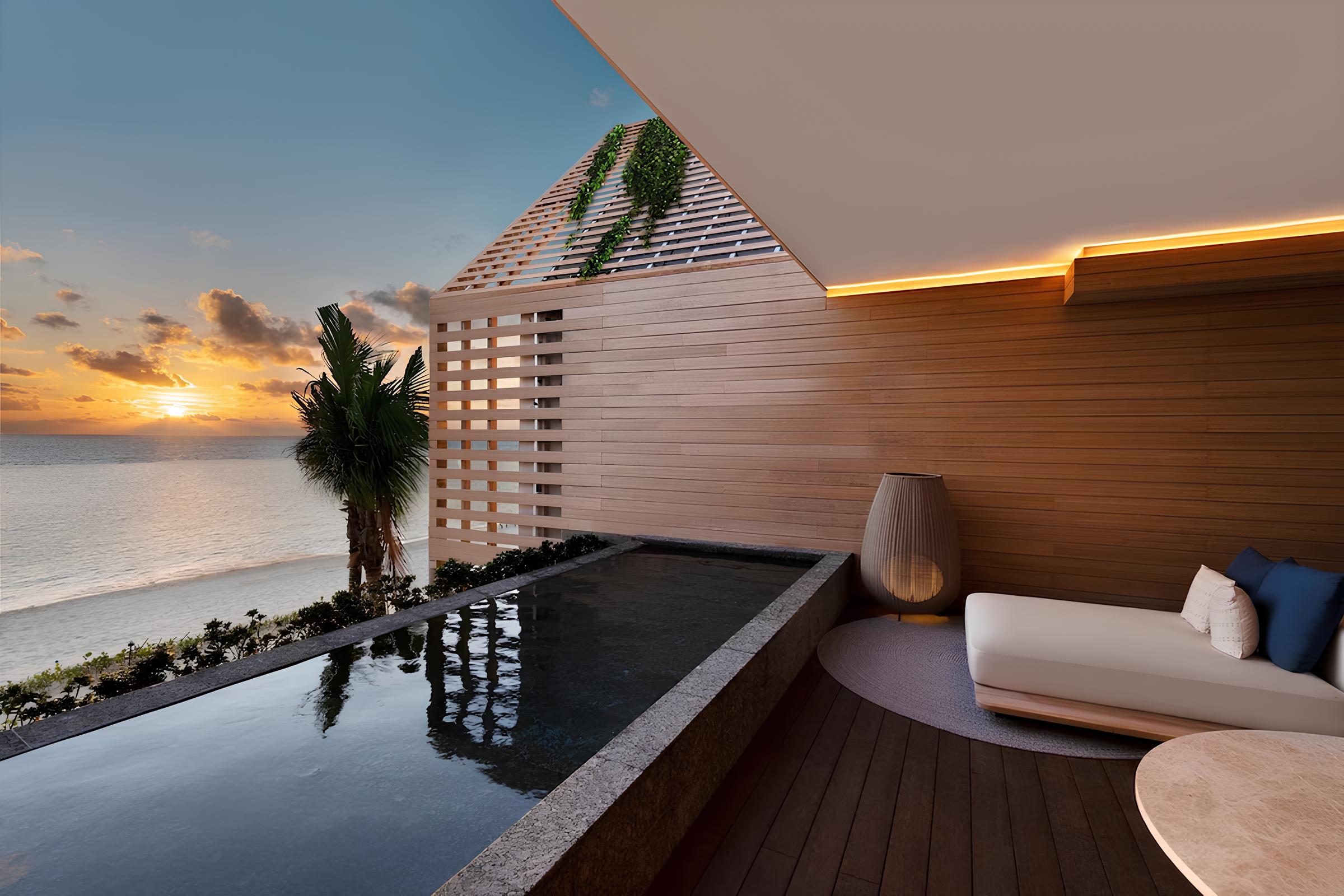
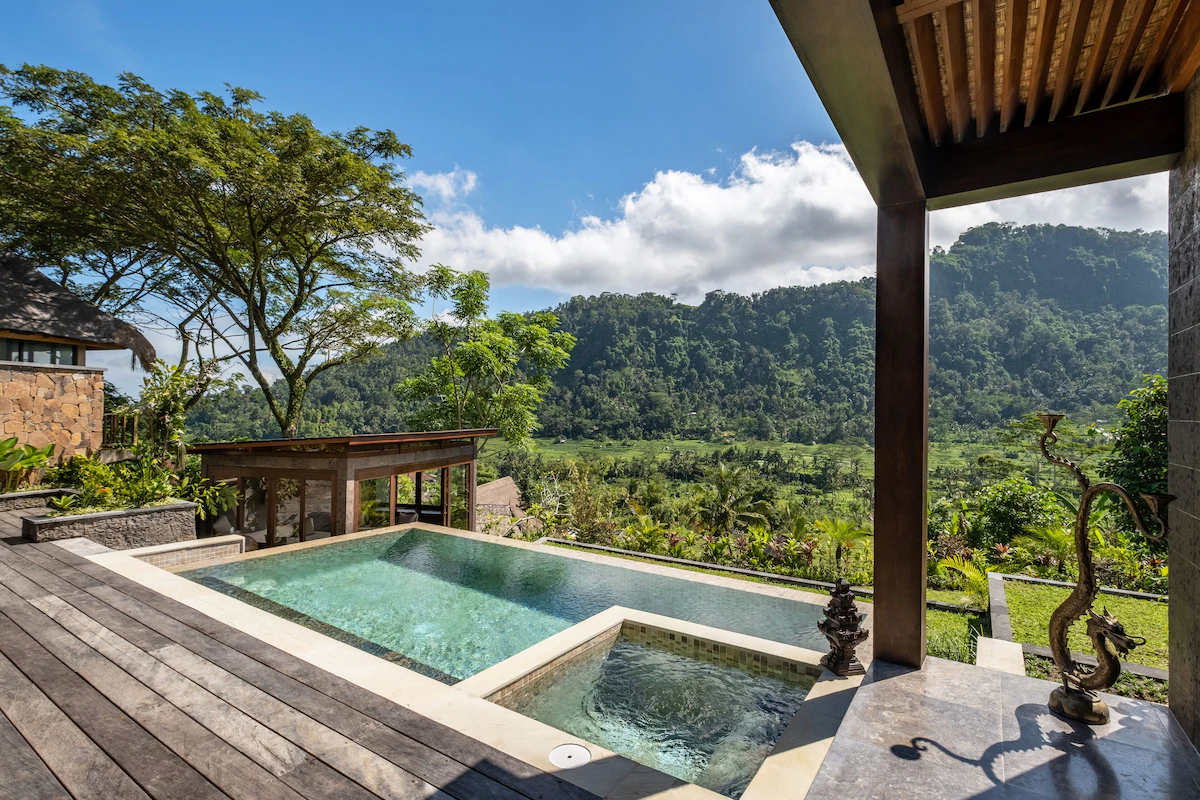
Not every Ubud stay is the same, and some travelers want the hills without the crowds and without children in the pool. Samanvaya answers that brief. Perched in the hills near Ubud, it is a small adults-focused retreat known for an infinity pool that seems to spill straight into the valley, and for a sense of seclusion that the busier centre of Ubud has lost.
This is the romantic end of the Ubud spectrum, a place built for couples, for quiet, for the long slow afternoon. The elevated setting means cooler air and wide green views, and the intimate scale keeps it personal. For a honeymoon, an anniversary, or simply a trip where two people want the hills to themselves, an adults-only retreat above Ubud is a very particular pleasure, and this is one of the addresses that does it with real style.
05Beach and art on the Gianyar shore
Between the developed south and the wild east lies a quieter stretch of coast, the black-sand shoreline of the Gianyar region, where a handful of hotels sit close to the sea within reach of Ubud's cultural pull. The Royal Purnama occupies this middle ground, a boutique beachfront property with a pronounced artistic sensibility, set on a calm and largely uncommercial stretch of east-facing shore.
The appeal here is the combination. A traveler gets the sea and a beachfront pool without the density of Seminyak, plus an easy run inland to Ubud's galleries and temples, and design that leans creative and considered, in keeping with a coast that has long drawn painters. For those who want beach days and culture from the same base, without committing fully to either the party south or the remote east, this quieter Gianyar shoreline is an underrated choice.
06The Seminyak beachfront classic
For all the talk of escaping the south, Seminyak still holds a strong hand, and some travelers rightly want to be where the beach clubs, restaurants and sunset crowds are. The trick is to stay somewhere that gives the location without the chaos. The Legian Seminyak, Bali has done that for years, a beachfront address of quiet, timeless elegance on one of the island's most social stretches of sand.
This is the grown-up way to do Seminyak. The property faces the sea and the famous west-coast sunset directly, the service is polished, and the mood is calm luxury rather than party volume, even as the buzz of Seminyak sits a short walk away. For a traveler who wants restaurants, shopping and beach life within reach but a serene room to return to, a classic beachfront hotel in Seminyak remains hard to beat.
07A wellness retreat on the Uluwatu cliffs
Bali's southern tip, the Bukit Peninsula around Uluwatu, has become the island's wellness frontier, all dramatic limestone cliffs, ocean views and clean sea air. It is a landscape that seems designed for reset, and a wave of retreat-focused hotels has grown up to meet the mood. The Asa Maia is one of the most focused of them, an intimate Uluwatu retreat oriented squarely around wellness, movement and recovery.
Where a general resort adds a spa, a place like this is built around the idea of feeling better, with programmes, practices and food to match, set against the cliffs and the Indian Ocean. It suits the traveler who comes to Bali with intent, to slow down, to move, to eat well and to leave lighter than they arrived. Small in scale and clear in purpose, it closes this list where a good Bali trip often ends, on the cliffs at the island's edge.
Building a route from the seven
The pleasure of a list like this is that it is not really a choice of one. Because Bali rewards movement, the natural way to use these seven is to combine two or three of them into a single trip. A classic pairing threads the green interior with the sea: a few nights in the Ubud hills, then a move to the east coast for the reef, or down to the Seminyak sand for the social south. A wellness-minded traveler might bookend Ubud with the Uluwatu cliffs, while a diver might spend the whole trip on the east coast, splitting time between Candidasa and Amed.
Whatever the route, the principle holds. In Bali, the hotel is the lens. Choose the small, well-sited place that understands its patch of the island, and the island opens accordingly, one honest part of it at a time.
Frequently asked questions
| Question | Answer |
|---|---|
| What makes a hotel in Bali a boutique stay? | For my purposes it is scale and character. A boutique stay in Bali usually runs from a handful of villas to around fifty rooms, has a strong sense of place and design, and offers personal service rather than resort-scale facilities. The best ones are built around what their setting does best, whether that is a reef, a rice terrace or a cliff. |
| Which part of Bali should I stay in? | It depends on what I want. Ubud and the hills suit culture, calm and green; the east coast around Candidasa and Amed suits diving, snorkelling and quiet; Seminyak in the south suits beach life, restaurants and nightlife; and the Uluwatu cliffs suit surf and wellness. Many travelers pair two regions in one trip, most often Ubud with a stretch of coast. |
| Is Ubud or the coast better for a first visit? | Both, ideally. If I can only choose one, Ubud gives the fullest sense of Bali's culture and landscape, while the coast gives the beach and the sea. A first trip that splits time between an Ubud base and a coastal one, such as the east coast or Seminyak, covers the widest range of what the island offers. |
| Are there adults-only boutique hotels in Bali? | Yes. Several small retreats, particularly in the Ubud hills, are adults-focused and built for couples, with a premium on quiet, seclusion and romance. A hillside address such as Samanvaya, known for its valley infinity pool, is a good example for a honeymoon or a quiet escape. |
| Where should I stay in Bali for diving and snorkelling? | The east coast is the answer. The waters around Candidasa are excellent, and Amed further north offers coral gardens and a famous shore-accessible shipwreck. Small hotels on this coast, close to the water, let me dive or snorkel straight from the doorstep rather than travel to reach the sea. |
| How do I get around Bali between these hotels? | Most travelers hire a car with a driver for the day, which is affordable and removes the stress of Bali's busy, winding roads. Distances look short on a map but take longer than expected, so it is worth planning transfers between regions and not trying to see the whole island from a single base. |
| When is the best time to visit Bali? | The dry season, roughly April to October, is the most reliable, with May, June and September offering good weather and slightly thinner crowds than the July and August peak. The wet season from November to March brings warm rain, often in short afternoon bursts, and lower prices for those who do not mind it. |
| How many nights should I spend in Bali? | Seven to ten nights suit most trips, enough to base in two or three regions without rushing. A shorter stay of four or five nights works if I focus on a single area, such as Ubud or one coast. Because the regions are so distinct, more time is easily filled by moving between the small hotels that define each one. |
Bali still keeps its promise for the traveler who chooses carefully. Pick the small hotel that belongs to its landscape, let it show one part of the island completely, then move on and let the next one show another. That is how the island was always meant to be read.