The Small Things That Make a Hotel Unforgettable: Eight Details Worth Travelling For
The hotel business has spent the past two decades competing on amenities. The infinity pool. The chef’s tasting menu. The two-storey suite. The branded toiletries. These have become baseline expectations, present in any property above a certain rate band, and as a result, almost useless as differentiators.
A guest who has visited fifteen luxury hotels in two years has seen most of the standard amenity list. A guest who has visited fifty cannot remember most of them. The hotels that survive the comparison test are remembered for a specific detail, often small enough to escape the brochure entirely, that recalibrates what a guest thinks a hotel can be. The detail is rarely the most expensive feature on the property. It is almost always the feature that an attentive operator has chosen to do unusually well, often at the expense of something more conventionally impressive.
The eight properties below are drawn from the Top World Hotel network. They span eight countries, four continents, and price bands from accessible boutique to upper luxury. None of them would describe the detail in question as their headline offering. Each of them, in the experience of guests who have stayed there, is the reason they remember the visit. The list is organised by detail, not by property: each section is about a small thing a hotel can do, with one address that does it exceptionally well.
01The Breakfast: Country House Villadorata, Noto
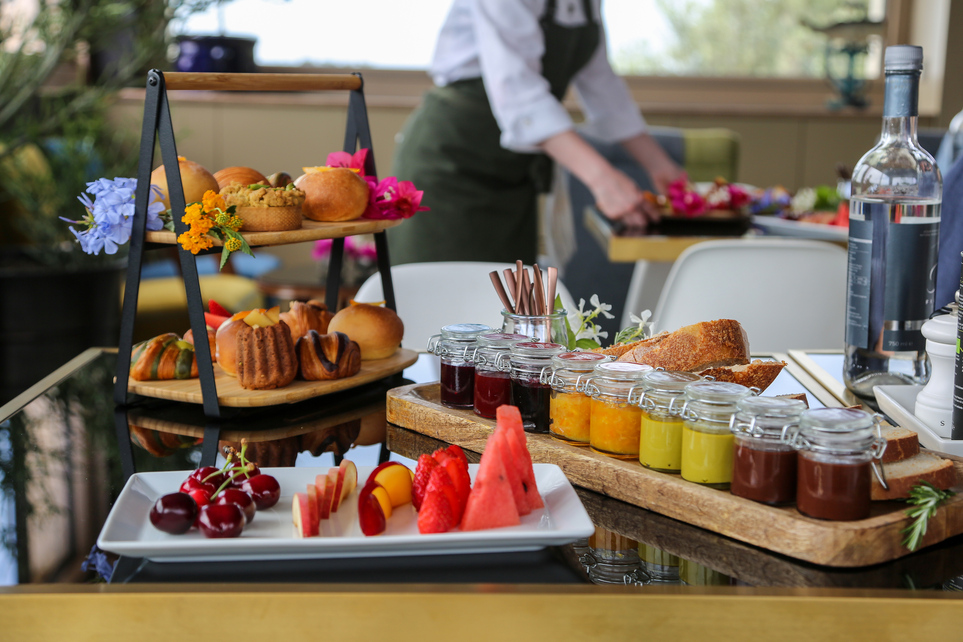
A breakfast that a guest remembers is unusual in luxury hospitality. The buffet has become an industrial product, identical in Bangkok and in Bordeaux, designed to satisfy without exciting. The properties that have moved away from the buffet model and back to a kitchen-led morning service tend to win the breakfast question definitively. The most committed example in the eastern Mediterranean is Country House Villadorata, the seventeenth-century farmstead a short drive south of Noto in southeastern Sicily.
Breakfast at Villadorata takes place on a stone terrace facing the property’s almond grove, with the table set for one or two parties at a time, never the entire occupancy at once. The bread arrives hot from the wood oven that the kitchen fires at five every morning. The pastries are made on the premises with butter from a producer in the Iblei mountains and flour milled in Modica. The fruit is from the property’s own orchard or from the small co-operative in Avola that supplies the kitchen. The honey is from the bee colonies that the estate’s agronomist maintains in the lavender fields east of the main building. The eggs were laid that morning. The coffee is from a single Sicilian roaster whose beans the property has used exclusively for eleven years.
None of this is dramatic. None of it is the headline of the property’s marketing. The reason it works is that the kitchen has refused to industrialise the morning service. Breakfast at Villadorata is the one meal of the day that the head chef personally oversees, and the consequence is the rarest thing in hotel breakfast service: a meal that a guest looks forward to the night before.
02The Library: Kozmo Hotel Suites, Budapest
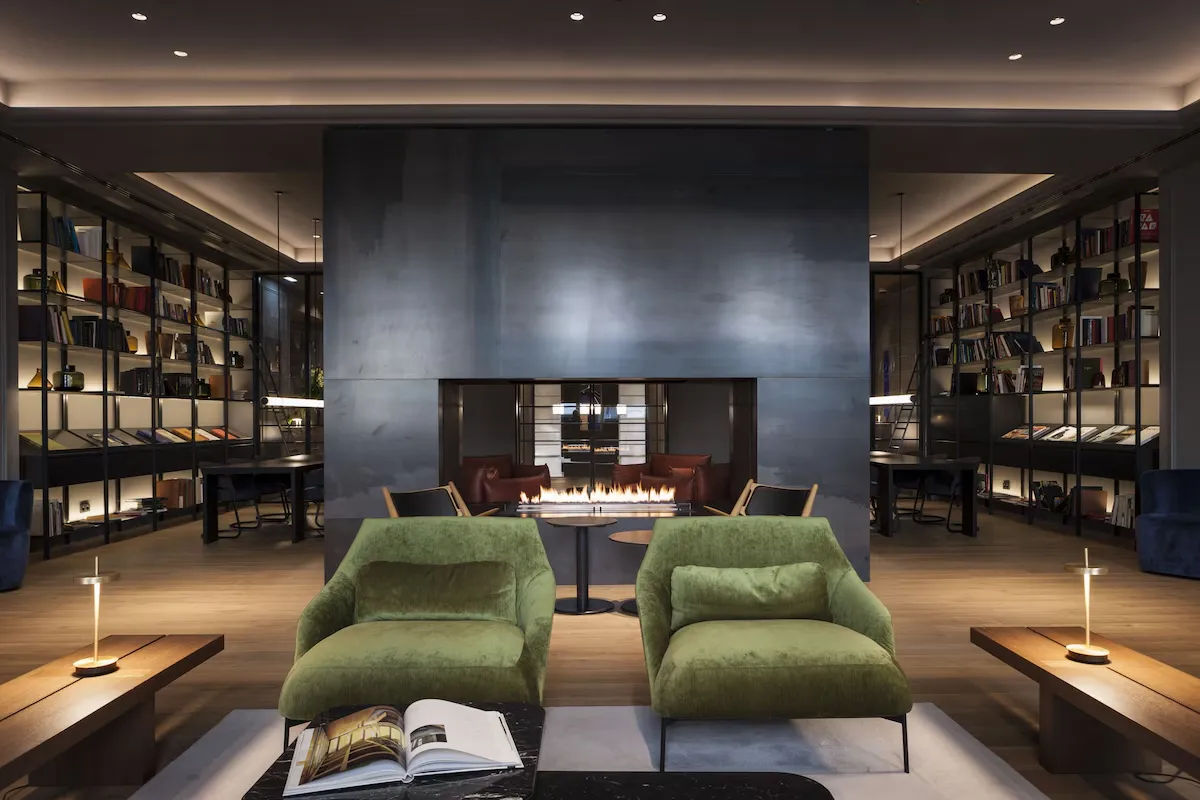
A hotel library is one of those amenities that has been gradually destroyed by interior designers. The standard outcome is a wall of leather-bound decorative volumes, chosen for their spines, that no one has ever opened or ever will. The exceptions are visible immediately to any guest who reads, and the most committed contemporary example is the library at Kozmo Hotel Suites, the small design property in the seventh district of Budapest.
The Kozmo library occupies a quiet ground-floor room facing the courtyard, with three armchairs, a long table, a brass reading lamp, and roughly twelve hundred volumes selected by a working bookseller from the Müpa cultural bookshop. The collection is heavy on Central European literature in English, German and Hungarian translation, with an unusually good section on twentieth-century European architecture, a complete Sándor Márai in English, a generous run of Magda Szabó and Péter Nádas, the kind of obscure but valuable history monographs that turn up only in specialised bookshops, and a small section of contemporary fiction selected with genuine taste rather than airport-bookshop reflex.
A guest staying at Kozmo for three nights can read a book they would not have found on their own and leave with the title written in their notebook. A guest staying for a week occasionally finishes the volume and replaces it on the shelf. The room is unoccupied for most of the day. It is the kind of amenity that costs almost nothing to maintain and that no other hotel in Budapest, including hotels that charge three times as much, has bothered to assemble.
03The Pool at Sunset: Acro Suites, Crete
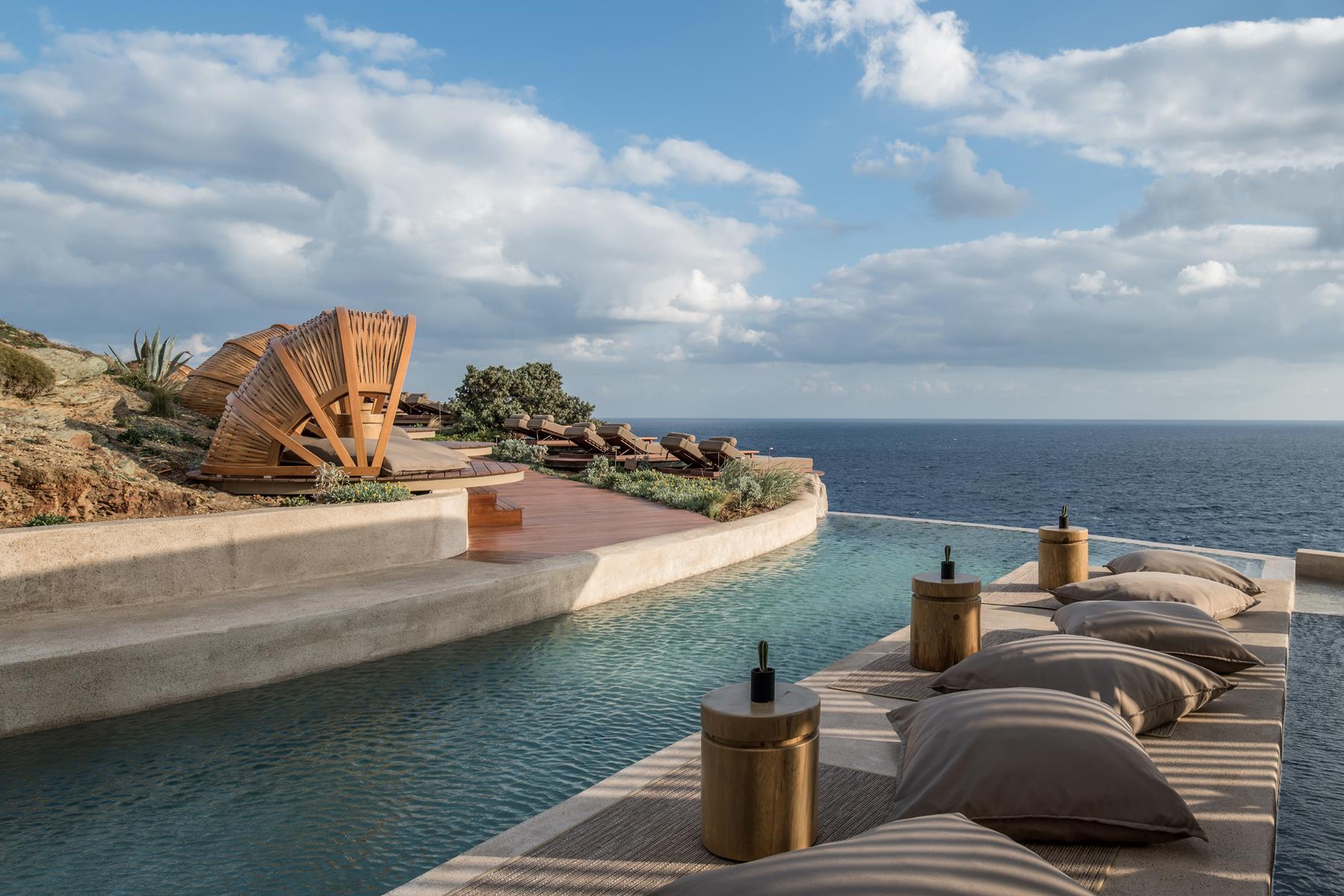
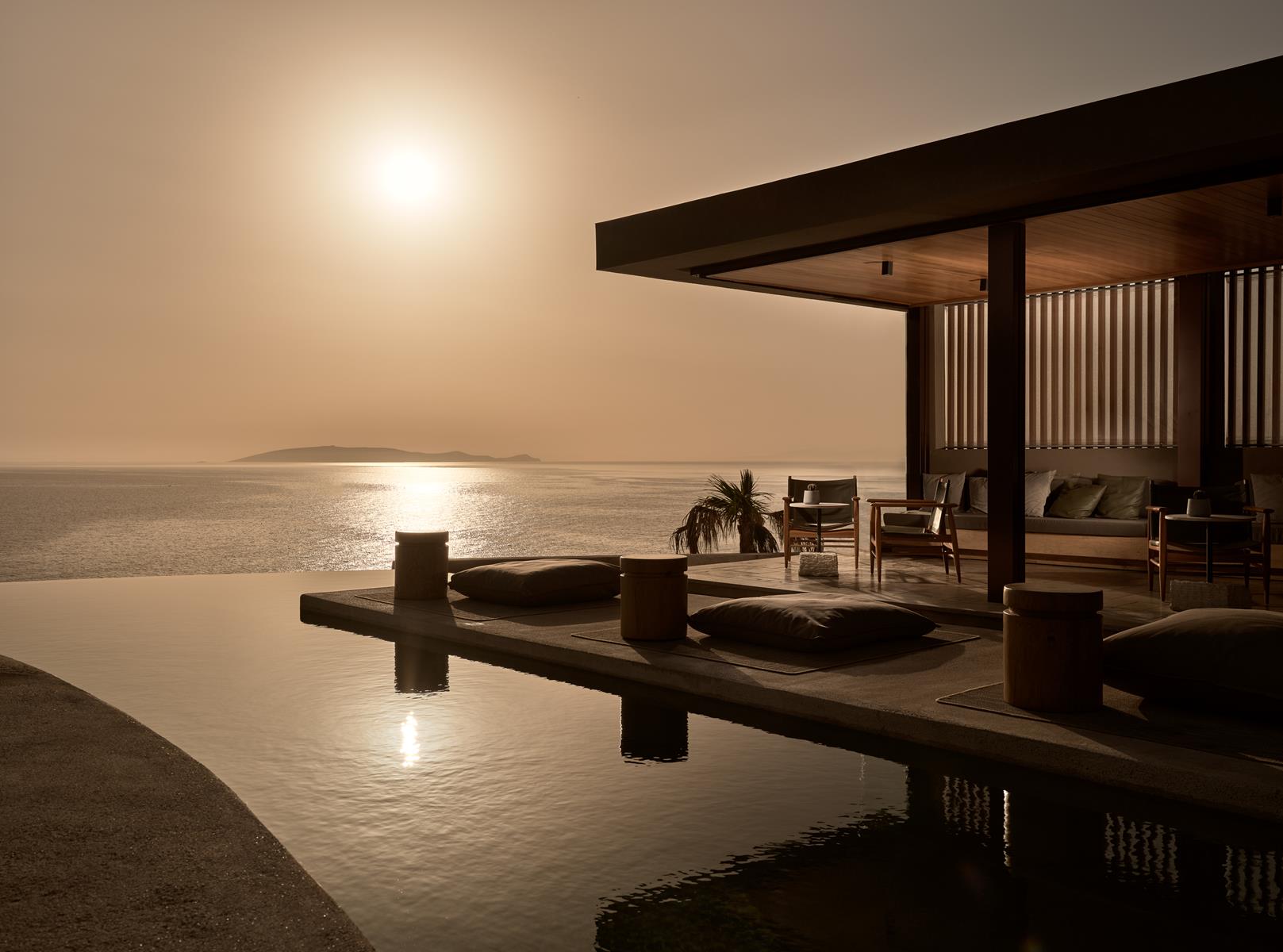
The infinity pool has become a tropical cliché. Almost every luxury resort built since 2005 has one, almost all of them face west, and the marketing photograph is interchangeable across continents. The pools that remain genuinely memorable are the pools that the architect designed for the specific light of the specific site, not for the photograph. Acro Suites, on the clifftop above Agia Pelagia on the northern coast of Crete, has one of these.
The pool sits on the outermost edge of the property, suspended above a two-hundred-metre drop to the Cretan Sea, narrow rather than wide, lined in dark stone rather than the standard white. The water reads as black at midday and as deep blue at sunset. The pool is oriented north-west rather than due west, which means that from late June through August, the sun sets directly along the pool’s long axis, the entire surface becomes a continuous line of light, and a guest swimming at seven-thirty in the evening is swimming inside the sunset rather than next to it.
The hotel keeps the pool open until ten at night during the summer months, with the underwater lighting calibrated low enough that the stars remain visible above the surface. The bar at the pool’s eastern end stays open as long as guests are present. The combination of the architectural orientation, the colour of the stone, and the discipline of the lighting produces the rarest result in resort design: a pool that is more memorable at nine in the evening than at noon.
04The Garden: Villa Gallici, Aix-en-Provence
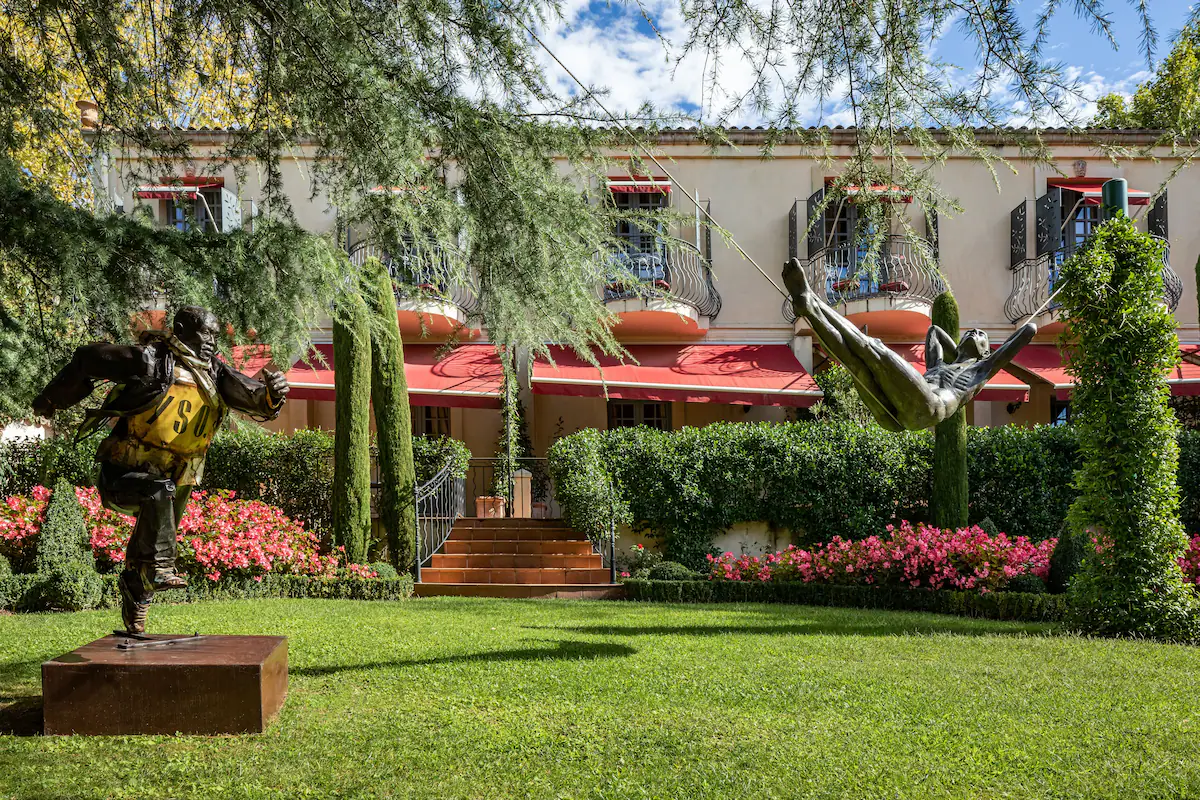
A hotel garden is the easiest amenity to neglect and the hardest to fake. The properties that have great gardens have them because someone has been thinking about the garden, daily, for decades. Villa Gallici, the eighteenth-century manor house at the foot of Mont Sainte-Victoire on the eastern edge of Aix-en-Provence, has one of the best in southern France.
The Gallici garden is small by the standards of a country property, perhaps half a hectare, but it has been gardened continuously for more than two centuries. The structure dates to the late eighteenth century: a formal axis from the terrace, gravel walks bordered with box, two rows of cypress that define the central perspective, and a series of compartments framed by clipped laurel. Inside this structure, the planting is loose and Provençal. Rosemary in waist-high cushions, oleander in colour ranges that no commercial nursery sells, fig trees that have been there for a century, an old pomegranate against the south wall, a wisteria over the dining terrace that flowers in the second week of May with a density that has been photographed by every garden magazine in France.
The garden’s secret is its head gardener, who has worked at the property for thirty-one years and who treats the planting as a single long composition rather than a series of seasonal swaps. The result is that the garden looks completely different in March than it does in October, but it looks correct in both months. The hotel’s most loyal guests time their visits to specific weeks of the year for what the garden is doing that week, and the property’s reservations team keeps an internal calendar of these weeks for guests who ask.
05The Sound: Villa San Sanino, Tuscany
Silence is a luxury that almost no hotel actually delivers. The standard hotel room is acoustically a disaster: thin walls, hard floors with rugs over them, single-glazed windows, plumbing that runs through the partitions, lifts that the architect placed for convenience rather than acoustic isolation, room-service trolleys at six in the morning. A guest who has slept in fifty hotels can recall perhaps three where the silence was unbroken. Villa San Sanino, the small eight-suite property in the hills above Torrita di Siena in southern Tuscany, is one of them.
The silence at San Sanino is not designed in the engineering sense. It is the result of a series of decisions about the property’s location and operation. The building is a restored eleventh-century stone tower, the walls a metre thick in places, set in an oak forest two and a half kilometres from the nearest road. There is no commercial flight path overhead. The property does not accept large groups, does not host weddings, does not maintain a high-volume restaurant, and does not have a pool with a sound system. Housekeeping operates only between ten and one. The maintenance schedule places loud work, on the rare occasions there is any, on the days the property is closed.
The result is the rarest acoustic environment in luxury hospitality: a room in which a guest can hear their own breathing, the cicadas outside, and nothing else. Eight nights at San Sanino recalibrates what a guest considers acceptable noise for the rest of the year. It is the kind of amenity that does not photograph, that does not appear on the website, and that anyone who has experienced it understands immediately upon arrival and finds difficult to summarise in conversation afterwards.
06The Bath: Athina Luxury Suites, Santorini
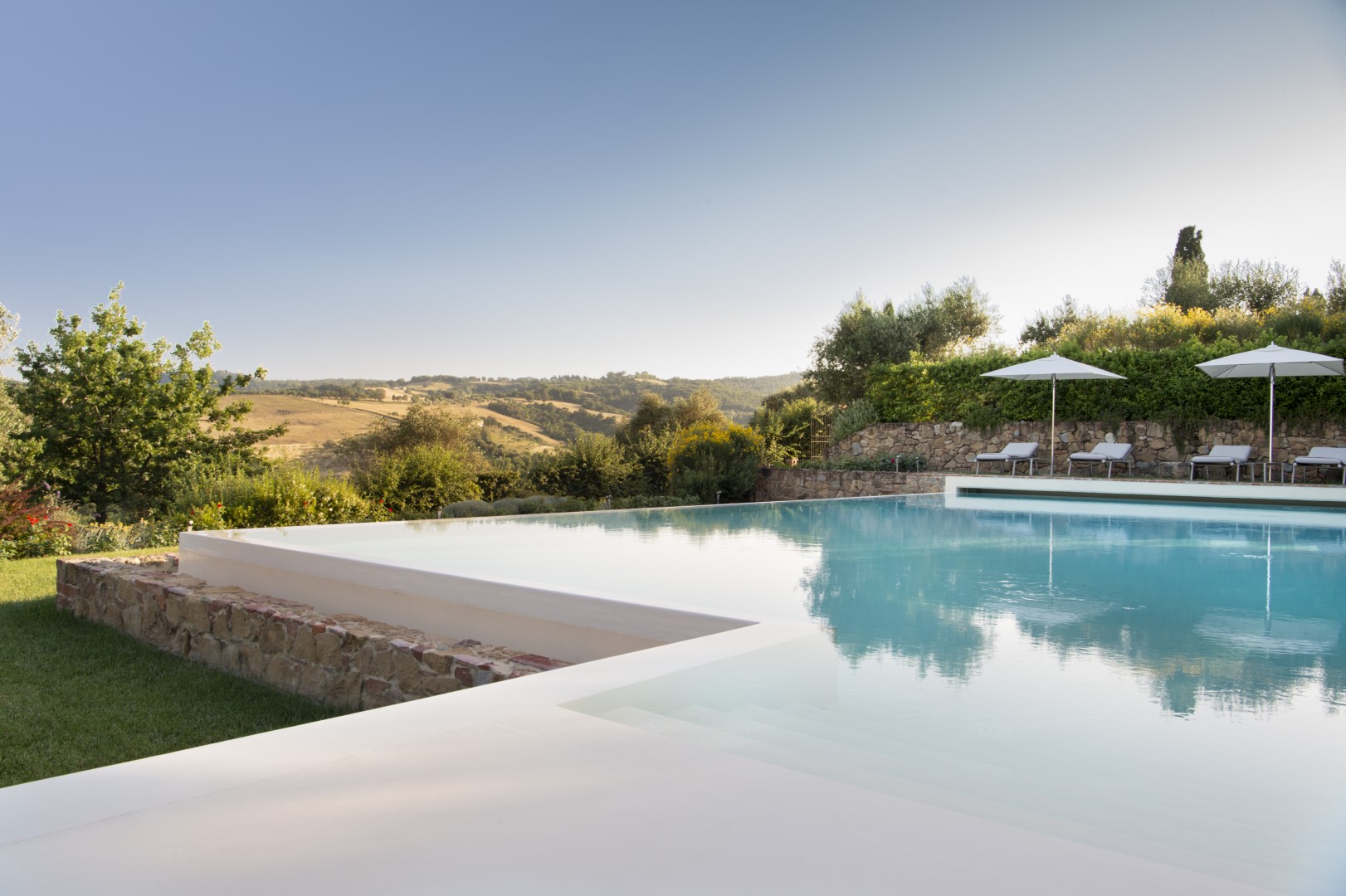
The hotel bathtub has been ruined by two design trends: the freestanding tub placed in the middle of the bedroom for theatrical reasons that defeat its actual function, and the deep soaker with no headrest or armrest that is impossible to stay in for more than ten minutes. The properties that take the bath seriously, as a place to spend forty-five minutes after a long day, are increasingly rare. Athina Luxury Suites, the small caldera-edge property in Fira on Santorini, takes the bath as seriously as any hotel in Greece.
The signature bathing experience at Athina is the cantilevered outdoor bath on the suite’s terrace, positioned at the very edge of the caldera, with a sightline that takes in the volcanic islands of Thirassia and Nea Kameni and the open Aegean beyond. The tub is solid travertine, heated to maintain temperature for the entire bathing session, deep enough for shoulders to submerge, and shaped for a long soak rather than a quick rinse. The position of the tub places it above the property’s interior, which means the guest is bathing essentially in the sky.
The detail that distinguishes the experience is what surrounds the bath rather than the bath itself. A small folding teak table positioned at hand height for a glass of wine or a coffee, towels heated and stacked on a wooden chair, a tray of citrus and rosewater bath salts from a producer in Naxos, candles in proper hurricane lanterns that the wind does not extinguish. The hotel does not market this as a wellness amenity. It is positioned simply as a bath, which is what it is, executed at a level that almost no other property in the Cyclades has bothered to attempt.
07The Bar at Midnight: Corral del Rey, Sevilla
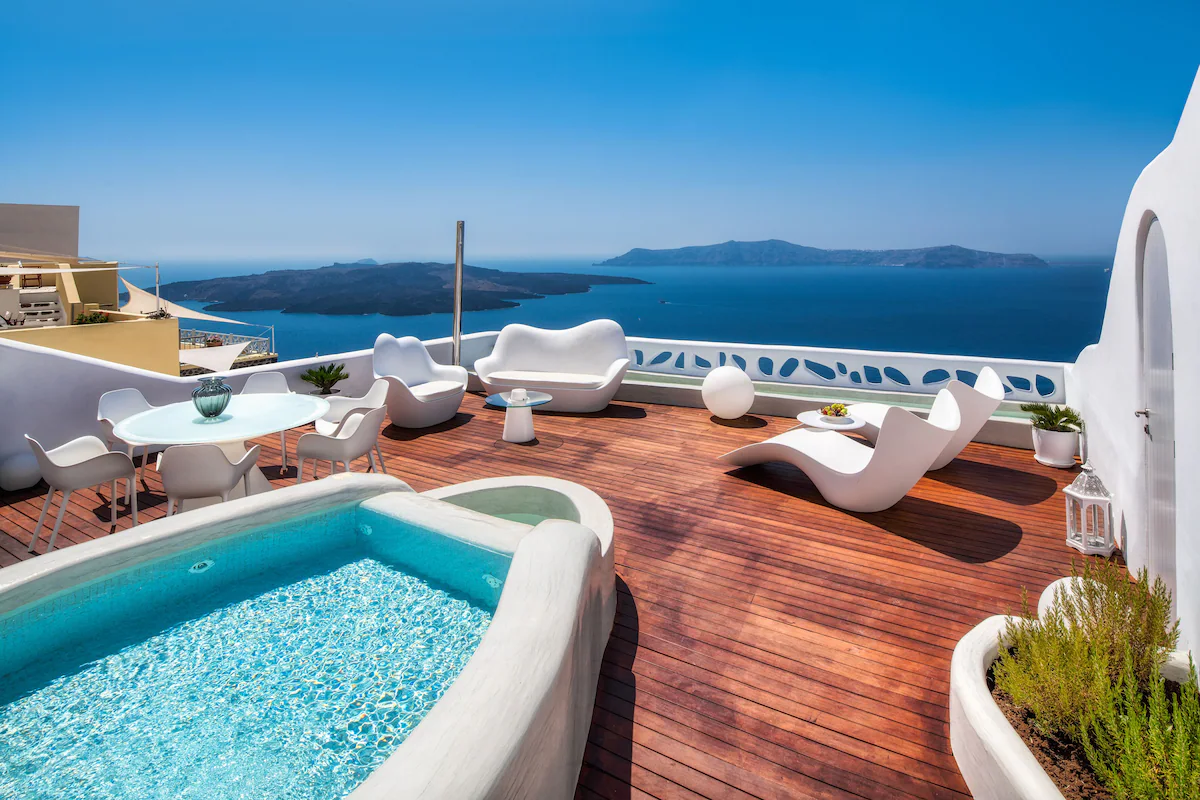
A hotel bar that works at midnight is harder to find than a hotel bar that works at six in the evening. The early-evening bar is easy: a few cocktails, a small crowd, music kept low enough for conversation. The midnight bar is harder because by that hour the casual drinkers have gone, the kitchen has closed, and the remaining guests are the ones who actually want to be there. The bar at Corral del Rey, the small boutique hotel in a fifteenth-century townhouse in the Santa Cruz quarter of Seville, holds the room at midnight better than almost any other small hotel bar in southern Europe.
The Corral del Rey bar occupies one corner of the central patio, with three small marble tables, four high stools, a working bartender who has been at the property for fourteen years, and a list of Andalusian sherries and fortified wines that almost no other hotel in the city offers in this depth. By eleven, the guests who are not drinking have gone upstairs. By midnight, the remaining group is usually three or four parties of two, conversation pitched at a register that the patio’s acoustics make possible, the temperature dropped by ten degrees from the Sevillian afternoon, and the bartender pouring an Amontillado that the property has been ageing in-house for nine years.
The detail that makes this work is the bartender’s discretion. A guest who wants to talk receives an interlocutor. A guest who wants to read receives silence. A guest who has had enough but wants to stay can nurse a glass of water for an hour without anyone suggesting another drink. The bar closes when the last guest leaves, not at a posted hour. It is a small piece of nineteenth-century Andalusian hospitality preserved inside a twenty-first-century hotel, and it is the reason that a particular kind of guest returns to Corral del Rey for a fifth and sixth time when there are nominally more impressive hotels in the same city.
08The Welcome: Haritha Villas & Spa, Sri Lanka
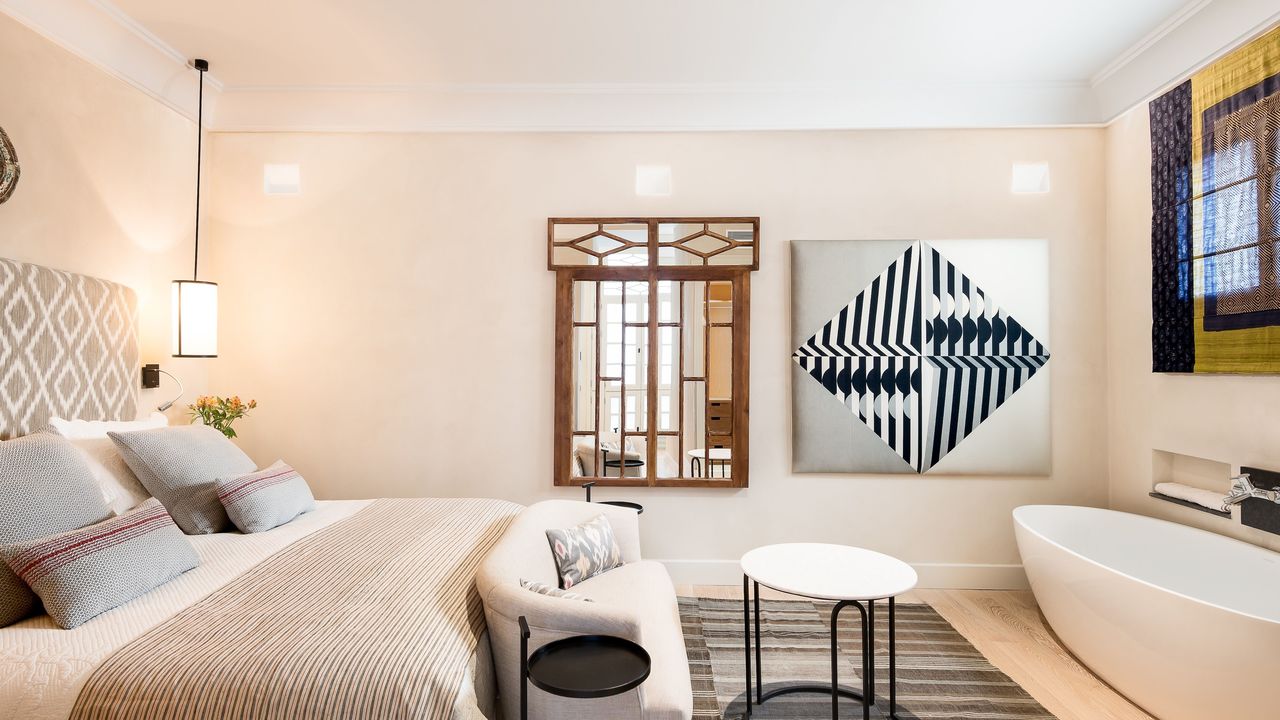
The arrival ritual at most hotels has been industrialised into uselessness. The cold towel, the welcome drink, the recitation of amenities at check-in, the offer of a property tour that no jet-lagged guest wants. The hotels that handle arrival well have understood that what a guest wants after an eleven-hour transit is the opposite of theatre. They want their room. Haritha Villas & Spa, the eight-villa boutique property on the southern coast of Sri Lanka near Hikkaduwa, has built its entire arrival sequence around this realisation.
A guest at Haritha is met at the airport by a member of the property’s staff, taken directly to a car that the property maintains for arrivals, and driven the two and a half hours south without being asked to do anything. The car is stocked with cold water, a small selection of Sri Lankan fruit, and a quiet driver who has been instructed not to narrate the route unless asked. The property is reached through an unmarked gate. The guest is taken not to a reception desk but directly to their villa, where check-in is completed at the table on the verandah, with a cool drink already poured, and the staff member who meets the guest at the gate is the same person who will be the primary point of contact for the entire stay.
The detail that distinguishes this welcome is what is absent from it. No lobby. No queue. No paperwork at a counter. No list of facilities. No suggestions for tomorrow. The guest is delivered to their room, the staff member withdraws, and the room is theirs. Dinner is available on the verandah at whatever hour the guest wakes up and asks. A small printed card, placed on the bedside table, contains a phone number and a single line of text: anything you need, any hour. The first conversation about the property happens the next morning, after a guest has slept, when a guest is actually equipped to have it.
It is the rarest arrival in luxury hospitality. It costs nothing in materials and almost nothing in labour. It is also, in the experience of guests who have stayed there, the welcome they remember when every other arrival ritual has blurred together into a single forgettable theatre.
The Pattern: what these eight properties have in common
Eight details, eight properties, eight different price points and geographies. The pattern is consistent. None of these amenities is the most expensive feature on the property in question. Most are not the headline offering. Several of them cost the property essentially nothing in capital expenditure and almost nothing in operating overhead. What they share is the result of a decision, often made by a single operator, to do one specific thing unusually well rather than to do thirty things adequately.
This is the actual definition of a great hotel in 2026. Not the brand. Not the price band. Not the star rating. The willingness of someone in operations to look at a small detail of the guest experience and decide that the detail deserves more attention than the standard hospitality template would give it.
The corollary is that the small detail is also the easiest part of a hotel to discover badly. A property that has neglected its breakfast service, that has filled its library shelves with leather decoration, that has built its pool for the brochure rather than the swim, will fail the test on a long enough stay. The detail is the slow-burning element of the hotel experience, the one that becomes visible on day three and indispensable on day seven.
How to spot these details when choosing a hotel
A traveller looking for memorable hotels can stop reading the star ratings and start looking for the detail. The properties that have one are usually easy to find once a guest knows what to look for.
The first signal is continuity of staff. A bartender who has been at the property for fourteen years, a gardener for thirty-one, a chef who personally oversees breakfast: these are not accidents. They are the result of a property that has decided, structurally, that the people running the operation are part of the product. A hotel whose staff turnover is at the industry standard rarely produces the kind of details described in this article.
The second signal is what the property markets and what it does not. The hotels with a great breakfast rarely advertise it. The hotels with a serious library never mention it on the homepage. The hotels with the best pools rarely show them in the night light that makes them memorable. A property’s marketing is the easiest part of its offer to fake. A guest who reads beyond the marketing copy, into the guest reviews, looking specifically for repeated mentions of a small detail, will find the properties that have one.
The third signal is scale. None of the eight properties in this article has more than fifty rooms. Several have fewer than fifteen. The detail-driven hotel is, structurally, the smaller hotel. Operators cannot do a single thing unusually well at the scale of a two-hundred-room resort. The smaller hotels have the option. The best of them take it.
Frequently asked questions
| What makes a luxury hotel actually memorable? | A specific detail, executed unusually well, that the property has decided to prioritise over the standard amenity list. Examples include a kitchen-led breakfast, a real library, an architecturally serious pool, a great garden, genuine silence, a properly designed bath, a bar that holds the room at midnight, and an arrival ritual that respects the jet-lagged guest. These are easier to find at small boutique properties than at large branded resorts. |
| Are these eight hotels considered luxury? | All eight are luxury properties in the broad sense, but they span a range of price points and styles. Some are at the very top of their market (Acro Suites, Villa Gallici). Some are mid-luxury boutique properties with strong character (Country House Villadorata, Kozmo Hotel Suites). The list is curated by detail, not by price band: each property is included because it does one thing exceptionally well. |
| Where can I book the hotels mentioned in this article? | All eight properties are available through Top World Hotel. Direct enquiry through the platform typically secures better rates and access to suite types that standard online travel agencies do not always surface, particularly for longer stays and shoulder-season dates. |
| Which of these hotels is best for a romantic week? | Villa Gallici (Aix-en-Provence) for the garden in May. Athina Luxury Suites (Santorini) for the caldera bath in shoulder season. Villa San Sanino (Tuscany) for the silence in June or September. Country House Villadorata (Noto) for the breakfast and the Baroque town nearby in late spring or early autumn. |
| Are any of these hotels family-friendly? | Most are oriented toward couple and adult travel. Country House Villadorata and Haritha Villas & Spa accommodate families comfortably with older children. Villa San Sanino, Athina Luxury Suites and Corral del Rey are adult-skewing. For families, the best approach is to enquire directly: a small hotel that is not designed for families produces a more stressful stay for everyone. |