The New Bali: Five Wellness Retreats Beyond the Yoga Cliché
Bali wellness in 2026 is not the same conversation it was in 2010. The island has moved on. Five retreats across volcanic east Bali, the cliffs of Uluwatu, the Sidemen rice fields, and the quiet north coast of Amed show what a serious wellness week on the island looks like today, without the saturated Ubud Instagram set.
Bali’s reputation as a wellness destination took off in the late 2000s, hardened in the 2010s, and then almost killed itself with the 2020s. The phrase “wellness retreat in Ubud” now triggers an instant mental image for most travellers: a crowded yoga shala, a smoothie bowl photographed from above, a tourist economy that has commercialised every spiritual gesture into a paid module. The cliché is real. The good news, for travellers willing to look past it, is that the actual island has continued to produce serious wellness properties in the corners the day-trip economy has not reached.
Five of those properties follow. None of them is at the centre of Ubud. None of them sells a “transformational journey” in its marketing copy. All of them are built around a specific physical place on the island (a volcano, a cliff, a rice valley, a black-sand coast) and use the location as the actual programme. The order below moves geographically across Bali from east to north, ending at the property furthest from the crowded south.
1. Samanvaya, Sidemen: the volcano-and-rice-field retreat
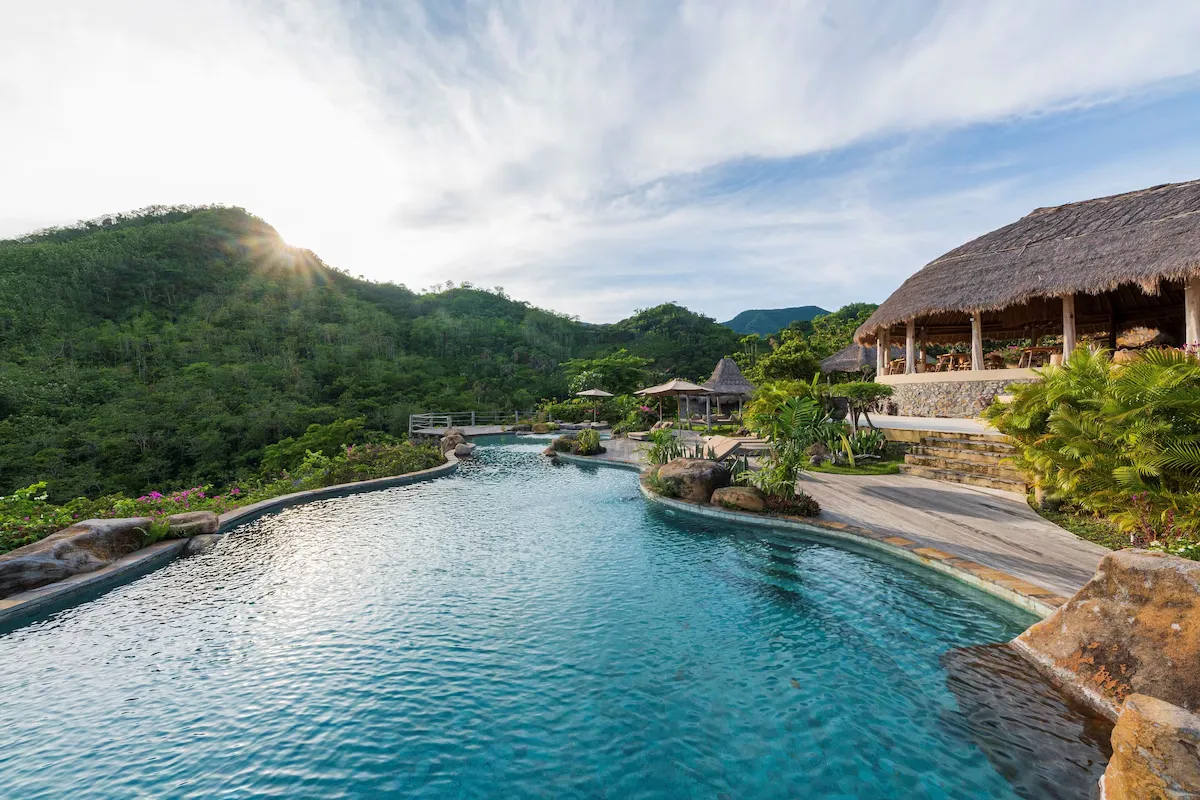
Samanvaya sits in Sidemen, the rural valley about ninety minutes east of Ubud, between the volcanic cone of Gunung Agung and the smaller terraced ridges that drop toward the eastern coast. Sidemen is what most travellers picture when they imagine “old Bali”: rice fields cultivated by hand, small villages where most of the work is still agricultural, no tourist infrastructure beyond a handful of small family-run warungs and a few boutique retreats like Samanvaya.
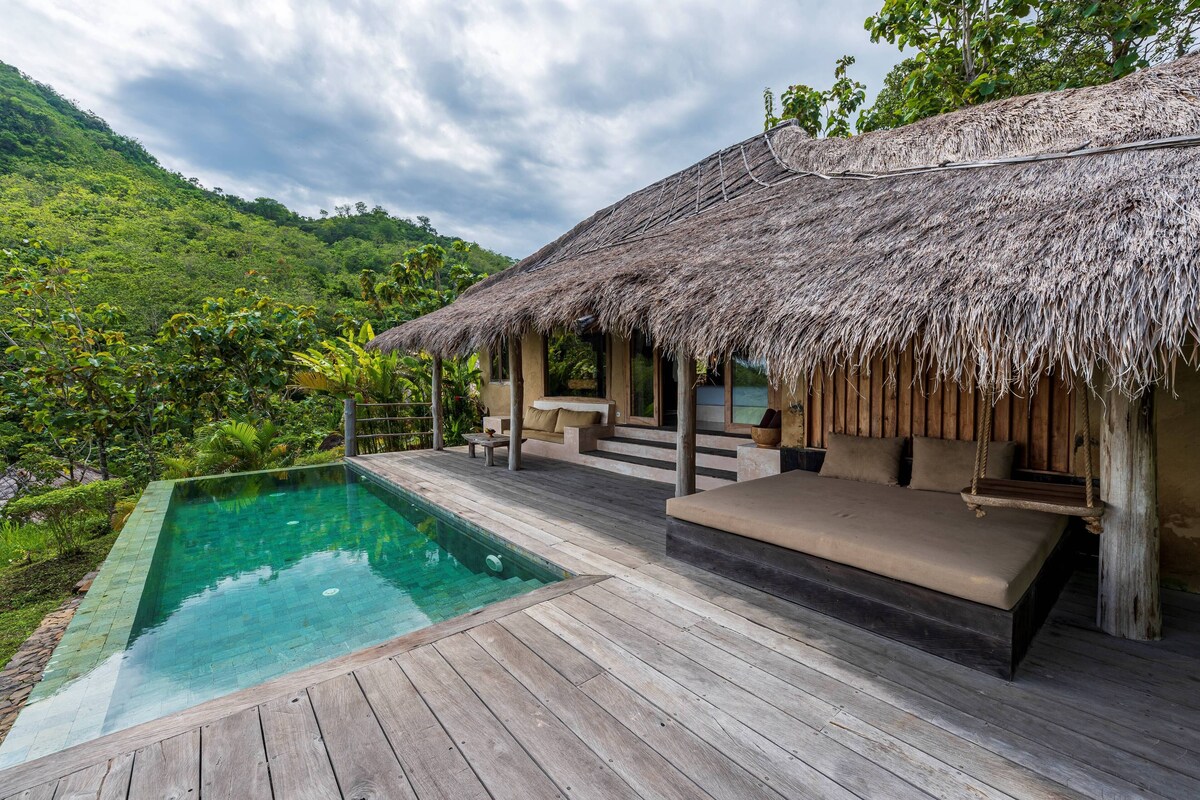
The property is a small adults-only retreat with twelve suites built into the slope, each with a private terrace or plunge pool oriented toward the valley. The architecture is local: timber, alang-alang thatched roofs, hand-finished plaster, stone collected from the surrounding fields. The pool is a black-bottomed infinity edge that disappears into the rice terraces below. The spa is small but unusually deep on traditional Balinese healing modalities (the Boreh exfoliating treatment with turmeric and rice powder, the Lulur royal bath, sound therapy with the Balinese gamelan metallophones).
The programming is intentionally light. No mandatory schedules. Yoga is offered most mornings on the open bale (Balinese pavilion) overlooking the valley. The food is genuinely vegetable-forward and built around the produce of the immediate valley, with Indonesian and Indian influences (the chef trained in Kerala). Many of the dishes are explained at table by the kitchen staff, who are happy to discuss the ingredients in detail.
The location is the medicine. Sidemen at five in the morning, when the rice farmers begin their work and the volcano is briefly visible before the cloud cover arrives, is one of the quietest places left on the populated side of Bali.
At a glance - Location: Sidemen valley, eastern Bali, 90 minutes from Ubud - Style: Adults-only volcanic-stone retreat in a working rice valley - Best for: A first-time Bali wellness trip that wants quietness, classical Balinese healing, no Ubud crowds - Memorable detail: The black-bottomed pool catching the first light at six in the morning, with Gunung Agung visible behind the property in clear weather.
2. The Asa Maia, Uluwatu: the cliffside healing house
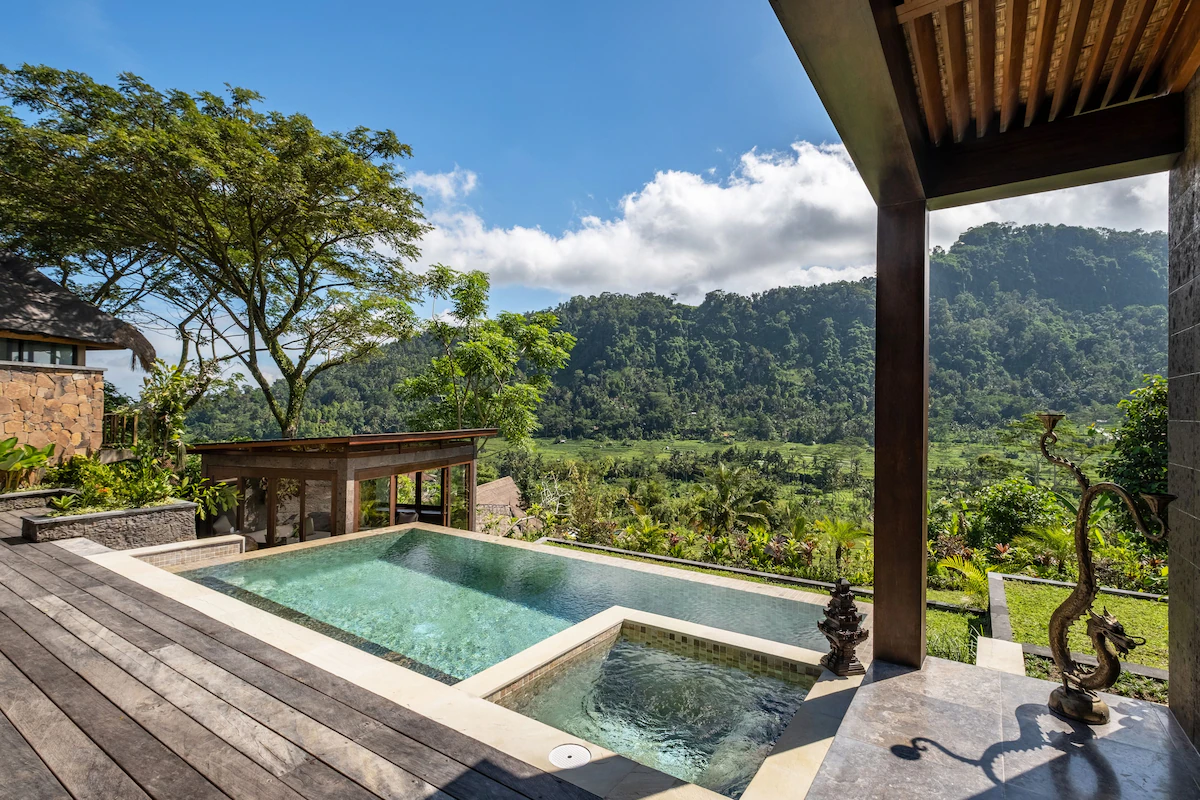
Uluwatu, on the southern tip of Bali, is best known for two things: the dramatic limestone cliffs that drop to a wild ocean, and the surfing breaks below them. Less known is that the area has quietly become one of the most interesting locations on the island for a different kind of wellness, focused on the contrast between the cliff-edge silence and the volcanic energy of the southern coast.
The Asa Maia is a small wellness house on the cliffs above Bingin Beach. The property has a handful of suites organised around a central pool and a single open-air dining space. The architecture is contemporary tropical with serious attention to natural light: limestone walls, oversized timber, ceiling fans rather than air conditioning in most spaces.
What makes The Asa Maia worth a journey is the wellness programme, which is structured but not rigid. Daily breathwork at sunrise. Morning yoga on a platform that hangs over the cliff. A small but excellent menu of bodywork (the signature is a Balinese-Ayurvedic hybrid called the Mahanarayan oil massage, ninety minutes, often described by guests as one of the most precise treatments they have had anywhere). A vegetarian kitchen that runs on what the local Uluwatu market produces.
The Asa Maia is also one of the rare wellness properties in Bali that takes its food programme as seriously as its movement programme. Three meals a day, all included in the rate, served at communal tables when guests want or in private when they prefer. The cooking is plant-based but precise (no smoothie bowls, no “buddha bowls”), with a particular emphasis on Indonesian sambals, fermented sauces, and the kind of cooking that the founder studied at Auroville in southern India before opening on Bali.
At a glance - Location: Cliffs above Bingin Beach, Uluwatu, southern Bali - Style: Small wellness house, communal dining, structured programme - Best for: Travellers who want a defined wellness week with daily movement, bodywork and serious vegetarian food - Memorable detail: The morning yoga platform at six o’clock, with the sound of the Indian Ocean breaking on the rocks two hundred metres below.
3. The Turiya, Ubud area: the jungle lodge that does the opposite of yoga town
The Ubud problem in 2026 is geographic. The centre of Ubud (the area around the Royal Palace, the Sacred Monkey Forest, the Saraswati temple) has become a tourist district. The price the visitor pays for being “in Ubud” is constant motorbike traffic, queues at the photographable rice walks, and a saturation of yoga studios competing for attention.
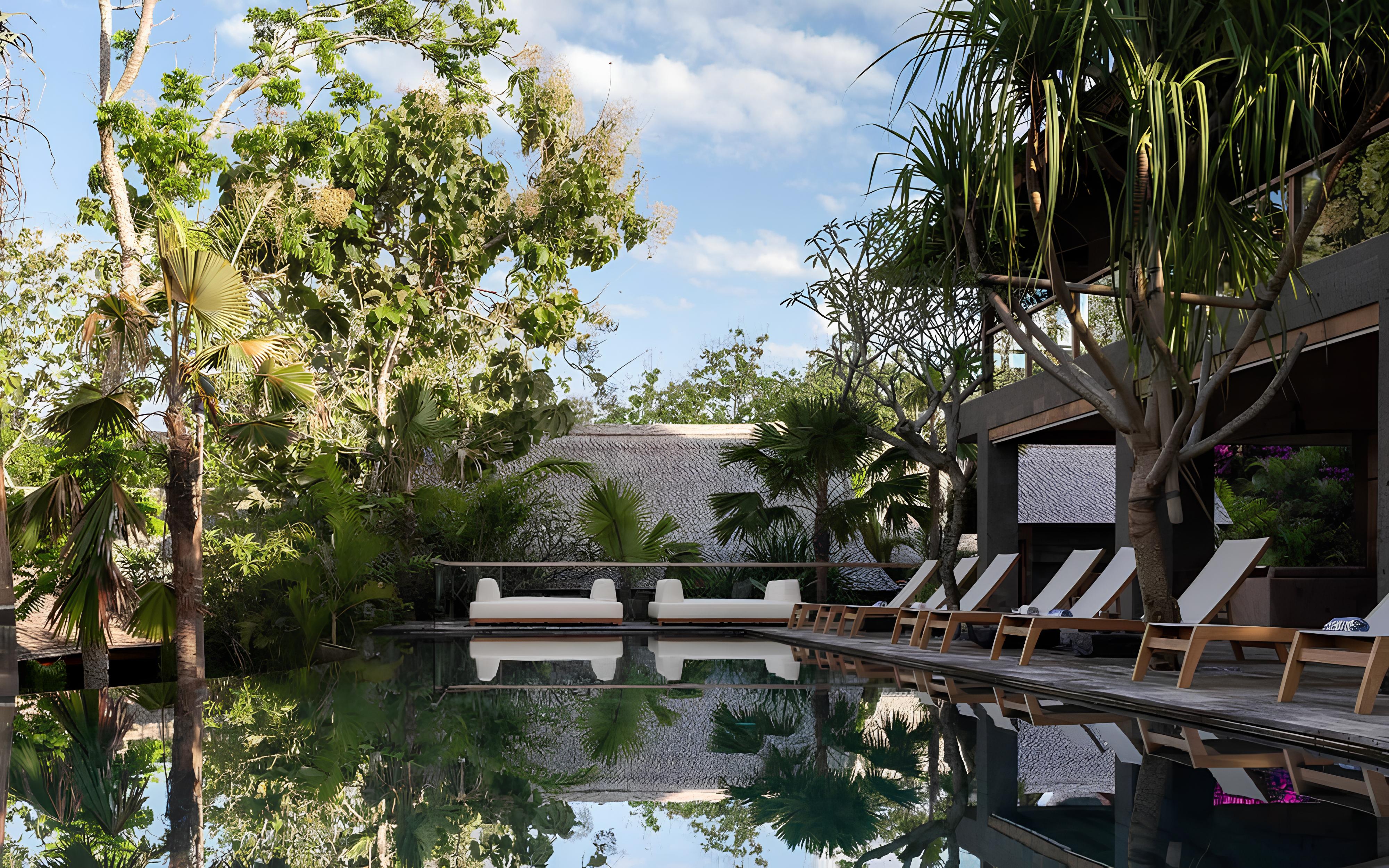
The Turiya sits in the green corridor north of Ubud proper, in the village of Tegallalang, on a small ridge above a steep ravine. The property is genuinely in the jungle. Reaching it requires the last fifteen minutes of drive on a small village road. Once inside, the noise of central Ubud is absent. The closest sound is the river running below the property.
The architecture is contemporary jungle lodge: timber, stone, large open volumes, swimming pool placed at the edge of the ravine, with the trees of the opposite slope visible through every meal. The suites are large, with outdoor showers and private gardens.
The wellness programme at The Turiya is light by design. There is no fixed yoga schedule. There is a serious spa with a small number of treatments (the Volcanic Stone therapy with stones from Mount Agung; the Cempaka Flower immersion with white champaca flowers grown on the estate). There is a beautiful small library of books on Balinese culture, Asian philosophy, and tropical architecture, which guests use more than expected.
The cuisine works in a refined Indonesian register with strong respect for the produce of the central highlands: bamboo-cooked rice with chicken and citrus leaves, the famous bebek betutu roasted duck (when the kitchen has time to prepare it, a 24-hour notice is required), seasonal vegetables prepared with serious technique.
At a glance - Location: Tegallalang, north of central Ubud, in a forested ravine - Style: Contemporary jungle lodge with strong spa and library - Best for: Travellers who want Ubud proximity without Ubud density, with the option to do as much or as little wellness as desired - Memorable detail: The pool at sunset, with the ravine below filling with the last light and the first calls of the small Balinese owls.
4. La Reserve 1785, Ubud: the historical estate
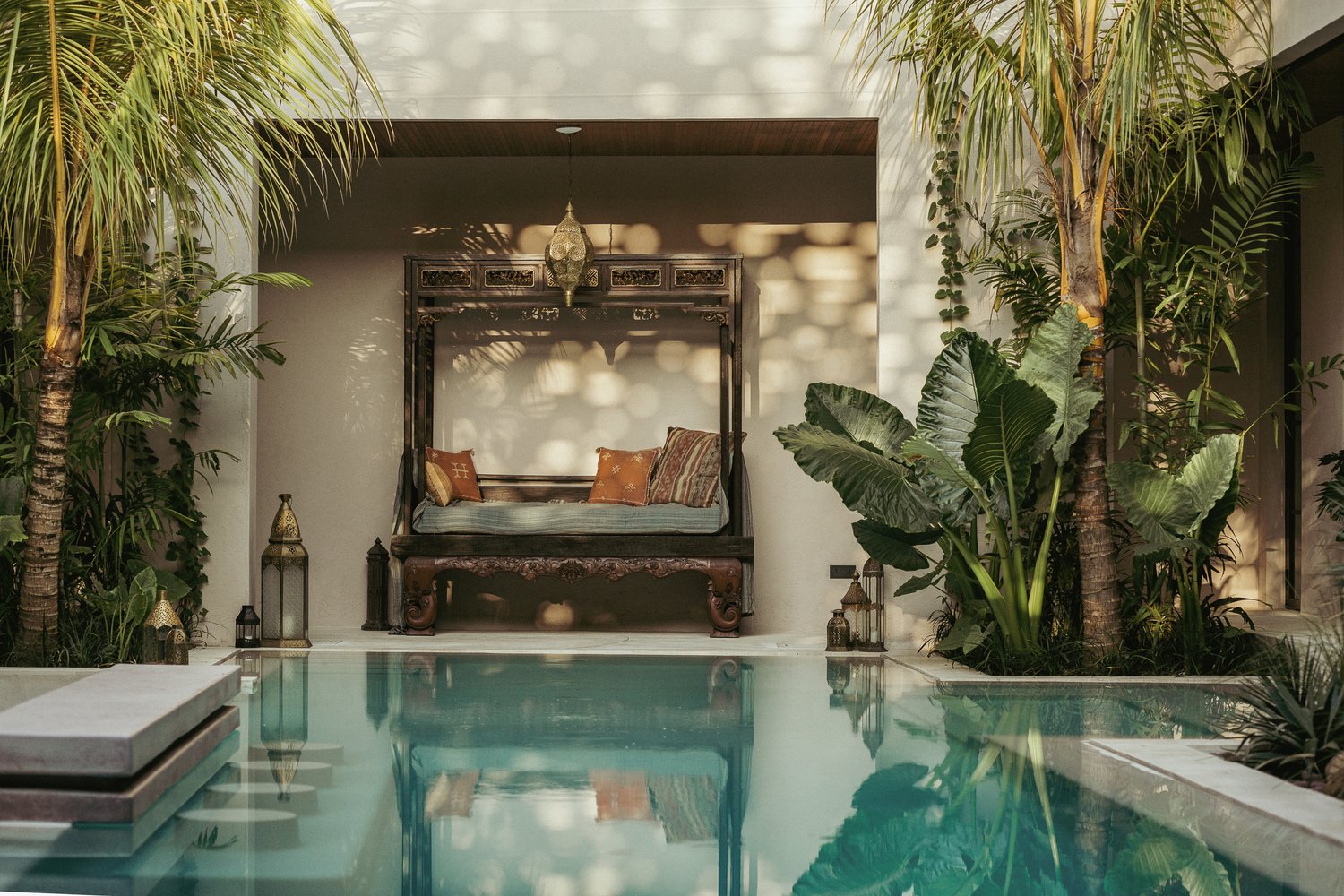
The fourth example is a different model: the heritage retreat. La Reserve 1785 sits on land that has been farmed since the late eighteenth century (the property’s name is a reference to its dated origin), in a small valley between Ubud and Tegallalang. The estate combines a working spice and herb garden, a small organic farm, and a contemporary retreat built within the original stone walls of the historic compound.
The property is small, twelve villas, all with private gardens and most with their own pools. The architecture is a deliberate blend of restored historic stonework and contemporary insertions, with the eighteenth-century bale (the ceremonial pavilion at the centre of the original compound) preserved and now used as the yoga and gathering space.
The spa at La Reserve 1785 is built around the estate’s own pharmacy of medicinal herbs. The signature programme is a multi-day Balinese-Ayurvedic detox using ingredients grown on the property, supervised by a resident Balian (traditional healer) who is a member of the family that has owned the estate since the late nineteenth century. The treatments are not theatrical. The healer speaks limited English and the sessions are translated by the spa team, which gives the work a more grounded quality than the wellness-industry version of the same modalities.
The kitchen at La Reserve 1785 is Ayurvedic-Indonesian, with most dishes prepared according to dosha (constitution) classifications and adjusted by the kitchen on the basis of a short conversation at check-in. The result is one of the few wellness kitchens on Bali that genuinely uses Ayurveda as a working framework rather than as a marketing label.
At a glance - Location: Small valley between Ubud and Tegallalang - Style: Restored eighteenth-century estate with working medicinal garden - Best for: Travellers who want serious traditional healing in a historic setting, with a resident healer and Ayurvedic cuisine - Memorable detail: The original eighteenth-century bale, used now as the morning yoga space, with its hand-carved beams and the stone floor that has been worn smooth by two and a half centuries of feet.
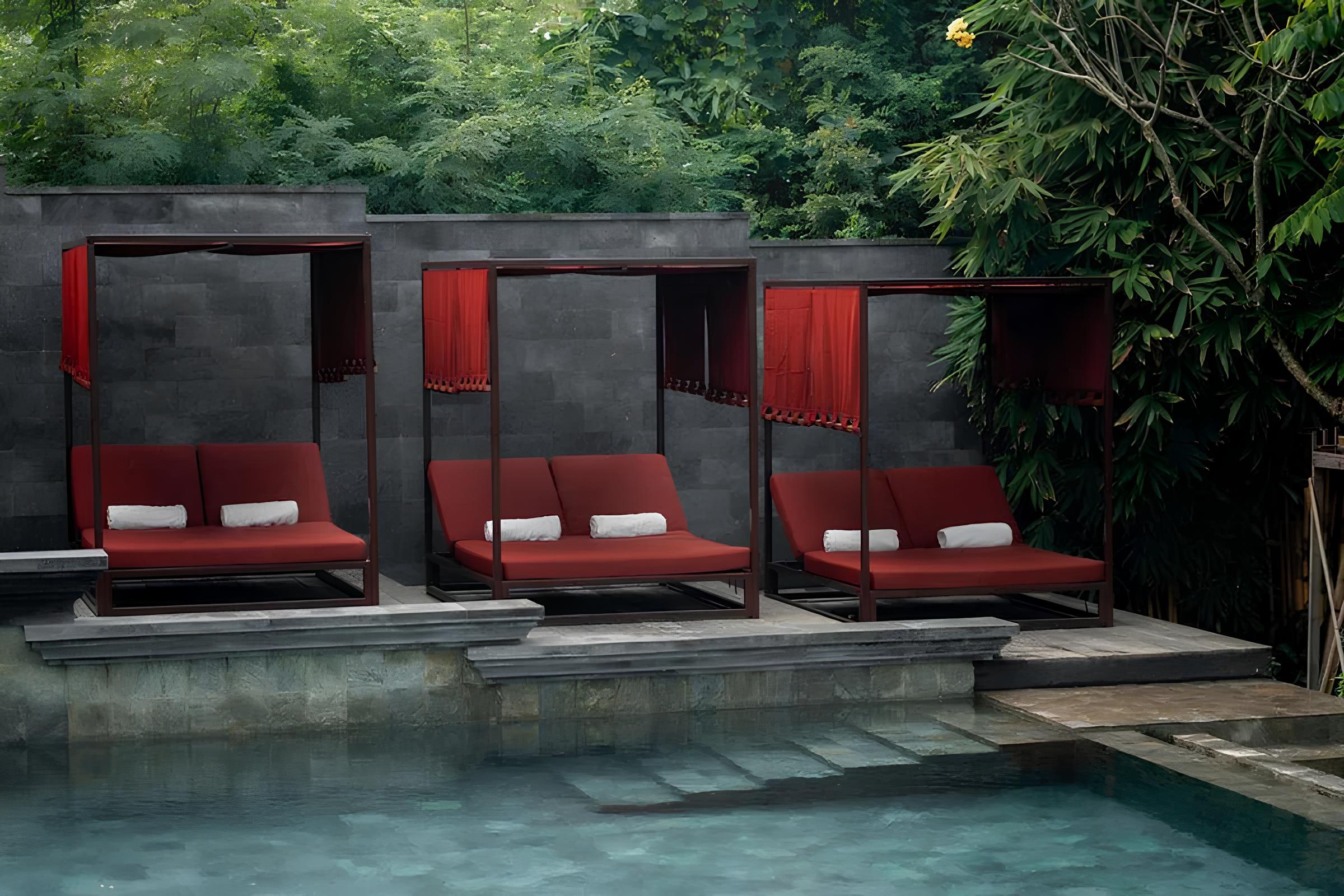
5. Mathis Lodge Amed: the silence option on the north coast
The final retreat is the most remote and the most quietly radical. Amed is a stretch of black-sand coast on the eastern tip of north Bali, two and a half hours by car from Ubud and three hours from the airport. The drive crosses the volcanic eastern interior, passes the salt-pan villages of the coast where sea salt is still produced by hand evaporation, and ends in a small fishing village where the rhythm is closer to a Bali of forty years ago than to the contemporary southern coast.
Mathis Lodge Amed is a small property on the cliff above the village, with a handful of bungalows facing the water. The atmosphere is intentionally minimal. There is no yoga schedule. There is no formal spa menu. There is a small natural pool, a vegetarian-friendly restaurant that uses the day’s catch from the local fishermen and the vegetables of the surrounding hills, and a quiet that travellers consistently describe as one of the deepest they have experienced on a populated island.
The wellness offering at Mathis Lodge is the opposite of programmed. The property arranges, on request, sessions with a local massage therapist (a relative of the property’s owner) and breathwork with a teacher from the nearby village. The treatments take place either in the room or on a small platform above the sea. The framework is informal: the therapist arrives, the session happens, the next day is open.
What guests at Mathis Lodge consistently note is the long-arc effect of the silence. The first day is sometimes restless. By the third day, the body adjusts to a different rhythm. By the fifth day, the city pace that the trip was meant to leave behind feels genuinely distant.
At a glance - Location: Cliff above Amed village, northeastern Bali, 2.5 hours from Ubud - Style: Minimal cliffside lodge, no fixed programme, sea-facing - Best for: Travellers who want a long-arc reset rather than a structured wellness week - Memorable detail: The cliff platform at five in the morning, with the sea below catching the first light and the local fishing boats heading out to the reef.
Which Bali to choose
A simple decision rule.
For a first wellness trip to Bali with a structured programme and an interest in Balinese culture, choose Samanvaya or La Reserve 1785. Both give a clear daily rhythm without forcing a rigid retreat schedule.
For a defined wellness week with daily movement, bodywork and serious food, choose The Asa Maia. The Uluwatu setting also gives easy access to the cliffs and the ocean for the non-wellness portion of the day.
For Ubud convenience without Ubud noise, choose The Turiya. The location allows day excursions into the centre of Ubud without spending the trip inside it.
For a long-arc silence and a complete disconnection from the high-density southern tourism corridor, choose Mathis Lodge Amed. The retreat works best from five to seven nights.
For a combined trip across two retreats (the most common structure for a two-week Bali wellness visit), pair Samanvaya in Sidemen with The Asa Maia in Uluwatu. The geographical contrast (volcanic east, cliffside south) gives the trip two distinct chapters without backtracking.
When to go
May, June, and September are the strongest windows for a Bali wellness trip. The dry season runs roughly April to October, but May and September give the best balance of dry weather, mid-temperature humidity, and lower visitor density than the July-August peak.
July and August are dry and high-season, with peak rates and the highest density of European and Australian visitors. The wellness retreats themselves stay calm (low room counts), but the road traffic between Ubud and the southern beach areas can be significant.
October and November are shoulder months with occasional afternoon rain showers that pass quickly. The benefit is lower rates and significantly fewer visitors. Several of the retreats above (Samanvaya, La Reserve 1785) consider November one of the most beautiful months on the island.
December through February is the wet season. The retreats remain open but the day rhythm shifts to early-morning activity and afternoon rain-watching. Not the recommended window for a first-time Bali wellness visit.
A practical note on getting there
International flights arrive at Ngurah Rai International Airport (DPS) near Denpasar in southern Bali. From DPS, transfer times to the retreats above are: - Samanvaya (Sidemen): about 2 hours - The Asa Maia (Uluwatu): about 45 minutes - The Turiya (Tegallalang): about 1 hour 30 minutes - La Reserve 1785 (Ubud valley): about 1 hour 15 minutes - Mathis Lodge Amed: about 3 hours
A private transfer is the standard option and is straightforward to arrange through any of the properties. Self-driving in Bali is not recommended for visitors without recent local experience due to dense traffic and motorbike conditions.
Frequently asked questions
What are the best wellness retreats in Bali in 2026?
The five recommended here (Samanvaya, The Asa Maia, The Turiya, La Reserve 1785, Mathis Lodge Amed) cover the geographic and programmatic range of the island. The best choice depends on whether the priority is structured programme, traditional Balinese healing, Ubud proximity, heritage setting, or remote silence.
Is Bali still worth visiting for wellness given the overtourism?
Yes, with strategy. The central Ubud area in high season is genuinely saturated. The corners of the island where the retreats above are located remain calm, particularly Sidemen, Amed, and most of the Uluwatu cliffs.
Where to stay in Bali outside Ubud?
For wellness specifically: Sidemen (volcanic east), Uluwatu (southern cliffs), and Amed (northeastern coast) are the three areas with serious retreat properties and minimal overtourism. Each gives a completely different version of the island.
When is the best time for a Bali wellness retreat?
May, June, and September. Dry weather, lower humidity than mid-summer, fewer tourists than July-August. May is the freshest after the wet season; September is the calmest before the European autumn-winter wave.
What is the difference between Ubud and Uluwatu for wellness?
Ubud is the historic centre of Balinese spiritual culture, with traditional healing practices, rice-terrace landscapes, and Hindu temples. Uluwatu is the cliff-and-ocean side of the island, with surfing culture, dramatic coastal walks, and a more contemporary international wellness scene. Ubud is rural and inland; Uluwatu is coastal and dramatic. Both work for wellness, but the experience is structurally different.
Are these retreats family-friendly?
Mostly no. Samanvaya and The Asa Maia are adults-only or strongly adult-skewing. The Turiya, La Reserve 1785, and Mathis Lodge accept families but are designed around quiet adult travel. For a family wellness trip in Bali, larger resort-style properties on the southern coast are a better fit.
Do these retreats include flights or transfers?
No. Flights to Denpasar (DPS) are booked separately. Transfers from the airport are arranged on request by the retreats and are typically not included in the room rate.