Small Is The New Big: Seven Sub-30-Room Hotels Quietly Reshaping Luxury in 2026
A slow shift is happening at the top of luxury hospitality. The most interesting new properties of the year are not the 200-room resorts. They are the ones with twelve rooms, fifteen, twenty. We look at seven of them across the Cyclades, southern Italy and the Alps, and ask what they actually do better.
There is a small piece of math that explains most of what is changing in luxury hospitality right now. A 200-room resort, even when fully staffed, has a ratio of around 1.2 staff per guest at full occupancy. A well-run 18-room hotel has a ratio of around 3.5. That difference, three times more hands per guest, is the difference between getting good service and being looked after.
For most of the past three decades the industry moved in the opposite direction. Bigger properties. More rooms. More restaurants, more pools, more brand-collaboration suites with a designer name above the door. Some of those hotels are genuinely magnificent. Most of them are now competing with each other on the same checklist, and the checklist has run out of road.
A different generation of properties has been opening more quietly, with a deliberately small footprint, and they are now the ones our guests come back from talking about. We have spent the last year staying in many of them, and a pattern has emerged. The interesting hotels of 2026 share five traits. They have fewer than thirty rooms. They are usually owner-run or owner-shaped. They have one restaurant, not three. They are housed in something that already existed (a palazzo, a riad, an alpine chalet, an island farmstead), not built from scratch. And they take a clear position on what they are not going to do.
What follows are seven examples currently on Top World Hotel. None of them is the most expensive hotel in its country. None of them is on the most-photographed beach. All of them are reservations our editors made last year and then made again.
1. Sun Aeriko, Tinos: when the island is the amenity
The hotel sits in the inland Tinian countryside, away from the port, near a village whose name most travellers will not recognise. Tinos is two and a half hours by ferry from Athens. It has no airport. For most of the international travel year it stays empty.
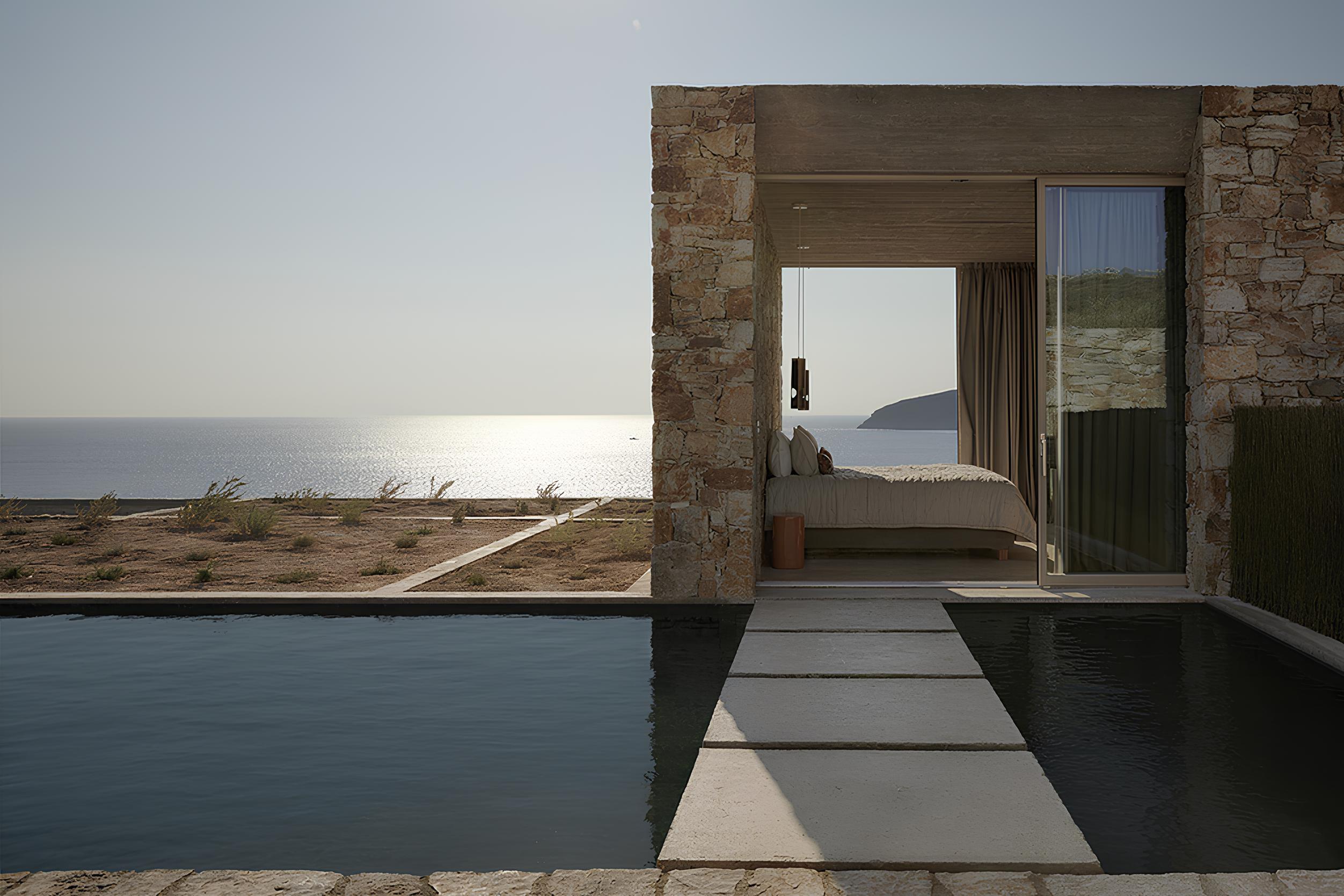
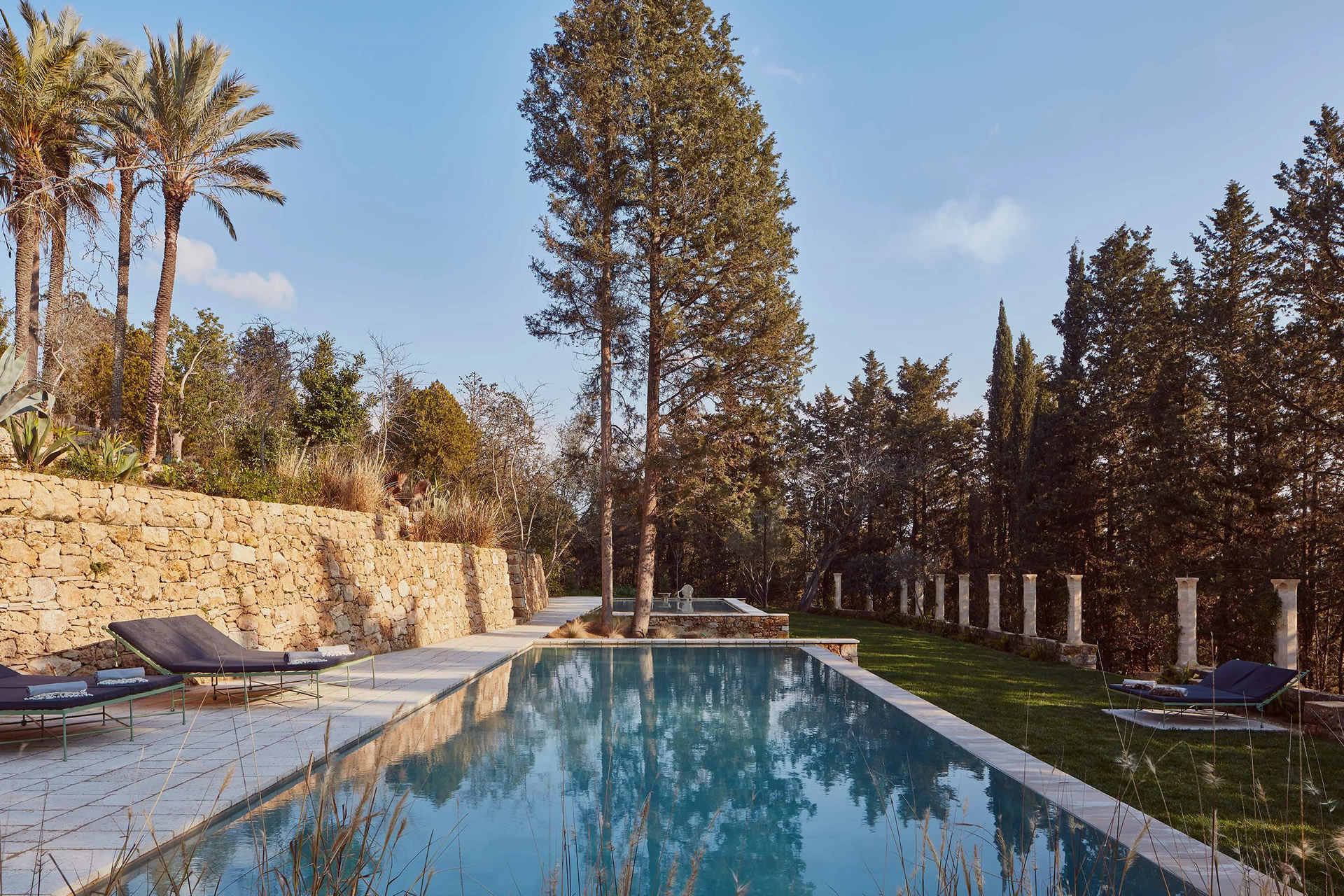
Sun Aeriko is small in a way that matters. The building is built into the slope, in local stone, with a single small pool oriented to catch the afternoon light. Breakfast is served at one shared table when guests want, or at small tables in the courtyard when they do not. The kitchen serves a precise Tinian repertoire: artichokes, capers, louza (cured pork loin), wild greens, the island’s own goat cheese.
What the property does not have is also interesting. No spa with menu. No bar service after 11pm. No gift shop. No “kids club”. No conference room. The argument the owners make, and we agree with, is that the island itself is the amenity, and the hotel exists to give you a base from which to reach it.
This is the unspoken contract of the small hotel done well: we are not the destination, we are the door.
2. Perma Serifos: the carpenter who runs the kitchen
Serifos is the Cyclades a generation ago. The white village (Chora) clings to a hill above the port. The beaches are reachable on a single road. There is no luxury infrastructure to speak of, and the island has resisted developing any.
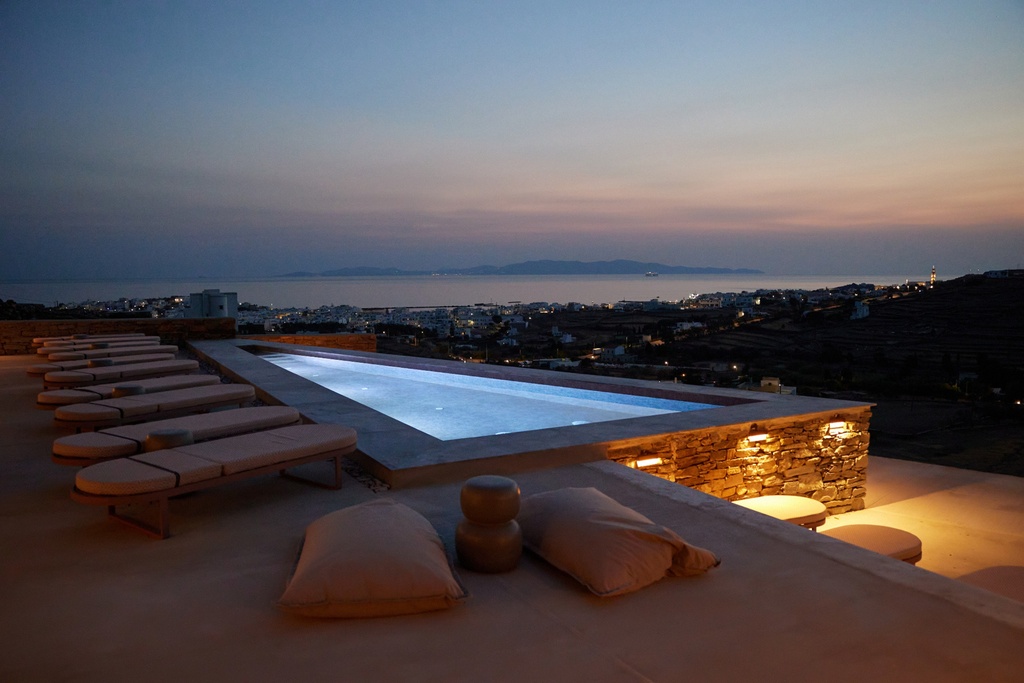
Perma Serifos is one of the very few boutique answers to that absence. It has a handful of suites, a single pool, and a vegetable garden that supplies most of what comes to the table. The owner cooks several nights a week. When he is not cooking he is in the workshop next to the lobby, finishing the woodwork that runs through the rooms.
The woodwork matters because it explains the property’s specific texture. The chairs guests sit on were made on the property. The shutters were made on the property. The bedside tables were made on the property. There is a depth of presence in the design that does not happen when a hotel orders furniture from a catalogue, and you feel it before you can name it.
The drawback, and there is one, is that Perma cannot scale. It will never have twenty suites. It will never have a second restaurant. For travellers looking for what most hotel chains call a “full-service experience”, this is not it. For the rest, it might be the most coherent small hotel currently operating in the Cyclades.
3. Boheme Mykonos: the smaller, calmer Mykonos that actually exists
Mykonos as a destination is having a quiet reset. The big clubs are still there. The summer rates are still extraordinary. But a new generation of small adults-only, design-led properties has appeared, and they are rewriting what a Mykonos stay can mean. Boheme Mykonos, on the Ornos side of the island (south-west, calmer than Paradise or Super Paradise, but still close to the centre), is one of the clearest examples.
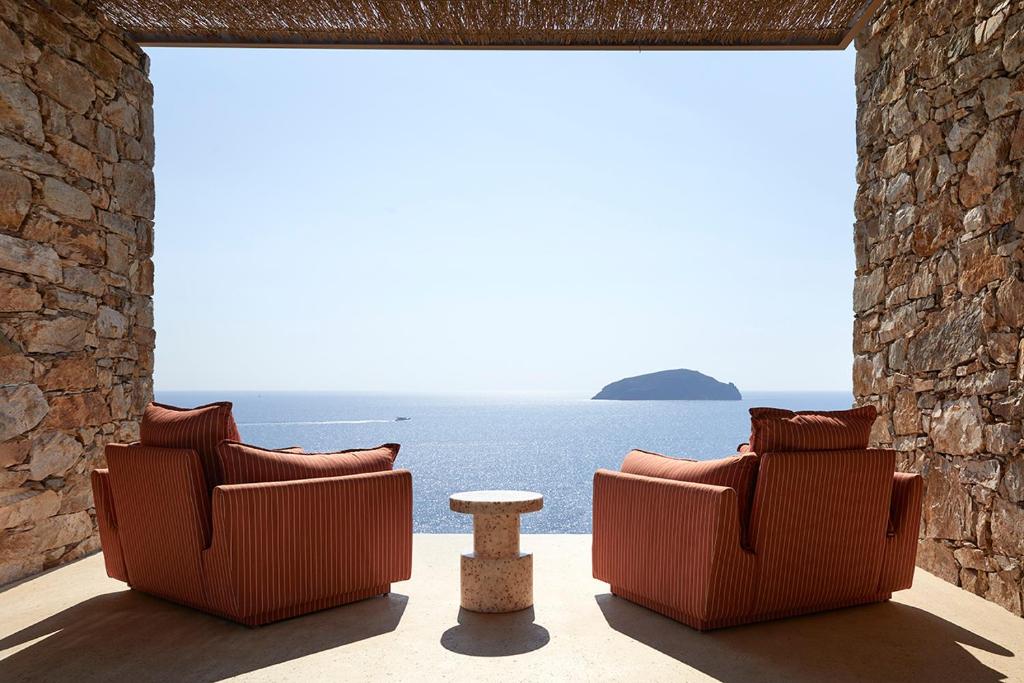
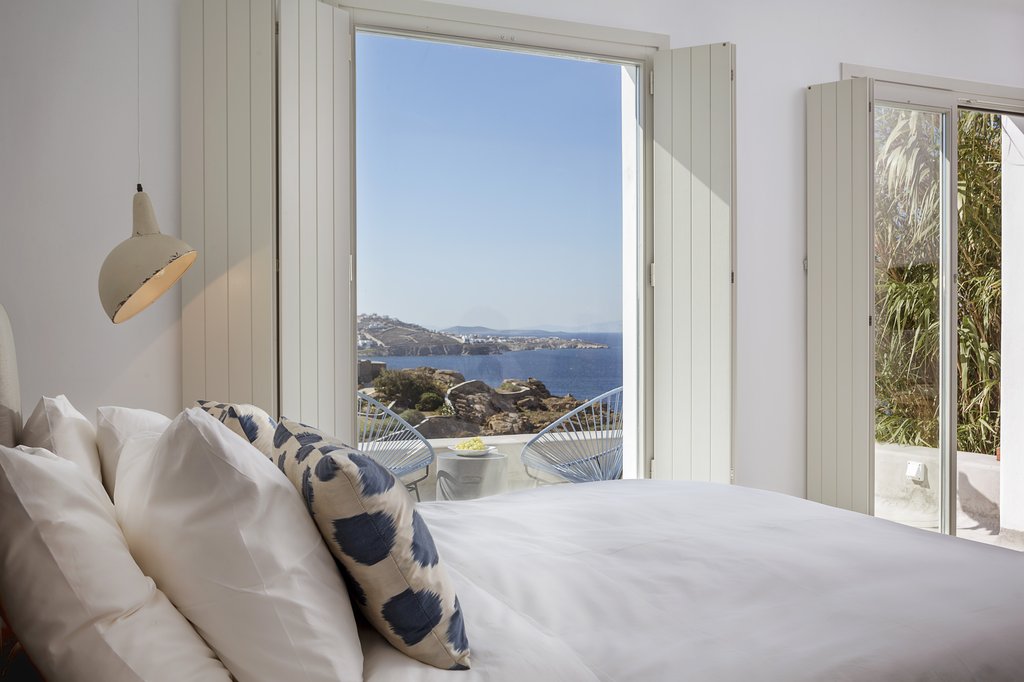
The aesthetic is consciously bohemian. Natural fibres, hand-thrown ceramics, palm shadows, eight or nine kinds of white. The rooms are small but extremely well thought through. The pool is intimate, the food is good, the staff are unusually relaxed for Mykonos in high season.
What guests are buying here is a way of being on the island that does not require chasing the party. The DJs in Mykonos are still some of the best in Europe, and the front desk at Boheme will get a table at any of them with a phone call. But the hotel itself is built for a different version of the day: the slow breakfast on the terrace, the early swim, the late siesta in a hammock that has been placed in a corner of the garden where nobody walks past, the dinner in Chora at 10pm, the drive back along the empty coast road at midnight.
It is the small hotel done in a place that has historically had no patience for small hotels. That is what makes it interesting.
4. Castle Elvira, Puglia: the family who answer the door themselves
This one is structural. Castle Elvira sits in Trepuzzi, on the Salento plain north of Lecce. It is a neo-gothic castle built in the late nineteenth century, restored by a British-Italian family who bought the property when it had been almost abandoned for twenty years. The restoration was finished in the early 2020s. The result is a hotel of about twelve suites, arranged in the original tower and adjoining wings, with terraced gardens around it.
Castle Elvira works because the family lives in it. The owners are usually the ones who meet new arrivals, who serve dinner under the loggia, who explain (when asked) how the stained-glass in the small chapel was restored by a Murano workshop. This is not theatre. It is the operating mode of the property.
The reason this matters in 2026 is that the model is rare. Most “small luxury” projects sold in the last decade are owned by holding companies, branded by groups, and run by general managers who rotate every two or three years. The owner-residence model produces a different hotel. There is less polish. There is more intent.
You can argue both ways about which is better. We have made the argument that, at this size, the owner-resident hotel almost always wins. There is no equivalent to staying at someone’s actual home.
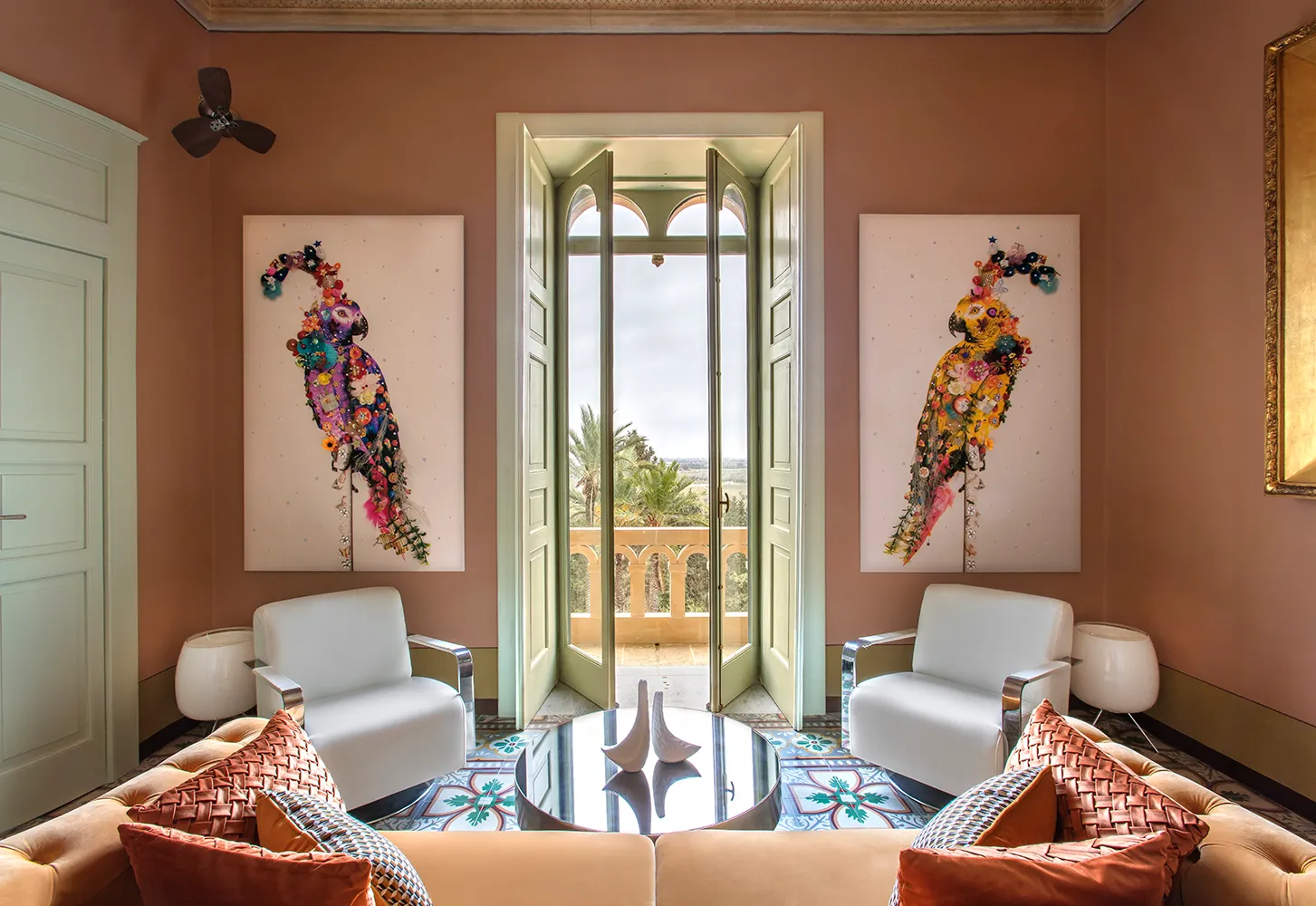
5. Auberge de la Maison, Courmayeur: the small alpine hotel that did not modernise itself
For most of the high-altitude alpine resorts, the last decade has been a long arms race to add wellness floors, fitness centres, kids’ areas and conference rooms. Some of the older hotels in Courmayeur, Cortina, Verbier or St. Moritz are now indistinguishable from each other inside, even when their facades remain distinct.
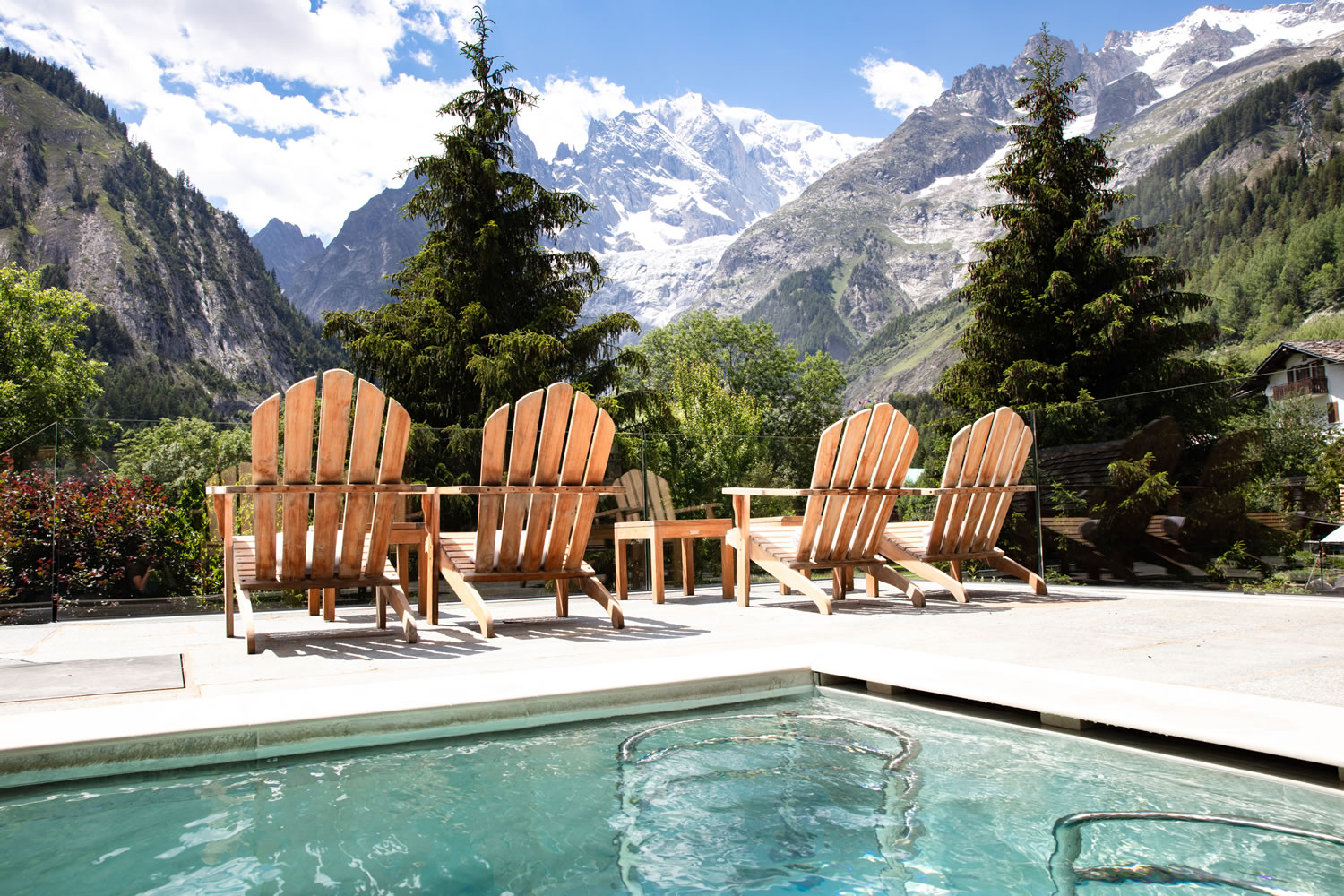
Auberge de la Maison, on the edge of the village of Courmayeur at the foot of Mont Blanc, kept its scale. It is a small family-run alpine boutique. The lobby is one room. The restaurant is one room. The spa is small but very well done. The materials are wood, stone, wool. The proportions are domestic.
Inside, the experience reads more like a private chalet than a hotel. The reason is simply room count: there are not enough guests at any one time for the building to feel public. Guests see the same six or seven faces at breakfast. After two days they know which of them is up early for the cable car and which is reading on the terrace.
The location is the same Mont Blanc base camp that hosts much larger hotels nearby. The difference is what happens when guests step back through the door.
6. Palazzo Lecce, Lecce: the city, miniaturised
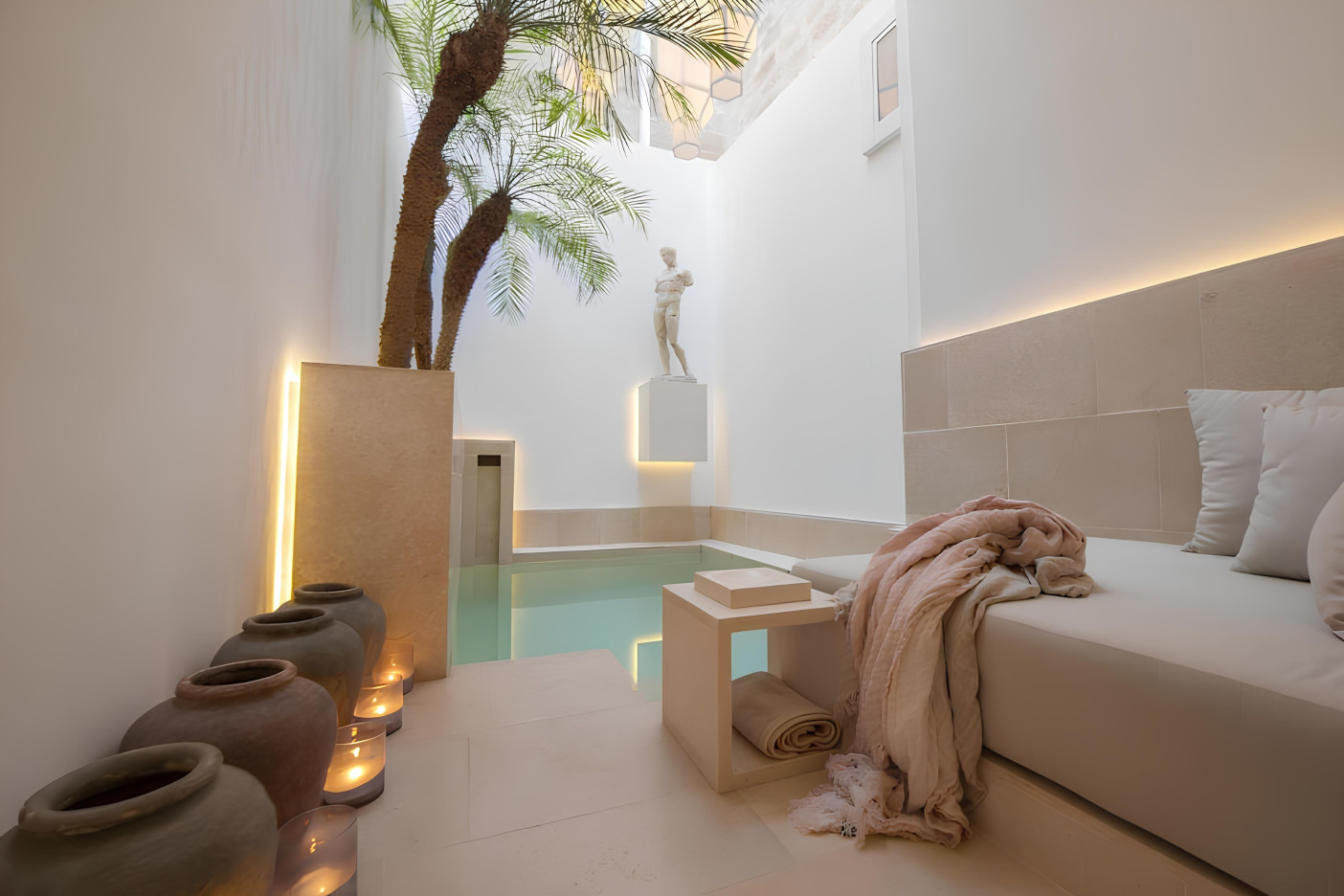
The sixth example is urban. Palazzo Lecce is a restored historic palazzo in the centre of Lecce, the baroque city of the Salento. It is small: about ten rooms inside a single sixteenth-century building. The interventions are minimal. The frescoes and stuccoes on the ceilings are the originals. The bathrooms are contemporary. The library is real and is used.
Why this matters in the small-hotel argument: Palazzo Lecce demonstrates that the model works in cities too. The default urban luxury hotel for the past two decades has been the 100 to 250 room block in the historic centre, with a rooftop bar and a basement spa. Palazzo Lecce is the opposite proposition. Ten rooms. One reception desk. No bar visible from the street. Quiet at night.
The trade-off is real. There is no room service at 1am. The restaurant is not open every day. For guests who want the urban hotel as a 24-hour platform, this is not it. For guests who want the urban hotel as somewhere they actually sleep in a building that has stood in the same square since the Council of Trent, this is the cleanest version currently bookable in the south of Italy.
7. Don Totu, San Cassiano: the smallest property on this list, and the most quietly radical
The seventh hotel is the smallest of all. Don Totu is a dimora storica in the village of San Cassiano, in the very deep south of the Salento, with seven suites. The owner is in residence. The kitchen serves breakfast in the courtyard and a small two-course dinner most evenings, in the family living room which has been opened to guests, on a long shared table. The cuisine is Salentine domestic, the food the family eats. Several of the recipes are the owner’s grandmother’s.
There is no reason to be in San Cassiano unless you are at Don Totu, or unless you stop for coffee on your way somewhere else. The point of staying is exactly that. San Cassiano has about two thousand people. The village square is empty most afternoons. The closest serious cultural attraction (the cathedral at Otranto) is twenty minutes away by car.
What Don Totu argues for, and the reason we have placed it last in this list, is the extreme version of the small-hotel logic. No pool. No spa. No “concierge service”. One owner who knows everyone by name on the second day. A village in the deep south of the Salento. Seven suites.
Some travellers find this too quiet. Many of the guests we send here come back asking if we can build.
Why this is happening now
The trend has economic, demographic and cultural drivers running at the same time.
The economic driver is that the post-2020 luxury traveller has stopped paying for visible amenities they do not actually use. The 200-room resort has a gym, a conference centre, three restaurants, a club lounge and a spa with twelve treatment rooms. The guest uses one room, one breakfast and possibly one dinner. The implied price of all the other things is now visible to the buyer in a way it was not five years ago.
The demographic driver is the rise of the high-net-worth couple traveller in their late thirties and early forties. This is a guest who has done the big resort circuit (Maldives, Mykonos, Mauritius) and is now looking for something else. The “something else” almost always turns out to be a small hotel run by people they end up meeting.
The cultural driver is harder to name but easy to feel. The big-resort vocabulary of the 2010s (DJ pool parties, signature cocktails, butler service, infinity views) has aged into something that reads as performance. The small-hotel vocabulary (one chef, a real library, a real garden, no music in the public rooms) reads as substance. We do not think this is permanent. We do think it is happening.
What can go wrong with small
We are committed to the trend, but we should also be honest about its limits. Two cautions.
First, a small hotel done badly is much worse than a big hotel done badly. At a 200-room resort, if one staff member is having an off day, there are another twelve interactions to compensate. At a 12-room hotel, if the owner is having a difficult week and a guest happens to be there, there is no buffer. The model is unforgiving on the property side. Guests see exactly what is there.
Second, smaller hotels can struggle with the basics that the big chains do well: efficient check-in for late arrivals, real airport coordination, group bookings, multilingual support for guests from markets the owner does not speak. A 200-room resort has a 24-hour front desk and a multilingual concierge by default. A 14-room hotel often does not. This is not a problem for a confident independent traveller. It is a problem for a guest expecting the hotel to manage everything.
Both of these are fixable, and most of the hotels in this article have fixed them. But they are worth naming before someone books a small hotel expecting Aman service at boutique scale and is then disappointed.
How to use this list
A simple decision rule. For a small hotel for a romantic week, choose by aesthetic match: Castle Elvira if the answer is neo-gothic, Sun Aeriko if the answer is Cycladic restraint, Auberge de la Maison if the answer is alpine warmth, Boheme Mykonos if the answer is the slower Mykonos. For a small hotel for a single short stay before a flight or onward journey, choose by location: Palazzo Lecce in the city, Auberge in the Mont Blanc area, Sun Aeriko on Tinos as a slow finale to a Greek summer. For a small hotel for two weeks of doing very little, choose Perma Serifos or Don Totu. The island and the village absorb the time.
For a first multi-stop small-hotel trip of nine to twelve nights, our recommended combination is five nights at Sun Aeriko and four at Castle Elvira. Two islands and one mainland region, three flights, no big resorts in the middle. That is the kind of itinerary the next generation of luxury travel is built on.
Frequently asked questions
Why are luxury hotels getting smaller?
Three reasons. The post-2020 luxury guest is paying for what they actually use, and large resorts include many amenities that go unused. The economics of running fifteen rooms with a high-touch service model produce a better margin than running two hundred rooms with industrial service. And a generation of owners is reopening historic buildings (palazzi, riads, alpine chalets, castles) that were never meant to hold two hundred rooms anyway.
Is small luxury actually better than a big resort?
Not always. A big resort has 24-hour services, a deeper concierge, a more reliable infrastructure for late arrivals and family logistics. A small hotel has a higher staff-to-guest ratio, a single chef, a more coherent design, and more direct access to the owners. Different trips call for different choices. The trend in 2026 is that, for two-person travel without children, small is winning.
What does sub-30-room actually mean for service?
It means the same faces appear every day, the front-of-house team remembers guest preferences without consulting notes, and the kitchen can cook for dietary requirements without it being a project. It also means that at peak season, when the hotel is full, the property is still calm. Twelve to thirty rooms is the size at which luxury can be intimate without becoming logistically fragile.
Are these hotels family-friendly?
Most are not, at least not for young children. Palazzo Lecce, Castle Elvira, Sun Aeriko, Boheme Mykonos and Don Totu are adult-skewing. Auberge de la Maison accommodates families. Perma Serifos can host children but is built around adults. For families, ask before booking. A small hotel that is not designed for families will be a more stressful stay for everyone.
When is the best time of year to visit small European hotels like these?
May, June and September for the southern European properties (Sun Aeriko, Perma Serifos, Boheme Mykonos, Castle Elvira, Palazzo Lecce, Don Totu). Mid-June to mid-September for the alpine property (Auberge de la Maison in summer mode). Avoid August where possible: even the smallest hotels are at their highest rates and the best tables in the area are difficult.