Tulum Beyond the Hype: Where Design Still Matters on Mexico's Caribbean Coast
A close look at four design-led luxury hotels on Mexico's Caribbean coast: Casa Malca, Delek Tulum, Hotel Muaré, and Chablé Maroma. Architecture, art, rooms, and how to choose
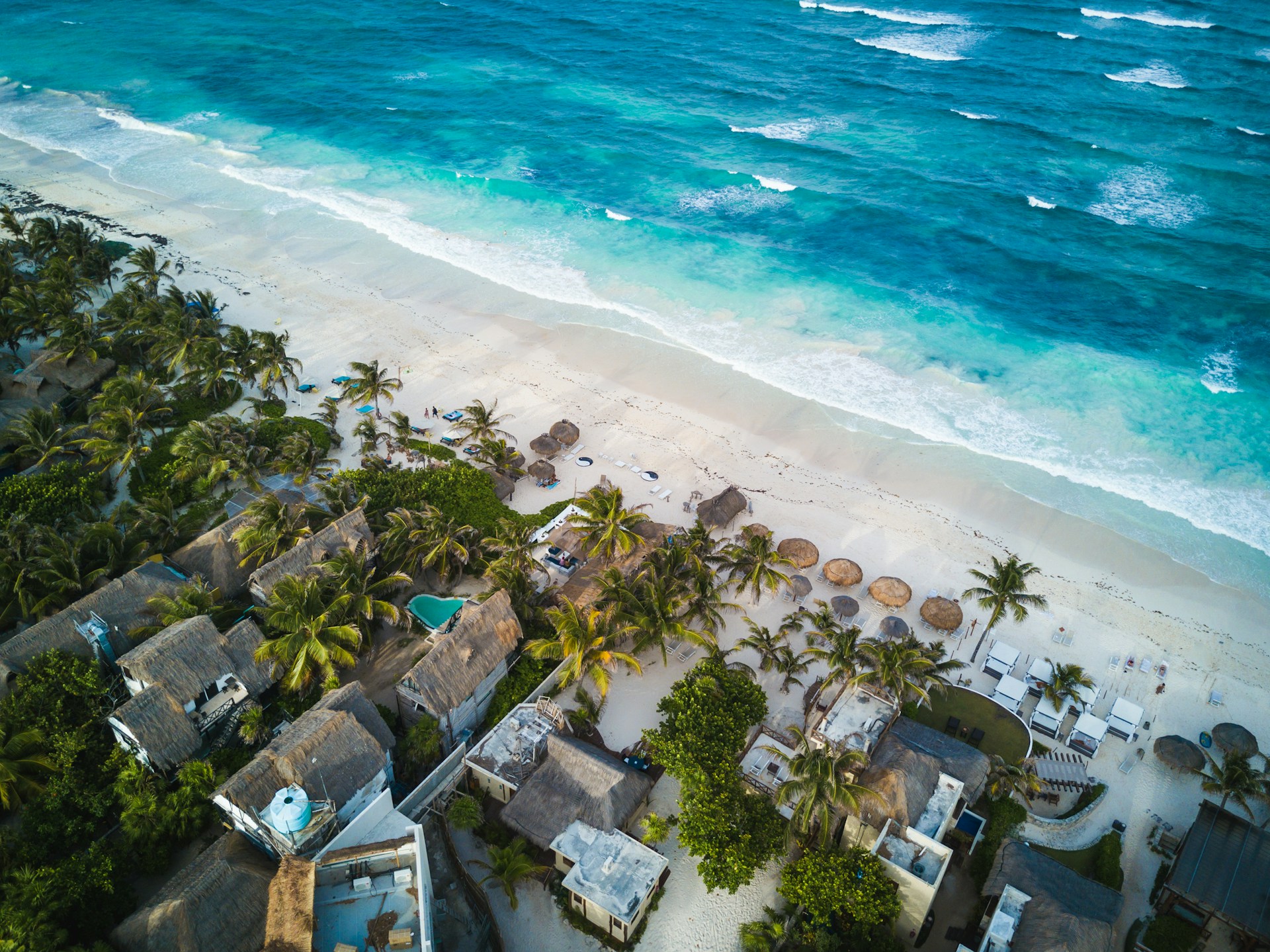
There is a stretch of road south of Cancún, the Carretera Tulum-Boca Paila, that you only really understand the second time you drive it. The first time you are looking for hotel signs and finding none, because most of the good ones do not have any. The second time you stop pulling over at every dirt track and start trusting the GPS when it says "you have arrived" in front of what looks like an empty patch of jungle. Then a bamboo gate swings open, a barefoot host walks out, and you remember why people kept coming back to Tulum even after the rest of us decided it was over.
The story you have read about Tulum is mostly true. Prices have gone up. Crowds have arrived. The beach road in high season is a dust storm of golf carts and rental SUVs. A specific kind of bohemian-luxe restaurant has metastasised in every direction. None of which changes the fact that, behind the right gates, there is still design being done in this part of Mexico that you cannot find anywhere else in the Americas. Hotels with serious architects, serious art collectors, serious craft programmes, sitting on the same white sand they sat on ten years ago.
What follows is a look at four of them. Three are inside Tulum proper, in different neighbourhoods and at different scales: a former Pablo Escobar mansion turned contemporary art museum, a twenty-one-cabana retreat directly on the sand, and a twenty-six-villa jungle hotel in La Veleta nominated for ArchDaily Building of the Year. The fourth sits forty-five minutes north, on the Riviera Maya, and is the answer for travellers who want everything Tulum used to promise without the soundtrack. They are not a comprehensive list. They are the four worth planning a trip around.
Why Tulum Still Earns the Trip
The criticism is fair. Tulum was a fishing village with one paved road in the early two thousands and is now a destination with its own international airport, opened at the end of 2023, plus a Tren Maya station that connects it to Mérida and Cancún. Beach club prices have crept past Mykonos territory. The famous restaurants take reservations weeks out, when they take them at all. There is a reason the New York Times and Condé Nast Traveler have both run "is Tulum over" pieces in the last two years.
The reason it is not over is the same reason it became a phenomenon in the first place. The land is extraordinary. The cenotes, the underground rivers the Maya called Xibalbá, the white sand pulled in fine as flour, the green of the jungle, the way the light moves through chukum-plastered walls at four in the afternoon. None of that has changed. What has changed is that you now have to know which gates to walk through.
The four hotels below are run by people who got there before the wave or who arrived recently with enough seriousness about design and craft to be worth their weight against the noise around them. Each is a building you would want to spend time in even if it were not a hotel.
Casa Malca: The Pablo Escobar House Turned Contemporary Art Museum
Carretera Tulum-Boca Paila KM 9.5, Zona Hotelera, Tulum
Of all the buildings on the Tulum hotel strip, Casa Malca has the strangest provenance. The original mansion was built for Pablo Escobar, completed in 1992, the year before he was killed in a Medellín shootout. After his death the property was abandoned and sat for nearly twenty years rotting under the Caribbean climate, the jungle slowly taking it back. In 2014 it was bought by Lio Malca, a New York gallerist and contemporary art collector born in Venezuela, who had spent the nineties championing Basquiat and acquiring work by KAWS, Kenny Scharf, Keith Haring, and George Condo before most of those names were household property.
The Concept
Malca renovated the mansion top to bottom and reopened it as a hotel of eight rooms in 2014. A 2018 expansion brought the count to seventy-one suites built on the beach. The architecture is minimalist, mostly poured concrete, deliberately stripped down to function as a backdrop for the art. And the art is not decoration. It is a working slice of Malca's personal collection installed throughout the property, with rotating exhibitions through the year. Casa Malca made the pages of Architectural Digest on opening, and it is currently part of the MICHELIN Guide hotel selection.
The Art Programme
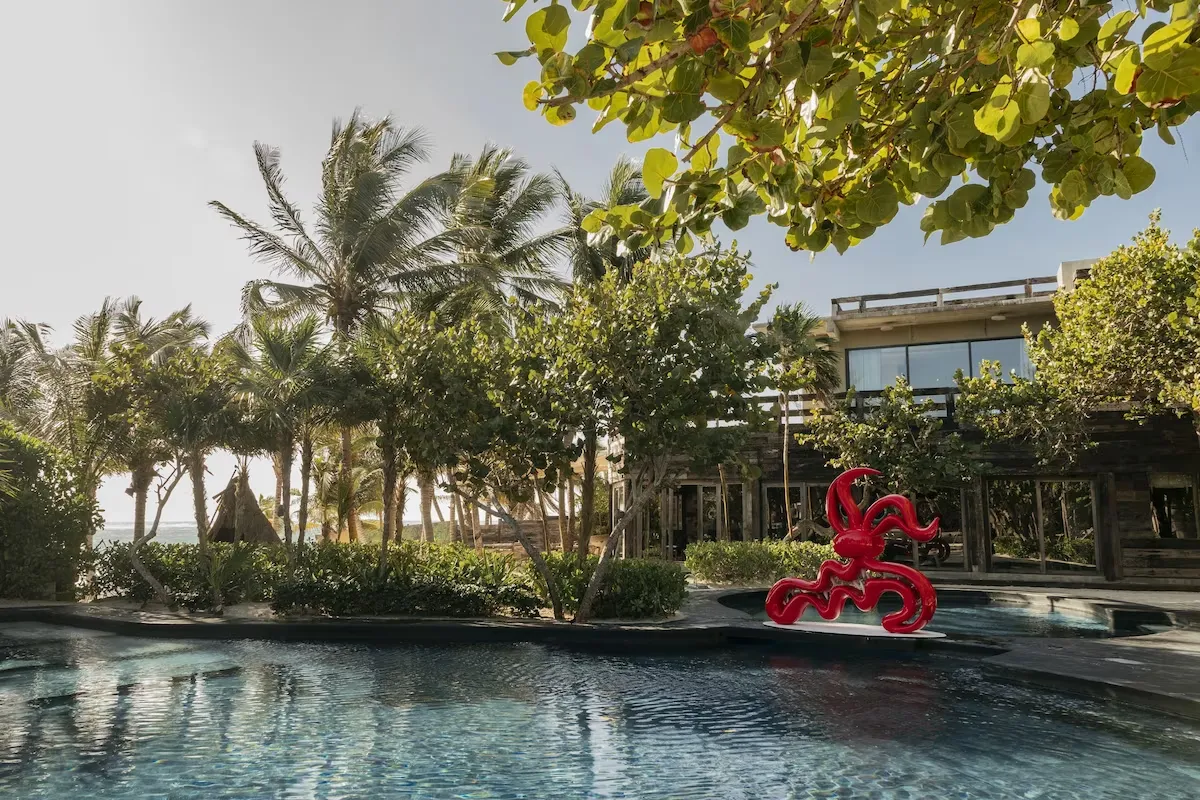
The lobby alone is worth the visit. A KAWS Companion (Passing Through) sculpture sits hands over its head against a curtain of antique wedding dresses cut and stitched into floor-to-ceiling drapes. A three-seater antique sofa floats suspended in mid-air under a skylight in a cube of purple velvet. The juice bar is wallpapered floor to ceiling in a Keith Haring print. Out by the main pool, a larger-than-life Kenny Scharf sculpture, the so-called Scary Guy, rises between the two pools and serves as the hotel's most photographed object. A second pool sits underground in a dimly lit grotto for guests who want their swim in semi-darkness.
The Rooms
Of the seventy-one suites, the original mansion contains the Master Suites, each decorated with one-of-a-kind artworks chosen specifically for the room. The newer buildings hold the rest, no two alike, some with private patios in the gardens, some opening directly onto the pool, some with feet-on-sand access to the beach. The standards are floor-to-ceiling windows, sustainable bamboo linens by Kassatex, original artwork in every room, and the kind of eclectic vintage furniture, baroque chairs and modernist sofas in unlikely combinations, that Lio Malca has been collecting alongside the art for thirty years. The two Malca Suites at the top of the range are the ones to ask for: one has a rooftop terrace overlooking the jungle, the other commands the long view of the beach and pools.
Food and Drink
There are two restaurants. Filosofía runs the lighter, more vegetable-leaning end of Mexican cooking, all chalked-up specials, communal sofas and reclaimed wood, with chef Jonathan Carbajal in charge. Ambrosía handles the seafood side, fresh fish ceviche, grilled octopus, the catch of the day handled with the simplicity good fish deserves. The bar pours strong margaritas and the kind of mezcal list that takes a while to read.
Wellness
Calma Spa is built into the back of the property behind locked doors and offers hot stone, Swedish, deep tissue, aromatherapy, organic facials, and a grapefruit body wrap that has become a small cult favourite. There is a sauna, steam room, jacuzzi, and cold plunge pool.
Getting There
Casa Malca is at kilometre nine and a half on the Carretera Tulum-Boca Paila, in the Zona Hotelera, with no signage at the gate, only bamboo and vegetation arranged to blend with the road. The new Tulum International Airport is roughly twenty-five minutes away by car. Cancún International is about an hour and forty-five minutes if you prefer to land at the bigger hub. Reception will arrange transfers either way.
Delek Tulum: Twenty-One Cabanas, Untreated Wood, and the Sea at Your Door
Carretera Tulum-Bocapaila KM 7, Zona Hotelera, Tulum
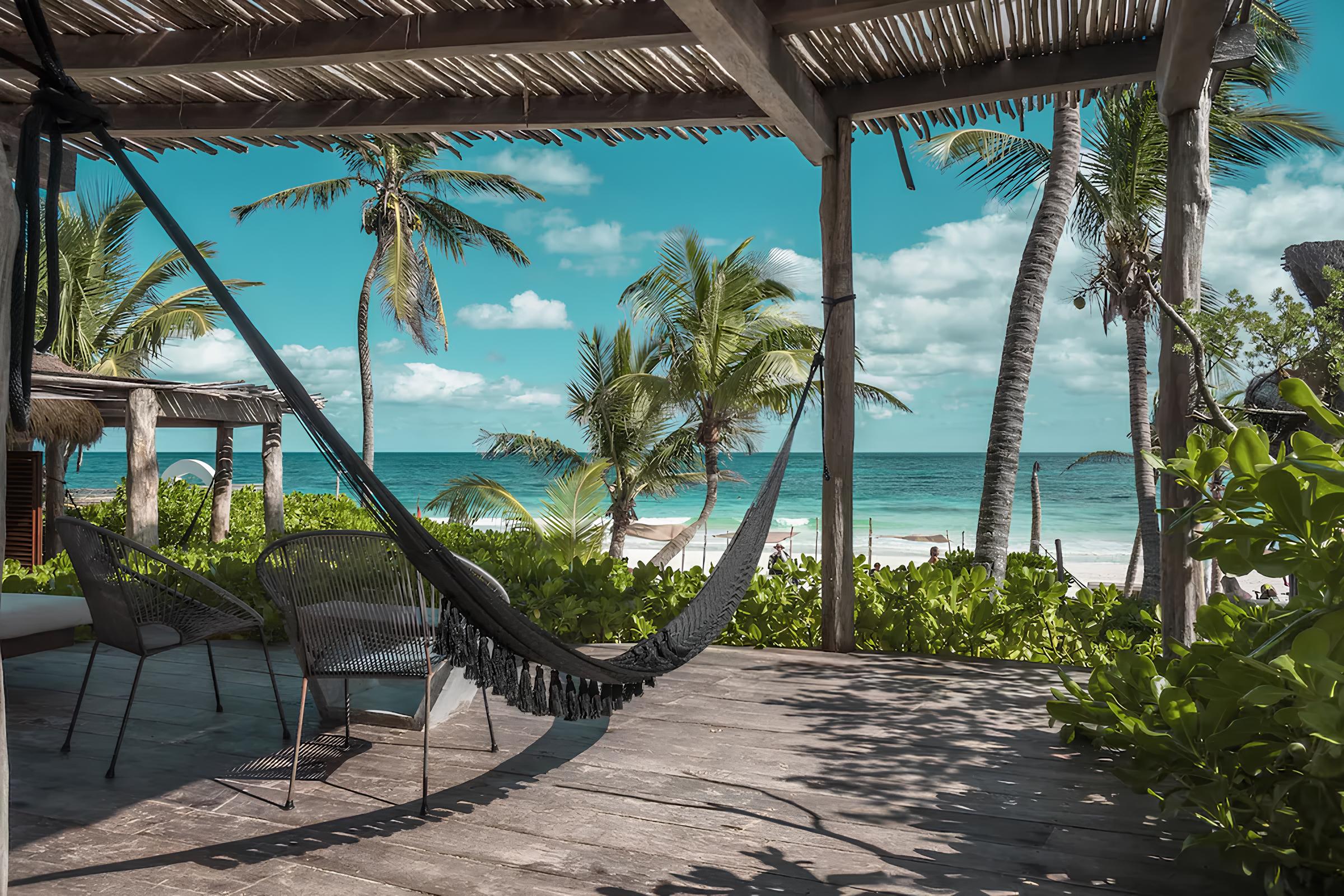
If Casa Malca is the maximalist art house, Delek Tulum is the opposite end of the same beach. Twenty-one rooms. Built almost entirely by hand. Thatched palapa roofs, untreated local wood, hand-woven hammocks on every terrace, and a deliberate ceiling on size that the owners have refused to break for almost a decade.
The Story
The hotel takes its name from the Tibetan greeting Tashi Delek, which translates roughly as "may infinite blessings be on your path". The phrase appears at the bottom of every reply the management writes on TripAdvisor, signed off by hotel manager Thalia Plascencia, and it sets the register of the place. This is Tulum as it used to be talked about: laid back, quiet, run by people who care more about the integrity of the experience than about scaling it up. The structures were built using sustainable construction methods to maintain stability in the dunes, capped at the local twelve-metre limit, and the on-site water comes from the underlying aquifer through the property's own well and reverse osmosis plant.
The Design
What you notice first is what is missing: there is no concrete, no marble lobby, no gleaming check-in desk. The cabanas are timber-framed, palapa-roofed, hand-built. Inside, the furniture is made by Mexican artisans to spec for the hotel: cement-cast bath tubs in some rooms, organic cotton linens, mosquito-net canopies over the beds. Bluetooth speakers, free purified water, and organic bath products in every room. The whole property reads like a single coherent piece of work rather than a collection of styled rooms.
The Cabanas
There are six categories. Standard Rooms at the back of the property, near the parking and the temazcal area, with small private terraces. Garden View Cabanas, around thirty-four square metres, with hammock terraces. Partial Ocean View Cabanas of around thirty-five square metres, sitting in the treetops with daybed and hammock terraces. Garden View Suites at forty-six square metres, expanding the layout. Master Suites of around fifty-eight square metres with walk-in showers and rustic bath tubs. At the top of the list sits the Master Suite Oceanfront Beach Terrace, sixty-two square metres of cabana with twin vanities, two walk-in showers, a rustic tub, and a private terrace facing straight at the sea.
Food and Drink
The kitchen runs on open-fire cooking and small plates designed to be shared, the Mexican way of eating that flatters the local seafood. Ceviche, grilled octopus in house marinades, prawns the size of small lobsters. Breakfast is included for guests and lands somewhere between Mexican and California-clean. The location also puts you within walking distance of the most coveted reservations on the strip: Hartwood, Gitano, RosaNegra, Taboo.
Wellness
There is a beachfront yoga area that runs morning sessions on the sand, a temazcal at the back of the property for traditional Maya purification ceremonies, a small spa offering massages, and bicycle rental for the ride into town or down the beach road.
Getting There
Delek sits at kilometre seven on the Carretera Tulum-Bocapaila, slightly closer to town than Casa Malca and in the heart of the Zona Hotelera. Tulum International Airport is about twenty-five minutes by taxi, Cancún International around an hour forty. The hotel can arrange transfers. A note worth knowing: the surrounding stretch of beach has become loud after midnight thanks to the neighbouring beach clubs, and Delek itself is honest about it. If you sleep light, ask for a room at the back.
Hotel Muaré: A 2024 ArchDaily Nominee Built Around 450 Trees
Calle Poniente 7, La Veleta, Tulum
Inland from the beach strip, in the residential La Veleta neighbourhood that has become the design-driven alternative to the Zona Hotelera, Hotel Muaré is the building that explains why the conversation about Tulum design is not over. It opened in 2022, was designed by Taller de Arquitectura Viva (TAV) under principal architect José Edeza with Freddy Arredondo, and was nominated for the 2024 ArchDaily Building of the Year. It is also one of only three properties in Mexico recognised by Healing Hotels of the World.
The Architecture
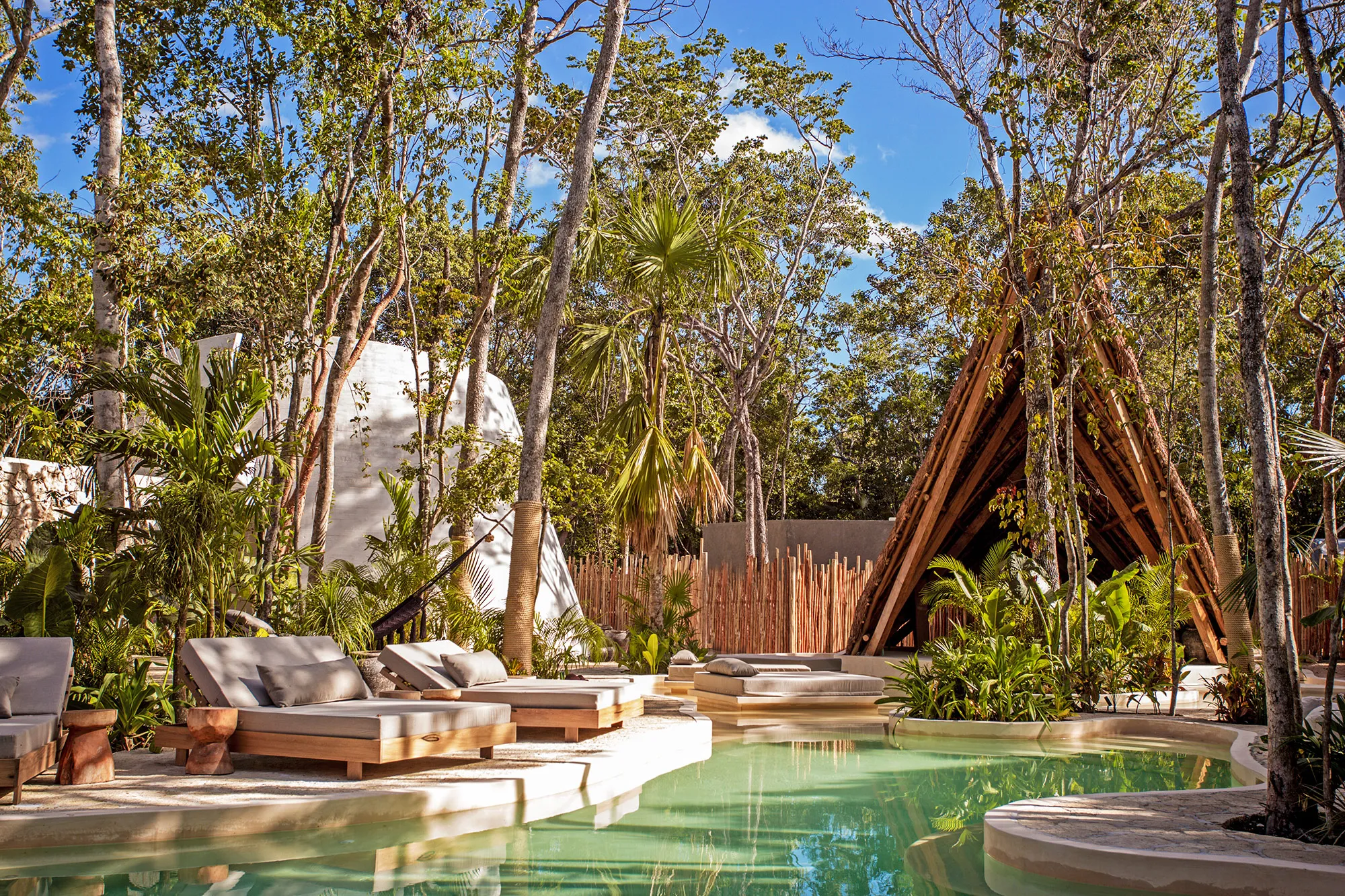
There are twenty-six villas. They are arranged in circular and nonagonal structures, each villa nested inside a palapa cut at sixty and forty-five-degree angles. The geometry is not decorative: it is what allows the buildings to keep their footprint small while opening generously onto the surrounding gardens. The hotel was constructed around more than four hundred and fifty native trees, none of which were felled. Pathways wind around chit palms, bromeliads, and chicozapote.
The walls are coated in chukum, the same vegetable-resin stucco that the Maya used to waterproof their cisterns a thousand years ago. The floors are limestone. The wood is regional, the weaving is henequen, and the orientation of each villa was set according to astronomical patterns the Maya used in Uxmal and Palenque. The result is a hotel that is unmistakably contemporary in its lines and unmistakably Maya in its logic.
The Villas
Each of the twenty-six villas opens directly onto a private garden with its own plunge pool, available heated or cold on request. The signature room is the Deluxe Muaré Suite, eighty square metres, with a king bed, a daybed, and a semi-exterior shower that puts you in conversation with the canopy while you are washing your hair. Air conditioning is provided but mostly unnecessary thanks to the passive ventilation built into the architecture. Mini-bar, healthy snacks, twenty-four-hour security, room service, the hotel is also pet friendly with extra charges.
Food and Drink
The restaurant is Gaudea, where the kitchen runs on a Mediterranean and Mexican crossover menu, open-air, calibrated to the kind of guest who does not want to drive somewhere for dinner. Breakfast is included and is delivered to the villa for guests who prefer to start the day inside their private garden. The mixology bar takes an inventive line on local spirits, mezcal in particular.
Wellness
This is where Muaré earns its Healing Hotels recognition. The Healing Center includes a therapeutic ice bath, jacuzzi, steam room, and massage cabins offering Maya clay massages and hot stone rituals. There is a yoga shala, sound therapy on offer, a ceremonial fire circle, and quiet nooks scattered through the gardens for meditation. The hotel runs morning yoga with an instructor named Andy who has become something of a fixture for repeat guests.
Getting There
La Veleta is the residential district between the beach zone and the town centre, equidistant from both. Five minutes by car or fifteen by bike to the Caribbean Sea, ten minutes to the archaeological ruins, fifteen to the cenotes. The hotel runs a free shuttle to the beach on a scheduled timetable, and bicycles are free for guests in some villa categories. Tulum International is around twenty minutes by car, Cancún International around an hour and a half. The hotel is adults only, eighteen and up.
Chablé Maroma: The Riviera Maya Alternative for Travellers Done with Tulum
Reserva de Punta Maroma, Riviera Maya, Quintana Roo
For everyone who has read the previous three sections and concluded that they do not want to deal with Tulum at all, Chablé Maroma is the answer. It sits forty-five minutes north of Tulum and thirty-five minutes south of Cancún International Airport, on a kilometre-long stretch of Maroma Beach that has been listed for years among the best beaches in the world. The hotel opened in 2018 after eight years of development, the second property of the Chablé brand whose Yucatán flagship had already become a benchmark for design-driven Mexican hospitality.
The Architecture
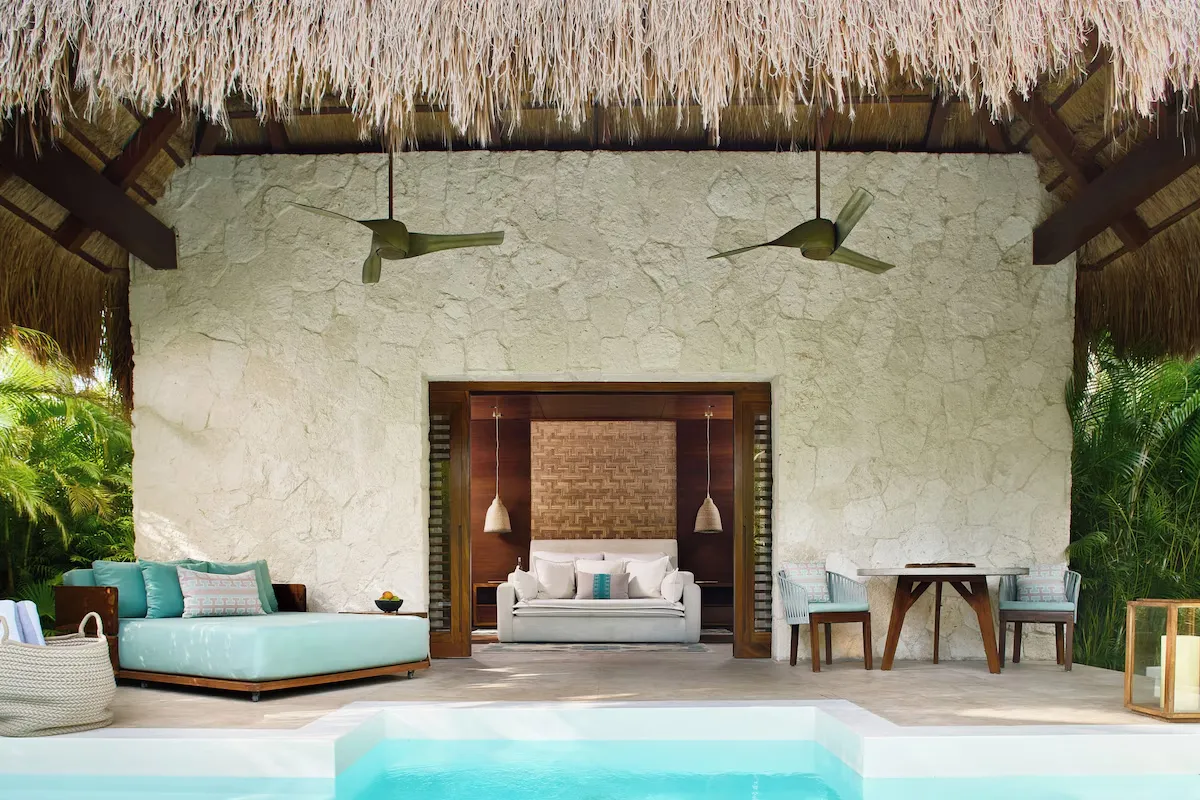
The casitas were designed by Mexican architect Javier Fernandez, the interiors by Paulina Morán, the same designer responsible for Chablé Yucatán and Hotel Esencia further north. Morán is the most influential interior architect working in this part of Mexico, and her signature, raw and refined at the same time, modernism softened by local craft, is on full display here.
There are seventy free-standing villas across the property. They were built on pillars to leave the underlying vegetation untouched, which is why you can walk between them through actual mangrove rather than landscaping. The protected chit palms that grow on the site were preserved and are now cultivated internally. The materials are local: xucan stone, marble, quarried stone, regional wood. The hotel runs its own reverse osmosis plant, uses biodegradable amenities, bamboo pens and key cards, and maintains a roughly three-staff-to-one-villa ratio which is among the highest in Mexican hospitality.
The Villas
The categories run from Serenity Pool Villa at the entry level, through the Treetop Pool Villa and Treetop Double Pool Villa elevated on the second floor with canopy views, the Jungle Pool Villa for guests who want to be deeper in the vegetation, up to the three-bedroom Presidential Villa and the Royal Villa at the top of the rate card. Every villa, without exception, has a private heated plunge pool, an outdoor terrace, a king bed, the brand's signature moon shower, and a freestanding stone bath tub that looks as if it had been carved from the rock face. Floor-to-ceiling windows in every direction. The bathrooms have indoor-outdoor jungle showers, marble sinks, and the kind of glass panels that, as a previous reviewer noted, make it almost impossible to take a bad photograph.
Food and Drink
Chablé's culinary programme is run under the direction of celebrated Mexican chef Jorge Vallejo, of Mexico City's Quintonil fame, currently one of the most decorated chefs in Latin America. There are three restaurants on the property. IXIM is the upscale Mexican kitchen and the headline room. The Seafood Bar sits directly on the beach for laid-back lunches and grilled fish. The third option handles the casual all-day side. There is also a serious cooking programme on offer: classes with the Chi Chis, the Maya grandmothers from the surrounding villages, who teach the traditional Yucatecan dishes the way they were learned at home. Cacao bean to chocolate bar workshops. Tortilla making. The kind of cultural depth a beach resort rarely commits to.
Wellness
The Chablé Maroma Spa runs to seventeen thousand square feet and is built around treatments inspired by Maya tradition: temazcal ceremonies, herbal rituals using ingredients from the on-site garden called the canche, full holistic programmes that align with the brand's wellness positioning. There is a beachfront infinity pool, a yoga pavilion, a fitness centre. The spa team can also organise a conch-blowing ceremony on the beach at sunset for the guests who want it.
Getting There
Chablé Maroma is on the Reserva de Punta Maroma, signed only by a discreet dirt track off the main highway. Cancún International Airport is the smart arrival point, thirty-five minutes by car. The hotel arranges all transfers. Tulum is about forty-five minutes south if you want to combine a trip. Children are welcome here, unlike at the other three properties on this list, though the overall atmosphere is decidedly grown-up.
How to Choose Between Them
The four are different enough that the choice almost makes itself once you know what you are after. Casa Malca is the destination if contemporary art is the reason you travel and you are willing to pay for a property that doubles as a private collection on view. Delek Tulum is the choice for travellers who want the original Tulum register, hand-built, untreated, twenty-one cabanas only, with the sea at the door and Hartwood ten minutes' walk away. Hotel Muaré is the architecturally serious option, set inland in La Veleta, the right answer if you care about the building you sleep in and want the wellness side handled by professionals. Chablé Maroma is the alternative for travellers who have read enough about Tulum to know they would rather skip it, want a serious chef, a serious spa, and a beach that has been protected from the worst of the development.
Combining two of them works well. Two or three nights at Chablé Maroma to land softly, then three at Hotel Muaré or Delek to get the Tulum part of the trip done. Or, if you want the full design spectrum, Casa Malca and Hotel Muaré in sequence and skip the rest. None of these properties accept group bookings of the kind that ruin smaller hotels, and three of the four are adults only, which sets the tone for what kind of stay you are signing up for.
Frequently Asked Questions
| Is Tulum still worth visiting in 2026? | Yes, with an asterisk. Tulum has changed dramatically since 2019, with prices up sharply, more crowds in high season, and an active beach club scene that runs late into the night along parts of the Carretera Tulum-Boca Paila. The natural attractions, cenotes, the Maya ruins, the white-sand beaches, are unchanged. The right hotel, away from the loudest stretch of the beach road, still delivers the experience the city was originally famous for. Travellers who want a quieter version of the Caribbean coast should consider Maroma Beach further north or the Sian Ka'an Biosphere to the south. |
| What is the best month to visit Tulum? | November through April is the dry season and the optimal travel window, with daytime highs in the high twenties Celsius, low humidity, and minimal rain. December through February is peak season with the highest rates and most demand. May, October, and early November are shoulder months that often offer the best balance of weather and price. The summer months from June to September are hot, humid, and prone to afternoon rains, with September overlapping the hurricane season's peak. |
| How do I get to Tulum from the airport? | Two options. Tulum International Airport opened at the end of 2023 and is roughly twenty to thirty minutes from the hotel zone. Cancún International Airport is the larger and better-connected hub, about an hour and a half from Tulum by car. Most luxury hotels arrange private transfers, which is the recommended approach. The Tren Maya also now connects Cancún and Tulum, and has stations at both airports. |
| What does a luxury hotel in Tulum cost per night? | Rates at the four properties on this list typically run between roughly two hundred and seven hundred euros per night in low season and climb significantly higher in peak weeks around Christmas, New Year, and Easter. Chablé Maroma sits at the top of the range. Delek Tulum is the most accessible. Breakfast is generally included in the rate. Dinner at on-property restaurants typically costs between forty and one hundred euros per person before drinks. |
| Is Tulum safe for travellers? | The hotel zone, the archaeological zone, and the design districts in La Veleta and Aldea Zama are broadly safe. Standard precautions apply: use registered taxis or hotel transfers, avoid walking the beach road alone late at night, and do not leave valuables unattended on the sand. Travellers should follow news from their own foreign affairs ministry on the wider region, which has had isolated security incidents related to organised crime, though tourist areas have generally not been targeted. |
| Can I visit cenotes from Tulum? | Yes, and it is one of the strongest reasons to come. The Yucatán Peninsula sits over the largest underground river system in the world, and the cenotes, the natural sinkholes the Maya considered sacred entrances to Xibalbá, are within thirty to sixty minutes of Tulum. Gran Cenote, Cenote Calavera, Dos Ojos, and Cenote Azul are among the most visited. Any of the hotels on this list will arrange a private guide. |
| What is the difference between staying in the Tulum hotel zone and staying in La Veleta? | The hotel zone, on the Carretera Tulum-Boca Paila, gives you the beach at your door but exposes you to the noise and traffic that has come with Tulum's growth. La Veleta, where Hotel Muaré is located, sits inland in a residential district and is quieter, greener, and more design-driven, with shuttle access to the beach. The trade-off is that you are not waking up to the sound of waves. For first-time visitors who came specifically for the Caribbean, the hotel zone makes sense. For repeat visitors and design-focused travellers, La Veleta is increasingly the smarter base. |
| Are these hotels suitable for families with children? | Of the four, only Chablé Maroma is fully family-friendly. Casa Malca accepts families but the overall register skews adult. Delek Tulum and Hotel Muaré are adults only, eighteen and over. Travellers with young children should also factor in that most luxury properties in Tulum involve sand paths, jungle access, and limited stroller-friendly infrastructure. |