The Urban Luxury Code: Milan vs. Berlin
How four definitive European addresses are redefining sophisticated city breaks through design and local culture.
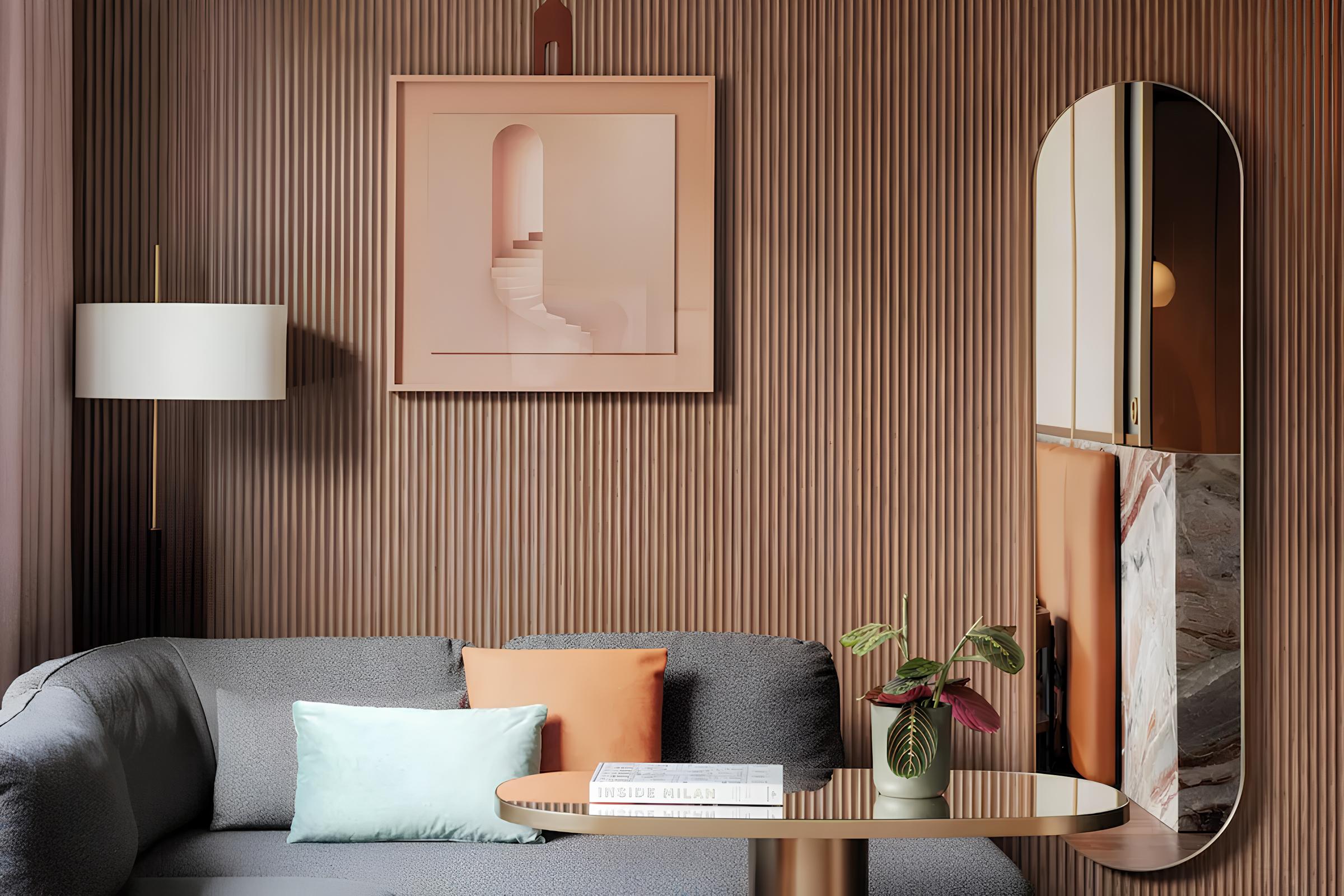
The luxury city break has fundamentally changed. The modern traveler no longer just needs a quiet, well-located place to recover from sightseeing. They demand a cultural synapse, a destination that accelerates, rather than isolates, their experience of the city.
This is the era of the Third Space. The most sought-after hotels today are not just five-star addresses; they are the new social engines of the city. They are galleries, literary haunts, gastronomic theaters, and the exclusive, beating heart of the local creative and financial elite.
We examine two of Europe’s defining luxury battlegrounds, Milan and Berlin, through the lens of four properties that embody this shift. This is a study in contrasts, linking Milanese elegance with Berlin’s radical design vision, proving that the hotel is the new cultural curator.
Why Now: The Post-Pandemic City Renaissance
The desire for the Third Space emerged from the pandemic. After years of isolation, travelers seek hotels that offer communal energy without sacrificing privacy. They want design that inspires and local scenes that integrate. Milan, with its fashion and finance focus, and Berlin, with its art and architecture drive, are leading this renaissance by making their boutique hotels the new anchors of sophisticated social life.
Milan – The Art of Effortless Sophistication
Milanese luxury is subtle. It’s defined by the perfection of a single garment, the texture of a passeggiata, and the quality of the crowd that gathers after dusk. The Third Space here is about access, aesthetic fluency, and perfect discretion.
The Design Magnet: ME Milan Il Duca
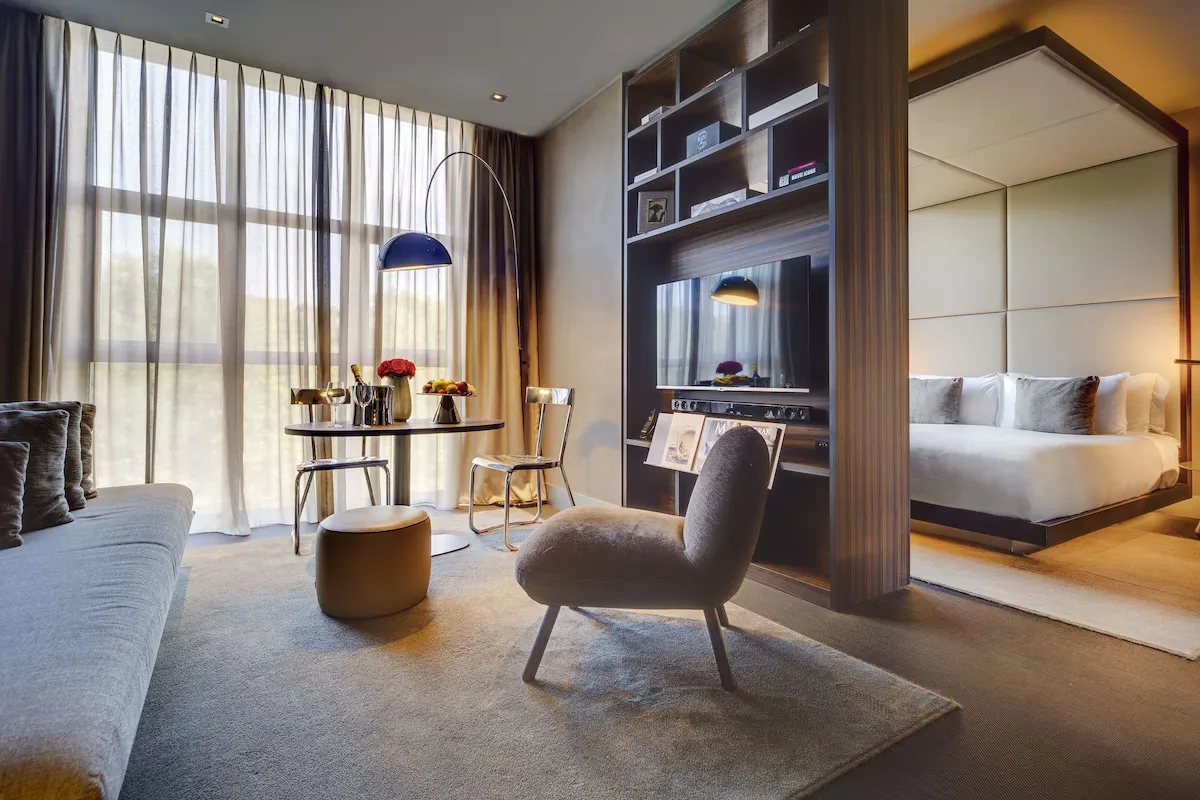
If Milan is the capital of effortless design, ME Milan Il Duca is its perfect embassy. Situated strategically between the financial pulse of Porta Nuova and the artistic flair of Porta Garibaldi, this hotel functions as a social nexus for the city’s most interesting crowd.
The crucial Third Space is the Radio Rooftop Bar. This is not merely a bar with a view; it’s a meticulously curated social stage. The Milanese don’t frequent it just for the panorama over the skyline; they go to see and be seen by the design community, the models, and the architects who define the city’s next season. The view is simply the backdrop for the real spectacle: Milan’s sophisticated nightlife. The hotel provides the immaculate atmosphere, but the local elite provide the exclusive energy, a seamless blend of insider status and high design.
The Residential Secret: Casa Brera
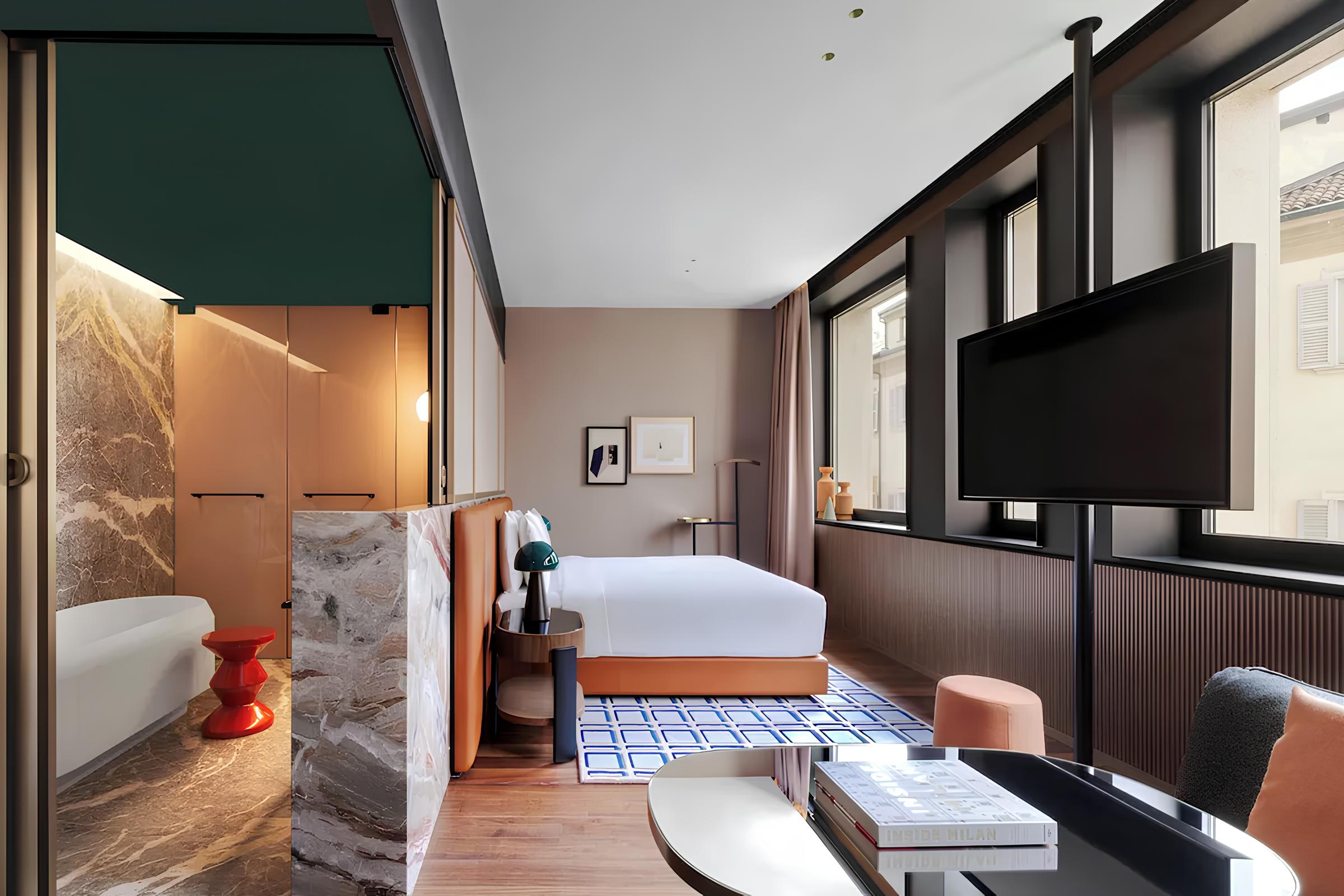
The counterpoint to Il Duca’s dynamism is Casa Brera. This hotel embraces the trend of "Homed-Living" (Vivere come un Locale di Lusso), offering a suite-only experience tucked away in the historic, artistic Brera district.
Its Third Space is defined by radical discretion and intimacy. The property’s small scale and limited common areas give guests the ultimate luxury: the feeling of owning a piece of Milan’s most coveted neighborhood. There is no loud lobby performance here. Casa Brera acts as the ultimate Curator's Retreat, providing a serene, design-forward base from which to immerse oneself in the city’s cultural heart without the usual fanfare. The true communal space is the lively piazza outside and the quiet artisanal workshops nearby.
Berlin – The Architecture of Ambition
Berlin’s luxury scene is less about showing off and more about knowing. It’s defined by architectural narratives, historical weight, and a fiercely independent artistic spirit. The Third Space here is about intellectual weight and subterranean cool.
The Diplomatic Statement: SO/ Berlin Das Stue
Housed in the former Royal Danish Embassy in the exclusive Tiergarten district, SO/ Berlin Das Stue immediately establishes its authority. This hotel isn't merely luxurious; it is an institution, linking Berlin's diplomatic past with its hyper-modern present.
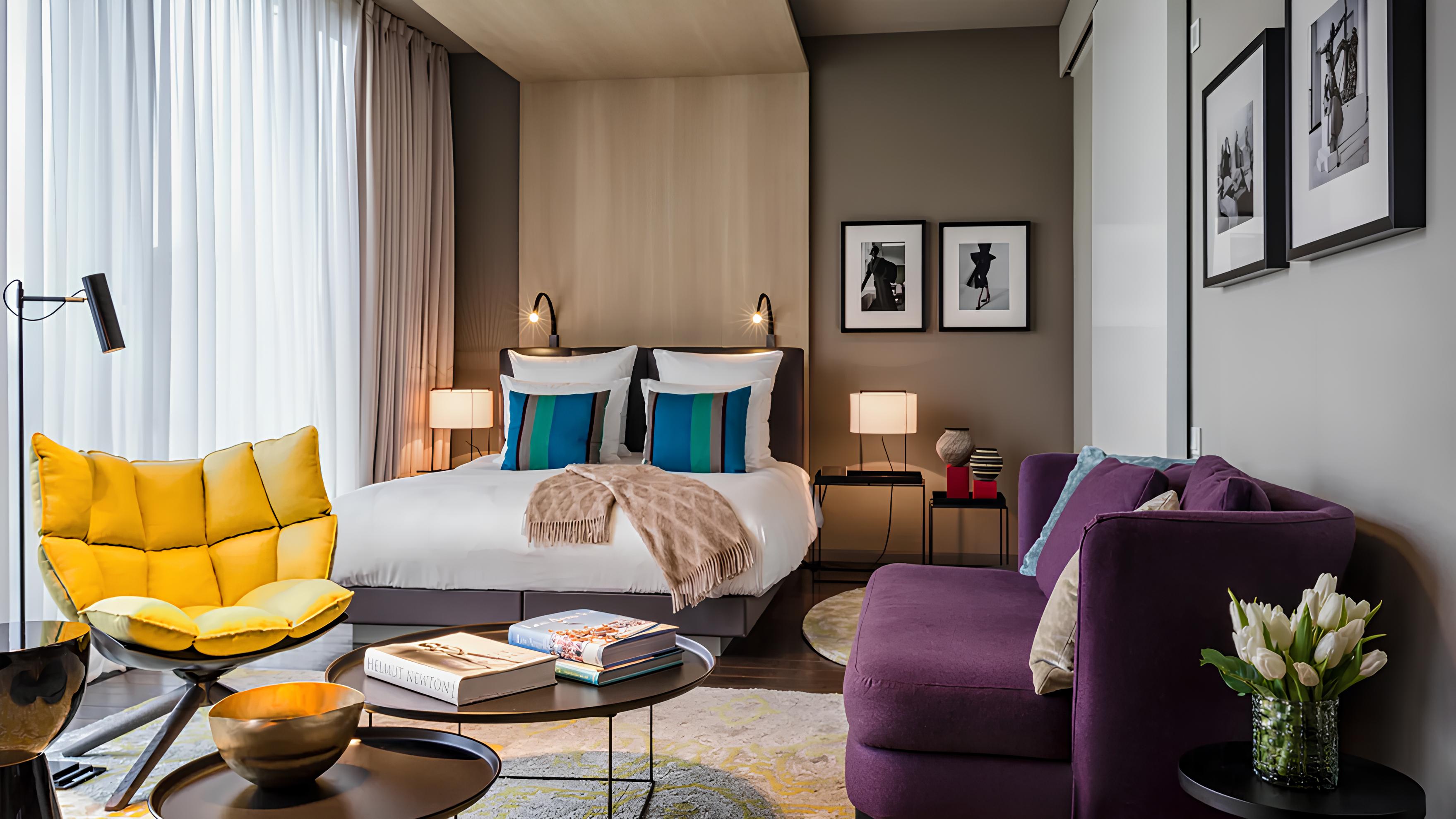
Das Stue’s Third Space is its intellectual sophistication. The interiors, designed by the Spanish star Patricia Urquiola, are warm yet minimalist, filled with an extraordinary collection of contemporary art and historical books. The common areas feel less like a hotel and more like a collector’s private home. The bar and restaurant attract Berlin's gallery owners, writers, and politicians, drawn by the blend of high design and genuine historical significance. It is the perfect blend of German precision and international flair, functioning as a sophisticated meeting point where serious, quiet conversations are the only required performance.
The Artistic Revival: Château Royal
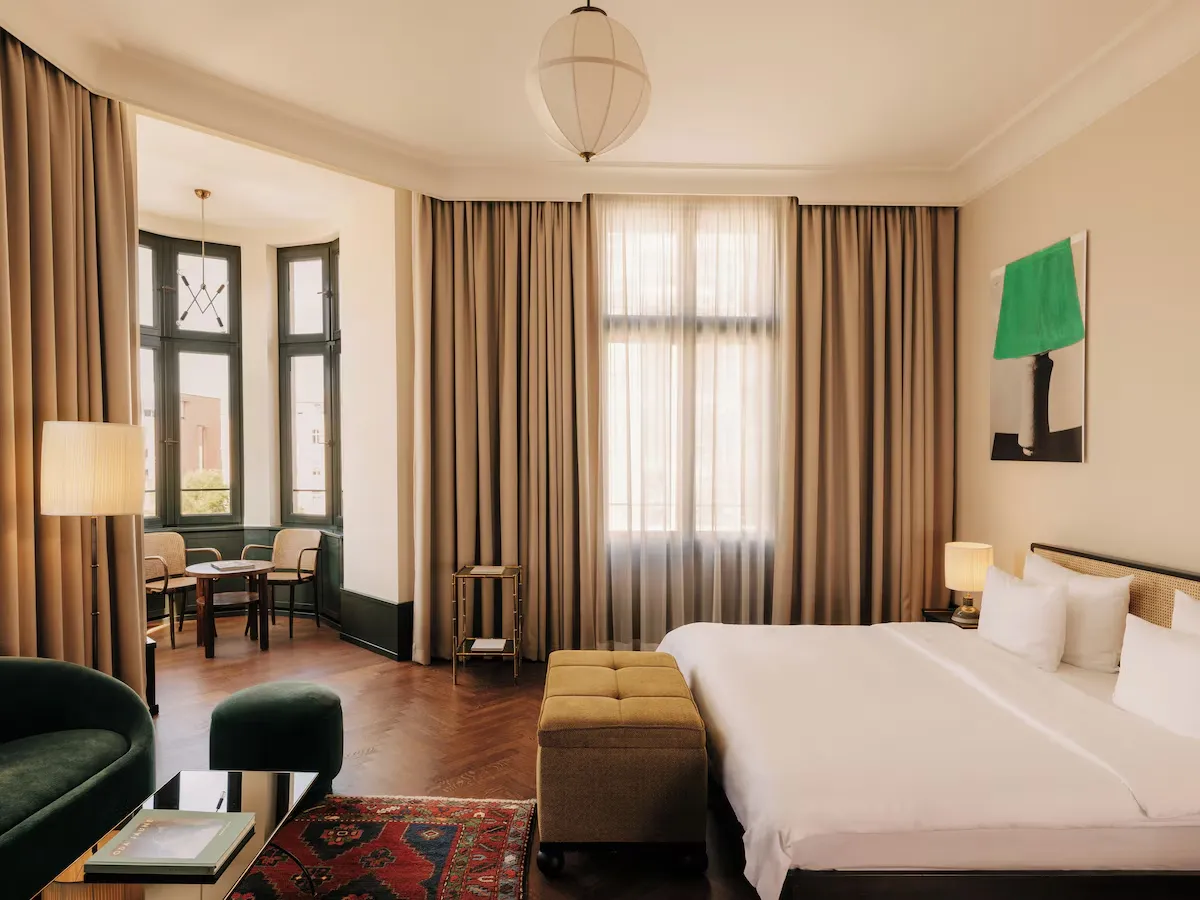
Château Royal is the new enfant terrible of Berlin’s luxury scene, situated in a beautifully restored historic building in Mitte. While Das Stue is established, Château Royal is kinetic, channeling the city’s current artistic and culinary renaissance.
This hotel’s Third Space is fundamentally about Art and Gastronomy. It hosts a permanent and rotational exhibition of contemporary art, effectively making the hotel a working gallery. Crucially, its multiple dining venues, led by renowned chefs, have become destinations in their own right, drawing Berlin’s demanding food critics and artists. The atmosphere is stylish, unpretentious, and constantly evolving. Staying here is like having an all-access pass to the most exciting new developments in German art and fine dining, making the entire property feel like an exclusive club membership.
The New Rules: The Geometry of Connection
The ultimate luxury of this European Grand Tour is the ability to seamlessly transition between these contrasting worlds. These properties prove that the hotel experience must now be a gateway, not a barricade.
| City | Third Space Focus | Defining Cultural Connection | The Emotional Payoff |
| Milan | Aesthetic Access | Design, Finance, and High Fashion (ME Il Duca). | The sense of belonging to an exclusive, fashionable circle. |
| Berlin | Intellectual Weight | Art, Diplomacy, and Culinary Innovation (Das Stue, Château Royal). | The feeling of engaging directly with history and radical creativity. |
These hotels are the essential curators of their respective cities. They prove that true luxury is not about isolating the guest, but about acting as the perfect, design-forward lens through which to experience the city's highest culture, deepest design secrets, and most vibrant social life.
Curator’s Notes: Essential Takeaways for the Discerning Traveler
-
Design Dialect: Notice the distinction: Milan (smooth, glass, lighting accents at ME Il Duca) uses design to signal wealth and visibility. Berlin (heavy wood, historical bones, abstract art at Das Stue) uses it to signal intellectual depth and privacy. The journey itself is an education in European aesthetics.
-
The Power of the Local Test: These properties pass the ultimate luxury metric: they are destinations for the locals. If you see more Milanese designers than American tourists at the rooftop, and more Berlin gallery owners than travelers at the bar, you know your choice is impeccably curated.
-
The Brera Advantage: For Casa Brera, the key is its intimacy. Secure your booking well in advance. Its small scale is the luxury; spaces are limited, making it feel truly exclusive.
-
Art Access in Berlin: Always check the current art exhibition schedule at Château Royal and the permanent collection at Das Stue. They offer access to world-class art often before it hits the major galleries.