The New Chinese Luxury: Beyond the Fusion Cliché
Three design hotels redefining luxury hospitality in China
The PuLi Shanghai, Capella Shanghai, and Six Senses Qing Cheng Mountain represent a turning point in Chinese luxury hotels. These three properties have abandoned the imported European codes that defined high-end hospitality in China for decades. Instead, they draw on Chinese materials, Chinese craftsmanship, and Chinese philosophy to create something the country's hotel industry had long lacked: design hotels in China that actually feel Chinese.
The lobby floor at The PuLi is made of gold bricks. Not gilded, not gold-coloured. Actual jin zhuan, fired in the imperial kilns of Suzhou using techniques that date to the Ming Dynasty. You walk across them without knowing, which is rather the point. The hotel never mentions it. There is no plaque, no explanation for guests who might photograph their feet against the grey surface. The bricks simply exist, doing what they have done for six hundred years: absorbing sound, regulating temperature, aging gracefully.
This small detail tells you everything about what has changed in luxury hospitality in China. For decades, luxury meant importing European codes wholesale. Crystal chandeliers. French cuisine. Staff trained to replicate Western service standards with robotic precision. The result was technically impressive and spiritually hollow, hotels that could have been anywhere, which meant they were nowhere.
Walk through the lobbies of Shanghai's five-star towers from the early 2000s and you will find marble quarried in Italy, furniture shipped from France, art purchased at auction in London. The aesthetic announced wealth without revealing taste. It suggested that Chinese guests, newly enriched, required European validation to feel they had truly arrived. The implication was insulting, and eventually the market noticed.
The three properties in this guide represent what comes next. The PuLi's gold bricks. Capella Shanghai's shikumen townhouses. Six Senses Qing Cheng Mountain's Taoist wellness traditions. Each makes a quiet argument that Chinese luxury need not be Western luxury with Chinese characteristics.
This matters beyond aesthetics. As China's domestic travel market matures, discerning travellers increasingly resist the implication that sophistication requires looking West. They want hotels that understand where they are, hotels rooted in place rather than transplanted from elsewhere. International guests, too, have grown weary of homogenised luxury. They travel to China seeking China, not a facsimile of what they left behind.
What follows is not a ranking. Each hotel serves different purposes, different travellers, different moods. The PuLi offers urban refuge for those who need Shanghai close but quiet. Capella Shanghai transforms history into residence for those who want to live briefly in another era. Six Senses Qing Cheng Mountain provides spiritual reset for those seeking mountain air and ancient wisdom. Together, they sketch the outline of what the best hotels in China might become when the industry stops apologising for itself.
The PuLi Hotel and Spa, Shanghai
Location: Jing'an District, Shanghai | Rooms: 229 | Style: Urban resort, minimalist Chinese design
The name translates roughly as "precious unpolished jade," a phrase that captures The PuLi Shanghai's philosophy better than any marketing copy could. In Chinese aesthetics, unpolished jade carries more value than its refined counterpart. The imperfections are the point. They suggest potential, authenticity, a refusal to conform to external standards of perfection.
The PuLi opened in 2009 in Shanghai's Jing'an District, overlooking the greenery of Jing'an Park, and immediately distinguished itself by refusing to do what luxury hotels in Shanghai were supposed to do. The parent company, Urban Resort Concepts, was founded specifically to challenge imported hospitality conventions. Their manifesto: create destinations that enable travellers to connect deeply with local culture while offering the intimacy of a residential environment.
Design and Architecture
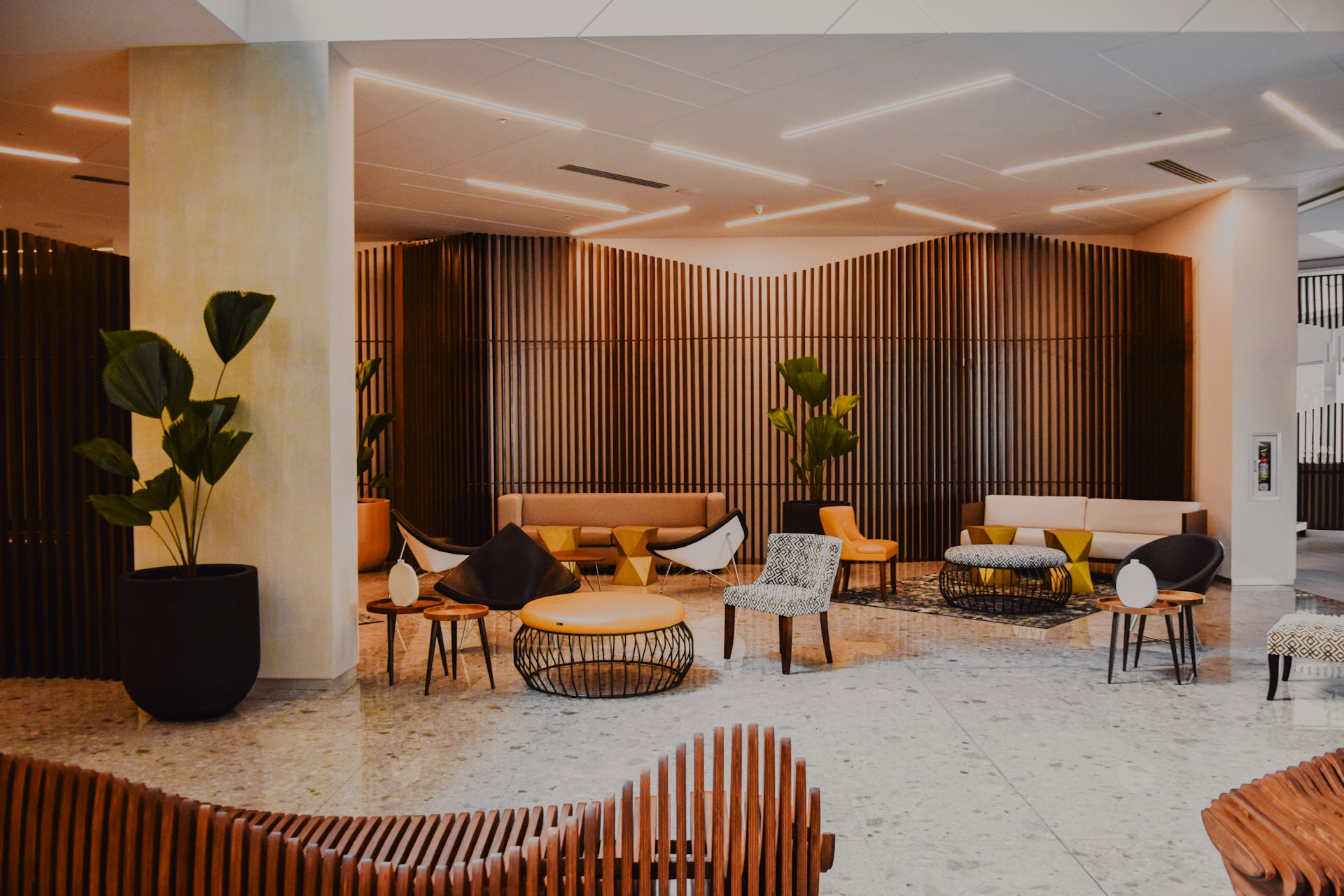
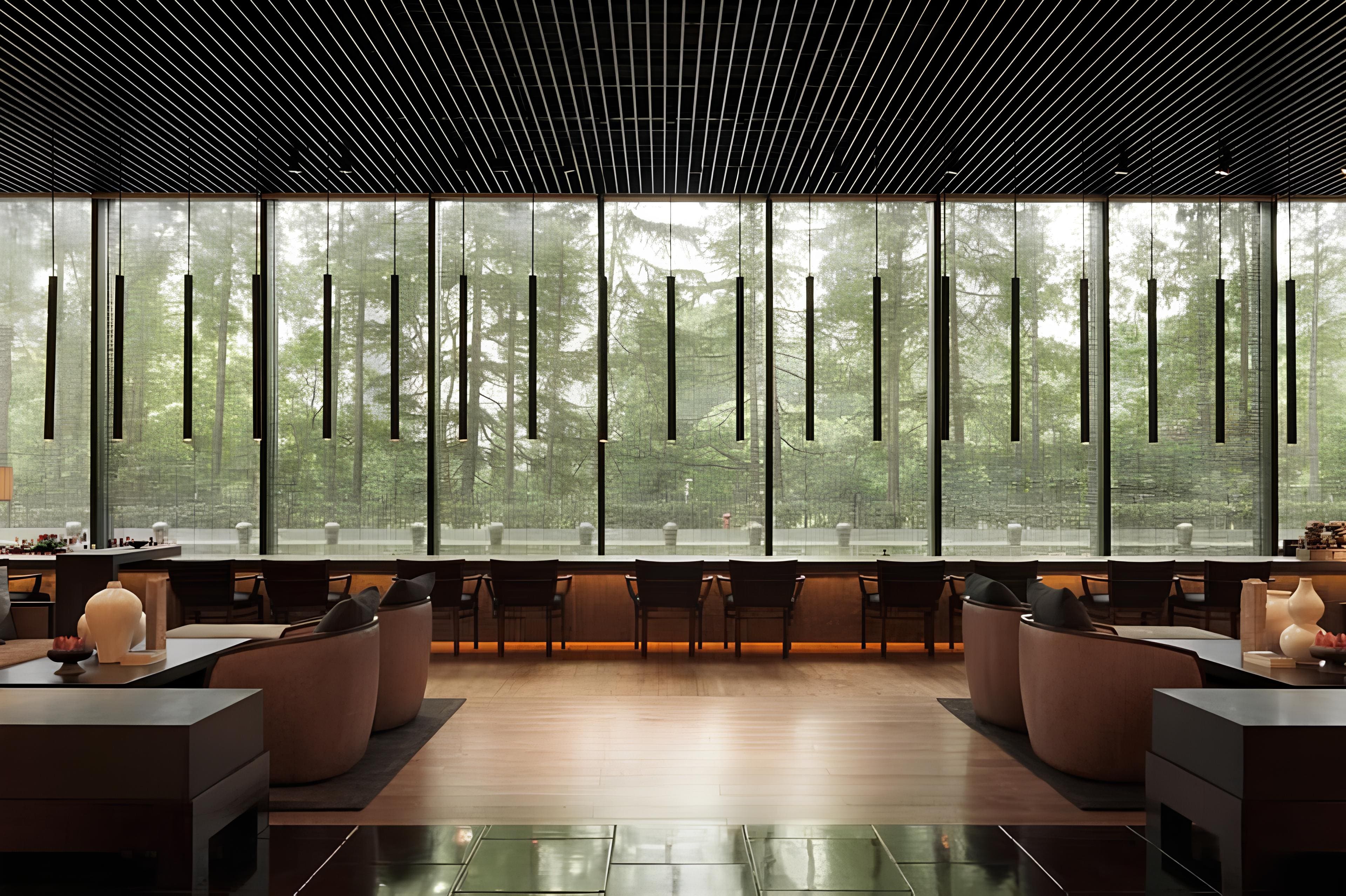
There is no grand reception desk. Melbourne-based Layan Design Group eliminated it entirely, replacing the traditional check-in ritual with a thirty-two-metre solid teak bar that spans the ground floor. Guests are greeted, seated, offered a drink, and registered while their luggage disappears upstairs. The message: you have arrived somewhere that prioritises your comfort over its procedures. The Long Bar, as it came to be known, turned a functional necessity into Shanghai's most talked-about hotel feature.
The design vocabulary draws entirely from Chinese materials and craftsmanship:
- Dark local timbers and cast bronze throughout
- Air-dried clay tiles identical to those in Shanghai's historic temples
- Grey Shanghai brick and flamed handmade stone
- Carved timber screens referencing classical garden architecture
- Stingray leather panels above the library fireplace
- Bronze mirrors laid in patterns reminiscent of ancient warrior armour
The materials tell stories for those who care to listen. The lobby floors use waxed grey brick from the same suppliers who maintain Shanghai's historic temples. The timber screens echo the lattice work of Suzhou's famous gardens. The bronze detailing recalls techniques developed during the Shang Dynasty. None of this is didactic. The hotel provides no educational literature, no guided tours of its design features. It trusts guests to notice or not, according to their own curiosity.
Rooms and Suites
The PuLi's 229 rooms distribute across upper floors, each featuring dark wood, Han Dynasty statues, slender lamps, and sliding silk screens. Bathrooms include rain showers and deep soaking tubs with views toward Jing'an Park. The technology is current without being obtrusive, controlled through a smartphone app that manages lighting, temperature, and entertainment.
Room categories at The PuLi Shanghai:
- Deluxe Rooms: 45 square metres
- Grand Deluxe Rooms: 55 square metres
- Studios and Suites: 75-130 square metres
- Club Suites (floors 20-25): Premium service tier
The Club concept at The PuLi departs from typical executive floor conventions. Rather than a shared lounge, the hotel delivers club benefits directly to guest rooms. Twenty-four-hour GuanJia service provides a dedicated butler for each guest. Complimentary mini-bars replenish automatically. Unlimited laundry and pressing. Sweeping views across Shanghai's famous skyline.
Dining
PHÉNIX, the hotel's signature restaurant, holds a Michelin star and operates under the philosophy that "life is about the ingredients." Award-winning chef Dane Clouston presents seasonal menus built on a modular concept, allowing diners to customise dishes according to their preferences. Jing'An, the all-day restaurant, offers views across the park and an international menu with subtle Asian influences.
Spa and Wellness
The UR SPA, developed with Thai wellness group Anantara, occupies the third floor alongside a twenty-five-metre infinity pool, gym, sauna, and steam rooms. Treatments draw on Asian traditions, including chrysanthemum tea wraps, rose tea scrubs, and herbal compress massages using locally sourced ingredients.
Practical Information
The PuLi belongs to both The Leading Hotels of the World and Design Hotels. It sits five hundred metres from Jing'an Temple, twenty-five minutes from Hongqiao Airport, forty-five from Pudong. The metro station directly beneath the hotel connects guests to every district.
Capella Shanghai, Jian Ye Li
Location: Xuhui District, Shanghai | Villas: 55 | Style: Heritage shikumen, French-Chinese fusion
In the 1930s, Shanghai was the most cosmopolitan city in Asia, possibly in the world. The French Concession attracted traders, artists, and adventurers who built homes blending Parisian elegance with Shanghainese pragmatism. These shikumen townhouses, named for their distinctive stone-framed gates, lined narrow lanes where neighbours shared courtyards and gossip, where children played and laundry dried and life unfolded at human scale.
What is Shikumen Architecture?
Shikumen architecture emerged in the 1860s as Shanghai's population exploded. Developers needed housing that maximised density while preserving privacy. The solution borrowed Western row-house construction and wrapped it around traditional Chinese courtyard principles. Stone gates provided security and status. Interior courtyards brought light and air into deep, narrow lots. The result was neither purely Chinese nor purely Western, a specifically Shanghainese invention for specifically Shanghainese conditions.
Most shikumen buildings are gone now. Development consumed block after block through the 1990s and 2000s as Shanghai raced to reinvent itself. The survivors exist in protected clusters, their redbrick facades and rosewood-framed windows standing incongruously against towers of glass and steel.
The Capella Restoration
Capella Shanghai occupies one such cluster in Xuhui District, the Jian Ye Li heritage estate. Originally built in the 1930s to house foreign traders and expatriates, the compound later became residential for local Shanghainese families. When Capella acquired the site, they chose restoration over demolition.
Fifty-five villas spread across the restored compound, each a functioning piece of history transformed into accommodation. This is archaeological luxury, hospitality built on rescued time.
Design by Jaya Ibrahim
The late Jaya Ibrahim designed the interiors before his death in 2015. Ibrahim, the legendary Indonesian designer behind Aman resorts and The PuLi itself, merged classic Chinese elements with nineteenth-century French style, honouring the shikumen's hybrid origins:
- Herringbone wood floors throughout
- Painted wood panels and raw silk wall coverings
- Chinoiserie accents in muted tones
- Colour palette of warm neutrals with deep blues and burgundies
- Private courtyards, living rooms, and rooftop balconies in each villa
Villa Categories
Capella Shanghai accommodation options:
- One-Bedroom Shikumen Villas: 111-118 square metres
- Two-Bedroom Deluxe Villas: For families
- Three-Bedroom Grand Villas: Multiple levels with separate living, dining, and entertainment spaces
Each villa occupies multiple levels connected by internal stairs. Ground floors contain living and entertainment spaces opening onto private courtyards. Upper floors house bedrooms with views across traditional eaved rooftops.
Capella Culturists
Guests receive attention from Capella Culturists, staff members trained to craft bespoke experiences rather than simply fulfil requests. Culturists might arrange a private cooking lesson with a local grandmother, secure access to Shanghai's best antique markets, or organise a midnight dumpling tour through the city's oldest neighbourhoods.
Dining: Pierre Gagnaire
The culinary anchor is le Comptoir de Pierre Gagnaire, the legendary three-Michelin-starred French chef's first restaurant in mainland China. Gagnaire's philosophy of transforming simple ingredients into layered compositions finds expression in a menu that changes with seasons and sourcing. La Boulangerie provides French pastries and lighter fare throughout the day.
Auriga Spa
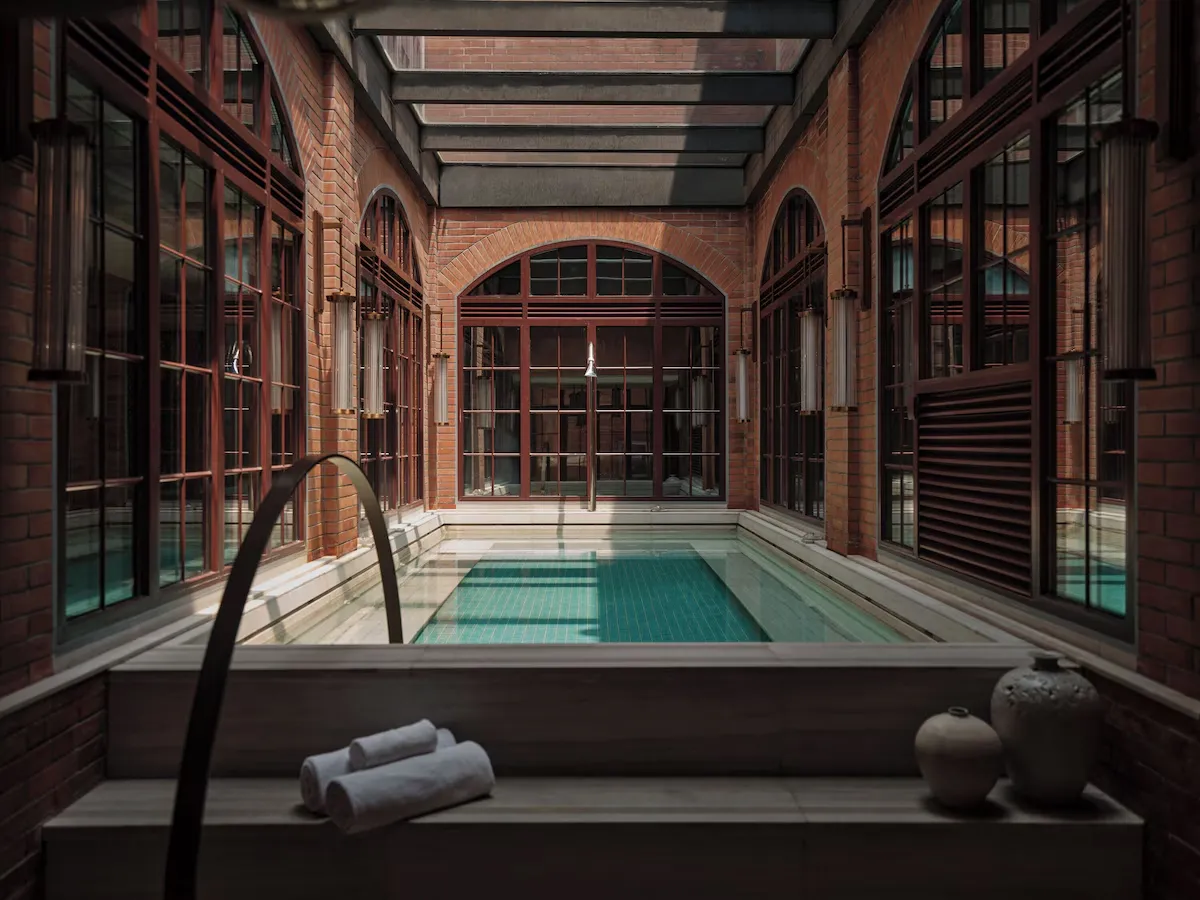
Auriga Spa draws on Traditional Chinese Wellness practices, with treatments calibrated to lunar phases. The swimming pool sits within arched redbrick walls beneath a vast skylight, the architecture itself functioning as aesthetic therapy.
Practical Information
Capella Shanghai operates year-round, though autumn brings particular magic to the lanes. Shanghai Hongqiao Airport lies thirty minutes away by car. The hotel is a member of The Leading Hotels of the World and the Global Hotel Alliance's DISCOVERY programme.
Six Senses Qing Cheng Mountain, Chengdu
Location: Dujiangyan, Sichuan Province | Rooms: 113 | Style: Taoist wellness resort, village design
Taoism was born here. Mount Qing Cheng rises west of Chengdu, its thirty-six peaks shrouded in mist more days than not, its slopes dotted with temples where monks have practiced for two millennia. According to tradition, Zhang Daoling founded religious Taoism on this mountain in 142 CE, establishing practices that continue largely unchanged today.
The mountain holds UNESCO World Heritage status alongside the nearby Dujiangyan irrigation system, an engineering marvel from 256 BCE that still functions, directing the Min River's flow through channels designed before Rome was an empire.
The Six Senses Approach
Six Senses Qing Cheng Mountain arrived in 2015, their largest property and first in China. The site sits at the mountain's gateway, sixty kilometres from Chengdu, where bamboo forests give way to sacred peaks. The location was not arbitrary. Six Senses built its reputation on properties that engage meaningfully with their environments, and no environment in China offered richer engagement than the birthplace of Taoism.
Feng Shui Design
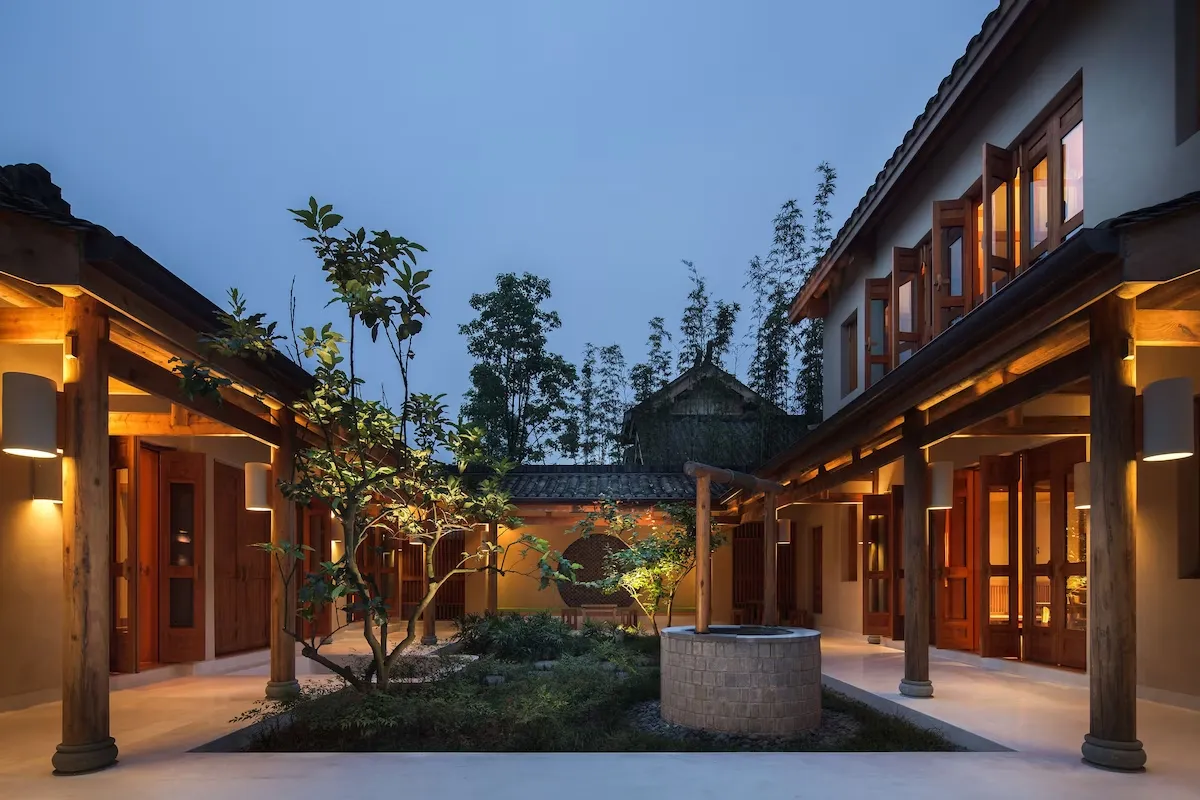
Bangkok-based Habita Architects designed the resort according to Feng Shui principles, orienting every structure in relation to mountain, water, and each other. Every building's position was determined in consultation with local Taoist practitioners.
The Welcome Pavilion establishes the relationship immediately. Guests ascend through a bamboo-lined avenue to reach a building conceived as a bridge, its main hall suspended between two slopes. From here, the entire resort reveals itself below: tiled rooftops arranged like a village, canals threading between buildings, footbridges arching over water.
Accommodation: Siheyuan Courtyards
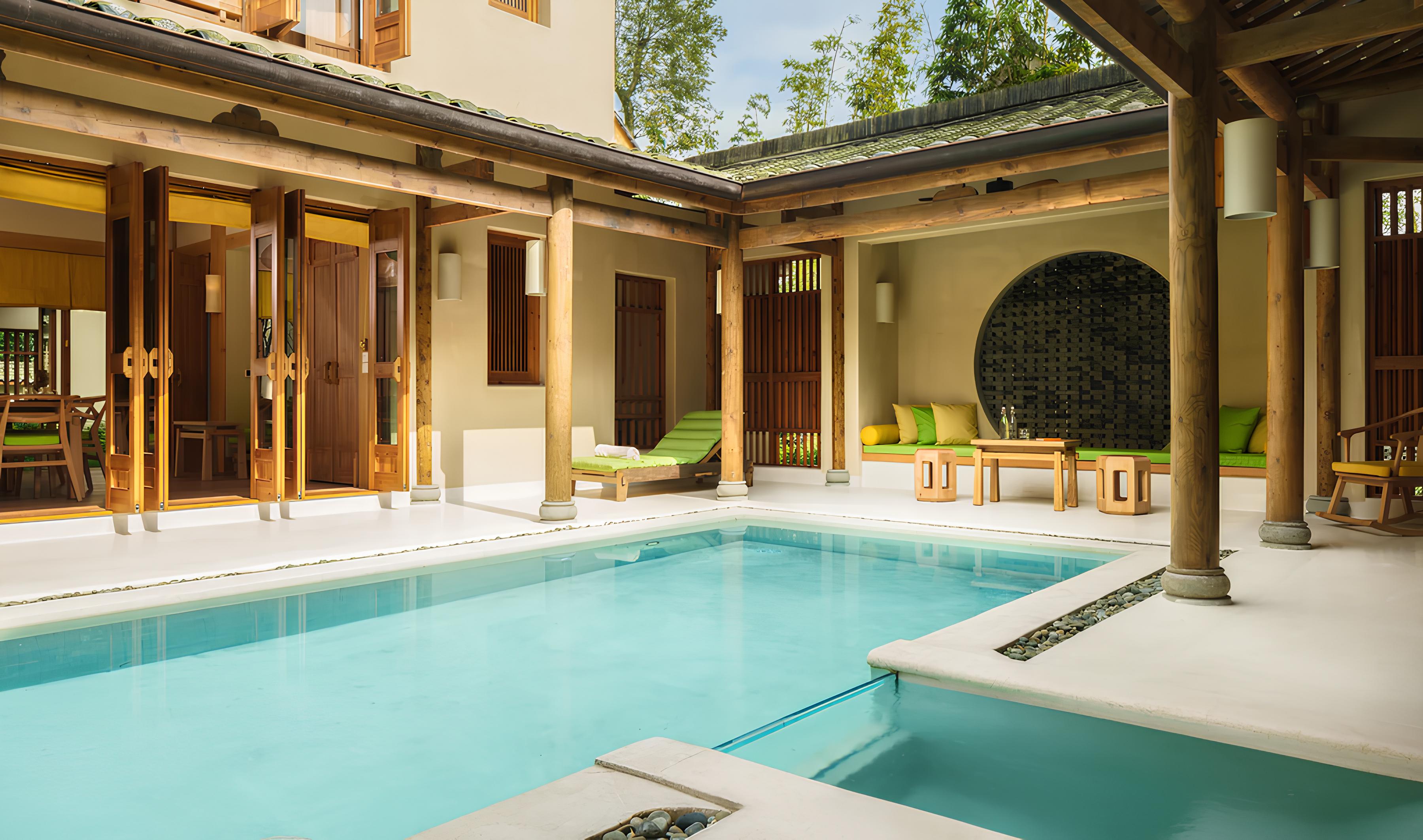
One hundred thirteen accommodations, eleven villas and one hundred two suites, arrange in clusters around central courtyards following the traditional siheyuan pattern. The siheyuan, literally "four-together courtyard," has organised Chinese domestic architecture for thousands of years. Four suites sharing a courtyard can be grouped for families or friends travelling together.
Room features at Six Senses Qing Cheng Mountain:
- Sustainable timber beams with rattan highlights
- Natural taupe colour palette
- Chinese antique-style furniture in contemporary proportion
- High ceilings and abundant windows
- Private balcony or veranda with mountain views
- Starting size of 79 square metres (850 square feet)
Taoist Wellness and Spa
The Six Senses Spa extends the brand's commitment to wellness into specifically Taoist territory. Ten treatment rooms overlook waterfalls and gardens. The spa covers over 1,700 square metres.
Signature treatments and therapies:
- Gua Sha, cupping, acupuncture, and Tui Na
- Daoyin Tao massage (created specifically for this property)
- Three wellness journeys: Jing (restoration), Qi (balance), Shen (spirit)
- Traditional Chinese Medicine consultations
- Tai chi sessions at nearby Puzha Temple
- Zen tea ceremonies with trained monks
These are not spa treatments dressed in Asian costume. They are authentic applications of therapeutic systems developed on this mountain over twenty centuries.
Farm-to-Table Dining
The resort maintains organic vegetable gardens, duck ponds integrated with rice paddies, and free-range chickens.
Restaurants at Six Senses Qing Cheng Mountain:
- Farm2Fork: All-day dining with garden-fresh menus
- Zi Qi Yuan: Sichuan classics including mapo tofu and gong bao chicken
- Sala Thai: Signature Thai cooking with mountain panoramas
- Moon Bar: Sunset cocktails
- Traditional teahouse: Afternoon refreshments in Chinese style
Experiences Beyond the Resort
- Panda Valley: Ten minutes away, offering close encounters with giant pandas
- Dujiangyan ancient town: UNESCO-listed irrigation system
- Mount Qing Cheng hiking: Trails through active Taoist temple complexes
Sustainability
Six Senses sustainability measures:
- On-site filtered water in glass bottles (no single-use plastic)
- Electric Tesla transfers from Chengdu Airport
- Extensive recycling programmes
- Community development projects with mountain villages
Practical Information
Six Senses Qing Cheng Mountain operates year-round. Chengdu Shuangliu International Airport is sixty minutes by car or rail. The resort is part of IHG (though IHG One Rewards is not currently applicable at this property).
A Common Thread: What Makes These Hotels Different
What connects The PuLi, Capella Shanghai, and Six Senses Qing Cheng Mountain extends beyond nationality or geography. Each began with a question that most luxury hotels never ask: what does this place already know about hospitality?
The PuLi answered with materials. The gold bricks. The temple tiles. The craft traditions that Shanghai's rush toward modernity nearly erased. The hotel became a repository for skills that might otherwise have vanished, employing artisans whose techniques date to dynasties tourists have forgotten.
Capella answered with architecture. The shikumen represented a specifically Shanghainese response to urban living, neither purely Chinese nor purely Western. By inhabiting these structures rather than building anew, Capella preserved not just buildings but the logic behind them.
Six Senses answered with philosophy. Taoism offers a complete system for understanding wellness, one developed over millennia in the very mountains where the resort now sits. The spa's treatments do not merely reference this tradition; they practice it.
None of this requires guests to be scholars of Chinese culture. The hotels work regardless of what you know or care about their deeper intentions. But they reward attention. The more you notice, the more there is to notice. This is perhaps the clearest sign that something genuine underlies the design.
This is what Chinese luxury hospitality might become when it stops apologising for itself. Not fusion, which implies two separate things awkwardly combined. Not tradition, which suggests museums and preservation at the expense of life. Something more difficult and more interesting: contemporary expression rooted in continuous practice, hospitality that knows where it is.
Frequently Asked Questions
| The PuLi Shanghai | offers the most accessible introduction to luxury hotels in China. Its central location in Jing'an District, English-fluent staff, and familiar urban-resort format provide comfort for first-time visitors, while its design introduces Chinese materials and aesthetics without overwhelming. Shanghai itself is easier to navigate than many Chinese cities, with excellent public transport and widespread English signage. |
| Six Senses Qing Cheng Mountain | provides the most comprehensive wellness programme in China, with Taoist-influenced treatments, tai chi at ancient temples, and an environment designed for restoration. The spa occupies over 1,700 square metres with ten treatment rooms. The PuLi's Anantara-operated spa offers excellent treatments in a more conventional format. Capella's Auriga Spa is smaller but distinctive, with moon-phase-calibrated therapies. |
| Six Senses Qing Cheng Mountain | accommodates families well, with a dedicated Kid's Club, children's cooking classes, outdoor cinema, and nearby panda encounters. Capella Shanghai's multi-bedroom villas work for families needing space. The PuLi welcomes children but offers no specific facilities; its atmosphere suits adult travellers better. |
| Shanghai's The PuLi and Capella | operate year-round, with autumn (October-November) offering the most pleasant weather. Six Senses Qing Cheng Mountain is beautiful throughout the year, but spring and autumn bring clearer mountain views. Summer in Sichuan can be humid; winter is mild but grey with fewer tourists. |
| Capella Shanghai's le Comptoir de Pierre Gagnaire | represents the highest culinary ambition, with the three-Michelin-starred French chef overseeing the kitchen. The PuLi's PHÉNIX also holds a Michelin star. Six Senses excels at farm-to-table Sichuan cuisine rather than fine dining. |
| Capella Shanghai's | fifty-five villas book quickly, especially during autumn. Reserve two to three months ahead for peak dates. The PuLi and Six Senses have more inventory. Chinese holidays (National Day in October, Chinese New Year in January/February) require booking far ahead at all properties. |
| Shikumen | (meaning "stone warehouse gate") describes a distinctively Shanghainese building style that emerged in the 1860s. These townhouses blend Western row-house construction with traditional Chinese courtyard layouts, featuring stone-framed entrances, redbrick facades, and interior courtyards. Capella Shanghai occupies one of the last intact shikumen heritage compounds. |
| The PuLi | participates in The Leading Hotels of the World's Leaders Club and Design Hotels' loyalty programme. Capella belongs to the Global Hotel Alliance's DISCOVERY programme. Six Senses operates under IHG but IHG One Rewards is not currently applicable at Qing Cheng Mountain. |