The Coast Beyond Amalfi: Where to Stay When You Want the Mediterranean Without the Crowds
Four boutique hotels along the Amalfi and Sorrentine coasts. None of them is on the most-photographed corner of Positano. All of them are designed for travellers who have done the Costiera once and want the version of it that exists between the cruise stops.
The Amalfi Coast in 2026 has a structural problem. The villages that made it famous, Positano and Amalfi above all, now receive more day-trippers in a single August Saturday than they have full-time residents. The narrow road that runs from Sorrento to Salerno is one of the most beautiful drives in Europe and also, in high season, one of the slowest. Restaurants are booked weeks in advance. Beach clubs run shuttles from boat docks that are themselves queued.
None of this means the coast has stopped being magnificent. It has not. The light is the same. The lemons are the same. The sea below the cliffs still goes from pale turquoise to deep cobalt in the same fifteen minutes of late afternoon. What has changed is how to enjoy it without spending the trip in slow-motion traffic and sold-out queues.
The version of the coast that still works in 2026 is the one travellers organise around a single property rather than around the bucket list. A hotel that is itself the destination. A base from which the iconic villages become optional half-day excursions, often by boat, often outside the peak hours. Four such properties follow, set across the Costiera and its quieter Sorrentine extension to the north. They are ordered by geography from south to north, starting in Amalfi itself and ending where the peninsula folds toward Naples.
01Borgo Santandrea, Amalfi: the contemporary clifftop hotel that almost did not happen
The most ambitious hospitality project on the Amalfi Coast of the last decade sits a few kilometres west of Amalfi town, on a private headland that drops two hundred metres into the sea. Borgo Santandrea was designed as a complete reinvention of a hotel that had stood on the spot for sixty years. The reconstruction took several years, and the property reopened with a clear architectural intent: mid-century Italian Riviera shapes, hand-painted Vietri tiles, terraces stacked into the rock, a single tone of pale blue carried through every public space.
The result is one of the very few hotels on the coast that reads as a single coherent design rather than as a renovation. Every corridor opens onto a sea view. The terraces are not optional. The private beach below the property is reachable by a panoramic elevator carved into the cliff, an arrival that visitors describe as a small theatrical event the first time. The pool sits at the top of the headland, oriented to catch the long Tyrrhenian sunset that runs from copper to lavender to indigo in the same twenty minutes every clear evening.
The dining is on two levels. A small Mediterranean restaurant on a sea-facing terrace, and the beach club below, where the kitchen turns out simply grilled fish and a long list of local vegetables. The wine list leans heavily into Campanian producers (Quintodecimo, Galardi, Mastroberardino) and is one of the strongest on the coast for travellers who want to drink locally and seriously.
At a glance - Location: Headland west of Amalfi town, about 1h30 drive from Naples airport - Style: Contemporary mid-century Mediterranean across a stepped clifftop estate - Best for: First-time visitors who want the most coherent design on the coast and a private beach reached by panoramic elevator - Memorable detail: The hand-painted tile pattern on the lobby floor, drawn from a 1950s Italian Riviera motif and produced specifically for the hotel.
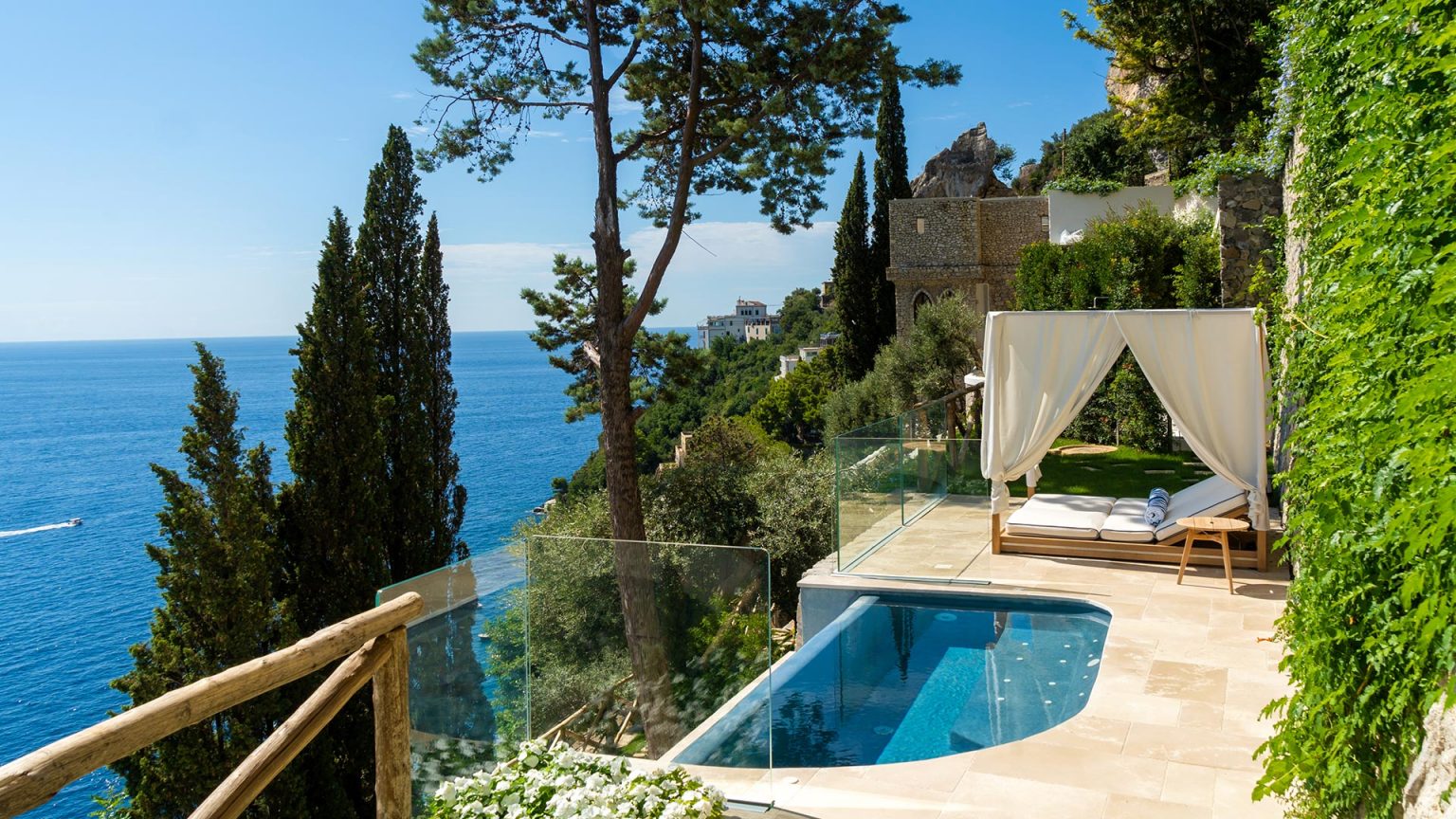
02Villa Fiorentino, Positano: a private estate above the bay, not in it
Positano in season is a beautiful but crowded place. The streets that descend toward the beach become single-file traffic. The most photographed restaurants take reservations weeks in advance. The most pleasant way to spend time in Positano in 2026 is, increasingly, to stay above the village rather than inside it.
Villa Fiorentino sits on the upper road, a few minutes by car from the centre of Positano, on a small private estate with a panoramic position over the bay. The villa itself is a historic building, restored with restraint, with a small number of suites organised around a garden of citrus, jasmine and bougainvillea. The terrace at sunset gives the classic postcard view of Positano without the climb back up at the end of the evening.
What makes Villa Fiorentino particularly useful as a base is the combination of three things. First, the garden and pool are genuinely private; the property does not feel like a hotel but like a private residence opened to a small number of guests. Second, the road position means that boat trips to Capri or to the Li Galli islands are easily organised from the small marina below. Third, the village itself can be visited in the cool early morning or in the late evening, when the day crowds have left.
The kitchen at Villa Fiorentino works in a residential register. Breakfast on the terrace, lunch usually on demand, dinner most evenings in a small dining room or under the pergola. The cuisine is Positanese-Mediterranean, with a particular focus on the local lemon (which is geographically protected and noticeably different from the Amalfi lemon a few kilometres south).
At a glance - Location: Upper road above Positano, panoramic bay view - Style: Restored historic villa as small private estate - Best for: Travellers who want Positano nearby without spending the trip walking up and down its streets - Memorable detail: The cool corner of the terrace at 5pm, when the breeze starts and the bay below begins to empty.
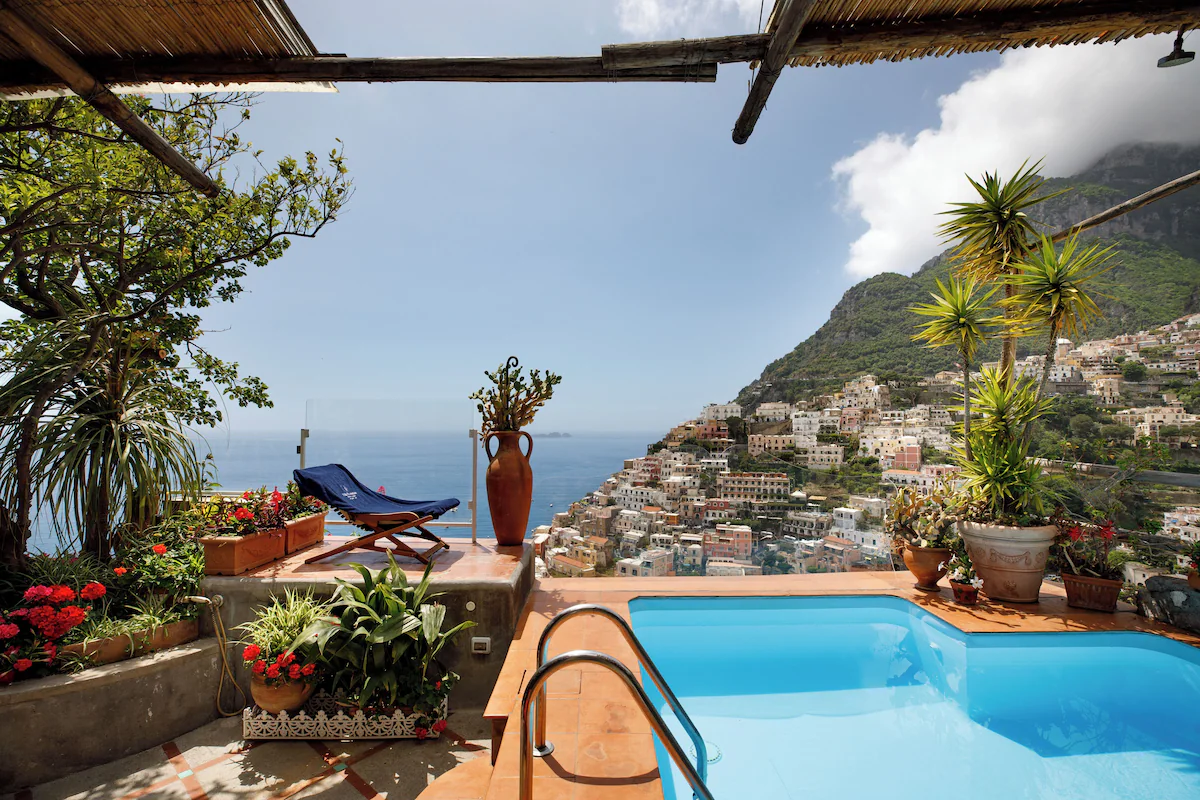
03Bellevue Syrene, Sorrento: the nineteenth-century clifftop villa most visitors miss
Sorrento has a reputation, partly deserved, for being slightly too organised. The town is a transport hub for boats to Capri and trains to Naples and Pompeii, and the centre can feel logistical rather than restful. The version of Sorrento that has retained its older character is the one along the eastern clifftop, above the small Marina Piccola, where the historic villas of the late nineteenth century are clustered.
Bellevue Syrene occupies one of those villas. The property has been a hotel since the 1820s. The building itself is older, with a foundation dating back to a Roman villa whose remains are visible in the basement spaces. Restorations have layered nineteenth-century salons, frescoed ceilings, and contemporary interventions in the guest rooms, but the architectural memory of the place is firmly belle époque. Long corridors, high ceilings, garden terraces that open onto the cliff edge.
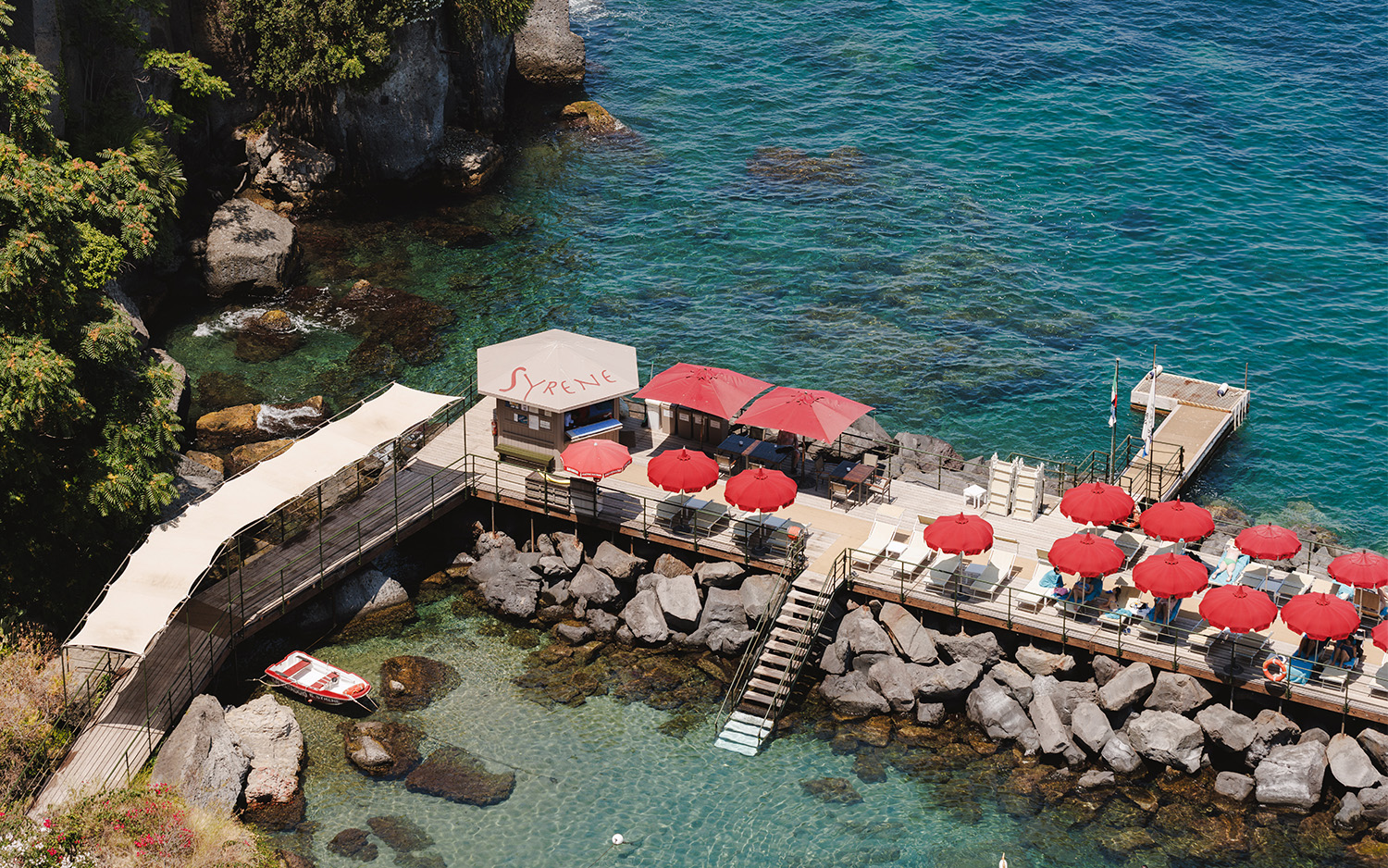
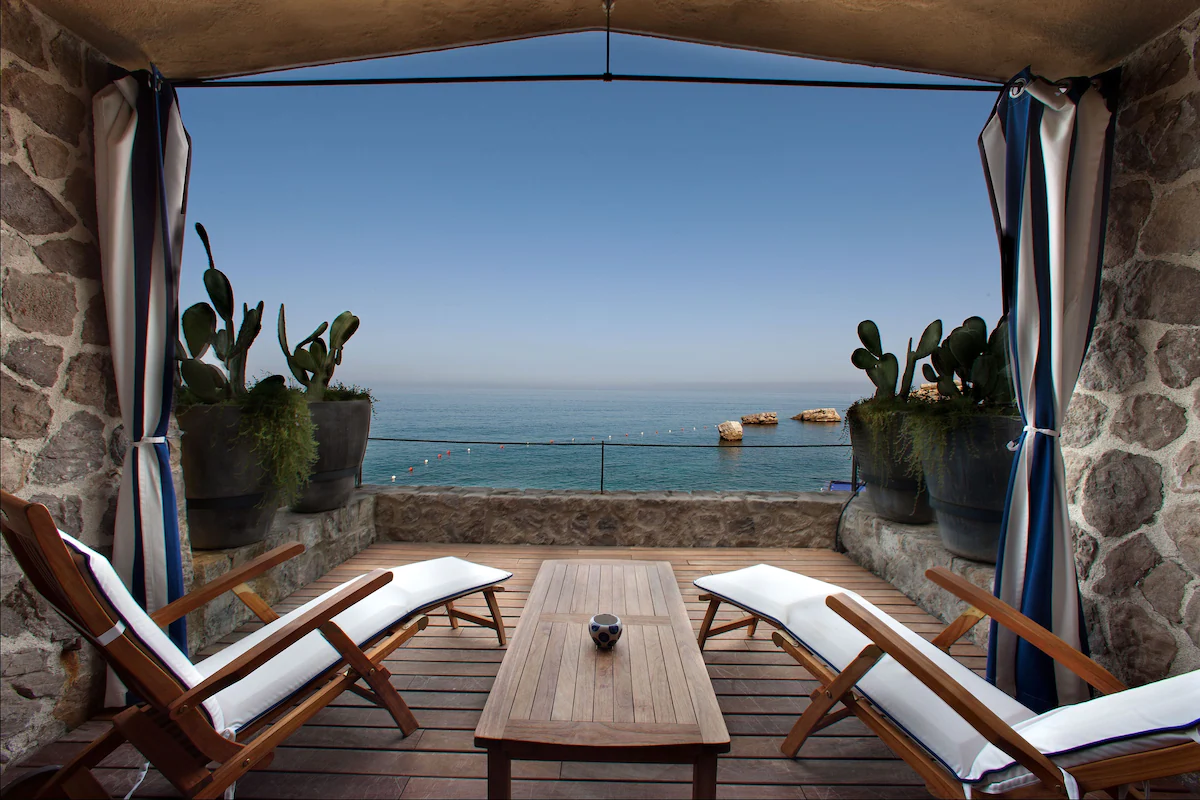
The cliff edge is the point. The terrace at Bellevue Syrene, with its view across the Bay of Naples to Vesuvius and Capri, is one of the great panoramic positions in southern Italy. Breakfast is served there in summer. So is the apéritif in the evening. The pool sits in a small private rock cove reached by elevator, sheltered from the wind, in water that stays warm from late May to early October.
The hotel kitchen, run by the Acampora family, works in a refined Neapolitan-Sorrentine register. Long pasta with sea urchin in season, paccheri with local Cetara anchovies, lemon-based desserts that travellers consistently describe as among the best on the peninsula. The wine list is unusually deep on the white wines of the Campanian volcanic soils (Fiano di Avellino, Greco di Tufo, Pallagrello Bianco).
At a glance - Location: Clifftop above Marina Piccola, eastern Sorrento - Style: Belle époque villa with Roman foundations and a private rock cove - Best for: Travellers who want the historical version of Sorrento and the panoramic view of the Bay of Naples from a working terrace - Memorable detail: The Roman foundation visible from the lower garden, with original masonry from the 1st century BC.
04Capo La Gala, Vico Equense: the northernmost option and the most architectural
The Sorrentine peninsula does not end at Sorrento. It continues northwest for about twenty more kilometres, past Vico Equense, until it folds back toward the Naples metropolitan area. This stretch of coast is much less travelled by international visitors. The road runs higher above the sea, the cliffs are sharper, and the villages are quieter.
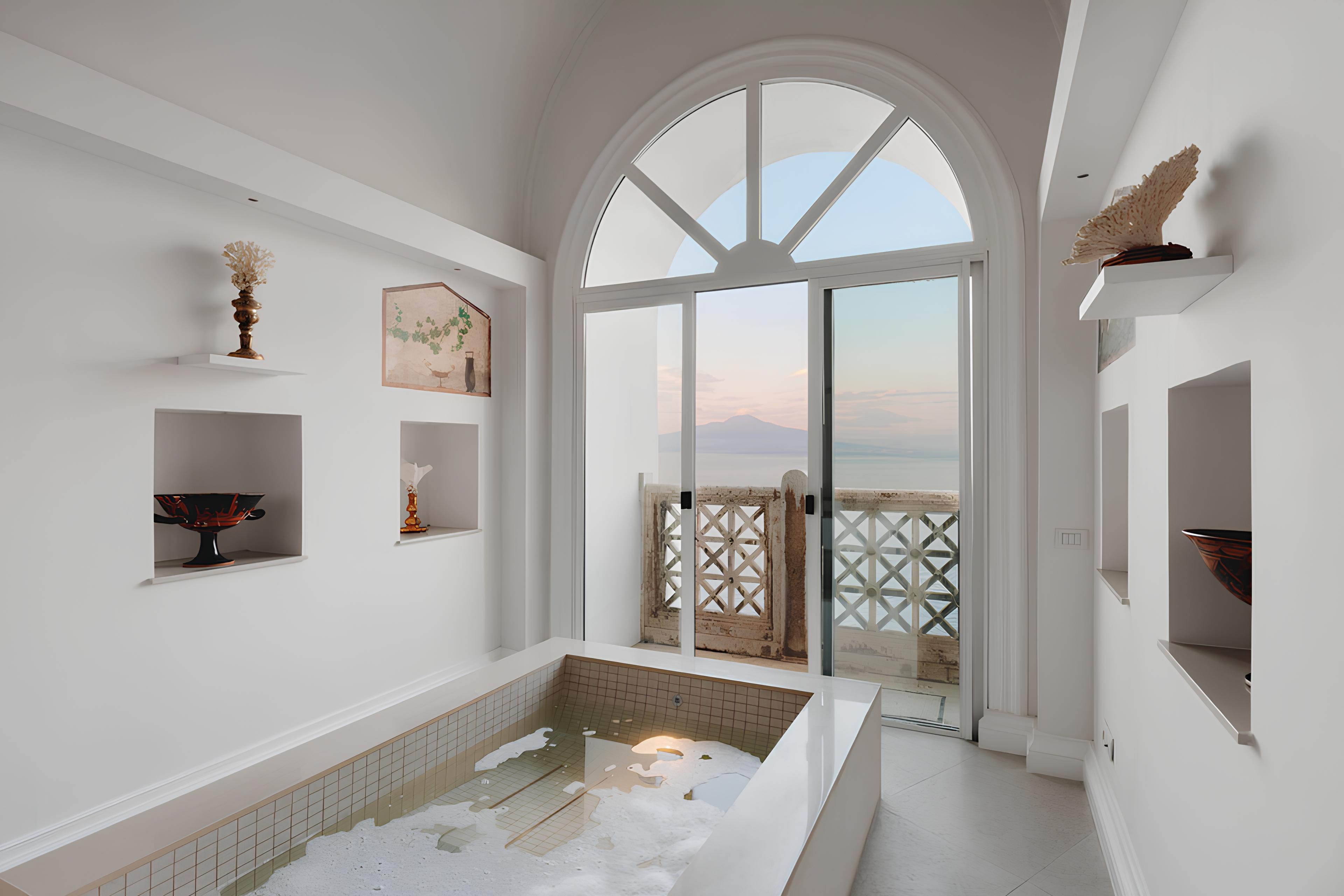
Capo La Gala sits on this stretch, in Vico Equense, on a private headland with a thermal spring. The building was designed in the early 1960s as a clifftop spa hotel, with horizontal lines that hug the rock, a swimming pool fed by the local sulphurous spring, and floor-to-ceiling windows in most rooms. A long restoration in the 2010s brought the property up to contemporary luxury standards while preserving the original architectural vocabulary, which is one of the cleanest examples of Italian mid-century clifftop construction still standing on the coast.
The thermal pool is the unusual element. The water is warm year-round and the pool sits on a terrace just above the sea, with a view across the bay to Capri. The on-site spa programme is built around this water, which has been used therapeutically for over a century in Vico Equense.
The dining is the most contemporary of the four hotels in this article. The one-Michelin-star Maxi, run by chef Domenico Iavarone, works in a precise modern Campanian register: spaghetti with local limoncello and oily sea fish; risotto with potato, provola and seaweed; sea bream in a sauce of black olives and citrus. The wine list is shorter than at Bellevue Syrene but more focused, with a particular emphasis on the natural producers of the region.
At a glance - Location: Vico Equense, northwest of Sorrento, about 35 minutes from Naples airport - Style: Mid-century clifftop architecture with a thermal spring and a Michelin-starred kitchen - Best for: Travellers who want architectural design, contemporary cuisine, and faster access to Naples and Pompeii without the Sorrento hub feel - Memorable detail: The warm sulphurous water of the thermal pool, swimmable year-round.
How to choose between the four
A simple decision rule.
For a single short stay before or after another part of Italy, Capo La Gala is the closest to Naples airport and the easiest logistical pick. For a coast-and-design-led week, Borgo Santandrea is the most coherent single property and the most photographed in its design. For Sorrento and the historic side of the peninsula, Bellevue Syrene is unmatched. For Positano without the queues, Villa Fiorentino is the cleanest answer currently bookable on the upper road.
For a first multi-stop week on the Costiera, the strongest combination is three nights at Borgo Santandrea and three nights at Bellevue Syrene. The drive between them is just under an hour and gives both sides of the coast, the Amalfitana proper and the Sorrentine peninsula, without retracing.
When to go
Late May through mid-June is the strongest window. The sea is warm enough for swimming (around 22 degrees), the lemons are in fruit, the long Mediterranean days run until past nine in the evening, and the day-tripper volume is roughly half of what it becomes in July and August. Mid-September through early October is the second optimum. The light is gentler, the sea stays warm, and the kitchens are at their best with the autumn produce.
July and August work but require advance planning. Restaurants need booking at least two weeks ahead. The road from Sorrento to Salerno can take twice its normal time in midday hours. The boat services to Capri operate at full capacity. None of this is ruinous, but it changes the rhythm of the trip from contemplative to logistical.
November through March is the off-season, with reduced services at all four properties. Some restaurants close. Boats to Capri become rare. The coast in this period is atmospheric and almost empty, but it asks for a traveller who is comfortable with quiet.
What to do beyond the hotels
A few suggestions that work well from any of the four properties.
A morning boat to Capri, preferably leaving the home harbour by 8:30 to arrive on the island before the day-trippers. A lunch at one of the small trattorie in Anacapri (Le Arcate, Da Gelsomina) before returning by afternoon ferry. This avoids the worst of the Capri congestion and gives the island in its quietest hours.
A short drive to Ravello (from Borgo Santandrea or Bellevue Syrene), to walk the gardens of Villa Cimbrone at sunset. The terrace there, set with classical busts above a sheer drop to the sea, is one of the most quietly spectacular places on the coast.
A morning at Pompeii or Herculaneum (from Bellevue Syrene or Capo La Gala), out the door at 7:30 to be at the gate when it opens. Both sites are increasingly crowded after 10am.
A walk along the Sentiero degli Dei between Bomerano and Nocelle (from Borgo Santandrea or Villa Fiorentino), about three hours one way through olive groves, vineyards and the high cliff path. Start early, carry water, end with lunch in Positano.
Frequently asked questions
| Is the Amalfi Coast worth visiting in 2026 given the crowds? | Yes, with strategy. The villages remain extraordinary; the issue is the high-season volume in July and August. Visiting in May, early June, or mid-September gives the coast at its best with manageable density. Staying at a hotel that is itself the destination, rather than at a small pensione in the village centre, also changes the experience significantly. |
| Which is better, Amalfi or Sorrento for a first visit? | Different. The Amalfitana proper (Amalfi, Positano, Ravello) is the more dramatic and photographed coast. The Sorrentine peninsula (Sorrento, Vico Equense) is calmer, with easier transport links to Naples, Capri and Pompeii. For a first trip, staying one night on each side gives both characters in one visit. |
| How do I get to the Amalfi Coast? | Fly into Naples Capodichino airport (NAP). A private transfer is the cleanest option (about an hour to Sorrento, ninety minutes to Amalfi). Trains to Sorrento via the Circumvesuviana from Naples Centrale are possible but uncomfortable with luggage. From November to March, expect reduced air links from northern Europe. |
| Are these hotels family-friendly? | Capo La Gala and Bellevue Syrene accommodate families well, with appropriate rooms and pool access. Borgo Santandrea is more adult-skewing but does host families. Villa Fiorentino is a small private estate and is most comfortable for travellers without young children. |
| What is the difference between Amalfi lemons and Sorrento lemons? | Both are protected by separate PDO designations and are different cultivars. The Amalfi lemon (Sfusato Amalfitano) is elongated, slightly thicker-skinned, more aromatic. The Sorrento lemon (Limone di Sorrento) is rounder, more juice-forward, the variety used in classical limoncello. Both are worth tasting; they are not the same fruit. |