A Complete Guide to Marrakech
A detailed guide to Marrakech with the best riads, neighbourhoods, food spots, design highlights and authentic experiences. Everything you need to plan your trip with confidence.
Quick navigation:
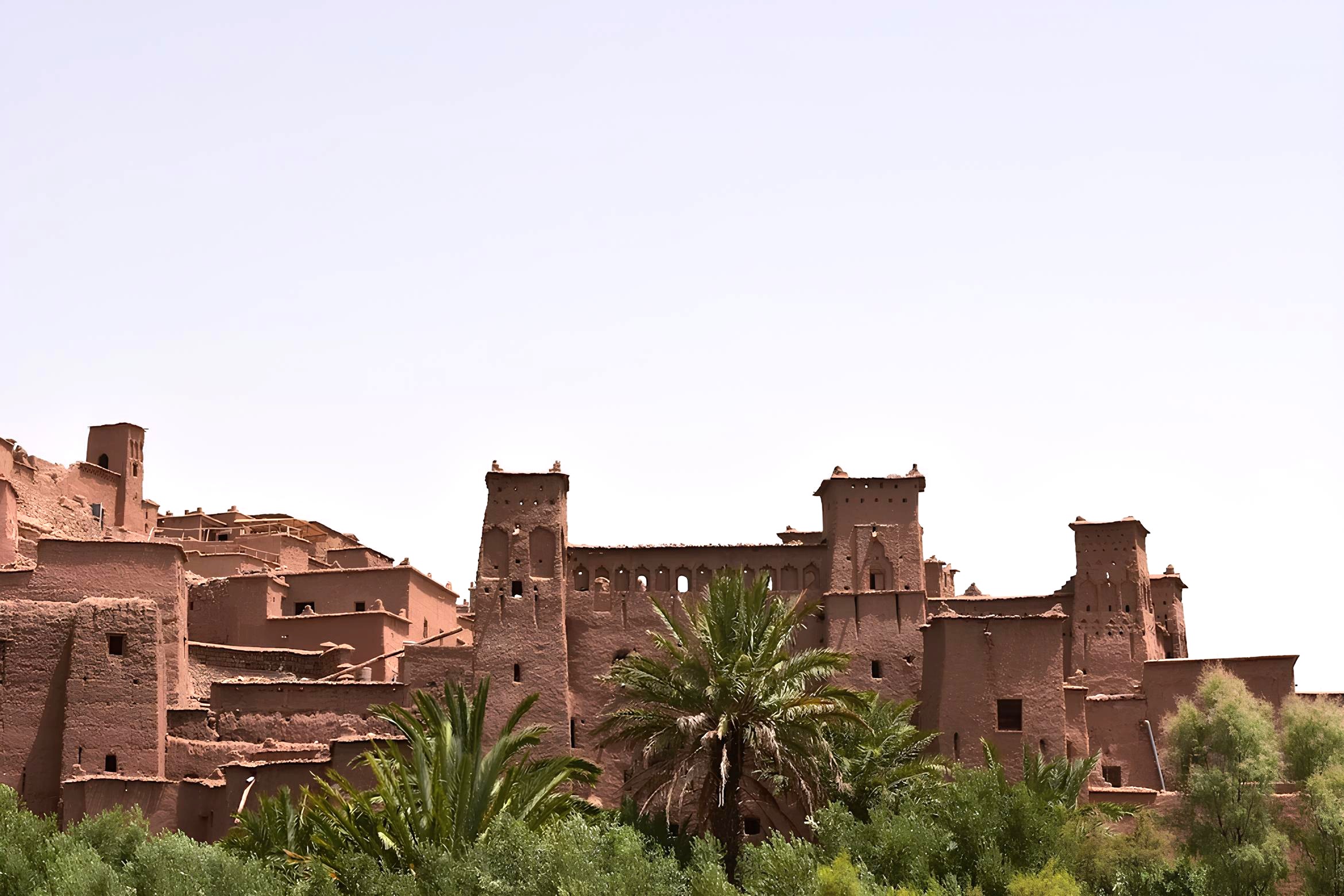
There are cities that ask you to meet them on their own terms. Marrakech is one of them. It doesn’t overwhelm you all at once. Instead, it reveals itself in layers. You feel it first in the warmth rising off the tarmac as you step outside the airport. Then in the changing tones of the city walls, pink at dawn and terracotta at noon. In the sound of footsteps and bicycle bells mixing with distant voices. In the smell of cumin, orange blossom, cedarwood and grilled bread hovering above the Medina. Marrakech doesn’t guide you gently. It simply continues its own rhythm until you fall into step with it.
The most beautiful thing about Marrakech is the contrast it holds. A rooftop can feel like a private sanctuary while the street beneath it vibrates with energy. A riad courtyard can feel cooler and quieter than seems possible. A gallery in Gueliz might display contemporary ceramics a few hours after you’ve watched an artisan hammer brass in a tiny workshop. Nothing tries to be perfect or polished. Everything feels lived-in and human.
This guide is meant to be more than an itinerary. It is a way of reading Marrakech so you can recognise its subtleties before stepping into them. The goal is simple. To understand how the city moves, breathes and reveals itself so your time here feels connected, calm and meaningful.
WHERE TO STAY IN MARRAKECH
Where you sleep shapes the entire way you experience Marrakech.
A riad brings you inside the city’s deepest rhythm.
A boutique hotel offers space and clarity.
A villa gives you silence that feels almost unreal.
Understanding the Riad Experience
A riad is not a hotel in the usual sense. It is a traditional Moroccan house, centred around an open-air courtyard designed to cool the air and create calm. Everything flows inward. Light drops from above. Plants soften the geometry. Rooms open onto the courtyard so you feel protected and connected at the same time.
The contrast with the Medina outside is striking. You might step in from a busy alley filled with vendors, scooters and the scent of spices, and within seconds find yourself in a stillness so complete it feels like exhaling after a long breath. This is what makes riads special. The ability to hold quiet even in the centre of the city.
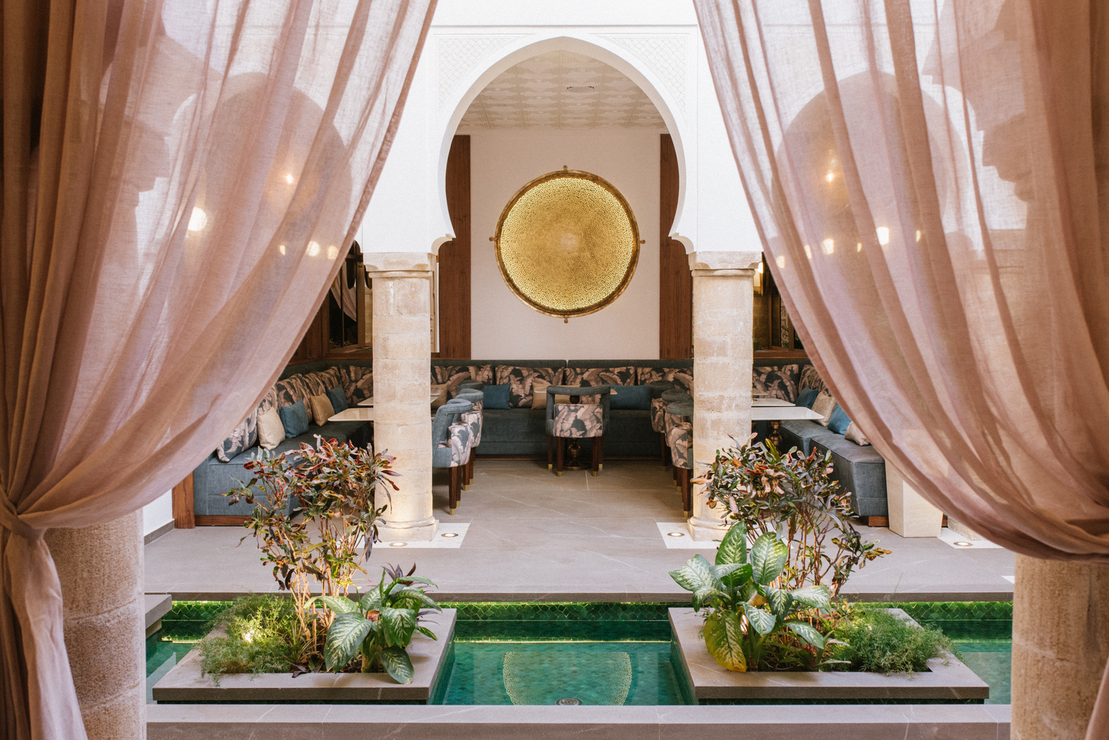
Riad Tajania
In the Kasbah district, Riad Tajania feels like a place shaped by someone who pays attention to balance and proportion. Soft tones, polished tadelakt, handwoven textiles and zellige tiles create a refined but grounded atmosphere. The courtyard is intimate, shaded by greenery that filters the light. Breakfast arrives slowly. The rooftop feels brushed by the softest breeze. It’s a perfect base for travellers who want to be close to the heart of Marrakech while still wrapped in calm.
Riad Nyla
Riad Nyla has a contemporary elegance that feels warm rather than minimalist. Clean lines, tactile details and a thoughtful palette give it a modern identity without losing the essence of the riad structure. It’s ideal for travellers who want tradition interpreted with restraint and subtlety.
Riad Botanica
Riad Botanica is the choice for travellers who appreciate craftsmanship. Ceramics feel handmade. Textiles carry weight. Plants bring softness into the architecture. The atmosphere is intimate and curated without feeling staged. It’s the kind of place where you notice the details because they were chosen with intention.
The Mellah Hotel
Set in the historic Jewish quarter, The Mellah Hotel offers a more contemporary stay. Its clean architecture and warm materials honour the heritage of the area while giving it a fresh, modern tone. It’s perfect for travellers who want the charm of the old city with more open streets and easier navigation.
The Calm of Pure House Marrakech
Beyond the Medina, Pure House Marrakech opens to the landscape rather than inward.
Wide spaces, natural stone, warm wood and generous sunlight define the property. The pace here feels slower. Breakfast stretches into the late morning. Poolside afternoons feel almost suspended. Evenings unfold naturally in the open air. Pure House is ideal for travellers who want the essence of Marrakech without the intensity of its centre. The atmosphere is restorative, grounding and deeply peaceful.
Villas for Complete Privacy: Life in the Palmeraie
Some travellers crave immersion. Others crave silence.
The Palmeraie is for the latter. It sits just beyond the Medina and feels like an entirely different world. Palm trees rise in loose patterns. Light falls gently across the earth. You hear birds instead of scooters.
La Plantation
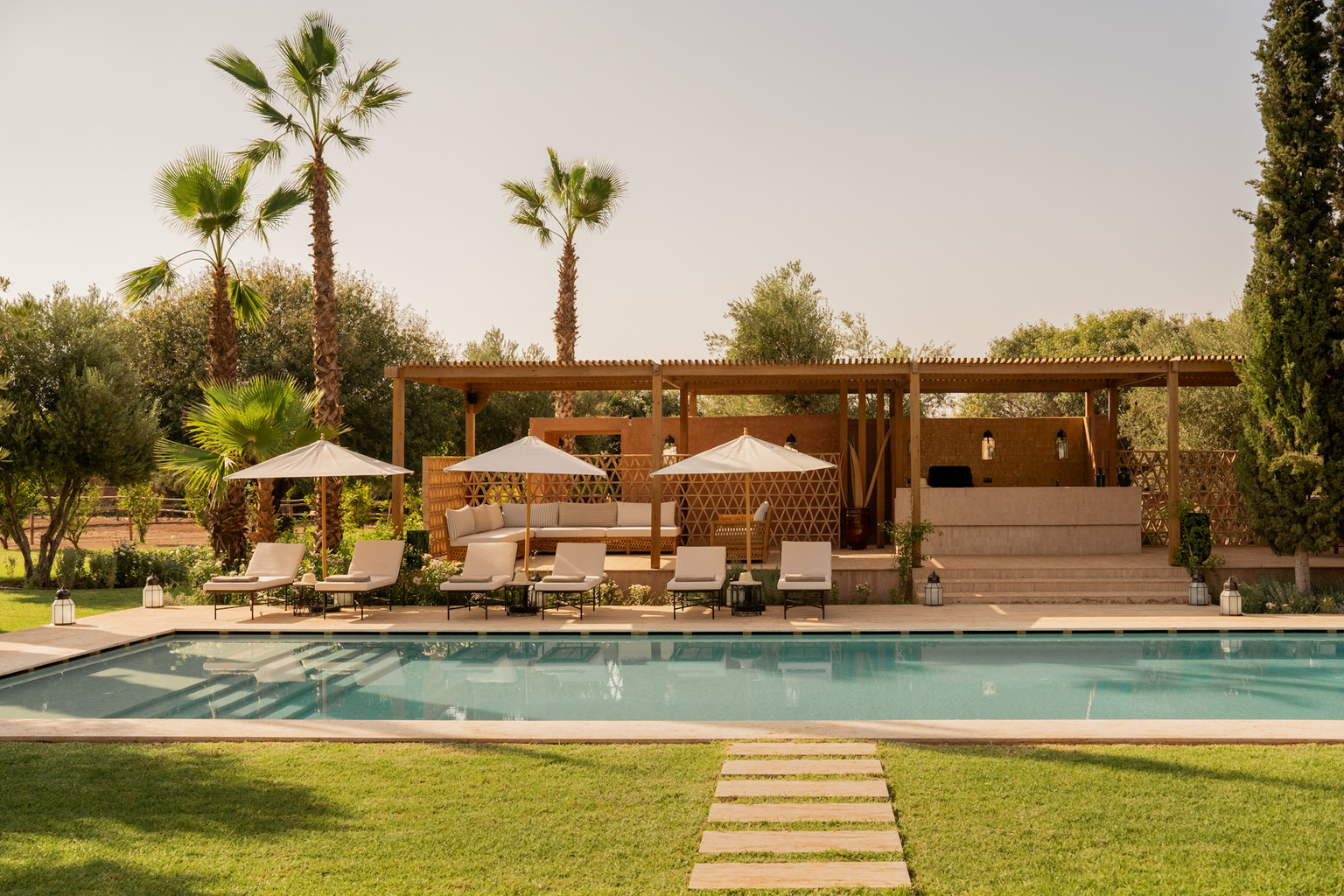
La Plantation is an estate shaped for calm. Gardens surround the house, creating a natural screen from the world. Interiors are warm and inviting. Outdoor dining becomes part of the daily rhythm. Mornings are slow. Evenings drift into conversations under soft light. It’s perfect for families, long stays and small groups who want privacy without disconnecting from the spirit of Marrakech.
Dar El Sadaka
Dar El Sadaka is more than a villa. It is an artistic universe.
Created by artist Jean-François Fourtou, it blends architecture with imagination. Sculptures appear unexpectedly. Rooms feel immersive. The house invites curiosity. Nothing is generic. Everything has character. Staying here becomes a story, not just accommodation.
WHEN TO VISIT MARRAKECH
Marrakech changes personality with the seasons.
The light softens or sharpens. The air shifts. The colours deepen or cool. The choice of when to come depends on the type of experience you want.
Autumn (September–November)
Autumn is widely seen as the perfect moment.
Temperatures are warm but manageable. The Medina feels alive without being overwhelming. Rooftop dinners are comfortable. The air takes on a golden softness. It is the season most design lovers and culture-focused travellers choose.
Spring (March–May)
Spring brings a sense of renewal.
Gardens bloom. The sky stays clear. The city feels fresh and vibrant. It’s the ideal season for exploring on foot, especially early in the morning.
Winter (December–February)
Winter has a quiet beauty.
The sun is gentle. The air is crisp. Nights are cold enough for jackets but days remain bright. This is the best time for hammams, museums, slow walks and food-focused trips.
Summer (June–August)
Summer is intense.
Temperatures rise early and stay high. The Medina can feel heavy with heat, but villas and hotels with shaded gardens offer relief. Evenings, however, are magical. The sky turns deep, the air softens and the city slows.
Ramadan
During Ramadan, Marrakech follows a different rhythm.
Mornings are slow. Shops open later. Evenings gain energy as families break the fast. Travellers who appreciate cultural depth often choose this moment. The city feels intimate and authentic.
HOW TO GET AROUND
Movement in Marrakech sets the tone for your days.
Walking the Medina
The Medina is best understood on foot.
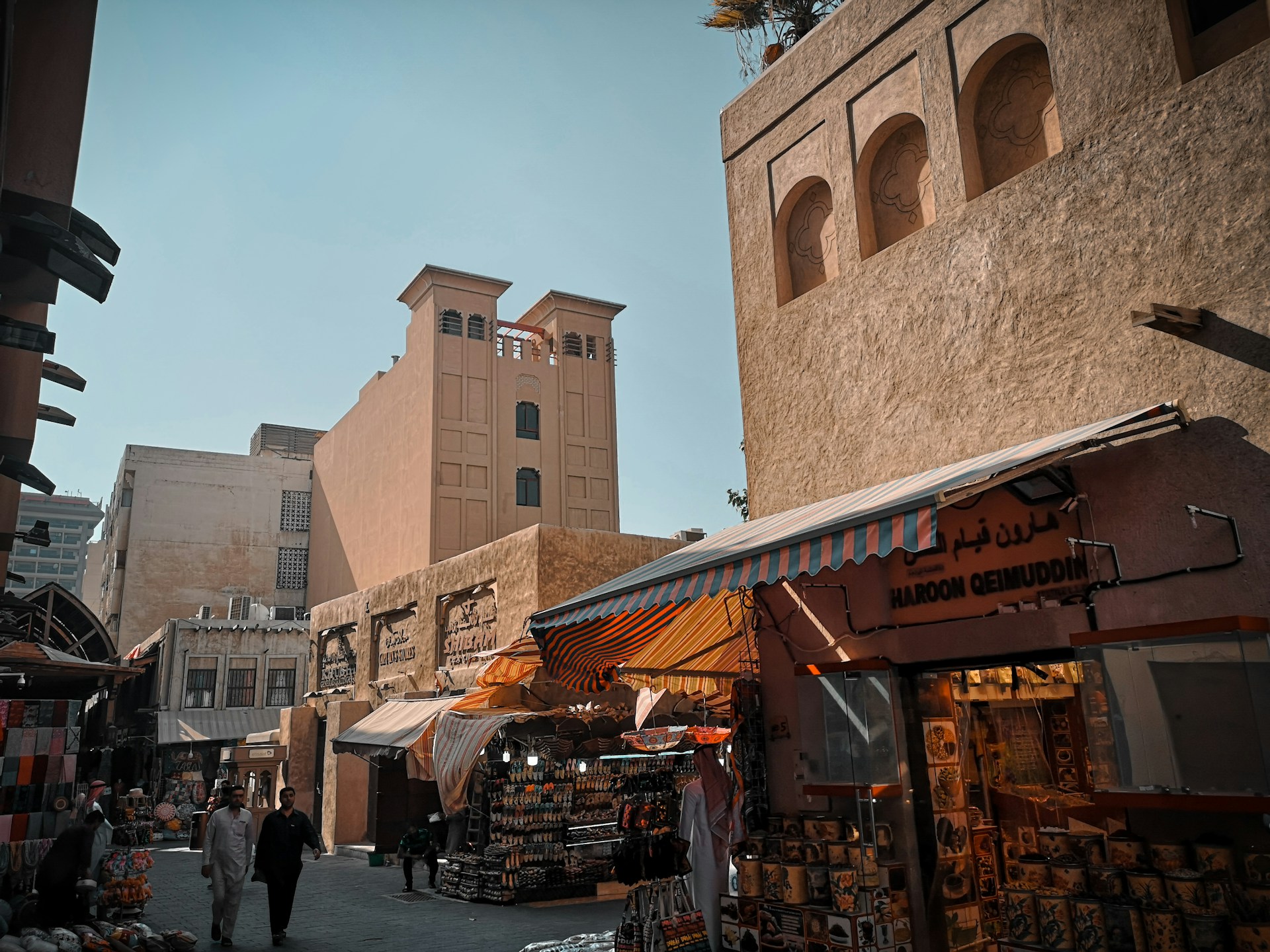
You follow narrow alleys that twist and open into small squares. You pass stalls selling brass lamps, leather slippers, baskets, spices and ceramics. Cats sleep in sunlit corners, artisans tap copper with precise rhythm. Getting lost is not a mistake, it is part of the experience.
Taxis
Taxis do not use meters.
Always agree on price before entering. Short distances cost between 20 and 50 MAD. From the Medina to Gueliz or Hivernage, expect 50 to 80 MAD. Keep small notes. For airport transfers, ask your riad or hotel to arrange a pickup.
Private Drivers
For villas, Atlas excursions or desert trips, private drivers make everything smoother.
Reliable, comfortable and essential for longer distances.
Car Rental
Avoid renting a car unless you plan to travel outside Marrakech.
Inside the city, traffic rules feel optional and parking is limited.
THE NEIGHBOURHOODS OF MARRAKECH
Marrakech is a mosaic of neighbourhoods, each with its own energy, rhythm and sense of space. Understanding them helps you choose where to stay and how to explore.
The Medina
The Medina is the pulse of Marrakech.
It is dense, textured, alive. You walk through alleys layered with scent, sound and colour. Vendors call out. Artisans craft in open workshops. Scooters glide through spaces that seem too narrow for them. Every corner holds a small scene. Yet behind an unassuming wooden door, stillness unfolds instantly. Courtyards soften the world outside. This contrast is the essence of the Medina.
Staying here means embracing the city’s intensity, then retreating into its quietest spaces.
Kasbah
Kasbah sits just south of the main souks and feels more residential, with calmer and wider streets.
Families live here, children play, and shops are local rather than touristic. The Saadian Tombs add historical depth, and the lower rooftops offer wide views toward the Atlas Mountains. Riad Tajania feels completely at home in this neighbourhood, where the atmosphere is grounded, refined and slow.
The Mellah
The Mellah carries centuries of history.
Once the Jewish quarter, this area has its own architectural character, with straighter streets and markets that feel truly authentic — especially the spice market. The pace is gentler; you can breathe here and look around without feeling rushed. The Mellah Hotel blends contemporary design with this deeply rooted atmosphere.
Gueliz
Crossing into Gueliz feels like entering modern Marrakech.
Wide boulevards, cafés with terrazzo tables, contemporary art galleries, design boutiques, pastry shops and independent fashion stores shape the neighbourhood. Young creatives gather here. It is where the city experiments with new ideas while respecting its roots.
Gueliz is perfect for travellers who want a balance of old and new.
Hivernage
Hivernage is polished, elegant and quiet.
Boulevards lined with palm trees, upscale hotels, refined spas and restaurants shape the area. After the intensity of the Medina, this neighbourhood feels open and spacious. It’s ideal for travellers who want comfort and calm after days exploring the city.
Palmeraie
The Palmeraie is a world of its own.
Kilometres of palm groves stretch toward the horizon, with villas hidden behind long driveways lined with olive trees. The sky feels wider and the air stiller, creating a serene atmosphere where time seems to slow. La Plantation and Dar El Sadaka sit naturally within this landscape, offering privacy, silence and a deep sense of retreat.
DESIGN & ARCHITECTURE
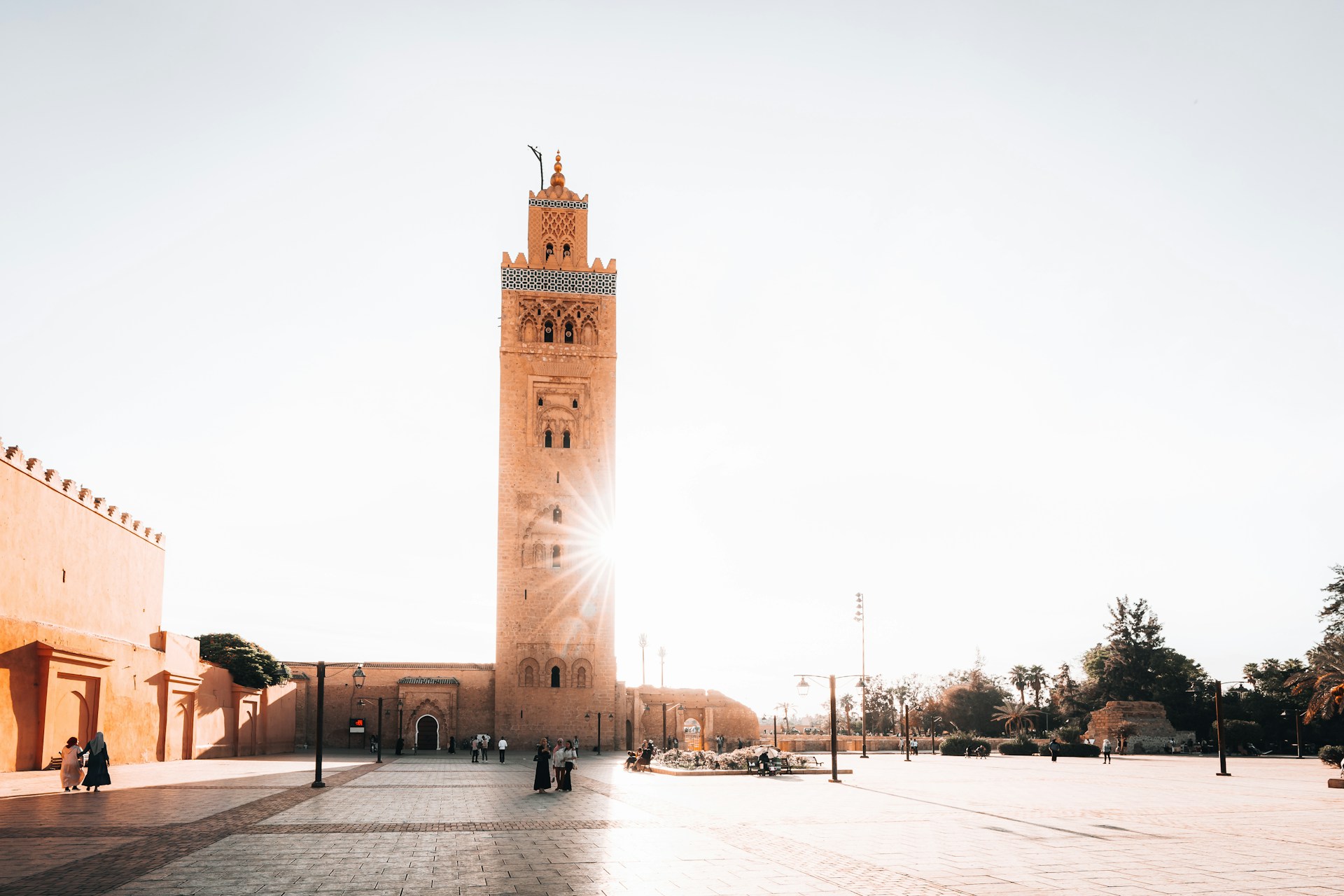
Marrakech is a city built on texture. You feel it before you understand it.
Walls are never flat here; they hold decades of sun, dust, lime and pigment. Tadelakt carries the touch of the artisan who polished it. Zellige tiles catch the light in small, jagged flashes. Wood is carved rather than shaped, and ironwork curls into geometric patterns. Even contemporary buildings feel rooted in something older and slower.
The design language of Marrakech sits between restraint and ornament. Nothing is minimal, yet nothing feels crowded. It’s a balance shaped by centuries of practice rather than modern intention. A riad, for instance, does not try to impress; its beauty lies in privacy, proportion, and the quiet way it cools itself. The walls are thick, the courtyard small, the air still. It was designed long before design became something to talk about.
Walk through the Medina and you’ll notice details repeating in different forms: arched doorways, latticed windows, niches carved into walls, and the occasional splash of deep blue on a wooden door. Floors show their age, and ceilings with carved beams hold a rhythm from another time. The city has its own visual logic — one that works without ever needing to explain itself.
In contrast, modern Marrakech looks outward. Gueliz and Hivernage host galleries, concept stores and boutique hotels that play with colour, material and form. Some lean into simplicity and pure lines. Others reinterpret traditional craft with new shapes. You will find ceramics glazed in unexpected tones, textiles that feel both familiar and new, metalwork that looks sculptural rather than functional.
The beauty of Marrakech is this constant dialogue between the handmade and the contemporary. A new boutique might use terrazzo and glass, yet still carry the warmth of local craft. A minimalist hotel can still smell faintly of cedar and orange blossom. The city invites reinvention without losing its identity.
If design matters to you, Marrakech is not a place to rush. Let your eyes slow, let your hands touch surfaces, and you’ll begin to understand why people come here to learn about materials rather than trends.
WHAT TO SEE
Marrakech has attractions, of course, but they are not the reason the city stays with you. What stays is the movement, the atmosphere, the way light hits a wall or how the air smells differently at sunset. Still, there are places you should see because they anchor the city’s story.
Jemaa el-Fnaa
The main square is always shifting. Mornings feel open and calm. Evenings become a theatre of food stalls, musicians and storytellers. Some travellers find it chaotic, others energising, but everyone should experience it at least once. Go with curiosity, stay as long as feels right, and walk away whenever you want silence again.
The Souks
The souks are a maze, but not in the way people imagine. If you walk with ease instead of tension, the paths make sense.
Souk Semmarine is bright and full of movement. Souk des Teinturiers carries vivid colours from the dye workshops. Souk Haddadine smells of metal and fire. Souk Cherratine is lined with leather goods. Each section has its own rhythm. The magic lies not in buying but in watching artisans work.
Jardin Majorelle
Jardin Majorelle is a controlled kind of beauty. Bright blue walls, yellow accents, bamboo groves, cactus gardens and reflections that turn everything vivid. Early mornings are quiet. Later hours can be busy, but the colour always wins.
YSL Museum
Next to the garden, the Yves Saint Laurent Museum is a modern tribute to the designer’s connection with Morocco. The building itself is the star. Brick patterns, curves and shadows create a soft geometry that feels rooted in the city.
Dar El Bacha – Musée des Confluences
One of the most elegant buildings in Marrakech.
Courtyards, tiles, carved wood, and a sense of refined patience. It’s a place to move slowly, and the coffee house inside is well worth a stop.
Le Jardin Secret
Calmer than Majorelle.
Open spaces, restored pavilions and a garden layout that reveals the city’s traditional water systems. Perfect for a quiet afternoon.
Bahia Palace
Tiles, stucco, painted ceilings. The palace is a masterclass in ornamentation. Arrive early if you want to appreciate its beauty without crowds.
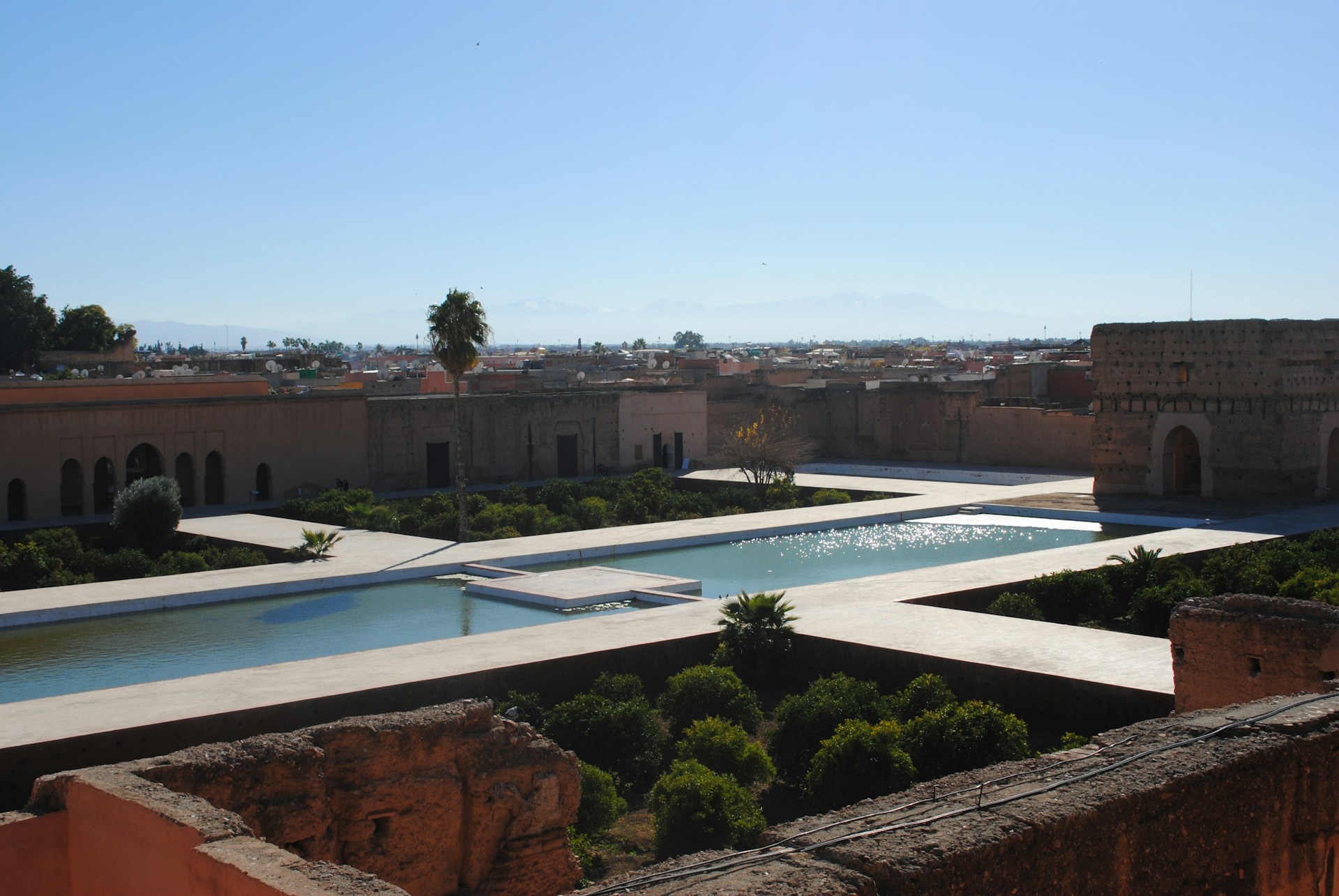
El Badi Palace
A ruin that tells a different story.
Open courtyards, long shadows, storks nesting on high walls. You feel the scale of what this place used to be.
The Saadian Tombs
Smaller than the palaces but with details that feel intimate and delicate. Zellige, marble, carved plaster. A place of beauty and quiet.
WHERE TO EAT IN MARRAKECH
Food in Marrakech is tied to the rhythm of the day.
Breakfast is slow, filled with msemen, fresh fruit and mint tea. Lunch can be light or generous. Dinner often moves to rooftops where the air flows easier.
Restaurants here don’t follow a single style. Some stay close to tradition, others reinterpret Moroccan flavours with a lighter, modern hand. And the best meals often happen in places that don’t try too hard.
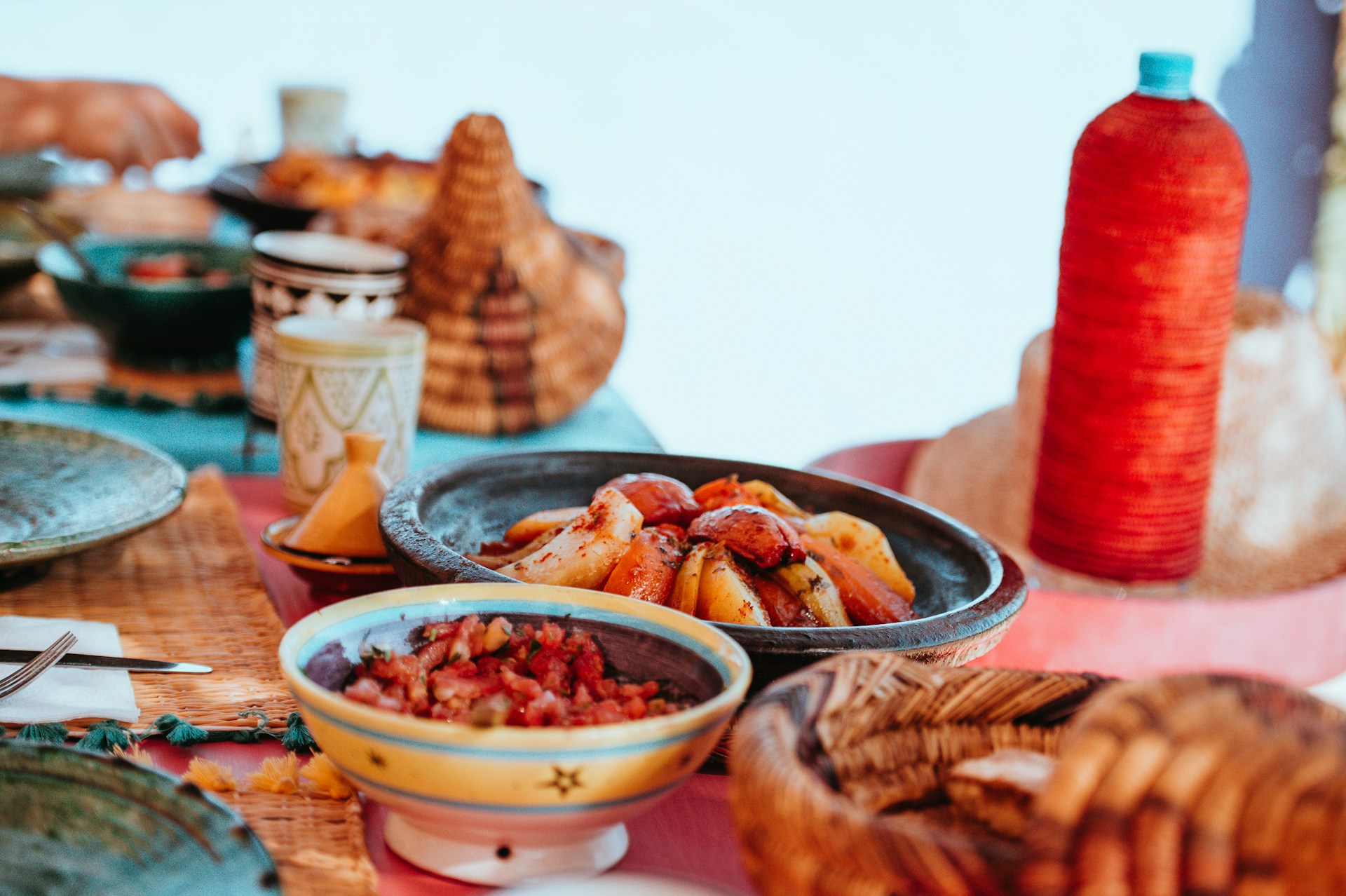
Traditional Moroccan
Dishes to look for: lamb tanjia cooked in clay jars, chicken tagine with preserved lemon, vegetable couscous, zaalouk, harira, pastilla, grilled brochettes and warm bread pulled straight from an oven that looks like part of the street.
Modern Moroccan & Contemporary Dining
Contemporary restaurants build on old flavours without losing their essence. Expect roasted vegetables with smoky spices, citrus notes, fresh herbs, warm grains, vibrant salads and desserts built on almonds, dates and orange blossom.
Rooftop Dining
Some of the most atmospheric meals are found on rooftops overlooking the Medina. Lights twinkle across uneven terraces, muezzins call from several minarets at once, and the air cools. It’s the closest the city comes to stillness while still fully awake.
Inside Hotels & Riads
Properties like Riad Tajania, Pure House Marrakech, Riad Nyla and others serve meals in courtyards, by pools or under pergolas. These meals feel personal, made slowly, without rush. Breakfast often becomes the hidden highlight of the stay.
Cafés & Daytime Spots
Coffee culture in Marrakech has grown over the last decade.
In Gueliz, cafés offer pastries, specialty coffee, and open-air tables that catch the late afternoon light. It’s a different way of experiencing the city, away from the Medina’s intensity.
SHOPPING & LOCAL CRAFT
Shopping in Marrakech is not about accumulating things.
It is about understanding how objects are made. Every craft has its own street, tools, rhythm and scent.
Ceramics
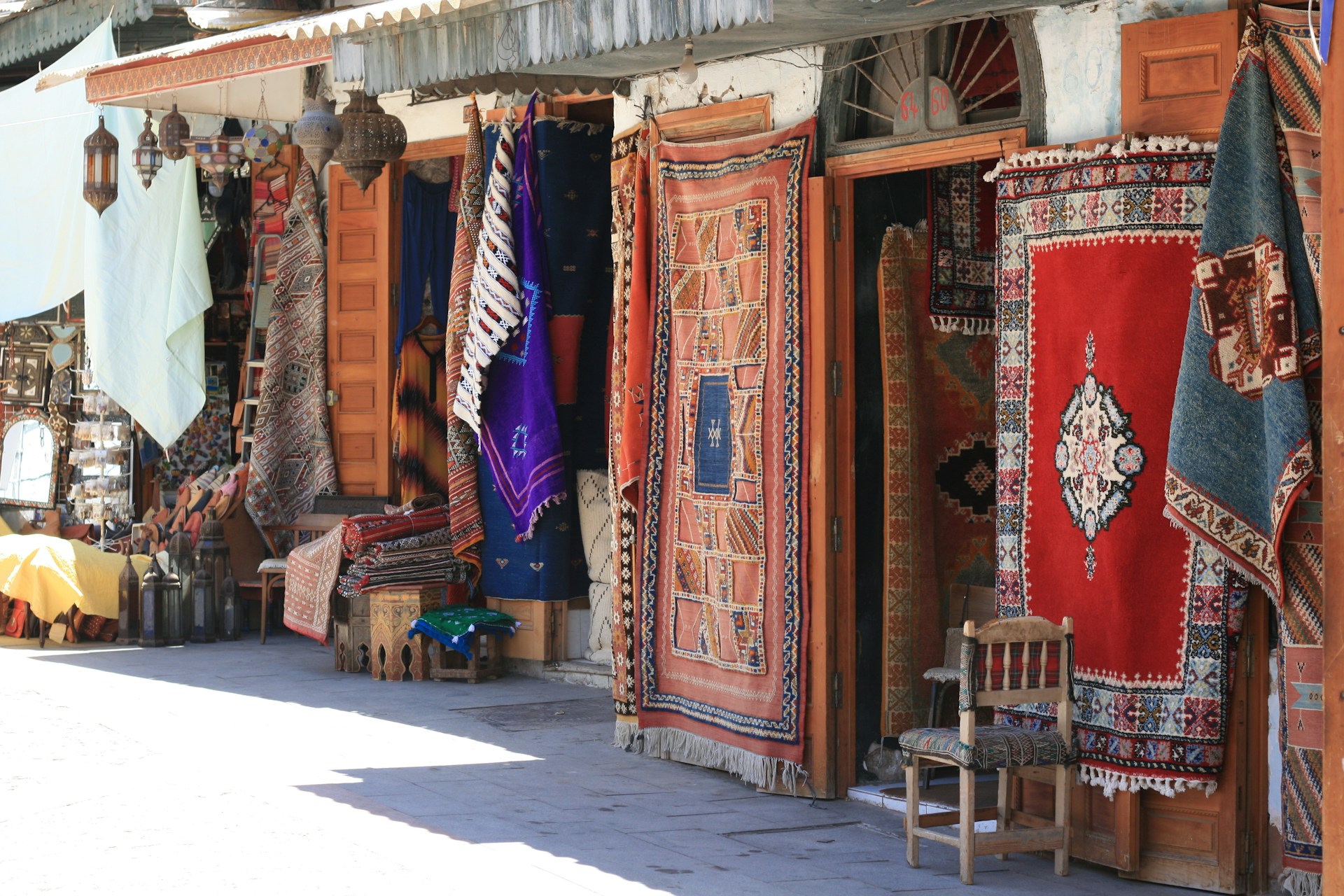
Glazes range from deep cobalt to pale mint. Some pieces are perfectly symmetrical, others carry small imperfections that reveal the maker’s hand. Workshops in the Medina and boutiques in Gueliz show two sides of the same craft.
Textiles
Rugs, blankets, cushions, caftans.
Each region of Morocco has its own weaving traditions. You recognise differences in texture, knotting, pattern and weight. If you see a piece you love, take your time. Ask questions. Textiles carry history.
Leather
Slippers, bags, belts, journals.
The leather souks near Bab El Khemis hold centuries of tradition. The smell is strong but real.
Metalwork
Lamps, trays, teapots, bowls.
You hear the sound of artisans long before you see them. Hammering is an art form here.
Caftans & Fashion
Contemporary Moroccan designers reinterpret traditional clothing in lightweight fabrics and modern silhouettes. Boutiques in Gueliz are the best place to explore this side of the city.
Etiquette & Bargaining
Bargaining is part of the culture but not a battle.
Start at half the asking price. Smile. Move lightly. When you reach a number that feels fair for both, shake hands.
EXPERIENCES WORTH PLANNING IN MARRAKECH
Some experiences in Marrakech happen naturally. Others deserve to be planned. A few stay with you long after the trip ends because they capture the city’s rhythm and its quieter moments.
Hammam & Spa Rituals
A Moroccan hammam is more than a treatment.
It is a sequence of heat, steam, cleansing and calm that resets your entire body. If it’s your first time, choose a private hammam inside a riad or hotel. The experience is slower and more personal. Warm water, black soap, exfoliation with a kessa glove and a final rinse that leaves your skin soft and refreshed. Follow it with a massage using argan oil or rose-scented blends.
Cooking Classes in Traditional Homes
Cooking in Marrakech means touching ingredients that carry the scent of the land.
Saffron from Taliouine, preserved lemons, mint, cumin, orange blossom, fresh vegetables from small farms outside the city. A cooking class reveals how Moroccan food builds flavour slowly. Some classes begin in local markets. Others start inside private homes where you share stories and recipes passed down through generations.
Atlas Mountains Day Trip
Less than an hour from Marrakech, the Atlas Mountains change the rhythm completely.
Villages sit along the hillsides, the air is clear, and paths curve around terraced farmland. Lunch in a Berber home always feels genuine, a simplicity that’s quietly beautiful. It’s the perfect break from the intensity of the city.
Agafay Desert Experience
Agafay is a stony desert rather than a sandy one.
The light here looks different. Mornings are pale and clean, and evenings turn everything amber. You can arrive for a sunset dinner or stay overnight in one of the desert camps. Fires burn softly, and the silence feels absolute.
Art & Galleries in Gueliz
Marrakech has a growing contemporary art scene.
Galleries in Gueliz host Moroccan painters, sculptors and ceramicists. The work is bold and expressive. It pairs tradition with experimentation. This side of the city shows how local artists interpret modernity without losing their roots.
Workshops with Local Artisans
You can spend a morning learning pottery, brasswork or calligraphy with an artisan.
Hands learn through repetition, and you begin to understand the patience behind every object sold in the souks. It’s a powerful way to connect with the city.
ITINERARIES
There is no single way to experience Marrakech.
These itineraries help you choose a pace that matches your style.
Three-Day Itinerary: A Taste of the City
Day 1: Medina & Rooftops
Arrive, settle into your riad and take your first wander through the Medina at an easy pace. Explore a few souks, stop at a quiet courtyard for tea and end the day with a rooftop dinner as the city lights soften.
Day 2: Majorelle & Gueliz
Start early at Jardin Majorelle and the YSL Museum before heading to Gueliz for cafés, boutiques and modern galleries. Spend the afternoon drifting between design shops and shaded terraces, then enjoy a relaxed dinner in the neighbourhood.
Day 3: Hammam & Evening Stroll
Begin with a hammam and massage to reset before your final hours in the city. Return to the Medina to revisit favourite workshops or choose a few meaningful pieces to bring home, then close the trip with a rooftop drink at sunset.
Four-Day Itinerary: A Blend of Culture & Calm
Day 1: Settling In
Arrive and give yourself a moment to land.
Drop your bags, breathe in the cool air of the courtyard and let the city slow you down before you even step outside. Once you feel settled, wander through the Kasbah or the Mellah. These neighbourhoods move at a gentler pace than the heart of the Medina, with wider streets, small shops, bakeries and a sense of everyday life that eases you into Marrakech without overwhelming you.
Day 2: Museums & Gardens
Start early at Jardin Majorelle, then cross directly into the YSL Museum while the air is still crisp.
Spend the late morning in Gueliz, where cafés and galleries showcase the city’s contemporary side. Have lunch somewhere bright and simple, then drift through art spaces like Comptoir des Mines or smaller independent studios.
Return to your riad when the afternoon heat peaks, then head out again as the city cools. A rooftop dinner works perfectly here.
Day 3: Atlas Mountains
Leave the city behind for a day and head toward the Atlas Mountains.
Small villages cling to hillsides, streams run clear and the air feels lighter. Take a short hike or walk between villages, then sit down to a home-cooked meal prepared by a Berber family. Expect dishes like vegetable tagines, fresh bread, mint tea and simple flavours grounded in the landscape around you.
You’ll return to Marrakech restored.
Day 4: Slow Medina Day
Keep this day unstructured.
Let the Medina guide you. Revisit a workshop you noticed earlier in the trip, buy something meaningful, stop for mint tea at a small café, linger somewhere shaded and watch the city flow around you.
Finish with a slow dinner on a rooftop as the call to prayer moves across the skyline.
Five-Day Itinerary: For Those Who Want Depth
Day 1: Medina Arrival
Walk the souks without trying to conquer them.
Let yourself follow sounds, colours and scents. Watch artisans hammer brass or carve wood. Don’t rush. The goal is to learn how the Medina moves, not to tick places off a list.
Day 2: Historic Buildings
Spend the day among Marrakech’s most beautiful architectural sites.
Bahia Palace for colour and pattern.
Saadian Tombs for delicacy and detail.
El Badi for open sky and silence.
Pause for a slow lunch, then return at sunset to a rooftop near the Koutoubia for one of the most atmospheric views in the city.
Day 3: Gueliz & Contemporary Marrakech
Gueliz has its own identity.
Start with boutiques or craft-driven shops, then explore galleries showing modern Moroccan artists. Cafés are perfect for an unhurried lunch. In the evening, you can dip into design-focused wine bars or restaurants that reinterpret traditional dishes.
Day 4: Desert or Atlas
Choose the experience that speaks to you.
Agafay desert for silence, endless horizon, dinner under the stars.
Atlas Mountains for fresh air, terraced landscapes, a glimpse of rural life. Both offer a welcome shift of perspective.
Day 5: Hammam + Shopping
Dedicate your final morning to a hammam treatment.
Your body will thank you.
Spend the afternoon shopping for ceramics, textiles or small pieces you’ll want to carry home. It’s a satisfying, grounding way to close the trip.
PRACTICAL TIPS
These details make your days smoother.
Money
Cash is essential in the Medina.
Many artisans and small shops don’t take cards, so keep small notes on you. Most riads accept cards for rooms and meals.
Dress Code
Marrakech is relaxed, but modest clothing is appreciated.
Light fabrics, loose shirts, long dresses and linen trousers work well in the heat and blend naturally with local customs.
Safety
The city feels safe when you move with awareness.
Avoid long walks at night through unfamiliar streets. Taxis are inexpensive and easy to find.
Taxis
Always agree on the fare before getting in.
Keep small change, as drivers rarely have enough to break larger bills.
Navigation
Maps can mislead you in the Medina’s narrow alleys.
Use landmarks instead, and don’t worry about getting slightly lost. It’s part of the experience. If needed, ask a shopkeeper rather than a passerby.
Photography
Always ask before photographing people or workshops.
Many artisans welcome it, others prefer privacy. A quick gesture or smile goes a long way.
Tipping
Tipping is part of daily life.
A few dirhams for cafés, taxis, hotel staff or small services are appreciated and often expected.
FAQ
Is Marrakech safe for first-time travellers?
Yes, as long as you move with awareness. The Medina can feel intense, but most travellers have smooth experiences.
How many days do you need?
Three to five days give you enough time to feel the city without rushing.
What’s the best neighbourhood to stay in?
The Medina for immersion, Kasbah for calm, Gueliz for modern comfort, Palmeraie for privacy.
Is it easy to shop in the souks?
Yes, if you take your time. Bargaining is expected. Move gently and be patient.
Is the hammam experience too intense for beginners?
Not if you choose a private or hotel hammam. Traditional public hammams are more vigorous.
Is Marrakech walkable?
Within the Medina, yes. Beyond that, taxis and private drivers make things easier.