Switzerland & Austria: 7 Hotels Worth the Journey
From Geneva's cobblestones to the Styrian Alps, a collection of addresses that reward the curious traveller
There is a particular kind of fatigue that sets in when every hotel begins to look the same. The lobby with its designated Instagram moment. The minibar arranged by an algorithm. The staff trained to smile in precisely the same increments. Against this backdrop, the hotels gathered here feel almost radical in their differences.
What links a seventeenth-century townhouse on Geneva's cathedral square to a timbered chalet in the Bernese Oberland? Or a hilltop castle above Zurich to a clutch of contemporary chalets overlooking a Styrian pilgrimage town? Not a brand, certainly. Not a formula. Perhaps only this: each property has been shaped by individuals with opinions rather than focus groups with spreadsheets. They are hotels where someone, at some point, made choices that could have gone wrong. The fondue served in a vaulted cellar. The Rolling Stones guitar mounted in a penthouse suite. The decision to serve breakfast directly into your chalet. The insistence on collecting art nobody else was collecting.
Switzerland and Austria share a border, a language (more or less), and a landscape that has been drawing travellers since the Grand Tour. But their hospitality traditions diverge in telling ways. Swiss precision meets Austrian ease. Zürich's discretion plays against Vienna's theatricality. Both nations understand luxury, though they express it differently.
The seven hotels profiled here span lake shores and city squares, forest clearings and historic palazzi. Three are in Switzerland, four in Austria. Some have centuries of history, others opened within the past two years. What they share is a point of view, and the willingness to defend it.
Switzerland
Hôtel Les Armures, Geneva
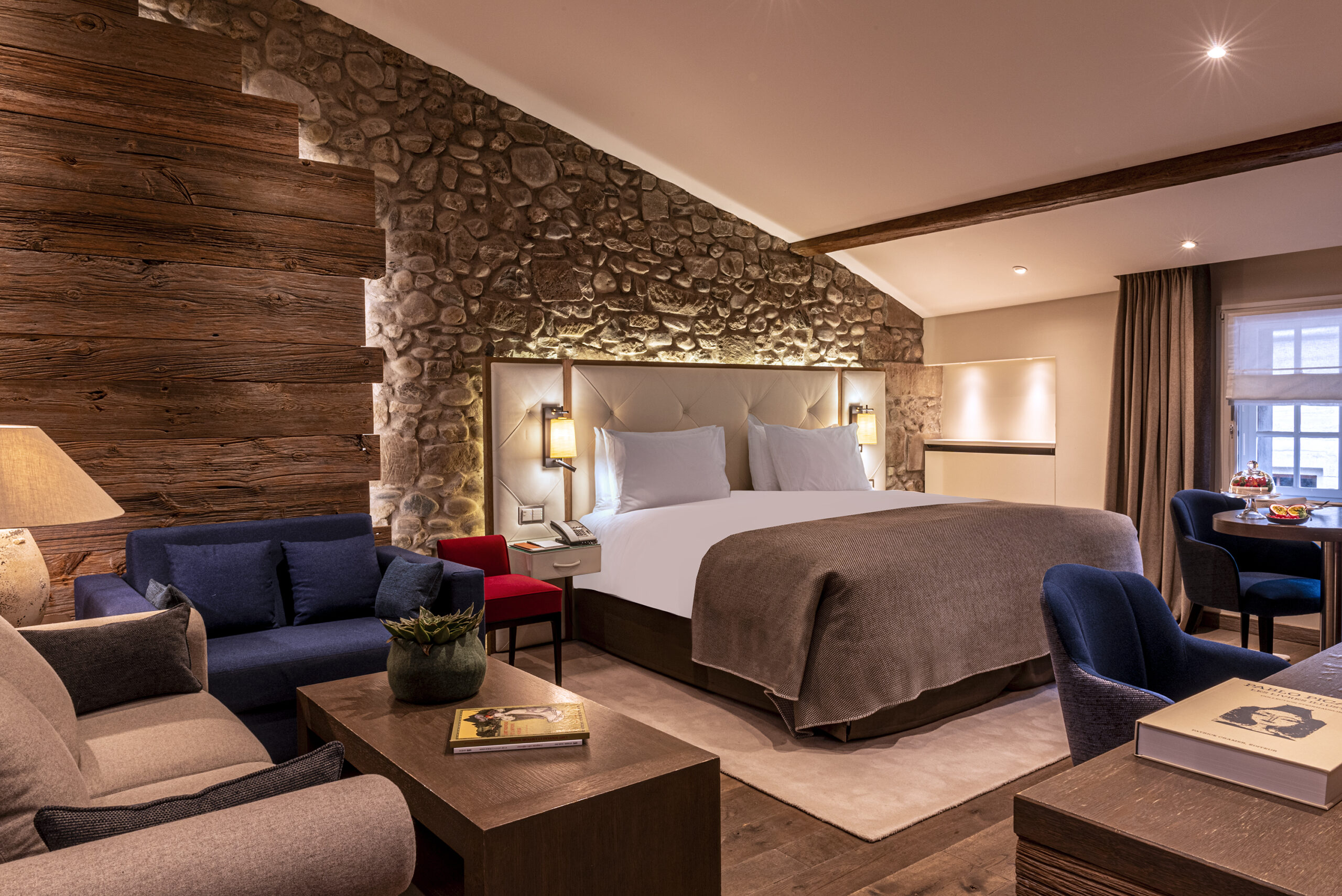
The Old Town of Geneva climbs steeply above the lake, its cobbled lanes threading between medieval facades and Reformation landmarks. At its highest point, wedged between the Maison Tavel and Saint-Pierre Cathedral, stands Les Armures, a property that has been receiving guests since the seventeenth century.
The hotel takes its name from the suits of armour that still guard its public spaces, relics of a building that has witnessed centuries of Genevan history. Thirty-two rooms occupy four floors of the stone-walled mansion, each decorated with exposed beams, faux-fur throws, and the kind of individualistic furnishings that suggest rooms assembled over time rather than delivered by a single shipment.
The Borgeat-Granges family runs the property with a philosophy that prizes understatement over assertion. There is no spa, no rooftop bar, no wellness concept requiring explanation. Instead, there is what Les Armures has always offered: proximity to everything that matters in Geneva, and a retreat from the city's more polished hotels.
The restaurant deserves particular attention. Operating since the building's earliest days, it holds the distinction of being Geneva's oldest continuously functioning café. The menu leans heavily into Swiss tradition. Fondue arrives in cast-iron pots, the cheese blend sourced from Gruyère and Vacherin Fribourgeois dairies. Raclette is scraped tableside. Zürich-style veal appears alongside rösti. The Carnotzet, a cellar room lined with Alpine wood, serves cheese specialities to parties seeking privacy.
The guest book reads like a twentieth-century history lesson. Jimmy Carter signed during his presidency. Bill Clinton brought his family. Paul McCartney wrote something gracious. Gary Kasparov analysed positions between matches. More recently, George Clooney stayed during film shoots, a visit that the staff mention with characteristic Swiss reserve.
Les Armures belongs to Small Luxury Hotels of the World and holds Swisstainable Level 1 certification. The property sits eighteen minutes by car from Geneva International Airport, though guests arriving by train at Cornavin can walk in fifteen minutes through increasingly ancient streets.
The Dolder Grand, Zurich
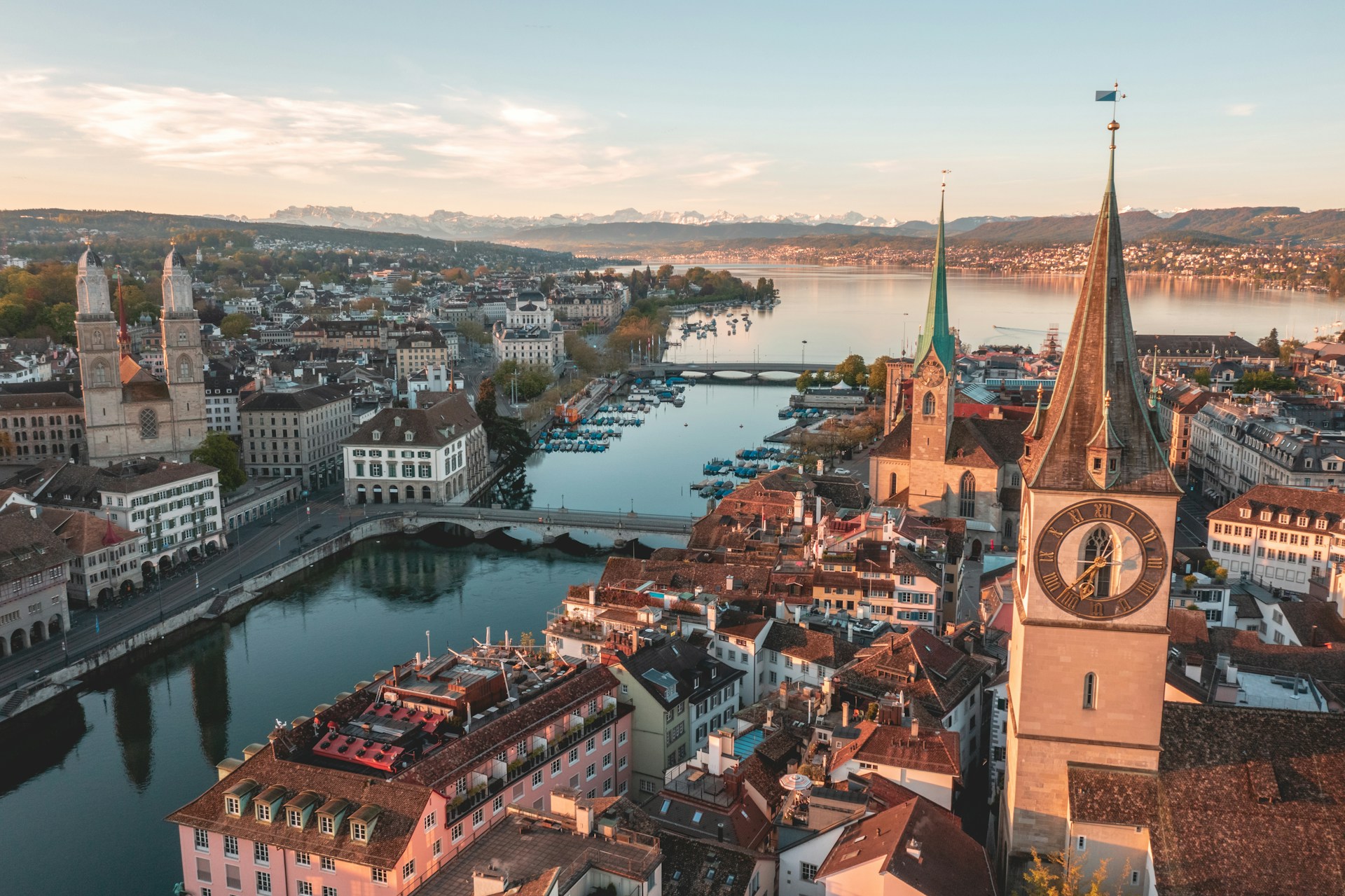
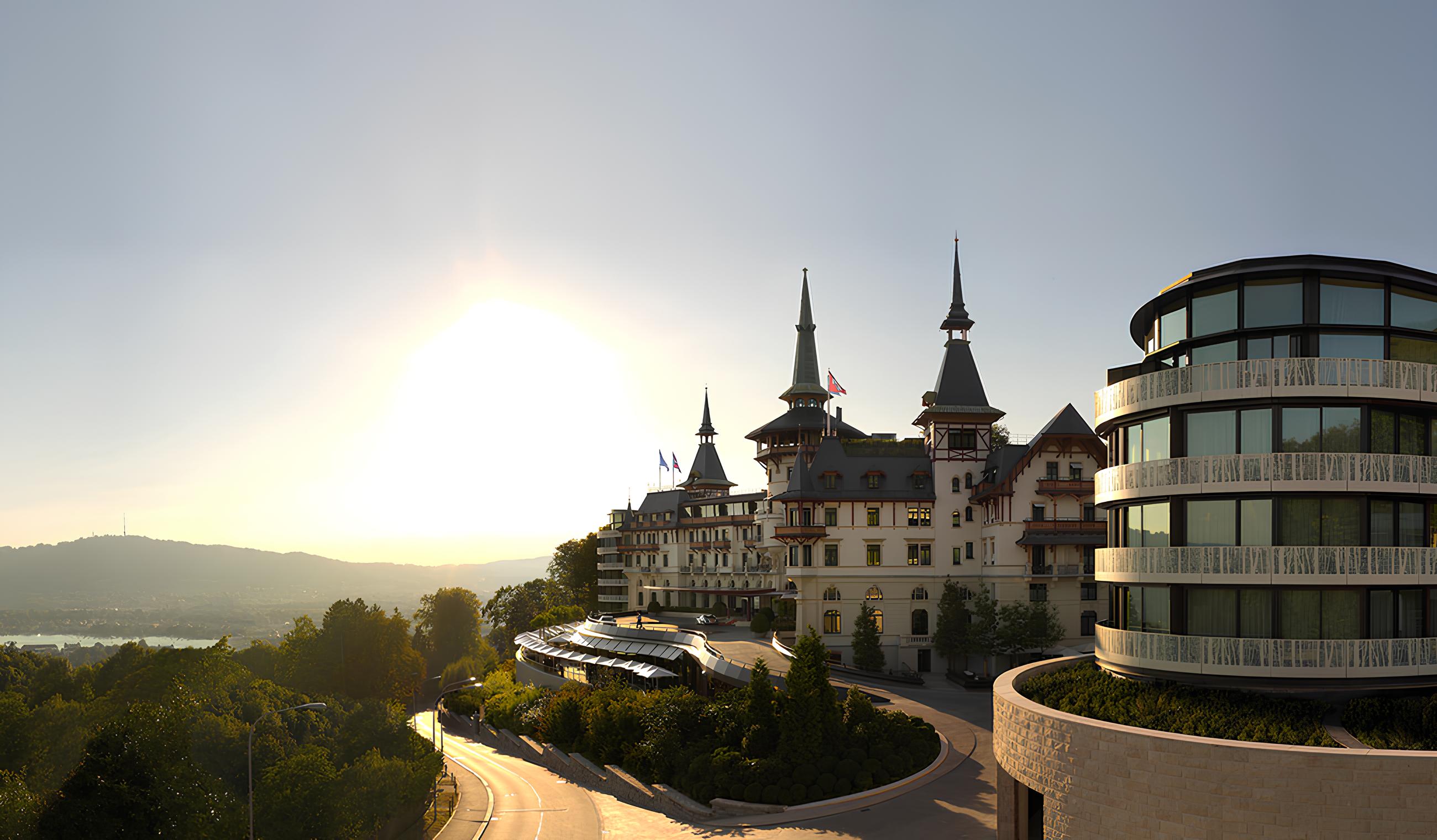
The Dolder Grand occupies an improbable position above Zurich, perched on a forested ridge called the Adlisberg, where the city's grid dissolves into nature. Guests have been arriving here since 1899, initially by horse-drawn carriage, later by the Dolderbahn funicular that still climbs from Römerhof station. The hotel began as a Grand Hotel & Curhaus, equal parts accommodation and sanatorium, its Swiss timber architecture designed by Basel architect Jacques Gros.
A century of additions obscured the original symmetry until 2004, when investor Urs Schwarzenbach commissioned Foster + Partners to reimagine the property. Norman Foster, working on his first hotel project, sketched initial concepts on a napkin over drinks. Four years and considerable expense later, two glass-and-steel wings embraced the restored Main Building, creating a hotel that manages the difficult trick of honouring history while refusing to be imprisoned by it.
The renovation doubled floor space while halving energy consumption. Seventy geothermal probes descend one hundred fifty metres into the hillside. The engineering feels almost beside the point, however, once you enter.
One hundred seventy-five rooms and suites distribute across the three structures. Those in the Main Building retain Belle Époque proportions with contemporary furnishings. The new wings offer clean modernist lines and floor-to-ceiling glass. Six historically protected rooms have been restored to their original condition. Several signature suites honour previous guests: the Maestro Suite commemorates Herbert von Karajan, the Masina Suite channels Giulietta Masina's 1950s glamour, and Suite 100 recreates the extravagance of London's Club 100 in black, orange, and purple.
The Schwarzenbach family has transformed the Dolder into one of Europe's most significant hotel art collections. Over one hundred works by ninety artists line corridors and public spaces. Salvador Dalí's "Femmes métamorphosées, Les sept arts" greets diners at the entrance to The Restaurant. A Niki de Saint Phalle and Jean Tinguely collaboration anchors the spa approach. Fernando Botero's "Woman with fruit" stands on the spa terrace. Keith Haring, Joan Miró, Max Ernst, Anselm Kiefer, Takashi Murakami, Andy Warhol. The collection feels less like curation than accumulation, which somehow makes it more convincing.
The spa covers four thousand square metres, shaped by European and Japanese influences. Separate ladies' and gentlemen's areas ensure privacy. The Aqua Zone includes a panoramic pool, indoor and outdoor whirlpools, sanarium, steam bath, and a snow room for cooling. Heated pebbles in the sunaburo provide rest in Japanese tradition. Twenty treatment rooms and two spa suites offer La Prairie and in-house therapies.
Culinary director Heiko Nieder oversees multiple venues. The Restaurant holds two Michelin stars and nineteen Gault Millau points, serving innovative tasting menus that showcase technical precision without forsaking pleasure. Saltz offers all-day dining with fifteen Gault Millau points. The Canvas Bar & Lounge, redesigned in 2025, hosts live performances that have become integral to Zurich's evening culture.
The Dolder Grand belongs to Leading Hotels of the World, Swiss Deluxe Hotels, and Design Hotels. It sits fifteen minutes by taxi from Zurich Airport, though the funicular journey from town remains the more romantic approach.
The Brecon, Adelboden
Adelboden occupies a high valley in the Bernese Oberland, flanked by the peaks of the Wildstrubel and known each January for hosting the FIS Alpine Ski World Cup Giant Slalom on the fearsome Chuenisbärgli. The village attracts serious skiers rather than scene-seekers, its atmosphere more local than international.
Into this landscape, The Brecon arrived in 2024, occupying a timbered hotel that dates to 1914. The building once operated as The Waldhaus, the social centre of Adelboden's 1950s and 60s heyday. Grant Maunder, a Welsh entrepreneur whose family has been taking ski holidays here for forty years, saw something worth reviving.
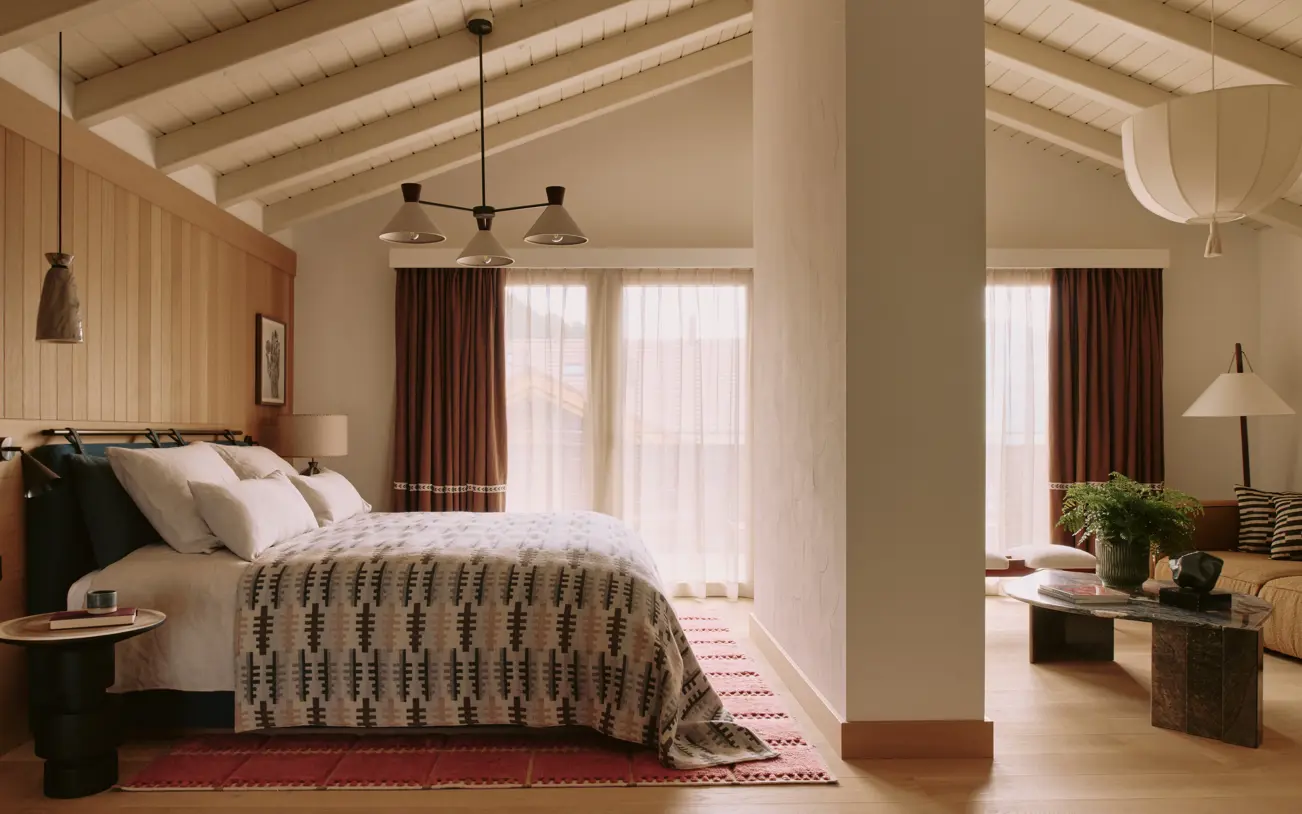
Amsterdam studio Nicemakers handled the interiors, creating spaces that feel like a particularly stylish friend's alpine den rather than a hotel designed by committee. Mid-century furniture, much of it vintage, sits against white-plastered walls and local stone floors. The Jean Gillon Lounge Chair, its leather creased with age, anchors the main room. Art from Amsterdam's Bisou Gallery hangs throughout. Soho Home bar cabinets appear in each room.
The Brecon offers eighteen rooms and four suites, distributed across the timber-framed structure. Rooms feature earthy colour palettes of neutral, deep red, and forest green, accented by Aesop bath products and deluxe bedding. Most include private balconies facing the Adelboden Massif. There are no televisions. Guests are encouraged to leave laptops behind. Reading nooks in each room suggest how to spend the freed time.
The property operates as all-inclusive in the truest sense. Room rates cover all meals and beverages, from champagne to the craft cocktails being mixed at the bar to the cold beers waiting in your room. Afternoon tea arrives daily. The open kitchen serves breakfast, lunch, and dinner emphasising local and seasonal produce, dishes that change with what's available rather than what a corporate menu dictates.
The spa offers a fire-warmed relaxation room, candlelit treatment room, steam bath, and a Finnish sauna with mirrored windows facing the mountains. The heated outdoor pool looks directly toward the Adelboden Massif. Guests can access the fitness centre at Cambrian Hotel, a ten-minute walk away.
The Brecon accepts only adults over eighteen and does not allow pets. It sits forty-five minutes from Bern Airport, two hours from Zurich and Geneva. The train to Frutigen connects to the hotel by a thirty-minute transfer.
Austria
Cortisen am See, St. Wolfgang
The Salzkammergut stretches across Upper Austria in a jumble of lakes, mountains, and villages that seem borrowed from operetta. Lake Wolfgang lies near its heart, its shores edged with painted houses and the white towers of St. Wolfgang's pilgrimage church.
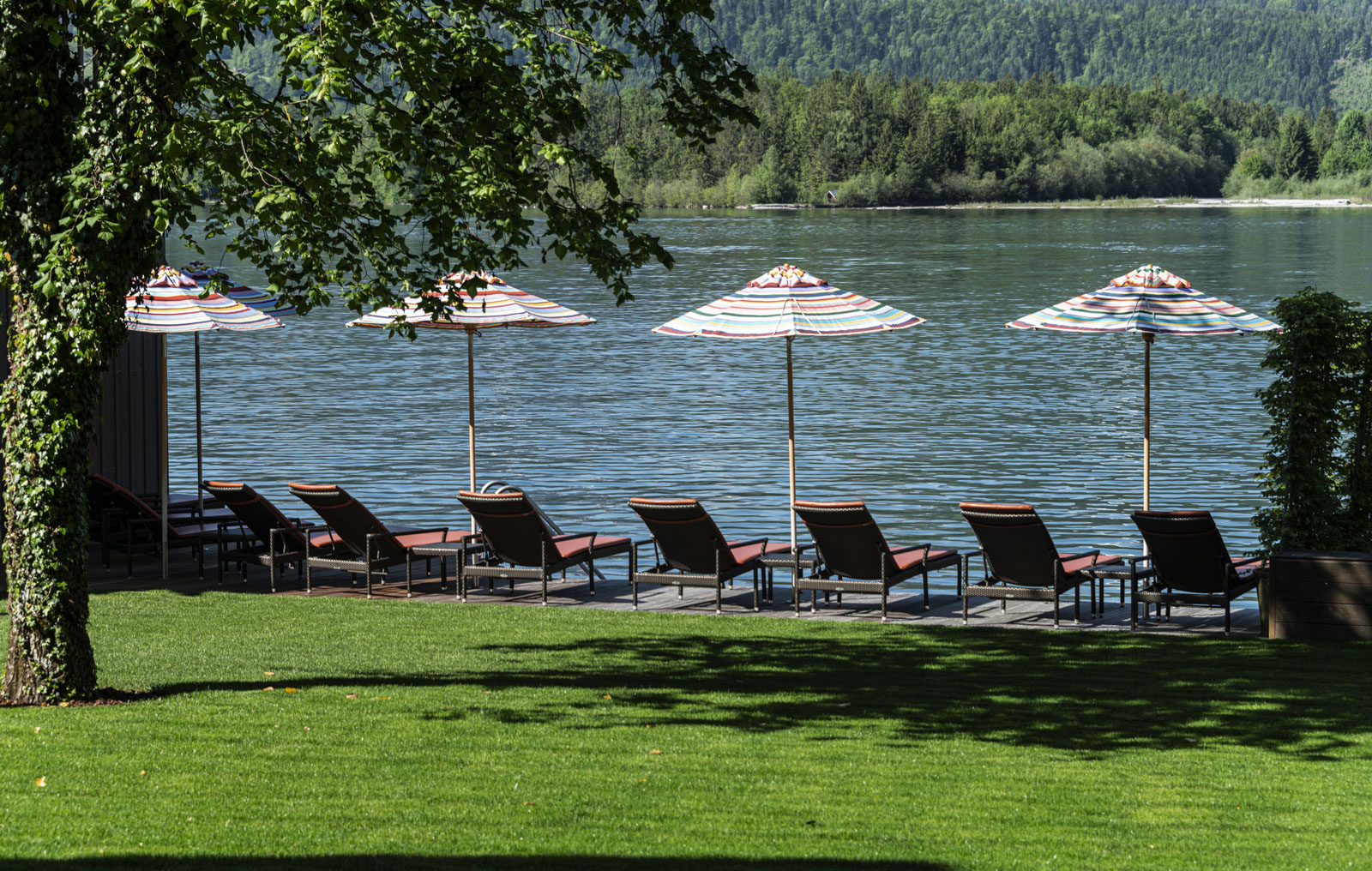
Cortisen am See sits directly on the lake, one of the few properties in the region with private water access. Owner Roland Ballner has shaped the hotel according to his own considerable tastes. This is immediately apparent upon entering, where lime greens, fuchsia pinks, bright purples, muted golds, and cornflower blues compete for attention across furniture collected from his travels worldwide. Zebra-print accent walls. Black rattan chairs. Moroccan woven rugs. Art covering every available surface. The hotel serves as permanent exhibition of one man's obsessions.
The thirty-six rooms and suites continue this maximalist approach. No two look alike. Colour schemes shift from room to room. The Boat Shed Suite occupies the upper deck of the hotel's boathouse, its two levels of balcony offering panoramic lake views. Junior suites, deluxe rooms, and standard doubles each receive individual treatment.
The twenty-five-metre indoor infinity pool runs along the building's lakeside edge, its water seemingly merging with the Wolfgangsee beyond. A Finnish sauna and bio sauna occupy the first floor. The boat-shed sauna sits directly on the water. Massage treatments can be booked in the garden pavilion during summer months. The hotel maintains private lake access with a jetty, sunbathing lawn, and rowing boats for guest use. Roland himself offers motorboat rides.
Breakfast unfolds over six courses, served à la carte on the terrace when weather permits. The restaurant holds two Falstaff forks, its regional cuisine shaped by international wine selections that Roland personally curates during his travels. Evenings might end at Blue in the Face, the hotel's cigar lounge stocked with Havanas, Hondurans, Dominicans, single malts, and aged rums.
Additional diversions include billiards in the reception lounge, a seventy-square-metre gym with Technogym equipment, Harley-Davidson rentals, and Roland's willingness to arrange whatever strikes a guest's fancy. The hotel participates in the Art Circle at Lake Wolfgang, bringing international artists to the region.
Cortisen am See operates as adults-only and does not accept pets. St. Wolfgang's cobbled streets and the famous Schafberg Cog Railway lie within walking distance.
Soulsisters' Hotel, Kaprun
Kaprun lies in Salzburger Land, in the shadow of the Kitzsteinhorn glacier. The town serves as gateway to year-round skiing, summer hiking, and the dramatic reservoirs of the Kaprun High Mountain Road. It is also, unexpectedly, home to a design hotel that calls itself Soulsisters'.
The building previously operated as Hotel Antonius before its transformation into something that the Michelin Guide describes as "filling a design-forward niche" in the area. The rebrand brought new interiors, a reconsidered approach to hospitality, and a name that gestures toward sisterhood without taking itself too seriously.
Rooms and suites offer alpine views through large windows, their interiors mixing solid wood elements with contemporary furniture. Loft rooms feature sloping ceilings with high light play and open-plan bathrooms. Design suites include effect fireplaces for evening atmospheres. The Lifestyle Suite spreads across separate bedroom and living areas. Throughout, box spring beds, designer mini-bars, and foldable desks suggest a hotel that has thought carefully about what guests actually use.
The one-thousand-square-metre Hideaway Spa functions as the hotel's centrepiece. An indoor pool, outdoor pool, and natural swimming pond provide three ways to enter water. Multiple saunas, a jacuzzi, and various thermal experiences fill the wellness area. A yoga room hosts regular sessions. The hundred-square-metre fitness studio offers panoramic mountain views while you work.
Dining operates on a half-board model. Mornings bring an extensive breakfast buffet featuring homemade specialities, vegan options, house breads, and a tea bar. Evenings deliver a five-course dinner menu incorporating superfoods and global culinary influences alongside traditional Alpine dishes. Once weekly, a themed experience buffet appears. On weekends, the WHY NOT restaurant serves an exclusive nine-course gourmet experience.
The hotel sits five minutes' walk from Kaprun's centre and eight minutes from the Maiskogel gondola. The ski bus stops outside. Summer brings the Zell am See-Kaprun Card with stays, offering free activities and discounts throughout the region.
Soulsisters' partners with Plant-for-the-Planet through its "Go Green Darling" programme, planting trees for every day a guest declines room cleaning.
Palais Rudolf, Vienna
Vienna's first district, the Innere Stadt, concentrates centuries of Habsburg ambition into a walkable core. The Vienna State Opera anchors one end, Saint Stephen's Cathedral the other. Between them, the Hofburg Palace, the Graben's boutiques, and enough coffeehouses to spend a lifetime rotating through their marble tables.
Palais Rudolf opened in December 2025 on Rudolfsplatz, a quiet square overlooking Rudolfspark near the Danube. The building dates to the fin de siècle, its historicist facade originally constructed during Crown Prince Rudolf's lifetime. The hotel takes his name, though its spirit feels more contemporary than imperial.
Palais Rudolf belongs to Miiro Hotels, a boutique brand developed by InterGlobe Enterprises that now operates properties in Paris, Barcelona, Gstaad, and London. The Vienna opening marked their fifth hotel in sixteen months, establishing a pattern of targeting Europe's most culturally dense cities.
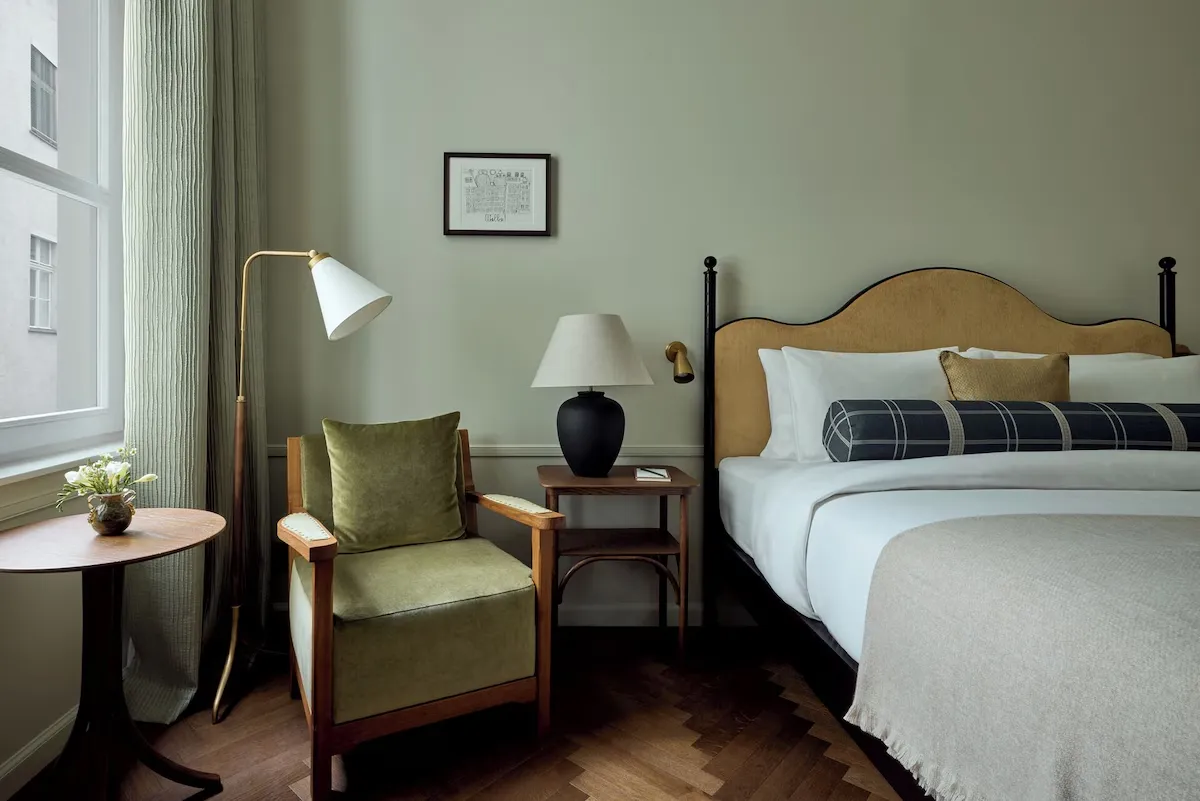
Sixty-four rooms and suites occupy the traditional Altbau structure. Thurstan handled interior design, creating spaces that blend old-world proportions with contemporary refinement. Warm colours, pale parquet flooring, and vintage-inspired furnishings appear throughout. Locally sourced Viennese antiques provide historical grounding. Views reveal either the leafy park or the property's inner courtyard.
Room categories range from Classic to Superior to Deluxe, with several suite types occupying corner positions. The Palais Rudolf Suites spread across fifty-two to fifty-three square metres, featuring four-poster beds, freestanding roll-top baths, and private balconies overlooking the park. Le Labo amenities, complimentary minibars in upper categories, and daily housekeeping (alternate days for Classic rooms) address practical concerns.
Baroness restaurant and bar anchor the ground floor, bringing Italian cooking to Vienna's Old Town. The space, named for a young Austrian aristocrat connected to Crown Prince Rudolf, opens for breakfast with plans to expand into full lunch and dinner service. The atmospheric bar serves hand-crafted cocktails into the evening.
Additional features include a Refresh Room for early arrivals and late departures, a fitness facility, and the concierge services expected at this level. The hotel cannot accommodate guests with limited mobility due to the historic building's constraints.
Schottenring U-Bahn station lies six minutes' walk away, connecting to the city's comprehensive public transport. Vienna Airport trains reach Wien-Mitte in fifteen to twenty-five minutes, with taxis completing the final stretch in ten minutes.
Hotel Montestyria, Mariazell
Mariazell lies in northern Styria, roughly equidistant from Vienna and Graz, in a mountain landscape that retains its remoteness despite reasonably good road connections. The town clusters around its Basilica, Austria's most important pilgrimage church, drawing faithful visitors year-round. Mass tourism has largely bypassed the region. Industry never arrived. What remains is Alpine quietude of an increasingly rare variety.
The Hideaway Hotel Montestyria opened in September 2022 on a hillside above town, its panoramic position offering views across Mariazell to the mountains beyond. Helga and Peter Lindmoser, the property's founders, designed what they call a "hideaway" in the most literal sense: a place to disappear from the outside world while being exceptionally well looked after.
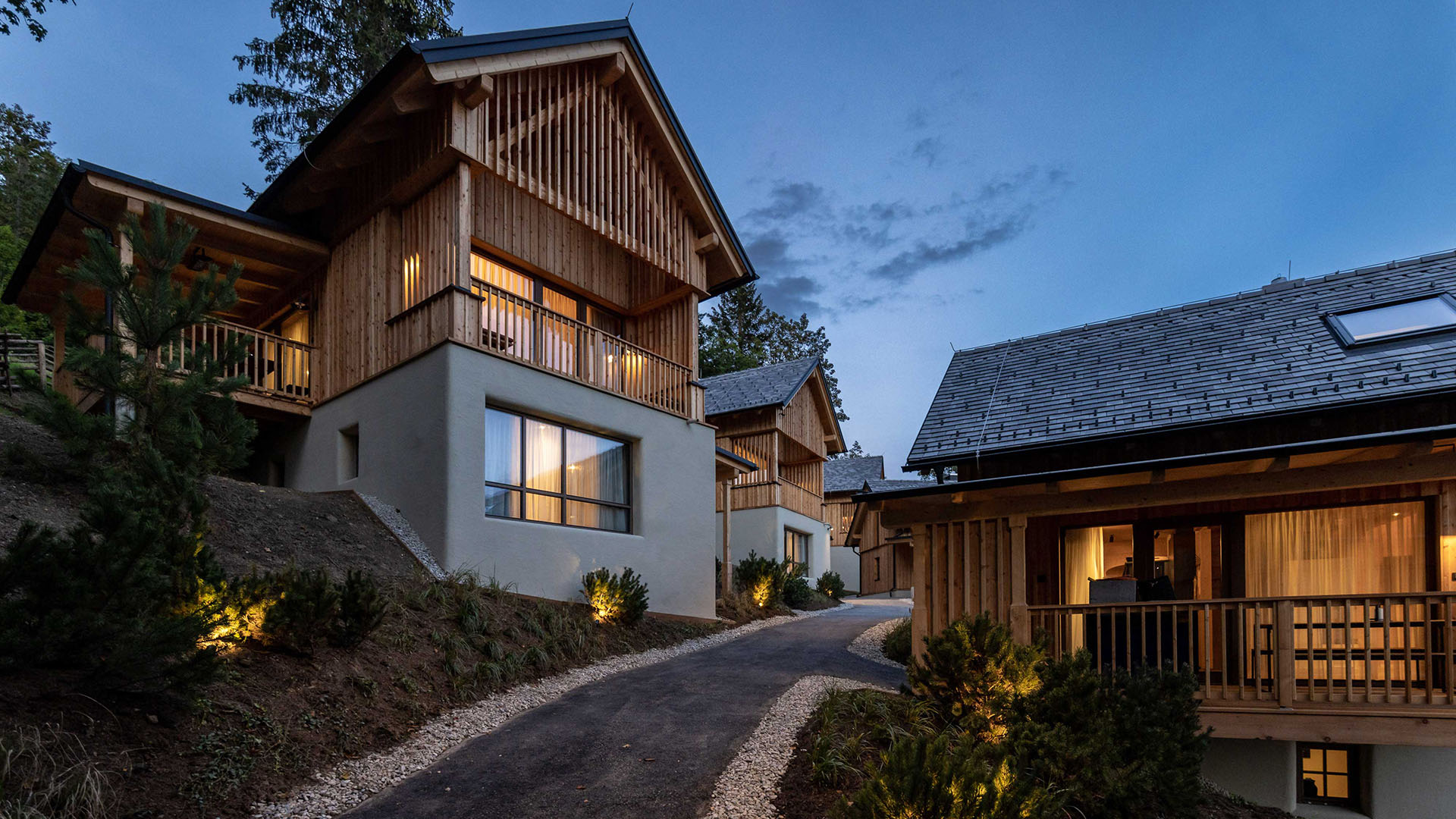
The hotel comprises six premium chalets and two junior suites in the main house, totalling just eight units. Each chalet spreads across three floors and one hundred square metres, accommodating up to four guests. The design merges contemporary clean lines with traditional Alpine materials, knotted pine and local stone providing warmth within minimalist frameworks. Each chalet includes a living and dining area with wood-burning stove, a high-quality SMEG kitchen, two bedrooms with bathrooms, a private Finnish sauna, and both a west-facing sundown terrace and a south-facing panorama balcony.
The junior suites occupy thirty-five square metres each, featuring panoramic windows with direct access to the hotel's heated outdoor pool. MARiAS organic cosmetics from Salzburg stock the bathrooms. ESPRESSOMOBIL coffee beans fill the machines.
The hotel's "Homebase" functions as reception, café, and communal gathering space. Guests arrive to homemade cake and afternoon coffee served daily from four to five. Breakfast appears directly in your chalet each morning, eliminating the need to dress for a dining room. The Lindmosers arrange dinner reservations at the nearby Brauhaus Mariazell, a brewery restaurant serving regional Styrian cooking.
Beyond the chalets, a heated sky pool faces south toward the mountains. The hotel maintains a private bathing jetty on the Erlaufsee, a crystal-clear mountain lake reaching twenty-four degrees in summer. Guests receive exclusive access.
The Mariazellerland offers hiking directly from the property, cycling routes, winter skiing at Bürgeralpe and Gemeindealpe, and the Ötschergräben, a gorge system sometimes called Austria's Grand Canyon. The Mariazellerbahn, Austria's longest narrow-gauge railway, provides scenic connection to St. Pölten across eighty-four kilometres.
Hotel Montestyria holds a Michelin Key and a 9.9 rating on Booking.com. Pets are not accepted, partly because deer visit regularly from the adjacent forest. Vienna, Graz, and Linz each lie approximately two hours away by car.
Frequently Asked Questions
| Which hotel is best for a first visit to Switzerland? | The Dolder Grand in Zurich offers the most complete Swiss experience: historic architecture, world-class dining, a spa that rivals dedicated resorts, and easy access to both city attractions and Alpine scenery via the Dolderbahn funicular. |
| What is the most romantic hotel in this collection? | Hotel Montestyria in Mariazell stands out for romantic getaways. The private chalets include wood-burning fireplaces, in-room saunas, dual terraces, and breakfast delivered directly to your door, ensuring minimal interruption to couple time. |
| Which hotel offers the best value for money? | The Brecon's all-inclusive model provides exceptional value. Room rates cover all meals, beverages (including champagne and cocktails), afternoon tea, and spa access. For comparable quality elsewhere, these extras would add significantly to the bill. |
| Are any of these hotels suitable for families with children? | Soulsisters' Hotel in Kaprun welcomes families with larger suite options and family-friendly facilities. The Dolder Grand also accommodates children, though its spa restricts access to those twelve and older. The Brecon, Cortisen am See, and Montestyria operate as adults-only properties. |
| Which hotel has the best spa facilities? | The Dolder Grand's four-thousand-square-metre spa is the most extensive, featuring Japanese-inspired design, twenty treatment rooms, and separate men's and women's areas. Soulsisters' Hotel offers the best spa value relative to room rates, with its thousand-square-metre complex included in stays. |
| What is the best hotel near skiing in Austria? | Soulsisters' Hotel in Kaprun provides direct access to year-round skiing on the Kitzsteinhorn glacier and sits minutes from the Maiskogel gondola. The ski bus stops outside the hotel. Hotel Montestyria offers proximity to Bürgeralpe and Gemeindealpe, though these are smaller, less challenging areas. |
| Which hotel is easiest to reach without a car? | Palais Rudolf in Vienna lies six minutes from Schottenring U-Bahn station, with express trains connecting Vienna Airport in fifteen minutes. Les Armures in Geneva sits walking distance from Cornavin station. The Dolder Grand's funicular provides car-free access from Zurich. |
| Are any of these hotels good for business travellers? | The Dolder Grand offers extensive meeting facilities, event spaces for up to six hundred guests, and business services expected by corporate travellers. Palais Rudolf's central Vienna location also serves business needs, with proximity to major institutions and professional infrastructure. |
| Which Austrian hotel has the best restaurant? | Cortisen am See holds two Falstaff forks and offers Roland Ballner's personally curated international wine selection. The restaurant's regional cuisine has earned consistent critical recognition for combining Austrian tradition with global influences. |
| How far in advance should I book these hotels? | During ski season (December through March) and summer high season (July through August), book Dolder Grand, The Brecon, Soulsisters', and Cortisen am See at least two to three months ahead. Hotel Montestyria's eight units require similar advance planning year-round. Les Armures and Palais Rudolf typically offer more availability outside major events. |