Quiet Balearics: The Mallorca and Menorca Hotels Travellers Miss
Ibiza takes the headlines and the helicopters. Mallorca and Menorca, the larger and the smaller of the other two main Balearic Islands, have quietly become the best Spanish-island summer of 2026. Four boutique hotels across both islands, with the geography that makes them work and the practical notes on when to go.
The Balearic Islands have a public image problem. To most non-Spanish travellers, “Balearics” still means Ibiza: the white clubs, the celebrity DJs, the small but expensive beach restaurants where lunch is treated as a fashion statement. Ibiza in summer is exactly what its reputation suggests, and many travellers genuinely enjoy it. The argument here is for the rest of the archipelago.
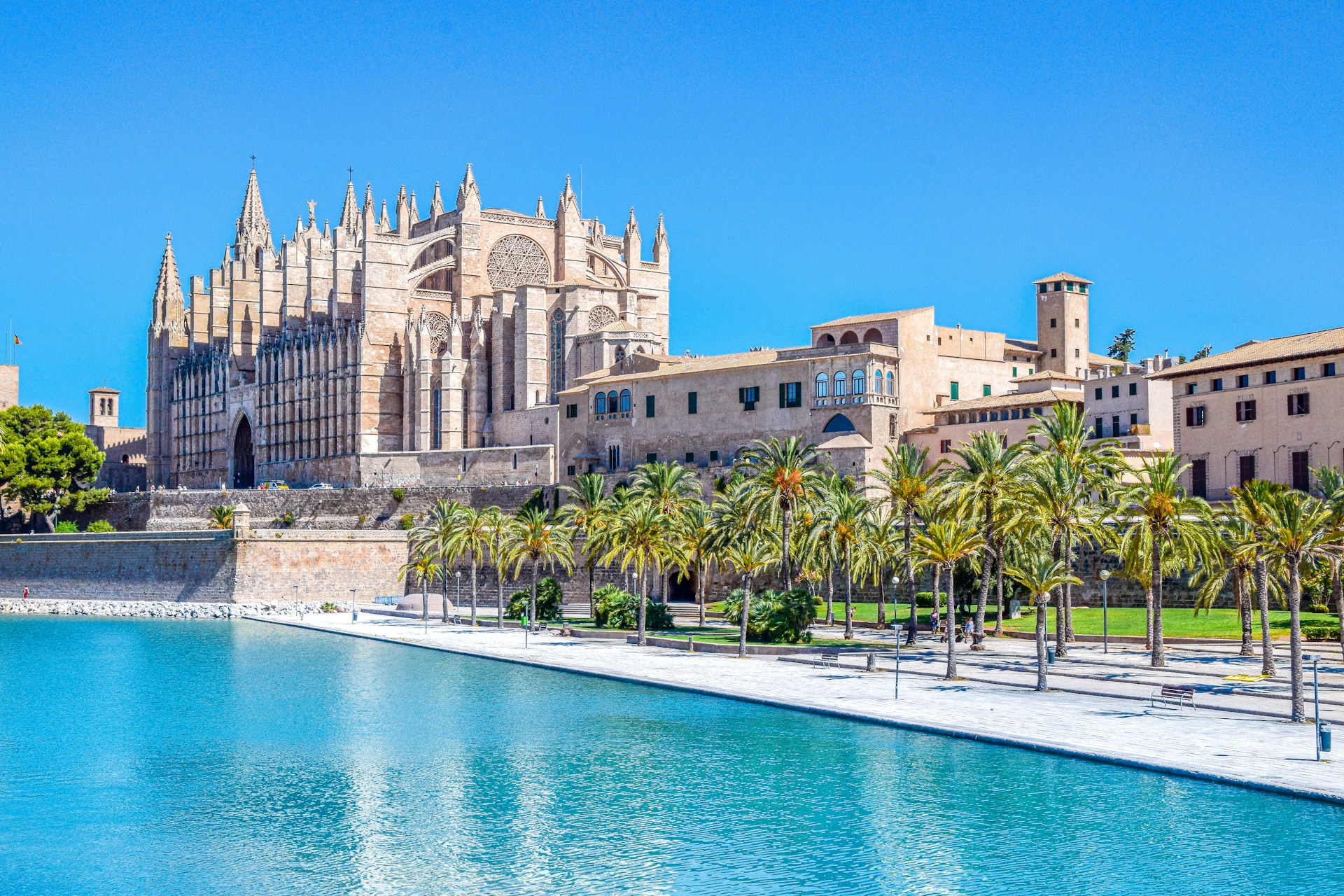
The two other principal Balearic islands, Mallorca and Menorca, sit a short ferry ride from Ibiza but operate on a different rhythm. Mallorca is the larger and more populated. Its capital, Palma de Mallorca, is a serious historic city with a Gothic cathedral, a small but excellent food scene, and a Mediterranean light that is increasingly recognised as one of the more beautiful in the western basin. The interior of the island, the Tramuntana mountain range, is a UNESCO World Heritage cultural landscape with stone-terraced olive groves and small villages that have changed slowly across the last hundred years.
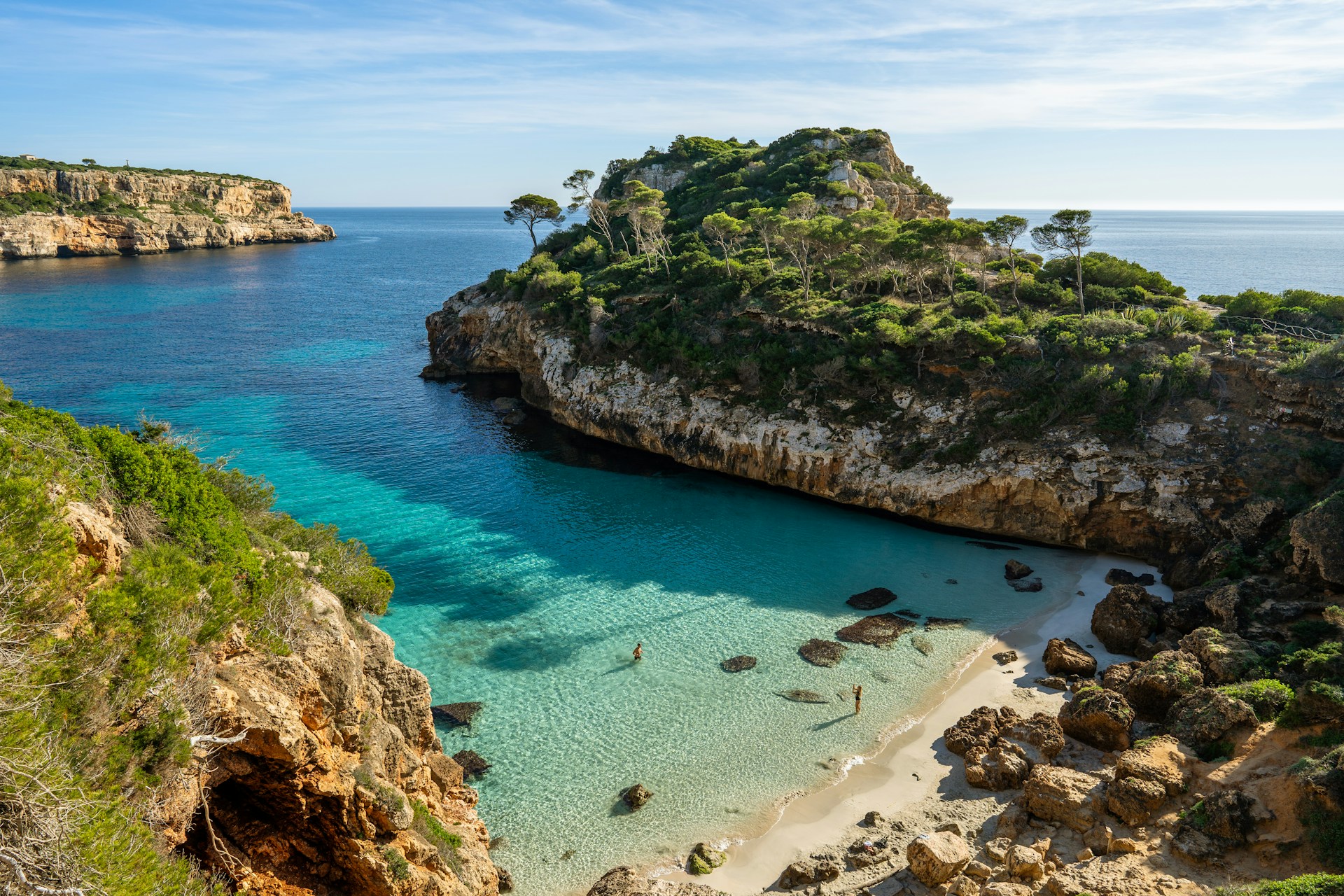
Menorca is the smallest of the three main islands and the quietest by any measure. The northern coast in particular, with its rugged limestone cliffs and small turquoise calas, is one of the least developed stretches of Spanish Mediterranean coast still accessible from major airports. The island has been a UNESCO Biosphere Reserve since 1993, which has limited development and preserved an unusually high proportion of natural shoreline.
Four boutique hotels follow, two in Mallorca and two in Menorca, all currently on Top World Hotel. They are ordered by island and within each island from urban to rural.
01Posada Terra Santa, Palma de Mallorca: the seventeenth-century palace in the old town
The most central of the four hotels in this article sits inside the historic old town of Palma de Mallorca, on the Calle de Santa Coloma, two minutes’ walk from the Cathedral of La Seu. Posada Terra Santa occupies a seventeenth-century palazzo (the building was originally a private residence of one of the Mallorcan noble families, with later additions in the eighteenth century) and has been restored over a multi-year project that ended in the mid-2010s.
The restoration is the point. The original stonework, the Catalan vaulted ceilings, the carved cypress doors, the small inner courtyard with its citrus trees, all of these have been preserved and consolidated. Where contemporary intervention was necessary (bathrooms, climate, lighting), the work has been done in a restrained modern register that does not compete with the historic shell.
The property is small, about twenty-five rooms, organised across the multiple historic levels of the palazzo. The breakfast is served in the inner courtyard when the weather allows, which is most of the season from late April to early November. There is a small rooftop pool, set into the original tile, with a long view across the rooftops of the old town toward the cathedral. The kitchen and bar are open to non-guests in the evening and have become one of the small social fixtures of the historic district.
What makes Posada Terra Santa particularly useful as a Balearic base is the old town of Palma itself. The district between the cathedral and the Passeig del Born is one of the most walkable historic centres in the western Mediterranean. The food scene has matured significantly in the last decade, with serious modern Mallorcan kitchens (Marc Fosh, Tast, Adrian Quetglas), an excellent set of small tapas bars (the Mercat de l’Olivar food market is a working market by day and a social space by night), and a strong wine scene built around the island’s revived viticulture (the small Mallorcan reds from Binissalem and Felanitx have become serious in the last fifteen years).
At a glance - Location: Historic old town, two minutes from Palma cathedral - Style: Seventeenth-century palazzo restoration - Best for: First-time Mallorca visitors who want the city before the countryside - Memorable detail: The inner courtyard at 8am, with breakfast served under the orange trees and the cathedral bells in the background.
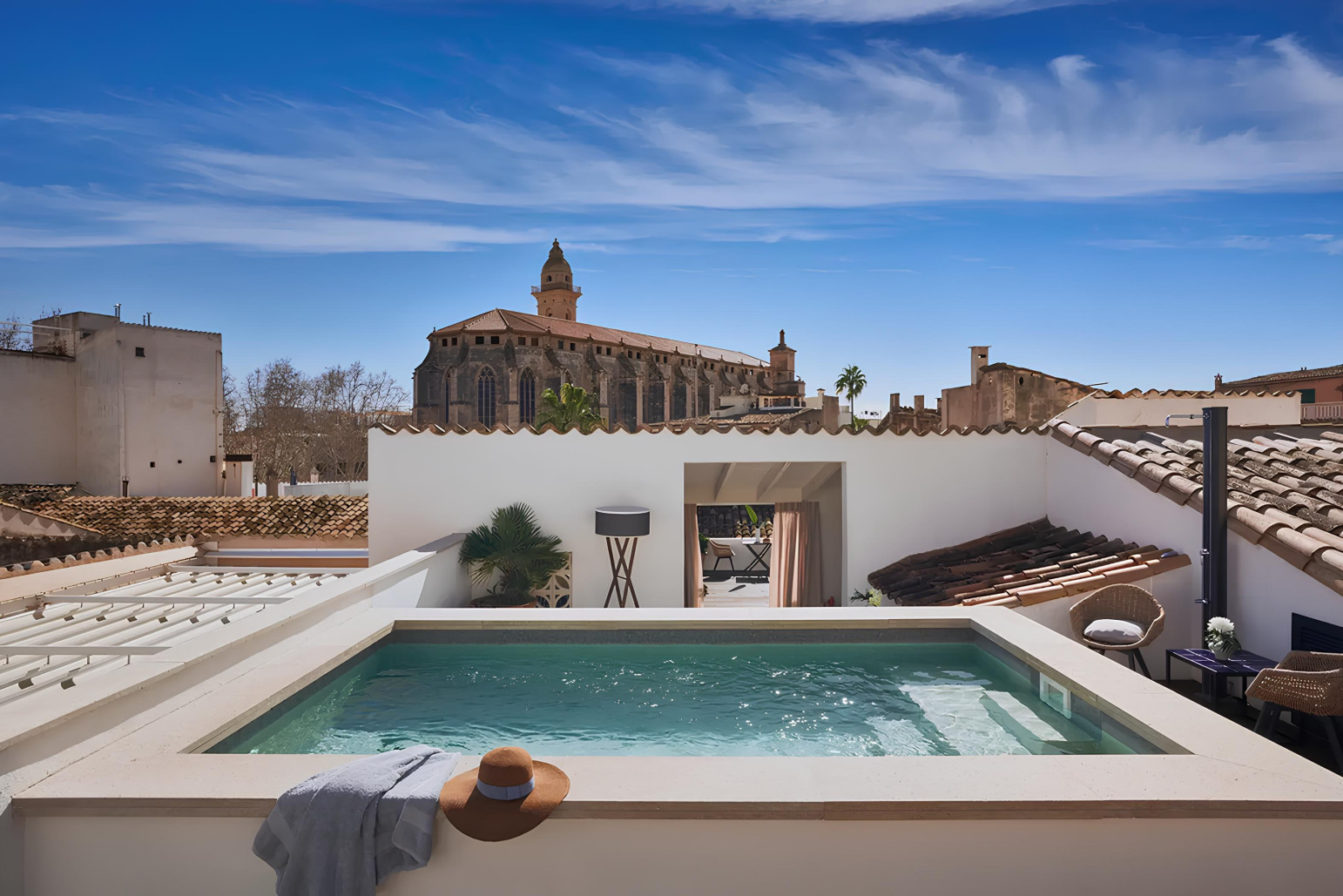
02Hotel Cort, Palma de Mallorca: the contemporary boutique on the cathedral square
For a different version of Palma, Hotel Cort sits directly on the Plaça de Cort, the city’s small main square, on the south side of the cathedral. The building is a converted nineteenth-century palace, restored in the early 2010s by the Mallorcan architect Lluís Garcia-Ruiz with a contemporary intervention that contrasts more directly with the historic shell than the Posada Terra Santa approach.
The result is a hotel that reads more “design hotel” than “heritage retreat”. Sixteen rooms, contemporary art on the walls (the founder collects work by Spanish and Mallorcan artists of the last twenty years), a small rooftop pool with one of the best square-and-cathedral views in central Palma, and a kitchen called Cuit by Andreu Genestra that holds one Michelin star and serves a contemporary Mallorcan menu built around the island’s terroir.
The location is the centre of central Palma. The city hall is across the square. The cathedral is three minutes’ walk. The historic old town extends in every direction from the front door. For travellers who want Palma as a working city rather than as a postcard, Hotel Cort is the contemporary answer.
The Hotel Cort kitchen deserves attention. Andreu Genestra is one of the more interesting young Spanish chefs of his generation, working out of an inland kitchen on the family estate near Capdepera and overseeing the Cort menu as a small urban outpost. The summer menu typically includes the Mallorcan red mullet from the Cala Rajada fishery, the sobrasada (the island’s iconic cured paprika sausage) used in contemporary preparations, and the small Mallorcan figs in late summer dessert pairings.
At a glance - Location: Plaça de Cort, central Palma - Style: Restored nineteenth-century palace as contemporary design hotel - Best for: Travellers who want design-aware Palma with serious modern cuisine - Memorable detail: The rooftop pool view of the cathedral at sunset, particularly in the long Mallorcan summer evenings.
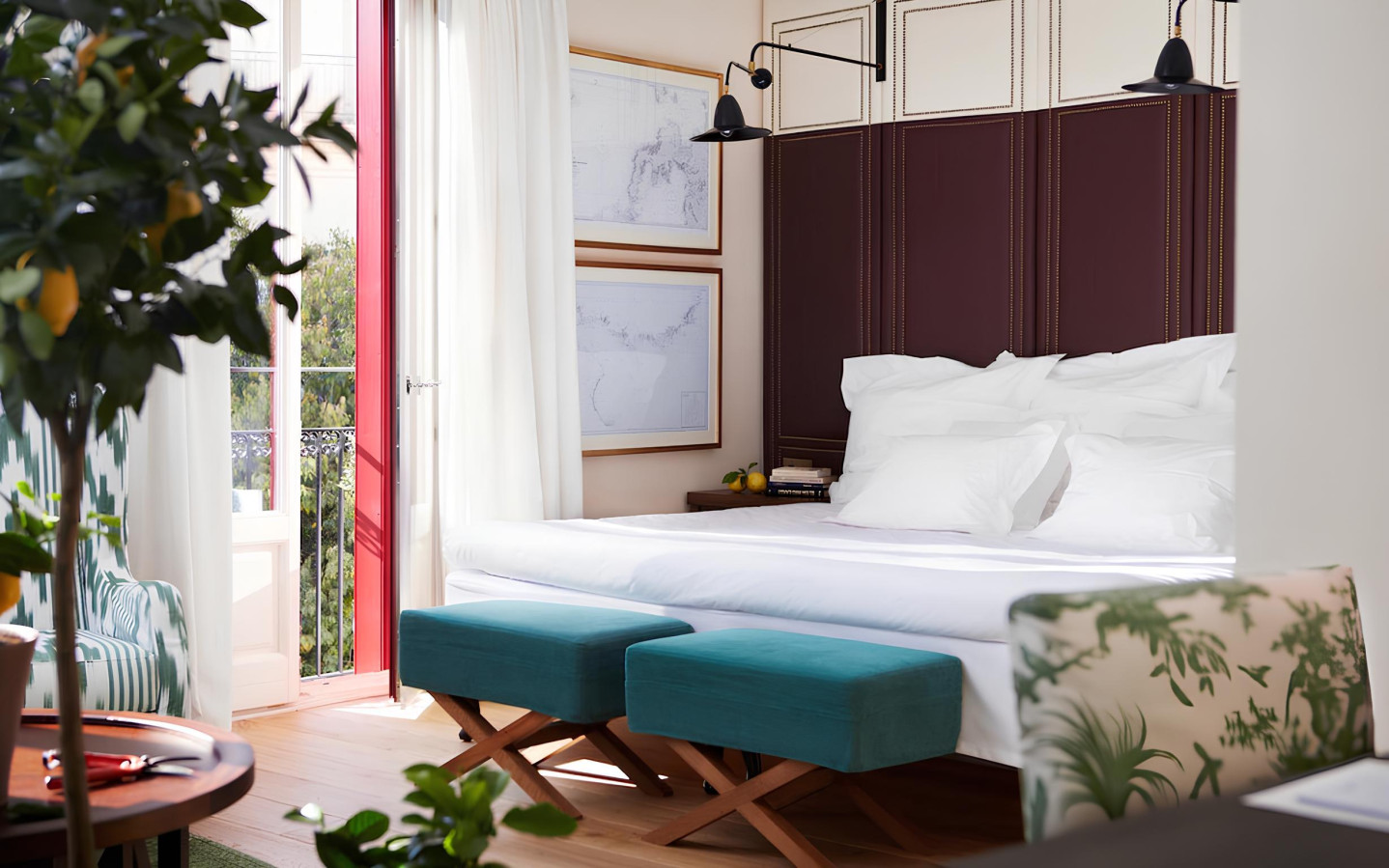
03Amagatay Menorca: the small house in the inland countryside
Menorca rewards a slower kind of travel than Mallorca. The island is small (about seven hundred square kilometres, less than half of Mallorca), the population is small (around one hundred thousand permanent residents), and the cultural and architectural fabric has been protected by the UNESCO Biosphere designation and by a deliberate slow tourism policy on the part of the island council.
Amagatay Menorca sits in this protected interior, in the rural area between the two main towns of Mahon (the eastern capital) and Ciutadella (the historic western capital). The property is a restored finca (the traditional Menorcan country estate) on a small hill above the surrounding olive groves and pine forests. The building is seventeenth-century stonework, restored by a small Spanish-British team in the late 2010s with serious attention to the original Menorcan vernacular: lime-washed walls, hand-finished timber beams, the cool stone floors that hold the morning’s coolness through the hottest hours.
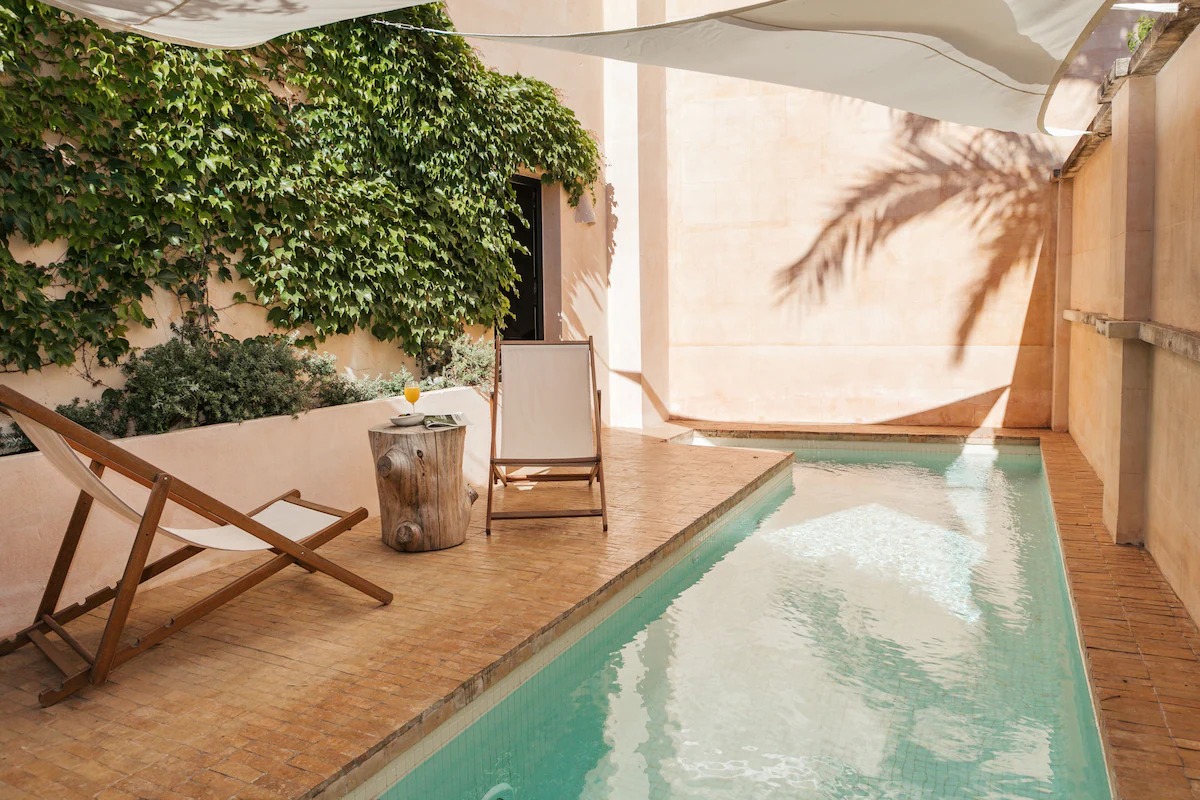
The hotel is genuinely small. Twelve rooms across the main finca and two restored outbuildings. A single pool set into the dry-stone walls of the original threshing yard. A kitchen that runs on what the island produces: the small Menorcan red mullets, the local queso de Mahón cheese (one of Spain’s serious cheeses, often underrated outside the island), the late-summer melons of the central valley.
What makes Amagatay particularly suited to a slow week is the surrounding landscape. Menorca’s interior is one of the most quietly beautiful Mediterranean landscapes in Europe: dry-stone walls organising the small fields, pine forests covering the lower hills, the prehistoric taules (the island’s megalithic stone monuments, similar to Stonehenge in age and idea) appearing unexpectedly at the edge of fields. From Amagatay, a small drive of fifteen to thirty minutes reaches almost any of the island’s significant beaches, the most beautiful of which are on the unspoiled northern coast.
At a glance - Location: Inland Menorca, between Mahon and Ciutadella - Style: Restored seventeenth-century finca with twelve rooms -Best for: Travellers who want Mediterranean countryside with serious cuisine and the quietest beaches in the Balearics - Memorable detail: The morning light on the dry-stone walls at six o’clock, when the island’s rural fabric is at its most coherent.
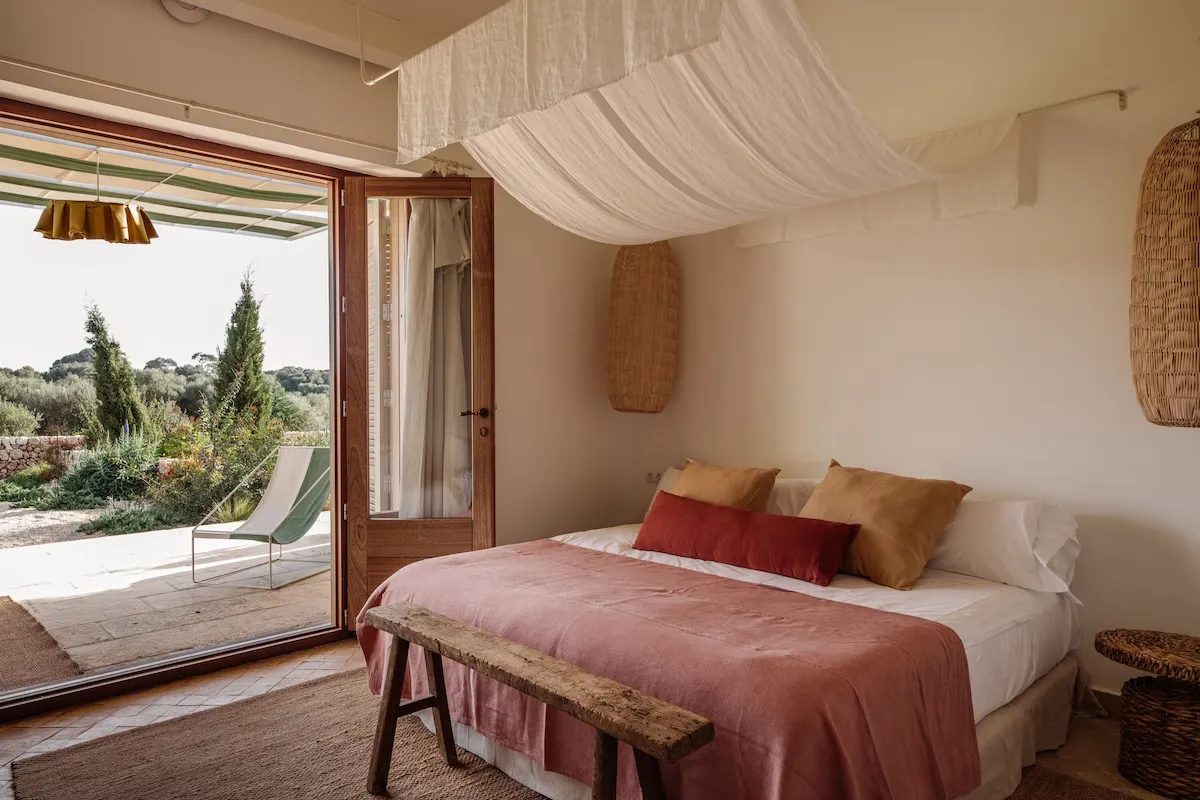
04Faustino Gran, Menorca: the heritage country house with the vineyard view
The fourth hotel is also in Menorca, but in a different register. Faustino Gran sits on the historic Faustino estate, a Menorcan winery that has been producing wine since the nineteenth century. The property is a restored country house adjacent to the working vineyard and winery, with views across the central plain of the island toward the southern coast.
The architecture is grander than Amagatay. The main building is a nineteenth-century finca that was the historic residence of the Faustino family, with high-ceilinged salons, original stucco work, and a long colonnaded gallery that opens onto the garden. The restoration has been generous (full plumbing, climate, restored stuccoes, contemporary art curation) without losing the country-house atmosphere of the original.
The hotel is part of a working agricultural estate, which gives the stay a different character than a pure resort. Guests can visit the winery, walk the vineyard at sunset, and taste the estate’s own production at the dinner table. The Faustino wines from Menorca are part of a small but serious revival of Balearic viticulture: dry whites from the Malvasia and Macabeo grapes, light reds from local clones of Tempranillo and Garnacha, an unusual sweet wine called vi de palla (straw wine) made from grapes dried after harvest.
The kitchen at Faustino Gran works in a refined Menorcan register. The cooking respects the island’s traditional repertoire (the caldereta de langosta, the lobster stew of the northern coast, is on the menu when the season allows) but adds technique and lightness. The dessert section often features the local citrus and the small Menorcan strawberries of late June, which are unusually fragrant.
At a glance - Location: Faustino estate, central Menorca - Style: Restored nineteenth-century country house on a working winery - Best for: Travellers who want Menorca with serious wine and country-house comfort - Memorable detail: The sunset walk through the vineyard, with the western sky going through orange and lavender, and the western coast of the island visible in the distance.
How to choose between the four
A simple decision rule.
For a Palma city base, Posada Terra Santa is the heritage option and Hotel Cort is the contemporary one. Both work for a short city stay of two to three nights.
For a Menorca country base, Amagatay is the smaller and quieter choice; Faustino Gran is the larger and more cuisine-and-wine-led one. Both work for a longer stay of four to seven nights.
For a first multi-island Balearic week, the strongest combination is two nights at Posada Terra Santa in Palma, followed by a short flight or ferry to Menorca, and four nights at Amagatay or Faustino Gran. The total trip covers the urban historic side of the Balearics (Palma) and the rural-coastal side (Menorca interior) without overlap.
When to go
Late May, June, and September are the strongest months for both islands. The sea is warm enough for swimming (around 22-24 degrees from late May onward), the temperatures are pleasant in the high twenties, and the day-tripper crowd from Mediterranean cruise ships is roughly half of the July-August peak.
July and August are the high season, with significantly higher rates and the most density on the beaches. Both islands remain manageable compared to Ibiza, but advance reservations at the recommended hotels and at the better restaurants are essential.
October is one of the loveliest months in the Balearics. The water is still warm (around 21 degrees), the light has softened, and the food season is at one of its peaks (the late figs, the new wine, the autumn vegetables). Several restaurants on Menorca close in late October, but the recommended hotels remain open through the season.
November through March is the off-season. Both islands are quiet, several smaller restaurants close, and ferry connections are reduced. The recommended hotels operate but with quieter atmospheres. The off-season Mallorca and Menorca are atmospheric and almost empty, but they ask for a traveller who is comfortable with reduced services.
Getting there
Palma de Mallorca airport (PMI) is the main gateway, with direct flights from most European capitals and seasonal long-haul routes. The airport sits about fifteen minutes by taxi from central Palma.
Mahon airport (MAH) in Menorca is smaller but has direct connections to Madrid, Barcelona, and most major European cities in summer season. The airport is twenty minutes from central Mahon and about thirty-five minutes from Amagatay or Faustino Gran.
The inter-island ferry, run by Trasmediterránea and Baleária, connects Palma to Mahon in about six hours (overnight option available) and to Ciutadella in about three hours. The ferry is the practical option for travellers doing a multi-island week with a car. For travellers without a car, the short flight (about twenty-five minutes) between Palma and Mahon is the faster choice.
A rental car is recommended for both islands once outside the city centres. Both islands are easy to drive: the roads are well maintained, the distances are short, and the traffic is light outside the immediate urban areas.
Frequently asked questions
| Which Balearic island is the quietest? | Menorca, by every measure: the smallest population, the most protected coastline (UNESCO Biosphere Reserve since 1993), the least developed tourism infrastructure of the three main islands, and a deliberate slow tourism policy on the part of the island council. |
| Is Menorca worth visiting in summer 2026? | Yes, particularly for travellers who have done Ibiza or Mallorca and want the quietest version of the Balearic experience. The island works best for a week or longer; shorter visits do not allow time to reach the unspoiled northern coves. |
| Where to stay in Palma de Mallorca? | For heritage character, Posada Terra Santa in the old town. For contemporary design and serious cuisine, Hotel Cort on the cathedral square. Both are within five minutes’ walk of the city’s main historic sites. |
| How long should I spend in Mallorca and Menorca? | Mallorca alone: three to five nights (Palma plus one or two days in the Tramuntana mountain villages). Menorca alone: five to seven nights. Combined trip: seven to ten nights, with two to three nights in Palma and the rest in Menorca. |
| What is the best alternative to Ibiza in 2026? | Menorca is the deliberate slow alternative. Mallorca is the larger alternative with serious cultural and food infrastructure. Both islands are accessible from Ibiza by short ferry or flight. |
| Are these hotels family-friendly? | Mostly yes, with adult-skewing atmospheres. Posada Terra Santa and Hotel Cort accept families. Amagatay and Faustino Gran accommodate families but are designed around quieter adult travel. For a family-led Balearic week, the larger seaside resorts on Mallorca’s eastern coast may be a better fit. |
| What is the food culture of Mallorca and Menorca? | Mallorcan cuisine is built around the sobrasada (paprika cured sausage), the local cheese, the small island wines from Binissalem and Felanitx, and an excellent vegetable repertoire built on the Mediterranean climate. Menorcan cuisine is more seafood-led, with the caldereta de langosta (lobster stew) as the signature dish, the queso de Mahón cheese, and the local gin tradition (Menorca produces a serious local gin from juniper grown on the island). |