East of Everything: Five Indonesian Hideaways Beyond the Crowds
From Sidemen's rice terraces to Lombok's untouched shores, discover five boutique hotels that reveal Indonesia's quieter, more soulful side. A guide to the Bali and Lombok that most travelers never see.
The flight path into Ngurah Rai tracks along Bali's southern coast, where the beach clubs of Seminyak spread beneath you like a fever dream of infinity pools and day beds. Turn your head east, and the view changes. The green darkens. Mount Agung rises through the haze, its summit hidden in clouds that locals say never fully lift. Somewhere down there, in valleys you cannot see from this altitude, farmers are walking terraces that their great-grandfathers carved by hand.
This is the Indonesia that doesn't make it onto mood boards. The Bali before the algorithm. The Lombok that Australians haven't colonized with surf camps. It exists, still, if you know where to look.
Top World Hotel has assembled a collection of five properties that trace a quiet arc from the rice fields of Sidemen to the bamboo shores of Gili Air. No beach clubs. No bottle service. Not a single villa that requires an influencer discount code. These are hotels for travelers who have seen enough, and now want to see something true.
The Geography of Escape
Understanding this collection requires a map, or at least a willingness to forget the one you've been sold.
Bali divides itself into two psychological territories. The south, from Kuta to Uluwatu, belongs to tourism. The east, from Sidemen to Amed, belongs to the subak. This is the ancient irrigation system, dating to the ninth century, that channels water from mountain springs through networks of canals, tunnels, and weirs to feed the rice terraces below. UNESCO recognized it in 2012, but the farmers who maintain it have never needed that validation. They follow a calendar more than a thousand years old, planting and harvesting according to temple ceremonies and monsoon patterns that predate the invention of the package tour.
Lombok, thirty-five kilometers across the Lombok Strait, operates on different rhythms still. The Sasak people, indigenous to the island, maintain villages where traditional weaving techniques and animist customs survive alongside Islam. The beaches are emptier. The surf is better. The resorts are fewer, and those that exist tend toward the contemplative rather than the celebratory.
The Gili Islands, a chain of three specks off Lombok's northwest coast, have famously banned motorized vehicles. You move by bicycle, by foot, or by cidomo, the horse-drawn carts that constitute the islands' only taxi fleet. On Gili Air, the smallest and quietest of the three, the loudest sounds are waves and roosters.
The five hotels that follow are not destinations in themselves. They are coordinates on an itinerary that no guidebook has bothered to write, stations on a pilgrimage toward the Indonesia that tourism was supposed to have erased but somehow hasn't.
Samanvaya: Where the Valley Teaches Stillness
The road from Ngurah Rai to Sidemen takes ninety minutes if you leave before dawn. You climb through villages where women carry offerings on their heads, through forests of banana and coconut, until the landscape opens into a valley so green it seems artificial. Mount Agung fills the northern horizon. The rice terraces descend in steps toward a river you can hear but not yet see.
Samanvaya occupies two hectares of this view, and every decision its founders made seems designed to honor rather than compete with it.
The resort exists because two New Zealand police detectives decided to change their lives. Tracey and Rob had spent years in law enforcement, including a deployment to the Solomon Islands, before asking themselves the question that every burnout eventually confronts: what would it look like to stop? They found their answer in Tabola village, Sidemen, where they opened Samanvaya in 2017. The name, in Sanskrit, means "gathering" or "coming together." It could also mean "surrender," which is what the place requires of its guests.
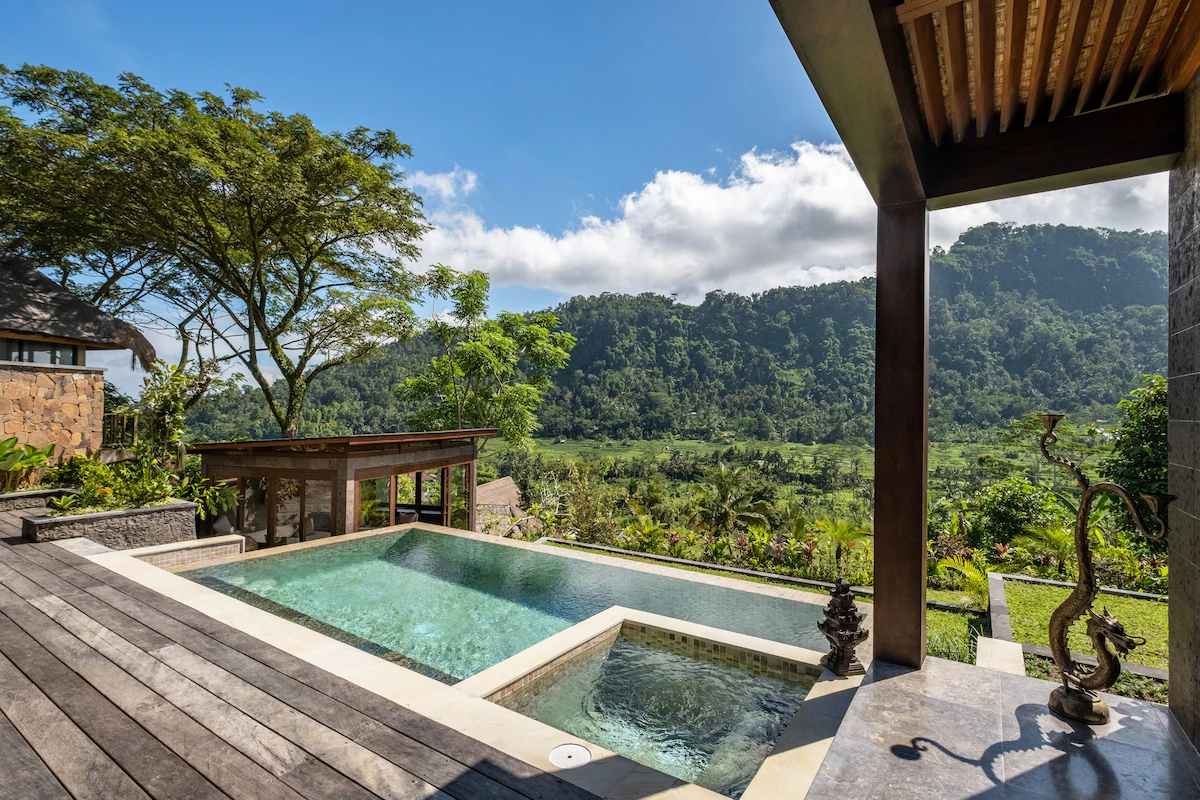
The architecture draws from Balinese tradition without cosplaying it. Twenty-nine villas scatter across the property, some centuries-old Javanese joglos that craftsmen dismantled, transported, and rebuilt by hand. Others are contemporary bamboo structures whose curves follow organic geometries. The Batari Villa sits at the highest point of the resort, its outdoor hot tub positioned for views that local priests once climbed mountains to access. The Samudra Villa, at the far edge of the property, looks across the rice terraces to the distant sea that gives it its name.
Materials matter here. Reclaimed timbers from the forests of East Kalimantan. Alang-alang thatch roofs that follow tropical architectural codes developed over half a millennium. Sustainable hardwoods sourced as locally as possible. The joglos, some over a hundred years old, represent a form of Indonesian heritage preservation that extends beyond aesthetics into ethics.
In 2025, Samanvaya expanded with a new Wellness Villas wing across the road from the original property. Eight private pool villas and two honeymoon suites now overlook the river valley, each with handcrafted stone bathtubs and views calibrated to slow the heartbeat. The Ananda Wellness & Bath House anchors this expansion, offering a bathhouse ritual that moves guests through sauna, herbal steam room, and contrast plunges before delivering them, emptied of tension, to the massage tables.
The dining program splits between two restaurants. Asri Dining handles garden dining, Mediterranean and Western comfort food served among landscaping that merges with the surrounding valley. Sahaja occupies a striking joglo overlooking the rice terraces, its menu exploring the flavors of Indonesia, Thailand, and broader Southeast Asia. Mornings begin with views of the Seraya volcano, and most guests discover they've forgotten whatever they thought they needed to do.
But Samanvaya's most significant contribution may be invisible to guests. The Support Sidemen initiative channels resort resources into the surrounding community, targeting families who don't directly benefit from tourism. A Plastic Exchange Program allows villagers to trade collected plastics for rice, addressing both poverty and environmental degradation with a single mechanism. The resort funds teachers for local schools, supplies educational materials, and runs clean-up initiatives throughout the valley.
The word "sustainable" has become meaningless through overuse. What happens at Samanvaya has a different quality. It looks like two former cops who decided that their second act should involve giving back to a valley that gave them peace.
Samanvaya was named Bali's Best Boutique Resort 2025.
The resort is adults-only, accepting guests aged 14 and over. Transfer from Ngurah Rai takes approximately ninety minutes.
Alila Manggis: The Kerry Hill Masterpiece That Time Forgot
Drive an hour east from Sidemen, and you'll reach a coastline that contradicts everything you think you know about Bali. Black pebbles clatter like percussion instruments as waves withdraw. Mount Agung looms closer here, its sacred presence almost physical. The tourists are elsewhere. Always elsewhere.
Alila Manggis has occupied this stretch of shore since 1994, when it opened as The Serai Manggis. To understand its significance, you need to know three names: Franky Tjahyadikarta, Adrian Zecha, and Kerry Hill.
Tjahyadikarta fell in love with East Bali during diving trips in the early 1990s. He bought a 2.3-hectare coconut grove near the village of Candidasa and approached Kerry Hill Architects on the recommendation of his partner in the luxury resorts Amankila and Amanjiwo. That partner was Adrian Zecha, founder of Aman Resorts and one of the most influential figures in Asian hospitality.
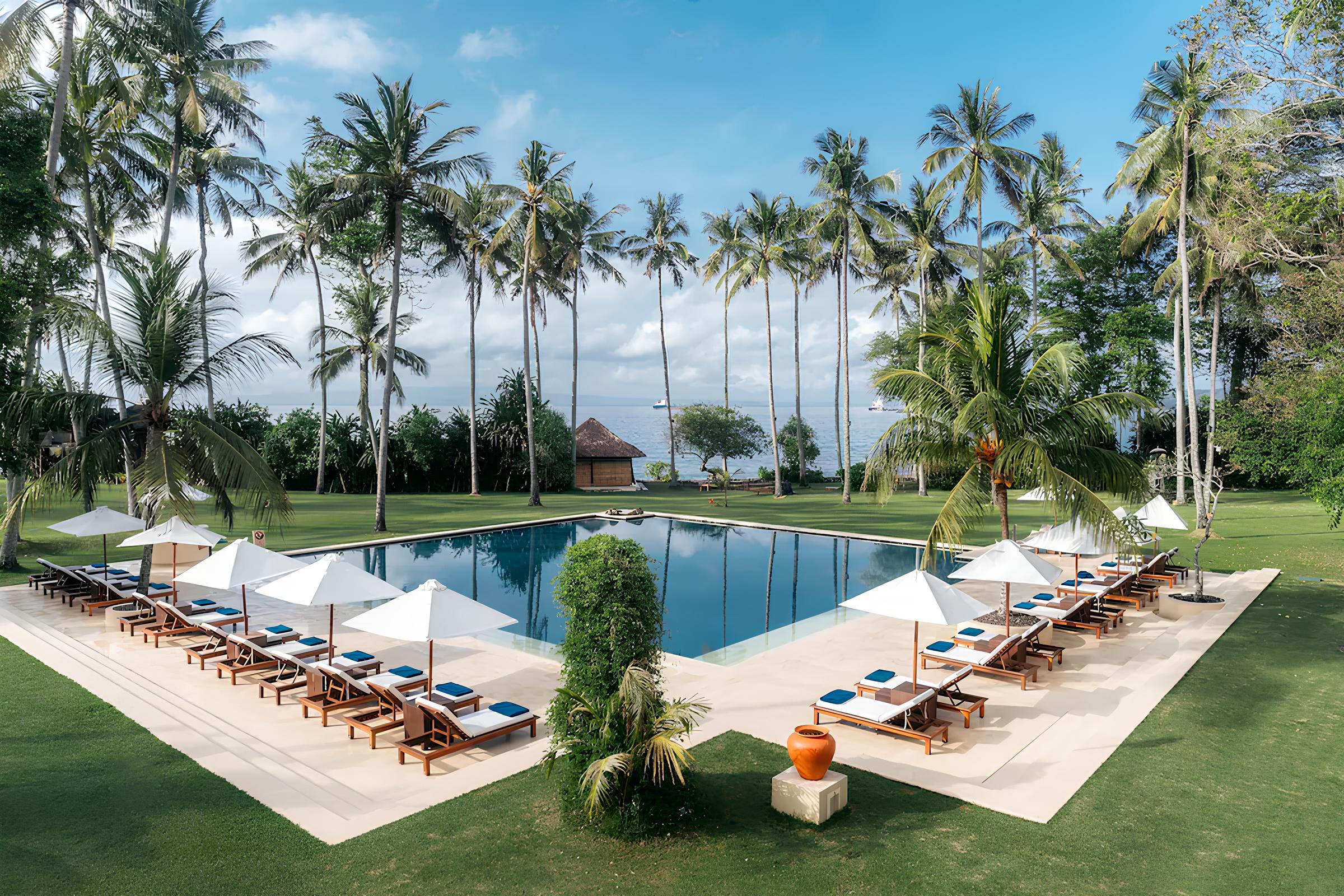
Kerry Hill, the Australian architect who had designed Bali Hyatt's lobby as a young man in Hong Kong, brought his philosophy of restrained elegance to Candidasa. The brief was open, the result was closed to interpretation. Four two-story buildings in cool white stone, each positioned at a forty-five-degree angle to the beach so that every room faces both the central pool and the Lombok Strait. Thatched alang-alang roofs anchor the structures in Balinese vernacular. Polished floors in ivory and colored concrete cool bare feet. No signage announces the resort's presence from the road, only a quiet forest lane and a guardhouse where security waves you through.
The design philosophy that Kerry Hill developed here, which he would refine through subsequent Aman projects in Sri Lanka, Bhutan, and Japan, prioritizes what he called "free-flowing interaction between buildings and nature." Wellness begins at reception, where guests receive herb-infused Balinese iced tea while staff handle documentation out of sight. The transition from arrival to relaxation happens without friction, without waiting, without the small indignities that most check-in experiences impose.
Fifty-five rooms occupy the four buildings, most of them a compact twenty-eight square meters. Ground-floor Superior rooms feature terraces with day beds. Upper-level Deluxe rooms have shaded balconies. The two suites, in the building closest to the ocean, offer wraparound balconies suitable for dining or simply watching Nusa Penida rise across the strait. There are no gimmicks, no unique hooks, no USP bullet points. Only the accumulated rightness of decisions made by an architect who understood that less continues to be more long after the phrase becomes cliché.
The central pool functions less as a swimming venue than as a water feature, its oblong shape surrounded by a lawn dotted with coconut palms. This is where most guests spend their days, reading in loungers, ordering from the Seasalt restaurant, discovering that they have no desire to leave the property even though the black-sand beach lies only twenty meters away.
Seasalt itself has evolved into a destination. The menu draws from local flavors and global influences, but the signature experience is Megibung, a communal dining tradition rooted in East Bali's cultural celebrations. Guests gather around shared platters, eating with hands in the manner that predates cutlery, creating connections that individual portions cannot replicate. The organic garden supplies herbs and vegetables. The executive chef runs cooking classes for guests who want to carry something home beyond photographs.
Alila Manggis never became famous the way that Ubud's resorts or Seminyak's beach clubs became famous. It lacks the drama of a clifftop position, the novelty of a radical design concept, the Instagram geometry that makes certain properties go viral. What it has instead is something harder to market and impossible to fake: thirty years of getting everything quietly right.
The resort welcomes families with children of all ages. Transfer from Ngurah Rai takes approximately ninety minutes.
Mathis Lodge Amed: A Hillside Village at Four Hundred Meters
The northeast corner of Bali resists tourism through geography alone. The roads climb and twist, hugging volcanic slopes where villages cling to hillsides and the twenty-first century feels like a rumor someone heard. This is Bali Aga, primitive Bali, where ancestral customs persist in communities that mass development forgot.
Amed has long attracted divers and snorkelers drawn to its crystal-clear waters, but the village itself remains a sleepy collection of fishing boats and modest guesthouses. In 2019, the French hospitality group behind the Mathis Collection looked at this landscape and saw potential that nobody else had recognized. They would build not on the beach but above it, at four hundred meters altitude, where the views encompassed the entire coastline.
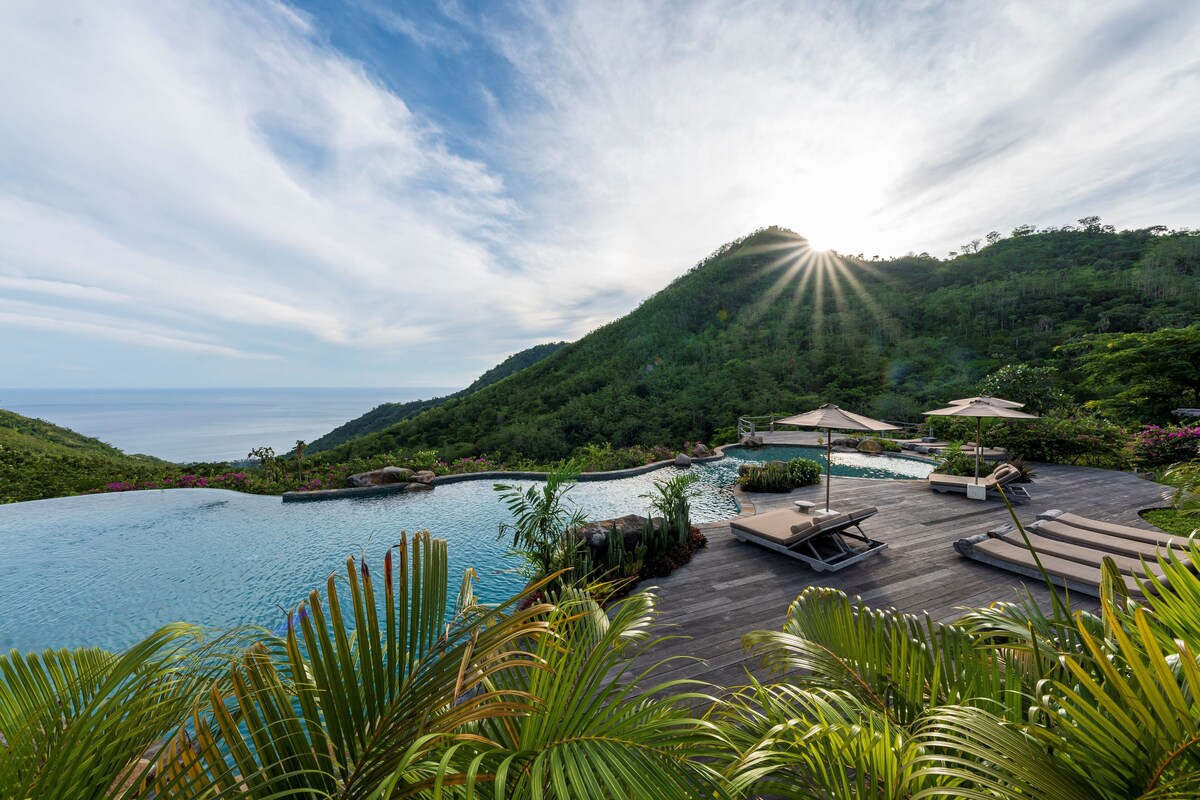
The result, Mathis Lodge Amed, required what its creators call "a pretty crazy project." Nobody had attempted serious construction in the hills above Amed. The roads were steep, the terrain uncertain, the logistical challenges profound. The three-kilometer ascent to the property takes fifteen minutes in the resort's buggies, climbing at an average grade of seven and a half percent through landscapes that transform as you rise. Coconut trees give way to terraced hillsides. The sea falls away below, then reappears as a vast blue expanse extending to the Lombok Strait.
Twenty lodges scatter across two hectares of volcanic slope, each roofed in alang-alang thatch and decorated with artifacts from Eastern Indonesia's most remote cultures. The design team drew inspiration from Papua, Sumba, and Sumbawa, regions where architectural traditions developed in isolation and aesthetic vocabularies never merged with the global mainstream. The effect is ethnographic without being museum-like, a living engagement with Indonesian diversity that extends far beyond Balinese Hindu iconography.
Accommodation categories range from the Superior Lodge, an elegant retreat with views of the surrounding mountains and pool, to Family Lodges with twinned bedrooms and optional private pools. The Jacuzzi Lodges position outdoor whirlpools for sunset contemplation. Throughout, the emphasis falls on connection to landscape rather than isolation from it. Semi-open bathrooms bring the outside in. Terraces extend living spaces into the tropical air.
The Asmat Restaurant occupies the property's highest point, its panoramic bar overlooking the entire valley. The name references the Asmat people of Papua, whose wood-carving traditions produce some of the most striking sculptural work in the Pacific. Here, the carving takes culinary form, with menus that blend Indonesian tradition with international technique. Breakfasts showcase local fruit and Indonesian herbal brews. Dinners unfold as the sun drops toward Mount Agung and the sky cycles through colors that no filter can improve.
Transportation within the property operates by electric buggy, essential given the seventy meters of elevation change between the upper and lower zones. The resort's free shuttle runs to the black-sand beach on demand, where partnerships with local operators provide sunbeds, towels, and snorkeling equipment. The diving at Amed ranks among Bali's best, with coral gardens and underwater volcanic formations attracting marine life that the crowded southern sites no longer support.
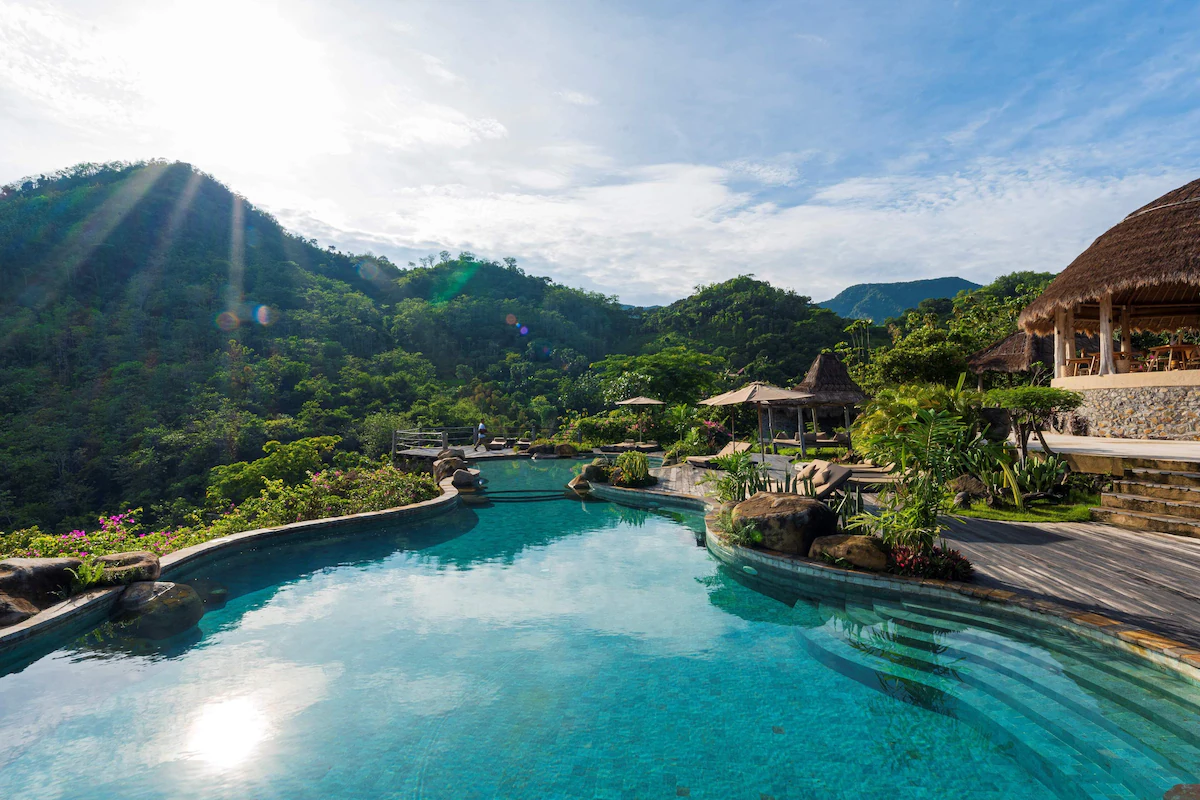
Wellness programming includes a traditional spa using Balinese massage techniques and natural products, yoga instruction available on private terraces or by the main pool, and the simple therapeutic value of altitude. At four hundred meters, the air cools. The humidity lifts. Sleep comes easier. The floating breakfasts that have become an Instagram cliché achieve something different here, surrounded not by other tourists but by actual wilderness.
Every Sunday evening, Balinese dance performances transform the Griya rooftop lounge into a cultural venue. The gamelan orchestra, the stylized gestures, the stories drawn from Hindu epic, all unfold against the backdrop of ocean and volcano that has shaped this culture for millennia.
Mathis Lodge Amed operates as part of the broader Mathis Collection, which includes properties in Umalas and Ubud. Discovery packages allow guests to combine multiple addresses, moving from rice fields to hillside to coast while maintaining continuity of service and philosophy. But most who reach Amed find that leaving feels unnecessary. The journey up that winding road creates a boundary between the world they left and the world they've entered, and crossing back requires a form of emotional permission that many guests prefer to delay.
Mathis Lodge Amed holds B-Corp certification for environmental responsibility.
The resort welcomes families with children of all ages. Transfer from Ngurah Rai takes approximately four hours including the buggy ascent.
Villa Tokay: Bamboo Sculptures on an Island Without Engines
The journey from Bali to Gili Air involves ferries, speedboats, and a willingness to surrender control. From Padangbai, the crossing takes two hours. From Lombok's Bangsal Harbor, it's thirty minutes. Either way, you arrive at an island where no motors run, where bicycles and horse carts define the pace of movement, where silence is the default condition and noise requires effort to create.
Villa Tokay occupies the western shore, two hundred meters from beaches that face Lombok's volcanic peaks. The property belongs to Small Luxury Hotels of the World, and its presence on that roster makes sense only after you've walked through the gates and understood what local artisans can achieve with bamboo.
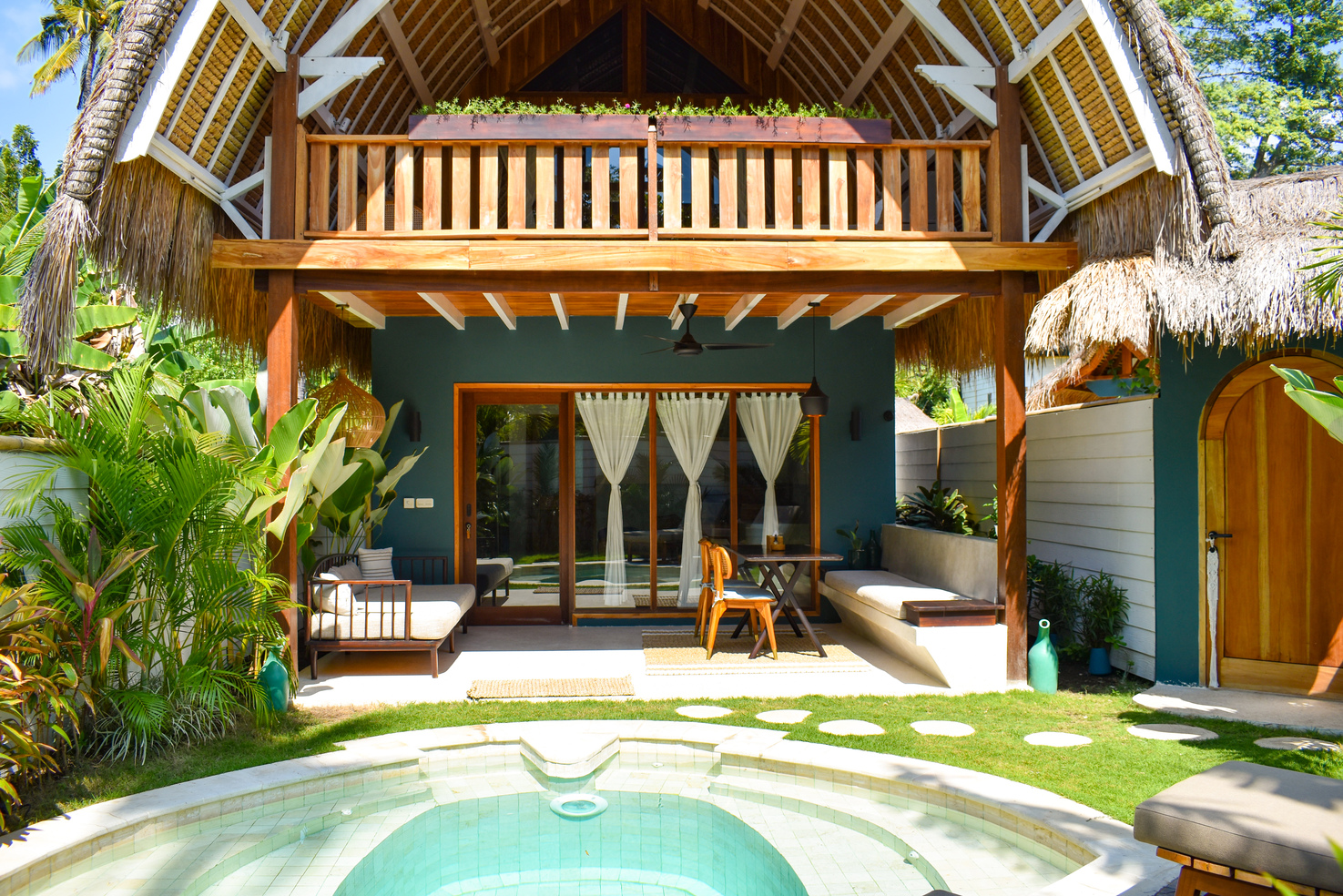
The villas here are sculptural statements. Sweeping staircases rise through curves that evoke unfurling leaves, breaking waves, spiral shells. High ceilings disappear into bundled bamboo pillars that support lofted sleeping areas. The structures were crafted by artisans from Gili Air, Java, Bali, and Lombok, using natural materials sourced from the surrounding islands. Nothing was shipped from distant factories. Everything carries the signature of hands.
Seven standalone villas compose the property, each named for the natural form it references. The Leaf Villa positions a canopy-level hammock above the pool, where guests can read or nap while tropical rain drums on the leaf-shaped bamboo awning overhead. A copper bathtub hides within the gardens, positioned for soaking beneath the stars. The Tide Villa offers an art deco-style outdoor shower. The largest villa, sleeping ten across four bedrooms, centers on an infinity pool that seems to dissolve into the surrounding greenery.
Design vocabularies merge here in ways that shouldn't work but do. Contemporary Indonesian craft meets art deco geometry meets tropical bohemia. The furniture was handmade for the property, ensuring that no piece exists anywhere else. Eco-friendly amenities stock every bathroom, produced locally to minimize transport impact. The hotel participates in the island's "Refill Your Bottle" project, part of a broader effort to reduce single-use plastic on an island with limited waste management infrastructure.
Breakfast arrives at your villa each morning, served on the terrace or floating in the pool, a spread of banana pancakes, tropical fruit, smoothies, and Indonesian bites that establishes the day's rhythm. There's no central restaurant, but the KAI dining concept offers menus inspired by the ancient Spice Route, blending Indonesian ingredients with Mediterranean influences. Beachfront dinners can be arranged. Most guests, however, find that the villa kitchens and the island's modest collection of local warungs provide everything they need.
Days unfold according to desire rather than schedule. Complimentary bicycles wait at the villa entrance. Snorkeling gear allows exploration of the coral gardens that ring the island. Yoga sessions take place on private decks or in the gardens. Massage therapists arrive when summoned. The concierge, intuitive and unobtrusive, surfaces recommendations for the island's quieter corners or arranges excursions to neighboring Gili Meno and Gili Trawangan without pressuring guests who prefer to stay put.
The no-motor policy that governs the Gili Islands transforms Villa Tokay from a hotel into a state of mind. Without engine noise, the body calibrates differently. Stress hormones that modern life keeps perpetually elevated have nothing to respond to. Sleep patterns reset. Attention spans lengthen. By the third day, guests report, the urgency that drove them here has evaporated, replaced by a contentment that feels earned rather than purchased.
Energy at Villa Tokay comes largely from the island's solar panel field, supplemented by energy-efficient lighting throughout the property. Water-saving measures and waste management systems address the environmental fragility of small-island ecosystems. The hotel contributes annually to a local school, funding additional teachers to improve educational access for Gili Air's children.
Departure requires a recalibration of expectations. The speedboat back to Bali or Lombok will feel fast, loud, aggressive. The airport will feel worse. Most guests, upon returning home, find themselves searching for flights back before they've finished unpacking.
The resort welcomes families with children of all ages. Transfer from Ngurah Rai takes approximately four hours including the speedboat crossing.
Seven Secrets by Hanging Gardens: Lombok's Beachfront Revelation
Cross the Lombok Strait and you enter a different Indonesia. Lombok shares a landmass with Bali but little else. The Sasak majority practices Islam rather than Hinduism. The development pressure is decades behind. The beaches stretch longer and emptier. The mountains, including the 3,726-meter volcano Rinjani, dwarf anything on neighboring islands.
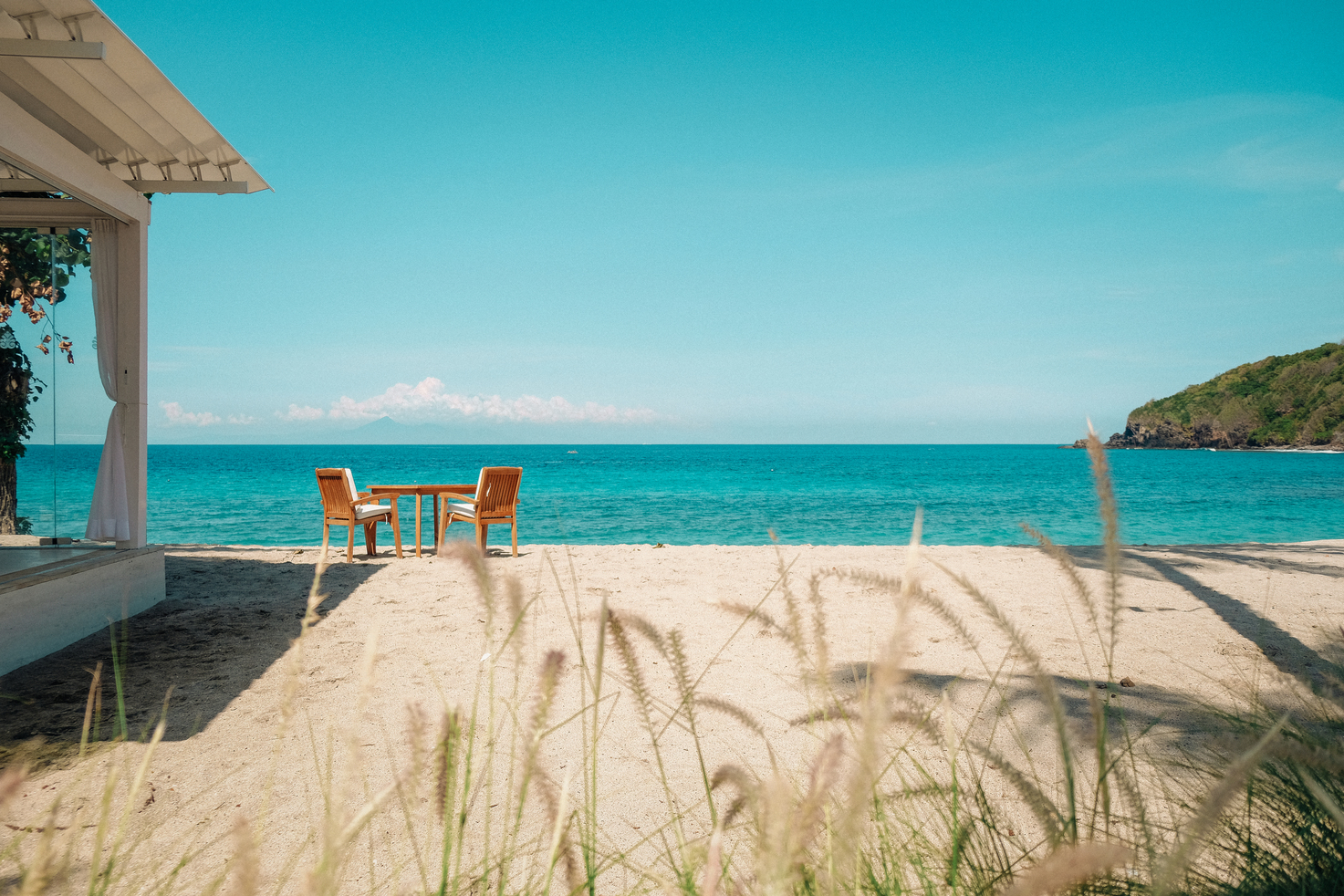
Seven Secrets by Hanging Gardens occupies a crescent of white sand on Nipah Bay, an hour's drive from Lombok International Airport along roads that pass traditional villages, tobacco fields, and the occasional cow blocking traffic. The resort takes its name from an unrelated property in Ubud, but the aesthetic connection is clear: both pursue a vision of Indonesian luxury that prioritizes natural immersion over artificial spectacle.
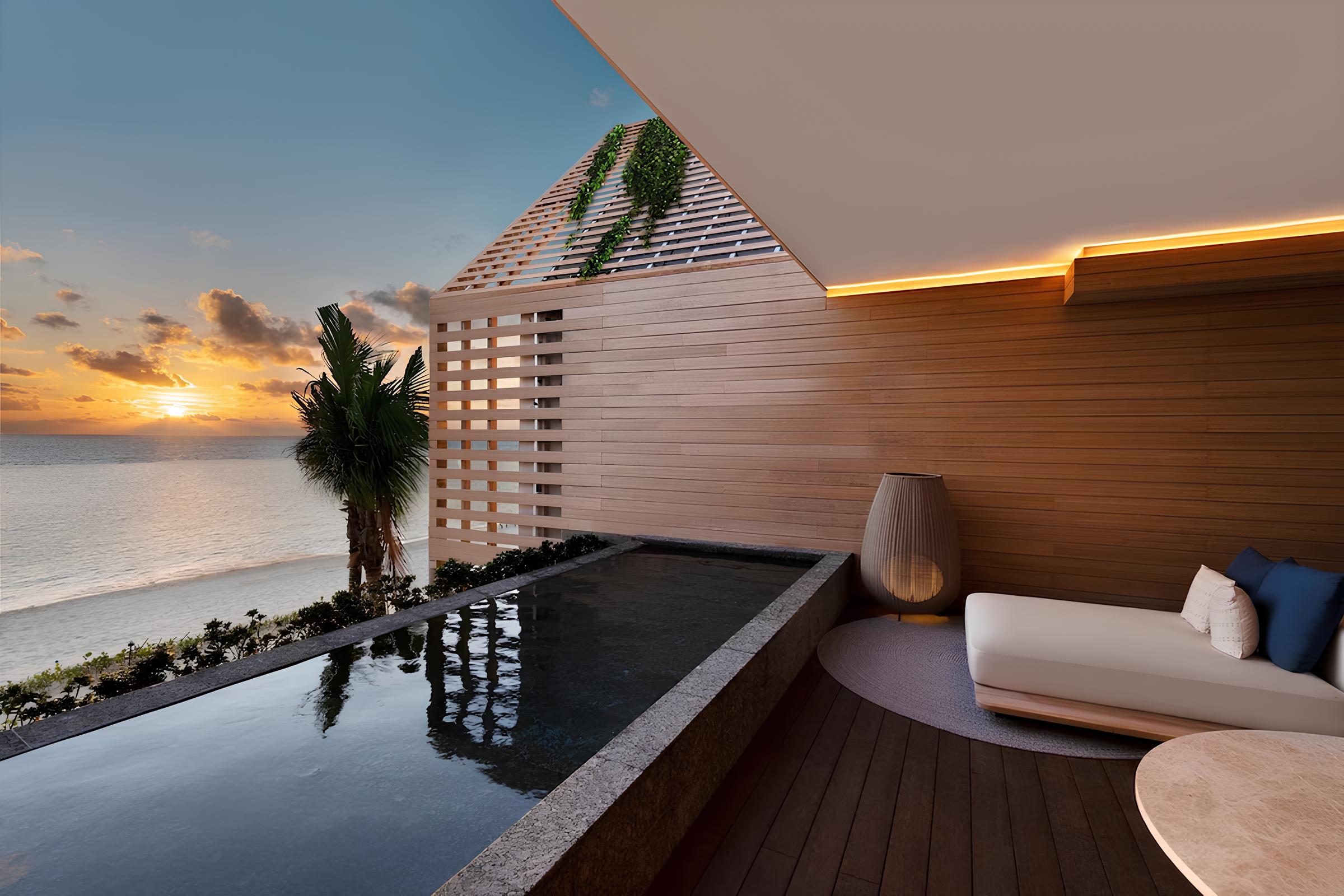
Twenty-four suites occupy the beachfront, each positioned for views across turquoise water to Bali's Mount Agung rising on the western horizon. The architecture blends modern lines with traditional Indonesian touches, using natural textures and elegant geometries to create spaces that feel substantial without feeling heavy. Private terraces extend living areas toward the beach. Private outdoor hot tubs invite evening soaking as the sky shifts through sunset colors.
The design philosophy prioritizes what the resort calls "refined opulence," a phrase that could describe many things but here means specifically: materials you want to touch, spaces scaled to human proportions, amenities that serve function rather than brochure photography. Garden View Suites on the lower level offer tropical surroundings and outdoor showers. Ocean View Suites on the upper level sacrifice garden proximity for expanded horizons. Throughout, the minimalist approach allows the setting to dominate.
Wellness programming draws from both Balinese and broader Asian traditions. The spa menu includes Ayurvedic treatments, aromatherapy facials, aloe-avocado masks, and deep-tissue bodywork. Morning yoga and Pilates sessions establish physical foundations for days that guests can fill as actively or passively as they choose. The resort's infinity pool extends toward the beach, its edge dissolving into the sea beyond.
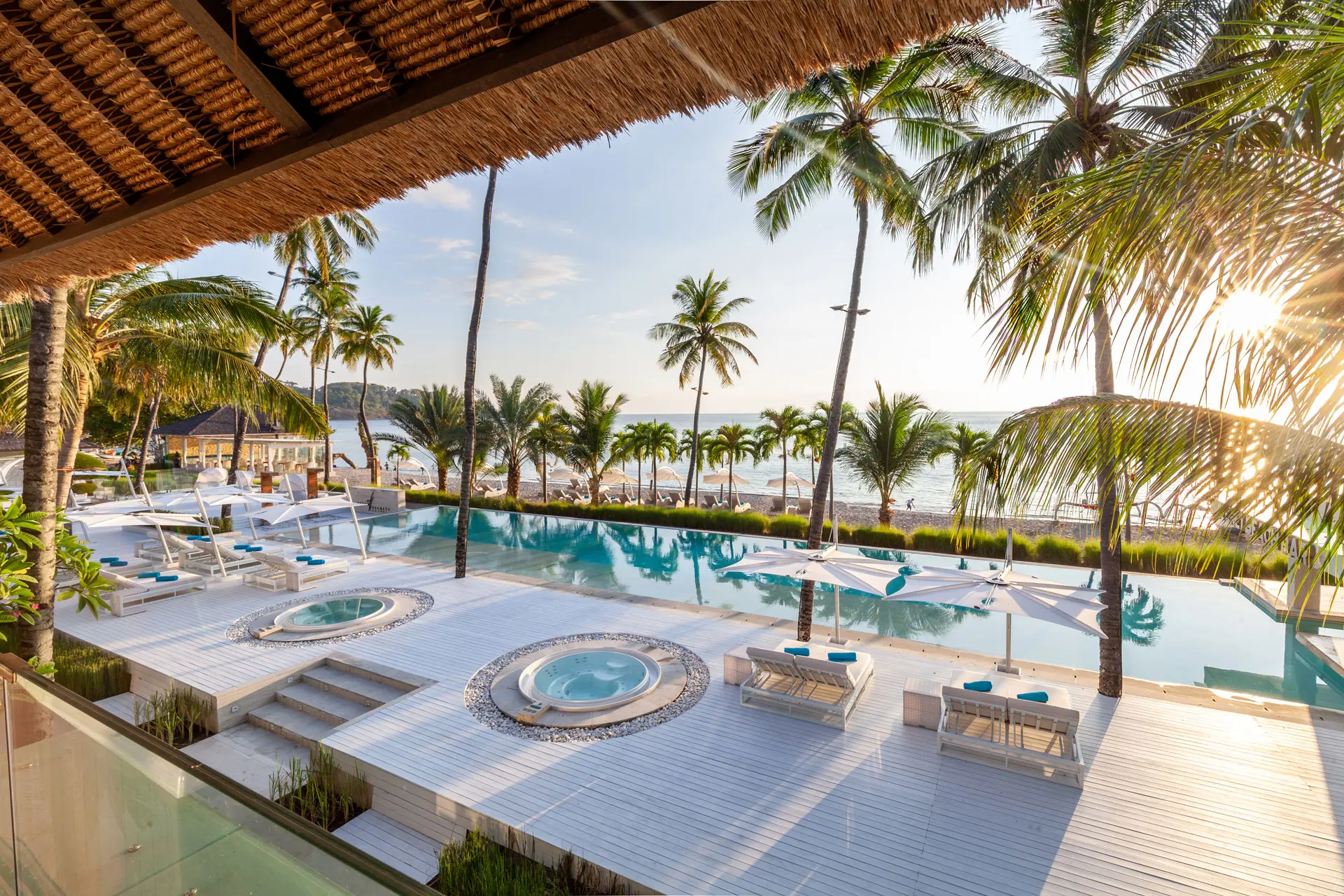
L'Angelo Bianco, the beachside open-air restaurant, handles all meals against a backdrop that justifies prolonged dining. Breakfasts trend generous and international. Lunches lighten toward salads and grilled seafood. Dinners become events, with themed cocktails reflecting the evening's mood and menus that combine Indonesian flavors with European technique. The afternoon tea service has developed a following among guests who discover that the ritual, performed against this setting, transcends its colonial origins.
Activities extend beyond the property through a concierge service skilled at reading preferences. Boat tours to the Gili Islands depart on request, allowing day trips to the diving and snorkeling that made the archipelago famous. Surf spots lie within ten minutes' drive for guests seeking waves. Traditional Sasak villages offer cultural immersion for those interested in weaving demonstrations and ancestral architecture. The resort's recommendations trend toward the authentic rather than the tourist-processed, steering guests toward experiences that match the property's own commitments.
Evenings at Seven Secrets develop their own rhythms. As the sun approaches the horizon, staff appear with cocktails calibrated to the moment. The poolside bar fills with guests who've discovered that sunset here constitutes an event worth attending. After dark, the beach becomes a different space entirely, lit by torches and inhabited by the sounds of gentle surf and distant gamelan from nearby villages.
The "seven secrets" of the name remain officially unexplained, though staff will offer theories when pressed. One interpretation: the seven elements that define the experience, from architecture to cuisine to service. Another: the seven transformations that guests undergo during extended stays. A third, perhaps most accurate: the seven reasons nobody wants to leave.
Seven Secrets by Hanging Gardens has received the Seven Stars Award for luxury hospitality.
The resort welcomes families with children of all ages and is wheelchair accessible. Transfer from Lombok International Airport takes approximately sixty minutes.
How to Travel This Arc
The five properties compose a geography that rewards sequential exploration. Begin in Sidemen at Samanvaya, allowing the valley's stillness to dissolve whatever you carried from home. Move to Alila Manggis for coastal contrast, the black pebble beaches and Kerry Hill architecture providing a different register of calm. Climb to Mathis Lodge Amed for altitude perspective, watching the island from above before departing it.
Cross to Lombok for Seven Secrets, letting the beachfront wellness programming prepare you for the final leg. Then board a speedboat for Gili Air and Villa Tokay, where the absence of engines allows full decompression before the journey home.
The entire sequence takes two weeks at minimum, three if you allow proper time at each stop. Rushing defeats the purpose. These properties were designed for guests who have already rushed enough.
Practical considerations:
Season: May through September offers the driest weather, but shoulder months (April, October) provide emptier properties and lower rates. The wet season (November through March) brings afternoon rains that rarely disrupt the day.
Transfers: Arrange through properties wherever possible. Independent drivers vary in reliability, and the remoteness of several locations requires local knowledge that apps cannot provide.
Connectivity: Wifi exists at all properties but struggles at some. Consider this a feature rather than a bug.
Health: Dengue mosquitoes operate in all areas. Use provided repellents. Tap water is not potable anywhere in Indonesia; all properties provide filtered or bottled alternatives.
Culture: Bali's Hindu ceremonies may close roads and restrict activities on significant dates, particularly Nyepi (the Day of Silence, usually in March). Lombok's Islamic calendar affects business hours during Ramadan. Check dates before booking.
The Indonesia That Remains
Tourism has a way of destroying what it loves. The beach that attracts the first visitor becomes, through that attention, something different than what attracted them. Bali has experienced this transformation more thoroughly than almost any destination on earth, its southern coast now unrecognizable to anyone who knew it thirty years ago.
But the island is larger than its reputation. East of the crowds, above the coastal roads, across the strait on islands that tourism hasn't yet consumed, the older Indonesia persists. Rice terraces continue their thousand-year cycles. Artisans weave patterns their grandmothers taught them. Temples receive offerings at dawn as they have since before Europeans knew this archipelago existed.
The five hotels in this collection don't preserve this Indonesia, exactly. They can't. The presence of any hotel changes the landscape it occupies, introduces economic pressures and cultural negotiations that alter local communities. What these properties do instead is participate honestly, hiring locally, sourcing locally, returning value locally. They offer guests access to something real while building structures that support rather than extract.
Whether this model scales remains uncertain. The pressures on Indonesia's environment and culture show no signs of easing. Climate change threatens rice terraces. Development pressure threatens coastlines. The machinery of global tourism, temporarily slowed by pandemic, has resumed its grinding advance.
For now, though, these five addresses mark coordinates where the older world remains visible. Where farmers still follow calendars their ancestors developed. Where architects design for integration rather than dominance. Where stillness is a commodity nobody has figured out how to exploit.
East of everything, the Indonesia you imagined still exists. You just have to know where to look.
Frequently Asked Questions
| East Bali | remains predominantly agricultural, with rice terraces, traditional villages, and Hindu temple complexes that predate mass tourism. The pace is slower, the crowds thinner, and the cultural authenticity more pronounced. Mount Agung, Bali's holiest volcano, dominates the landscape. |
| Alila Manggis | was designed by the late Australian architect Kerry Hill in 1994. Hill also designed Amankila and numerous other properties for Aman Resorts worldwide, including Aman Tokyo and Aman Kyoto. |
| Samanvaya's | new Ananda Wellness & Bath House provides the most comprehensive wellness infrastructure, including sauna, steam room, contrast plunges, Technogym fitness studio, and a full spa menu. Seven Secrets offers extensive Ayurvedic and Asian treatments. All five properties incorporate wellness elements into their design. |