Porto by the Glass: Four Hotels Reshaping Northern Portugal’s Wine Country
A close look at four design-led boutique hotels turning Porto, Vila Nova de Gaia and the Vinho Verde countryside into one of Europe’s most quietly serious wine destinations. Field notes on what to drink, where to sleep, and when to go.
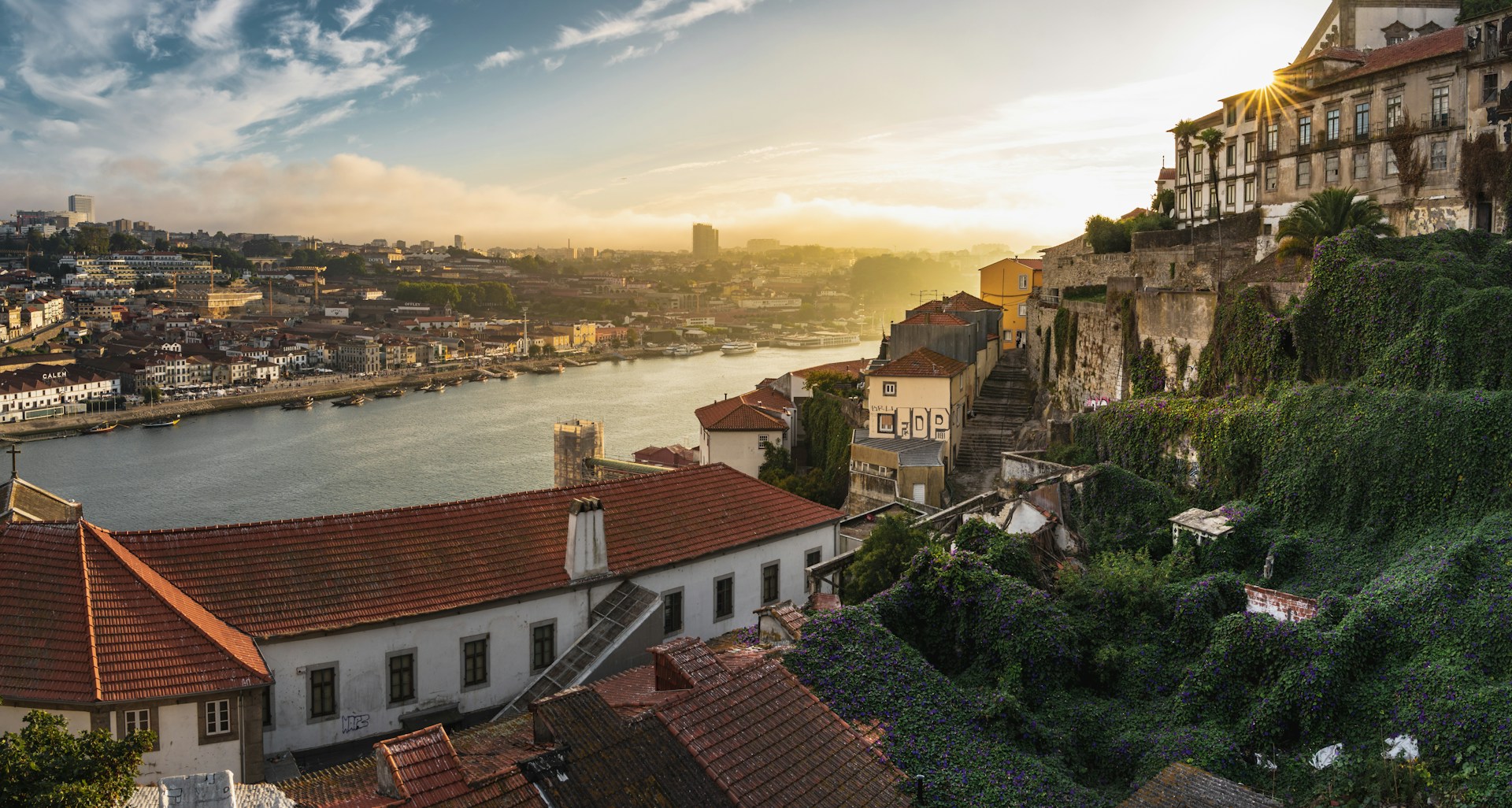
There is a moment, somewhere between your second glass of Loureiro and the first slice of presunto, when you understand that Porto has stopped being a city you visit for one weekend and started being a region you return to. It usually happens on a terrace. Sometimes the terrace is in the city, looking across the Douro toward the cellars of Vila Nova de Gaia. Other times it is forty kilometres inland, on a hillside above a river you cannot quite name, surrounded by vines that look like a photograph from a magazine but smell, much more interestingly, like wet earth and lemon zest.
For decades, Northern Portugal sold itself with two postcards. The fortified Port wine of the Douro, dusty and dark and ceremonial. And the city of Porto itself, painted tiles and tram lines and a working river. Both postcards still exist. Both are still magnificent. But they no longer tell the full story.
Three things have changed in the past five years. Vinho Verde, a region many travellers still associate with the cheap, slightly fizzy white poured in tourist menus, has been quietly reinvented by a generation of winemakers working with single varieties (Loureiro, Alvarinho, Avesso) and farming organically. The wines that come out of these estates today are dry, mineral, and serious enough to share a table with white Burgundy. Vila Nova de Gaia, the slope across the river from Porto where the wine ages in the famous lodges, has become a destination in its own right rather than a half-day stop. And a small group of boutique hotels has emerged that treats wine not as an amenity but as the organising principle of the experience.
This article looks at four of them. They are very different from each other. One sits inside an estate vineyard. One looks straight at Porto from the opposite bank of the Douro. Two are inside the city, in restored historic buildings, but neither is anything like a conventional city hotel. Together they sketch, surprisingly precisely, what a wine-led trip to Northern Portugal in 2026 actually looks like.
Why now: the shift Northern Portugal made when no one was watching
To understand why these hotels matter, it helps to understand what changed in the wine itself.
Vinho Verde is the largest wine appellation in Portugal by surface, and for a long time it was a regional curiosity. The wines were blended, lightly sparkling, served young and cold, more refreshment than reflection. Then, around 2015, a generation of producers began to do things differently. Many of them had returned from oenology programmes in France, Italy and Australia. They isolated the best grape varieties. They worked single-vineyard rather than co-operative. They reduced yields and slowed down vinification. By the early 2020s, the result was a wine recognisably from the same region but operating at an entirely different level. Today, a Loureiro from Amarante, drunk at the right temperature in front of grilled sea bass, is one of the most precise food wines produced anywhere in Europe.
The hotels followed the wine. Monverde Wine Experience Hotel, built on a working estate in Amarante, was one of the first to commit completely to the idea of staying inside the vineyard rather than near it. Vinha Boutique Hotel, opened more recently in Vila Nova de Gaia, took the opposite approach. It built itself on the river so you can see the entire wine geography of Porto laid out below: the rabelo boats, the centuries-old lodges, the Ribeira on the far bank. Travel between them happens by private boat. Palacete Severo and The Largo sit inside Porto itself, in two very different historical buildings. Both have integrated wine into their hospitality grammar in ways the older grand hotels of the city simply do not.
What follows is a portrait of each, a recommendation of when to choose which, and an honest note on what is still difficult about Northern Portugal in 2026. The short version: the better the region gets, the more bookings you need to make in advance.
Monverde Wine Experience Hotel: the first wine hotel of Vinho Verde
Monverde sits on a working estate in Amarante, about an hour’s drive east of Porto, in the heart of Vinho Verde country. Coming up the long approach, what strikes you first is the quietness. The hotel is low and horizontal, built in a contemporary architectural language that disappears into the slope. The vines come right up to the building. From most rooms, you do not look at the vineyard. You look across it.
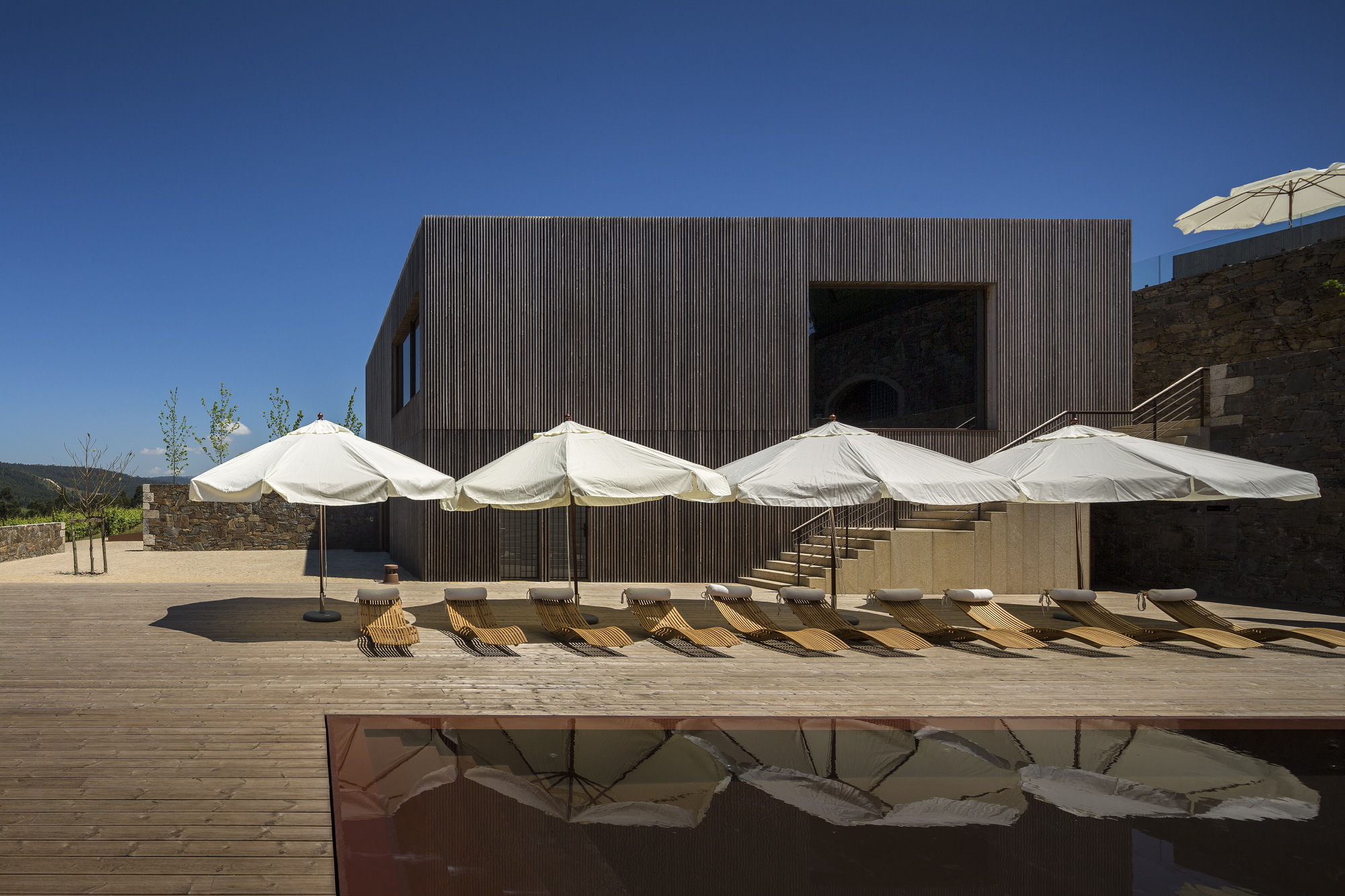
The estate has been producing wine for several generations. The hotel, which opened in stages over the last decade, treats this not as decoration but as the central narrative of a stay. Rooms are organised in two main categories. Vineyard Experience Rooms open directly onto the vines, with a private terrace, often a small lawn, and a low table for the in-room wine flight that arrives on request. Wine Experience Suites are larger and engage more architecturally with the estate, usually positioned where the slope opens slightly and the view extends further down the valley.
The dining is led by Chef Carlos Silva, who has refined the Monverde kitchen into a serious destination in its own right. The cooking is contemporary Portuguese, ingredient-driven, with strong relationships with local producers. The wine pairings, and this is the point of being here, pull almost entirely from the estate and from neighbouring producers in Amarante and Baião. You will drink Loureiro and Avesso. You will be poured red Vinho Verde, which is its own discovery. Most people do not know it exists.
The spa, the outdoor pool, the morning rituals on the terrace all work as you would expect at a modern wine hotel of this category. What is less expected is how good the estate wine cellar tours are. Most wine-region hotels offer a polite walk-through. Monverde’s tour, when scheduled with the estate manager, is something closer to an oenology lecture. You leave understanding what Vinho Verde is now in a way you would not have understood walking in.
At a glance: - Location: Amarante, Vinho Verde region, about 1h drive from Porto - Style: Modern wine hotel inside a working estate - Price range: From around €168 per night - Best for: First-time visitors to Vinho Verde who want to be in the vineyard, not near it - Memorable detail: Red Vinho Verde, served slightly chilled, with the estate’s own picanha-style grilled meat
Vinha Boutique Hotel: sleeping above the wine caves of Porto
Cross the Dom Luís I Bridge from Porto and you are in Vila Nova de Gaia, the slope where Port wine has been aged for three centuries. The lodges are still here. Sandeman, Taylor’s, Graham’s, Ramos Pinto, and dozens of smaller names. In the last few years, the slope has slowly turned itself into one of the most interesting micro-destinations in Iberia. Vinha Boutique Hotel sits high on this slope, in an estate built around an 18th-century building that has been completely re-imagined.
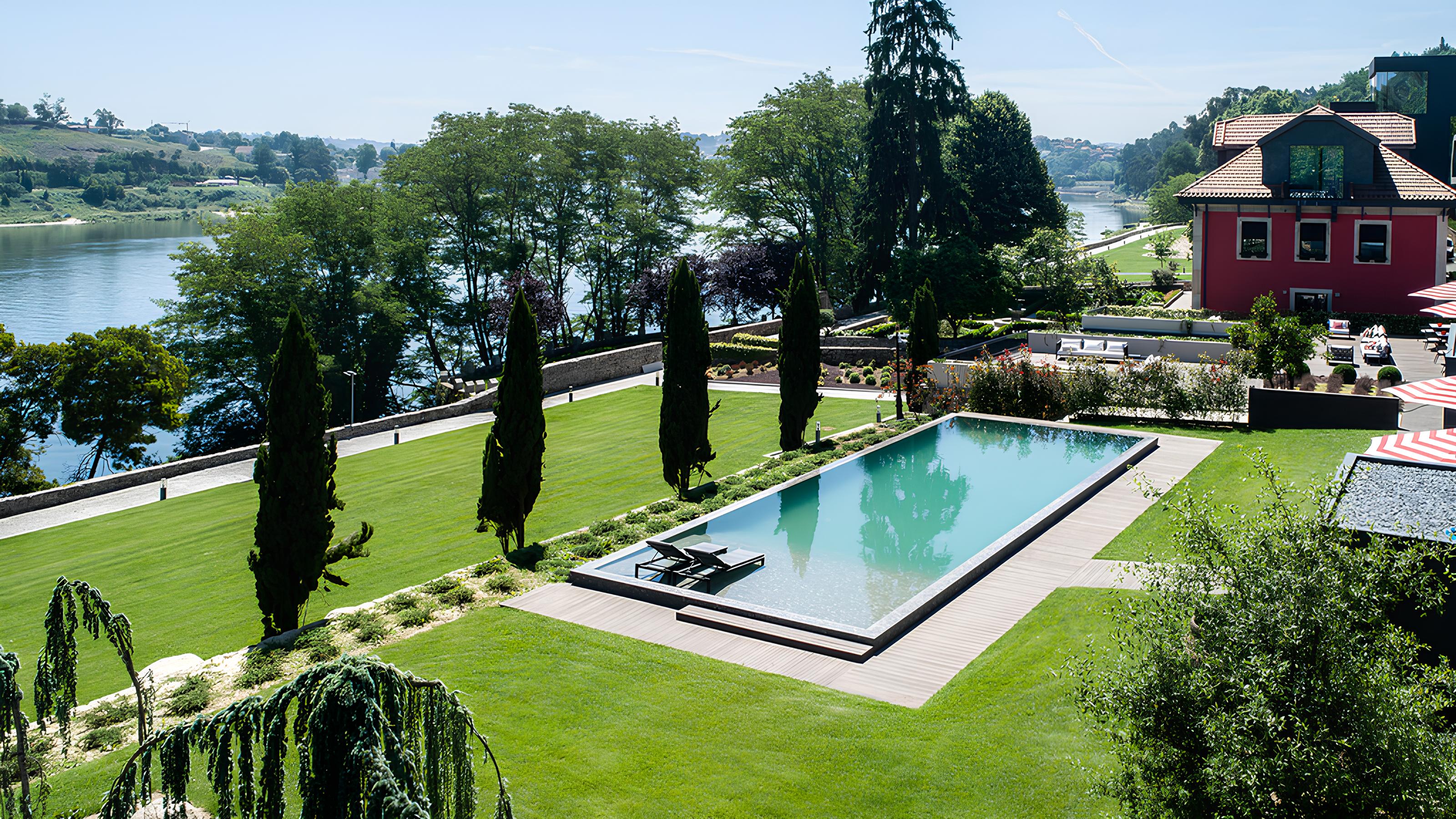
The architectural concept is unusual. The hotel is organised in three wings, each with its own atmosphere: Wine, Art and Design. The Wine wing is the densest and most thematic. Rooms are built around bottle storage and tasting alcoves, with walls in deep textured stone and lighting that recalls the cellars below. The Art wing leans contemporary, with rotating exhibitions and quieter, more residential rooms. The Design wing pushes contemporary furniture and clean lines, for guests who arrive from a Milan or Copenhagen aesthetic. Across the three wings, the hotel has 38 rooms and suites, which is small enough to keep service intimate.
The Michelin-starred restaurant is the stage on which the property’s wine programme actually performs. The list is built primarily around Northern Portuguese producers (Douro reds, Vinho Verde whites, single-quinta Ports), with selective excursions into Alentejo and the international market. The kitchen leans modern Portuguese, technically rigorous, generous on the seafood that arrives daily from Matosinhos.
What makes Vinha unusually well-suited to a wine-focused trip is its private boat service to Ribeira. The hotel has a small pier. The journey across the Douro takes a few minutes. You arrive on the Porto side without parking, without traffic, without the long descent through Gaia that normally tires you out before lunch. You can spend the day in the city, return for the Sisley Paris spa, eat dinner with a view of Porto’s lights from across the river, and never use a car. For a wine trip, where the entire premise is that you are tasting and not driving, this single logistical detail changes everything.
At a glance: - Location: Vila Nova de Gaia, directly across the Douro from Porto’s Ribeira - Style: 38-room boutique hotel inside an 18th-century estate, in three architectural wings - Price range: From around €266 per night - Best for: Travellers who want Porto’s wine geography literally below their window, with luxury Spa and Michelin dining on site - Memorable detail: The complimentary boat service that lets you treat Porto and Gaia as one connected destination
Palacete Severo: the adults-only Porto you didn’t know was still possible
Inside Porto itself, in the Boa Vista neighbourhood (quieter than Ribeira, residential, leafy), sits a property that almost does not signal itself from the street. Palacete Severo is a restored historic palace, organised around a private garden of chestnut and camellia trees that has stood for more than a century. From the entrance, the impression is more of arriving at the home of a discreet collector than of checking into a hotel.
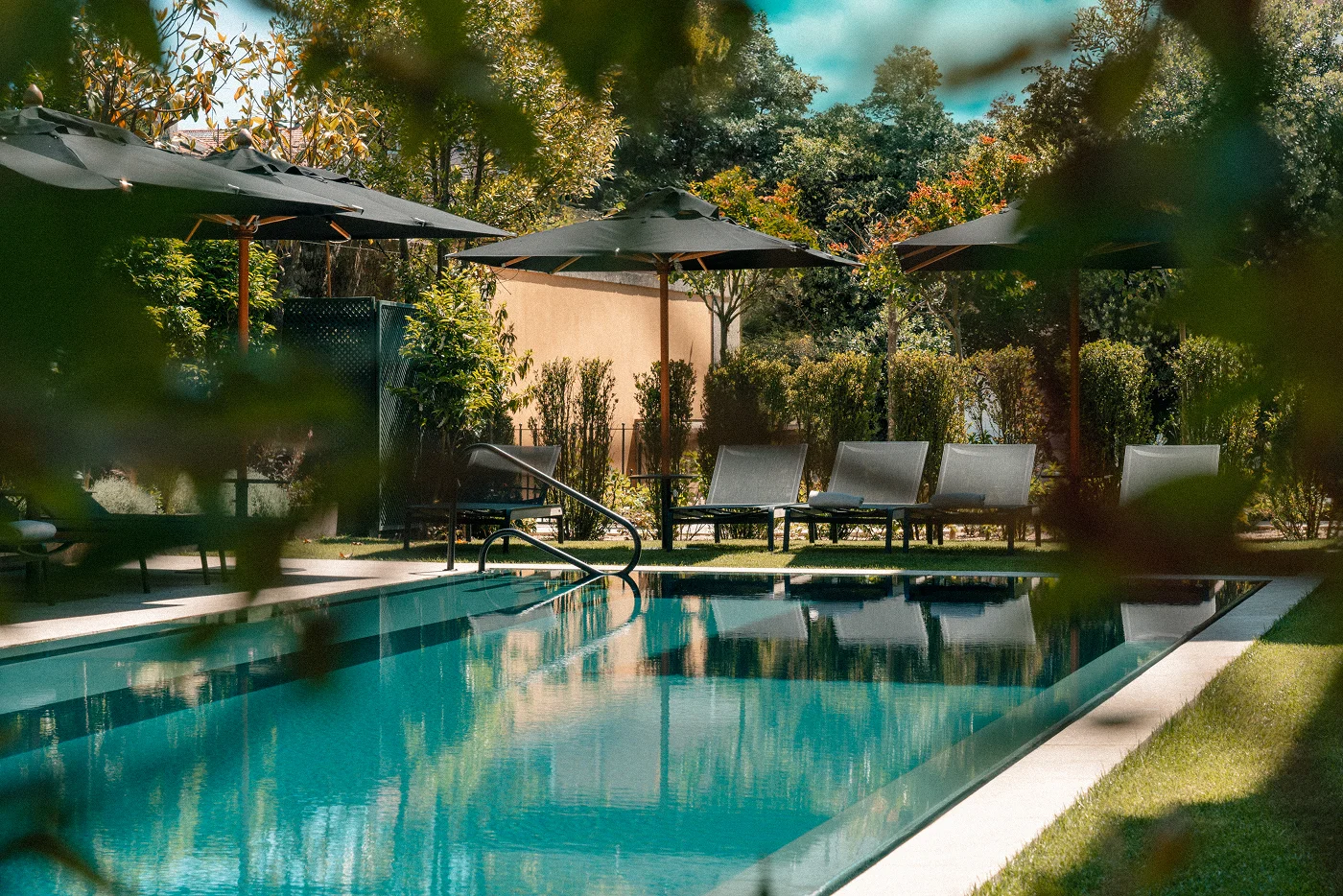
The architectural inheritance is the point. Yellow façades, arched loggias, original stone staircases, stained-glass windows in the public rooms, hand-painted ceilings in some of the suites. Where intervention was needed, the design moved towards minimalist contemporary, with neutral materials, restrained palette, and no decorative noise. The historic detail is allowed to breathe. The result is a hotel where the architecture is loud and the decoration is quiet, the inverse of how most luxury renovations end up.
Palacete Severo is adults-only, and that sets the rhythm of the whole property. Mornings are slow. The garden is genuinely usable. The spa, with hammam, sauna, and a heated saltwater pool, is small enough that two people can effectively have it to themselves at off hours. The fine-dining restaurant works in a similar register: short menu, deeply seasonal, technically careful, with a wine list that leans into Douro reds and small-production Vinho Verde.
The hotel is ten minutes from the centre by taxi but feels, when you are sitting in the garden at dusk, as if it were thirty kilometres away. For travellers who want Porto without the traffic of Ribeira and the constant churn of cruise-ship day trippers, Palacete Severo is the cleanest answer the city currently offers.
At a glance: - Location: Boa Vista neighbourhood, Porto - Style: Adults-only restored palace, garden-led, minimalist-contemporary inside a historic shell - Price range: From around €291 per night - Best for: Travellers prioritising calm, design and a private garden over central street life - Memorable detail: The hand-painted ceilings in the original wing. Easy to miss if you don’t look up.
The Largo: five buildings, one green door
The fourth hotel is, in some ways, the most ambitious project of the four. The Largo sits in Largo de São Domingos, a small square in the historic heart of Porto, behind what the hotel itself calls “an unassuming green door”. Cross that door and you find a property assembled from five restored historic buildings, internally connected, organised around courtyards planted with trees and Portuguese tile-patterned terracotta.
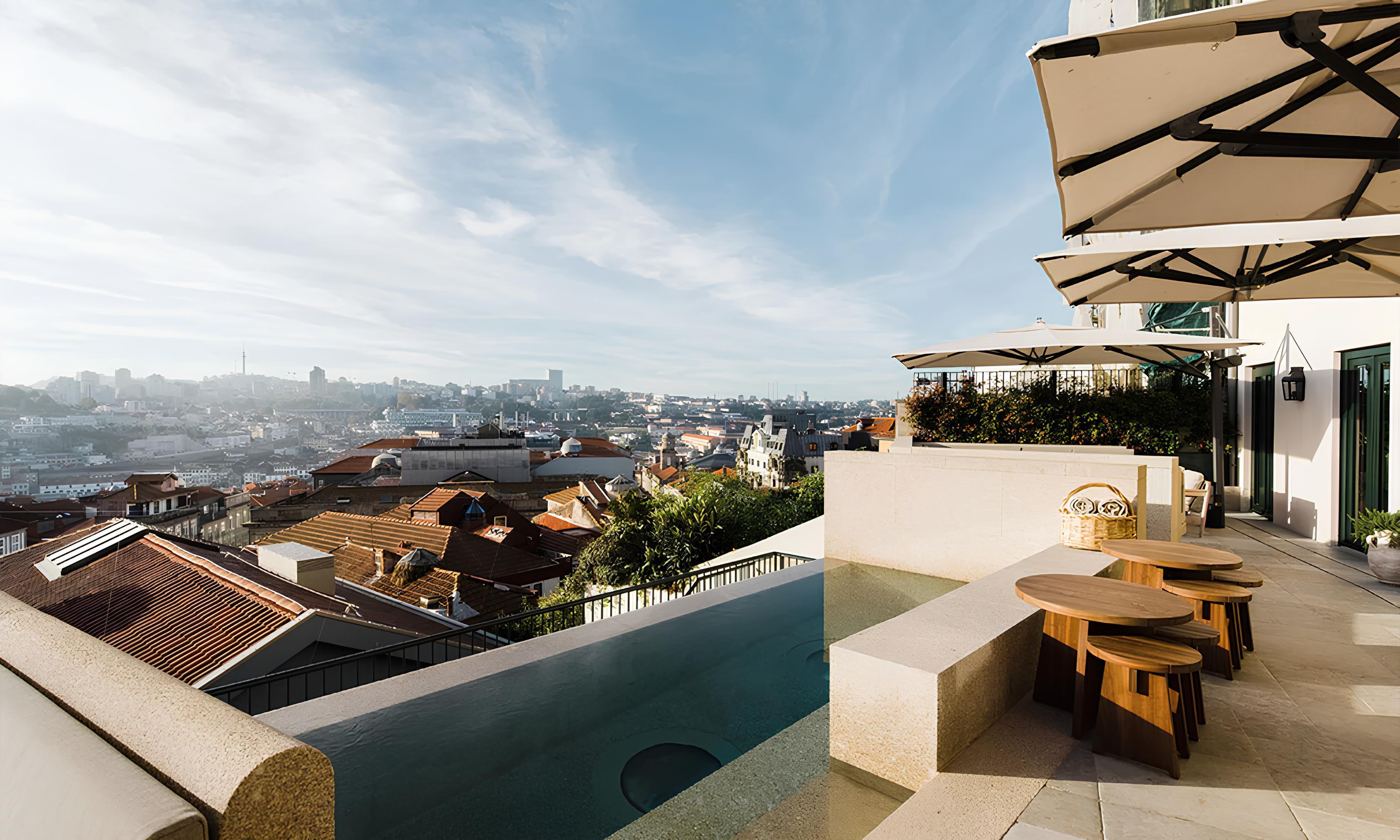
The design language is one of the most articulate currently in Iberia. The phrase the hotel uses, Nordic restraint with Portuguese warmth, is unusually accurate. The materials are hand-finished. The light is treated as a building material in its own right. Rooms are organised across categories that include conventional doubles, large suites, multi-floor townhouse duplexes, and a top-floor penthouse with its own panoramic terrace. There is a rooftop pool with views over the terracotta roofs of central Porto and, in good visibility, the Atlantic in the distance.
The fine-dining restaurant is the most contemporary of the four hotels in this article. It pulls heavily from coastal Portuguese ingredients but applies a refined, almost Scandinavian-influenced grammar: clean plating, fewer elements per dish, careful temperatures. The cocktail bar is run by a team that has clearly thought about Port wine as a cocktail base in ways most international bars have not.
A small detail that travellers tend to remember: The Largo accepts small dogs (under 10 kg) at no charge, and runs a fleet of private cars with drivers for guests who want to move between Porto, Gaia and the wine country without managing logistics. For wine-trip travellers in particular, the second of these matters more than it sounds. The drivers know which gates to use at the cellars, which roads to avoid in the Douro Valley, and which producers will let a small group through without an appointment if you arrive at the right hour.
At a glance: - Location: Largo de São Domingos, central Porto - Style: Five restored historic buildings, one design language, integrated as a single hotel - Price range: From around €856 per night - Best for: Travellers wanting maximum design ambition and the most central possible location, with serviced logistics for wine excursions - Memorable detail: The unassuming green door, and the rooftop pool that is invisible from the street but commands the entire centre of Porto.
Three wine routes from these four hotels
A practical question travellers ask: we have three days, what do we drink? Three suggested routes that map onto these hotels.
Route 1. Vinho Verde (one full day from Monverde or Vinha): Start at the Monverde estate cellar in the morning. Drive twenty minutes north to a smaller producer in Sub-Region Amarante (the hotel concierge will arrange). Lunch on the river in Amarante itself, the small wine town with the famous arched bridge, with grilled sea bass and a glass of Loureiro. Afternoon visit to a single-vineyard Avesso producer. Return for dinner at the home hotel.
Route 2. Port and Vila Nova de Gaia (one full day from any of the four hotels): Walk or boat across to Gaia in the morning. Two cellars before lunch (we recommend one large historic name and one small independent. Vasques de Carvalho is the under-the-radar pick). Lunch in Gaia at a panoramic restaurant. Afternoon: a tasting of vintage Ports, ideally back-to-back across two decades, at a single producer. Sunset on the slope with a glass of white Port and tonic.
Route 3. Douro Valley (one long day, requires a driver): Drive east into the Douro Valley itself, the dramatic terraced river landscape, for a full-day visit to two quintas. Lunch on a quinta terrace overlooking the river. Return late afternoon, with the kind of fatigue that only a five-glass tasting in mountain heat produces, to the spa at your hotel.
When to go: the case for May, June and September
Northern Portugal in late spring is, for almost any kind of trip, the optimal window. May and early June give you long daylight, mild temperatures (low to mid 20s in Porto, slightly warmer inland in Vinho Verde), wines that have rested through winter, and the entire region before the major summer crowd arrives. September is the second perfect month: vintage time in the Douro, smaller crowds than August, mornings cool enough to walk the city before the day heats up.
July and August are not ruined. Porto stays manageable thanks to the Atlantic. But these are the months when the cruise traffic is heaviest in Ribeira, and when the most interesting smaller producers in Vinho Verde are working harvest and less available for visits. November through March is the quiet, atmospheric, sometimes very wet alternative. If you want Porto without crowds and a bottle of red Vinho Verde at a fireplace, this is its honest moment.
What is still difficult about Northern Portugal in 2026
Three honest pieces of context.
Tables at Michelin-starred restaurants, including the one at Vinha Boutique Hotel, should be booked at the time you book the room, not later. The same is true of estate cellar tours at Monverde for groups, and of the better Port lodge experiences in Gaia.
Driving in Porto is not difficult, but parking is, particularly near Ribeira and in the higher Boa Vista streets. If you are not staying somewhere with private parking (Palacete Severo’s garden, The Largo’s private cars), expect to walk uphill at the end of long days.
The Douro Valley is further from Porto than the maps suggest. The road takes longer than the kilometres look, and the drive becomes exhausting after a few wine tastings. Hire a driver for that day. Every hotel in this article will arrange it. Do not improvise.
How to choose between the four
A simplified decision tree.
- You want to wake up inside a vineyard: Monverde
- You want Porto across the river, with a boat, Sisley spa and a Michelin star: Vinha Boutique Hotel
- You want adults-only, garden, peace, design restraint: Palacete Severo
- You want central Porto, maximum design ambition, full concierge logistics: The Largo
For a first wine-focused visit to Northern Portugal of four to six nights, the most rewarding combination is two nights at Monverde and three nights at Vinha or The Largo. You experience the vineyard from inside, then move to the city without losing the wine logic of the trip.
Frequently asked questions
Where should I stay in Porto if I am here mainly for wine?
For maximum wine immersion, Vinha Boutique Hotel in Vila Nova de Gaia is the strongest single choice. It puts the Port wine lodges literally below your window and gives you a private boat to Porto’s Ribeira. If your priority is Vinho Verde rather than Port, Monverde Wine Experience Hotel in Amarante is the only option among these four that places you inside a working estate.
What is the difference between Vinho Verde and Douro Valley wines?
Vinho Verde is whites (mostly) and reds (a smaller but interesting category) from the green, Atlantic-influenced north-west of Portugal. Light, fresh, mineral, often built around varieties like Loureiro, Alvarinho and Avesso. Douro Valley is the dramatic terraced river region further east, the historical home of fortified Port and increasingly of serious dry red table wines based on Touriga Nacional, Touriga Franca and Tinta Roriz. Vinho Verde is for fish and warm afternoons. Douro reds are for slow autumn dinners.
Can I visit Port wine cellars without a guided tour?
You can walk into the public cellars of the larger Port houses in Vila Nova de Gaia and join scheduled tours throughout the day. For more interesting visits (small producers, vintage Port verticals, family lodges), booking ahead through your hotel concierge gives access that walk-ins do not.
Is it worth combining Porto with the Douro Valley in the same trip?
Yes, but only with at least four full nights. A single day-trip into the Douro Valley from Porto is possible but exhausting. If you want to understand the region, plan two nights at a Douro Valley quinta in addition to your Porto stay. Several hotels in this article will arrange the transfer and bookings.
When is the best time of year to visit Porto for wine? May, early June and September.
Mid-temperatures, long daylight, smaller crowds than July and August, and the wine producers more available for tastings. November to March is the atmospheric off-season, with red wine weather and very few tourists.