Where Havana Lives: Six Boutique Hotels Keeping Culture Alive
From the birthplace of Latin jazz to San Isidro's street art, six privately owned boutique hotels are preserving Cuban culture through restoration and hospitality.
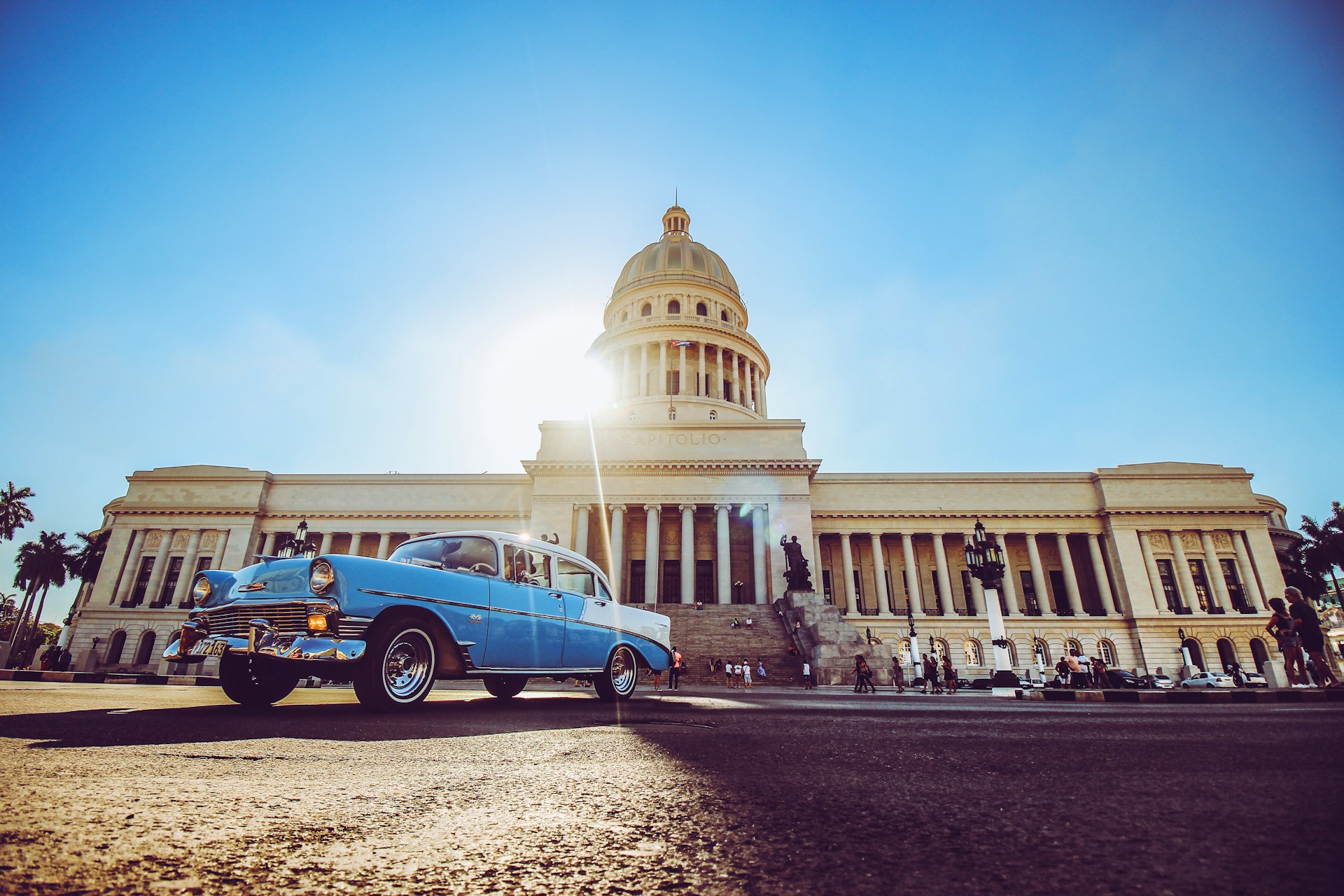
Something has been happening in Havana that the guidebooks haven't quite caught up with. While the grand government-run hotels along the Malecón continue their slow decline, a parallel hospitality universe has emerged in the city's residential neighbourhoods.
These are not casa particulares in the traditional sense, those spare rooms rented out by families supplementing state salaries. These are full-scale boutique hotels, often occupying entire mansions, created by an unlikely coalition of returned exiles, international artists, Grammy-winning producers, and Cuban-Italian families with dreams larger than most Caribbean islands. They represent the first wave of genuine luxury hospitality in Cuba since the Revolution, and their significance extends far beyond thread counts and breakfast menus.
Each property tells a story that intersects with Cuba's cultural DNA. A 1930s apartment building in the neighbourhood where Latin jazz was born. A nineteenth-century mansion in an art district now covered in murals. A senator's former love nest, won in a poker game, now serving Italian cuisine under a golden chandelier. The six hotels profiled here aren't simply places to sleep. They're entry points into Cuban culture, art, music, and architecture, operated by people who've made it their mission to share what they know.
The Sound of a Neighbourhood: Cayo Hueso and Tribe Caribe
There's a park in Centro Havana called Parque Trillo where, sometime in the 1940s, a young percussionist named Chano Pozo first encountered the vocalist Benny Moré. A few years later, Pozo would take his congas to New York and, with Dizzy Gillespie, create a song called Manteca, effectively inventing Latin jazz. The neighbourhood where this happened is called Cayo Hueso, and it remains, to this day, one of the most musically significant addresses in the Americas.
Tribe Caribe opened in late 2022 inside a five-storey 1930s building at the corner of Aramburu and Neptune, a block from Parque Trillo. The founders are Andrés Levín, a Venezuelan-American music producer with twenty-six Grammy nominations (he won in 2009 for the original Broadway cast recording of In the Heights), and American investor Chris Cornell. Levín has spent over two decades documenting and promoting Afro-Cuban music, founding the band Yerba Buena and collaborating with artists from David Byrne to Caetano Veloso. His wife is Cuban-American singer Cucú Diamantes. The hotel is, essentially, an extension of this lifetime's work.
The building itself underwent a transformation that architect Orlando Inclán describes as rescue rather than renovation. The iron balconies had rusted through. The interior had been subdivided into eight apartments. A few more years of salty Caribbean air and it would have collapsed entirely. Today, eleven rooms and suites occupy the upper floors, each decorated with locally sourced period furniture and original artwork by Cuban and Pan-Caribbean artists. The ground floor houses The Black Box, a gallery and performance space that functions as a cultural hub for the neighbourhood. When the hotel opened, they threw a block party. Hundreds of Cayo Hueso residents showed up to see an exhibition by photographer Juan Carlos Alóm featuring images of their own streets and faces. People wept.
Cayo Hueso is not a tourist neighbourhood. It never has been. Traditionally Afro-Cuban and working-class, it was known in the early twentieth century for violence and vice, but also for the Abakuá secret societies that nurtured generations of rumberos. The names associated with these streets read like a hall of fame of Cuban music: trumpeters Félix Chappottín and Mario Bauzá, singers Omara Portuondo and Elena Burke, bandleader Juan Formell of Los Van Van, the harmony group Los Zafiros. The neighbourhood also produced Eusebio Leal, the beloved historian who masterminded the restoration of Old Havana and secured its UNESCO World Heritage status.
When Tribe Caribe brought a free concert by Los Van Van to Parque Trillo during Havana Jazz Fest, two thousand people showed up. Many had never seen the band live. The rooftop restaurant and bar, called Manteca in tribute to Pozo's masterpiece, hosts sunset events with live music. The antique cage elevator still works. The vaulted ceilings and original floor tiles survived. There is no television in any room. As one reviewer noted, you switch off your phone here and discover a symphony of culture awaiting.
Walls That Speak: San Isidro and A|S Boutique Residence
On the southern edge of Old Havana, a few blocks from the touristy plazas, lies a neighbourhood called San Isidro. A decade ago, this was one of the most forgotten corners of the UNESCO heritage zone, its colonial buildings sagging, its streets potholed and dusty. Then, in 2016, actor-turned-artist Jorge Perrugorría opened Galería Taller Gorría in an abandoned factory, inviting Cuban and international artists to paint the surrounding walls. San Isidro became an open-air museum almost overnight.
Time Out magazine named it one of the fifty-one coolest neighbourhoods in the world. Bold portraits of Afro-Cuban women now cover entire facades. Geometric abstractions pulse alongside surrealist murals. International graffiti writers from Belgium, Mexico, and New York arrive to collaborate with local crews who call themselves "the freaks." Art festivals, poetry readings, and community gatherings fill the narrow streets where horse-drawn carts still share right of way with bicycle taxis.
Into this environment stepped André Visser, a Dutch abstract artist and former fashion industry executive, and Sandy Solano Díaz, a Cuban dancer and musician from Havana. They met in Moscow, fell in love, and dreamed of creating something together in Cuba. Despite Visser never having visited the island before Sandy spotted their future property, a crumbling nineteenth-century mansion on Calle Jesús María, they committed to the vision. The building had no roof. Its walls rose five metres toward an open sky. Two years of restoration later, in 2020, A|S Boutique Residence opened.
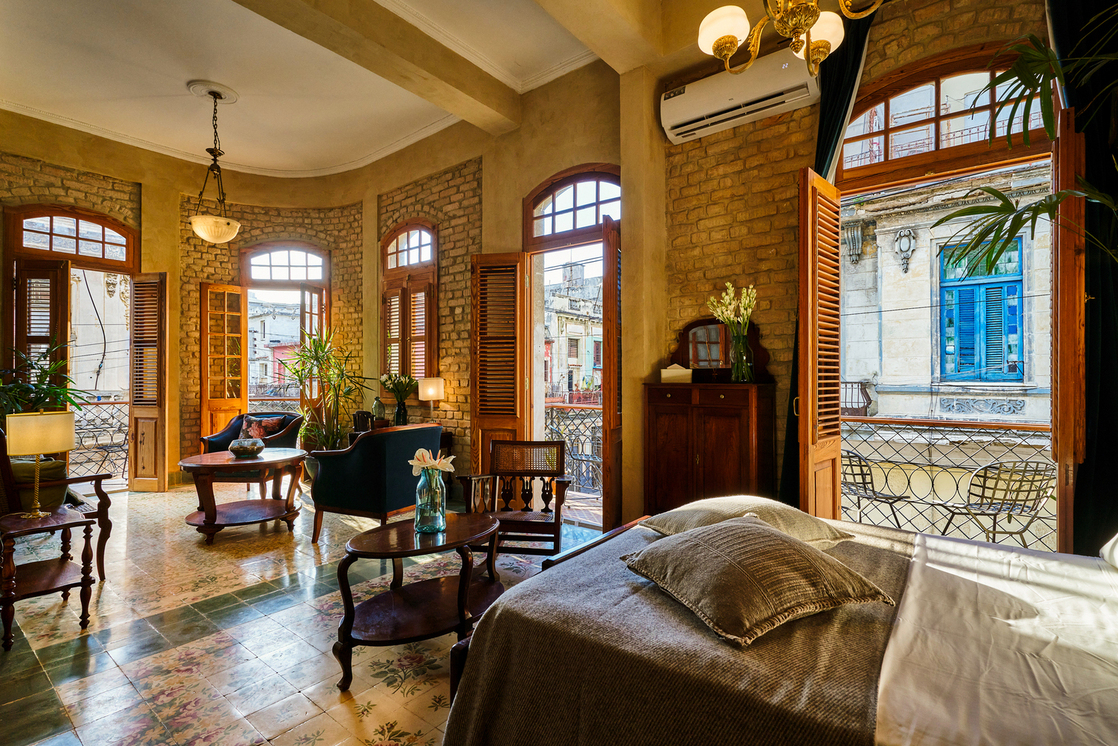
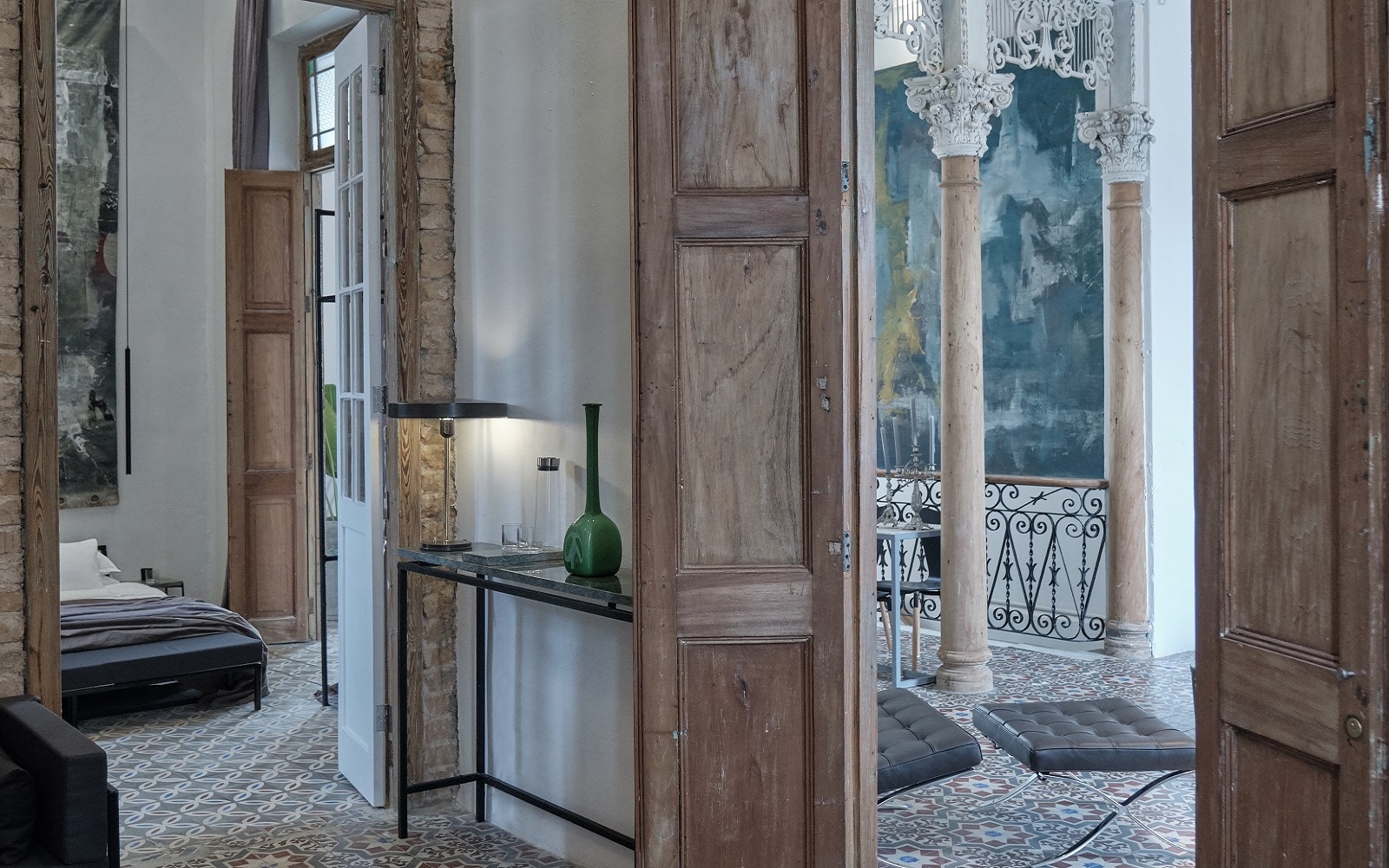
The result is a collision of worlds that somehow holds together. Original Carrara marble columns and handmade ceramic floor tiles meet Mies van der Rohe Barcelona chairs and industrial lighting. Visser's large abstract paintings, executed in bold colours, hang throughout the property, alongside works by emerging Cuban artists exhibited in the ground-floor gallery called HAV Coffee & Art. Vintage Venetian glass vases catch the light filtering through Caribbean louvered shutters. The exposed brick walls were left deliberately raw, bearing the patina of two centuries.
There are nine suites, sleeping a maximum of eighteen guests. The policy is adults only, age sixteen and above. The rooftop terrace offers panoramic views of Old Havana's skyline and a plunge pool for cooling off after walking the cobblestone streets. Organic breakfasts include vegan options, accompanied by Italian espresso. Sandy and André personally curate experiences for guests, from tours led by musicians and art curators to dance classes and yoga retreats on the rooftop. They share their little black book of Havana's best piano bars and foodie haunts.
The hotel also operates an Artist in Residence programme, bringing international artists to live and work in San Isidro for two-week periods, with exhibitions in the gallery. It's a model of hospitality as cultural exchange, where the boundary between host and curator dissolves entirely.
The Sugar Baron's Legacy: Vedado's Grand Mansions
West of Old Havana, across the invisible line that once separated the colonial city from the countryside, lies Vedado. The name means "forbidden," a reference to its origins as the green buffer zone protecting the harbour from pirates. Beginning in the late nineteenth century, Cuba's sugar barons transformed it into the most elegant residential district in the Caribbean, a grid of tree-lined avenues where neoclassical mansions sat behind flowering gardens. By the 1930s and 1940s, as sugar profits soared, Art Deco towers and eclectic villas joined the streetscape, their architecture reflecting every fashionable European and American style of the era.
The Revolution changed everything and nothing. The wealthy owners fled. Their houses became schools, embassies, ministries, and communal apartments. But the buildings remained, frozen in time, their Carrara marble lobbies and French chimneys slowly decaying under tropical humidity. Vedado today is a living textbook of early twentieth-century architecture, its streets an open gallery of styles from Beaux-Arts to Streamline Moderne. Three boutique hotels have planted flags here, each occupying a mansion with its own complicated history.
Paseo 206
The story begins in 1934, when a senator in the administration of President Gerardo Machado built a mansion on Avenida Paseo for his mistress. She lived there until the senator lost the house in a poker game. The property passed through several hands before Diana Sainz, a Havana-born architect, and her Italian husband, economist Andrea Gallina, discovered it in 2015. They had been living abroad for twenty years, raising their children in Hanoi and other cities, but the moment they saw the mansion, they bought it immediately.
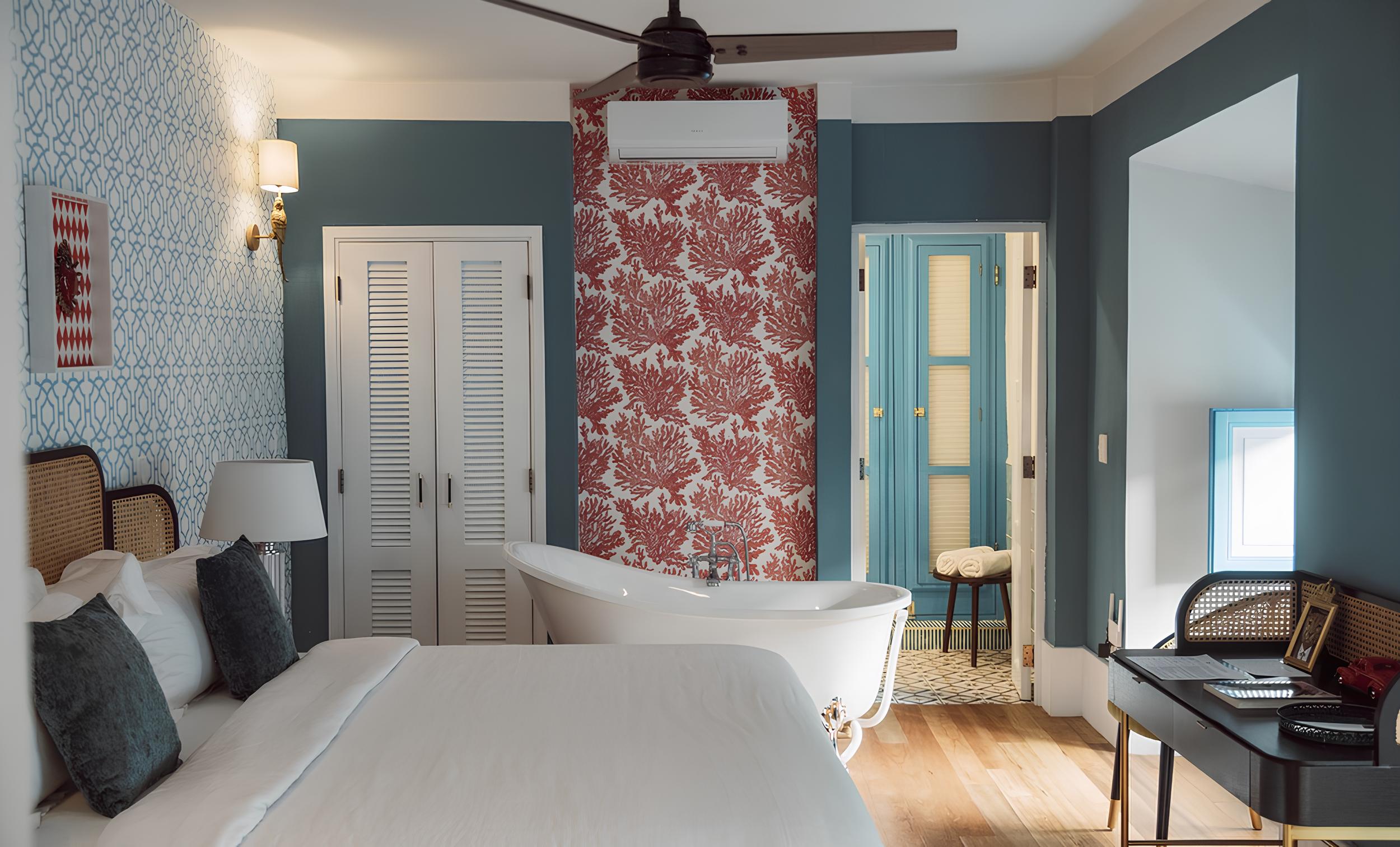
A year of renovation followed, with architects from Italy and the Dominican Republic helping to restore the original woodwork, glass cabinetry, and French chimney. Paseo 206 opened in August 2016, Havana's first genuine luxury boutique hotel, now a member of Small Luxury Hotels of the World. The ten rooms and suites are decorated with mid-century Italian furnishings and Cuban artwork, some pieces designed specifically for the property. Three rooftop suites have outdoor jacuzzis overlooking the Malecón. The library, once the senator's office, invites guests to linger over aperitivos before dinner.
Downstairs, the restaurant Eclectico, named for Vedado's architectural eclecticism, serves Italian cuisine that has become among the best in Havana. Executive chef Alejandro Perez oversees the kitchen, with signature dishes created by Michelin-starred chef Vincenzo Frassanito. Pumpkin truffle ravioli, octopus carpaccio, rum tobacco gelato. Every Thursday, the terrace hosts live Latin jazz, a tradition that has made Paseo 206 a destination for Havana's music lovers.
La Alameda Boutique Hotel
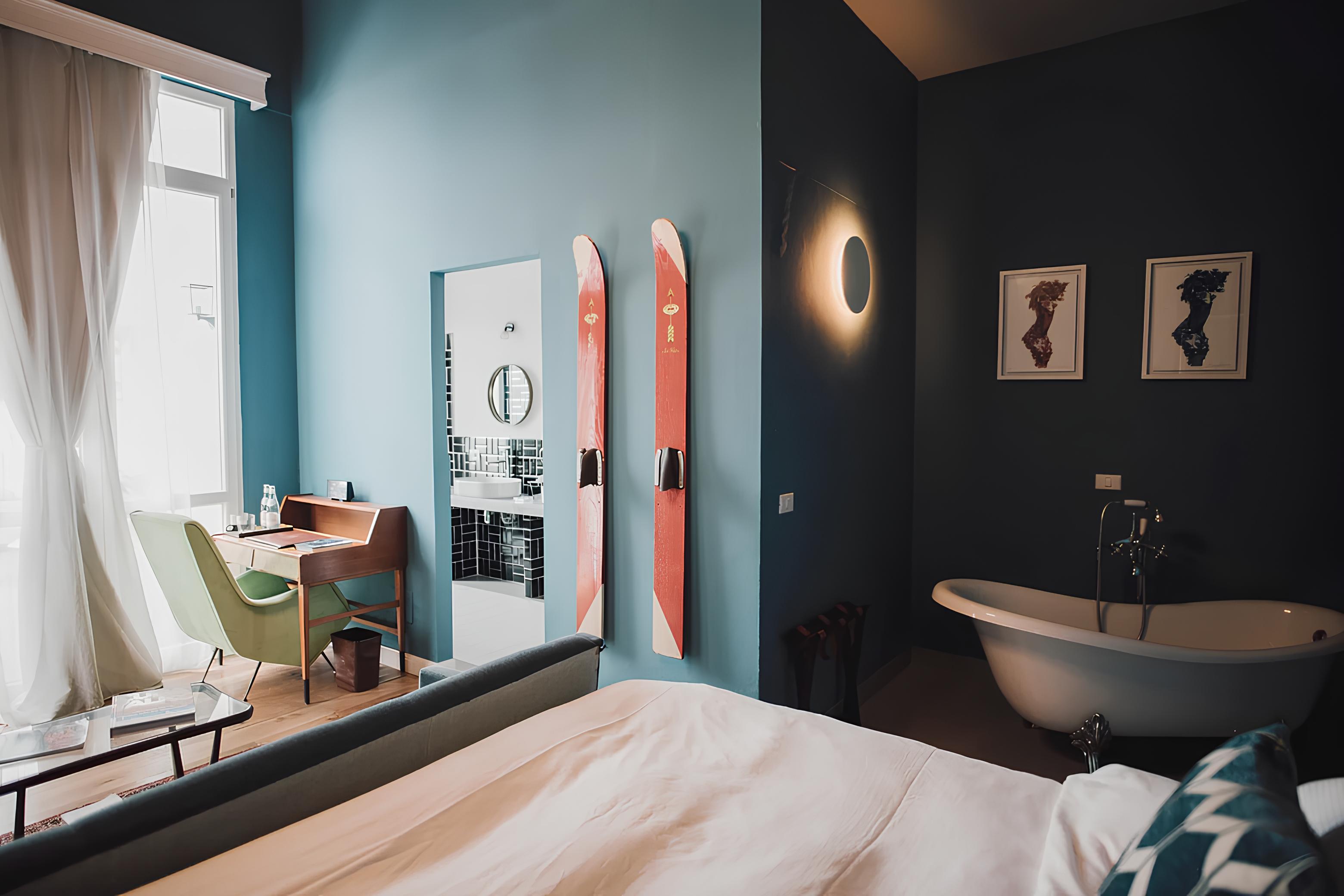
Also known as Mansion Alameda, this neoclassical residence sits in the heart of Vedado, a ten-minute drive from Old Havana. Part of the Caoba Hotels collection, the property offers eight rooms and suites within a meticulously restored colonial home. High ceilings and graceful arches frame light-filled interiors. Natural materials and bespoke furnishings create a dialogue between past and present.
The courtyard patio, shaded by avocado and mango trees, provides an oasis of green in the urban landscape. Cocktails are crafted with fresh local fruits. A small plunge pool offers respite from Havana's heat. The rooftop restaurant La Azotea serves Spanish and Cuban fusion, tapas and traditional dishes, with views across Vedado's rooftops to the sea beyond.
The location places guests near Plaza de la Revolución and the Cementerio Cristóbal Colón, one of the most significant cemeteries in the Americas, its marble tombs and monuments a museum of Cuban history and art. The neighbourhood retains the quieter, more residential character that distinguishes Vedado from the tourist bustle of Old Havana.
VOYA Boutique Hotel
In the upscale residential neighbourhood of Santos Suárez, fifteen minutes from the airport and Old Havana, a 1925 colonial mansion has become one of Havana's most acclaimed boutique hotels. VOYA is the work of owners who spent three years restoring the property with a team of local craftsmen, bringing back its original splendour while updating it with modern conveniences.
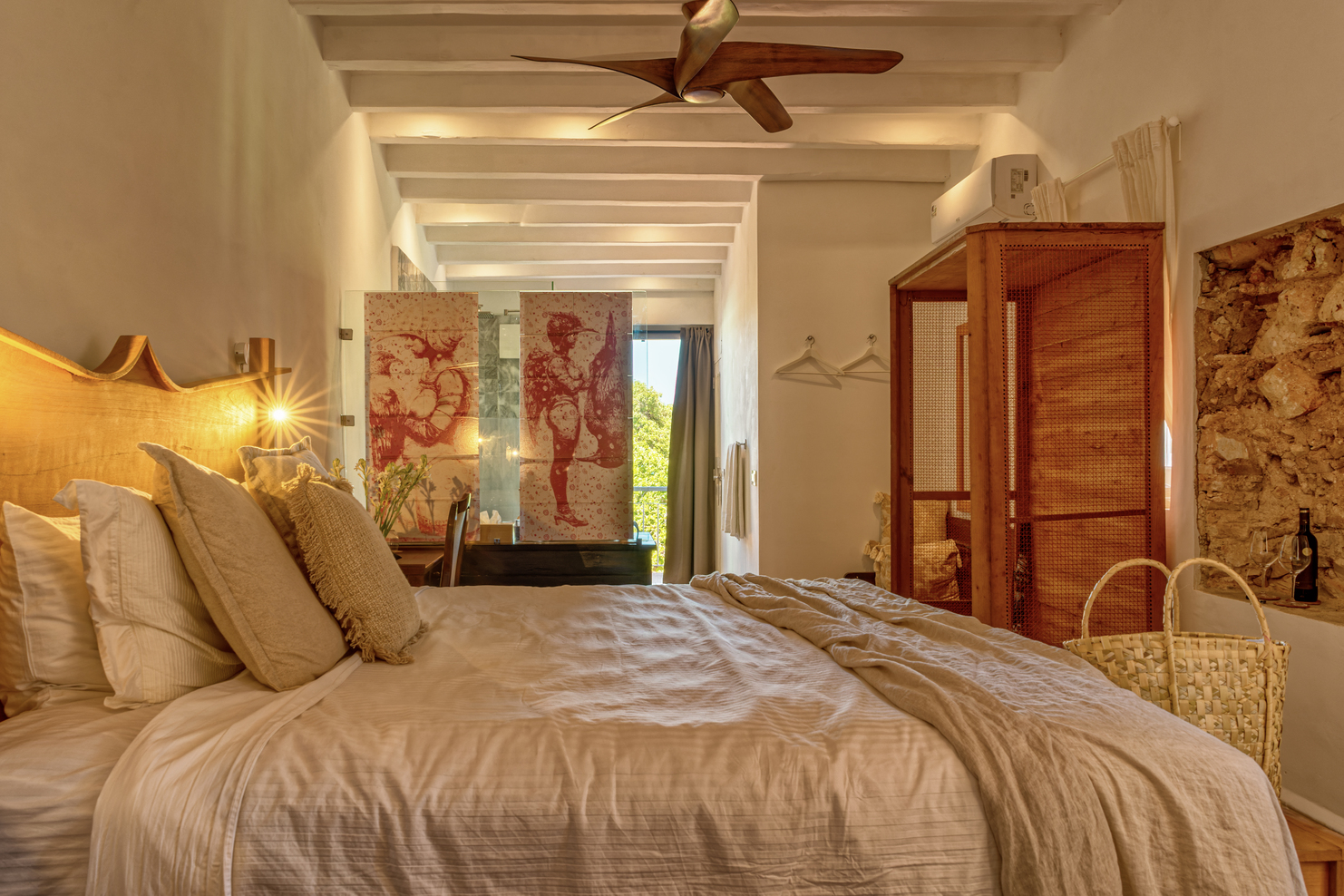
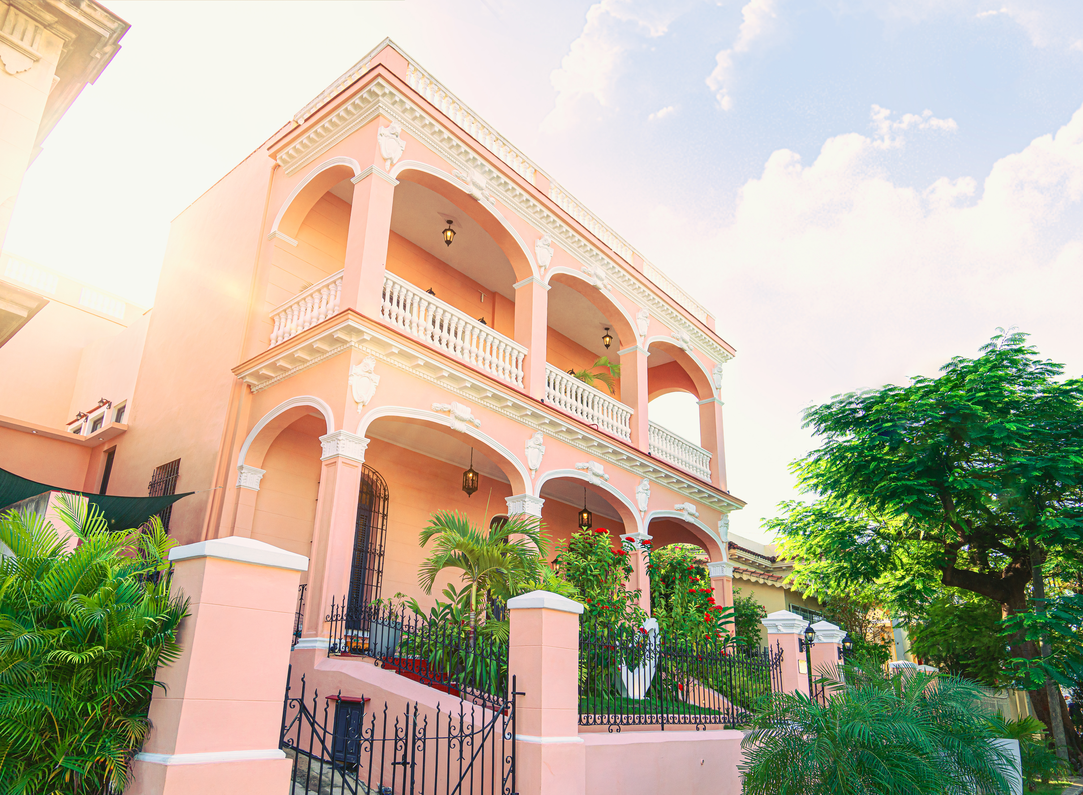
The mansion's apricot exterior and vanilla balustrades set the tone. Inside, Art Deco lamps cast a glow across sleek designer furniture and soothing colour palettes. A golden chandelier greets arrivals. Ten rooms and suites occupy the upper floors, each exclusively designed to international five-star standards, with custom-made furniture and contemporary artwork. The Secret Garden, a jungle-meets-city outdoor bar surrounded by palms, serves designer cocktails and tapas. An outdoor jacuzzi and sun lounges complete the scene.
The restaurant Brasserie 255 offers contemporary Cuban-Mediterranean cuisine, and has earned a reputation as one of the best dining experiences in Havana. The neighbourhood itself is quieter than central Havana, a world of candy-coloured houses and majestic old mansions, offering a peaceful retreat from the overstimulation of the historic centre. VOYA's staff has become legendary for personalised service, from handwritten welcome notes to arranging birthday celebrations with live saxophone performances.
Where Time Began: Plaza Vieja and Estancia Bohemia
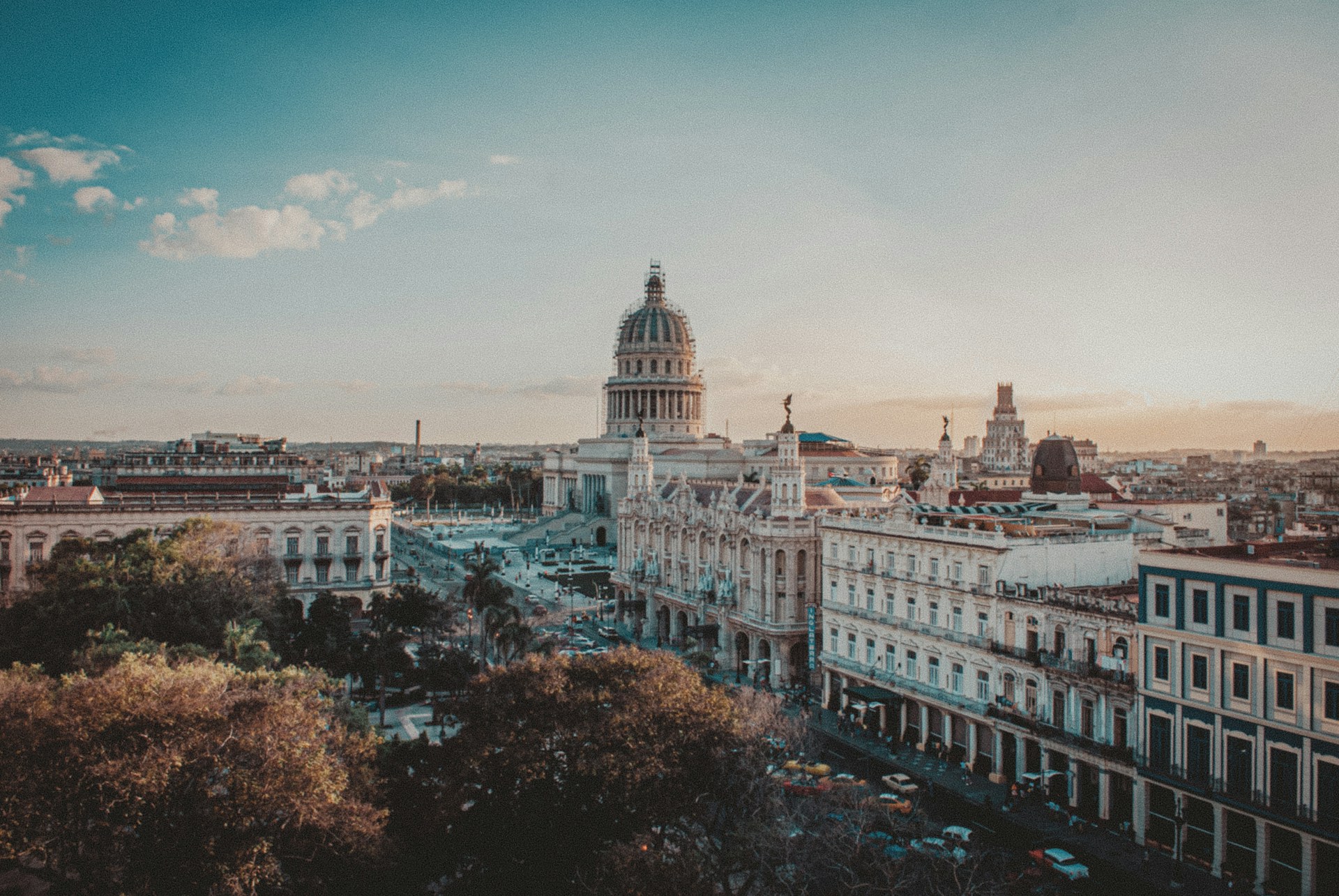
Return to Old Havana, to the most perfectly restored of its colonial plazas. Plaza Vieja dates to 1559, making it one of the oldest public squares in the Americas. Its surrounding buildings span four centuries of Cuban architecture, from baroque to Art Nouveau, their painted facades in pink, blue, and yellow restored to glory by the Office of the City Historian. Today, the plaza hums with life. Local musicians play guitars and accordions from morning to night. Craft beer flows at the microbrewery Factoria Plaza Vieja. The planetarium's camera obscura projects a live panorama of the city onto a viewing screen.
Overlooking this scene from behind massive wooden doors sits Estancia Bohemia, housed in the historic Palacio del Conde de Lombillo, a residence dating to 1780. The owners are Diana and Andrea Gallina, the same Cuban-Italian couple behind Paseo 206, and their second hotel shares the same DNA: Italian luxury meets Cuban soul, with meticulous attention to detail and a passion for hospitality that feels genuinely personal.
The palace contains ten accommodations, six suites and four luxury rooms, each decorated with Sicilian handmade tiles and Italian furnishings. Frette linens dress the beds. Erbolario toiletries fill the bathrooms. Tempur-Pedic mattresses ensure sleep. The ground floor café, Café Bohemia, opens onto the plaza, serving cocktails and light meals to the sound of live music drifting from the square. Behind two massive colonial doors, twenty-four-hour security ensures tranquillity.
The location could not be more central. Within walking distance are the Museo Nacional de Bellas Artes, the Gran Teatro de La Habana, the Capitolio, and scores of restaurants, bars, and galleries. The staff arranges classic car tours, rum tastings, and visits to the homes of emerging artists. Complimentary airport pickup in a vintage American convertible awaits those who book directly.
The Architecture of Survival
Cuba's current economic crisis, the worst since the Soviet collapse of the 1990s, has created paradoxes that visitors will encounter daily. Power outages last hours. Basic goods are scarce. The dollar economy favours foreign visitors in ways that create uncomfortable disparities. Yet the boutique hotel sector continues to grow, absorbing capital that nowhere else in the Cuban economy could accommodate, employing staff at wages far above state sector salaries, and preserving buildings that might otherwise collapse.
This is not uncomplicated. The hotels profiled here exist because of laws that have allowed limited private enterprise since 2011, laws that remain subject to political winds. Their owners are careful about how they discuss politics. Their staff genuinely seem to love their jobs, but the context in which those jobs exist remains precarious. Visitors who stay at these properties directly support Cuban entrepreneurs and workers in ways that staying at government-run hotels does not. Whether this constitutes the "Support for the Cuban People" that American travel regulations require, or something more ambivalent, is a question each traveller will answer for themselves.
What seems clear is that these buildings, and the culture they contain, would not survive without the investment and care these hotel projects represent. The Grammy-winning producer preserving Cayo Hueso's musical heritage. The Dutch artist and Cuban dancer restoring a roofless mansion in San Isidro. The Cuban-Italian family turning a senator's love nest into a library of design and gastronomy. They are each, in their way, doing the work that the state cannot or will not do. The hotels themselves become a form of cultural conservation.
Practical Notes for the Culturally Curious
Getting There: José Martí International Airport receives direct flights from Mexico City, Madrid, Toronto, and other cities, with connections through Caribbean hubs. American travellers must declare one of twelve approved categories of travel ("Support for the Cuban People" being the most flexible) but face no inspection upon arrival. Visas are issued as tourist cards, purchased through airlines or upon arrival.
When to Go: The dry season runs November through April, with temperatures in the mid-twenties Celsius and lower humidity. Summer brings heat, afternoon thunderstorms, and hurricane season from June through November. January sees Havana Jazz Fest. February brings cigar season. Year-round, something is always happening.
Money: Bring euros or Canadian dollars in cash. US dollars attract unfavourable exchange rates. Credit cards issued by American banks do not work. ATMs are unreliable. Hotels can arrange currency exchange at reasonable rates.
Getting Around: Old Havana is best explored on foot. Vedado and other neighbourhoods require taxis, which hotels arrange. The iconic classic cars offer photogenic transport but lack air conditioning and safety features. Modern taxis are available for those who prefer comfort.
Internet: Connectivity remains spotty throughout Cuba. Boutique hotels offer the best WiFi, though speeds vary. Embrace the disconnection. The symphony of Havana's streets rewards those who put down their phones.
Cultural Highlights: The Museo Nacional de Bellas Artes houses five centuries of Cuban art. Fábrica de Arte Cubano, a converted cooking-oil factory in Vedado, hosts exhibitions, concerts, and DJs until the small hours. The Callejón de Hamel in Cayo Hueso erupts with rumba performances every Sunday. Private galleries and studios throughout San Isidro welcome visitors. Ask your hotel to open doors.
Frequently Asked Questions
| What makes Cuban boutique hotels different from government-run hotels? | Cuban boutique hotels are privately owned and operated, often by families or entrepreneurs with personal connections to the arts, music, or architecture. They occupy restored historic buildings, offer personalised service, employ local staff at above-average wages, and provide cultural experiences that large hotels cannot replicate. Staying at these properties directly supports Cuban private enterprise. |
| Can American citizens legally stay at these hotels? | Yes. American travellers must qualify under one of twelve categories approved by the Office of Foreign Assets Control. "Support for the Cuban People" is the most commonly used category and explicitly includes staying at privately owned accommodations. Hotels can provide documentation of their private ownership status upon request. |
| Which neighbourhood is best for first-time visitors to Havana? | Old Havana offers the highest concentration of historic sites, museums, restaurants, and nightlife within walking distance. San Isidro provides an immersive art experience. Vedado is quieter and more residential, with excellent architecture and a local feel. Cayo Hueso suits music lovers seeking authenticity over polish. Many visitors split their stay between neighbourhoods. |
| How do power outages affect these hotels? | Cuba's ongoing energy crisis means outages occur throughout the country. Most boutique hotels have backup generators that maintain essential services including air conditioning, refrigeration, and some lighting. Staff are experienced at managing these situations smoothly. Guests should expect occasional inconveniences but rarely prolonged disruption. |
| What cultural experiences can these hotels arrange? | Offerings vary by property but typically include private art gallery visits, music venue tours, salsa and rumba lessons, rum and cigar tastings, cocktail masterclasses, classic car tours, boxing classes, farm visits, and connections to emerging artists. Several hotels employ staff specifically to curate cultural itineraries. A|S Boutique Residence offers an Artist in Residence programme. |
| Are these hotels suitable for families with children? | A|S Boutique Residence is adults only, requiring guests to be sixteen or older. Other properties welcome families, though the intimate scale and design aesthetic skew toward adult travellers. Estancia Bohemia's location on Plaza Vieja offers good options for families, with the planetarium and ice cream shops nearby. |
| How far in advance should I book? | These hotels have limited capacity, typically eight to eleven rooms. During peak season (December through March) and around major events (Havana Jazz Fest in January, carnival in February), booking several months ahead is advisable. Low season offers more flexibility but properties still fill quickly due to their reputations. |
| What is the best time of year to visit Havana for cultural events? | January brings the Havana Jazz Festival, one of the most important jazz events in the Americas. The Havana Biennale (contemporary art) occurs every three years. February hosts cigar season and carnival. December's Havana Film Festival draws international attention. Year-round, live music fills the city nightly, and gallery openings occur weekly. |
| Do these hotels have restaurants, or should I plan to eat elsewhere? | Paseo 206's Eclectico, VOYA's Brasserie 255, and Estancia Bohemia's Café Bohemia all serve meals of note and are worth visiting even if not staying at the property. La Alameda's La Azotea and Tribe Caribe's Manteca offer rooftop dining with views. A|S Boutique Residence serves breakfast and brunch only. All properties provide excellent restaurant recommendations and booking assistance for Havana's expanding private dining scene. |
| Is Havana safe for tourists? | Cuba has one of the lowest violent crime rates in the Americas. Petty theft and scams targeting tourists occur but are not pervasive. Neighbourhoods like Cayo Hueso that might seem rough have strong community bonds and are generally safe, especially for guests of local hotels. Standard urban precautions apply. Hotel staff offer reliable guidance on where to walk and when. |