Three Days in Truffle Country: An Alta Langa Food Journey
A truffle hunt at dawn, pasta with thirty eggs, two hotels where the kitchen sets the rhythm. What happens when you eat your way through Piedmont's upper hills.
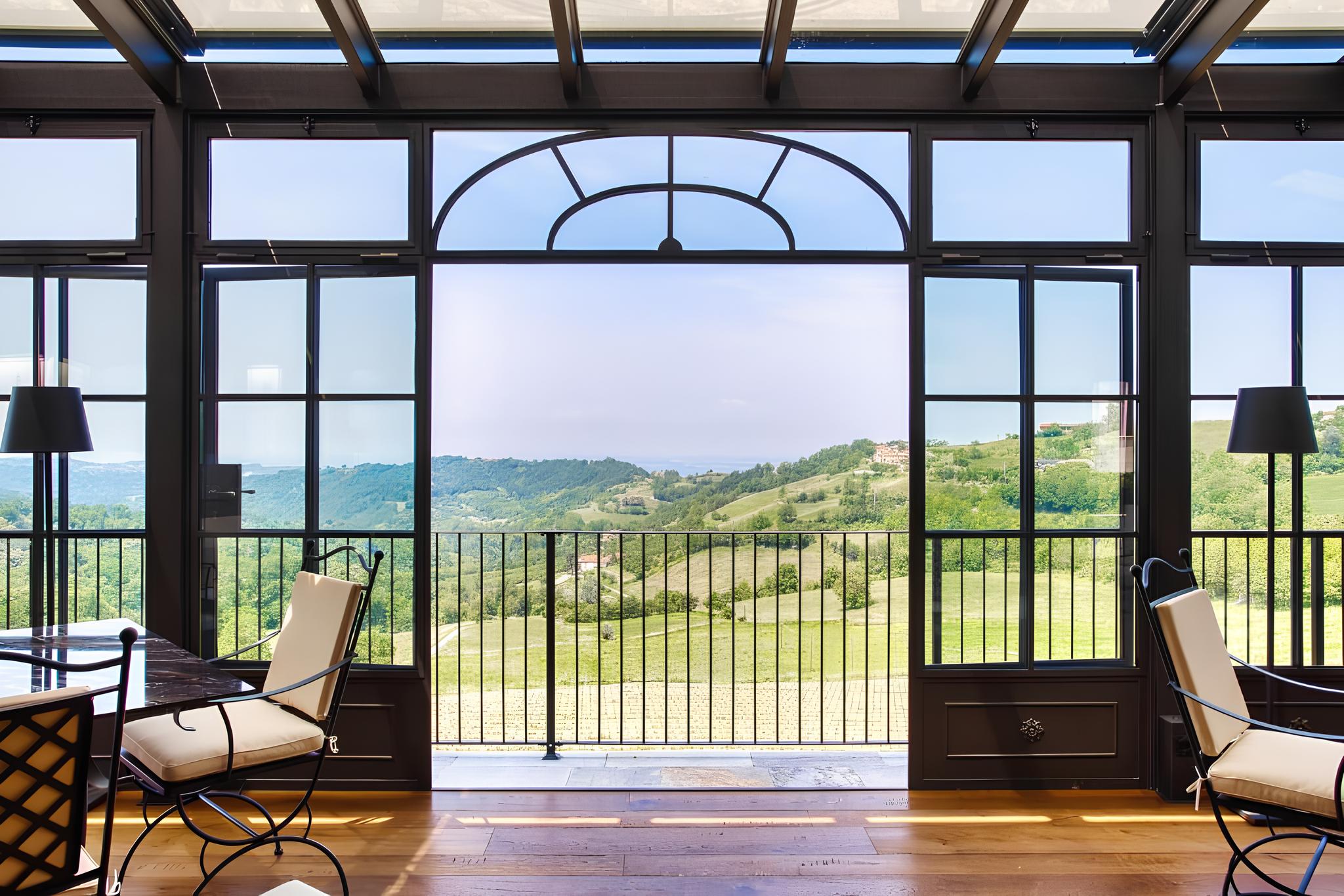
The road from Genoa airport climbs through the Apennines, drops into the Po valley, then climbs again. After an hour, the landscape shifts. Vineyards appear on the slopes. The towns become smaller, the buildings older, the stone a particular shade of golden brown. The GPS says thirty minutes to destination. The phone shows no signal.
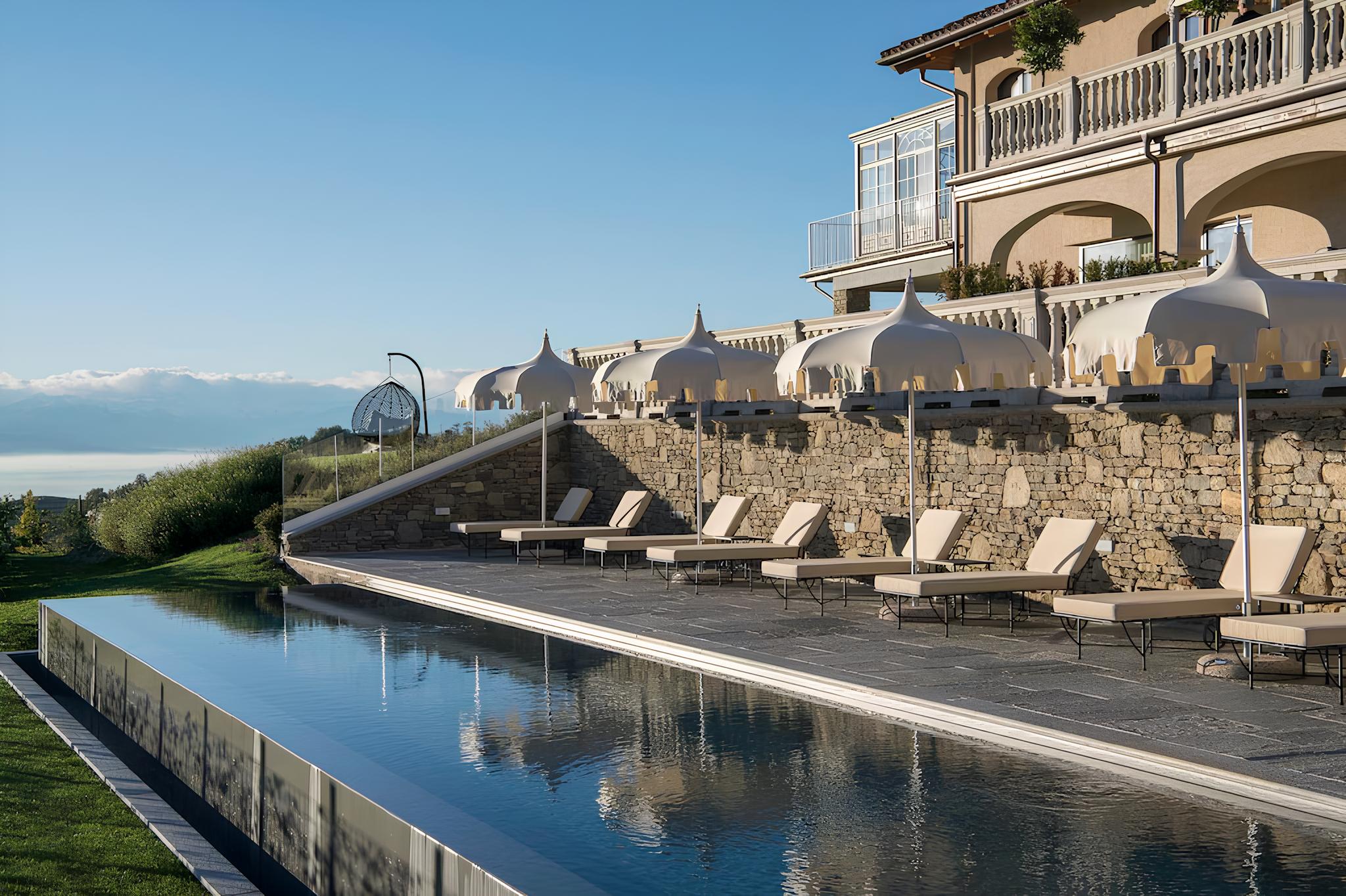
Villa La Madonna appears around a bend, a cluster of 16th-century buildings on a hilltop surrounded by vines. The first impression is of green. Green tiles on the pool, green shutters on the windows, green rows of Barbera grapes running down the slope toward the Bormida valley. The second impression is of quiet. No traffic noise, no construction, no background hum of modern life. Just birds and wind and somewhere, faintly, someone laughing.
The owners are Swedish. Two sisters, Marie and Annica Eklund, who run a design company in Stockholm and bought this property fifteen years ago as a project. The project became a hotel. The hotel became a way of life. The interiors show their eye: Scandinavian clean lines meeting Italian warmth, natural materials, light filling every room. Seventeen rooms in total, each looking over the vineyard or the valley, each with the kind of details that suggest someone cared.
Aperitivo begins at six-thirty. The bar fills with guests and, often, the owners themselves. The house wine appears, a Barbera from the property's own vineyard. Conversation starts. By the time dinner is served, strangers have become acquaintances. This is the Villa La Madonna rhythm: social, warm, unhurried.
The Truffle Hunt
The alarm sounds at five-thirty. By six, the hotel courtyard holds a small tractor, a local farmer named Vittorio, and his dog Zoe. Vittorio supplies the hotel with vegetables, wine, and, in season, truffles. Zoe is a Lagotto Romagnolo, the traditional Italian truffle dog, alert and eager, waiting for the signal she knows is coming.
The tractor drives through the vineyard and into the forest. The light is grey, the air cold and damp. Perfect conditions. Truffles release more scent when the ground is moist. Zoe knows this. She is already pulling at her leash.
The truffle hunt is not performance. It is work. Zoe moves fast through the undergrowth, nose to the ground, occasionally stopping to dig. Vittorio watches her body language, reading signals invisible to the untrained eye. When she finds something, he drops to his knees beside her, brushes away the soil with his fingers, extracts a lump the color of dirty clay.
The first truffle is the size of a golf ball. The smell is overwhelming: earth, garlic, something almost animal, a scent that seems to bypass the conscious mind entirely. This is why people pay hundreds of euros per kilo. This is why dogs train for years to find them.
Two hours produce four truffles, ranging from marble-size to nearly the size of a tennis ball. Vittorio is pleased but not surprised. He knows these woods. His father hunted here, and his grandfather before that. The locations are family secrets, passed down like recipes.
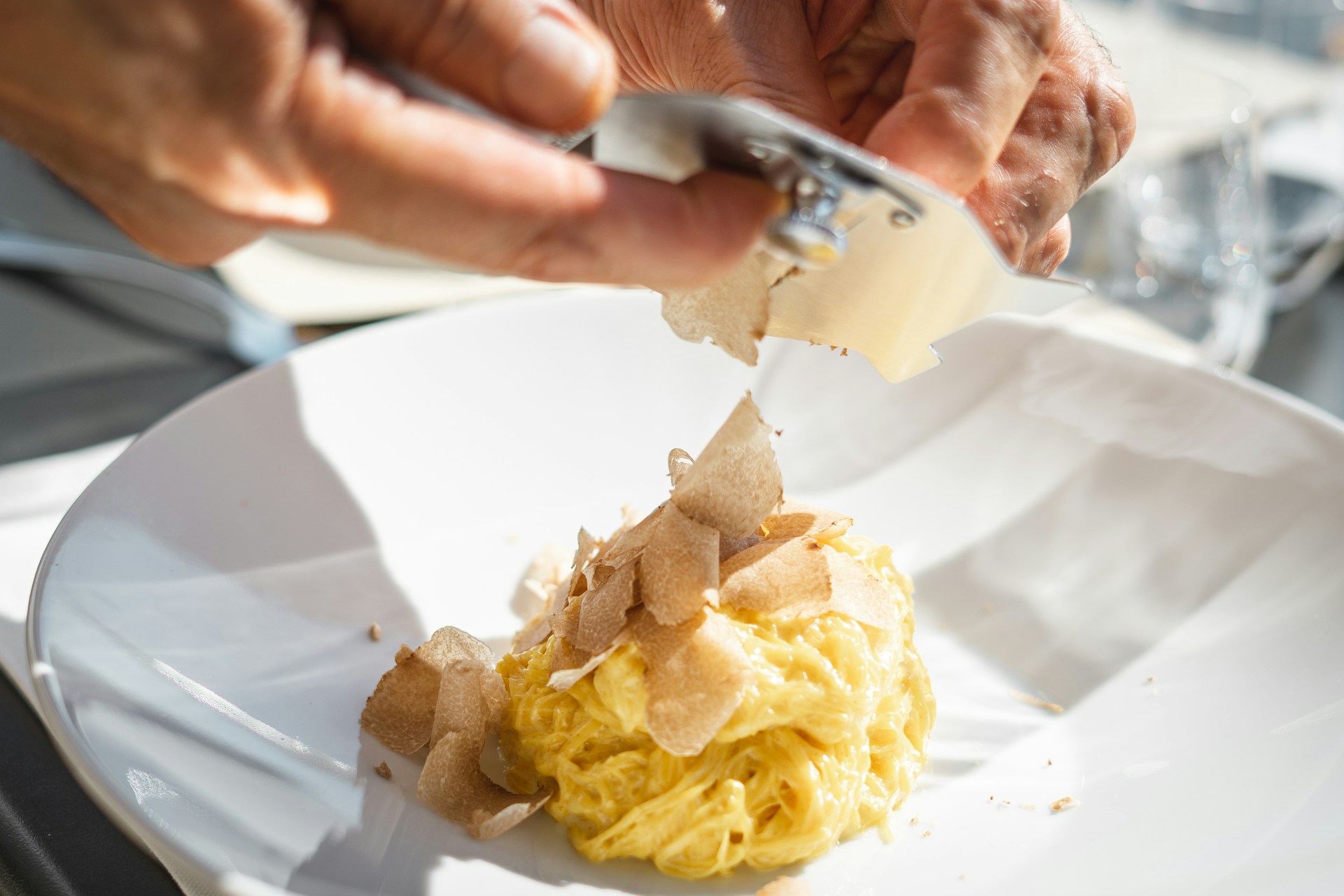
Breakfast happens at Vittorio's farmhouse, a stone building a few kilometers from the hotel. His wife has prepared eggs, bread, salumi, and a bottle of his own wine. The truffles from that morning are shaved over the eggs, so many shavings that the yellow yolks disappear beneath white. This is why people travel for this. Not for the truffle itself, which could be bought in Alba and shipped anywhere in the world. For the forest at dawn, the dog doing what evolution designed it to do, the farmhouse kitchen, the eggs that still smell of the earth they came from an hour ago.
The Valley
Villa La Madonna sits in the Bormida valley, a territory that rarely appears in tourist itineraries. The famous Langhe, the ones that attract wine tourists from around the world, lie to the north and west. Barolo is an hour away. Alba, capital of truffle commerce, forty-five minutes. Here, in this quieter corner, the pace is different.
The Eklund sisters understood this when they bought the property. They were not looking for a business opportunity in wine tourism. They were looking for a place where life moved slowly, where food came from nearby, where beauty was not curated for visitors but simply existed because no one had bothered to destroy it.
The pool has become famous, at least in the world of design hotels. Green tiles, surrounded by vineyard rows, loungers in forest colors. But the pool is not performance. It is a logical response to Italian summers. Swim, dry in the sun, walk to the bar for a glass of the house Barbera. The vineyard is not decoration. It produces wine that appears on the dinner table.
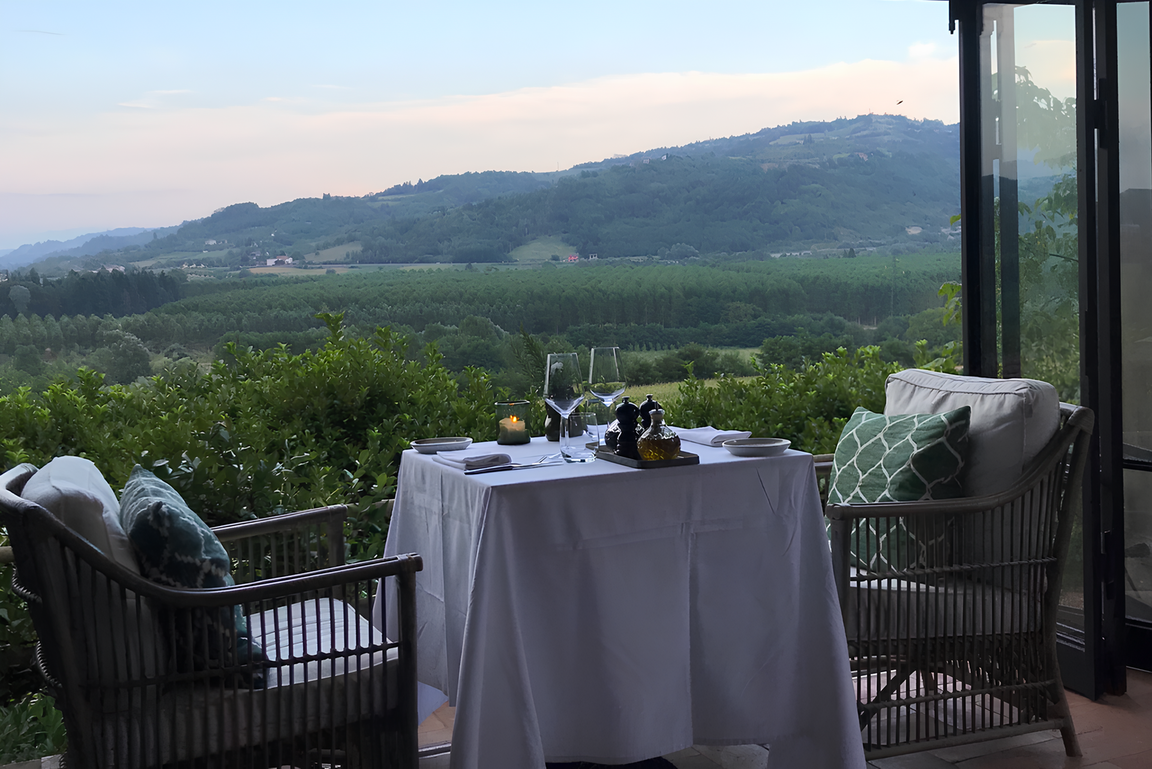
The restaurant serves what the chef found at the morning market. The menu changes daily. One night: vitello tonnato to start, tajarin with butter and sage, a braised beef cheek that falls apart when touched. The wine is local, a Barbera d'Asti from a producer whose vineyard is visible from the window. The Swedish influence shows in the service: warm but not overbearing, portions generous but not excessive, a sense that the staff actually enjoy their work.
The High Country
The road from Monastero Bormida climbs through forests, past hazelnut groves, through villages with a dozen houses and a church. The elevation gain is significant: from 300 meters in the valley to nearly 800 at the destination. This is the Alta Langa proper, the wild upper territory that most visitors never see.
Bossolasco announces itself with roses. In late May and June, the village's main street erupts in thousands of blooms, varieties from all over the world planted along the sidewalks. In autumn, the roses are gone, but the village still has the air of a place that cares about beauty. The stone houses are well-maintained. The views, when they appear between buildings, stretch to the Alps.
This was artists' country in the mid-20th century. Painters from Turin came here to escape the industrial city, to find light and silence. They stayed in the local hotel, painted the landscape, made signs for the village shops as payment for hospitality. Some of those signs, the Insegne d'Artista, survive in the town hall. The tradition of attracting creative people continues: galleries, studios, a general sense that this village, despite its small size, is not provincial.
Relais Le Due Matote sits at the edge of Bossolasco, a 17th-century farmhouse converted into something between a hotel and a private home. Six suites, a restaurant, a spa, gardens that drop away toward the valley. The scale is intimate. The feeling is of visiting friends who happen to have very good taste.
The restaurant, L'Orangerie, operates differently from Villa La Madonna. Where the valley hotel emphasizes simplicity and family-style warmth, Le Due Matote aims higher. Two forks from Gambero Rosso, a kitchen garden that supplies much of the produce, presentations that show thought and technique. The tajarin here are made with thirty egg yolks per kilo of flour, the traditional Piedmontese ratio that produces pasta the color of sunflowers.
Lunch on the terrace means looking at mountains while eating vegetables from the garden, grilled and dressed with nothing but oil and salt. Then those tajarin, tossed with butter and sage, each strand distinct. Then a cut of Piedmontese beef, the local breed with its strange, muscular bodies and intensely flavorful meat.
The chef talks about suppliers, not techniques. The vegetables come from fifty meters away. The beef from a farm he visits monthly. The eggs from a woman in a nearby village who keeps chickens the old way, letting them roam and eat what they find.
The Producers
An afternoon driving between villages reveals the people who make what the restaurants serve.
In Murazzano, a village famous for its sheep's milk cheese, a small dairy tells the story of the local breed. The Pecora delle Langhe nearly went extinct. By the 1980s, only a few hundred animals remained. Slow Food and local farmers organized a recovery. The breed has stabilized, though production stays small. Murazzano DOP made the traditional way, with raw milk from animals that graze the high pastures, is soft, white, slightly acidic, with a sweetness that reflects what the sheep ate that morning. The big distributors want volumes that small producers cannot provide. The cheese stays local.
In Cortemilia, the heart of hazelnut country, family operations have been processing nuts for generations. The Nocciola Tonda Gentile delle Langhe IGP covers the hillsides: trees everywhere, nuts drying on tarps in farmyards, the smell of roasting in the air. Ferrero, the company behind Nutella, buys most of the region's production for industrial use. What remains goes to artisans who roast and grind and turn the nuts into torta di nocciole, hazelnut oil, spreads that make commercial products taste like imitations.
In small villages without tourist traffic, old cantinas carved into hillsides hold bottles of Alta Langa DOCG sparkling wine. This territory produced Italy's first méthode classique wines, in 1865, before Franciacorta existed, before Trento was known for bubbles. The world forgot. Now, slowly, people are remembering. Production stays tiny, a few thousand bottles a year, sold mostly to locals and to the restaurants that understand what they are getting.
The Last Night
Dinner at Le Due Matote on the final evening means a full restaurant, a mix of Italians from Turin and Milan and a few foreigners who have somehow found this place. The conversation is loud, the wine flowing, the atmosphere nothing like the hushed reverence of a Michelin-starred room.
The menu includes tartufo bianco, white truffle, shaved tableside over fresh pasta. The waiter brings a truffle the size of a small apple, holds it for inspection, then shaves it in long, translucent curls until the pasta disappears beneath. The price is significant. The experience is worth it: not because the truffle itself is so remarkable, but because the connection to where it came from is now clear. The forest, the dog, the hunter, the plate.
The Crystal Bar afterward offers local sparkling wine and a view of lights scattered across the dark hills. Tomorrow means the drive back to Genoa, the flight home, the return to a life where food comes from supermarkets and restaurants source from distributors. Tonight means a place where the connections between land and kitchen remain visible, where the chef knows the farmer, where the truffle was in the ground this morning.
This is what the Alta Langa offers. Not a culinary destination in the sense of starred restaurants and celebrity chefs. Something older and more valuable: a food culture that still functions as food cultures are supposed to function, with producers and cooks and eaters in relationship with each other and with the land.
Planning Your Trip
Villa La Madonna works best as a first stop, especially during truffle season (October-December). The truffle hunting experience with Vittorio should be booked in advance. The hotel's location in the Bormida valley provides easy access to Alba, Barolo, and the wine villages of the Bassa Langa. Open late March through mid-November. From €475/night.
Relais Le Due Matote suits those who want fine dining and a more intimate atmosphere. The location in Bossolasco places guests in the Alta Langa proper, higher and wilder than the wine country below. The spa provides a reason to stay put; the surrounding villages provide reasons to explore. Open year-round. From €230/night.
The ideal itinerary combines both: two nights at Villa La Madonna for truffle hunting and valley exploration, then two nights at Le Due Matote for the restaurant and the mountain landscapes. The drive between the two hotels takes about forty-five minutes through some of the region's most beautiful countryside.
Getting there: Genoa airport is 90 minutes from Villa La Madonna. Turin is 90 minutes from Le Due Matote. Milan Malpensa is about two hours from either. A rental car is essential.
When to go: October and November for white truffle. September for the grape and hazelnut harvests. May and June for roses in Bossolasco. Summer for the pools and the long evenings. Each season has its table.
Frequently Asked Questions
| White truffle | (tartufo bianco d'Alba) season runs October through December, peaking in November. Black truffle is available November through March. The Alba truffle fair takes place in October and November, but the best truffle experiences happen away from the crowds, with local hunters in the forests of the Alta Langa. |