Netherlands
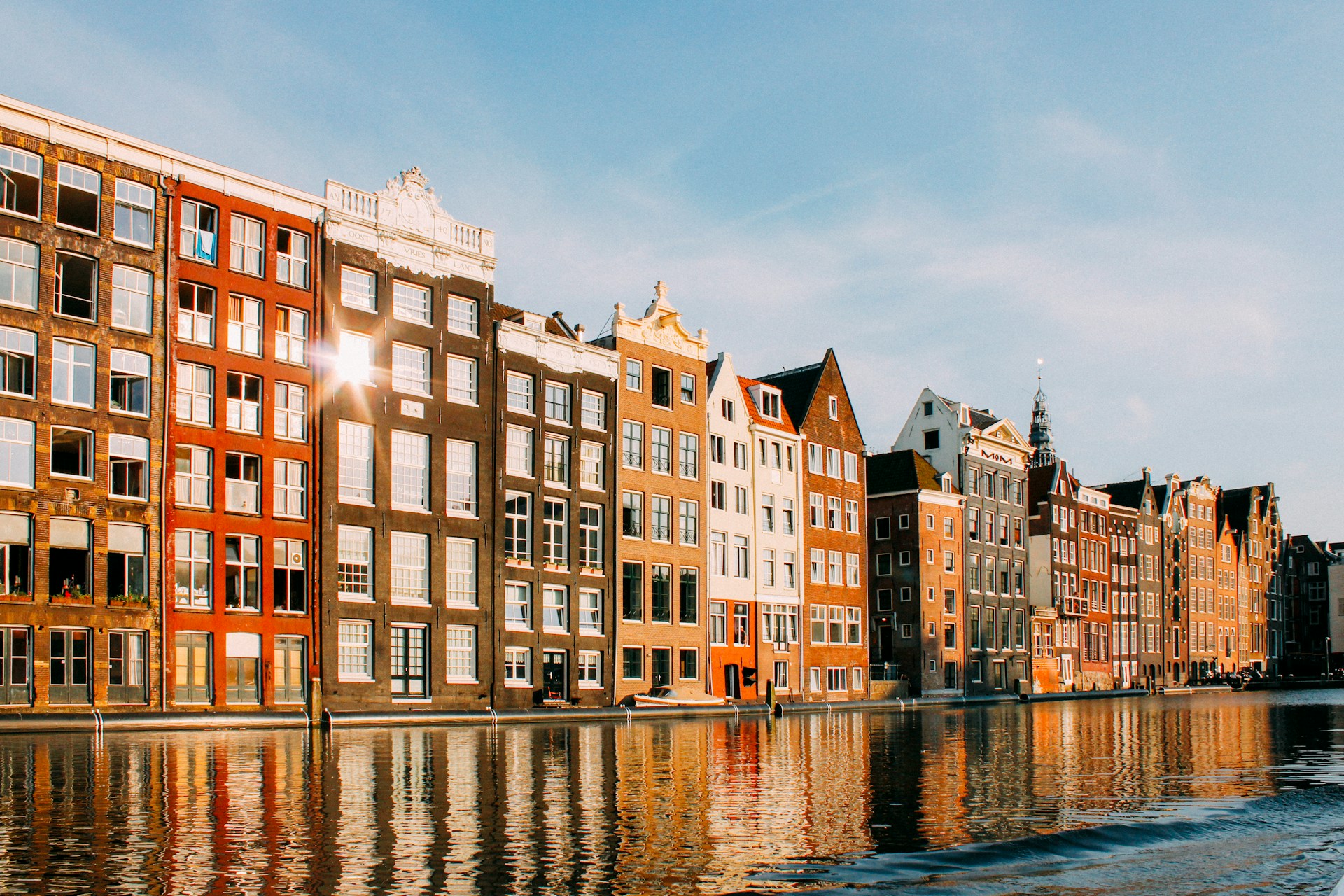
Amsterdam canal houses, Wadden Islands wilderness, and museums you could spend a week inside.
Where the stays are
Introducing the Netherlands
The Netherlands is more than its capital. Amsterdam is the headline: canal-house architecture, three of the world's great museums in walking distance, brown cafés that haven't changed in a century. Outside the city: Utrecht's medieval centre, Rotterdam's experimental skyline, the Wadden Islands for tidal-flats wilderness, and Maastricht for the Burgundian south. The country runs on bicycles and trains, in that order.
See hotelsYour travel notes
Euro (EUR). Cards accepted everywhere. The Netherlands is almost a cashless country: many places refuse cash entirely. Contactless payments preferred.
Dutch cuisine is having a quiet renaissance: bitterballen with a good Trappist beer, oude kaas (aged Gouda), bread baked at De Vlaamsche Broodbakker. The country also has more Michelin-starred restaurants per capita than nearly anywhere in Europe.
NS intercity trains link every major city in under 90 minutes. Amsterdam to Rotterdam: 40 minutes. Amsterdam to Utrecht: 25 minutes. In cities, bikes are the local solution; hotel bike rental is the most authentic way to see Amsterdam. For the Wadden Islands, ferries from Den Helder, Harlingen and Lauwersoog.
Service is included. Round up taxi fares to the nearest euro; leave a euro or two on a coffee bill if the staff was attentive; 10% in a fine-dining restaurant is generous, not expected.
Late April to early May for tulip season (Keukenhof opens late March to mid-May). May to September for canal-city weather. November to February is grey but cosy, with brown cafés and museum interiors at their best.
Tips for travel in Netherlands
Why does Amsterdam look like no other European capital?
Because the city was planned around water, not around a palace or a cathedral. The three concentric canals (Herengracht, Keizersgracht, Prinsengracht) were dug in the early 1600s during the Dutch Golden Age, and the merchant houses along them were built to face the water rather than the street. The result is a horizontal city of brick gables and barges, with the museums, fine dining and brown cafés tucked between the rings.
How do the Dutch live with bicycles and water?
By making both into infrastructure rather than novelty. Almost a third of journeys in the country are made by bike, with dedicated cycle paths on every road. Water is managed by a network of dykes, pumps and polders that has been refined for eight hundred years; a quarter of the country sits below sea level. Both are taken for granted by the Dutch and surprise visitors more than the museums.
What makes Vermeer and Rembrandt easier to understand in Dutch museums?
Light and context. The Mauritshuis in The Hague keeps Vermeer's Girl with a Pearl Earring under daylight from a north-facing window, the same light he painted it in. The Rijksmuseum's Night Watch hangs at the end of a long gallery the way Rembrandt designed it to be seen. Outside the museum, you can still walk past the same canal houses he sketched. Forty minutes inside a Dutch museum tells you more than three hours in the Louvre.
Why is the country called more than its capital?
Because Amsterdam, for all its weight on the brochure, is one of dozens of small cities arranged along a forty-minute train ride from each other. Utrecht's medieval centre, Rotterdam's experimental skyline, Maastricht's Burgundian south, the Hague's diplomatic gravity, Delft's blue tiles, Leiden's university canals. Add the Wadden Islands for tidal-flats wilderness and the Veluwe forest for a stag at dawn. A week is the minimum for the picture.