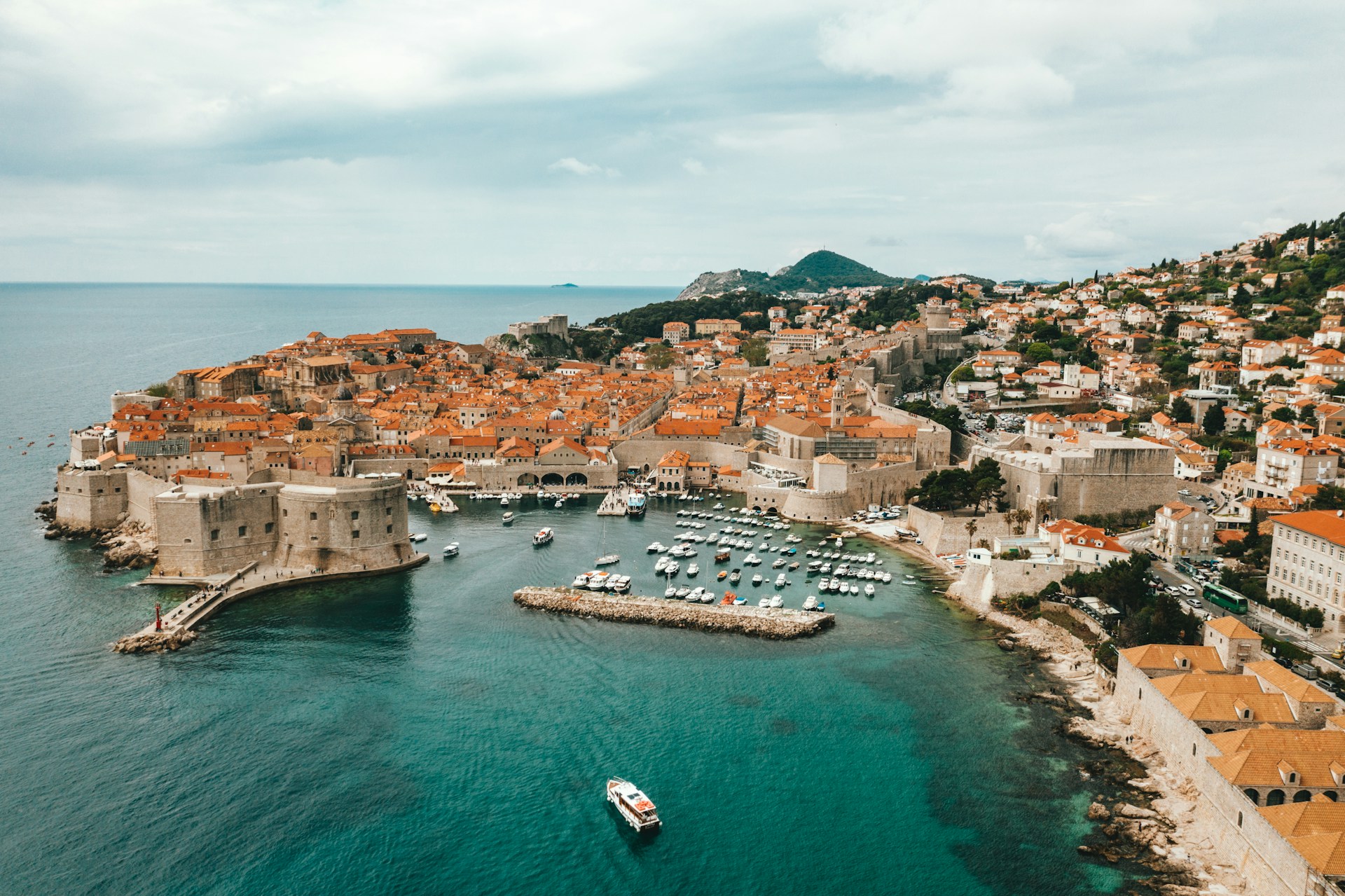
Croatia
Dalmatian islands, walled medieval cities, and a coast that turned slow travel into a national sport.
Introducing Croatia
Croatia is 1,800 kilometres of Adriatic coastline and 1,200 islands. Dalmatia is the postcard: Diocletian's Palace in Split, the walled city of Dubrovnik, the lavender of Hvar. Istria, on the northern peninsula, feels closer to Tuscany than to the Balkans: truffles, olive oil, hilltop towns. Inland, the karst landscapes of Plitvice and Krka, all waterfalls and limestone pools that refuse to look real in photographs.
See hotelsYour Travel Notes
Currency
Euro (EUR), since 2023. Cards accepted everywhere from islands to inland villages; some smaller konobas (taverns) prefer cash.
Cuisine
Dalmatian peka (lamb or octopus slow-cooked under a bell), Istrian truffles and prosciutto, fresh Adriatic fish grilled simply over coals. Croatian wines (Plavac Mali on the coast, Malvazija in Istria) are quietly excellent.
Transport
Coastal ferries (Jadrolinija, Krilo) link Split, Hvar, Korčula and Dubrovnik. Private speedboat transfers booked through your hotel save hours on island-hopping days. Inland, a rental car works well; in old towns, walk.
Tipping etiquette
10% in restaurants if service is not included; round up taxi fares; EUR 5 to 10 per day for housekeeping; EUR 20 to 30 per day for private guides.
When to go
Late May to early July, and September, are the sweet spot: warm sea, fewer crowds, restaurants open. July and August are peak (book hotels six months ahead). October still has swimming weather on the southern coast.
Tips for travel in Croatia
Latest Article and news

