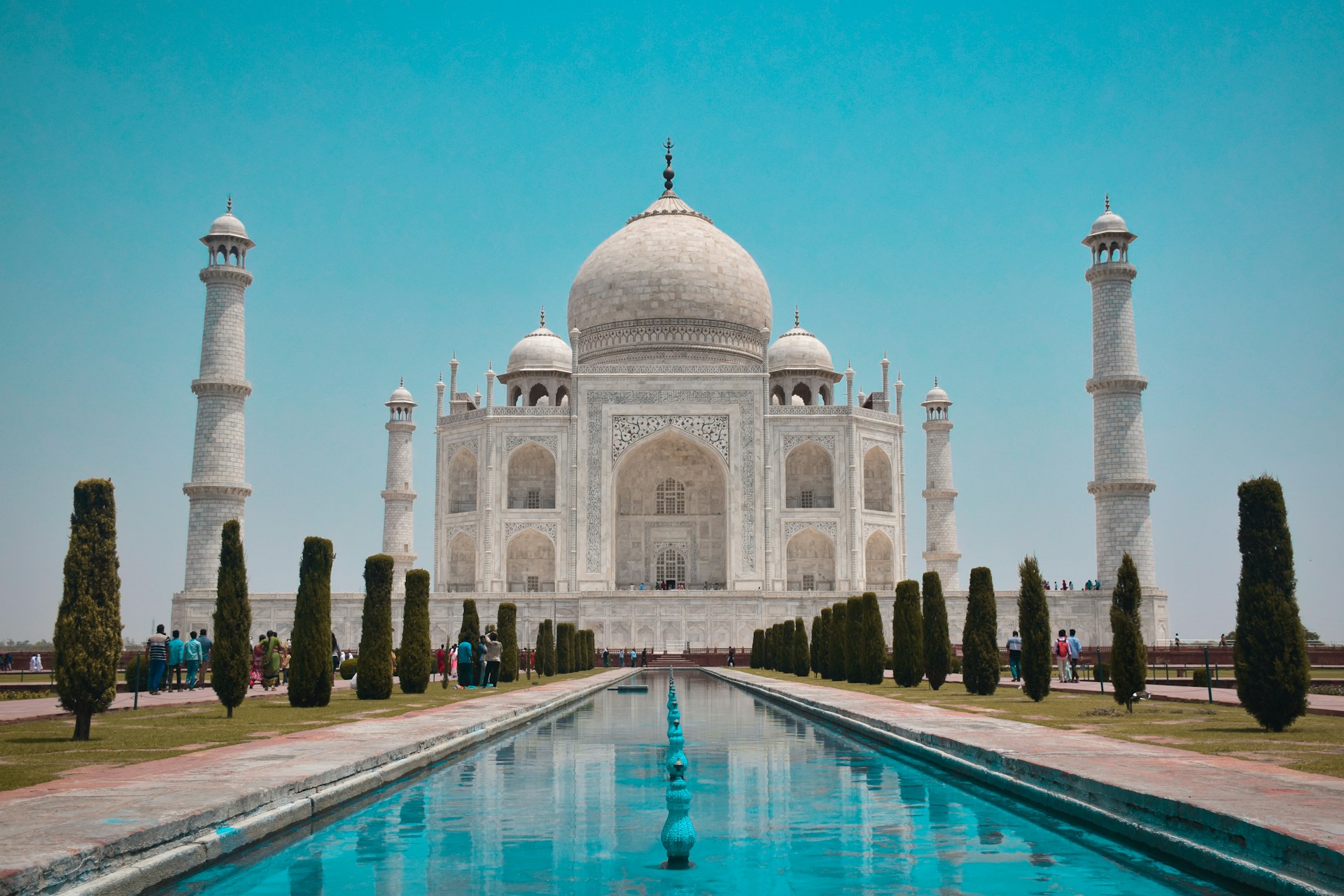
India
Palace cities, Himalayan retreats, Kerala backwaters, and Mughal heritage.
Introducing India
From the lake palaces of Udaipur and the marble of Agra to the Kerala backwaters and the Himalayan foothills, India layers six distinct travel countries into one. Food shifts every 300 kilometres. Temple traditions stretch back four thousand years. The classic first trip is the Golden Triangle and Rajasthan; the second is Kerala for slow water and ayurveda; the third is everything in between.
See hotelsYour Travel Notes
Currency
Indian Rupee (INR). Cards are widely accepted at luxury hotels and restaurants; carry small cash for markets, drivers, and rural areas.
Cuisine
India is not one cuisine but many: Mughlai in the North, coconut-led Kerala in the South, Bengali sweetness in the East, Rajasthani spice in the West. Hotel restaurants are increasingly the best place to taste regional cooking at its highest standard.
Transport
Domestic flights connect the major cities efficiently. For shorter distances, pre-arranged drivers through your hotel are safer and more comfortable than renting a car. The Maharaja Express and Deccan Odyssey offer luxury rail journeys worth planning around.
Tipping etiquette
A 10% tip is appreciated at restaurants if service charge is not already included. Hotel staff: around 100 to 200 INR per service for bellboys, around 500 INR per day for housekeeping. Drivers and guides: 10% to 15% of the daily rate.
When to go
October to March is the dry season and the most comfortable time to travel across most of the country. April and May get intensely hot in the plains, though Himalayan retreats are at their best. The monsoon (June to September) brings dramatic landscapes to Kerala and the Western Ghats.
Tips for travel in India
Latest Article and news

