Cambodia
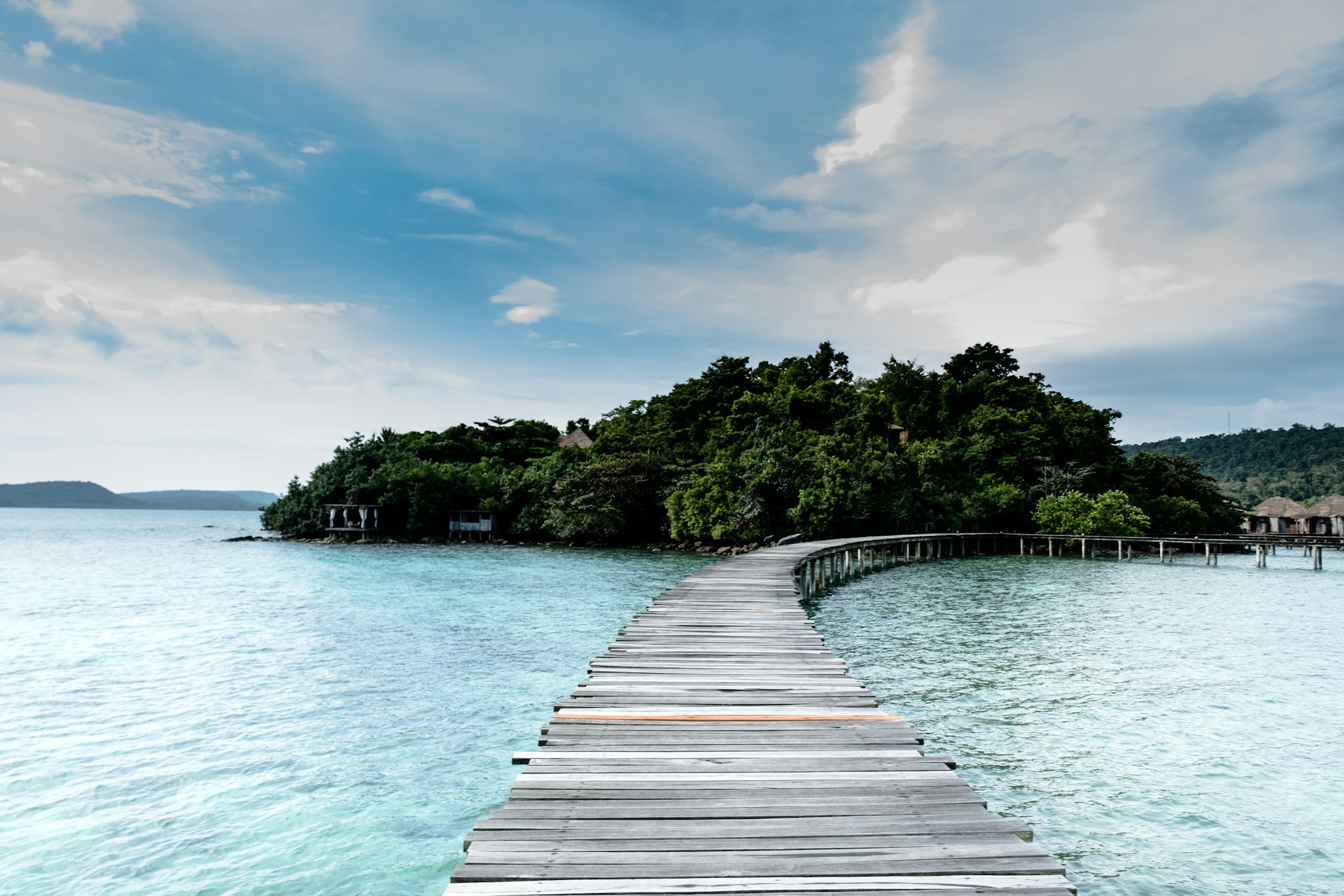
Angkor before sunrise, the Mekong after dark, and Koh Rong beach country in between.
Introducing Cambodia
Cambodia is still a country travellers visit for one reason, then return for everything else. Angkor remains the headline: a thousand-temple landscape best walked at first light and again at dusk. The rest of the country is Phnom Penh's riverfront, the Kampot pepper plantations, and the Koh Rong archipelago where the rest of Asia's beach development hasn't yet caught up. Khmer cooking is gentler than its Thai and Vietnamese neighbours.
See hotelsYour Travel Notes
Currency
Cambodian Riel (KHR) circulates alongside US Dollars, which are widely accepted and often preferred. Bring small USD bills for tuk-tuks, tips and markets; cards work in hotels and proper restaurants.
Cuisine
Khmer cooking is gentler than its Thai and Vietnamese neighbours: fish amok in coconut, beef lok lak, freshwater snails with lemongrass. Pepper from Kampot is one of the best in the world.
Transport
A pre-arranged car with driver is the way to move between cities. Domestic flights connect Siem Reap, Phnom Penh and Sihanoukville in under an hour. Tuk-tuks remain the locals' default within town.
Tipping etiquette
10% at restaurants if not included; USD 1 or 2 per tuk-tuk ride; USD 10 to 15 per day for an Angkor guide; USD 5 to 10 per day for hotel housekeeping.
When to go
November to February is dry, cool and ideal for Angkor. March to May gets very hot. The June to October monsoon brings shorter rains but greener temples and far fewer crowds.